What To Bring To A First-Day Ceremony
By Lloyd A. de Vries
Most U.S. commemorative and “special” issues and some of the others have events on the day that they go on sale: first-day ceremonies. Some are organized by U.S. Postal Service headquarters, others by local people, ranging from postal people to interest groups.
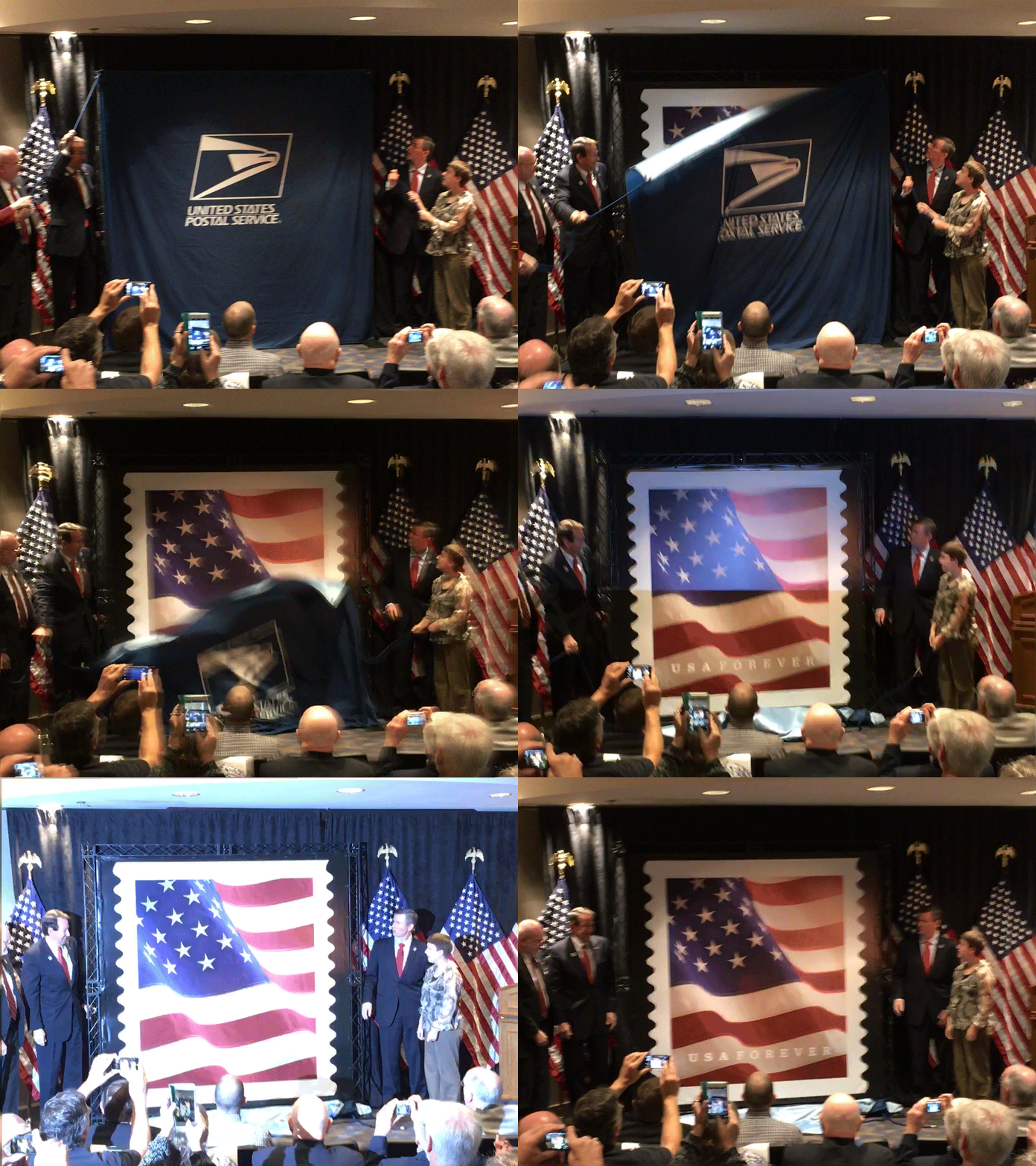 The listing of what happens at these events is the “program,” which is what we collect. However, we can do more than just accumulate these souvenirs. We can actually go to these events. (Shown above, the unveiling of the stamp design, launching the 2017 Flag stamp at Southeastern Stamp Expo near Atlanta.)
In 2018, word is that first day sites again will have a wider geographic distribution around the country than in the past. We saw that beginning in late 2016, when the Hanukkah stamp ceremony was moved to Boca Raton, Fla., the Kwanzaa ceremony was held in Charleston, S.C., and Nativity was at a church in Washington, D.C. In the past, almost all non-Christmas stamps for winter holidays were issued at the big New York City show in October.
In 2017, for example, Love Skywriting was issued in Chino, Calif., WPA Posters in Hyde Park, N.Y. (home of FDR, in whose administration the Works Progress/Projects Administration was created), and Flowers from the Garden in Sioux Falls, S.D., at the Mary Jo Wegner Arboretum.
Nearly all U.S. first-day ceremonies have free admission (even when the event to which they are attached charges admission). In most cases, you don’t need to bring anything other than yourself in reasonably presentable condition. However, experienced ceremony attenders often come prepared. Here are some suggestions:
Money, checks or payment cards to buy the new stamps, of course: The U.S. Postal Service also is likely to offer other “philatelic products” at the ceremonies, such as uncacheted FDCs, press sheets, framed stamps and so on. Nearby, you may find cachetmakers selling their own FDCs, both serviced and unserviced.
Envelopes or cards of your own for servicing as FDCs: Cacheted is better, but cachets can be added later, if there isn’t time to prepare them in advance. Bring extras; non-collectors or those who haven’t read this column may want to trade for or purchase what you have brought.
Savvy FDC collectors who attend first-days keep a supply of good-quality envelopes for issues announced at the last minute.
Something in which to carry your collectibles: The Postal Service may or may not have large glassine envelopes, but even if it does, those aren’t very protective.
Absorbent paper to put between your freshly-postmarked covers and cards: Most on-site cancelers aren’t using quick-drying ink, and the postmarks on glossy paper may smear otherwise. Post-it notes also work well.
A good-quality pen for autographs: There is usually an “autograph table” with the dignitaries from the ceremony, and they are usually supplied with “Sharpies” (permanent ink markers). The key word here is “usually.” Also, not all dignitaries participate in these autograph sessions, so you may have to chase some down, or you may see a celebrity not involved in the ceremony whose autograph you want to obtain.
The Sharpie is a good choice: The ink dries quickly and it will write on practically anything.
A keen eye: Look for postmarks that won’t be offered by mail, such as the double-ringed red registry plug, which postal regulations state cannot be backdated. Watch the cancellation clerks at work; you may decide you want a particular clerk to handle your covers, or none at all. If you plan to obtain autographs after the ceremony, see where the autograph line will be and perhaps take a seat near where it starts.
Keep an eye out for “ephemera” that might make a nice first-day collectible: A brochure for the attraction at which the ceremony is being held and which is related to the stamp subject, for example. But don’t be greed: Don’t clean out the rack or stack, take just a few.
Also watch for programs left behind by non-collectors. Even if you only want one for your collection, the extras may be “trade fodder.” Or, in the case of multi-stamp issues, you may need more than one program to complete the set..
You may wish to add additional stamps and cancels or autographs to your first-day ceremony program to differentiate it from those that were not distributed at the event; that is, purchased from the USPS sales department.
An Attention Span: It is amazing what you might learn at a first-day ceremony. At one in 2015, for example, collectors learned how hard the Postal Service designers tried to make the person attractive. Best of all, though was the definitive bird stamp ceremony in January 2004 where a local postmaster, reading a script prepared for him by USPS Headquarters, let drop that there would be a not-yet-announced John Wayne Legends of Hollywood stamp later that year!
 If you begin as a collector of U.S. stamps, you eventually have to decide whether you will collect mint (with its unobstructed view of the design), used (which carries evidence in the form of the cancellation that the stamp has done the job it was created for), or both.
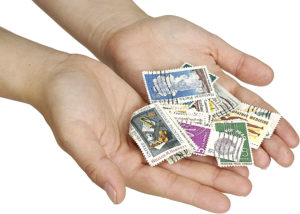 If you have enjoyed collecting current stamps, you may well decide to go backwards to get stamps previously issued by your country(ies) of interest. Or you may decide to broaden your collecting to other countries, or pursue a theme such as space travel on stamps, the story of tennis, or national costumes on stamps.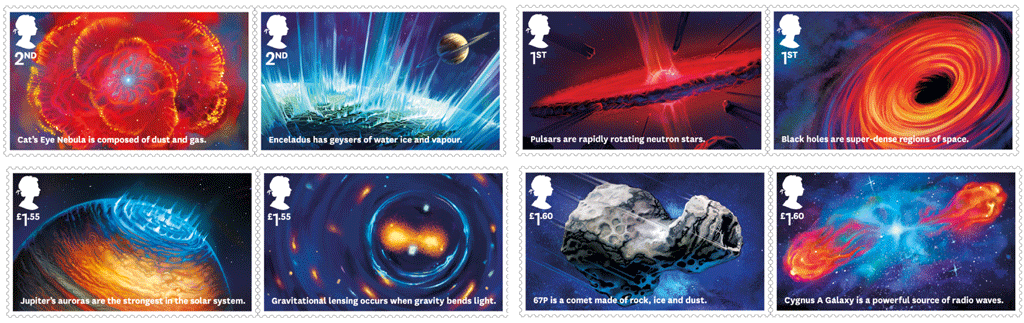
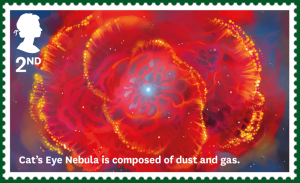 now expanding into space but was once inside a star, much like our own Sun. As the nuclear reactions that generate energy in its core were coming to an end, the uneven outflow of energy pushed the outer layers of the star off into space. The nebula was discovered by William Herschel ñ the first president of the RAS. In 1864, William Huggins used the pioneering technique of optical spectroscopy, in which light is split into an artificial rainbow and analysed, to prove that the Cat’s Eye Nebula was a tenuous gas, rather than a solid object. Huggins was awarded the prestigious Gold Medal of the Royal Astronomical Society in 1867.
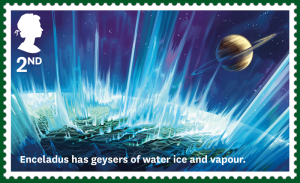 Enceladus is a small, icy moon of Saturn with a system of geysers that spray water and vapour into space. The geysers were found after the British-built magnetometer instrument on NASA’s Cassini spacecraft began sending back puzzling results indicating that Enceladus possessed a thin atmosphere. Michele Dougherty of Imperial College persuaded NASA to skim the space probe over the moon’s surface to take a closer look. In the process, the cameras revealed the geysers. Subsequent investigations have found that the geysers are fed by a subsurface ocean in which the water contains the molecular building blocks of life.
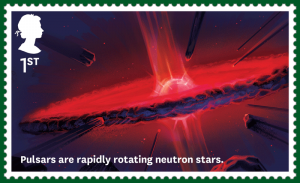 beam radiation across space like a lighthouse, sometimes many times a second. Every neutron star was once the energy-generating core of a massive star, but after exhausting its nuclear fuel supply it collapsed into an ultra-dense object, triggering the explosion of the star.
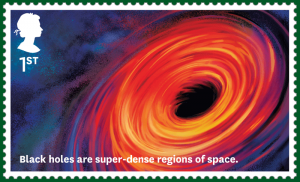 philosopher John Michell, and their behaviour was mathematically described in 1916 by the German physicist Karl Schwarzschild. Yet they seemed so unorthodox that astronomers were initially reluctant to believe they could truly exist. Only in the 1960s were black holes accepted, which led to a flurry of theoretical investigations.
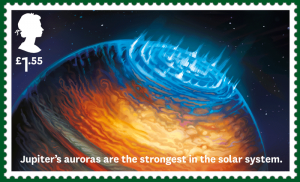 produced when charged particles accelerate into the atmosphere, giving off light as they collide with the gas atoms there. Earth’s auroras come in visible wavelengths of red and green, but at Jupiter they shine in the ultraviolet part of the spectrum and as X-rays. On Earth, powerful voltages in our magnetic field power the auroras, but this does not seem to be the case at Jupiter, where the source of power remains a mystery. A team of astronomers at the University of Leicester continues to study this phenomenon.
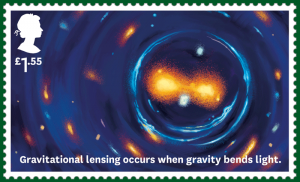 sources to form distorted and multiple images. The phenomenon was a prediction of Albert Einstein’s General Theory of Relativity. It was confirmed in 1979 when an Anglo-American team of astronomers that included Dennis Walsh and Bob Carswell discovered two distorted galaxies side by side that on closer inspection appeared to be identical. Astronomers can ‘weigh’ the amount of matter forming the gravitational lens by the appearance of the distorted images. This has shown that clusters of galaxies contain a lot more matter than can be seen. Astronomers call this invisible material ‘dark matter’.
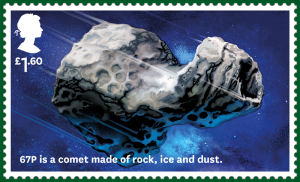 the European Space Agency’s Rosetta mission. UK industry and universities worked on the mission’s lander and instruments. We now know that 67P is an ancient object that formed before the planets, more than 4.5 billion years ago. Rosetta’s lander instruments revealed carbon-rich molecules in the ice. Such molecules could have been important in ‘seeding’ the early Earth and helping to get life started on our planet. Rosetta also showed that the comet’s two distinct lobes were once separate bodies that collided and stuck together.
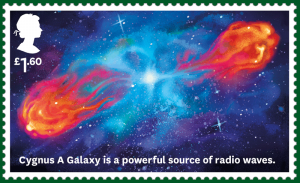 significant amount of energy within it. In the early 1950s, the Jodrell Bank radio observatory in Cheshire found that radio emission was not coming directly from Cygnus A but from a pair of radio lobes, one on either side of the visible galaxy. It is thought that energetic jets of particles are being accelerated away from the centre of the galaxy by strong magnetic fields. These particles collide with the extremely rarefied atoms in the space surrounding the galaxy, powering the radio lobes.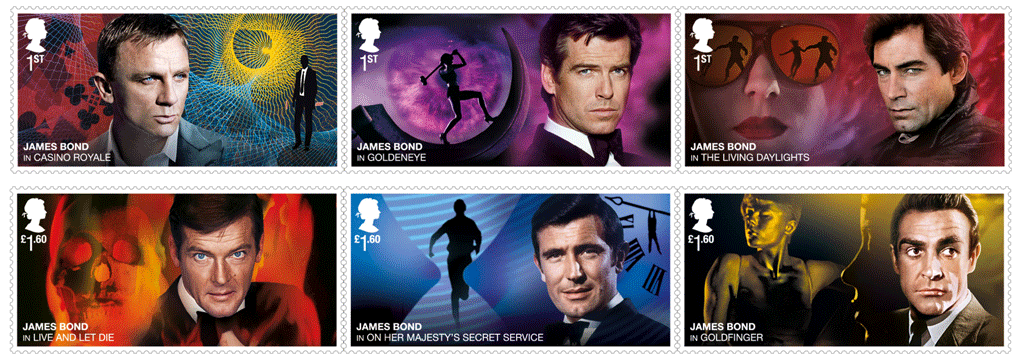

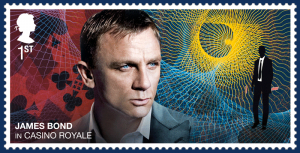 The sixth Bond (Daniel Craig) joined the series in 2006 as the producers turn to Ian Fleming’s first novel to re-imagine a harder-edged 007. Having just earned his 00 status and his licence to kill, Bond foils ruthless Le Chiffre, who uses terror attacks to manipulate the stock market. A jaw-dropping finale ends with the tragic demise of, Vesper Lynd.
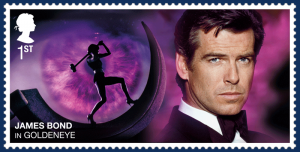 Although remaining involved, Cubby Broccoli passes on main producing responsibilities to his son and daughter, Michael G Wilson and Barbara Broccoli, who debuts in the producer’s chair. A new Bond (Pierce Brosnan) and a female M (Judi Dench) take the stage as a former agent, 006, threatens the world with a terrifying space weapon, GoldenEye.
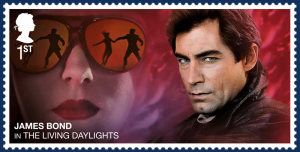 Timothy Dalton takes on the Bond mantle in this thrilling, lightning-paced adventure. The story draws inspiration from real-life East–West defections and Soviet-Afghan war in Afghanistan, as Bond defeats the ambitious Soviet General Georgi Koskov and a rogue US arms dealer called Whitaker.
 In Roger Moore’s first film as James Bond, 007 travels to Harlem, New Orleans and the Caribbean to investigate the mysterious Dr Kananga, known as Mr Big. Bond saves the day during a voodoo ritual and the stunt team sets a world record for a speedboat jump.
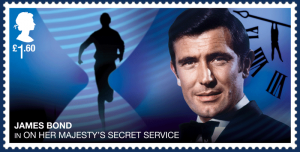 The film-makers unveil a new Bond (George Lazenby) and the adventurous Tracy Di Vicenzo (Diana Rigg) in a story that sees Bond marry. SPECTRE is bidding to blackmail world powers via biological warfare. Bond defeats Blofeld but is left devastated when his bride, Tracy, is gunned down on their wedding day.
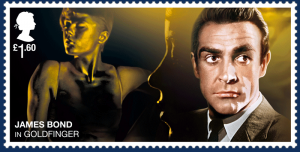 The third film starring Sean Connery introduces the iconic Aston Martin DB5, which combines ingenious gadgetry with understated elegance. The story sees Bond track gold smuggler, Auric Goldfinger, dodging death in the form of Oddjob, as well as a terrifying laser beam. Bond, with the help of Pussy Galore, foils a bid to render Fort Knox worthless.
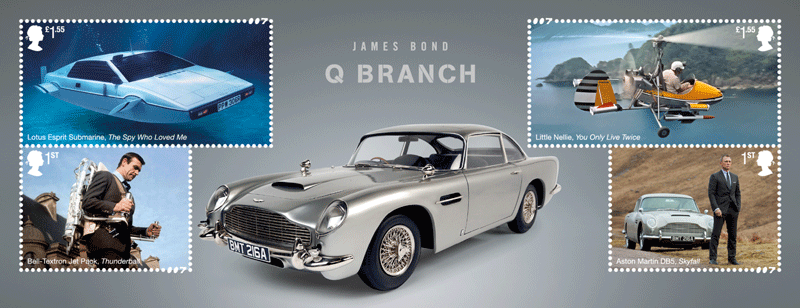
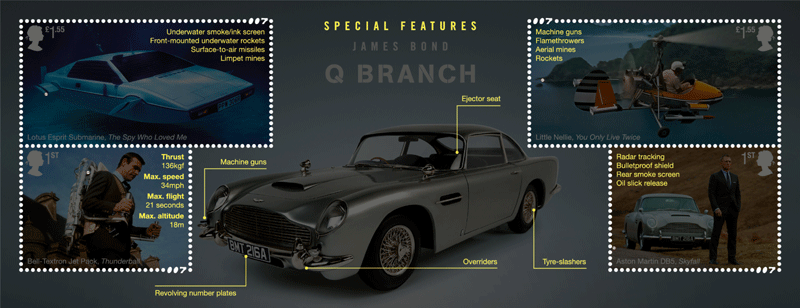
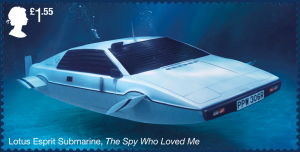 Lotus Esprit Submarine – The Spy Who Loved Me (1977)
 Little Nellie – You Only Live Twice (1967)
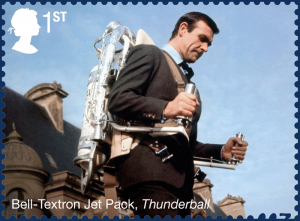 Bell-Textron Jet Pack – Thunderball (1965)
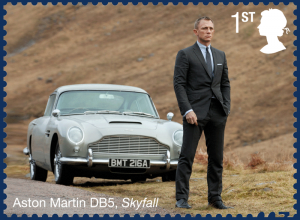 Aston Martin DB5 – Skyfall (2012)
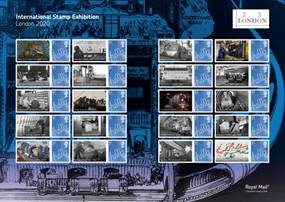 Royal Mail will celebrate London 2020 with a selection of special items that recall the worldís first adhesive postage stamps, the Penny Black, Twopenny Blue and Penny Red.
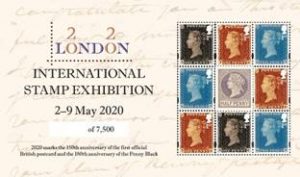 Ahead of the exhibition opening, a retail stamp booklet will be issued on 10 March. Containing two each of the Penny Black, Twopenny Blue and Penny Red designs, the inside of the booklet includes the official London 2020 logo. The stamps in this booklet are self-adhesive.
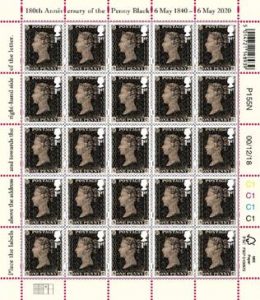 can be experienced as part of the attractions at The Postal Museum in London.
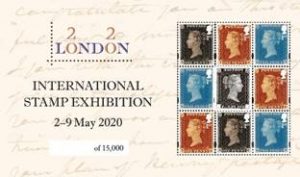 stamp design that appeared on the first postcard, while the sheet itself will carry an ëanniversaryí text. This sheet will be available in a numbered edition of 7,500.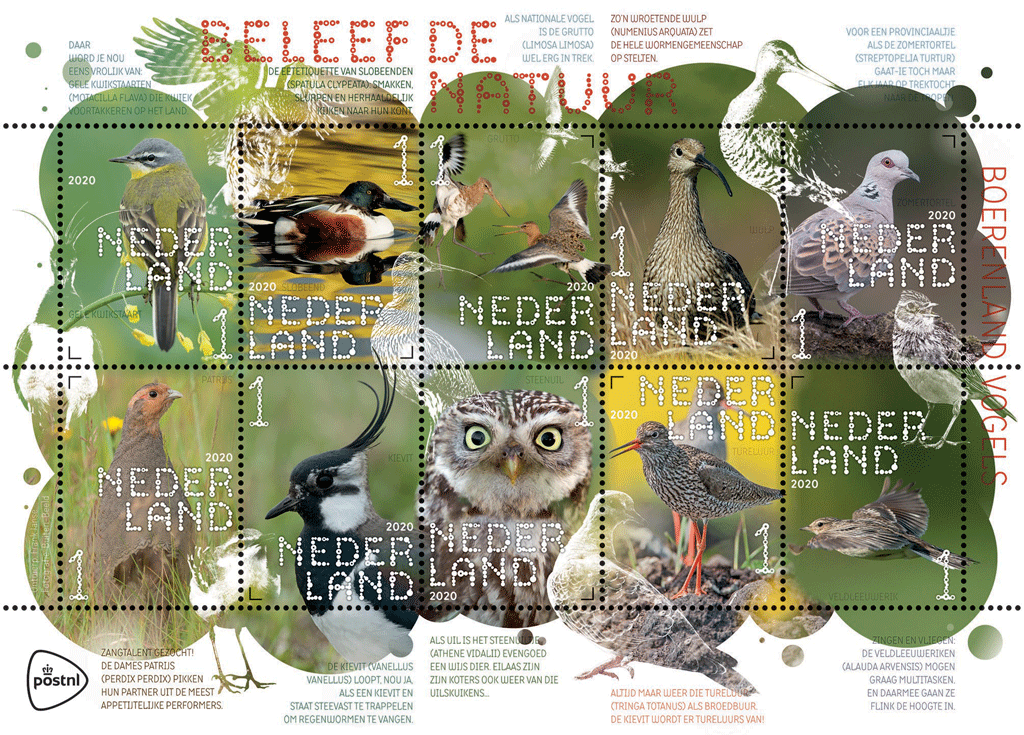
 The consequence of this for the farmland birds is far-reaching, says Resi Becker, director of Mail NL at PostNL. “In half a century, 60% of these birds have disappeared in our country. The Netherlands currently has around 70 species of farmland birds. We must handle this with care. That is why PostNL is supporting the efforts of Bird Protection Netherlands to protect all wild birds and their habitats as well as possible by issuing these stamps.”
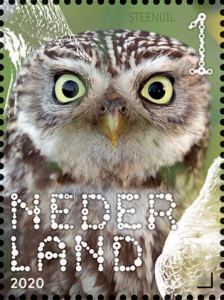
 partridge, lapwing, little owl, redshank and skylark. Of the 10 farmland birds on the stamps, only the 2 bellowing godwits and the skylark can be seen in the sky. The other birds are depicted standing, sitting or swimming. Janse: “That has to do with the fact that farmland birds are generally somewhat smaller and therefore more difficult to recognize when they fly. More importantly, I wanted to create a nice balance. With birds that takes different positions and look at different sides. ”
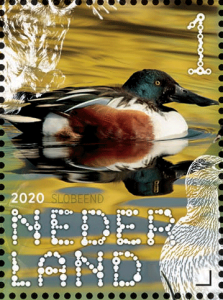
 and orange. “The latter especially comes back nicely in the long legs of redshank, in the partridge’s part, the belly of the shoveler, and the necks of the two bald-tailed godwits. That was also a consideration to make the title orange this time. ”
 “
“

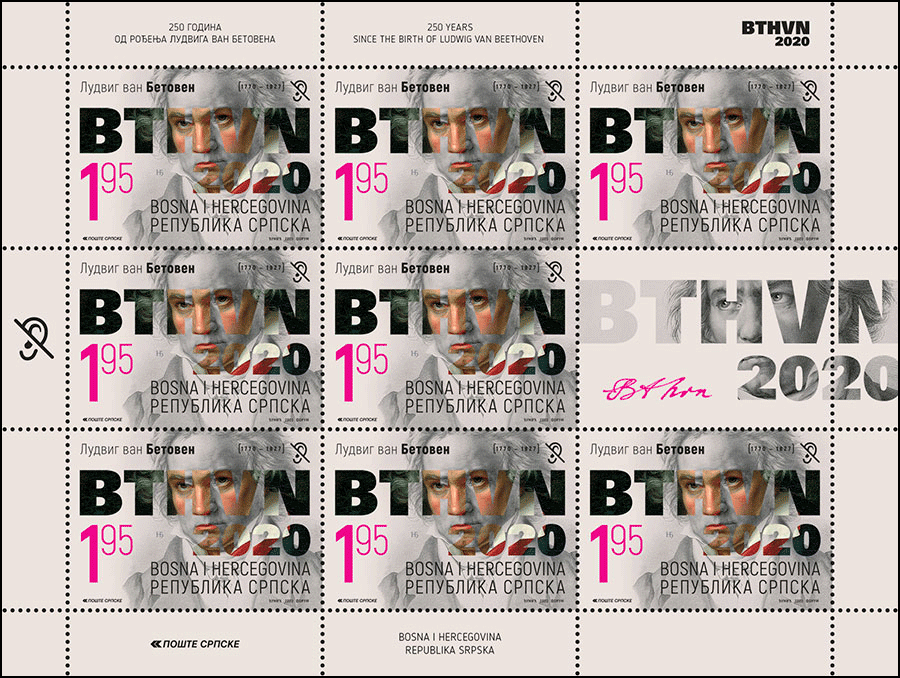
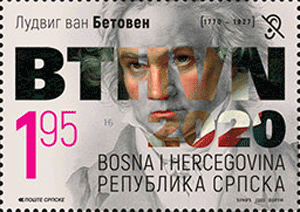 The Republic of Srpska – Bosnia and Herzegovina is issuing a stamp January 29th to commemorate the 250th anniversary of the birth of Ludwig van Beethoven. According to the Enterprise of Postal Traffic, the eight stamps on a sheet have a denomination of 1,95 KM or 1 euro. There is also an official FDC.