
[press release]
Israeli Music – Love Songs
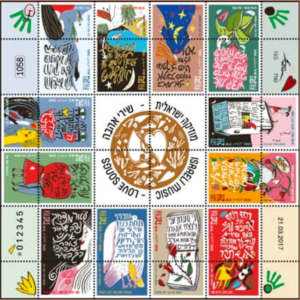 The people of Israel love to sing songs of love: love for God, love for their homeland, love for the world, love between a man and a woman. Some of the most beautiful poetic verses about love are found in the biblical Song of Songs. The Levites sang songs of love for God in the Temple. Through good and bad, throughout the world, during the Holocaust and the subsequent revival of the Jews, in war and in peace, the Jewish people have never stopped singing love songs.
The Israel Philatelic Service has selected 12 romantic love songs from a wide range of genres and times, songs that remind everyone of wonderful moments.
Atur Mitzchech Zahav Shachor (Your Forehead is Decorated in Gold & Black)
Lyrics: Avraham Chalfi, Melody: Yoni Rechter
Written in the 1950’s and set to music by Yoni Rechter in 1977. This very popular song was performed by Arik Einstein, accompanied by young singers Yehudit Ravitz and Corinne Allal.
Brit Olam (Universal Covenant)
Lyrics: Ehud Manor, Melody: Matti Caspi
Ehud Manor dedicated this song to his wife, singer Ofra Fuchs. He later gave it to his friend, composer and singer Matti Caspi, who added the words to the soundtrack he was composing for the film Hagiga BaSnuker (1975). Thus this magical love song was born. Matti named his firstborn daughter Brit.
 Lechol Echad Yesh (Everyone Has)
Lyrics and Melody: Uzi Chitman
One of the last hits by late songwriter Uzi Chitman, who wrote this love song in 2000 for his wife Aya when their son Yoav was drafted into an IDF combat unit. It expresses life and partnership coming full circle. Some interpret the song as one of love for Eretz Israel. It was performed as a duet by Shlomi Shabat and Lior Narkis and has become a popular wedding song.
Zemer Nogeh (Melancholy Song)
Lyrics: Rachel, Melody: Mordechai Zaira, Shmuel Kraus, Zohar Levy, Yosef Moustaki
This poem was written by poetess Rachel in the late 1920’s. It was set to music several different times, but became especially well known when Rona Ramon sent it to her husband Ilan Ramon, the first Israeli astronaut, who died in the Columbia space shuttle.
Hayu Leilot (There were Nights)
Lyrics: Yaakov Orland, Melody: Mordechai Zeira
This song was commissioned by the Kol Haruchot Theater in 1939. The songwriters met in the “Waiters Club” in Tel Aviv and completed it in the wee hours of the night, when it was first performed by the club’s waiters. Since then, the song has been sung by many singers, but it was the first song performed by Esther Ofarim as a soloist and from there she went on to be a star.
Slichot (Forgiveness)
Lyrics: Leah Goldberg, Melody: Oded Lerer
This poem appeared in Leah Goldberg’s book Shibolet Yeroket Ha’Ayin (Green-eyed Spike) in 1938. It was set to music by Oded Lerer in 1977 and sung by Yehudit Ravitz at the annual Song Festival.
Haperach Begani (The Flower in my Garden)
Lyrics and Melody: Avihu Medina
This song, which is considered to be a milestone in Eastern music, was written by Avihu Medina based on an experience of unrequited love in his youth. The song was written for the Eastern music festival “Lamenatze’ach Shir Mizmor” in 1982, where it was performed by Zohar Argov.
Kshe’or Dolek Bechalonech (When the Light is on in your Window)
Lyrics: Amos Ettinger, Melody: Alexander Argov
This song was written in 1964 for the Gesher Hayarkon trio. Ettinger wrote: “I love fairytales and the ones I don’t know, I make up… As long as I continue to believe that the light is on so that you can write your letters to me – I will keep waiting…”.
Tapuchim Ut’marim (Apples and Dates)
Lyrics: Eitan Glass, Melody: Rami Kleinstein
According to the lyricist: “In 1994, I was driving and listening to the tune from the film “Never on Sunday” and it reminded me of the bright light of Athens reflecting the colors from Mt. Lycabettus into the sea… the lyrics and the story for the song came to me in an instant, matched with a melody by Greek composer Hatzidakis. I pulled over and wrote down the lyrics. Later on, Rami Kleinstein set them to music”.
Rosa Rosa
Lyrics: Haim Hefer, Melody: Dubi Seltzer
Haim Hefer wrote this song for Yehoram Gaon, star of the 1973 film Kazablan, directed by Menahem Golan. The play Kazablan, written by Yigal Mossinson, was first performed in 1954 by the Cameri Theater, starring Yosef Yadin and Haya Hararit. In 1966 the play was turned into a musical starring Yehoram Gaon.
Pgisha Le’Ein Ketz (A Meeting to Eternity)
Lyrics: Natan Alterman, Melody: Naomi Shemer
This poem was published in Alterman’s book “Kochavim Bachutz” in 1938. Naomi Shemer set it to music and gave it to the “Shlosharim” trio in 1969. Since then it has been performed by many talented singers.
Hachnisini Tachat Knafech (Take Me Under Your Wing)
Lyrics: H.N. Bialik, Melody: Alexander Krane, Shmuel Alman, Paul Ben Haim, Menachen Avidom, Nurit Hirsch, Miki Gavrielov, folk tune
This poem was written by poet H.N. Bialik in 1905 in Odessa, for his beloved Ira Jan or for his wife Mania, or possibly for both… The words were set to music by numerous composers, including Paul Ben Haim, Nurit Hirsch, Miki Gavrielov and more, and it has been performed by many singers.
Nava Bodek Achiron, Series Editor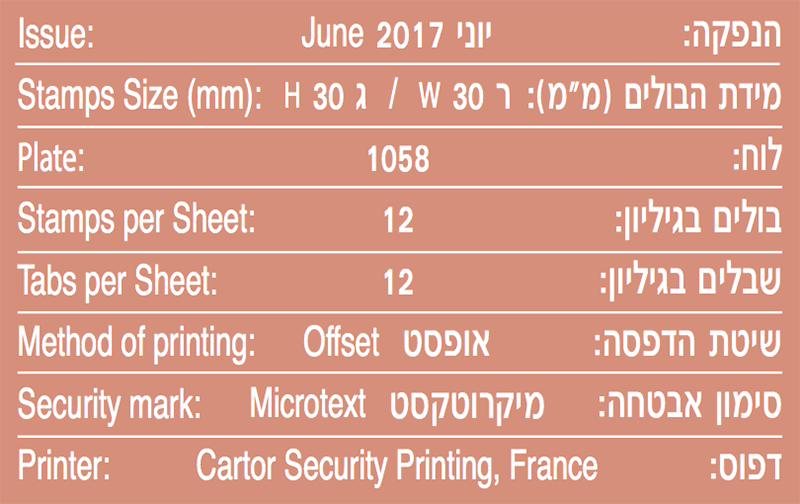
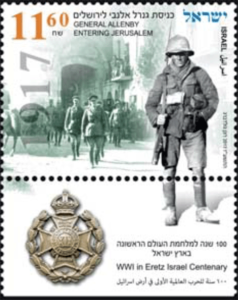 When WWI broke out in August 1914, the Ottoman Empire joined the Central Powers (Germany and Austria) against the Allied Countries (Britain, France and Russia). The Great War, as it was called at the time, lasted for more than four years and fundamentally changed world history, including the status of Eretz Israel.
 In late October 1917, the British surprised the Turkish forces by attacking the city of Beer Sheba and succeeded in breaking through the front line. British forces pressed on quickly, fighting intensely against the retreating Turks as they tried to establish numerous new lines of defense. By early December the southern coast had been conquered and the British reached the gates of Jerusalem.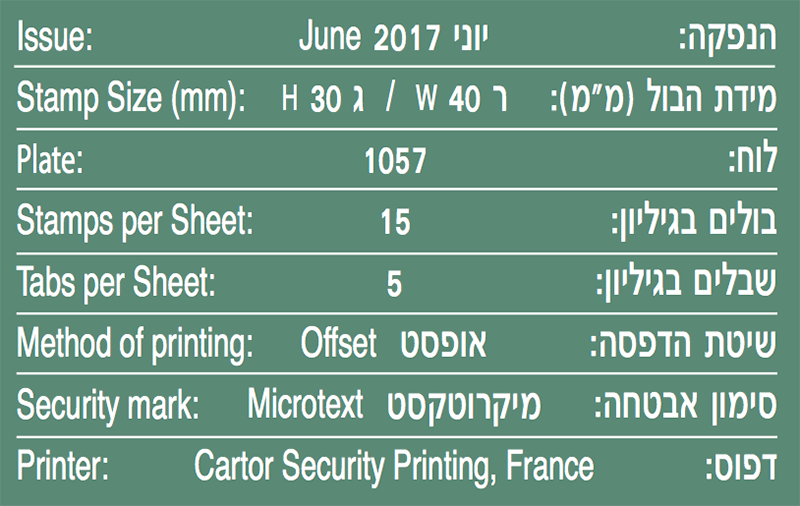
 REGINA – Country music star Dean Brody, while on tour, unveiled a stamp today that captures the Trans-Canada Highway, the 8,000-kilometre ribbon of adventures, dreams and memories – and a key economic artery for Canadian business.
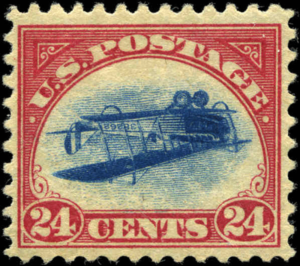 The Inverted Jenny stamp stolen in 1955 and
  The boards of the two organizations decided last fall to sell the stamp recovered in 2016. The auction was conducted by the Robert A. Siegel firm. Bids were received by telephone, Internet and live bidding. The winning bid came in over the phone.
 ition 76 was $150,000-$200,000, well below the final price. No doubt its notoriety added to the value.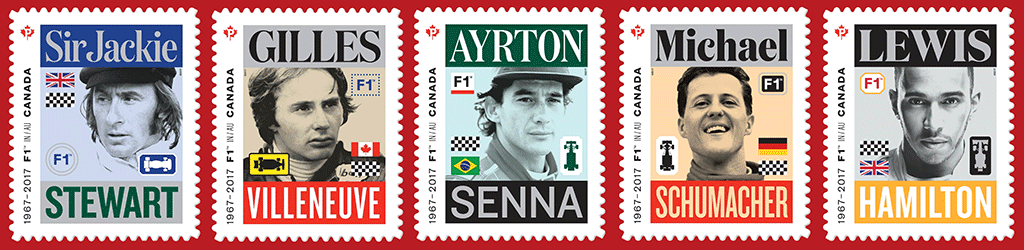
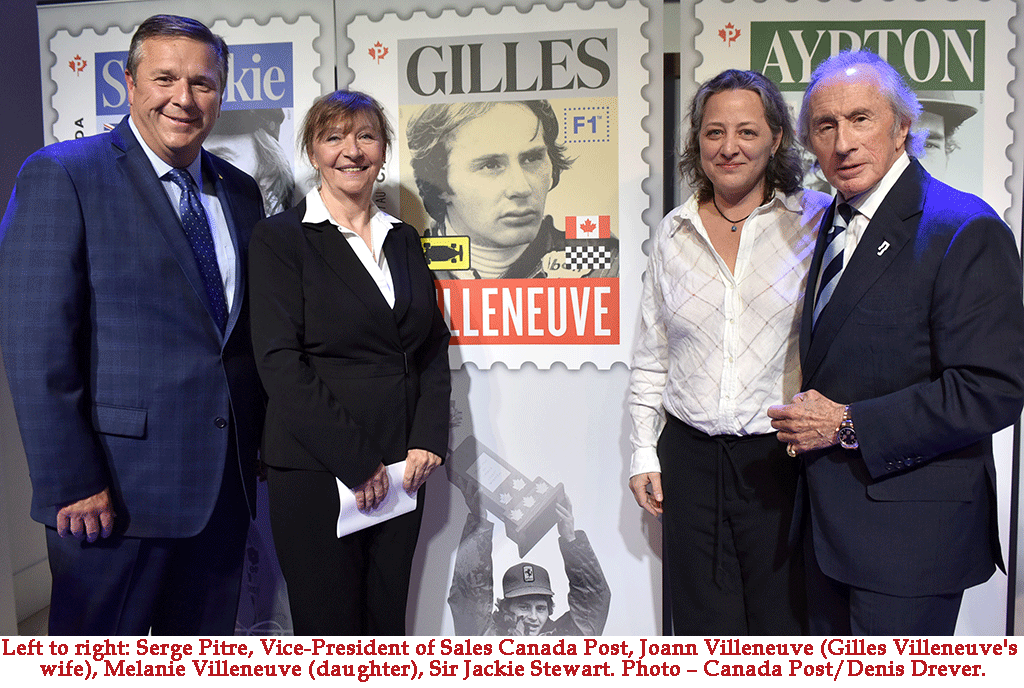 The F1™ in Canada stamps celebrate 50 years of the race in this country by honouring five winning drivers, one for each decade of F1 in Canada: Sir Jackie Stewart (Scotland), Gilles Villeneuve (Canada), Ayrton Senna (Brazil), Michael Schumacher (Germany) and Lewis Hamilton (England).
 Sir Jackie Stewart
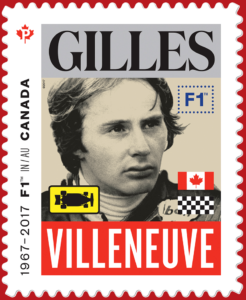 Gilles Villeneuve
 Ayrton Senna
 the sport’s history. Schumacher raced F1 from 1991 to 2006 and 2010 to 2012. In 308 races, he registered 91 wins, took 155 podiums, 68 poles and a record seven World Championships. He won his first World Championship in 1994 and his second in 1995. After breaking his leg in 1999, he mounted a comeback that saw him win five consecutive World Championships from 2000 to 2004. He retired at the end of 2006 but returned to race from 2010 to 2012.
 raw ability, few drivers compare to the man who represents the fifth decade. Hamilton won four races in his rookie season in 2007 and finished on the podium in the first nine races of his brilliant, ongoing career. In his 193 starts, the three-time World Champion has recorded 55 wins, 108 podiums and 64 poles. Hamilton has finished in the top five in points in each of his 10 years in F1. He won the World Championship in 2008 and back-to-back titles in 2014 and 2015.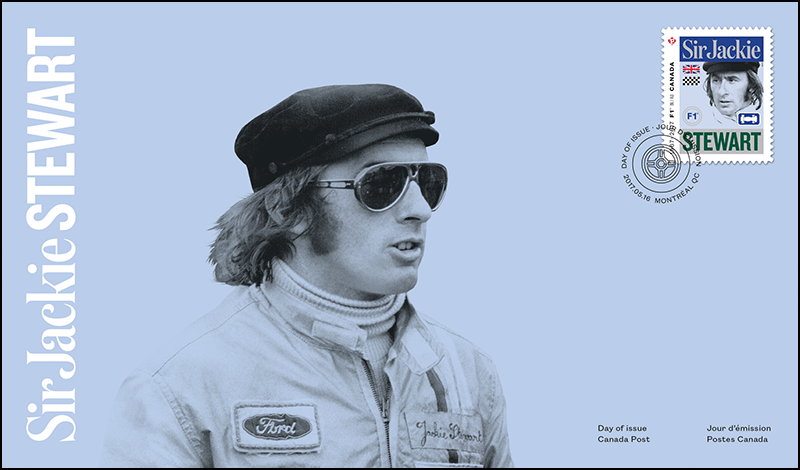
 About Formula 1®
 MONTRÉAL, May 11, 2017 /CNW/ – Legendary drivers harnessing awesome power at incredible speed with skill, daring and courage: that’s how Formula 1 auto races thrill fans in Montréal, in Canada and around the world.
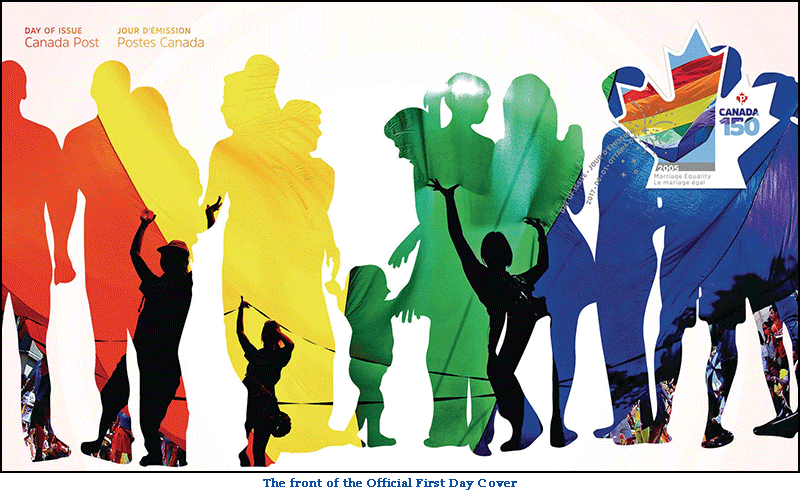
 TORONTO, May 9, 2017 – At an event today in downtown Toronto, Canada Post unveiled a stamp commemorating the 2005 passage of the Civil Marriage Act, which made marriage equality the law throughout Canada. Grassroots activists, government officials and community members attended the unveiling, catching the first glimpse of the new stamp, which features the iconic rainbow symbol. The unveiling was held at and in partnership with The 519, a City of Toronto agency committed to the health, happiness and full participation of LGBTQ communities.
 But the road to achieving marriage equality in Canada began long before 2005. For decades, LGBTQ activists and supporters from coast to coast to coast had fought for the rights of their communities, including the right to marry. In the late 1990s, the community began to achieve significant victories.
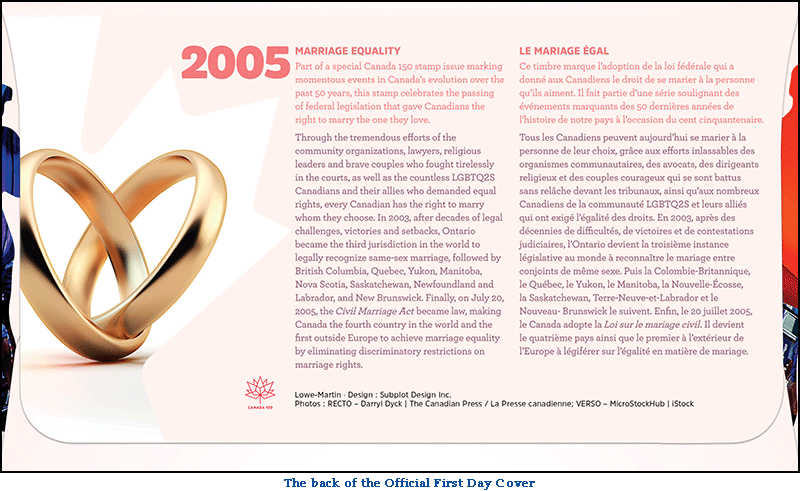 Similar court battles were also taking place in provinces across the country, and more provincial courts issued rulings legalizing marriage equality: B.C. in July 2003, followed by Quebec, Manitoba, and Nova Scotia in 2004. Finally, on July 20, 2005, the government of Canada passed the federal legislation that legalized marriage equality across the country, making Canada the fourth country in the world and the first outside of Europe to grant same-sex couples the right to marry the one they loved.
 TORONTO, May 9, 2017 /CNW/ – The 519 is excited to be partnering with Canada Post for an event that will highlight the struggles for marriage equality in Canada, and celebrate this important moment in the country’s history. In this event, as part of the Canada 150 celebrations, Canada Post is releasing a new stamp to commemorate the hard-fought right of equal marriage in Canada.
 TORONTO, May 4, 2017 – Canadian Space Agency astronaut Jeremy Hansen was at a Toronto school to unveil a stamp with an image of Canada’s most famous robotics accomplishment – the Canadarm. The stamp commemorates Canada’s achievements in space, science, technology and innovation.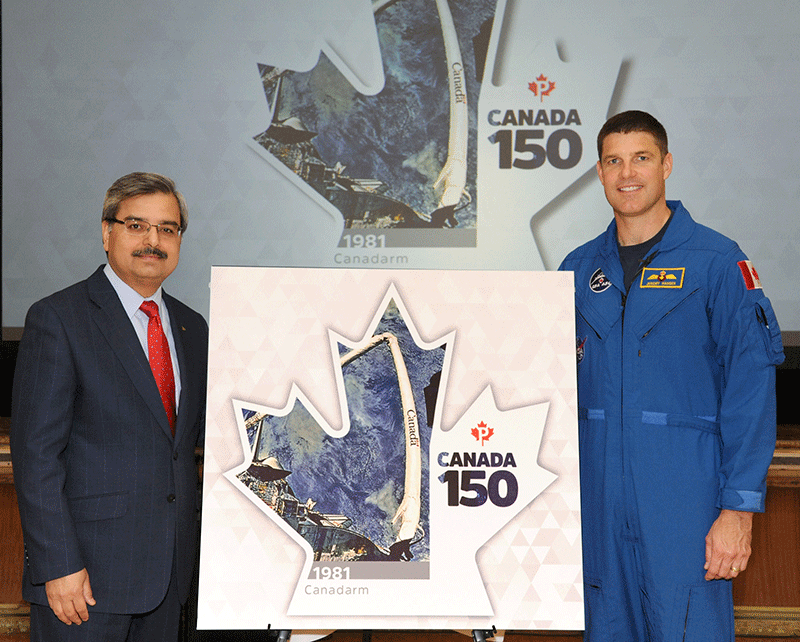
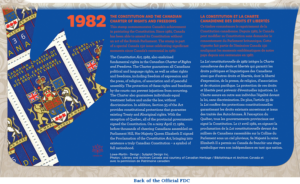
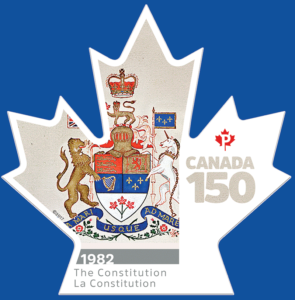 OTTAWA, May 3, 2017 – Only a peaceful nation achieves full independence with the stroke of a pen, thousands of citizens erupting in cheers and a band striking up a fanfare – which is how Canada brought its Constitution home.
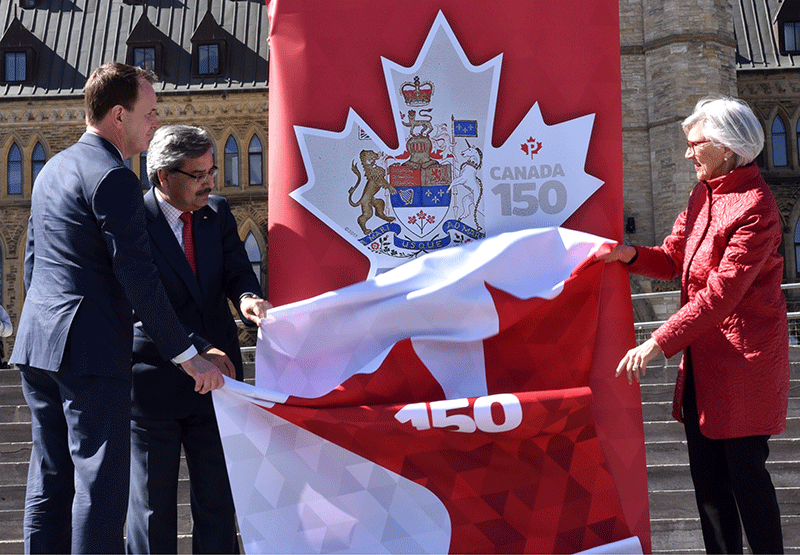 [Photo, left to right: Steven MacKinnon, Member of Parliament for Gatineau, Parliamentary Secretary to the Minister of Public Services & Procurement; Deepak Chopra, President and Chief Executive Officer, Canada Post; The Right Honourable Beverley McLachlin, P.C., Chief Justice of Canada. Photo by Canada Post/Denis Drever.]
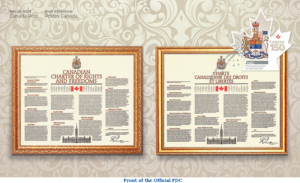 Under the Charter, Canadians have the right to freedom of speech, religion, thought and expression, as well as freedom of the press, of mobility, of association and of assembly, among others. The Charter also enshrines citizens’ rights to vote, to run for office, to a fair trial, to security and privacy, as well as important linguistic rights. The Charter also confers equality upon every individual in Canada – regardless of race, religion, national or ethnic origin, colour, sex, age or physical or mental disability. Governments must not discriminate on these grounds in laws or programs.
 A
A 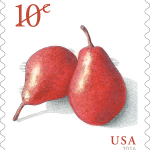 5178 10¢ Red Pears, serpentine die cut 11¼x11
 a. Block of 10, #5180-5189