[press release]
Issue Date: 4th April 2019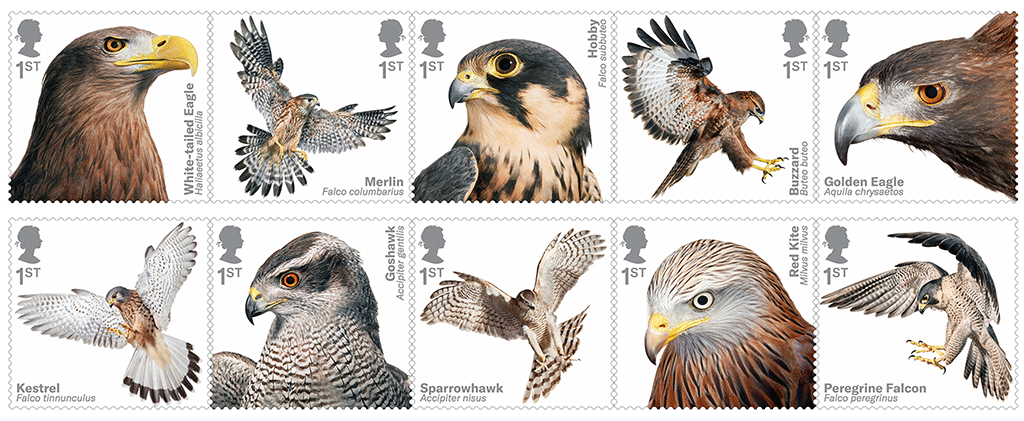 Products/Price/Code
- Stamps (10 x 1st class) £7.00 AS4431
- First Day Cover Stamps £9.00 AF443
- Presentation Pack £7.80 AP458
- Stamp Souvenir £9.00 AW101
- First Day Envelope £0.30 AE398
- Set of 10 Postcards £4.50 AQ275
- Retail Stamp Book £4.20 UB422
- Framed set of 10 stamps £29.99 N3162
- Signed, framed set of 10 stamps £59.99 N3163
- Limited edition, blow up print of Peregrine £69.99 N3169
The StampsPrice: £7.00 / Code: AS4431
Each bird was individually photographed by well-known and leading British animal photographer, Tim Flach, at the International Centre for Birds of Prey.
Details on each bird:
White-tailed Eagle — Haliaeetus albicilla
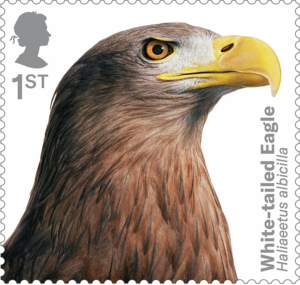 This very large eagle catches fish or sea birds with a low, slow approach, dropping its feet into the water to snatch the prey and then taking it to shore. These eagles were persecuted to extinction by 1918, but in 1975 a release programme was started on R˘m in Scotland. The population in Scotland is now around 60 breeding pairs, with over 200 adult birds. Since eagles readily feed on carrion, they get blamed for killing animals they are unlikely to kill. The financial benefit to Scotland from tourists coming to photograph these stunning birds is approximately £5 million a year.
Merlin — Falco columbarius
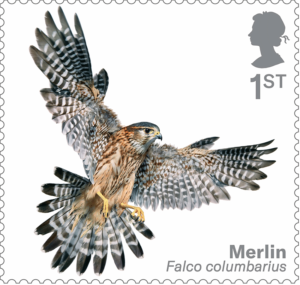 The merlin, which belongs to the falcon family, is the smallest UK raptor and can be found during the spring and summer on the uplands, nesting on the ground underneath heather. A specialist bird-catcher, it feeds its young on larks and meadow pipits in the summer. Females are brown, as are juveniles, while adult males have a blue-grey back. Once the autumn arrives, these birds move to lowlands, in a partial migration, for the winter. Since merlins are fast, agile and small, they are not commonly seen, but energetic young make a spectacular ringing flight after larks.
Hobby — Falco Subbuteo
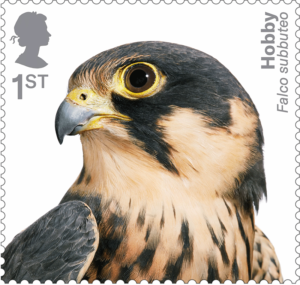 Larger than the merlin, this little falcon migrates to the UK from Africa in the spring to breed. With its long, sickle-shaped wings, it resembles a giant swift and is incredibly nimble in flight. Feeding on dragonflies and other insects, the hobby is often seen near large bodies of water. It nests using abandoned crowsí nests, and during the breeding season it hunts for swallows and swifts to feed its young. Once the young are able to fly and can hunt for themselves, hobbies migrate with the swallows back to Africa.
Buzzard — Buteo buteo
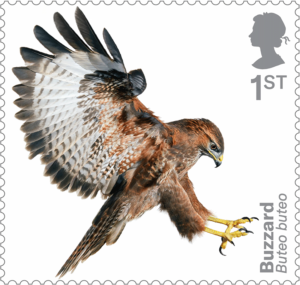 By the 1970s, the common (or Eurasian) buzzard was rare in the UK other than in the far west. Since then, however, there has been a huge increase thanks to more nesting areas and to rabbits surviving myxomatosis, and buzzards are now breeding in every county. Buzzards are usually seen on fi ne days soaring and calling, with a mewing cry, or sitting on poles, on fences by roads or on the ground, particularly when ploughed in the winter. They scavenge roadkill, which can cause them traffic injuries, or feed on insects on the ground. There is enormous colour variation in this species, from almost all cream to very dark brown.
Golden Eagle — Aquila chrysaetos
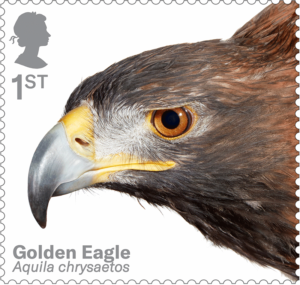 The golden eagle prefers remote moorlands and mountains in Scotland, usually nesting on cliff ledges. It soars over the Highlands, catching rabbits, hares and birds with its very powerful feet. It also consumes carrion, in some areas being reliant on dead animals during the winter. Golden eagles pair for life. Of the two eggs that the female lays, one chick rarely survives, the other fl edging at about three-and-a-half months. Juveniles have a mottled white and brown tail with a black band, which turns brown over the years. The golden feathers that give this eagle its name are on the head and the neck.
Kestrel — Falco tinnunculus
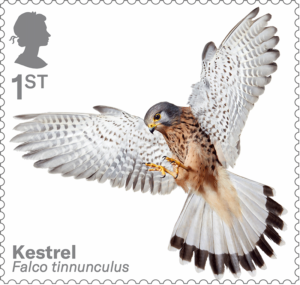 Once the UKís most common raptor, observed hovering by roads and motorways, this falcon has seen a decrease of 40 per cent over the past two decades. A key reason for the decline is the lack of sufficient nest sites and suitable grasslands for hunting. Kestrels are characterised by a beautiful chestnut-red colour over their bodies. The female has a red tail with bars, while the adult male has a grey head and grey tail with a black band at its tip. These birds are best known for hunting mice and voles by hovering, often descending in stages to drop on their prey.
Goshawk — Accipiter gentilis
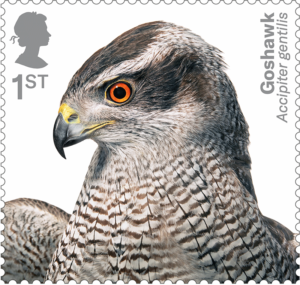 This aggressive, forest-dwelling hunter was probably extinct as a breeder until the middle of the 20th century. Its wing shape allows it to twist and turn through trees, and its long legs and powerful feet are well suited to hunting birds and mammals up to the size of a hare, with a short, often surprise attack. Adults are grey and white, with fi ne horizontal bars on the breast, while juveniles are brown, with vertical brown stripes. Goshawks build large stick nests and lay up to four eggs. The parents are vocal in the spring, when they can sometimes be seen soaring high in good weather.
Sparrowhawk — Accipiter nisus
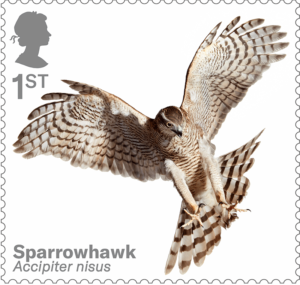 This little hawk is most commonly seen in gardens catching small birds. Its defining features are very long, thin legs and yellow eyes. Males are tiny in comparison to females. Both hunt birds, but females can take birds up to the size of a pigeon. The sparrowhawk is often blamed, wrongly, for the demise of small birds, while in fact it is cats, cars, windows and pesticides that are responsible. Sparrowhawks build a stick nest and rear up to five young. The young grow swiftly and become independent by the age of 14 weeks, although onlyabout a third survive their first year.
Red Kite — Milvus milvus
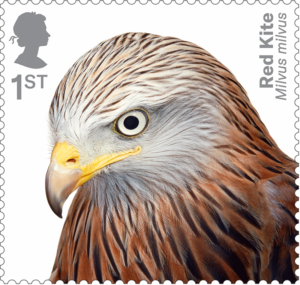 By 1903, red kites had been persecuted close to extinction, with the last few remaining in the mountains of Wales, when a farmer started to feed them. Now, with four feeding stations, there are 900 pairs in Wales. There have been very successful translocation programmes in England, Scotland and Northern Ireland, so kites are now seen soaring together in many places. Long wings, a long, forked tail and red colour make the red kite easy to identify. These birds are mainly scavengers, feeding on roadkill and animal remains. They have small feet for their body size, which limits the prey they can catch.
Peregrine Falcon — Falco peregrinus
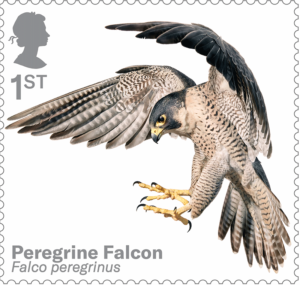 Brought to low numbers by pesticides in the middle of the 20th century, the peregrine has recovered dramatically. Many peregrines are now urban birds, nesting on cathedrals, other tall buildings and bridges. Probably the fastest living creature, the peregrine hunts birds up to the size of large gulls, almost always on the wing. It has a short tail and long, pointed wings. The juveniles are brown, while the adults have a grey-blue back. In the UK, these birds are sedentary, but peregrines in other areas can be migratory, and they are the most widely spread raptors worldwide.

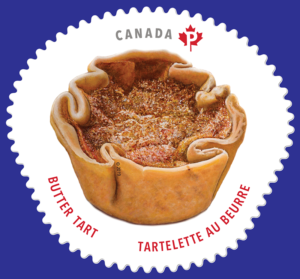
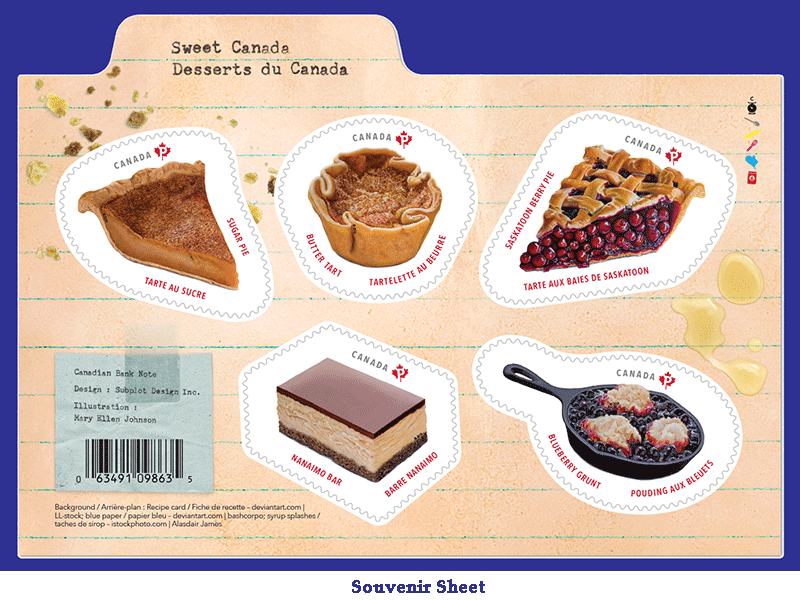
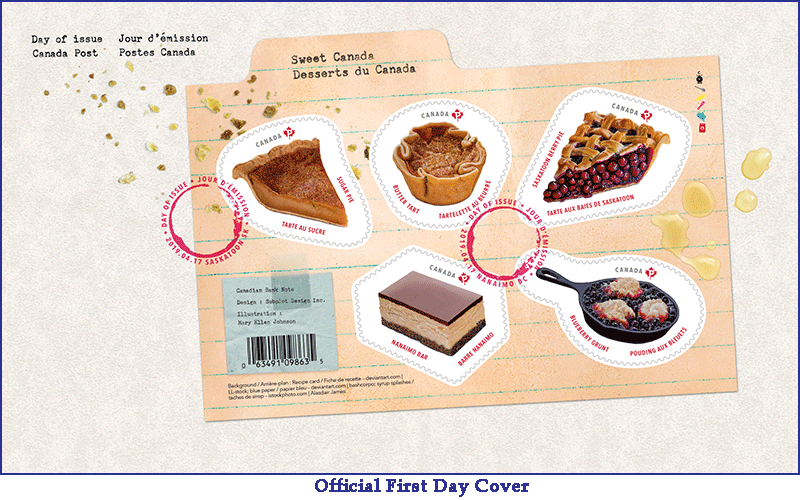
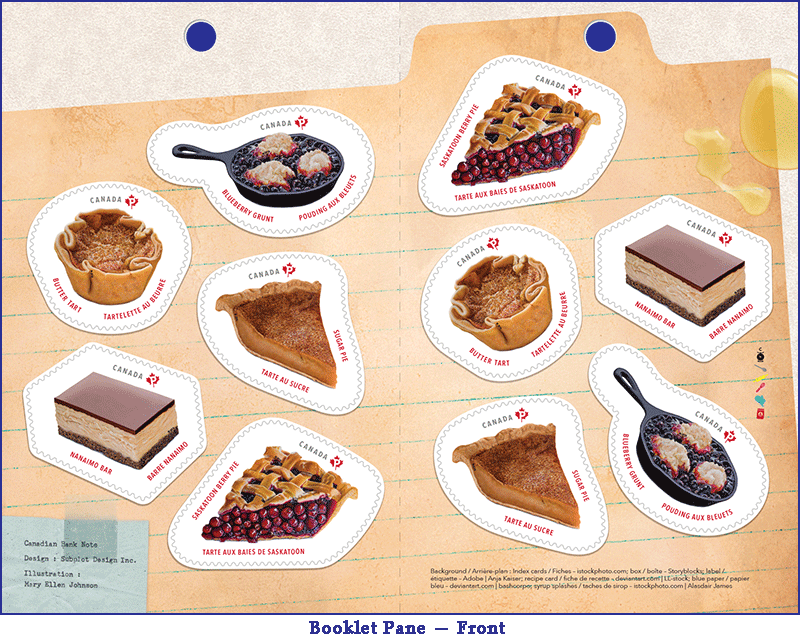
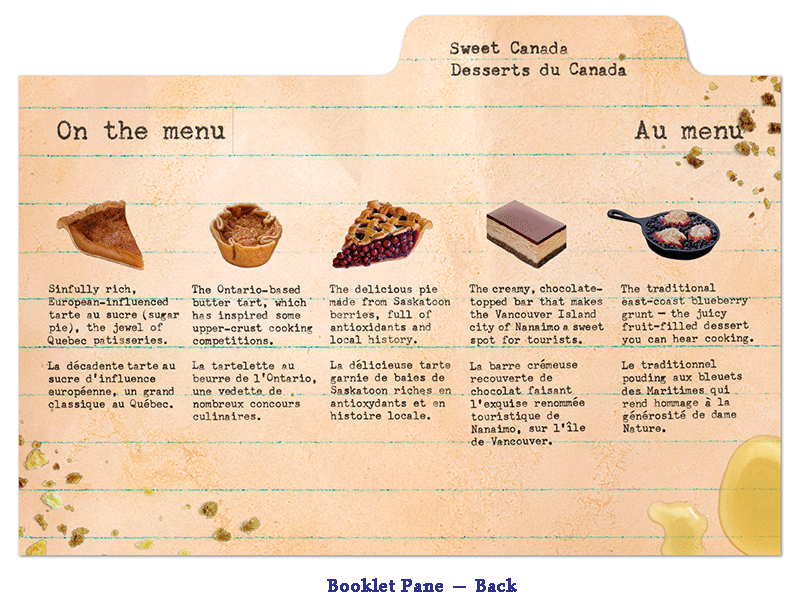
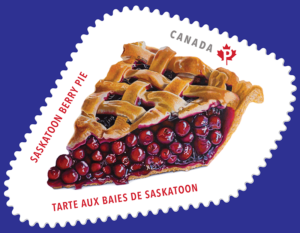 Our country’s traditional desserts offer more than just a scrumptious way to end a meal – their origins are a tasty part of our history. These stamps give you a chance to discover the sweet stories behind some of our favourite treats.
 a recipe card-inspired design that shows a truly satisfying slice of creativity.
 antioxidants. Their name is derived from the Cree word misâskwatômina, which also inspired the name of the city of Saskatoon, meaning “at the Saskatoon berry.”
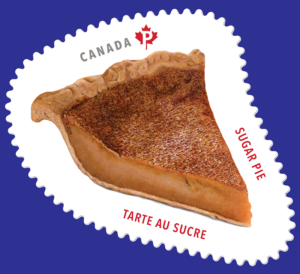 A staple of Quebec patisseries, sugar pie (4) (tarte au sucre) traces its origins to France. Colonists brought the recipe for the pie along with them – but since brown sugar was a rare commodity in New France, early French-Canadian versions used maple syrup as a sweetener.


 Australia Post is commemorating Anzac Day this year by focusing on the theme of peace in 1919 – the year in which official World War I peace treaties were signed and celebrations, such as Peace Day, occurred throughout the British Empire.
 Anzac Memorial Day 1919 souvenir program ($1) published by the Victorian Branch of the Returned Soldiers and Sailors League for Anzac Memorial Day, 1919. The cover artwork by Melbourne firm Goldsworthy and Davey features a figure based on the Roman Goddess of Peace and incorporates both the dark skies of war and the sunny skies of peace.
 The handbook deals with every postal and philatelic aspect representing the three sides of the war and includes abundant related history pertinent to the context of this conflict.
 American Philatelist editor Mark Kellner is leaving that post at the end of April, The Virtual Stamp Club has learned. He became AP editor at the beginning of 2019 when Martin Miller left.
 The American Topical Association is recruiting for an executive director, as Vera Felts (below right) is planning to retire after 10 years of service to ATA. Applications are now being accepted.
 shows. The position requires strong organization skills and accurate record-keeping. Member communication is frequent, by mass mailings, email and phone. Experience in the philatelic arena is required. Experience in graphic design and website management is a plus.
 Dassault Mirage IIICj
 ATM Rates: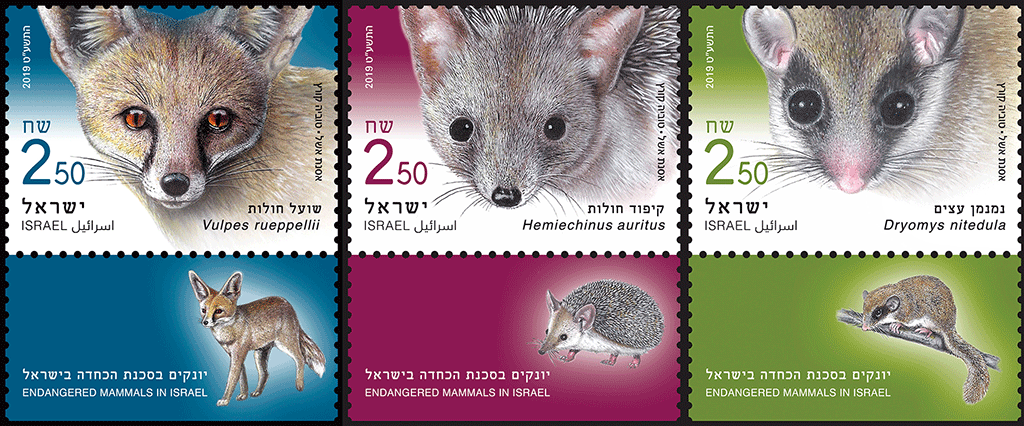




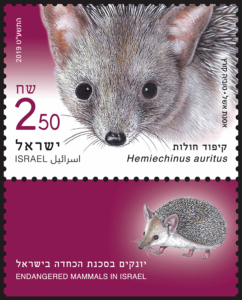
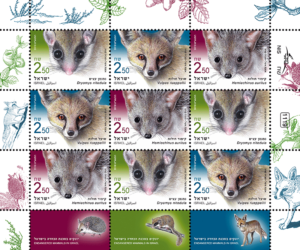 in a different area and habitat. All of these habitats are disappearing, be it loess covered areas, desert sands in the Negev or Mediterranean forests. The destruction of natural habitats is the most severe problem plaguing our world’s wildlife, and Israel is no exception.
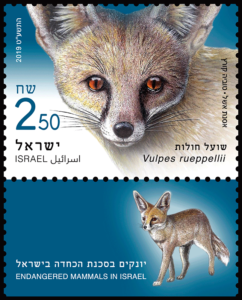 special effort to preserve them and their habitats.
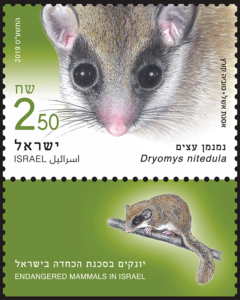 The Forest Doormouse is a small, stealth rodent that is active at night and few ever see it. It has a black “mask” on its face and a long, bushy tail. This species builds round nests in treetops, and spends its days sleeping there. At night it searches for acorns from oak trees and fruit in its