Financing A Stamp Collection On A Tight Budget
By John M. Hotchner
If it’s true that there is no such thing as a free lunch, then stamp collecting is subject to the rule. One of the reasons that our hobby is not embraced as a serious pursuit by young people (by which I mean those from 10 to 50), is that it costs money, and those are the years when potential collectors usually have other, more pressing uses for relatively scarce dollars. Later in life, the kids are grown and on their own, housing needs are not so much a drain, the outflow of dollars associated with the 9-5 job is mitigated by retirement, and those who have planned for retirement often have disposable income that can be devoted to a wide range of pleasurable activities that were harder to justify when younger.
 But speaking as one who started as a young teenager and never quit (and we are a distinct minority) I want to pass along the ways I developed to feed my stamp collection in the post- college years when dollars were scarce. How scarce? My first job in the U.S. Foreign Service paid the magnificent sum of $5,194 per year! Though I had steady promotions, they were eaten up by marriage and establishing a home, four children in five years, and the expenses thereunto pertaining. Note, I’m not complaining. I would not have done anything differently. But there was not much left over for hobbies. I doubt things have improved markedly for today’s youngsters.
The first lesson I learned was that I couldn’t/shouldn’t spend family money on stamps. So, where would money come from? As a teenager and at college, I spent most of my lawn mowing/snow shoveling money on stamps. The result was that, as I began my work life, I had a decent collection that was expansive compared to what I actually wanted to get more deeply involved with. So, at the local stamp club, I began to sell off what I didn’t need, and that money went into a separate stamp fund. I used it to buy material for my specialty collections (Christmas seals and AMG material mostly), but also bought collections at auction.
 Auctioneers and dealers, I learned, usually bought col- lections, took the best material out to sell as individual stamps or small lots, and that made their cost and a short-term profit. The leftovers went to auction as collection remainders that often realized no more than 5-10% of Scott Catalogue. I found I could break those collections down into smaller lots for my club auction, where members would be happy to buy at 20-25% of Scott. And since I had been a collector for a while, and knew how to watermark, perforate, tell papers apart, etc., it became a game to identify better items that the collectors and dealers had missed. Since I had time and limited money, I could use the former to rectify the latter.
I also found that buying collection remainders was a great way to fill album holes because 80+% of most countries’ stamps were low to moderate priced stamps that dealers would skip over in arriving at their buying price, and in making up higher priced lots to sell. In those early years, I began collecting several of the countries I visited, and got them to perhaps 70% complete from collection remainders.
Meanwhile my stamp account was getting healthy enough that I could buy the occasional better stamp or set for my serious collections.
Another thing I learned is that discretionary money means just that. I could buy lots of cheap stamps and fill a bunch of album spaces, or expensive stamps in poor condition to do the same. But something my father told me registered. He said that cheap stamps will almost always remain cheap. And damaged stamps, unless great rarities, will also remain cheap. So, I made a decision to spend my money on good stamps in Fine or better condition, and the occasional rarity if in sound condition and it looked good from the front.
I was not thinking of myself as an investor, and still don’t. But I am mindful of the fact that at some future time, my heirs will be selling my collection, and the better the stamps and the better their condition, the easier they will be to sell. And it pleases me to know that, unlike greens fees, concert tickets, and fine wines consumed, all of which have no value once the event is passed (though the money will have bought wonderful memories), my collection will have value to those who come after me.
In my early years, stamp clubs were essential to me; not only for selling, but for buying and trading. We’ll get to the latter in a moment. But just as I was selling excess material, other club members and sometimes their heirs, were also using the monthly club auctions (and some clubs had sales book systems as well) to do the same.
Club auctions were then, and remain, a bargain-hunter’s paradise. Sellers don’t expect to get full catalogue. The club auction, as compared to other methods of selling stamps (and covers), is fast, low on paperwork and commissions, and the income is immediate.
These days sellers can also use eBay, APS Stamp Store and the like, but for the bread-and-butter material that every collection needs, the club auction remains a staple.
Now, let’s talk about trading. In some sense this seems to be a lost art, but it was for me, and remains, a great method of acquiring material, and there are no taxes involved since no money is changing hands!
Again, your local club, and national societies where you meet others with your interests, are a key to trading. There are several methods: trading according to catalogue value; stamp for stamp or cover for cover, and if mint stamps are involved, face value for face value.
You can, and most people do, trade duplicates. But what is essential is that you are getting something you really want, and to do that, you may decide to trade material that is in your collection for something that you want even more. An example: In my Christmas Seal collection, I began collecting everything I could get my hands on. Eventually, I found I liked the 1934 design best, and found it to be a worthy challenge to gather material to illustrate its history, production, use, and the items used to market it.
Another collector had material I wanted. He would not sell it. But I had some 1913 material he wanted, and though I liked it, it was not as important to me as the 1934 items he had, so we swapped. In cash value, he probably got the better of the deal. But I’d make that trade again in a heartbeat. The point here is that trading can sometimes go in unusual directions, and so long as both collectors involved are happy, it is a good trade.
One final thought before I close. Sometimes I saw items — both with dealers and collectors — that were available, and that I wanted, but were in the “I could never afford that” category. If we are a prisoner of our own thought processes, most of us interpret that concept as “I could never have enough money at one time to pay for item X”, and that may well be true.
But I learned early to offer a down payment, with a promise to pay off the remainder owed on a schedule, over a reasonable amount of time. I have never had a seller turn me down. And I have never defaulted. That is because of two things:
- Having made that contract, I am motivated to sell material so that the money would be there when I needed to write a check. I might mention that I met someone at the local club who was happy to pay me to do his washing and cataloguing. What he paid was far short of minimum wage, but it was welcome and useful.
- Sometimes, the reaction “I could never afford that” does not arise from a lack of money so much as from how you have chosen to allocate what you have. Several times I have found that I could afford something I wanted badly if I were willing to reallocate how I had planned to spend what I had. It was a matter of deciding what I wanted more, and exercising some level of flexibility.
The bottom line to this discussion is that being young with financial responsibilities need not mean that you can’t be a stamp collector. It does mean that you have to look for ways in which you can generate income to have a nest egg to be able to purchase material you want and need. And you need to use resources you have available like your local stamp club, the knowledge you have accumulated, and time. With moderate expenditures you can have a lot of fun and build a satisfying collection.
Should you wish to comment on this column, or have questions or ideas you would like to have explored in a future column, please write to John Hotchner, VSC Contributor, P.O. Box 1125, Falls Church, VA 22041-0125, or email, putting “VSC” in the subject line.
Or comment right here.

 from the USPS Postal Bulletin May 9, 2019:
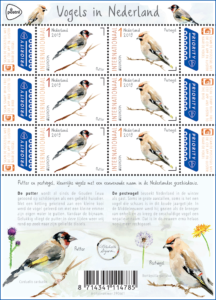 PostNL has released new stamps on April 23 for international destinations, with illustrations of the putter and the plague bird. These two colorful birds have an age-old name in Dutch history. Both illustrations were made by Michelle Dujardin, the stamp design by art director Yvonne Warmerdam.
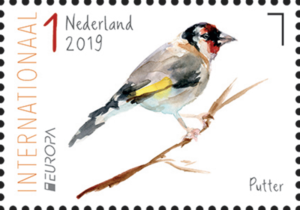 have its characteristic minimalist style: realistic, with a slight abstract-impressionistic touch. Michelle: “The putter and the plague bird are consciously set against each other. They fit well together, all 2 start with a p and both have a striking nickname. And they also form a beautiful contradiction – one loved, the other feared. While both are very beautiful birds. ”
 As a follow-up to the issue for PostEurop, PostNL will issue a second stamp sheet on 20 May 2019: Garden Birds in the Netherlands. On this issue there are illustrations of 6 garden birds: blue tit, winter king, robin, house sparrow, golden rooster and great tit. Michelle Dujardin also provided the illustrations for this issue and Yvonne Warmerdam the design.
 Australia Post is marking the International Year of Indigenous Languages 2019 with a commemorative stamp celebrating the more than 250 indigenous languages in our nation’s history.
 Board of Vice Presidents (run as a team of 3):
 The five stamps on the 50 years of Pinkpop issue depict the special anniversary logo of the popular festival. The typography in the white frame was printed in gold to give the anniversary an extra sparkle. The stamp sheetlet also contains a description of the unique event, with photos and promotional material from the rich history of the past fifty years.
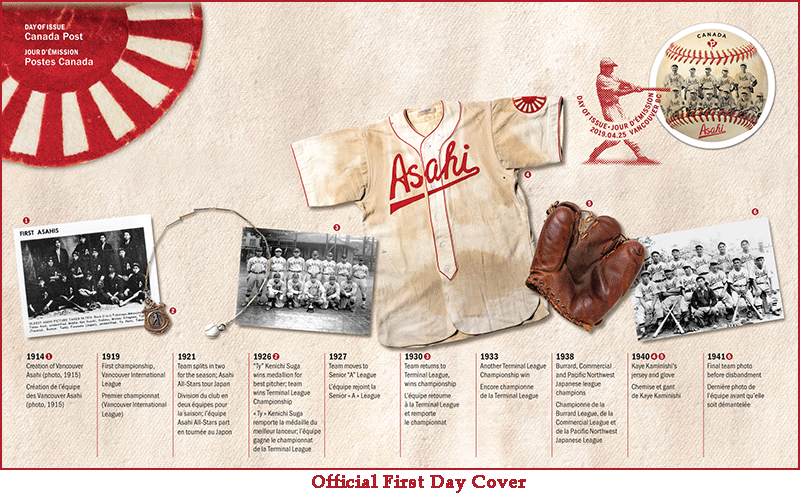
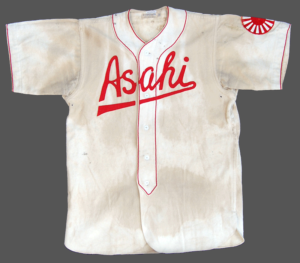 BURNABY, BC, April 18, 2019 /CNW/ – Canada Post invites you to the unveiling of the stamp commemorating the Vancouver Asahi baseball team on Wednesday, April 24. The baseball team, made up of Japanese-Canadians, was formed in 1914 and played until 1941.
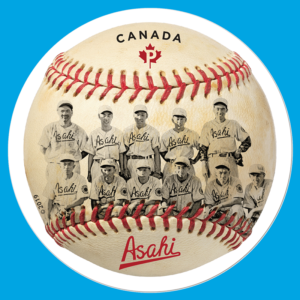 BURNABY, B.C. – Canada Post today released a stamp that honours an amateur Japanese-Canadian baseball team that helped remove racial barriers through sport.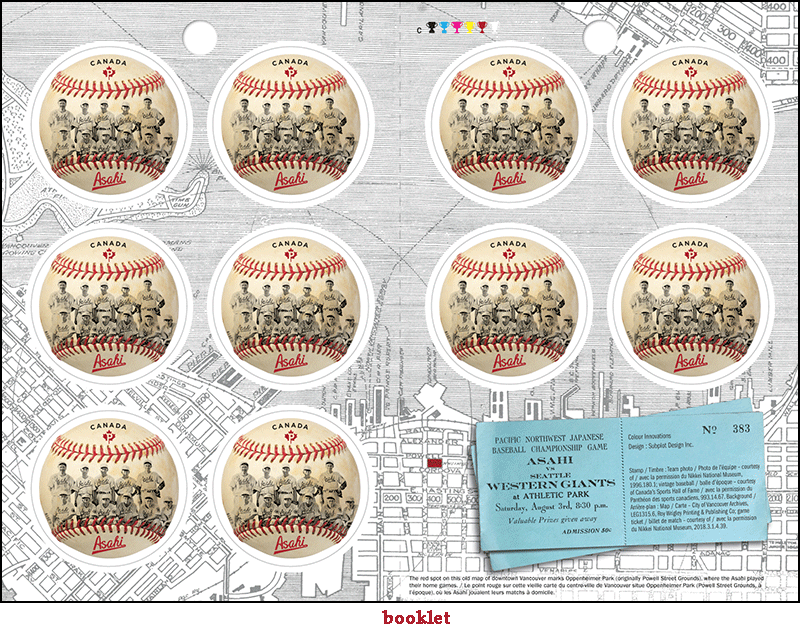
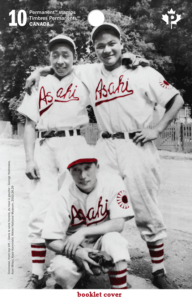 Kaye Kaminishi, a third baseman and the last surviving member of the Vancouver Asahi, helped unveil the stamp at the Nikkei National Museum & Cultural Centre. Ninety-seven today, he was joined by players from the Asahi Baseball Association, which was inspired by the original team.
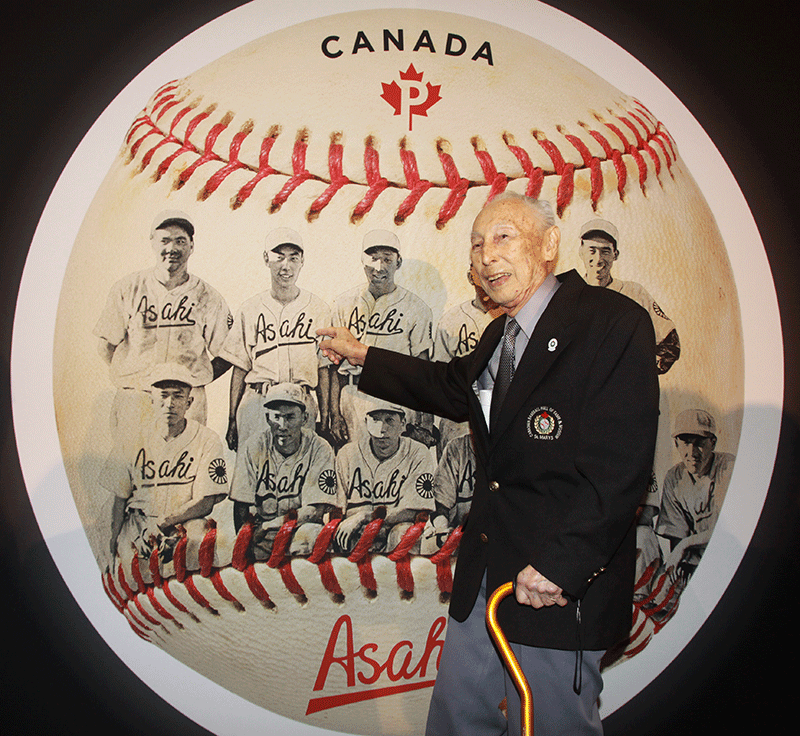
 Kaye Kaminishi, actor George Takei and current members of the Asahi team.
 Takei and Kaminishi. Photos courtesy Pinpoint National Photography/Canada Post.
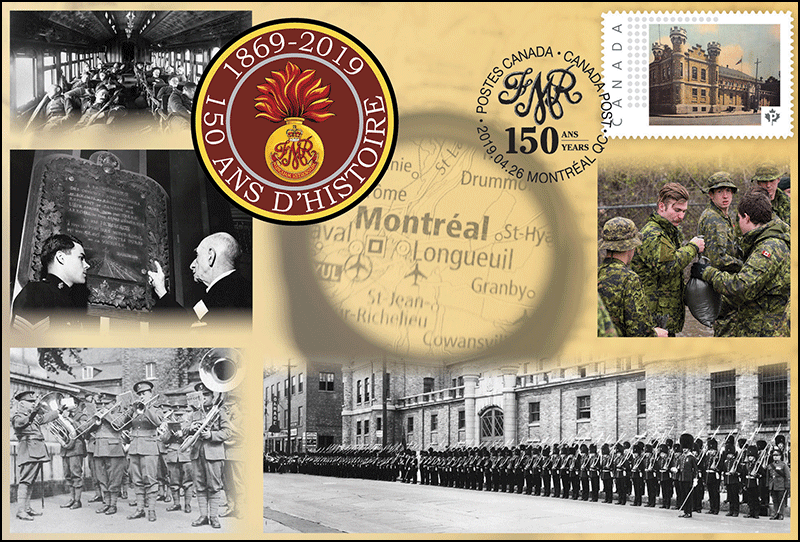
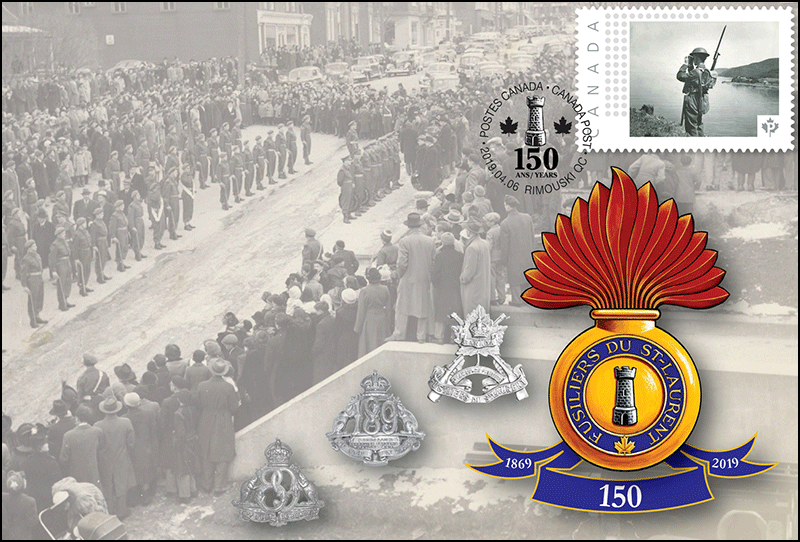
 Fusiliers du St-Laurent
  Fusiliers Mont-Royal
 Princess Louise Fusiliers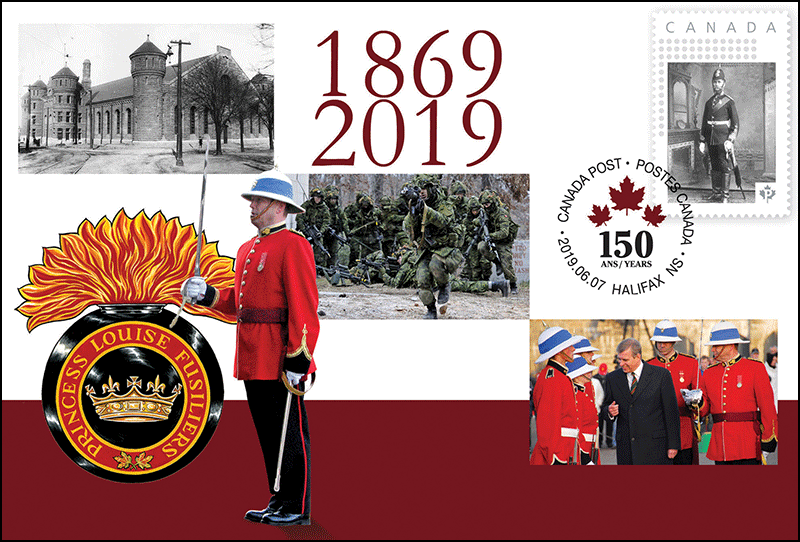
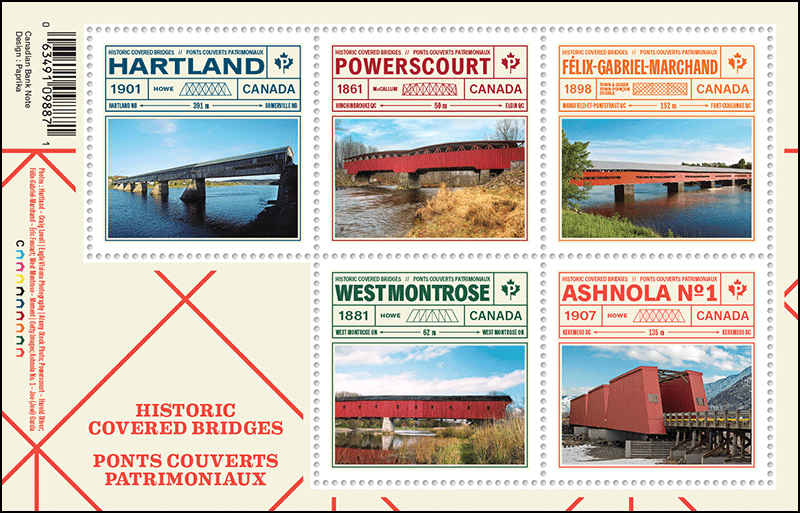 At the end of the 19th century, there were more than 1,400 covered bridges in rural communities across Canada. Today, only an estimated 140 remain.
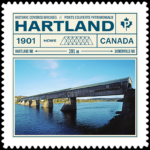 Opened in 1901 and covered in 1922, New Brunswick’s Hartland Bridge is the longest of its kind in the world, spanning 391 metres. An engineering marvel, it boasts seven heavy-timber Howe trusses supported by six piers.
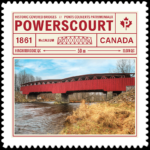 Also known as the Percy Bridge, Quebec’s Powerscourt Bridge, built in 1861, is one of Canada’s oldest covered bridges and the only known example of the McCallum inflexible arched-truss design that is still in existence.
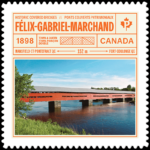 The Félix-Gabriel-Marchand Bridge, extending 152 metres from end to end, is Quebec’s longest covered bridge and one of its oldest. Built in 1898, it is unique in the province for its combination of Queen Post and Town lattice trusses.
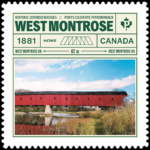 Ontario’s last remaining historic covered bridge, the 60-metre West Montrose Bridge – opened in 1881 over the Grand River – features Howe trusses and louvered window openings.
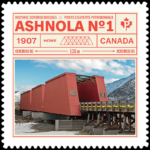 British Columbia’s Similkameen River, was completed in 1907 and rebuilt in 1926 with its Howe trusses sheathed in wood panelling and cross-bracing exposed overhead. It was converted for automobile use in 1961.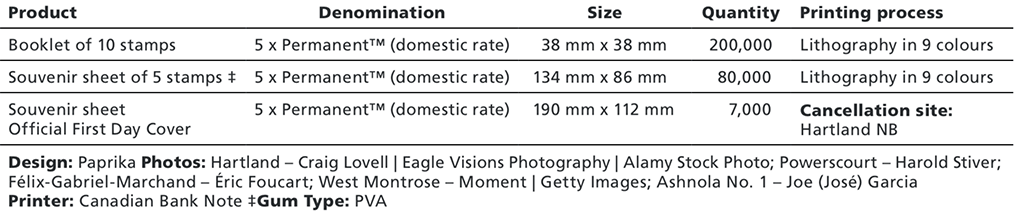
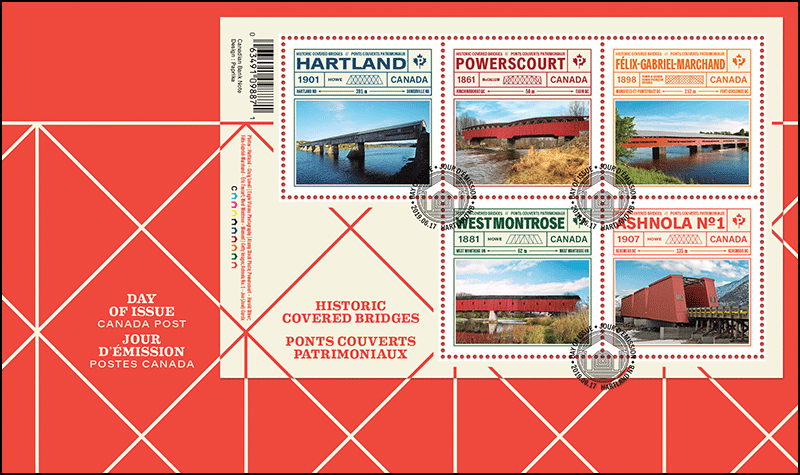
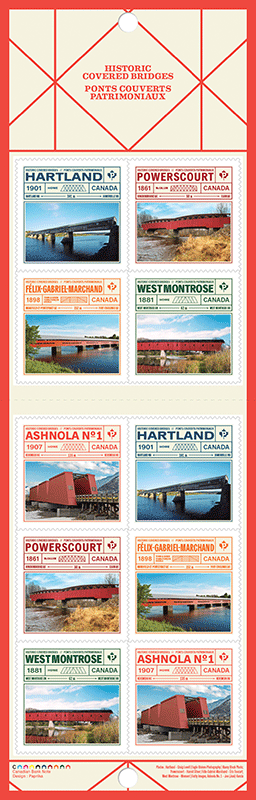 OTTAWA, June 17, 2019 /CNW/ – Built in a bygone era as vital transportation links spanning rivers, covered bridges are now also portals that invite the imagination back to the age of steam locomotives and horse-drawn buggies.
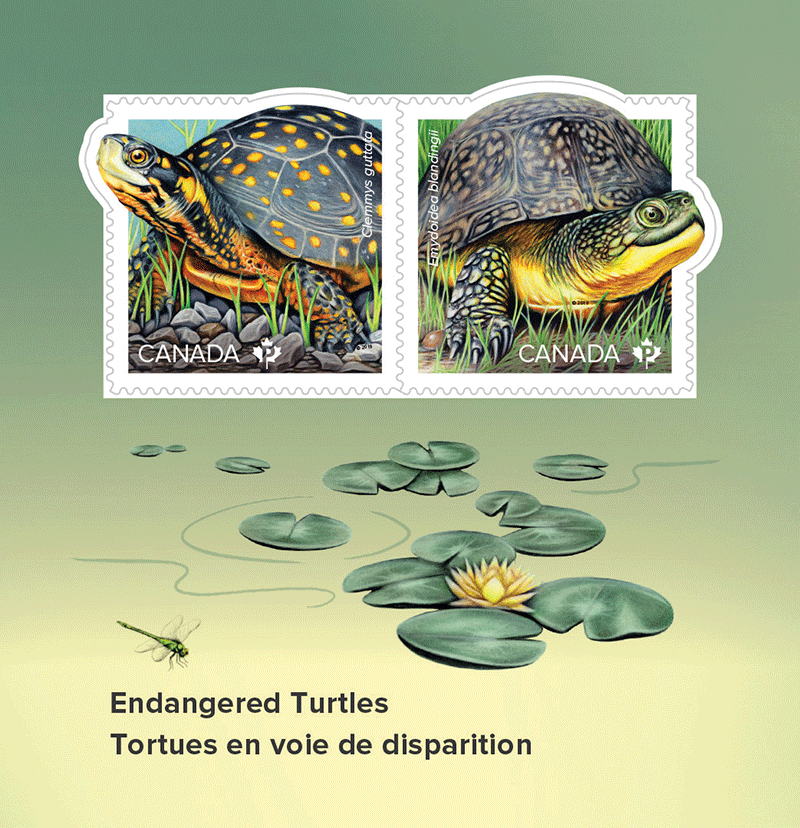
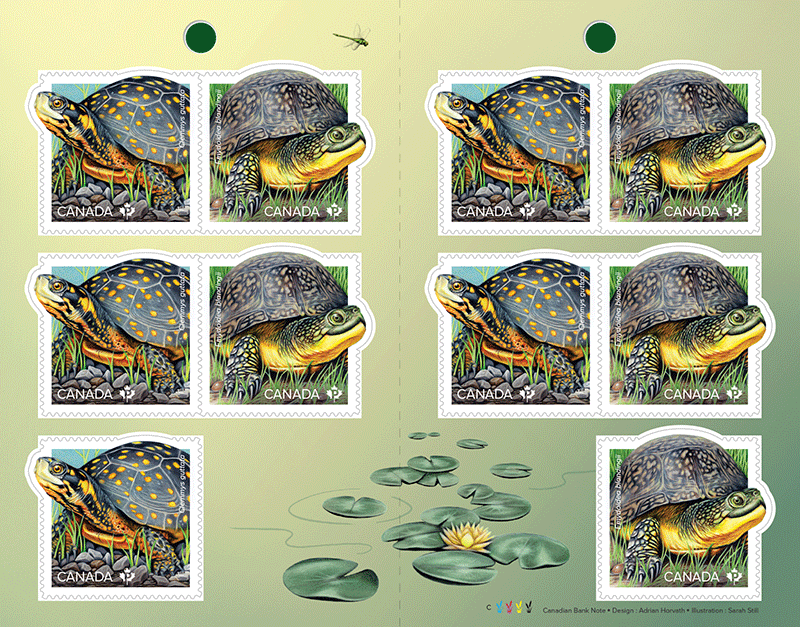
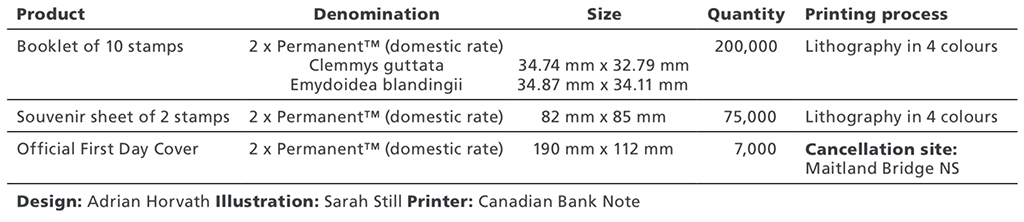
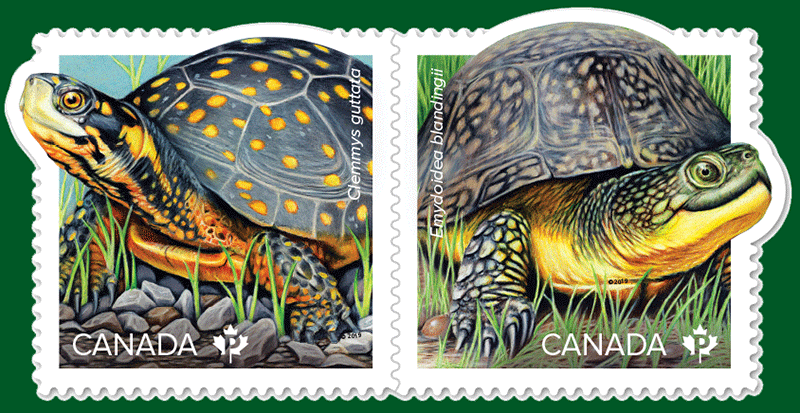 With spring in full swing – and camping, canoeing and cottage life just around the corner – you might soon encounter one of Canada’s eight freshwater turtle species. These stamps showcase two species that have been assessed as endangered by the Committee on the Status of Endangered Wildlife in Canada (COSEWIC).
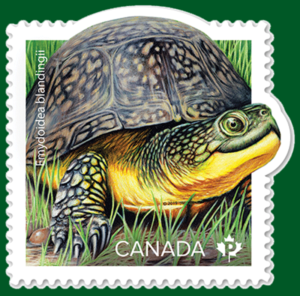 In Canada,
 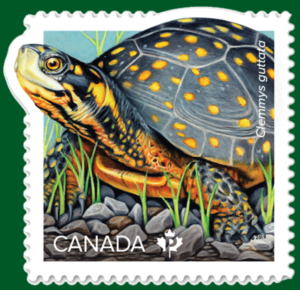 Canadian populations of the