By John M. Hotchner
I’ve just gotten to the long put-off project of updating my U.S. albums — used stamps only — and that has required paying attention to catalogue listings; not so much values as numbers, what can be washed and what can’t, year-by-year programs, and such. And that has provoked some random thoughts.
 When I began collecting stamps in earnest, in 1954, at age 11, there were barely 1000 catalogue numbers after 107 years since the first U.S. stamps were issued. In the 74 years since then, the U.S. has issued another 4300+ stamps. The midpoint, catalogue number 2650, was issued in 1992, with a First Class letter rate of 29¢. Which means we have had about 2650 U.S. stamps (ignoring air mail, postage due, officials, and other Back of the Book issue) in just the last 26 years.
Many of the U.S. stamps from the very beginning to those of today have varieties and subvarieties. What this means is that collecting the entire country has become a mammoth undertaking — even if we limit ourselves to a single copy of each major variety. Projecting into the future, at roughly 100+ new stamps per year, the challenge will become gargantuan over the next 25 years — assuming we still need or want stamps in the next 25 years!
Let’s look at another aspect: Our first stamps in 1847 were denominated at 5¢ and 10¢; the former for letters sent up to 300 miles, the latter for over 300 miles. Shortly thereafter, in 1851, the basic rate was reduced to 3¢ for up to 3000 miles and 5¢ for beyond that distance. On October 1, 1883, the domestic First Class letter rate was set at 2¢, regardless of distance. And there it sat for nearly 50 years; except for 1917-19 when a penny was added for postage on letters (really, a semi-postal rate, as the additional penny was intended to help pay for the costs of American involvement in World War I.)
 The 2¢ rate ended on July 6, 1932, when the 3¢ rate came into force. Twenty-six years later, it was increased to 4¢ on August 1, 1958. And the march to higher rates with ever shorter time spans began in earnest. In recent years, there have been nearly annual rate increases (though there was a hiccup in April, 2016, when a court directed the USPS to reduce its 2014 49¢ rate to 47¢ because the increase to the 49¢ rate had been improperly processed. Eight months later the 49¢ rate came to stay, last year it became 50¢, and this year, it went to 55¢.
Some of the sting of recent rate increases has been removed by introduction of the Forever stamp concept in 2007. Had you bought heavily in 2007, the 41¢ you paid then per stamp would now be carrying 55¢ letters. Of course, some of that gain would have been eaten up by inflation. And the USPS would have had your money all this time instead of you having it in the bank earning interest. You have to figure that the USPS knew what it was doing, and did not expect to lose money on the Forever deal. In fact, virtually all First Class stamps are now issued with the word “Forever” as a part of the design, and the concept has been extended to other types of mail as well.
The bottom line is that collecting U.S. stamps has become more expensive if looked at it purely from the standpoint of cost per First Class stamp — especially if we collect mint U.S. Ah, but I hear you say, today’s dollar is not what it used to be. To be fair, the present First Class rate has to be seen in the context of inflation. In other words, 2¢ in 1900 is not the same as 2¢ in 2018.
The website in2013dollars.com is helpful in understanding this. A single 1900 dollar could buy what it takes $30.42 to buy in today’s dollars. The 1950 figure is $10.33, and the 2000 figure is $1.45. Using their calculator, the 2¢ you paid for postage in 1900 is the same as 61¢ in today’s money. And that means we are getting a bargain.
Looked at another way, we really do get a bargain. Our domestic letter mail cost is among the lowest in the developed world; made possible by the volume of mail sent in this country: around 40% of the world’s total. Nowhere else in the world can you send a letter as far for as low a rate.
But we buy much more than First Class stamps. For example, the numbers of dollar stamps these days greatly exceeds (what with Priority Mail and Express Mail) the numbers of dollar stamps issued through the 1954 Liberty issue of my youth. And as I think back to the few 1¢-5¢ booklet panes which I treasured in my youth, today’s output of booklets is staggering when one considers the range of stamps in booklet form, and the varieties of booklets.
What is on our stamps? The earliest U.S. issues celebrated the Founding Fathers, which was gradually expanded to presidents and other prominent politicians and government (including military) officers.
The the first tentative steps toward expanding subject matter of stamps began with the 1869 issue, advanced with the 1893 Columbian Exposition issue, and really began to flower with the 2¢ red commemoratives starting in the mid-1920s. But the people honored remained mostly those in the above categories.
Expanding the categories of people was begun in 1940, with the Famous Americans issue of 35 stamps; five in each of seven categories (Authors, Poets, Educators, Scientists, Composers, Artists, and Inventors).
Today, we have taken what was a good thing and arguably gone round the bend with a majority of our stamps being devoted to pop culture, and sports, fruits and other edibles, pets and flowers. Whereas our stamps of the first 100+ years were devoted to the people, events, discoveries that made America great, we now overwhelmingly celebrate what will sell.
Let’s look at a few more changes. Multicolor stamps — actually only two colors to start with — were a rarity from 1869 when they first appeared, and were the exception rather than the rule into the late 1950s. The first year that more U.S. commemoratives were issued with multicolor designs than as single color was 1961. The reason tracks to advances in printing technology that made multicolor stamp production more reliable, faster and cheaper.
The same advances in printing technology also resulted in our much lamented leaving the era of line engraved stamps in favor of surface-printed and photogravure printing. Many feel strongly that the trade-off of routine multi-color stamps in place of the beauty of quality intaglio printing was a mistake. Why couldn’t we stick with engraved multi-color stamps? The Postal Service felt the higher cost couldn’t be justified.
The early 1960s also saw another imperative for multicolor stamps — the fact that another “color” was being added in the form of tagging; made necessary by the requirement to automate mail handling in the interest of speed and cost control. That has blossomed into its own specialized field with different tagging compounds, formats (overall, block and stripes), and tagging embedded in the paper that comes from the manufacturer so that it doesn’t have to be added by printing.
And we can’t forget the advent of self-sticks, introduced in 1974 and used now and then until the self-stick experiments of the early 1990s, which quickly morphed into nearly the entire production of U.S. stamps being produced in self-stick form. Granted, the public loves it, and we collectors might also — had it not come with a terrible surprise: Almost all used self-stick stamps are difficult if not impossible to wash from the envelopes that carry them. The USPS has not seen the cost of adding a washable layer to stamps, thus making self-sticks collector-friendly, as being worth the cost.
And so, time, fashion, and technology march on. Whether the result in our issued stamps is a net positive or negative for U.S. stamp collectors can be debated ’til the cows come home.
On balance, I think it is a less attractive hobby to newcomers than it used to be, and I regret having to say that. But it can be just as absorbing and fascinating once a collector is hooked, and for that reason, I don’t fear for philately’s demise as some do.
U.S. stamps will continue to change. It is not in our power to stop change. What is in our power is to resolve to adapt to the changes as best we can rather than simply railing against them.
Should you wish to comment on this column, or have questions or ideas you would like to have explored in a future column, please write to John Hotchner, VSC Contribu-tor, P.O. Box 1125, Falls Church, VA 22041-0125, or email, putting “VSC” in the subject line.
Or comment right here.

 Some of Australia’s native bees are set to appear on a striking commemorative stamp issue to be released by Australia Post this May.
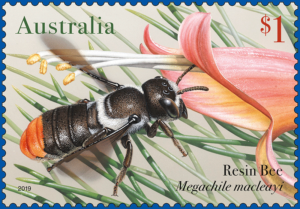 $1 Resin Bee (Megachile macleayi)
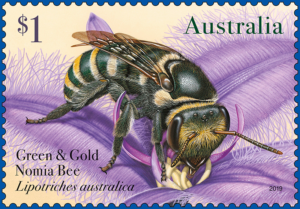 $1 Green and Gold Nomia Bee (Lipotriches australica)
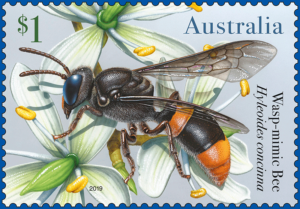 $1 Wasp-mimic Bee (Hyleoides concinna)
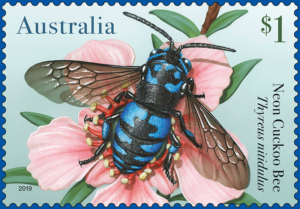 $1 Neon Cuckoo Bee (Thyreus nitidulus)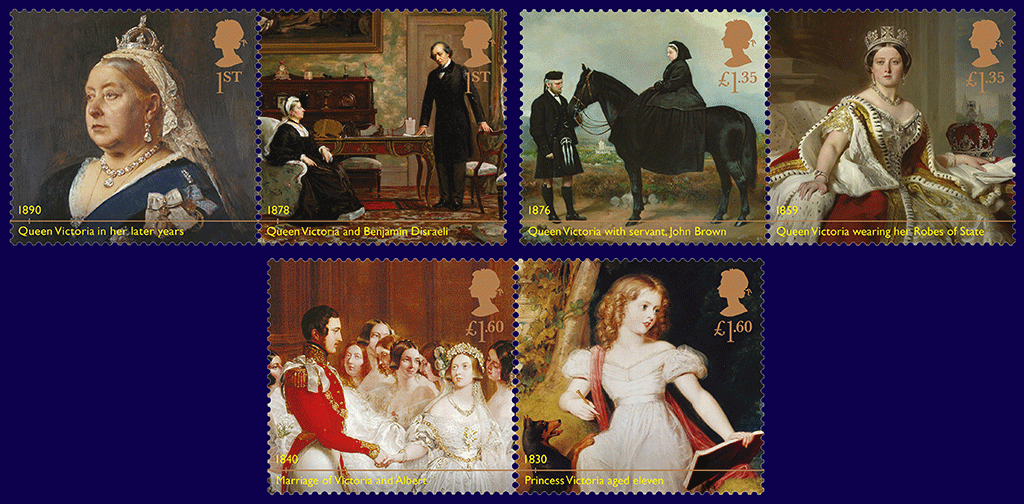
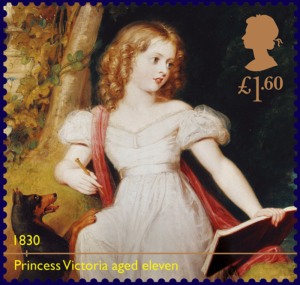 Stamps AS4583 £7.30
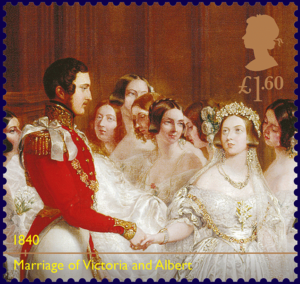 Design: Webb & Webb Design
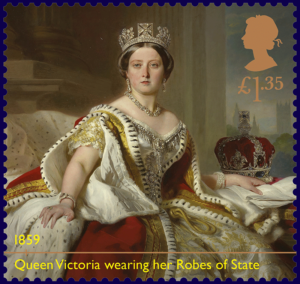 Victoria when a Girl by Richard Westall, Royal Collection Trust/© Her Majesty Queen Elizabeth II 2019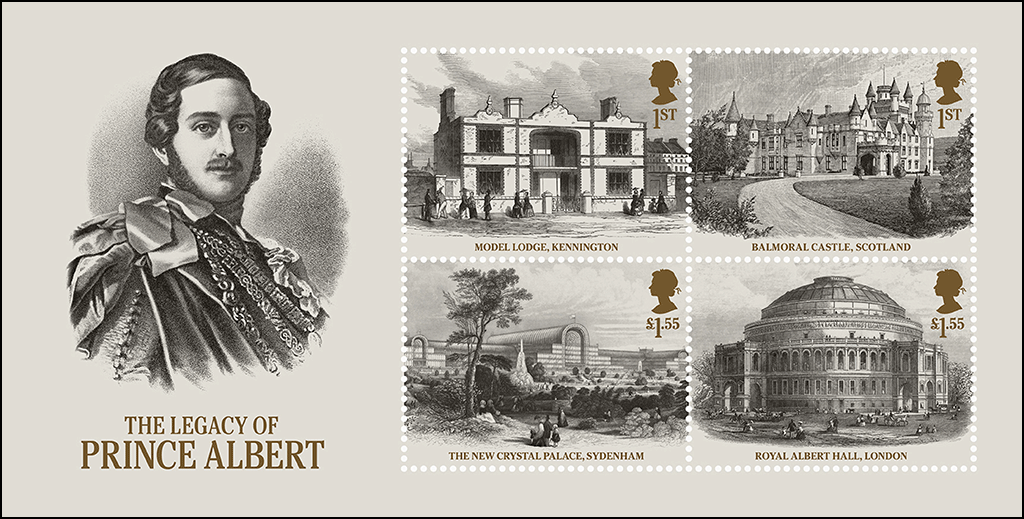
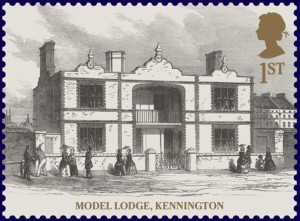
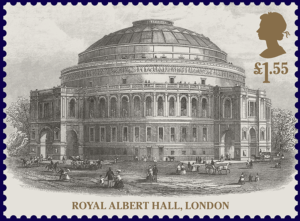
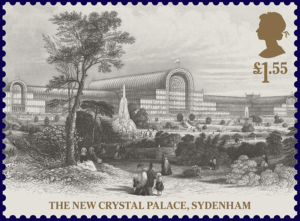
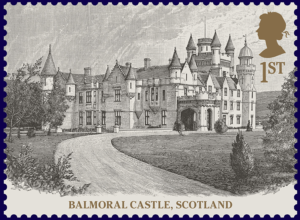 Acknowledgements: Background image – Albert Prince Consort © Hulton Fine Art Collection/Getty Images; Model Lodge, Kennington, Private Collection/© Look and Learn/Illustrated Papers Collection/Bridgeman Images; Balmoral Castle, Scotland, Private Collection/© Look and Learn/Bridgeman Images; The New Crystal Palace, Sydenham © Science & Society Picture Library/Getty Images; Royal Albert Hall, London, Private Collection/© Look and Learn/Peter Jackson Collection/Bridgeman Images
 Miniature sheet size: 146mm x 74mm
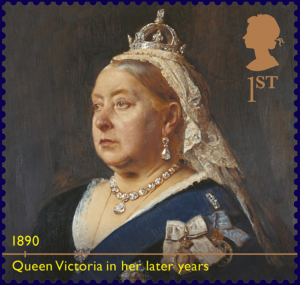
 The Presentation Pack contains all six special stamps plus the Legacy of Prince Albert miniature sheet in a separate carrier. The pack includes an illustrated biography of Queen Victoria reflecting on her life on one side and her long period of mourning following the death of Prince Albert on the other.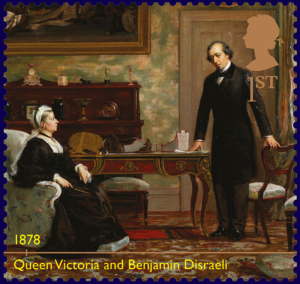
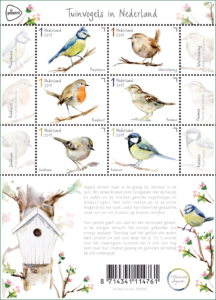 The Hague, 23 May 2018 – On 20 May, PostNL issued a new stamp sheet: Garden Birds in the Netherlands. Illustrations of 6 different garden birds adorn this sheet. Michelle Dujardin provided the illustrations, art director Yvonne Warmerdam was responsible for the stamp design.
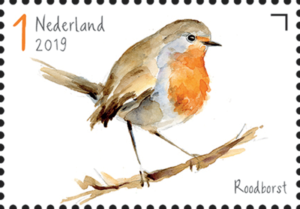 sparrow is sitting on the ground. The illustrations by Michelle Dujardin have its characteristic minimalist style: realistic, with a slight abstract-impressionistic touch. Michelle: “I have chosen 6 common garden birds. They are birds of which everyone at least knows the name. Last summer I saw a golden rooster here in the garden. Striking, because normally you don’t see them often in the west. I have a weakness for the shape of this type of bird, which also includes the wren. Real balls that actually still resemble the egg from which they crawled. On the stamps I have depicted them the way I prefer them. As if every bird is alive, has a soul and could fly up
 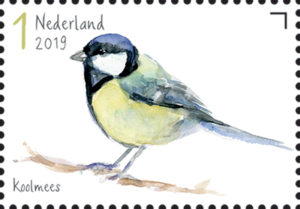 like that.”
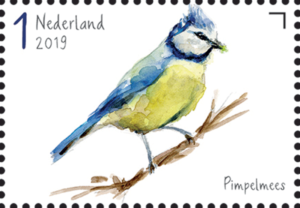 The Tuinvogels stamp sheet in the Netherlands has 6 stamps in 6 different designs, with value designation 1, intended for mail up to 20 grams with a destination within the Netherlands. The stamps have been available since May 20 at the post office in the Bruna stores and via the website. The stamps can also be ordered by telephone from Collect Club customer service on telephone number 088 – 868 99 00. The period of validity is indefinite.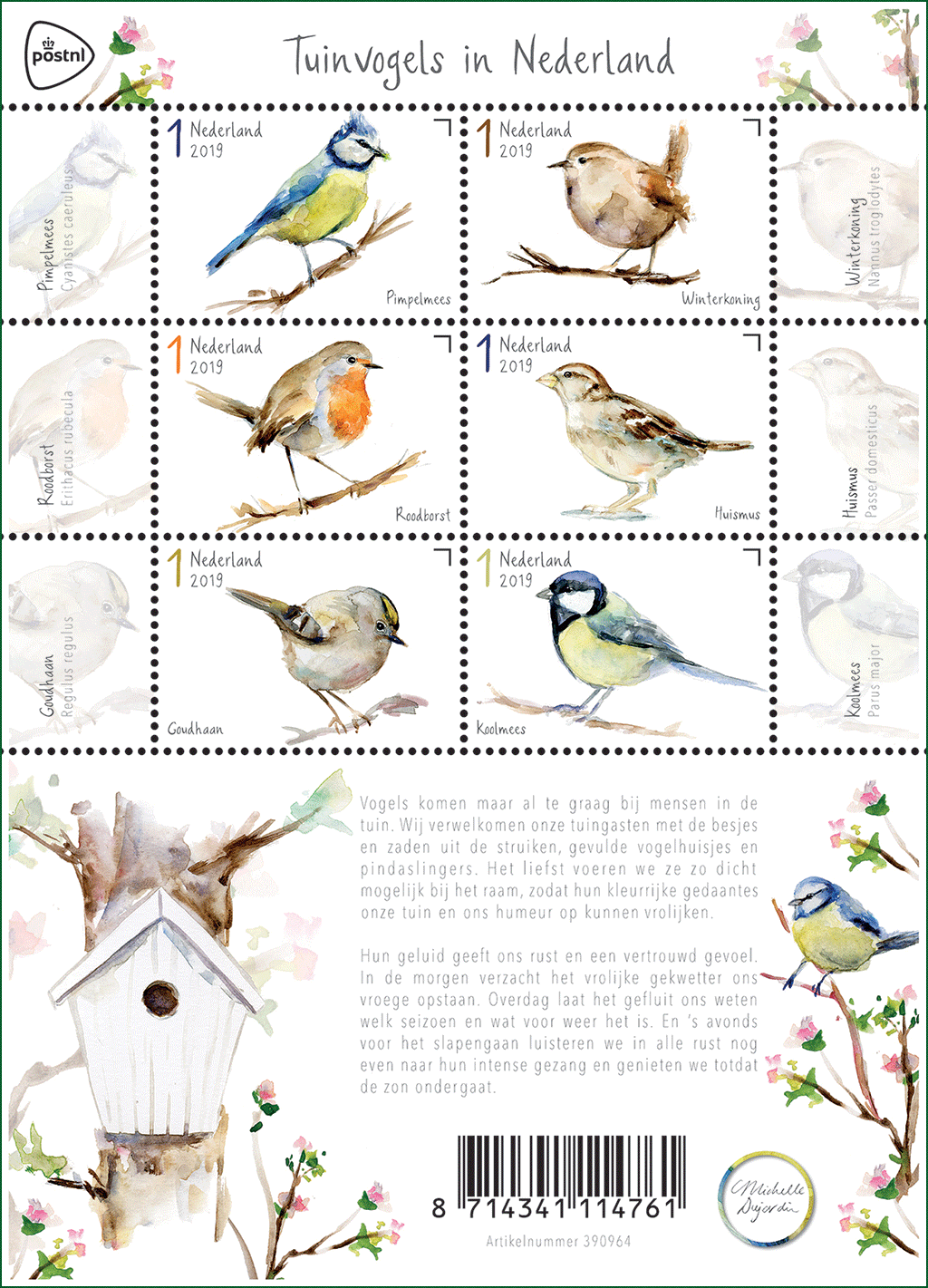
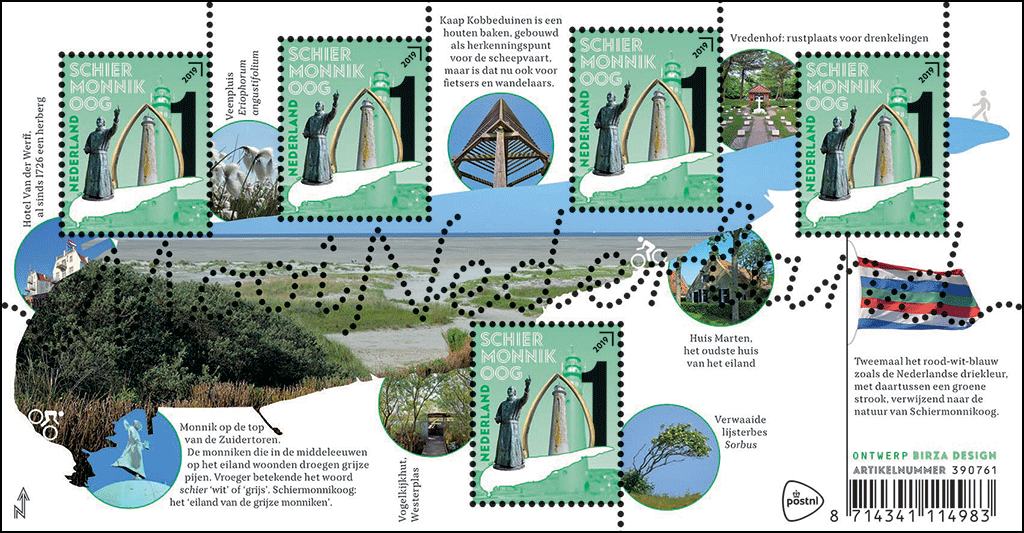
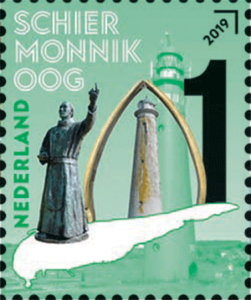 In the design of ‘Beautiful Netherlands 2019: Schermonnikoog’, the island shape plays the leading role. This is reflected in the map of Schiermonnikoog, which the designers have positioned in miniature on the stamps and in large on the stamp sheetlet. The stamps show recognisable images of the island: the current lighthouse (North Tower, Noordertoren), the former lighthouse (South Tower, Zuidertoren), the lower jaw of a blue whale and the statue of theSchiere Monnik (literally ‘the Grey Monk’), both of which are in the centre of the village. The typical shape of the island is also reflected in the design in other ways. For example, the font used for the captions is a ‘stencil font’, made up of elements that are separate from each other.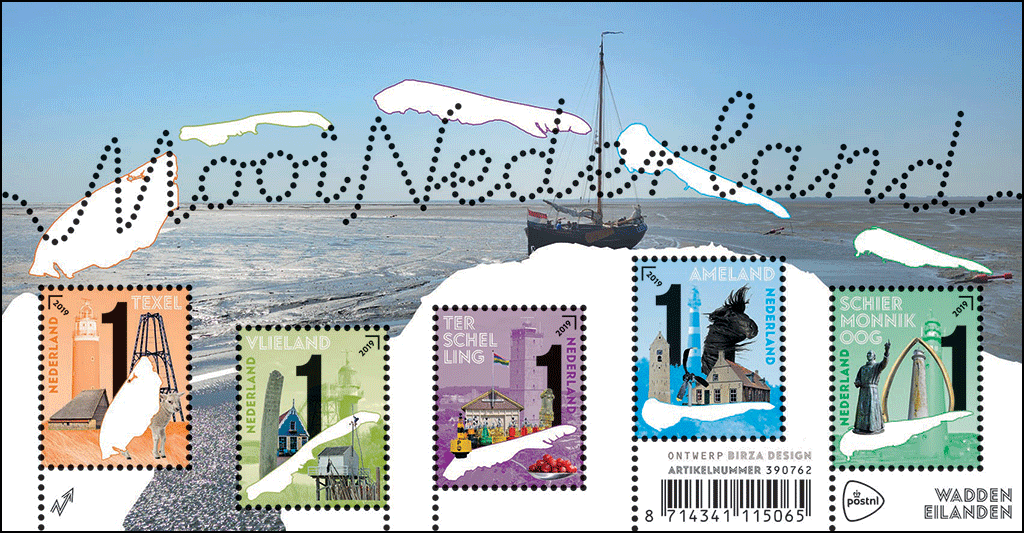
 In a telephone-conference board meeting, the American Philatelic Society Board has approved Gary Loew from Atlanta [right] to replace Tom Horn as Director of Expertising, reports Foster Miller in The Stamp Collecting Forum. He will be moving to Bellefonte and will start June 16.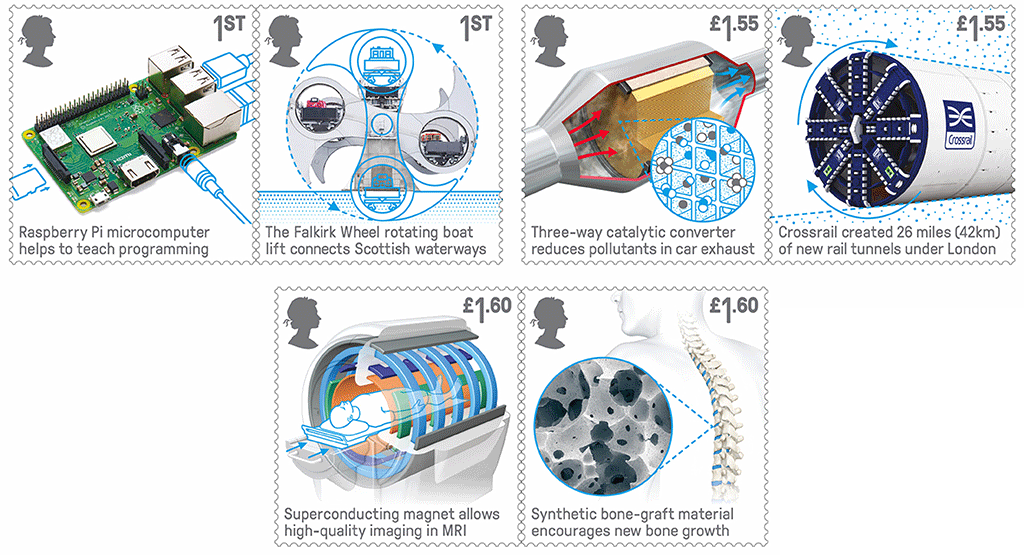
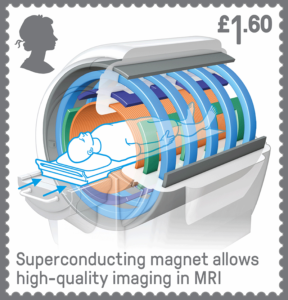 Royal Mail has revealed 10 new Special Stamps to mark Britain’s long and proud history of engineering excellence.
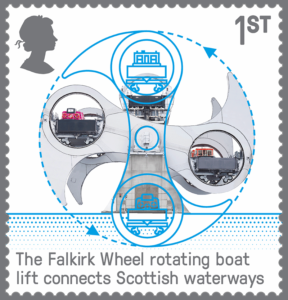
 A collaboration of British engineers and architects produced the world’s first and only rotating boat lift, The Falkirk Wheel, joining two major Scottish canals for the first time in 70 years with a phenomenally beautiful structure.
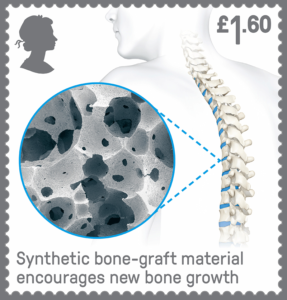 prevent some 20 million tonnes of pollutants from entering the atmosphere, helping to make the world cleaner and healthier.”
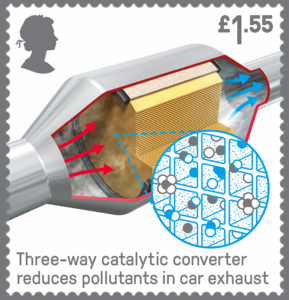 The team at Queen Mary University of London led by Dr Karin Hing, engineered materials that encourage bone growth when used in complex orthopaedic surgeries and have improved the outcomes for hundreds of thousands of patients worldwide.
 people’s lives, but this would not have been possible without multidisciplinary collaboration. Having our engineering of synthetic bone grafts celebrated on a stamp like the Marvel Comics and the Harry Potter books might even impress my kids.”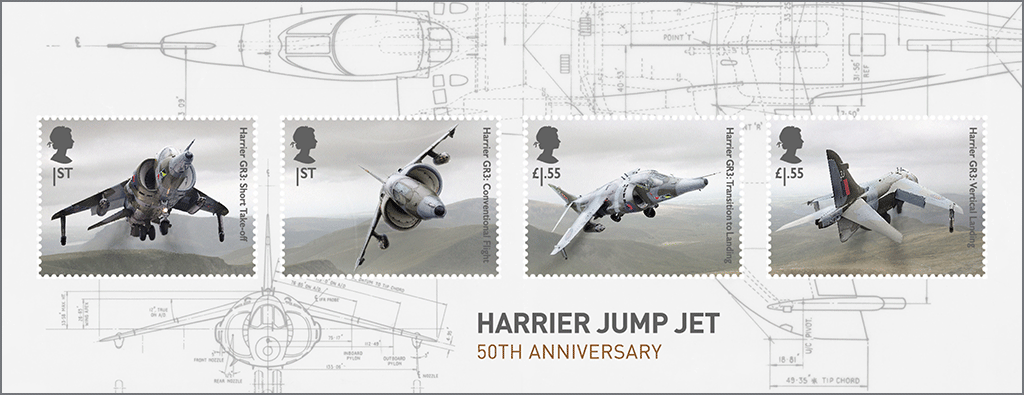
 Some of the innovations celebrated have won the MacRobert Award, bestowed by the Royal Academy of Engineering – the UK’s most prestigious and longest running award for engineering excellence. The award marks its 50th birthday this year.Dr Dame Sue Ion DBE FREng FRS, Chair of Judges for the Royal Academy of Engineering MacRobert Award, said: “The UK is a global engineering powerhouse with many world firsts developed here that have both benefitted our economy and helped to transform people’s lives for the better. This wonderful new set of Royal Mail stamps perfectly encapsulates the technical and commercial achievements made by British engineers over the last 50 years, from the Harrier jump jet to Raspberry Pi. These great British engineering innovations – several of which have won the MacRobert Award, the UK’s biggest prize for engineering innovation – represent an amazing foundation from which to develop exciting technologies for the future.”Philip Parker, Royal Mail, said: “British innovation in engineering is world renowned. This stamp issue proudly celebrates the projects and inventions which showcase this, as well as demonstrating the extraordinary range of disciplines that British engineers excel in.”
 The Hawker Siddeley Harrier was developed from a unique experimental aircraft known as the P 1127, which was capable of taking off and landing vertically. In 1962, British, US and German armed forces procured nine of these aircraft to form a Tri-Partite Evaluation Squadron at RAF West Raynham. Now called Kestrels, these aircraft could take off and land using paved runways, semi-prepared sites in clearings in woods and other confined
  spaces.
 extremely effective ground attack. They could drop precision-guided weapons and operate in poor weather using the latest radar, infrared and optical devices. Because of their remarkable take-off ability, they became known as Harrier Jump Jets.
 Academy of Engineering in 1969. Photographer Richard Cook captured a Harrier GR3 especially for the stamps.
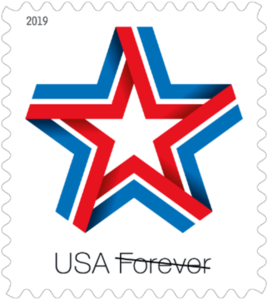 5363 (35¢) Coral Reefs – Elkhorn coral and French angelfish, serpentine die cut 11¼x10¾
 Ho, hum, another American Philatelic Society election. There’s only one candidate per office, so why bother?