 The Virtual Stamp Club has learned that the American Philatelic Society — the biggest stamp collecting organization in the U.S. — has chosen Thomas Loebig (pronounced “LO-big”) for Chief Content Officer. As such, he will be the editor of both American Philatelist and the American Philatelic Literature Review, as well as in charge of APS’ online outreach efforts.
Loebig and his wife live in State College, Pa., so having a CCO onsite won’t be the issue it was with his predecessors, although APS executive director Scott English tells VSC that was not a major consideration. He held a similar position at Accuweather, which is headquartered in State College.
He begins June 25th, which is during APS’ Summer Seminar. He also will attend APS StampShow in Omaha.
[press release]
American Philatelic Society Names New Chief Content Officer
BELLEFONTE, PA, June 5, 2019 – Today, the American Philatelic Society announced Thomas R. Loebig as its next Chief Content Officer. Loebig, an experienced digital media and broadcasting executive, most recently served as Vice President, Digital Media Content and Operations of AccuWeather.
The APS conducted a national search for a Chief Content Officer to serve as editor of the two award-winning journals of stamp collecting, The American Philatelist and the Philatelic Literature Review, the flagship publication of the American Philatelic Research Library. In addition, the Chief Content Officer will be responsible for leading the growth of digital content offered to members and non-members alike through the organization’s website, stamps.org.
“We’re incredibly fortunate to be so close to Penn State University and great corporate citizens like AccuWeather to draw new talent,” said Scott English, Executive Director of the Society, “Tom brings experienced leadership in the digital content field and will help lead the APS and the hobby to serving 21st century stamp collectors.
Loebig, a collector in his youth, has recently reignited his collecting interests and joined the APS. “I am excited to join stamp collecting’s preeminent organization, as an executive and member. Stamps have deep historical significance and are beautiful pieces of American art. I look forward to engaging our current members and introducing future members with amazing content that advances and promote the hobby.”
 While with AccuWeather, Loebig successfully led the effort to increase web traffic through relevant news and video content, increasing time spent on the website and more than doubling the social media referral traffic within three months. “Our recently-adopted strategic plan emphasizes development of more relevant, shareable, and timely content for the hobby and we believe Tom will be a critical link in moving ahead,” said English.
Loebig served as news director for several television stations from Altoona, PA, Cincinnati, OH, Pittsburgh, PA, and Asheville, NC. He holds a Bachelor of Arts degree in Journalism from Penn State University. Loebig resides in State College, PA and will work from the APS headquarters in Bellefonte.
In the past six months, the APS has launched the virtual library, housing nearly 2,000 journals of philately dating back to 1887 and the online learning portal, Collecting and Connecting Central Academy (C3a).
Loebig will join [the APS Staff] on June 25, 2019, during the APS annual Summer Seminar. Loebig will be part of the APS team in Omaha, Nebraska for the joint StampShow/National Topical Stamp Show put on by the APS and the American Topical Association on August 1-4, 2019 at the CHI Health Center Omaha Convention Center.
We expect to expand this article as we get more information —VSC.

 Australia Post is releasing a commemorative stamp to celebrate 50 years of the principle of equal pay for equal work in Australia.
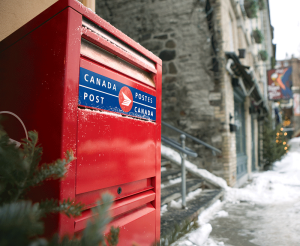 es, the estimated impact of the rate increases on the average Canadian household would be well under a dollar a year, and the total increase for small businesses that use stamps would be estimated at about $6 a year. Canadians can avoid the increase by purchasing Permanent stamps at the current rate in advance, if the changes are approved for next January.
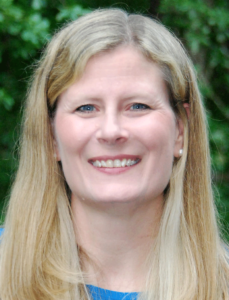 The American Topical Association has named Jennifer L. Miller of Greer, SC, as its executive director. An avid topical collector and ATA member, she is well-known in the hobby.
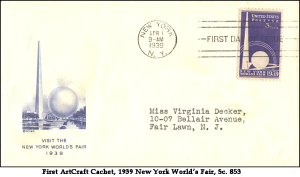 Camden, NY. In May 2019, Mystic Stamp Company purchased ArtCraft’s complete inventory – over 5 million covers – after the company announced it was closing its doors. ArtCraft had been sending out Fleetwood First Day Covers since they stopped printing their own in 2015, so it’s only fitting Mystic – owner of Fleetwood – pick up ArtCraft’s inventory, too. This inventory includes historic covers from ArtCraft’s earliest days (1939) to 2015. Known for their exquisite detail, ArtCraft’s steel-engraving-style cachets have always been popular with collectors.
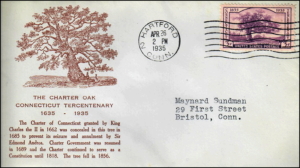 In the press release, Mystic president Don Sundman said, “My family has been collecting and selling covers for over 85 years, beginning with my father, Maynard, in the 1930s. [One of his covers, from 1935, is shown on the left.] At Mystic, we know what First Day Cover collectors want, and we design our cachets accordingly. Going forward, ArtCraft customers can expect to see the same high-quality First Day Covers they’ve been receiving since 2015.”
 However, when Washington Stamp Exchange stopped producing new ArtCraft designs, WSE purchased unserviced Fleetwood cachets from Mystic, serviced them, and sold them to its subscription customers.
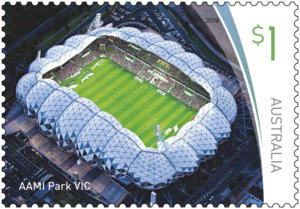 The award-winning AAMI Park was welcomed to Melbourne & Olympic Parks’ precinct in May 2010, giving Victoria its first world-class pitch for elite-level rugby league, rugby union and football codes. The 30,050-seat stadium is defined by its distinctive bio-frame design, the roof of which provides covered seating for most of a capacity crowd enjoying the spectacle on the 136 x 82 metre playing field below.
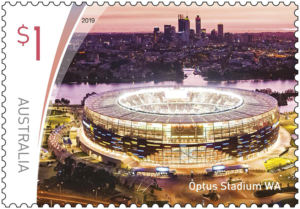 Optus Stadium was opened in Perth in January 2018, and in its first 12 months of operation attracted more than two million fans. The 60,000-seat stadium can host AFL, rugby union, rugby league, football and cricket, as well as large entertainment events. From fence to fence the pitch covers 177 x 141 metres, with 165 x 130 metres for the AFL field of play.
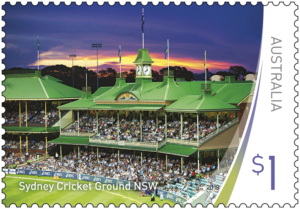 Located on the edge of the CBD, the Sydney Cricket Ground has a long and venerable history dating back to the mid-19th century. It hosted its first game of cricket in 1854, and has been home to major cricket matches since 1876. With a capacity of 48,000, in addition to hosting cricket in its various formats, it also regularly hosts AFL, rugby league and union, and football.
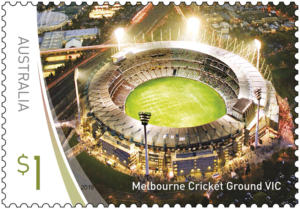 Melbourne Cricket Ground, or the MCG or ’G, as it is fondly known, is considered by many to be one of the premium stadia of the world. Built in 1853, it was the main venue for the first Olympic Games held in the Southern Hemisphere in 1956, a centrepiece for the 2006 Commonwealth Games and host to two cricket World Cups, in 1992 and 2015. Primarily a ground for AFL and cricket, with a capacity exceeding 100,000, it sits fondly in the heart of many Victorians and Australians alike.

 $1 Emu (Dromaius novaehollandiae)
 $1 Southern Cassowary (Casuarius casuarius)
 $2.30 Little Penguin (Eudyptula minor)