APS to Receive $1.3 Million Gift

[press release]

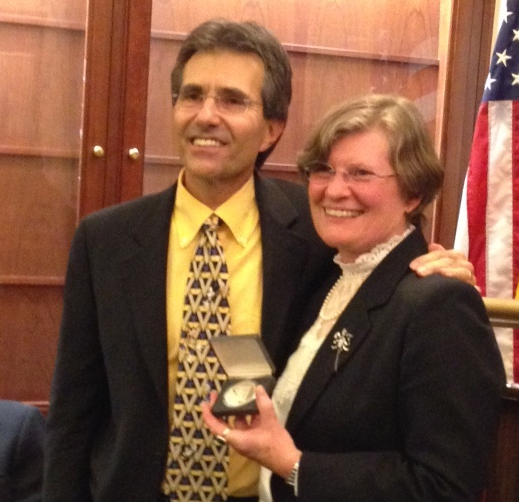
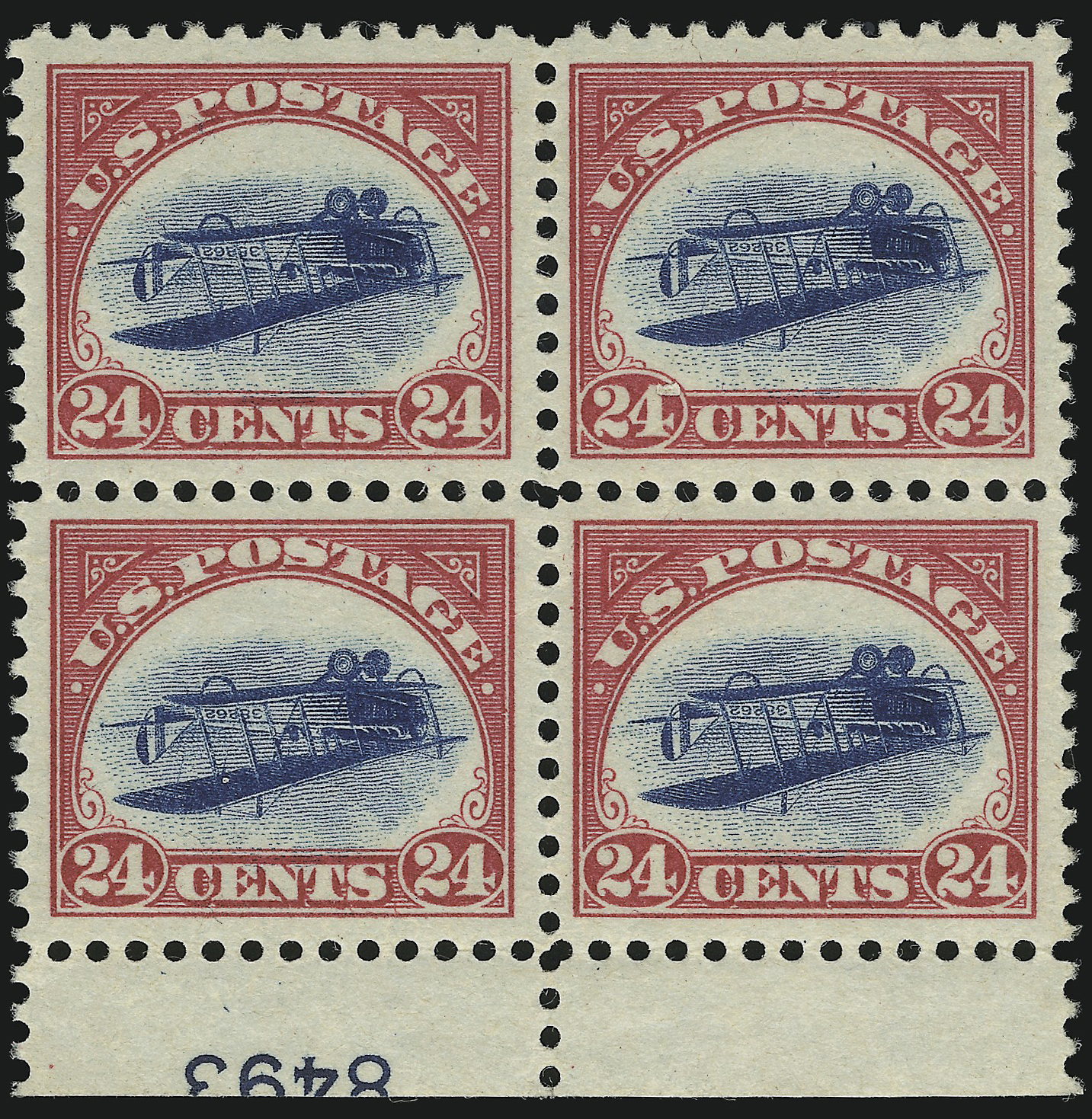
The APS has been informed that it will soon receive approximately $1.3 million, the single largest gift in its history. Twenty-five year APS member Walter Weber of Bellingham, Washington, who passed away in May, designated the American Philatelic Society as the sole beneficiary of his IRA. A private investor, Mr. Weber collected the stamps of the United States, Canada and Switzerland. He was also particularly interested in Revenues.

Mr. Weber’s gift surpasses the estate of past APS president William Bauer who passed away in 2009 and left $1.2 million for the American Philatelic Society and American Philatelic Research Library. Other major gifts to the APS and APRL have come from the estates of George Fisher of Langhorne, PA ($600,000 in 2004), Osborne Morse of Leawood, Kansas ($300,000 in 2001), and Horace Harrison of Ruxton, Maryland ($300,000 in 2002).

More than 50 other individuals have expressed their love of the hobby and their belief of the importance of the APS and APRL by notifying the APS and APRL that have they included the organizations as a beneficiary of their IRA, estate or trust. APS Executive Director Ken Martin is happy to work with interested donors and their accountants and attorneys to help find appropriate ways that members and others can support the APS/APRL and fulfill their personal goals. Ken can be reached at 814-933-3817 or kpmartin@stamps.org. Information on supporting the APS and APRL is also available at stamps.org/donate.

The American Philatelic Society is the nation’s largest organization for postage stamp collectors, with more than 31,000 members. Members receive a 100-page full color monthly magazine, opportunities to buy and sell through the mail or over the internet, reduced rate services including educational courses and authentication of postage stamps, exclusive members-only offers, and full use of the American Philatelic Research Library including a growing body of digital content.

Breast Cancer Research semi-postal reprint

Breast Cancer Research semi-postalThis will be issued some time in September, with the “2014” year on it. The design is similar to the earlier versions. It will sell for 60¢ (the current 49¢ first-class rate plus an 11¢ surcharge. The format is a pane of 20.

From the September 18th Postal Bulletin:

On September 30, 2014, in Sacramento, CA, the U.S. Postal Service® will reissue the Breast Cancer Research semipostal stamp priced at 60 cents, in one design, in a pressure-sensitive adhesive (PSA) pane of 20 stamps (Item 553000).

The Breast Cancer Research First-Class® semipostal stamp, is being reissued in 2014. Semipostals are stamps sold at a surcharge to raise money for a particular cause. Originally issued in 1998, the stamp art depicts a woman standing with her right arm raised, reaching behind her head in the position recommended for breast self-examination. The drawing of the woman’s body is set against a background of pastel colors from yellow to violet that cover the entire face of the stamp. Across the top of the stamp are the words “Breast Cancer.” Circling the figure’s right breast are the phrases, in all caps, “FUND THE FIGHT.” and “FIND A CURE.” Art director Ethel Kessler designed the stamp using original artwork by Whitney Sherman.

How to Order the First-Day-of-Issue Postmark:
Customers have 60 days to obtain the first-day-of-issue postmark by mail. They may purchase new stamps at their local Post Office, at The Postal Store® website at www.usps.com/shop, or by calling 800-STAMP-24. They should affix the stamps to envelopes of their choice, address the envelopes (to themselves or others), and place them in a larger envelope addressed to:

Breast Cancer Research Reissue
Customer Relations Coordinator
2000 Royal Oaks Drive
Sacramento, CA 95813-9998

After applying the first-day-of-issue postmark, the Postal Service™ will return the envelopes through the mail. There is no charge for the postmark up to a quantity of 50. For more than 50, customers have to pay five cents each. All orders must be postmarked by November 30, 2014.

There are three philatelic products for this stamp issue:

555306, Press Sheet with Die cuts, $144.00
(print quantity 1,000).
555308, Press Sheet without Die cuts, $144.00
(print quantity 1,500).
555316 First-Day Cover, $1.04.

Technical Specifications:

Issue: Breast Cancer Research Stamp
Item Number: 553000
Denomination & Type of Issue: Nondenominated First-Class Mail Semipostal (60 cents)
Format: Pane of 20 (1 design)
Series: N/A
Issue Date & City: September 30, 2014, Sacramento, CA 95813
Designer: Ethel Kessler, Bethesda, MD
Art Director: Ethel Kessler, Bethesda, MD
Typographer: Ethel Kessler, Bethesda, MD
Artist: Whitney Sherman, Baltimore, MD
Engraver: N/A
Modeler: Donald Woo
Manufacturing Process: Offset, Microprint
Printer: Banknote Corporation of America/SSP
Printed at: Browns Summit, NC
Press Type: Alprinta 74
Stamps per Pane: 20
Print Quantity: 20 million stamps
Paper Type: Raflatac, USPS-P-1238
Adhesive Type: Pressure-sensitive adhesive
Processed at: Banknote Corporation of America, Browns Summit SC
Colors: PMS1365 Yellow, PMS322 Light Blue, Cyan, Magenta, Yellow, Black
Stamp Orientation: Vertical
Image Area (w x h): 0.84 x 1.42 in./21.34 x 36.07 mm
Overall Size (w x h): 0.98 x 1.56 in./24.89 x 39.62 mm
Full Pane Size (w x h): 5.92 x 7.24 in./150.36 x 183.90 mm
Press Sheets Size (w x h): 21.72 x 23.68 in./ 551.69 x 601.47 mm
Plate Size: 240 stamps per revolution
Plate Numbers: “S” followed by six (6) single digits
Marginal Markings:
Front: Plate numbers in four corners of pane
Back: © 1998 USPS • USPS logo • Plate position diagram • Barcode (553000) Breast Cancer proceeds explanation • Promotional text

U.S. Scott Catalogue Numbers – Sept. 2014 Update

Note: United States No. 4823a in the 2015 Catalogue has been changed to No. 4823b.

4822a (49¢) Navy Medal of Honor, dated “2014”
4823a (49¢) Army Medal of Honor, dated “2014”
4823c Pair, #4822a-4823a
4910 (49¢) Civil War Sesquicentennial – Battle of Petersburg
4911 (49¢) Civil War Sesquicentennial – Battle of Mobile Bay
a. Pair, #4910-4911
4912 (49¢) Farmers Markets – Breads
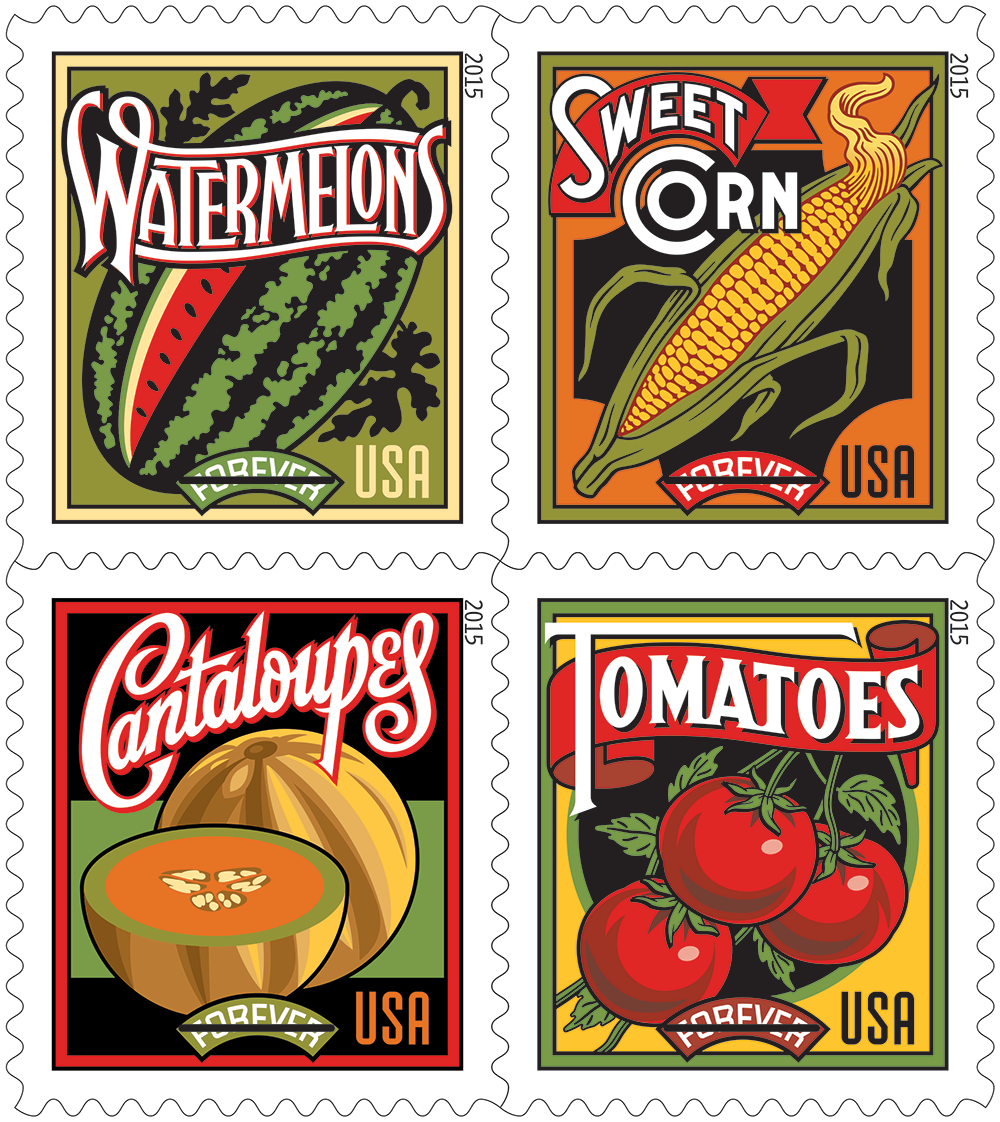
4913 (49¢) Farmers Markets – Fruits and Vegetables
4914 (49¢) Farmers Markets – Flowers
4915 (49¢) Farmers Markets – Plants
a. Horiz. strip of 4, #4912-4915
4916 (49¢) Janis Joplin

Linn’s: No U.S. Bollywood Stamp

Linn’s Stamp News reports here that Indians and Indian-Americans were very excited to hear that veteran Bollywood actor Akkineni Nageswarara Rao was going to be honored with a U.S. stamp on September 20th.

Unfortunately for them, the U.S. Postal Service says it has no knowledge of such a stamp. (Of course, given communications within the USPS, maybe there will be such a stamp.)

Bill McAllister of Linn’s says U.S. Postal Service press rep Mark Saunders isn’t able to contact the Akkineni Foundation of America, the source of the story. I “googled” the Foundation, and found no web listing for it — just loads of South Asian news stories about the upcoming Rao stamp. Even Wikipedia now says he was “conferred with U.S. post stamp!” (reproducing the agency name error  in all the news reports.)

It sounds like a hoax to me, one that took in Wikipedia, the Times of India, The Hindu newspaper and more.

Myself, I have no idea who Rao is other than a star of Indian cinema, commonly called “Bollywood,” but I would support a Rao stamp just for the fun of seeing all the American first day cover cachetmakers misspell “Akkineni Nageswarara Rao.”

It reminds me of a stamp for a baseball star in 1984. Since this was pretty much before personal computer printers, a number of Washington, DC-area cachetmakers had given their designs to a collector and professional printer for production. He brought their boxes of envelopes to a Robert C. Graebner (AFDCS) chapter meeting. The cachetmakers eagerly opened the boxes… to find that the printer had “corrected” the text in all their designs so that they were commemorating Pittsburgh slugger Roberto Clemento.

—Lloyd de Vries

Hot Rods Race Into L.A. Museum

There was a “dedication” ceremony for the Hot Rods stamps on August 27th at the Petersen Automotive Museum in Los Angeles. Mark Saunders of the U.S. Postal Service took these photos and provided them to The Virtual Stamp Club. His press release follows. Our information on the issue, including FDC servicing information and technical specifications, can be found here. And our report and photo essay from the first-day ceremony in June is here.

lahotrod66lahotrod66The two cars shown on the stamps are position before the start of the ceremony.

lahotrod67Postmaster General Patrick Donahoe, the cars’ owners and other dignitaries unveil the stamps, which initially went on sale June 6th.

lahotrod68PMG Donoahoe and others listen to the speeches.

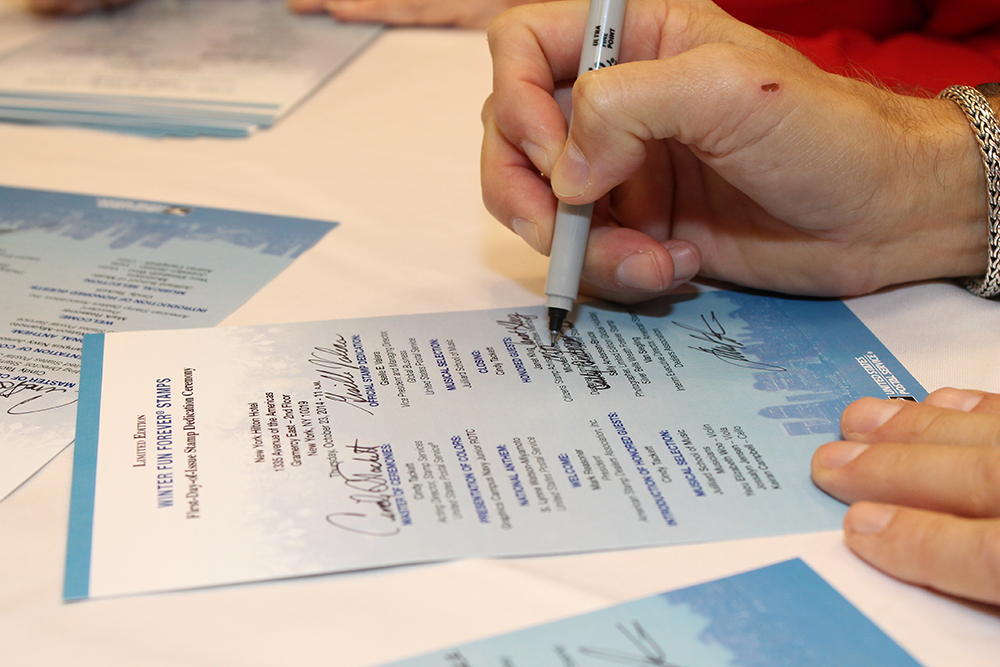
lahotrod69Afterward, the PMG and other dignitaries signed the event program. Several members of the Claude C. Ries (Southern California) Chapter of the American First Day Cover Society can be seen on the line.

lahotrod70Unlike some of his predecessors, PMG Donahoe not only sticks around for these autograph sessions, but chats with the collectors and others.

Two more photographs are at the end of the USPS press release describing this event:

California Hot Rods Get Postal Service Stamp of Approval
Postmaster General, Car Owners, Provide Backstories
LOS ANGELES — The two iconic hot rods that modeled for the Postal Service’s recently issued Limited Edition Hot Rods Forever stamps took center stage today at the Petersen Automotive Museum. There, the car owners and one of the car builders joined the Postmaster General in revealing the backstories on these cruisers and how the stamps came to be.

“These Hot Rods stamps personify the beginning of America’s fascination with customizing fast cars,” said Postmaster General Patrick Donahoe in presenting the stamps. “And they’re just as popular today as they were decades ago. Just like the cars they celebrate, these stamps are timeless in that they’re good for mailing First-Class letters anytime in the future.”

Joining Donahoe in dedicating the stamps were Bruce Meyer, owner of the red ’32 Highboy McGee Roadster featured on the stamps and co-chair of the Museum where the car is displayed; and Mark Graham and Vern Tardel, owner and builder respectively of the black ’32 Frank Rodgers Deuce Roadster featured on the stamps; and Barry Meguiar, Host of “Car Crazy”.

The Stamps Backstory
“We chose these hot rods after stamp artist John Mattos conducted extensive research,” explained Donahoe. “He found the McGee roadster that was featured on a 1948 cover of Hot Rod Magazine which is often referred to as the ‘Holy Grail of Hot Rods.’ In his research, John also received recommendations to feature any car built by Vern Tardel.”

Donahoe noted that Graham, of Sioux Falls, SD, purchased Tardel’s roadster second-hand on eBay.

“With an estimated 12 million hot rodders in America today, I applaud the Postal Service for recognizing that Hot Rods will forever be a symbol of our American Culture,” said Meguiar, who emceed the event.

The Frank Rodgers Roadster
Graham said he has been enamored with Tardel’s work for many years and always wanted to own a Tardel, 32 Ford Highboy Roadster. About four years ago he found the Frank Rodgers Roadster on eBay. Graham bought it sight unseen with just 600 miles listed on it and had it shipped to Tardell’s Santa Rosa, CA, garage to be fine-tuned and shipped to South Dakota.

“It’s been my dream to own this car since the 1960s,” said Graham, “And now, to have this iconic car on a stamp is truly a hot rodders dream.”

“I’ve been building hot rods since the sixties,” said Tardel. “I am truly honored to see the USPS issue a stamp with one of my cars, celebrating this great American tradition.”

The McGee Roadster
Meyer, an avid car collector, considers himself the custodian of the McGee he purchased in 1993. A purist, he had the car restored to its original 1947 condition by the So-Cal Speed Shop.

“The Postal Service honoring Hot Rods and Hot Rodding is a giant step in the long over-due recognition and appreciation of this pure American art form,” said Meyer. “Hot Rods are like jazz and baseball when it comes to American achievements, and the McGee Roadster is the Holy Grail of early hot rodding. Kudos to the Postal Service!”

Available in booklets of 20 stamps, customers may purchase the stamps at usps.com/stamps, at 800-STAMP24 (800-782-6724) or at Post Offices nationwide and on eBay at ebay.com/stamps.

Designed by Derry Noyes of Washington, DC, the two stamps were digitally created by artist John Mattos of San Francisco.

lahotrod72 lahotrod71

2015 Philadelphia Show Canceled

And from the sound of this press release, this may be the end of a 77-year-old philatelic institution.

Philadelphia Show Cancelled for 2015

pnseThe Philadelphia National Stamp Exhibition will not hold a 2015 show as originally planned. The tentative arrangements included the dates of April 10-12, 2015 and the Philadelphia Expo Center in Oaks, Pa., as the venue. The show committee is reviewing income and expenses and will possibly look for other potential sites in the greater Philadelphia area for shows in future years.

A decision has not been made on whether to hold a 2016 show in April that year in view of the proximity of World Stamp Show NY 2016. A tentative 2015 jury and society convention were informed of the cancellation of the 2015 exhibition.

The Philadelphia National Stamp Exhibition was established in 1937 as SEPAD, the Associated Stamp Clubs of Southeastern Pennsylvania and Delaware. One of its well-known traditions is the annual selection of local and national merit awards, which recognize the contributions of those outstanding individuals who have supported organized philately at the local and national levels.

Canada Commemorates Comedians

[Canada Post press release]
Carrey, Guimond, Myers, O’Hara and Short Recognized on Comedian Stamp Series

cancomics3OTTAWA, Aug. 29, 2014 /CNW/ – Today Canada Post is honouring Great Canadian Comedians by issuing a series of stamps featuring them and some of their most memorable roles. The stamps honour the work of Jim Carrey, Olivier Guimond, Mike Myers, Catherine O’Hara and Martin Short, all chosen for their talent in entertaining and making us laugh.

“Canada is the birthplace of some of the world’s most successful comedians and our series is about some of the many Canadian comedians who keep us laughing,” says Jim Phillips, Director of Stamp Services at Canada Post.

Jim Carrey: Born in Newmarket (Ontario), Carrey was a natural entertainer, giving his first stand-up performance at the age of 14. It wasn’t long after Carrey became a staple on Toronto’s comedy circuit. He then moved to Los Angeles where he appeared on An Evening at the Improv and The Tonight Show and as a regular on the sketch comedy series In Living Color. Carrey then starred in some of the most successful movies of all time, including Ace Ventura: Pet Detective, The Mask, Dumb and Dumber, Liar, Liar, The Truman Show, Bruce Almighty and Eternal Sunshine of the Spotless Mind.

cancomics1Olivier Guiond: Rising to fame on Quebec’s burlesque scene, Guimond continued to shine at the Théâtre National, the Théâtre des Variétés, the Théâtre Odéon-Mercier, the Comédie-Canadienne and Place des Arts. Guimond starred on the popular TV series Cré Basile and appeared on the well-known Radio-Canada comedy review Bye Bye. He will always be remembered for his portrayal of Basile Lebrun on Télé-Métropole, which stands as one of Guimond’s greatest achievements.

Mike Myers: Born in Scarborough (Ontario), he learned to love Monty Python and Benny Hill from his father. In the early 80s, he joined Toronto’s Second City ensemble before making his mark as a cast member of Saturday Night Live, where some of his characters vaulted from the TV sketch to the big screen. He also created memorable characters, from Wayne Campbell in Wayne’s World to Austin Powers/Dr. Evil and voiced the green ogre in the Shrek movies. In 2013, he made his directorial debut with Supermensch: The Legend of Shep Gordon.

cancomics1Catherine O’Hara: O’Hara’s first appearance on stage was with Toronto’s Second City troupe. She moved on to television on the SCTV show, where she is remembered for playing a range of hilarious characters. Her film career took off with After Hours followed by Beetlejuice. She was memorable in the Home Alone movies, and lent her comedic talent as a voice actor in The Nightmare Before Christmas, Chicken Little, Over the Hedge and Frankenweenie.

Martin Short: A native of Hamilton (Ontario), Short’s comedic career kicked off by joining Toronto’s Second City troupe. He moved on to the SCTV show, creating several memorable characters that would later reappear in The Completely Mental Misadventures of Ed Grimley and I, Martin Short, Goes Home. When SCTV ended, he jumped to the big screen, co-starring in Three Amigos. He also lent his voice to hit animated movies, including Jimmy Neutron: Boy Genius and more recently, Frankenweenie.

About the stamps
The stamps measure 40 mm x 26 mm and are available booklets of 10. The five separate Official First Day Covers measure 191 mm x 113 mm and the souvenir sheet featuring all five comedians measures 130 mm x 95 mm. The stamps were printed by the Canadian Bank Note. Kosta Tsetsekas, Mike Savage and John Belisle of the Signals design group designed the stamps. The Official First Day Cover cancellation sites are: Jim Carrey, Newmarket, Ont.; Olivier Guimond, Montréal, Que.; Mike Myers and Catherine O’Hara, Toronto, Ont. and Martin Short, Hamilton, Ont. To purchase philatelic products, please visit canadapost.ca/shop.

Dick Sine: Writing = Sharing

Writing = Sharing
By Richard L. Sine

We collectors normally go through a sort of progression … not all of us, but I have to believe it applies to a very large percentage. First we obtain a stamp album, either for our home country or the world. Then comes the attempt to fill all of the pre-printed spaces. For some, that is most enjoyable and as far as those collectors go. Others tire of what they consider the repetition of purchasing or trading for stamps to mount into the albums.

RLSA next step is a specialization. It may be a larger U.S. album, a country album that represents the collector’s own heritage or where he/she has traveled, or stamps that represent something else the collector likes or likes to do … these are topical collections. Specialization can become as targeted as a collector wants: a single stamp issue, stamps of only a certain color, only postal stationery, and on and on.

Once engaged in a specialized collection – or any depth – the collector begins research that further adds to the enjoyment. Note: the enjoyment aspect is key here. After all, why have a hobby if you are not going to enjoy it?

There are no limits to the breadth or depth of such research. Collectors may want to investigate how a given issue/stamp came to be, or how many varieties exist of a given issue and how best to describe/define them, or how a specific issue is used in the movement of mail … the latter really refers to older issues that had a specific reason for release.

Now we go back to the title of this article. When you have found something in your research, share it with others. There are any number of outlets for your research. All you need to do is put forth what you have learned in a very logical, straightforward manner. This is not the time, particularly if you are new to philatelic writing, for flowery language. Just get the information out there for others to learn.

Send your article to your local club publication, a specialty publication, or set up your own website where you will be able to expand on your work as well as allow others to react and comment. The digital world has opened a very expanded world for philatelic writing, which more than overcomes the loss of print periodicals over the recent past.

Some quick hints from a philatelic editor/writer who began in 1976:

  • Lay out what you have learned, make your point, then stop writing that article
  • Be certain your article has no spelling, grammar, or punctuation errors … get help before you are published
  • Where possible, cite references so others are able to look for themselves
  • Incorporate illustrations … philately is a visual hobby

Even with my hope that you will share your finding with others, only do so if you are comfortable as a writer. There is no obligation, merely an interest in sharing.

Hotchner: Computers & Philately

The March of the Computer in Philately: Positive or ???????
by John M. Hotchner

hotchnerComputers and the Internet are at best a mixed blessing, if one looks at the digital age from the standpoint of some in organized philately. Why? Collectors often see no need to pay money to subscribe to publications and to join organizations when there is so much free information out there on the World Wide Web. We can connect to others whose interests match our own. We can buy and sell virtually any type of philatelic material. We can access most of the dealer community through our keyboards. We can subscribe to free message boards and other websites that not only bring news and opinion about the latest goings on in the hobby, but let us participate with our own opinions nearly instantaneously. Do you have a question about something you own, or need guidance on how to catalog a difficult specimen? Put it out there for the online community, and you will have dozens of answers in two shakes of a lamb’s tail.

While I don’t have reliable figures, I know from observation that more and more stamp and cover collectors are getting online. When I began this journey myself in 1996, I was in the minority. Now, it is the person without the Internet who is the odd duck.

This does not make them bad people, or an object of ridicule. Some just don’t feel the need, don’t see enough benefit to justify the expense, or are technophobes who dislike steep learning curves. As Ogden Nash is reported to have said, “Progress may have been all right once, but it has gone on entirely too long.” No amount of pushing or shoving is going to move them from their easy chair to the computer store.

But for those of us who have at least begun to adapt to the new age, and know a computer professional and/or have someone under 30 who can help us overcome the problems, the computer is a blessing for exactly the reasons that it costs subscriptions and memberships. For that reason, it is the wise organization, dealer and publication that also works to adapt to the computer age. Those who fail to do so will be left in the dust.

And philately as a whole is in this same situation. Those who might become stamp collectors are also increasingly turning to the Internet to learn about the hobby, how to participate, what resources are available, how to get their questions answered. Organizations that are holding their membership numbers report significantly increasing percentages of their new members are signing up by way of the computer. The smart groups are using the computer to introduce themselves to a wide range of newcomers in several ways:

1. Having an attractive website that answers questions, explains the benefits of membership, and makes joining easy.

2. Putting older issues of their journals online

3. Putting the new issues into Members Only sections of their website, and including the table of contents in the generally available portion.

4. Including “How To” information, a library of related literature, and encouraging participation in society activities.

5. Including a Members Only auction in the public part of the website so prospects know what is available to be bought, and see the possibility of selling material as a club member.

For local clubs, the hardest part has always been letting newcomers know that they exist. Can your club be found when someone looking for a club puts into their search engine: “stamp clubs in ___(city)_____, ___(state)____”? The second hardest part has been enticing people to actually visit. A nicely done website that tells people where and when the meetings are, who to contact for further information, and making the club enticing fixes that. Then the third difficult part kicks in: treating visitors right when they arrive. But that is a subject for another column!

Perhaps the most difficult situation is that faced by print publications as the news can be spread so much faster by Internet. Subscribers do see a benefit in having news and features in one place rather than having to search for it. So, many publications are making their offerings available in color, on the web as rapidly as possible (well before it arrives in the mail), and at a reduced price. Some even have an extra web publication to bring breaking news to the subscribers

Organized philately is adapting because they have come to the proper conclusion that modern technology is neither a fluke nor going to be reversed. It is here to stay and we have to learn to use it. Those that don’t will wither away. And if the hobby as a whole fails to do so, it will be inviting disaster. Without a robust web presence recruiting for the hobby, it will not grow. And if that happens, we will see a stronger version of the trend we saw in the early years. Which is to say that the hobby sailed along oblivious and failed to adapt. while the computer gathered more and more adherents, and the hobby lost market share. Indeed it was the rare organization that did not lose a third to half its membership – mostly never to return – while they dawdled about whether to have a web presence, and if so, what sort of presence to have.

We seem as a hobby to have done a reasonable job reversing that trend, but we cannot rest on our laurels. Confounding those who believe as Ogden Nash did, technology continues to trample the old ways of doing things, and we must keep up or die. The new reality, using the computer and marrying it to phone technology, is the explosion in social media, and again as a hobby, we are lagging the power curve. We seem to have missed the fact that the world is spinning at a faster rate, and the time we have to make decisions that allow us to catch the comet’s tail has been compressed. The day of leisurely consideration, waiting to see what happens in the longer term, and decisions that consider every well researched alternative are a luxury we sometimes do not have.

Stamp collecting used to be a quiet, introverted, even solitary activity. Now as the general public becomes more interactive, a larger and larger percentage of collectors think of the hobby as having a dynamic edge that allows them to maintain much of their anonymity if desired while benefitting from the resources the computer brings to their desktop. And at the same time, it seems that fewer and fewer of those who have grown and are growing up in the information age are oriented toward the anonymity that so many collectors used to value. How you react to this state of affairs probably reflects your age and your experience with technology. But as noted above, those running organizations no longer have the luxury of sitting back and waiting to see where technology goes. We need to be managing our future, not merely adapting to it.

If we are going to survive as a hobby, and permanently stop the slide that befell us in the 1990s and early 2000s, we must expand the resources offered to new collectors, continue to innovate as we reach out to potential collectors through social media, and keep our eyes on new products that will further change our playing field.


Should you wish to comment on this editorial, or have questions or ideas you would like to have explored in a future column, please write to John Hotchner, VSC Contributor, P.O. Box 1125, Falls Church, VA 22041-0125, or email, putting “VSC” in the subject line.

Or comment right here.