
Mint U.S.: The Gift That Keeps on Giving (at a Reduced Rate)
By John M. Hotchner
My father, gone nearly 30 years, would be stunned if he knew how his “investment” turned  out. He was among those stamp collectors who, coming out of World War II, surveyed the value of U.S. new issues of the 1920s and 1930s, and thought “Hmmm…Mint U.S. commemorative stamps are popular, and the retail value seems to go up. So, I’ll buy a couple of sheets of every new issue, and when little Johnny gets to be college age, there is a little nest egg.”
[Above, Howard Hotchner in 1943, when he was working for the Voice of America (Office of War Information). And, yes, with part of his collection.]
He was assiduous in making sure every new issue was represented in his mint sheet files, and many regular issues, Air Mails, and other stamps too. Fortunately, he was wise in that  he bought only what he could afford, and what he could afford to lose; because when it came time to sell in the early 1960s, the market for sheets of U.S. commemoratives had tanked.
There were many reasons; not least among them the fact that the Post Office Department anticipated the new demand, and began to issue two to four times the number of stamps for each issue as compared to the pre-1940s issues. They also ratcheted up the number of issues per year to previously undreamed of totals. And in the 1950s, the basic First Class rate began to creep up.
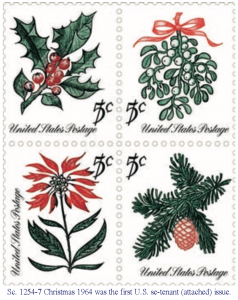 So, when all the little Johnnies and Janies got to college age in the late ‘50s and early ‘60s, the tens (if not hundreds) of thousands who had the same idea went to the well to collect on their investments, and found that there was far more supply than demand. If they could get 75% of face for routine stamps and full face for plate blocks, they were doing very well. Crank in the reduced purchasing power of the dollar, thanks to inflation, and even the realizations received were not nearly high enough to cover the initial outlay.
As the number of collectors has dropped, and the First Class postage rate has increased, the value of quantities of U.S. post-WWII mint stamps has continued to fall. Who wants to buy 3¢ commemoratives when it takes 18 of them (plus 1¢) to pay the current First Class rate?
And yet, habits are hard to break. Having begun to buy sheets, my father couldn’t bring himself to stop. Even when he knew that his expectations for the earlier purchases had not panned out, he kept right on buying; almost to the day he went into a nursing home with Parkinson’s Disease and a broken hip.
It isn’t uniformly true that all modern era U.S. stamps have only scrap value. Some limited  printings that have topical value — such as Space-related, some sports heroes, the first stamps of a continuing series (such as Black Heritage) — still bring a modest premium. Also, some booklet panes, line pairs, plate number coils, and souvenir sheets. But for the vast majority of post WWII stamps, people selling them in quantity are now able to realize a mere 50-60% of face. And even some booth-holders at stamp shows who used to offer sheets of stamps to collectors for face value, are now forced to undercut their prior pricing in order to remain competitive.
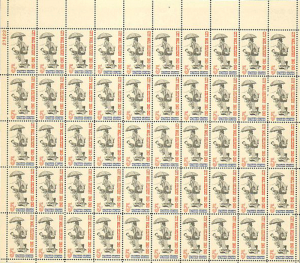 Now, don’t expect this dynamic to hold for single stamps being sold to collectors. Dealers who retail modern- era U.S. singles have to do more than buy and sell in large quantities. Even if they buy cheap, they have to break up sheets, put single stamps in glassines or make up year sets, advertise by individual Scott numbers, provide storage space for what is pending sale, and haul their wares to wherever they retail; or pay commissions if they are selling online using established websites. It all takes an investment of time and space, in addition to the investment of money. So you will pay more than face for single stamps to complete your album pages.
And the beauty of the stamps, and the joy of completing pages makes the modest outlay worthwhile. But realists know that you will not be able to sell these stamps for what you paid for them.
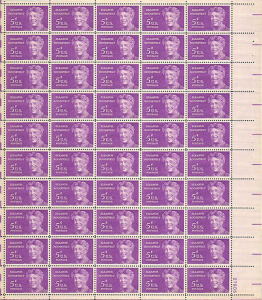 The holder of quantities of U.S. mint, often in my experience survivors of the original purchaser, rarely have a clue that what they have is not so much windfall as white elephant. I can’t count the number of times I’ve had to explain to the new owners the facts of philatelic life; that they have only a few alternatives:
- Use most of what they have as postage for the relatively few letters and packages that they send.
- Share the stamps with family members to do the same.
- Take up stamp collecting themselves.
- Sell to a dealer at the prevailing (reduced) rate, or to friends and neighbors at 25% off.
- Donate them to a 501c3 charitable organization for the tax benefit.
- Or if you can find one, donate to a school or youth stamp club.
The saving grace for some is that they are not desperate for the money; and they understand that their collector enjoyed his or her collecting activities, and even reveled in the acquisition of new issues and understanding the story behind each new stamp; even if their dreams of profits could not be realized. My father was in this class. He was a passionate collector who often got out a magnifying glass to study the design of each new stamp. While I think he would be surprised by how low the market has gone, I doubt he would be losing any sleep over it!
 Kelsey was born September 3, 1949. He served as executive director of the AFDCS from 1991 until 2011, at which time the position was altered and named executive secretary. He also served many years on the society’s board of directors.
 president of the Machine Cancel Society, executive director of the Postal History Foundation, and secretary-treasurer of the Meter Stamp Society.
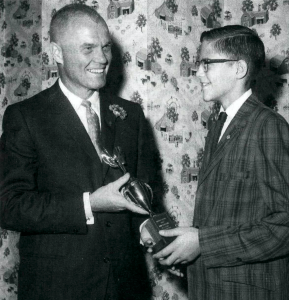 In the February 2002 issue of American Philatelist, Kelsey wrote about the 1962 Project Mercury first-day and his collection, and recounted how that collection’s display at the Ohio State Fair won him a chance to meet astronaut John Glenn, an Ohio native.
 The
The 
 The
The 
 And VSC member Joseph Goodwin is
 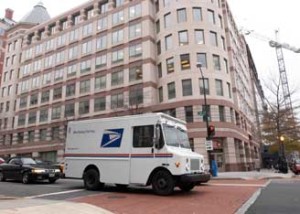 Postal agencies are rarely attention-getting issues in political races, but 2020 is a year like no other: The U.S. Postal Service is a lead item in the presidential election coverage.
 residence.


 Returning to London following a traumatic experience in the Afghanistan war, injured army medic Dr John Watson is on the hunt for a flatmate when he is introduced to Sherlock Holmes, a unique figure who describes himself as “the world’s only consulting detective”. The pair move into shared lodgings at 221B Baker Street, only for Watson to be drawn into an unexpected adventure when Sherlock begins investigating a series of bizarre ‘serial suicides’ that have left Scotland Yard baffled. Coming to the aid of Detective Inspector Greg Lestrade, Holmes soon discovers that each of these deaths is actually the work of the same sinister killer, who has the apparent ability to move undetected through the streets of London.
 and John Watson are drawn into a cat-and-mouse game with London’s most notorious criminal, the enigmatic James Moriarty. The challenge is simple: working against the clock, Sherlock must solve a series of crimes, each more fiendish and challenging than the last. Ranging from the seemingly natural death of a popular TV star to the theft of important government files, each case adds another piece to Moriarty’s sinister, unfolding puzzle. Having successfully completed all five tests – and survived a bruising encounter with a master assassin known only as The Golem – Holmes accepts Moriarty’s invitation to join him at a deserted swimming pool where the criminal mastermind finally reveals his true identity.
 photographs of a member of the Royal Family on her phone, and calls on Holmes and Watson to retrieve the device. When our heroes track the flirtatious Adler to her London flat she escapes, taking the phone with her. But Sherlock is unable to forget his encounter with this alluring woman, and when her dead body is found he is deeply affected. It later transpires that Adler – who has also been passing information to Moriarty and threatening to blackmail the government – faked her demise to evade a gang of terrorists, who plan to bomb a transatlantic flight. Only Sherlock has the knowledge necessary to stop them.
 question following another encounter with the devious Moriarty. Having carried out audacious attacks on the Bank of England, Pentonville Prison and the Tower of London, Moriarty is captured in possession of the Crown Jewels. He is swiftly brought to trial, only to be unexpectedly acquitted – because, as Sherlock discovers, the crime lord either threatened or bribed the jury. Having gained his freedom, Moriarty manipulates the public and the media into believing that Sherlock is a fraud who carried out crimes only to ‘solve’ them himself. Matters culminate in a face-to-face showdown between Sherlock and Moriarty on the roof of a hospital, from where Sherlock apparently plummets to his death.
 and eliminated the last vestiges of Moriarty’s criminal empire. He reintroduces himself to Dr Watson, only to be surprised when his old friend doesn’t welcome him with open arms. Watson, who is soon to be married to Mary Morstan, has spent the intervening years trying to come to terms with Sherlock’s death, and is understandably annoyed to discover that he has simply been in hiding. But the pair set aside their differences when Sherlock saves John from a kidnapping, and are soon on the case of a respected Lord who appears to have vanished on the London Underground. The case leads them to a bomb plot against the Houses of Parliament, and the revelation that there is a new master villain in town.
 second sibling – a sister, Eurus, described as a genius to rival Isaac Newton, but with a total absence of human empathy. Eurus is being held in a secret maximum-security prison situated on an island in the North Sea, a last-resort facility housing the country’s very worst criminals. Holmes and Watson travel to the prison to confront Eurus, only to find that she has used her extraordinary powers of persuasion to take over the facility, bending the staff and fellow prisoners to her will. To avert a horrific tragedy, Sherlock and John must undergo a series of psychological trials designed to test the bonds of friendship between them.
 5475 (55¢) Enjoy the Great Outdoors – Child building sandcastle
 5480 (55¢) Hip Hop – MC with microphone rapping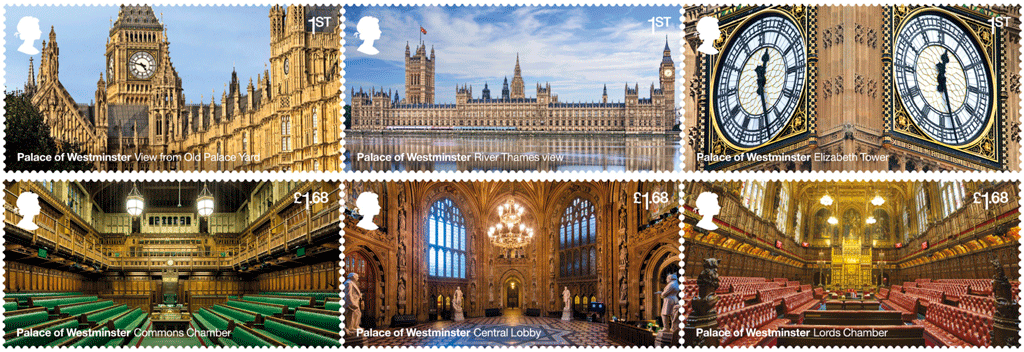
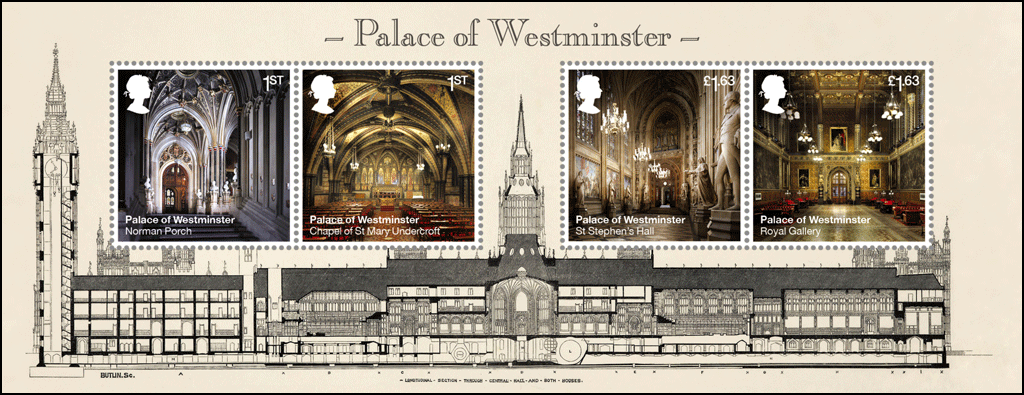
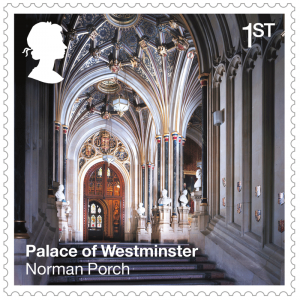 Westminster Abbey, as a UNESCO World Heritage site.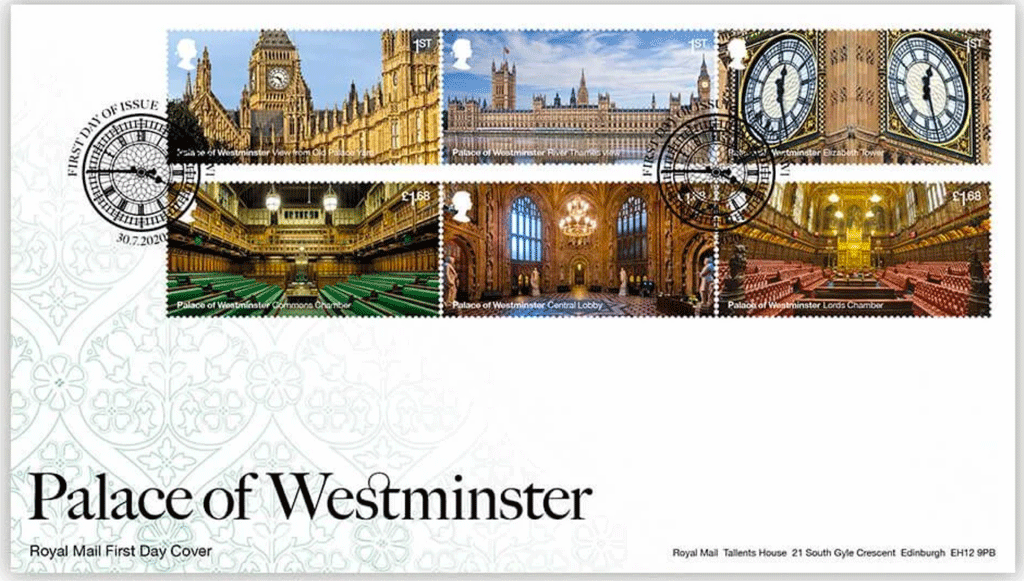
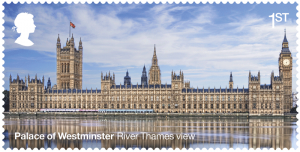 In 1835 a Parliamentary Committee decided that the Palace should be rebuilt.
 ertaken by Barry’s son, Edward Barry.
 between 1288 and 1290 during the reign of Edward I. There are 399 steps from ground level to the lantern.
 During the Blitz, the palace received several direct hits, and in 1941 the Commons Chamber was destroyed. The new chamber was designed by Sir Giles Gilbert Scott in a modern, pared-down Gothic Revival style, in places using wood from indigenous trees donated by the nations of the Commonwealth.
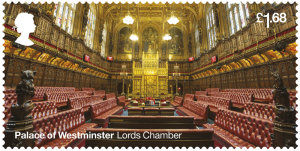 Sir Lindsay Hoyle, Speaker of the House of Commons, said: “Not only is the Palace of Westminster one of the best-known landmarks in the world, it is a living building – a workplace for MPs, peers and staff, as well as a tourist attraction and UNESCO World Heritage Site.
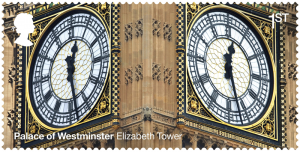 Lord Fowler, the Lord Speaker, said: “For 150 years, this striking and significant building has been a symbol of our democracy, but also a place of important work as the home of the House of Lords and House of Commons.
 Philip Parker, Royal Mail, said: “The Palace of Westminster is one of the most recognisable buildings in the world. Our new stamps mark the anniversary of the completion of its rebuilding and celebrate the genius of its Gothic Revival architecture and design.”
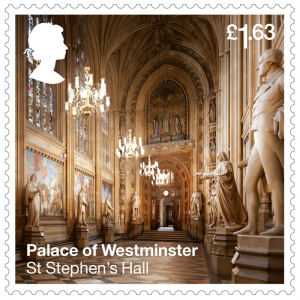 source of knowledge and inspiration for all. A special anniversary section of Parliament’s online shop will also be available – showcasing a collection of products specifically related to the famous building which houses Parliament which include the official guidebook, the encaustic tiles used throughout the Palace, and the popular Palace of Westminster tree ornament.
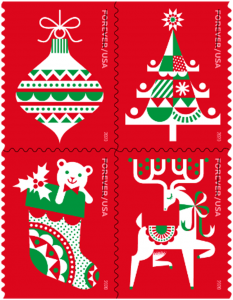 Celebrate the holidays with Holiday Delights. Inspired by folk art but with a modern graphic vibe, these charming stamps will add a touch of whimsy to your holiday mailings. With a traditional palette of red, green and white, illustrator Kirsten Ulve channeled her love of Christmas, vintage ornaments and Scandinavian folk art to create unique digital illustrations of four holiday icons: a prancing reindeer with antlers; an ornament tied with a bow and ready to hang; a tree topped with a star; and a stocking holding a teddy bear and a sprig of holly. Art director Antonio Alcalá designed the stamps.
 The Digital Color Postmark measures 2.69″ x 1.43″
  The Pictorial Postmark measures 2.56″ x 1.23″
 envelopes (to themselves or others), and place them in a larger envelope addressed to:
 Winter Scenes celebrates the beauty and serenity of seasonal sights amid snowy landscapes. The 10 different photographs featured in this booklet of 20 stamps showcase the special allure of winter, with iconic scenes from the northern United States. Art director Derry Noyes designed the stamps with existing images taken by various photographers.
  New information will appear below the line, with the latest at the top.
 The Digital Color Postmark measures 2.97″ x 1.42″
  The pictorial postmark measures 1.94″ x 1.19″
 Winter Scenes stamps (Forever® priced at the First-Class Mail® rate) in 10 designs, in a pressure-sensitive adhesive (PSA) double-sided booklet of 20 stamps (Item 683000). The stamps will go on sale nationwide October 16, 2020, and must not be sold or canceled before the first-day-of-issue.
 Modeler: Joseph Sheeran
 This Christmas stamp (Our Lady of Guápulo) features a detail of the painting “Our Lady of Guápulo.” Painted in the 18th century by an unknown artist in Cuzco, Peru, “Our Lady of Guápulo” is from the collection of the Metropolitan Museum of Art in New York. Enrobed in a pyramidal gown speckled with jewels and holding a scepter woven with roses and leaves, a crowned Virgin Mary looks down at a similarly adorned Christ Child in her left arm. Art director Greg Breeding designed the stamp.
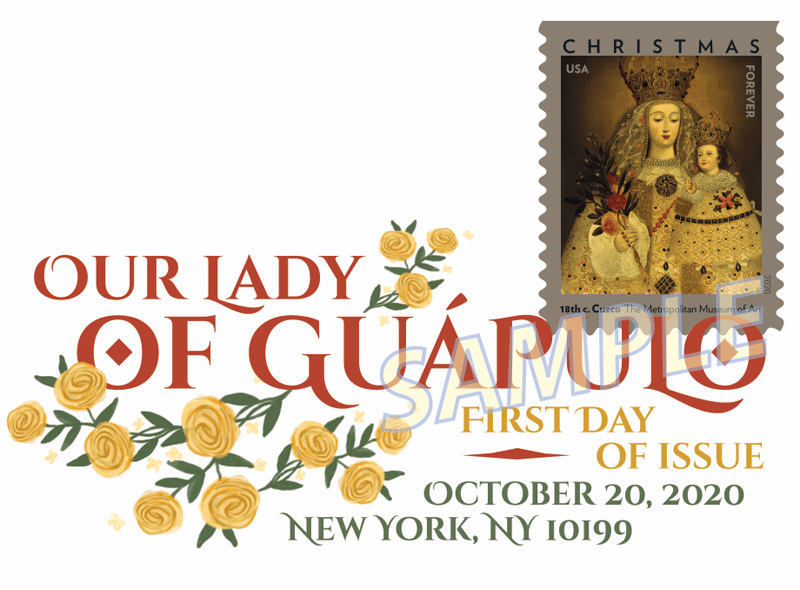 The Digital Color Postmark for this issue measures 2.91″ x 1.26″
 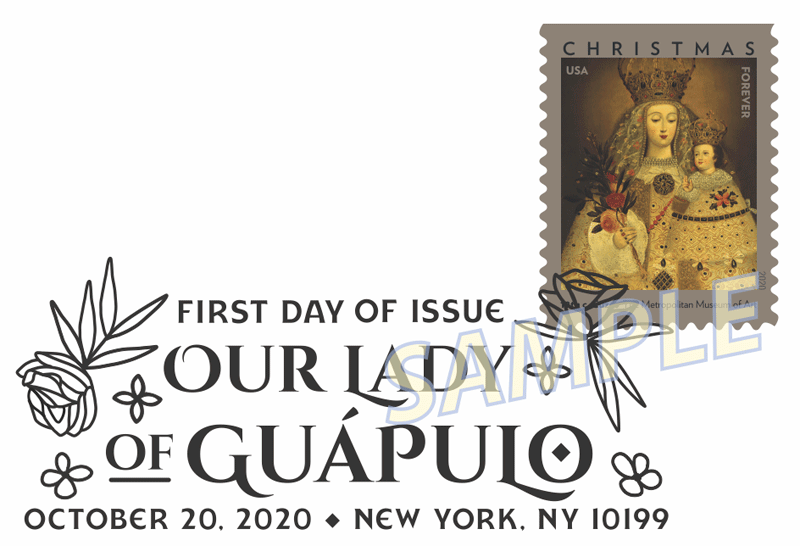 The pictorial postmark measures 2.58″ x 1.07″