
How to Collect U.S. Commemoratives
by John M. Hotchner
 In the last column, we talked in this space about How to Collect the Presidential Series of 1938-1954. This prompted a couple of readers to remark on a trend that has been growing among stamp show exhibitors: They are picking a specific commemorative or commemorative series, and finding everything about it that can be collected in order to tell the story of how it came to be created, to how it was used to move the mails.
How big a trend is this? I have either seen or been told of exhibits that have already appeared centered on the following commemoratives: 1904 Louisiana Purchase set of five (1¢, 2¢, 3¢, 5¢, 10¢) 1909 2¢ Hudson-Fultons 1909 2¢ Alaska-Yukon-Pacifics 1926 2¢ Sesquicentennial Exposition 1929 2¢ George Rogers Clark 1939 3¢ New York World’s Fair 1945-6 Roosevelt Memorial set of four (1¢, 2¢, 3¢, 5¢), 1945 5¢ Toward the United Nations, 1947 3¢ Centennial Philatelic Exhibition commemorative & 15¢ souvenir sheet, 1956 3¢ King Salmon, 1958 3¢ International Geophysical Year, 1958 4¢ Forest Conservation, 1959 4¢ Oregon Statehood, 1959 4¢ St. Lawrence Seaway, 1959 4¢ Dental Health, 1962 4¢ World United Against Malaria, 1964 5¢ New York World’s Fair, 1965 5¢ Churchill Memorial, 1968 6¢ Walt Disney, 1984 20¢ Smokey Bear, 1984 20¢ Roberto Clemente, 1928 5¢ Beacon Air Mail, and 1948 5¢ New York City Air Mail.
 In addition, there are exhibits that are focused on the Black Heritage stamps, a series that began in 1978 and continues; and on the Chinese New Year series that began in 1991 and was capped with a 2005 sheetlet showing all of the 12 designs that had been previously issued. Finally there is also a very well done exhibit that covers the joint issues that the United States has had with other countries; usually with similar designs.
I know of other exhibits being built but not yet ready for prime time, and there are undoubtedly others both on the circuit and in planning that I’m not aware of. Even so, with fewer than 100 commemorative stamps having been given this kind of attention, there are still plenty of commemoratives to choose from if this form of collecting appeals to you.
There are a few exhibits I have not included here because they are totally focused on usages of the stamps and do not include the development of the stamp(s) themselves. Among these are, for example, the 1940 Famous Americans series, and the 3¢ 1946 Smithsonian issue.
Which brings me to the question of what a comprehensive exhibit contains. They start with the photo, painting or other basis for the stamp design, then come such essays as are in public hands. Next in the frames would be photo essays and publicity photos of the stamp(s) released by the Bureau of Engraving and Printing and/or the Postal Service; followed by such proofs as may be in public hands. Check the Scott U.S. Specialized Catalogue to see what might exist in the way of essays and proofs for your favorite stamp(s).
Next come the first day ceremony souvenirs, which should include a program (autographed if possible), and perhaps other items such as covers or blocks of the stamps signed by dignitaries not on the formal program. Then come the issued stamps starting with an absolutely superb copy of the featured stamp, plate blocks or other memorabilia signed by the designer/modeler and the engravers involved in the production of the stamp.
Issued stamps showing the type and location of normal or exceptional marginal markings are featured next, followed by such errors and varieties as have been discovered. It can be especially difficult to find these as errors (which exist in very small quantities) are listed, but there is no central listing for varieties such as misperforations, constant plate varieties, and color misregistrations — most of which will be equally scarce — and the collector has to search high and low for whatever may exist.
Now we get to the First Day Cover cachets. It will probably be the longest section of the exhibit. Much of what exists in this category has been recorded in publications of the American First Day Cover Society, but there are often small unrecorded productions of cachets that can be found randomly in dealer stocks, other collections, and in the archives of cachet makers. And there may be, especially with older stamps, uncacheted covers from unusual sources such as U.S. Navy ships.
Finally, the exhibit will end with commercial usages of the stamp showing how it was used to pay various rates and on mail to unusual destinations. This section is often frustratingly small. Why is this?
While definitives were and are often produced in quantities of many hundreds of millions, and sometimes in billions, commemorative production figures have mostly topped out in the 150 million range up until the 29¢ era (early ‘90s, when per-stamp production dropped to under 100 million in most cases, reflecting the larger number of stamps being issued). In addition, definitives are available for years; sometimes a dozen or more. Commemoratives can sell out much earlier, but in almost every case what is still not sold after 18 months is withdrawn and destroyed.
The result is that finding usages of any given stamp beyond routine first class, in the period when the commemorative was current, requires a lot of searching, a lot of knowledge as to where to look, diligent advertising of what is being sought, and much correspondence. The good news is that when you find the covers cost is generally pretty reasonable. It isn’t affording them, it is finding them that is the challenge; made more difficult by the fact that most dealers don’t stock “modern” (which is often anything in the last 75 years!) covers, because it is low profit margin material.
So, to do a commemorative exhibit requires, usually, years of acquisition and learning about what exists to be found. The learning is not trivial as it encompasses knowledge of production, EFOs, the range of First Day cachets, and contemporary rates and possible usages. I have a couple of ongoing projects in the acquisition/learning stage, and it may be that I will never be able to come up with enough material to get to an exhibit. But the journey in that direction is much of the fun of forming a commemorative collection.
If you are working on such a collection, D.A. Lux has continued my original list and publishes it monthly. If you would like your commemorative interest(s) included on The Hotchner Commemorative List, contact D.A. at dalux2041@gmail.com and include the Scott number and first day of issue of your stamp. Once on the list, other list members will be able to search their collections for the covers you need and will know your interests when they dig through the dollar and quarter boxes at their local stamp shows. This could be a way of helping to unearth new material to improve your collection!
Should you wish to comment on this column, or have questions or ideas you would like to have explored in a future column, please write to John Hotchner, VSC Contributor, P.O. Box 1125, Falls Church, VA 22041-0125, or email, putting “VSC” in the subject line.
Or comment right here.
 Our February stamps celebrate Winter, Israel-Greece relations, influential writers and the importance of rescuing Turtles and Dogs!
 Author, playwright, film and theater director,
  Our 2016 ATM labels pay tribute to man’s best friend and the importance of adopting rescue dogs. The first label introducing the
  Our 2016 ATM labels pay tribute to man’s best friend and the importance of adopting rescue dogs. The first label introducing the Dog Adoption in Israel series [issued January 1st and shown below] features a beautiful silhouette picture showing the love between humans and dogs.
 The issue date is February 9, 2016.
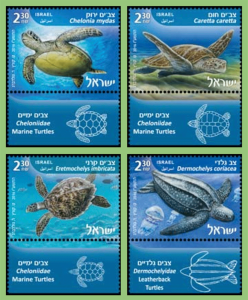 Marine Turtles are the largest reptiles in Israel. They live mostly in the sea, but the females come ashore on summer nights to lay dozens of eggs in cavities they dig in the sand. The offspring hatch in about two months.
 The issue date is February 9, 2016.
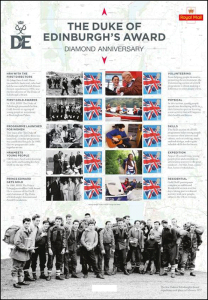 Royal Mail’s limited edition The Duke of Edinburgh’s Award’s Diamond Anniversary Commemorative Sheet goes on sale on 12 January 2016 celebrating 60 years since the scheme was first launched, which is the world’s leading youth achievement award.
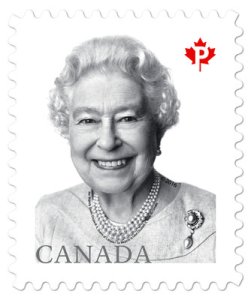 [press release]