
 It seems like only yesterday that Bob Lamb and Ken Lawrence drove me from APS headquarters in Patton Township (“State College”) Pa. to Bellefonte to see a derelict factory complex. On a later trip, Ken Martin took me up into the loft area of “Building 4.” We had to watch where we put our feet, because the flooring wasn’t very solid. But I saw the view out the open end of the loft and said, “Wow! This could really be something.”
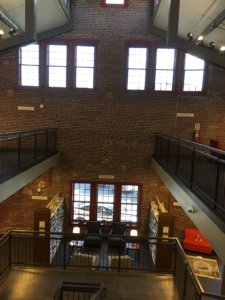 It’s now 16 years later (left), and it really is something. In fact, when I went up to the second floor for the first time during the celebratory weekend, I was a little choked up.
Other articles, here at The Virtual Stamp Club and elsewhere, describe the new facility and the dedication events. Instead, here are some thoughts about the building and the event.
I like to think I was a key player, casting the deciding vote on the American Philatelic Society board in favor of purchasing the property. But in looking around that weekend, I saw so many other people whose claims are just as good, or better, than mine: Donors, members of the APRL and APS boards then and subsequently, the architects, local officials, and APS staffers, past and present. There were even some past opponents at the weekend celebration.
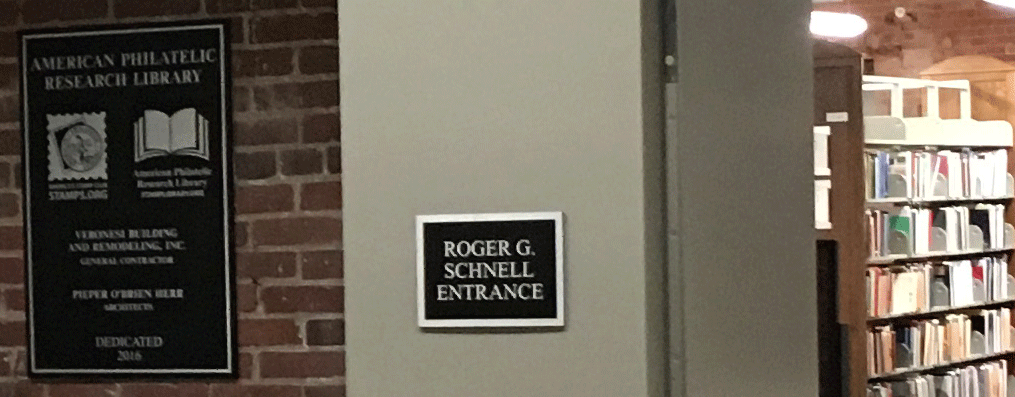
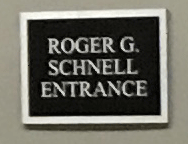 Roger Schnell was on the Board when the vote was taken; he voted against it. His comment as soon as the results were announced was, “Congratulations. You just bought yourselves a pile of bricks.” Yet as you enter the new facility, there’s the sign shown on the right: The Roger Schnell Main Entrance. Despite his misgivings, once the decision was final, Roger became a major donor for the complex’s renovation. There’s a lesson there that some mainstream national politicians haven’t learned.
  Every local official paid tribute to Ken Martin, now the APS Chief Operating Officer as an important part of the project. I think some philatelic leaders don’t appreciate Ken enough.
I was also glad to see Ken Lawrence acknowledged during Friday night’s dinner. He is somewhat a pariah no w, after an ugly APS election in 2007 and the subsequent lawsuit, and his always sharp tongue — he can flay you with his pen — but Ken was a driving force behind the “Match Factory” project. APRL president Roger Brody praised Ken, while admitting that he is often “prickly.” (I think that is the word he used.) Kudoes to Roger for broaching the subject. I’m sure it wasn’t easy, nor was deciding whether to do so wasn’t easy, either.
I hope at some point a big piece of the American Philatelic Center is named for Bob Lamb (left). He also had the vision, plus (unlike Ken) the diplomatic skills to make it happen.
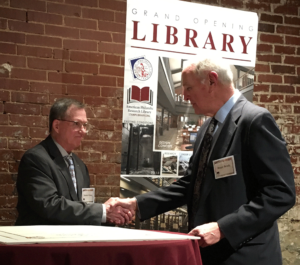 I was surprised that more wasn’t made of Dennis Gilson’s contribution to the project when he received his Luff Award for Service to the American Philatelic Society. In reading a list of his activities before Dennis signed the Luff scroll, Ken Martin first listed all his many activities on behalf of the APS, quite a few of which are continuing. Perhaps it’s because the American Philatelic Center actually belongs to the APRL, not the APS. Dennis was the first project manager, using his engineering background to get the work started. He retired from that post after the first two phases were completed and the two organizations had moved to the Center.

 I was both pleased and surprised to see how closely the finished product (right) looks like the architectural renderings (left).
Talleyrand Park is beautiful and the weather Saturday — unseasonably warm and sunny — showed it off to best advantage. Several of the local officials at the dedication thanked the APRL and APS for sparking a renaissance both for the park as well as Bellefonte itself.
The project isn’t done: There are a few rooms or areas that needed to be finished, some details that need to be added. Given the nature of libraries, the APRL will probably need even more room at some point. (You can’t digitize everything: There are copyright issues and also “forward compatibility” issues. If you don’t understand the latter, let me know and I’ll send you a box of 5¼-inch floppy disks.)
I understand there’s some thought to buying out some of the other pieces of property adjacent to the present American Philatelic Center. G-d willing, I’ll be there for the dedication of the next completed phase.
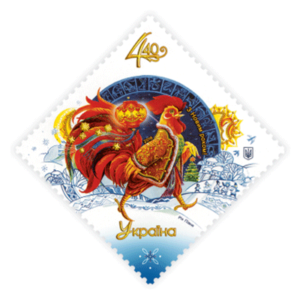 Issue Date: November 11, 2016

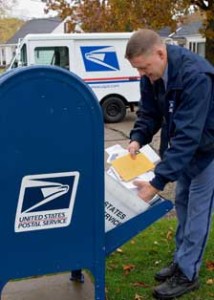 WASHINGTON — The United States Postal Service today filed notice with the Postal Regulatory Commission (PRC) of price changes for Mailing Services products to take effect next year, following the end of the holiday mailing season. The new prices, if approved, include a two cent increase in the price of a First-Class Mail Forever stamp, returning the price to 49 cents, the price of a Forever stamp before the Postal Service was forced to reduce prices by the PRC as part of the exigent surcharge removal.
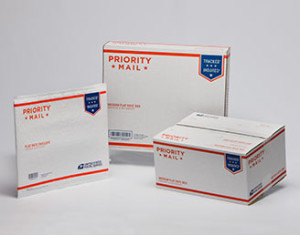 WASHINGTON — The U.S. Postal Service today filed notice with the Postal Regulatory Commission (PRC) of price changes for Shipping Services products to take effect next year, following the end of the holiday mailing season. The filing does not include any price increase for First-Class Package International Service, Priority Mail Express International and Priority Mail International.
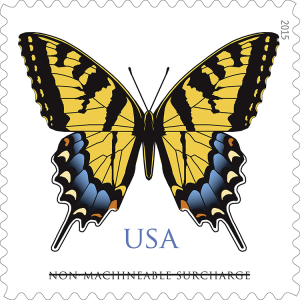 5137 (47¢) Jack-o’-lantern with four teeth booklet stamp
 usually work hard to build up large fat reserves before they bed down, and subsist on this during their sleep. They might wake up at intervals to defecate or top up on food. Few British mammals hibernate during the winter – only the dormouse, hedgehog and the bat species.
 British snakes also hibernate through the winter months. The grass snake is the UK’s largest snake, growing to 150cm in length and identifiable by its yellow or cream band behind the head and its delicate body markings. They live in a wide range of wetland habitats but also venture into gardens. Grass Snakes eat as much as possible before they go into hibernation to store up enough fat in their bodies to live off during their long winter sleep.
 Number of stamps:Four
 As overprinted by Post & Go machine: Brown long-eared ba
 Royal Mail has issued Christmas stamps since 1966 and is therefore celebrating fifty years of Special Stamps this year.
 Design: The Chase
 The fourth stamp depicts the Virgin and Child, which was painted around 1460 by a highly esteemed painter from Florence, Italy, known only as the Master of the Castello Nativity. This rare painting uses gold and tempera, a pigment common until the advent of oil paint, whose many layers create intense colours. Virgin and Child is part of a generous donation of paintings made by Michal and Renata Hornstein to the Montreal Museum of Fine Arts.

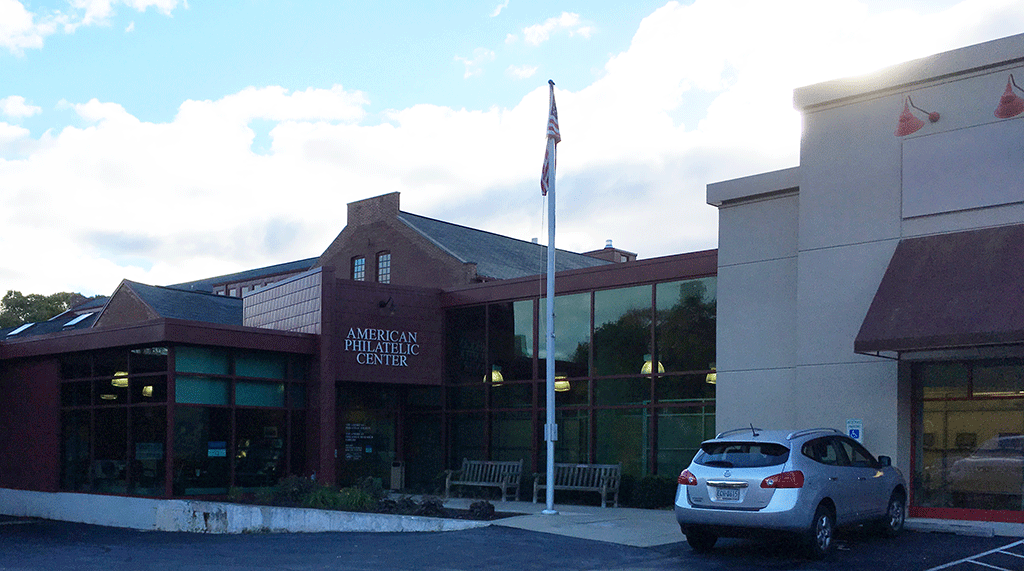 The exterior of the building, which the APRL shares with the American Philatelic Society, The APRL is the owner and leases space to the APS, which in turn provides services.
 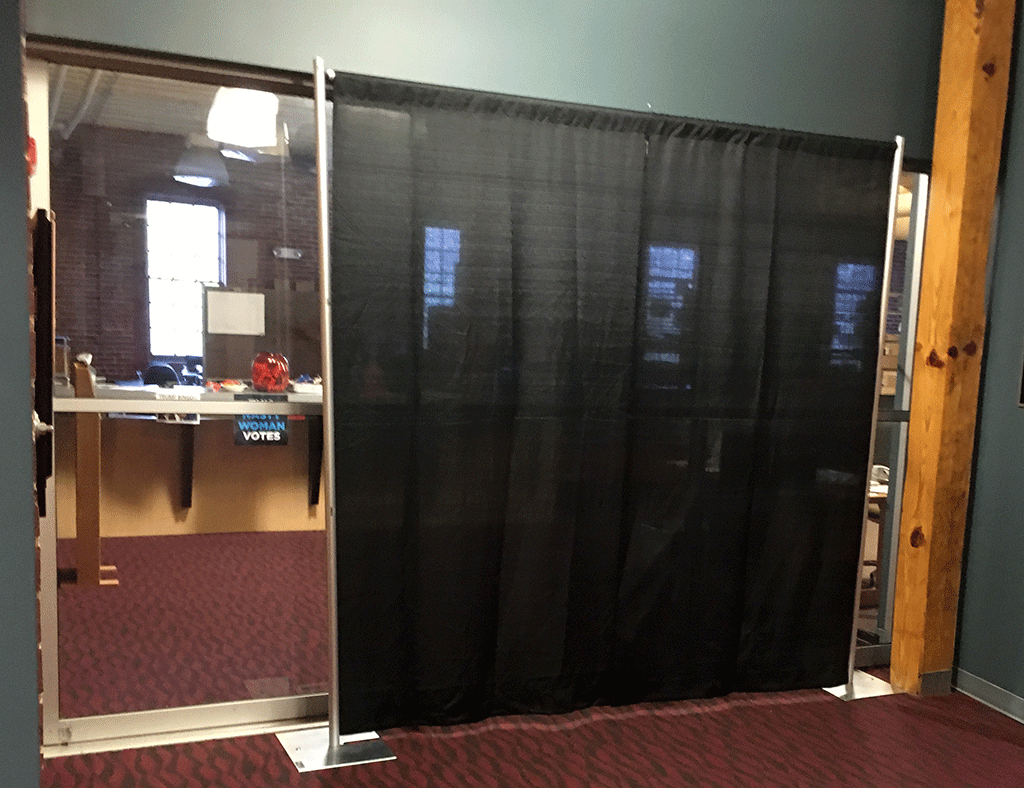 The old library space, in “Building 1,” is now being rented to Centre County Democrats.
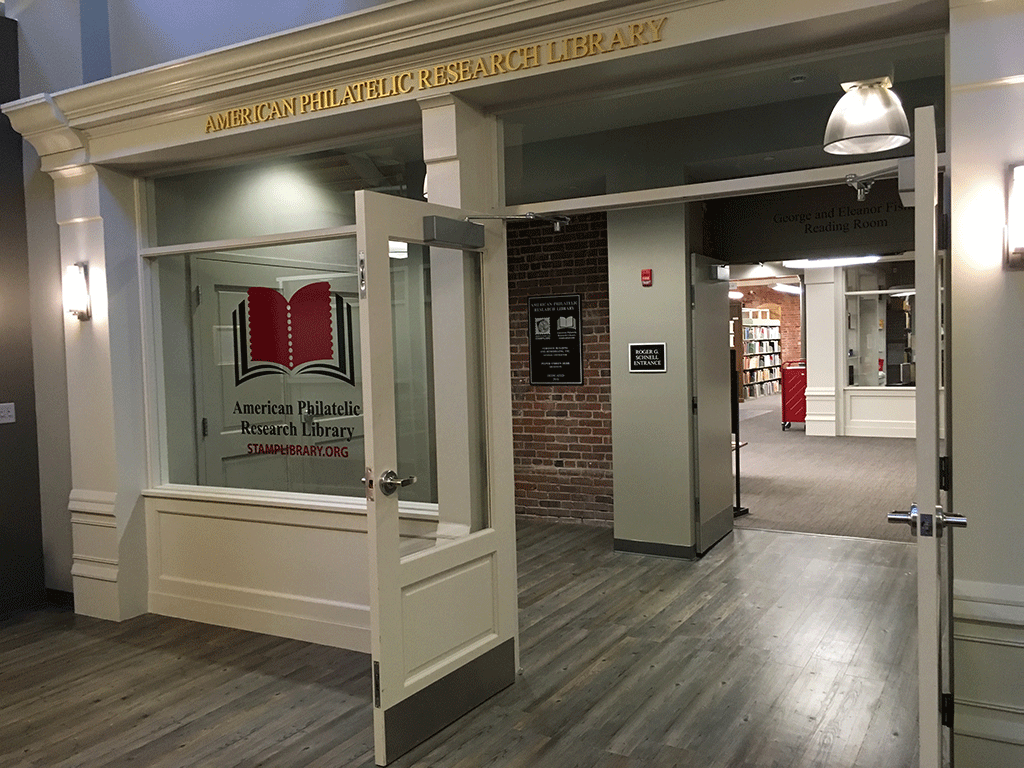 The main entrance to the Library.
 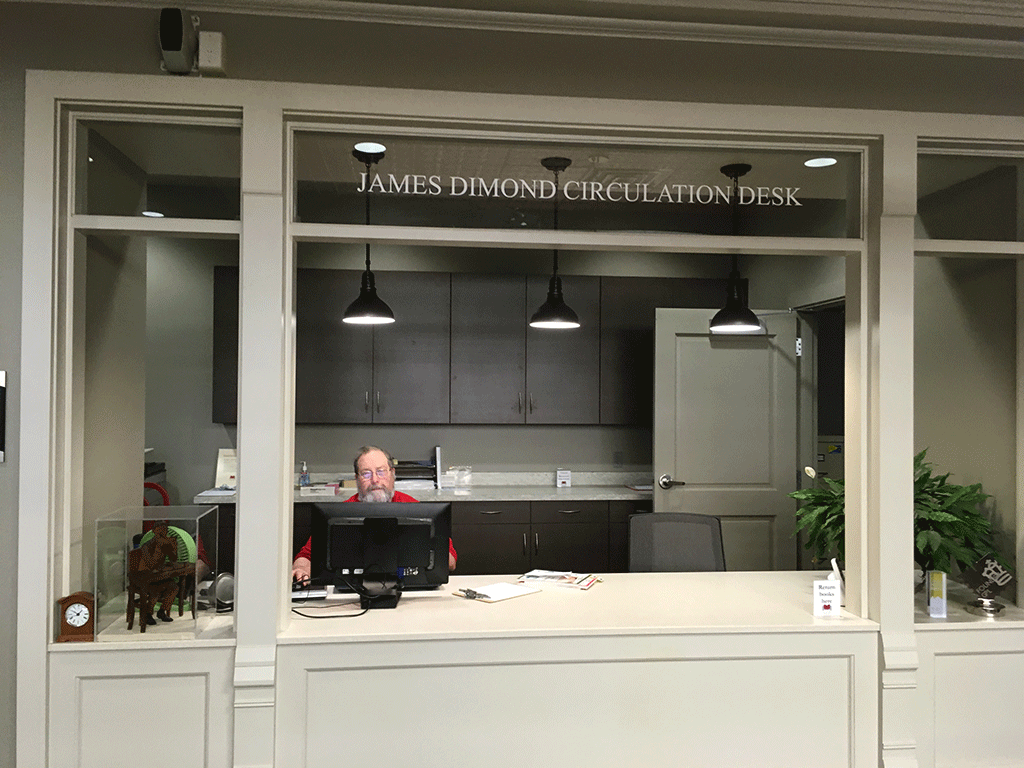 Staffer Fred Baumann at the Circulation Desk
 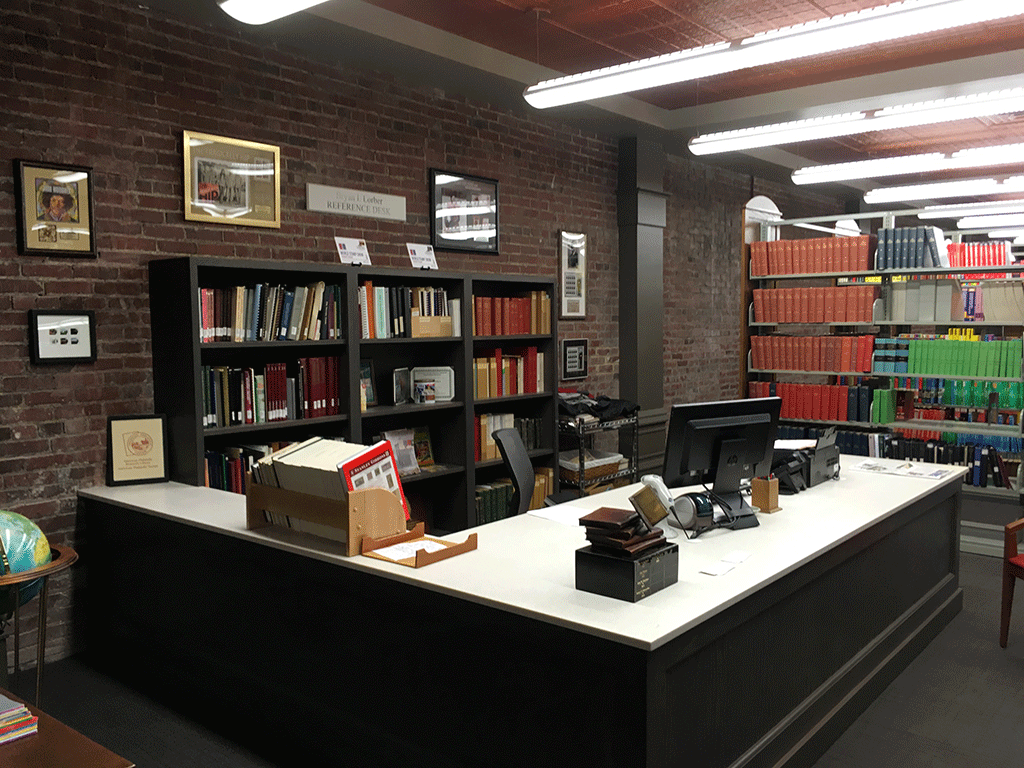 The Reference Desk on the first floor.
 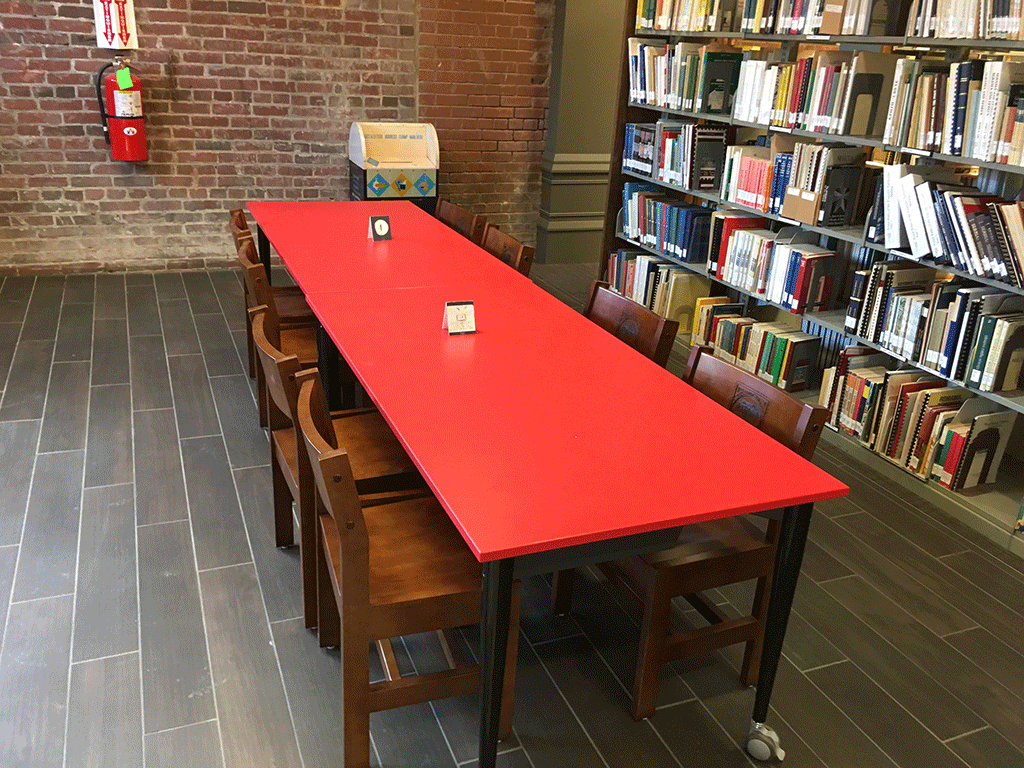 This is the children’s area. The table and chairs are, well, child-size.
 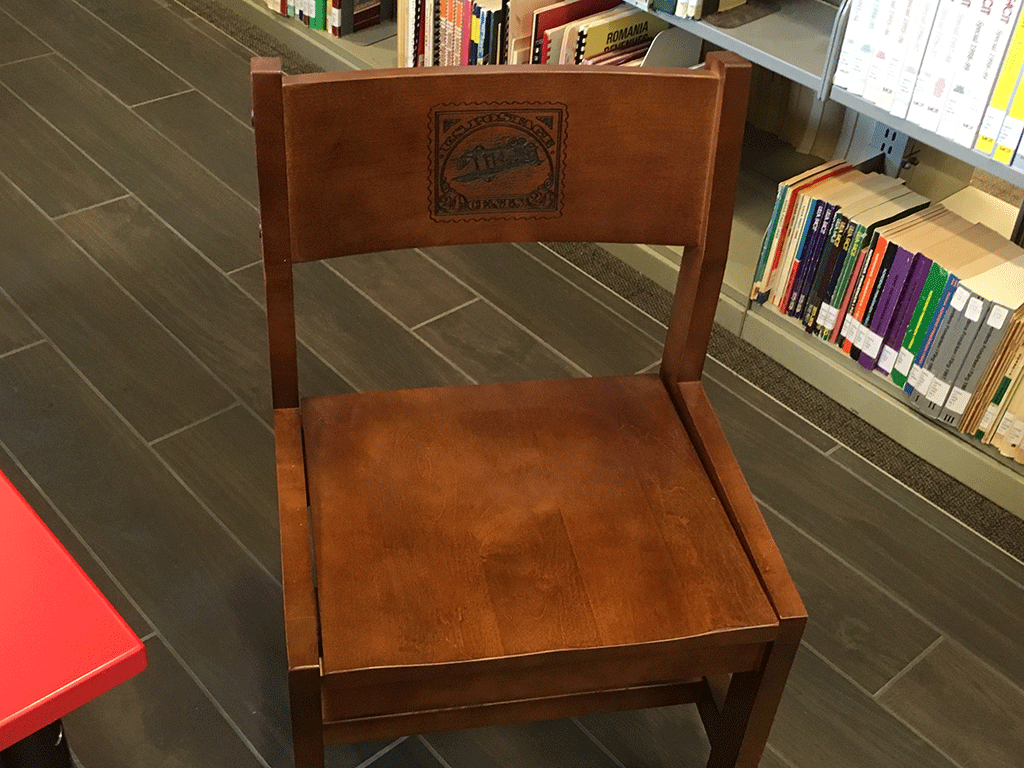 The company making the chairs called the APRL before burning the design into the chair backs: “Do you know the airplane is upside down?”
 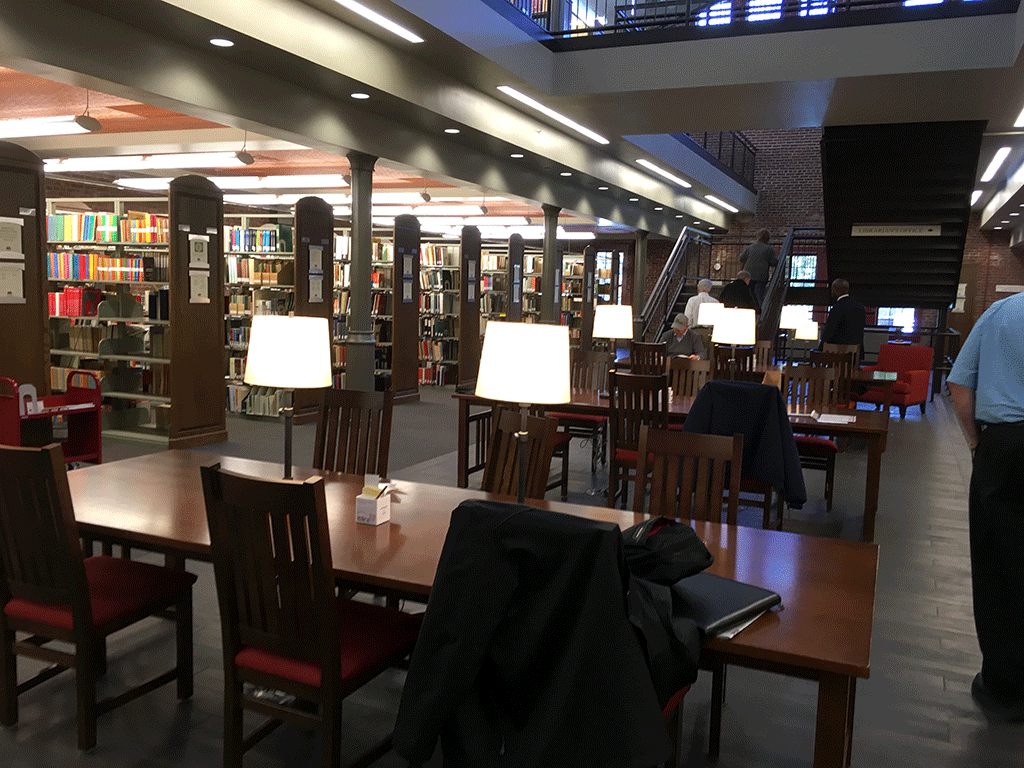 The main floor reading area.
 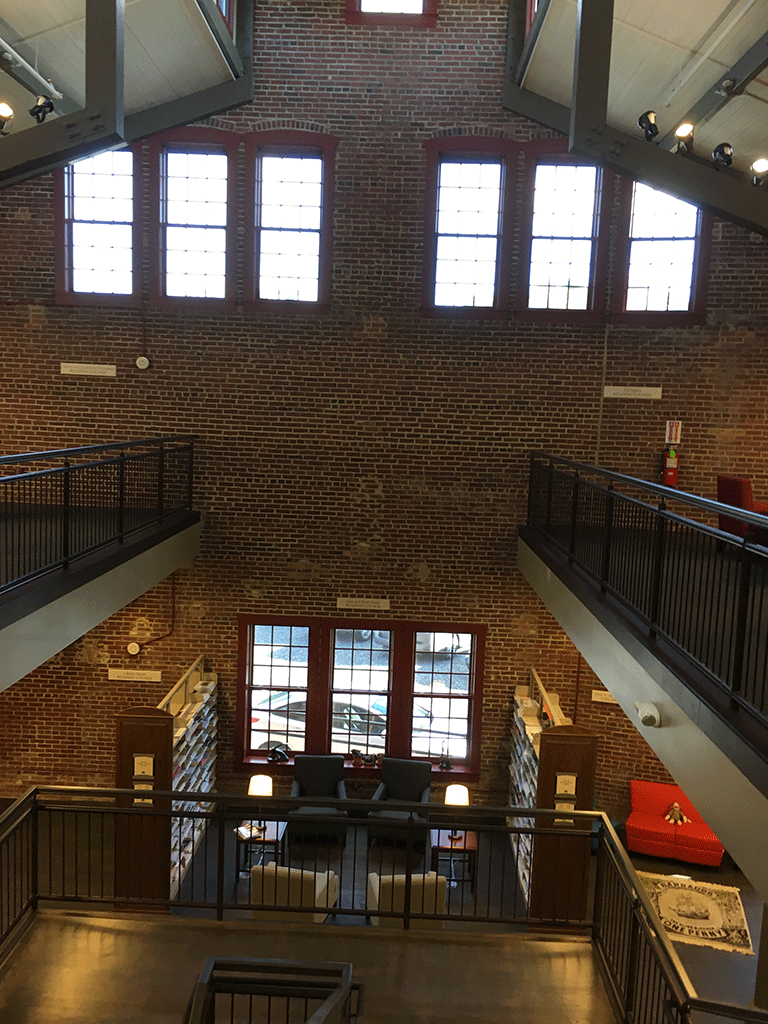 The second floor atrium. In 2001 or 2002, when the APS and APRL were considering buying the “Match Factory,” I was up in the second floor loft area, where there was not much of a floor and what there was wasn’t terribly safe. I saw the view out the end of the building and said, “Wow. This is going to be something some day.” It is.
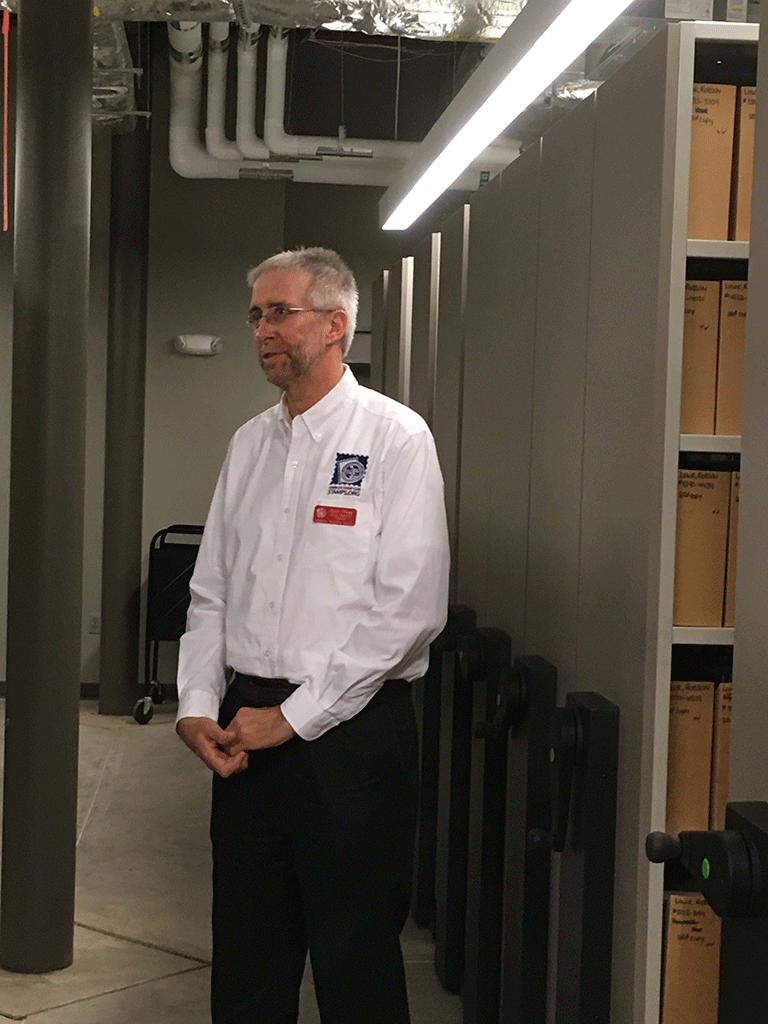 Our tour of the new facility was conducted by librarian Scott Tiffney (correct spelling). This photo was taken on the second floor in the less-public areas containing material that is less in demand.
 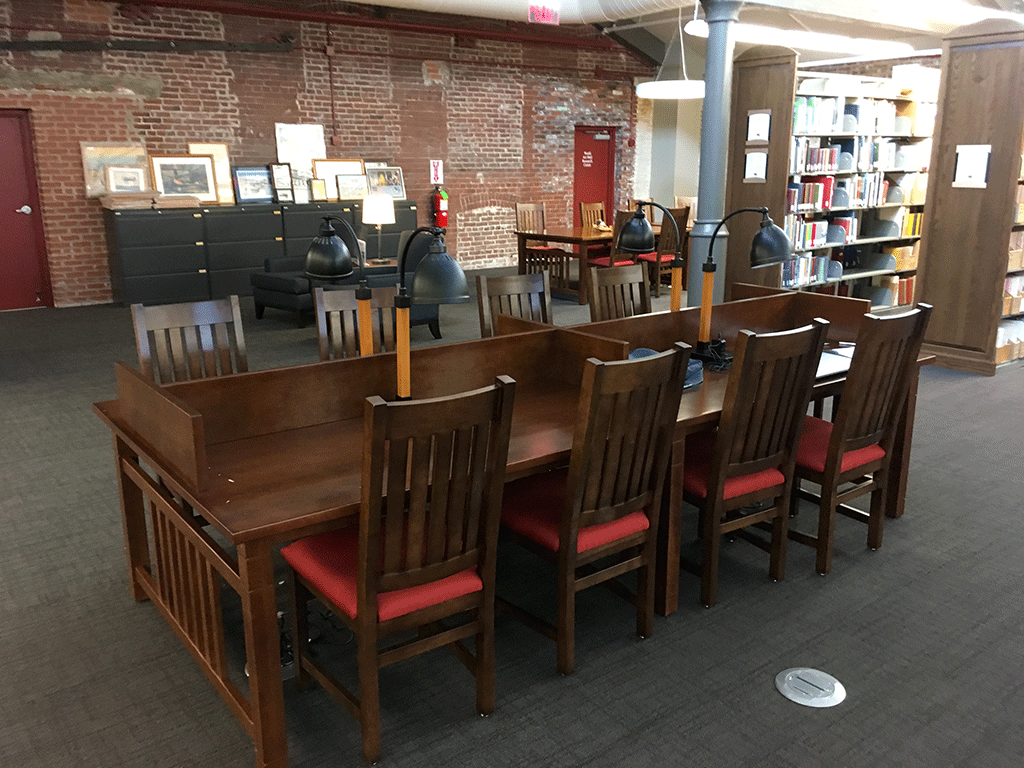 A reading desk on the second floor.
 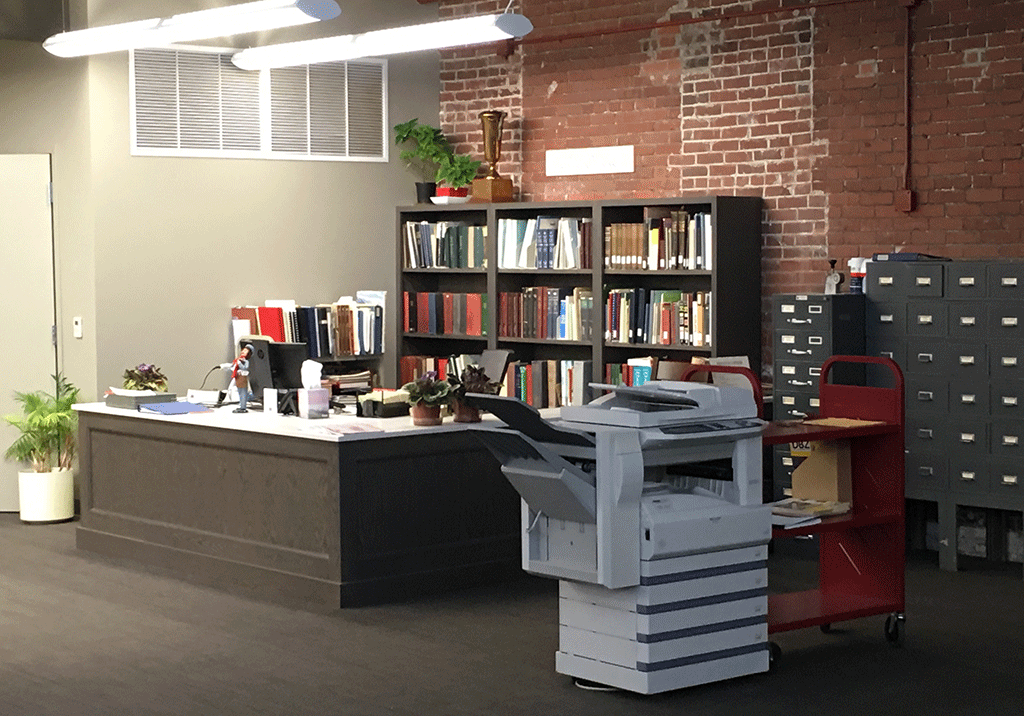 The upstairs reference desk, usually staffed by the Technical Resources library, Betsy Gamble. Pay particularly attention to the potted plant on the left. You’ll see why below.
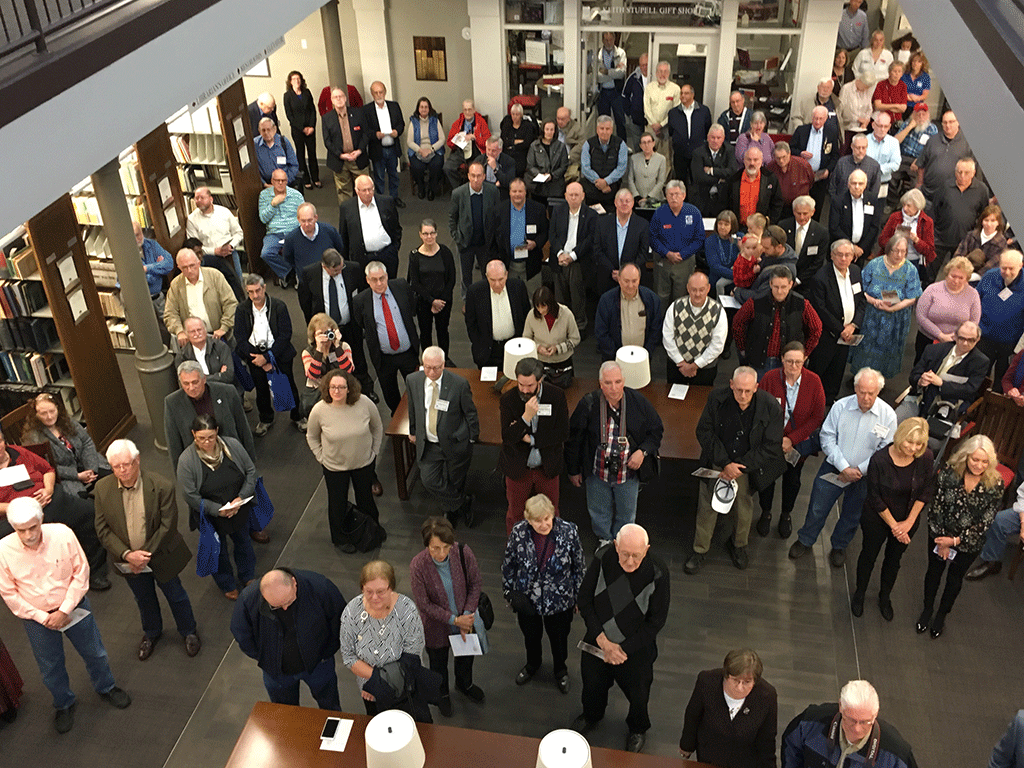 People awaiting the start of the ceremony. How many do you know?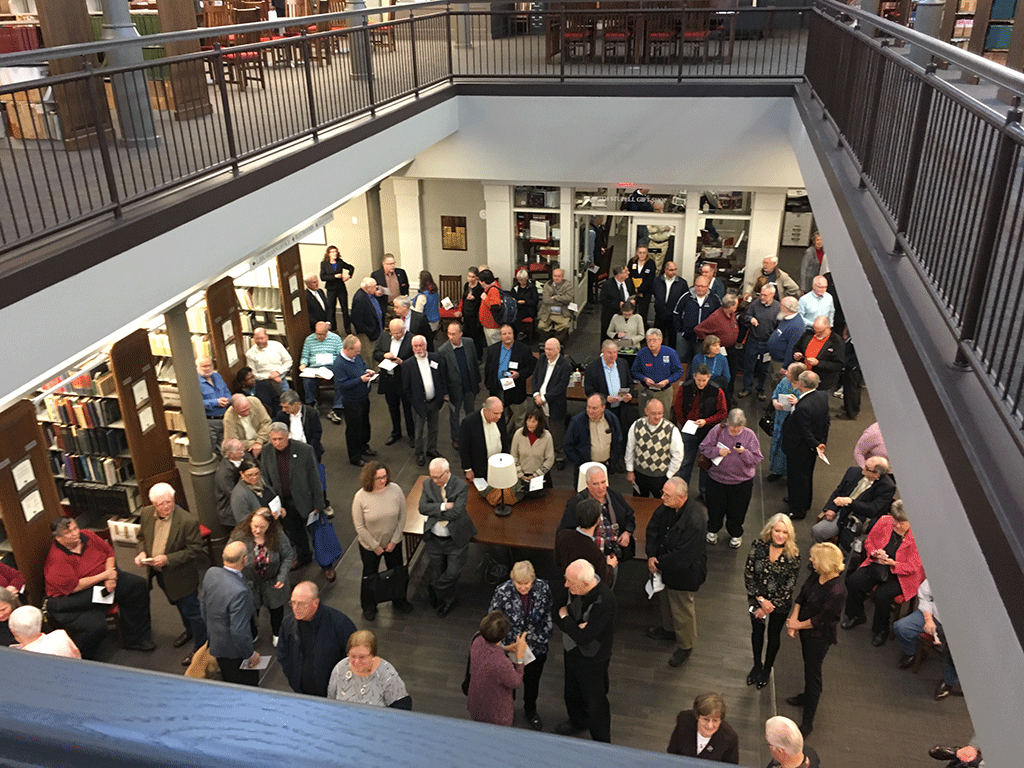
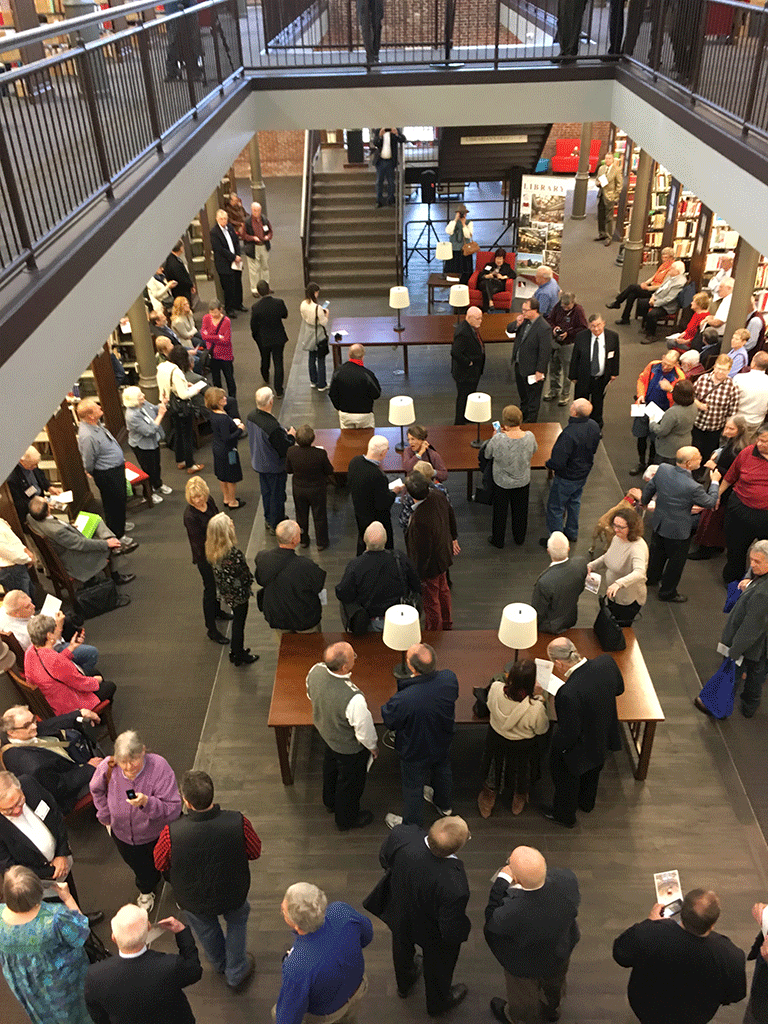
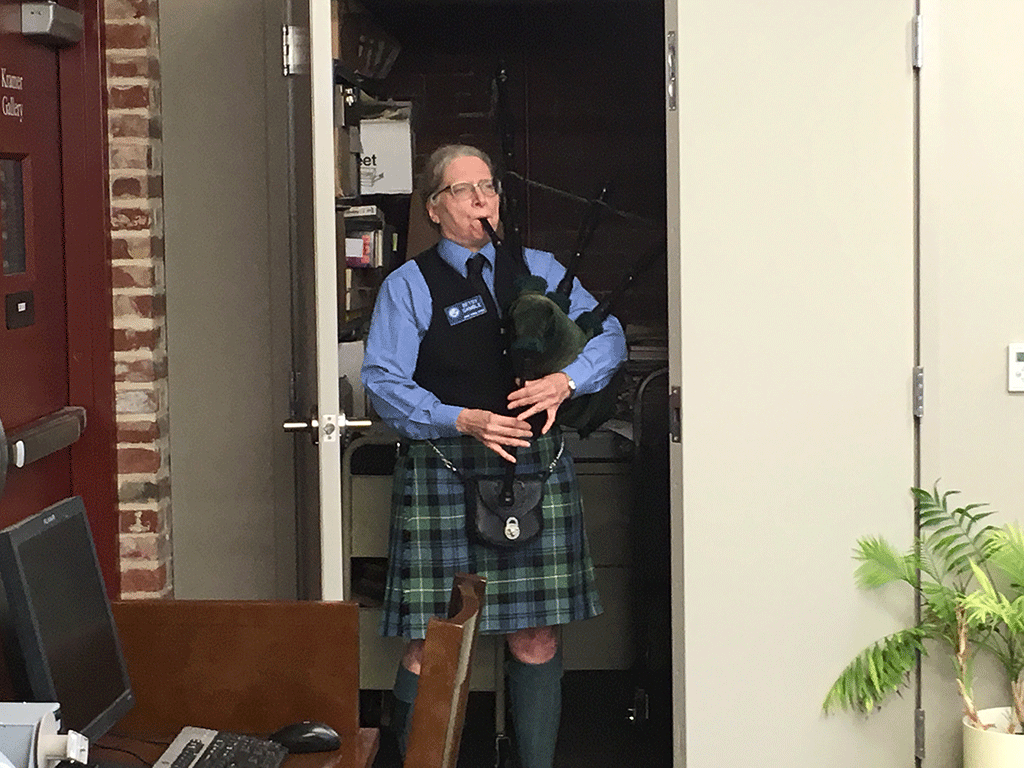 Music before the ceremony was provided by bagpiper Betsy Gamble, the APRL’s Technical Services Coordinator. Why is she in the closet next to her usual station (to the right of the potted plant)? “People said I was too loud,” she told The VSC.
 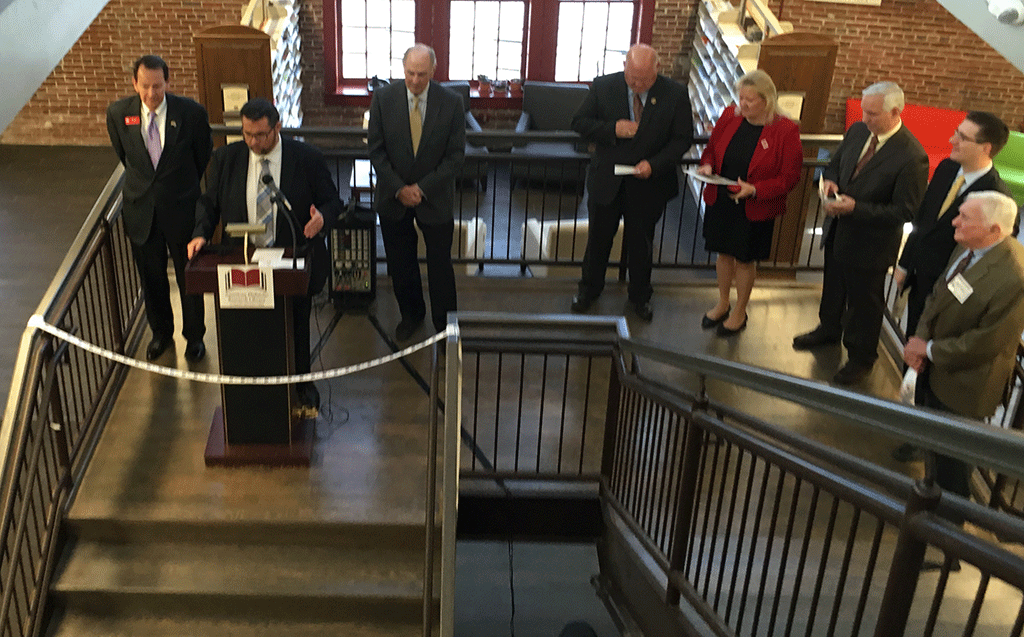 APS/APRL executive director Scott English speaking at the dedication.
  Bob Lamb, who as executive director of the APS/APRL guided the acquisition of “The Match Factory” and its initial stages of renovation.
 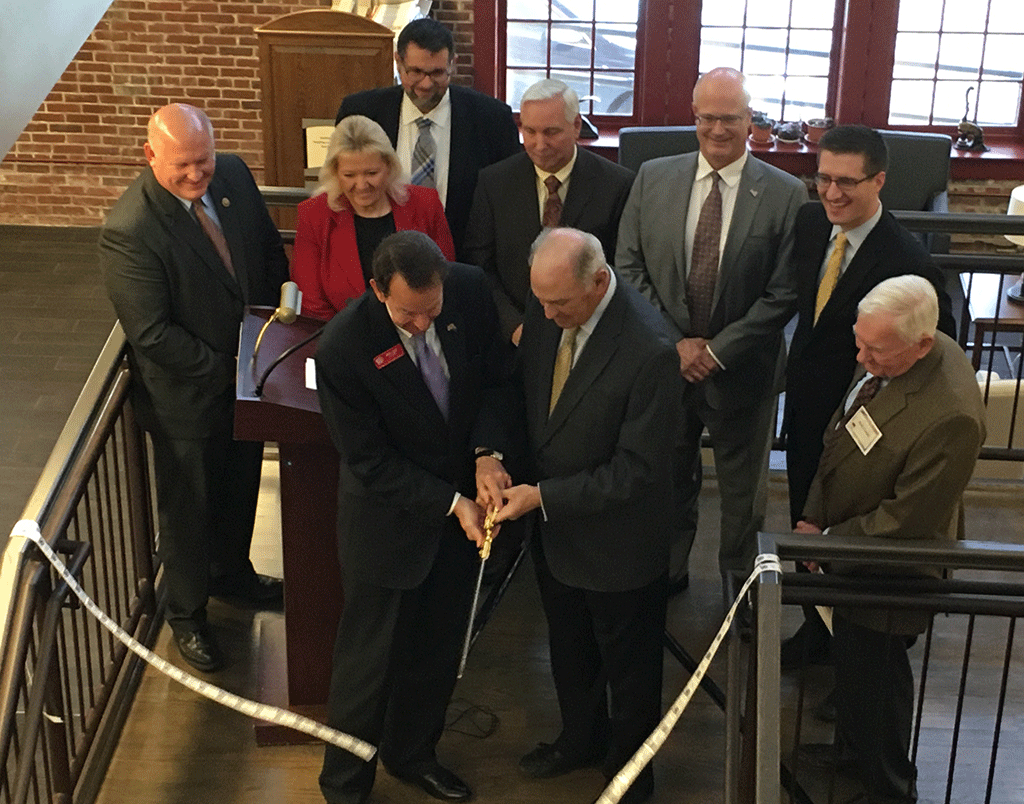 APS president Mick Zais (left) and APRL president Roger Brody cut the ribbon (of stamps, of course) to signify the dedication of the new facility. Behind them, from left, U.S. Rep. Glenn “GT” Thompson; Mary-Anne Penner, Director of Stamp Services, U.S. Postal Service; English; Randy Brachbill, vice president, Bellefonte Borough Council (and husband of APS Director of Education Cathy Brachbill); Michael Pipe and Mark Higgins, Centre County Commissioners; and Lamb.
 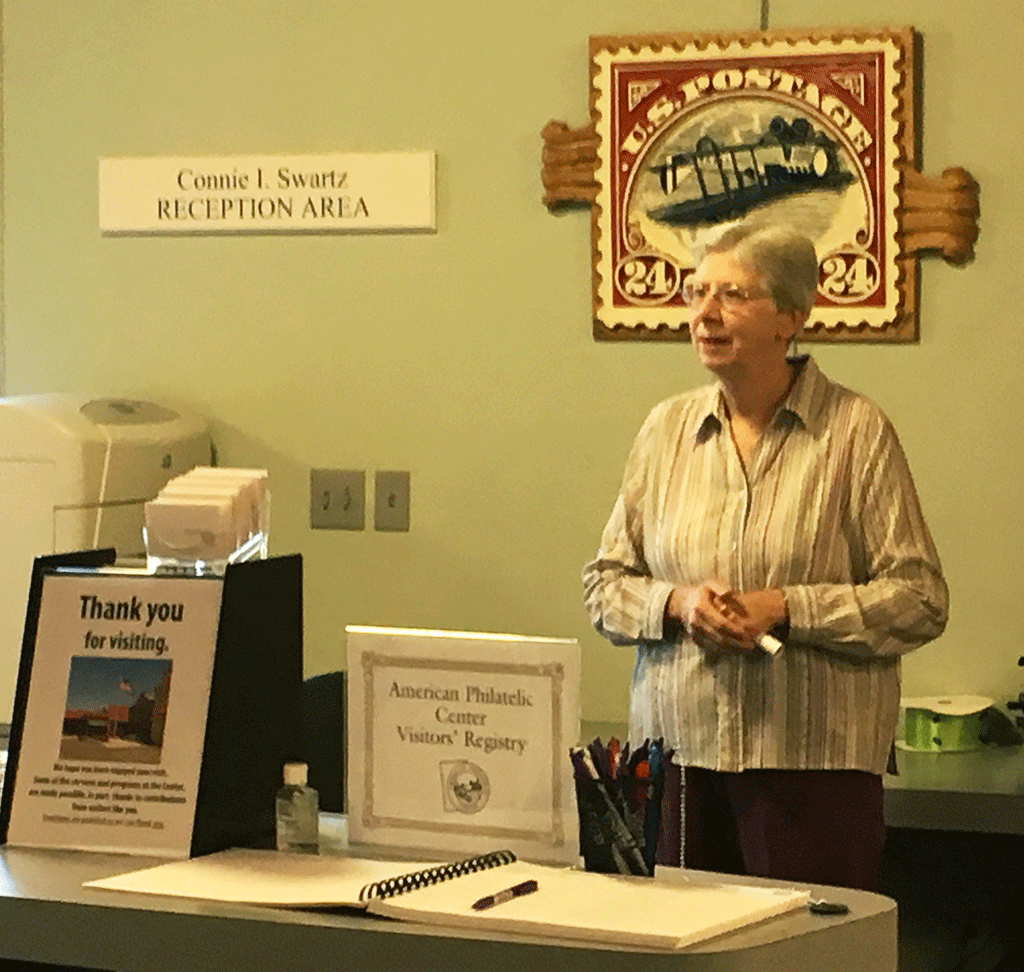 After the Library Dedication was the dedication of the Connie I. Swartz Reception Area, the main entrance to the American Philatelic Center. Swartz was a long-time employee of the APS/APRL, and was often the first contact for members and others when they called or wrote the two organizations. In the photo below, English presents a plaque to her in tribute to her long service.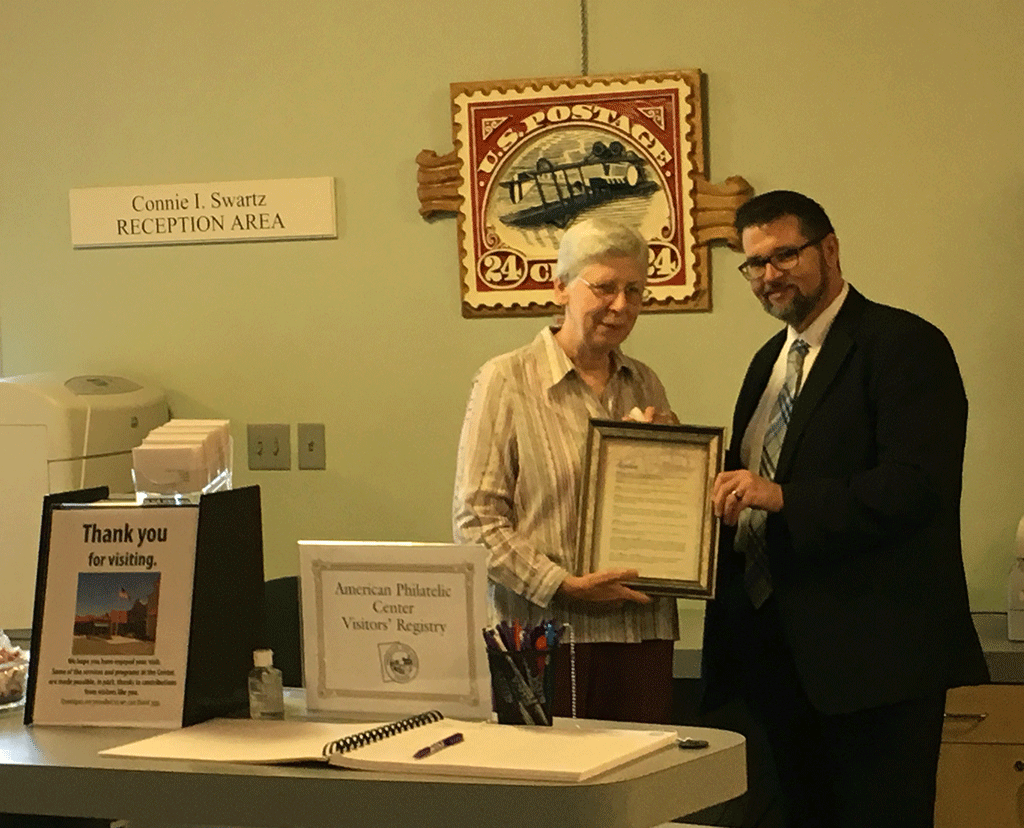
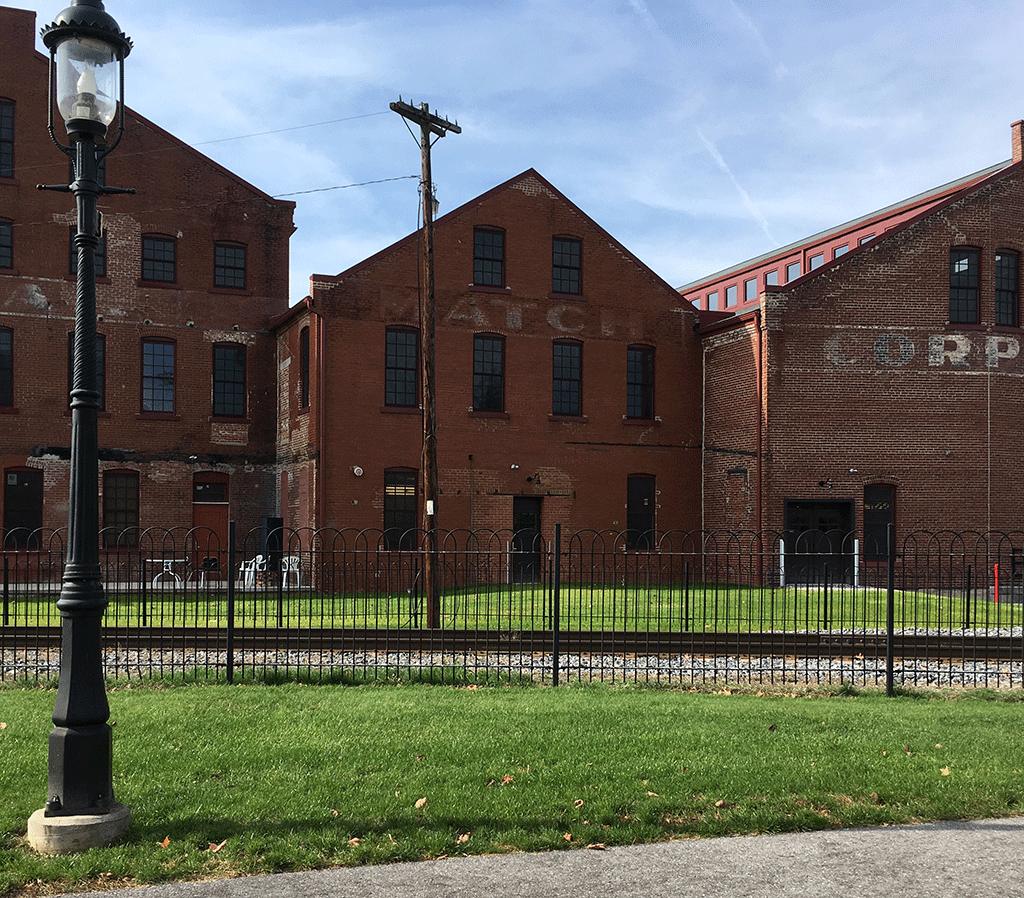 And then we took a walk on the beautiful Saturday afternoon to downtown Bellefonte for lunch, pausing in Talleyrand Park for a different view of the exterior of the American Philatelic Center.
 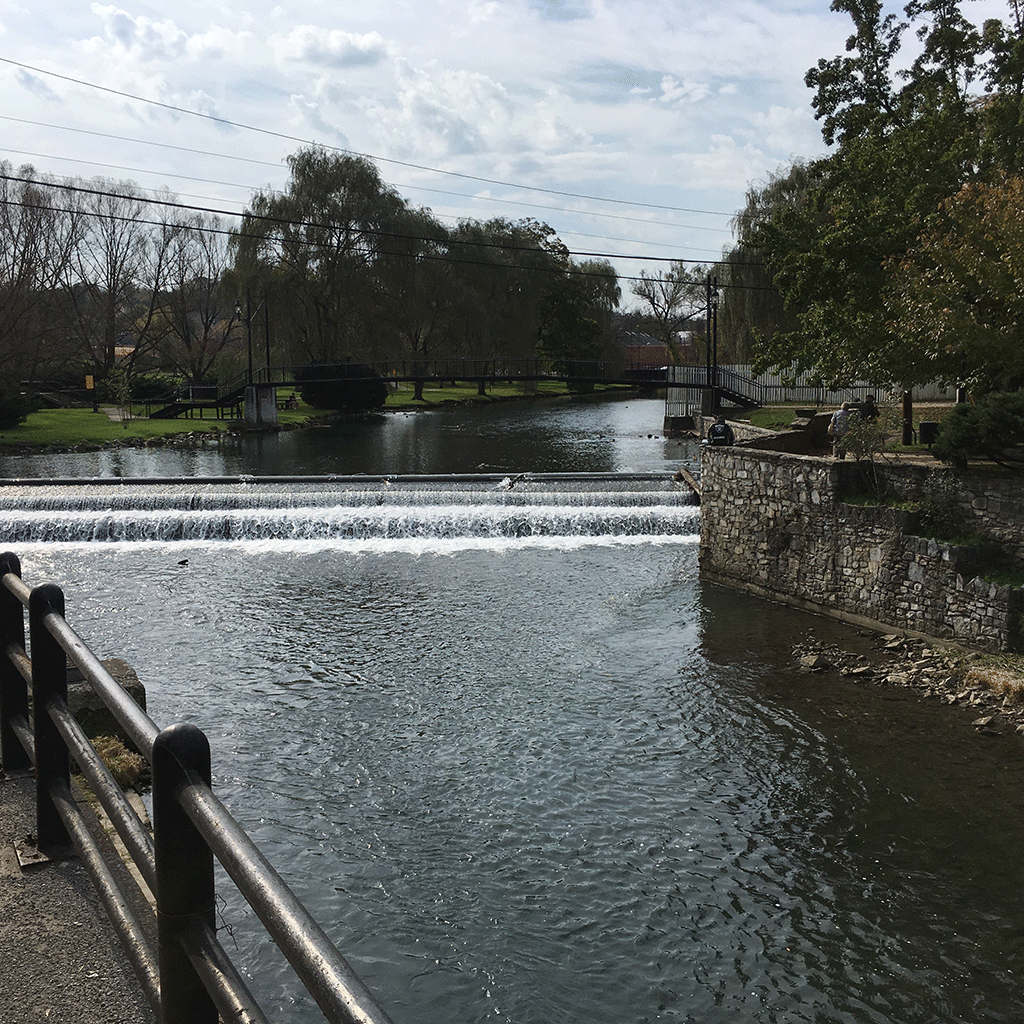 Hard to believe much of the park was once a dump or yard for the lumber/home improvement company that occupied “the Match Factory” in the 1950s and 1960s, isn’t it?
 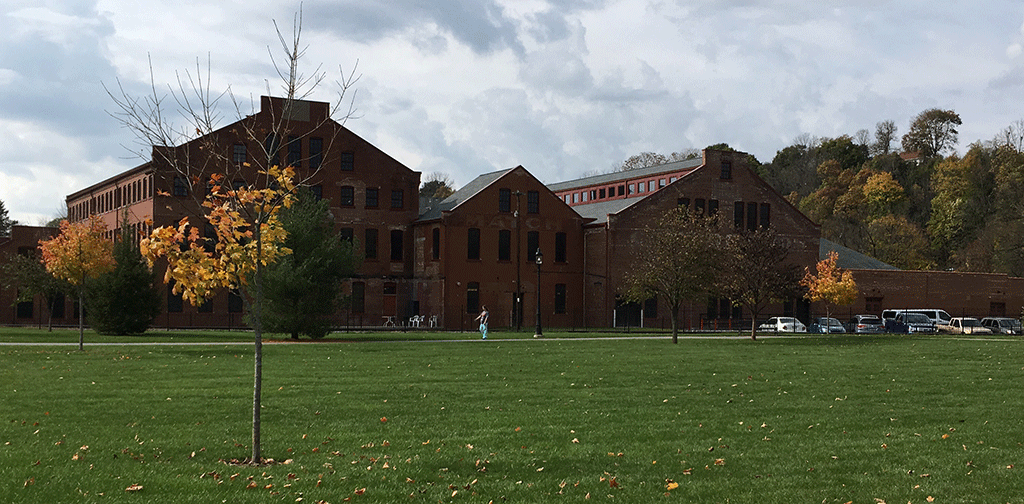 And if you read this far, you heard it here first: There are rumors that the American Philatelic Center may expand some more, acquiring additional land. But not this park. It’s too beautiful.
 A postal sales truck and customer outside the Indian Consulate sold just the stamps, but without the lines at the sales table inside before the ceremony (below).
 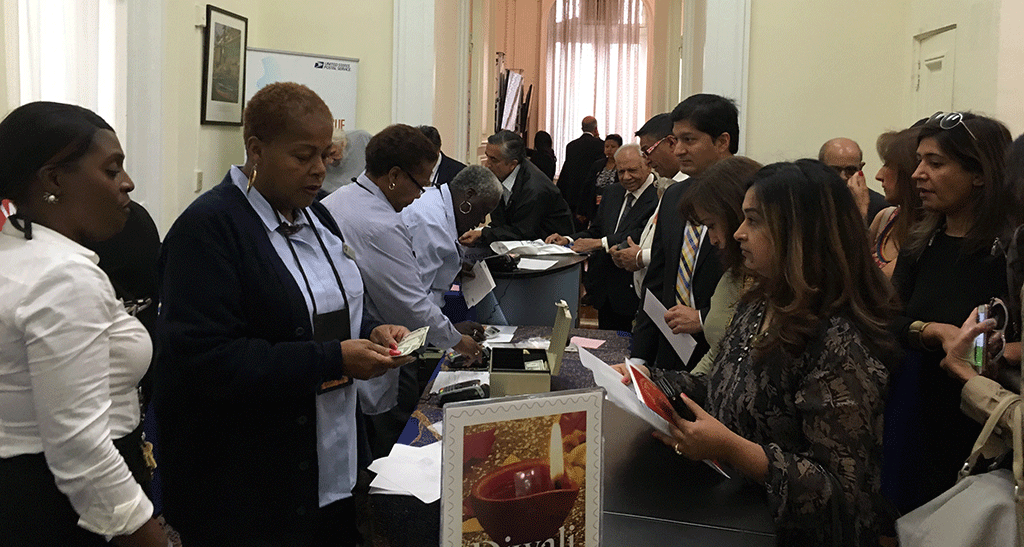 The sales table sold “philatelic collectibles,” too. This photo was taken more than a full hour before the ceremony was scheduled to begin.
 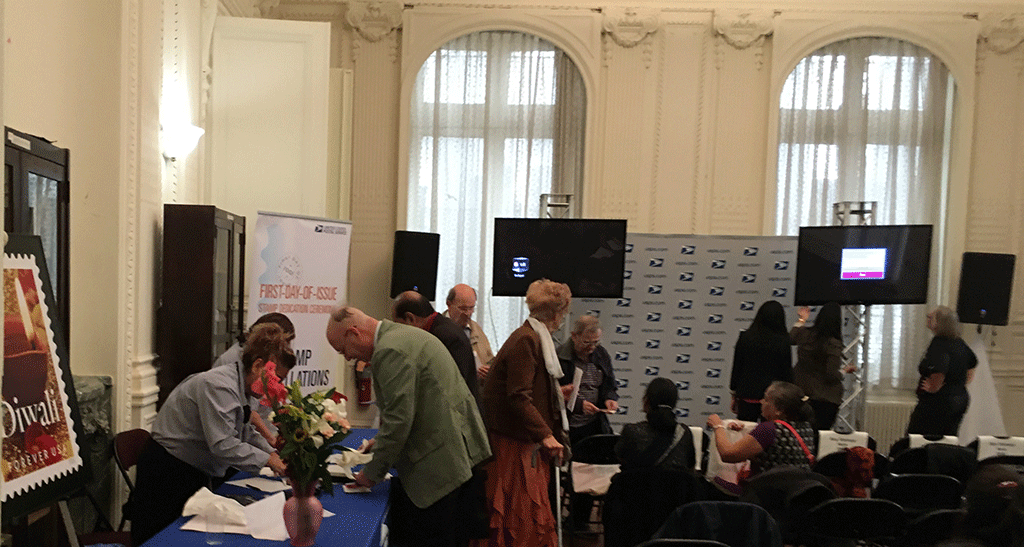 Servicing also began early, with two field pictorials. Foster Miller is the collector obtaining the cancels on the left. This was in the secondary room for those who had not pre-registered for the ceremony. The autographing was also to be held in this room after the ceremony.
 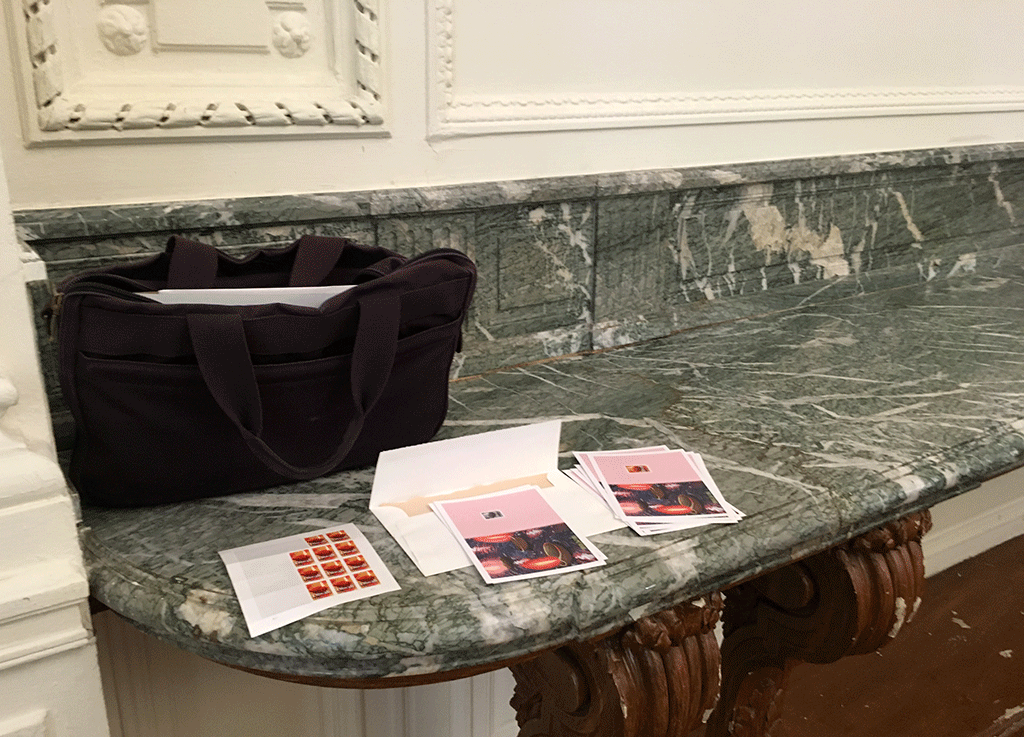 I don’t know what this first-floor room (with the cancelers) was originally used for, but it had a convenient marble shelf in the back for affixing stamps to my Dragon Cards! Now if only I had picked the correct (more adept) canceler of the two.
 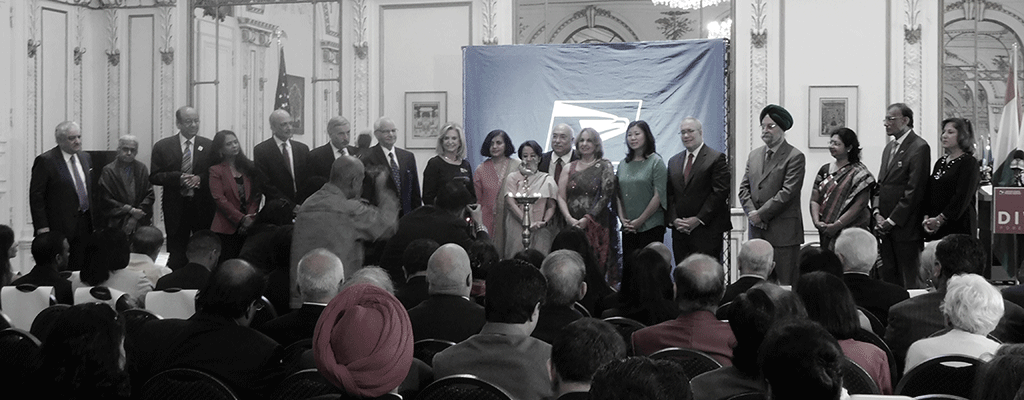 At the beginning of the ceremony, all the dignitaries — and there were far more of them than are listed in the ceremony program, and all of them spoke, too — were called forward for the lighting of diyas.
 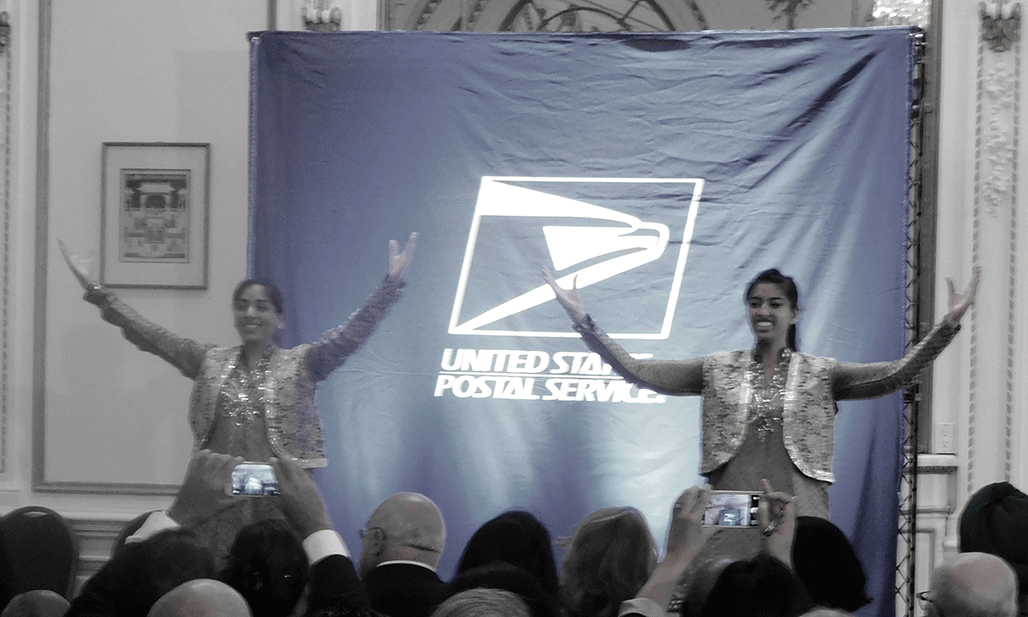 There were several interludes of dancing by members of the Shaan Mutiyaaran Di Bhangra Club. (Photo above by VSC. Below, courtesy Daniel Alfala, U.S. Postal Service.)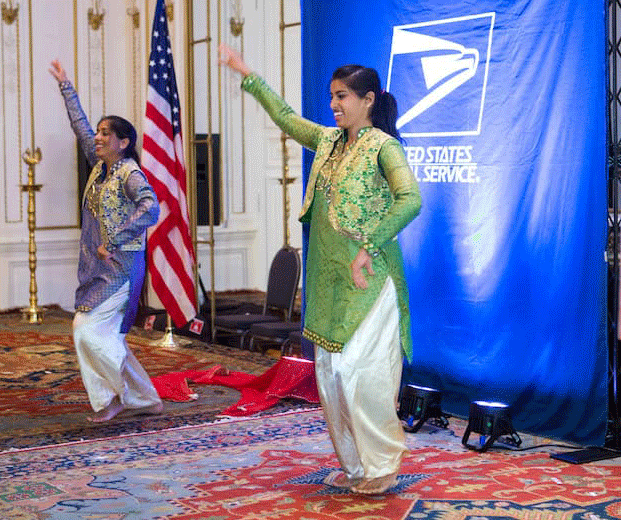
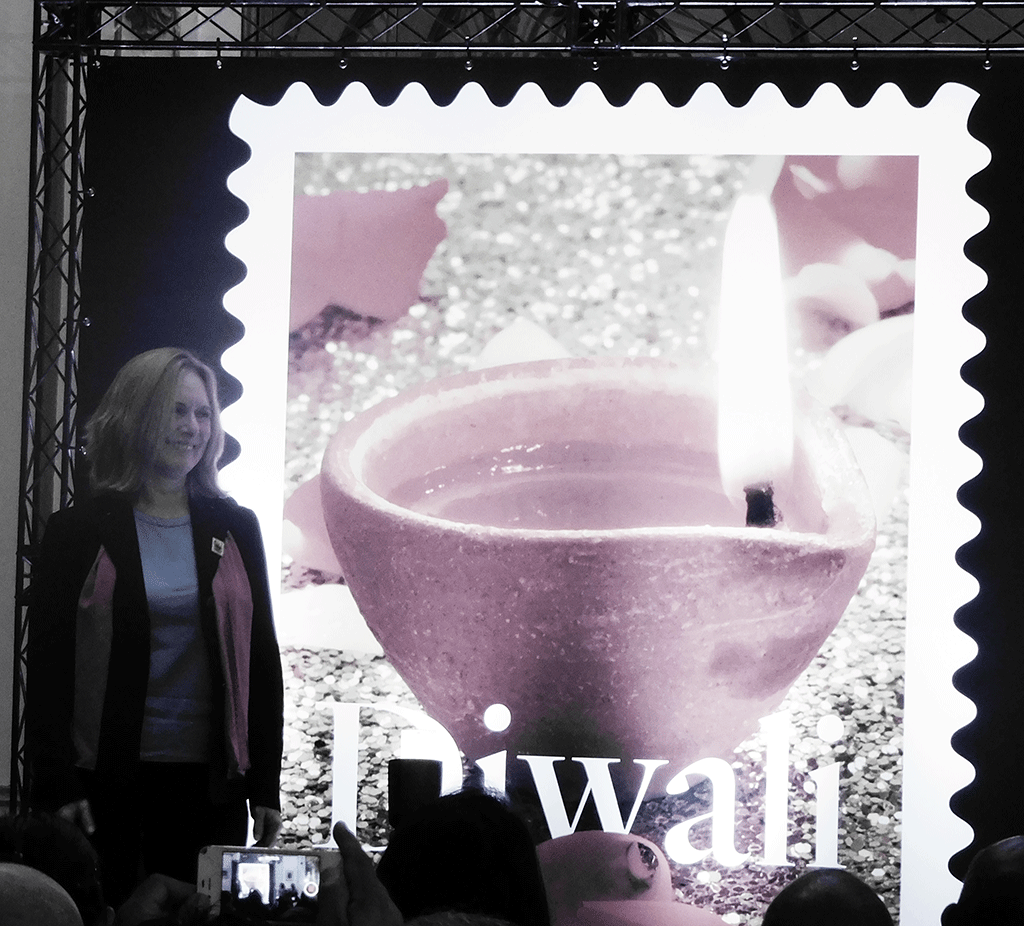 Stamp design photographer Sally Andersen-Bruce was not listed on the program, not introduced earlier and not brought up for the diya-lighting, but was introduced during the ceremony and called up for recognition for her photograph on which the stamp design is based. Watch for a Virtual Stamp Club radio interview this weekend.
 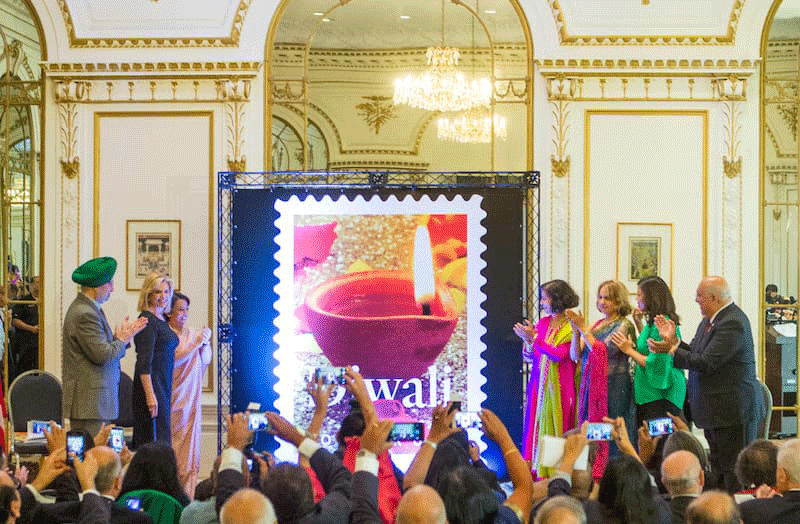 And, of course, the unveiling of the stamp design. From left, I believe, former Indian Ambassador to the U.N. Hardeep Singh Puri, U.S. Rep. Carolyn Maloney, Consul General Riva Ganguly Das, (the stamp design), USPS VP Pritha Mehra (partly hidden), Diwali Stamp Project chair Ranju Batra, U.S. Rep. Grace Chen, master of ceremonies and chair of the National Advisory Council for South Asian Affairs Ravi Batra. (Photo courtesy Daniel Alfala, U.S. Postal Service)
 Several speakers, but especially master of ceremonies Ravi Batra, expressed how pleased they were that the USPS had sent “one of our own” to be the “dedicating [postal] official” at ceremony: USPS VP, Mail Entry & Payment Technology, Pritha Mehra. (Photo courtesy Daniel Alfala, U.S. Postal Service)
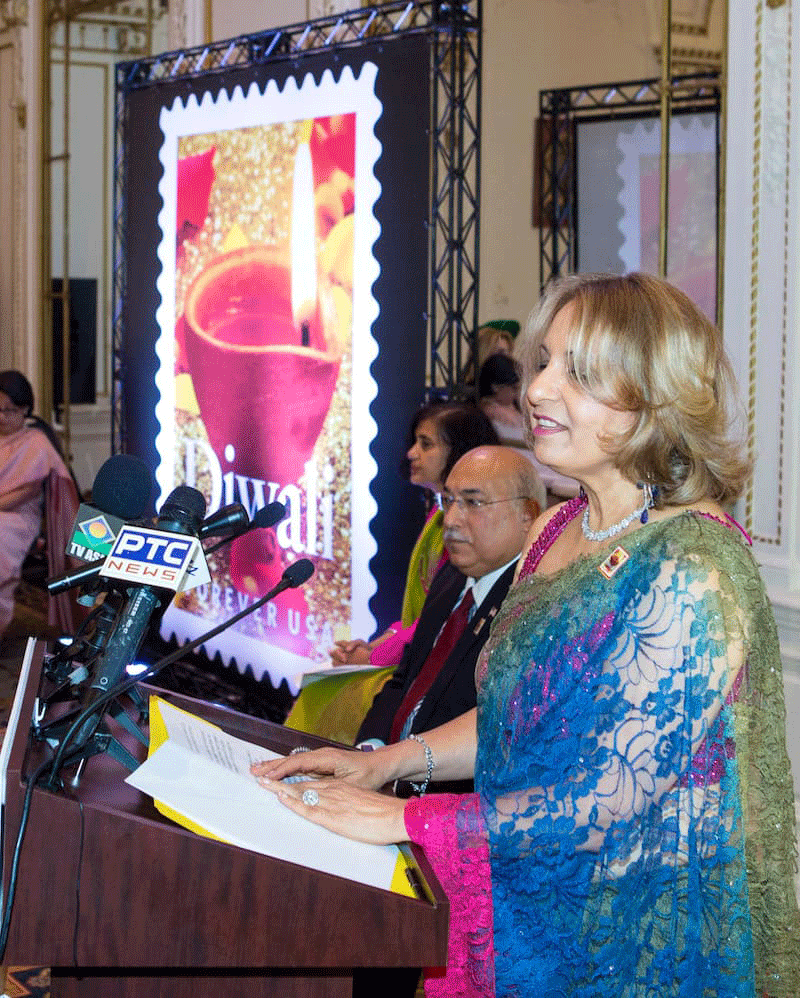 Ravi’s wife, Ranju Batra, spent seven years campaigning for this stamp, even speaking to the prime minister of India about it. She said at one point, a postal official advised her to forget the online petitions, because “e-mails don’t use stamps.” She got the message, and subsequent petitions and pleas were mailed in on paper. Ravi Batra is seated next to her. (Photo courtesy Daniel Alfala, U.S. Postal Service)
 Maloney is seen here purchasing some of the Diwali stamp products at the sales booth inside the consulate. (Photo courtesy Daniel Alfala, U.S. Postal Service)
  Consul General Riva Ganguly Das (Photo courtesy Daniel Alfala, U.S. Postal Service)
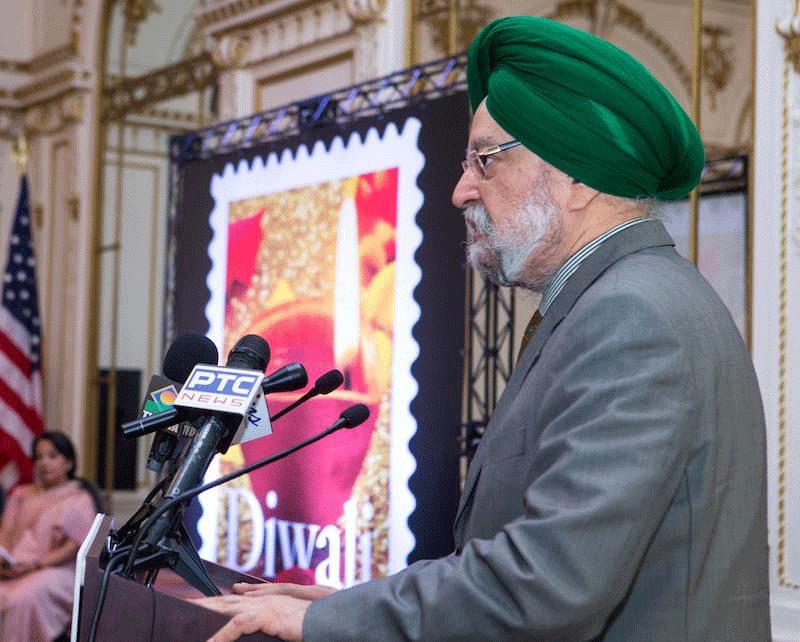 former Indian Ambassador to the U.N. Hardeep Singh Puri (Photo courtesy Daniel Alfala, U.S. Postal Service)