This semi-postal stamp is rumored for December, replacing the Alzheimer’s semi-postal. It is one of the “discretionary” semi-postals whose subject the USPS is allowed to pick. (An earlier report that it would be announced was in error.)
Updated November 8th: The stamp was finally announced on this date. Large version of the design follows the press release.
[press release]
U.S. Postal Service Announces Healing PTSD Semipostal Fundraising Stamp
Dedication Ceremony Will Be Held Dec. 2
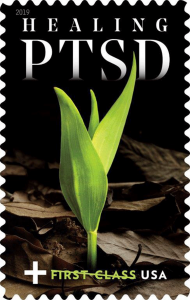 WASHINGTON — The U.S. Postal Service today announced that a semipostal stamp to help raise funds for those diagnosed with post-traumatic stress disorder (PTSD) is being issued Dec. 2 at McGlohon Theater at Spirit Square in Charlotte, NC.
The Healing PTSD semipostal stamp features a photographic illustration of a green plant sprouting from the ground, which is covered in fallen leaves. The image is intended to symbolize the PTSD healing process. Art director Greg Breeding designed the stamp with original art by Mark Laita.
Tens of millions of Americans will experience PTSD in their lifetimes. Today, the nation is increasingly dedicated to compassionately treating this mental health issue.
While post-traumatic disorders have long been a subject of study, PTSD was not officially added to the Diagnostic and Statistical Manual of Mental Disorders, a widely used reference guide published by the American Psychiatric Association, until the late 20th century.
The condition develops in some children and adults who have survived a traumatic event. Experiences such as a natural disaster, car accident, physical or sexual assault, abuse, and combat, among others, can trigger PTSD.
When the Healing PTSD semipostal stamp becomes available, it will be sold for 65 cents. The price includes the first-class single-piece postage rate in effect at the time of purchase plus an amount to fund PTSD research. By law, revenue from sales of the Healing PTSD semipostal stamp — minus the postage paid and the reimbursement of reasonable costs incurred by the Postal Service — will be distributed to the U.S. Department of Veterans Affairs.
The Semipostal Authorization Act, Pub. L. 106–253, grants the U.S. Postal Service discretionary authority to issue and sell semipostal stamps to advance such causes as it considers to be ‘‘in the national public interest and appropriate.’’ Under the program, the Postal Service intends to issue semipostal stamps over a 10-year period, with each stamp to be sold for no more than two years. The Alzheimer’s semipostal stamp, issued Nov. 30, 2017, was the first. The Healing PTSD semipostal stamp is the second. Additional discretionary semipostal stamps have not yet been determined.
Under the Act, the Postal Service will consider proposals for future semipostals until May 20, 2023. The Federal Register notice outlining this program can be found at the following url: www.gpo.gov/fdsys/pkg/FR-2016-04-20/pdf/2016-09081.pdf.
Proposals will only be considered if they meet all submission requirements and selection criteria. They may be submitted by mail to the following address:
Office of Stamp Services
Attn: Semipostal Discretionary Program
475 L’Enfant Plaza SW, Room 3300
Washington, DC 20260–3501
Suggestions may also be submitted in a single Adobe Acrobat (.pdf) file sent by email to semipostal@usps.gov. Indicate in the Subject Line: Semipostal Discretionary Program.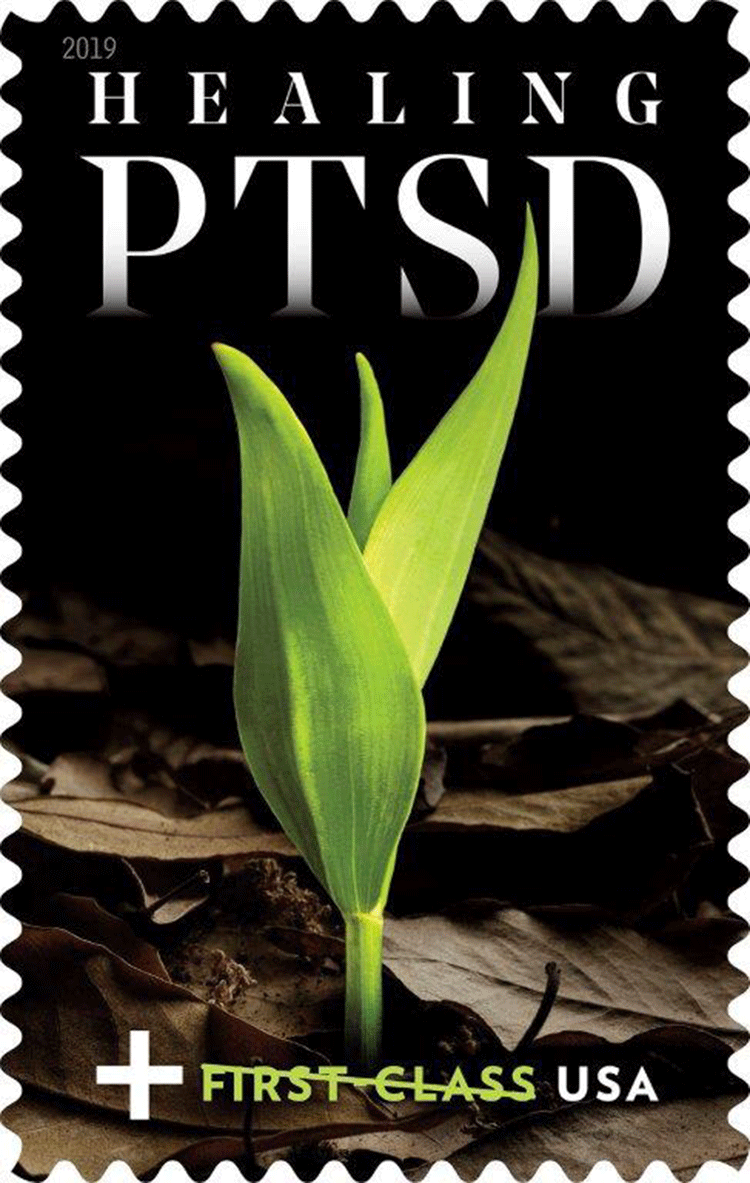
Further updates will appear below this line, with the most recent at the top:
Updated January 4, 2020: The Scott Catalogue number for this semipostal issue is B7.
Updated December 5th:
Here are the first-day postmarks for this issue: 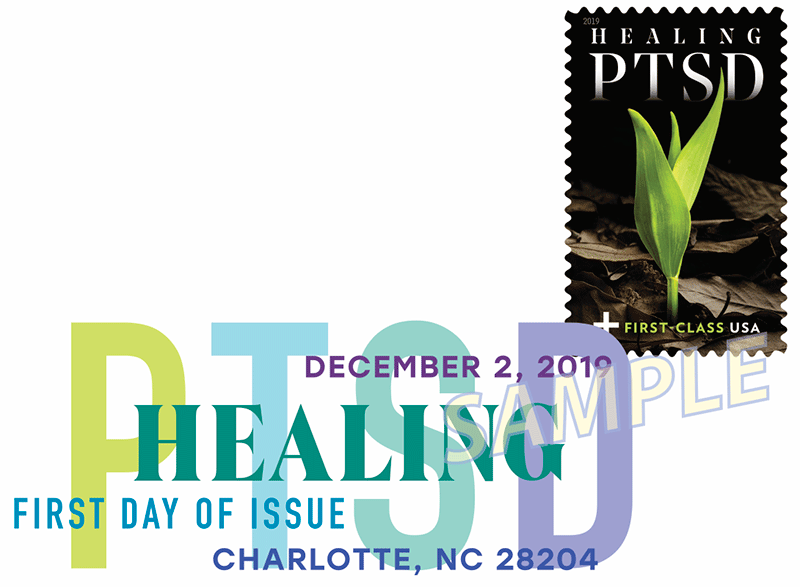 The Digital Color Postmark measures 2.80″ x 1.15″
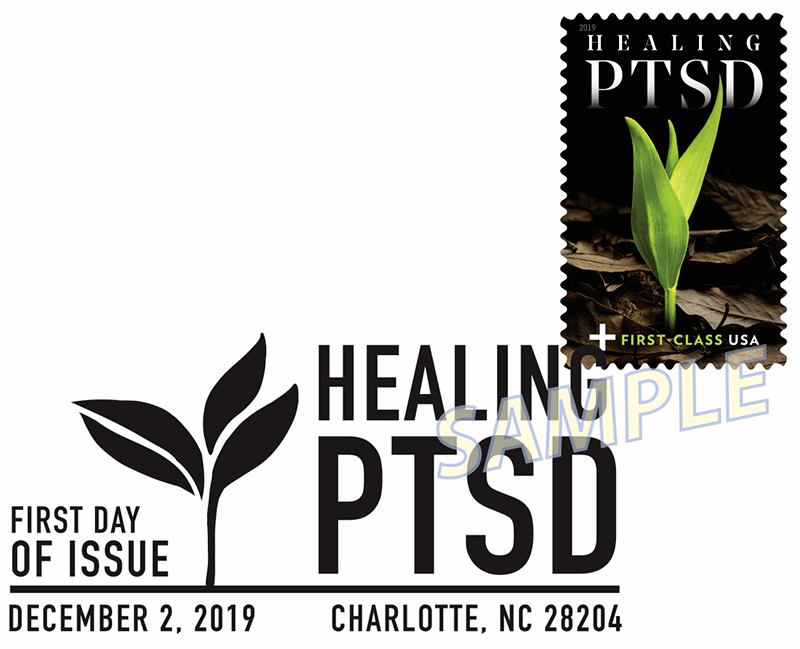 The Pictorial measures 2.73″ x 1.34″
Updated November 18th:
[press release]
U.S. Postal Service Issuing Healing PTSD Semipostal Stamp Dec. 2
What: With this semipostal stamp, the U.S. Postal Service will raise funds to help treat those impacted by post-traumatic stress disorder (PSD). The stamp features a photo illustration of a green plant sprouting from the ground, which is covered in fallen leaves. The image is intended to symbolize the PTSD healing process, growth and hope. Art director Greg Breeding designed the stamp with original art by Mark Laita.
The stamp dedication ceremony is free and open to the public. News of the stamp is being shared with the hashtags #HealingPTSDStamp and #semipostalStamps.
Who:
- Hon. David C. Williams, Vice Chairman, Board of Governors, U.S. Postal Service and Dedicating Official
- Koby J. Langley, Senior Vice President, American Red Cross
- Chuck Denny, Founder, The American Veteran Foundation
- Dan Miller, Wounded Warriors Project
- Donald Tyson, President, Charlotte Chapter, National Alliance on Mental Illness (NAMI)
- Dr. Paula Schnurr, Executive Director, National Center for PTSD
- Maureen O’Boyle, Primetime News Anchor, WBTV, Charlotte, NC, and Emcee
When: Monday, Dec. 2, 2019, at 11:00 a.m. EST
Where: McGlohon Theater at Spirit Square
345 N. College Street
Charlotte, NC 28202
RSVP: Dedication ceremony attendees are encouraged to RSVP at usps.com/ptsd.
Background:
Tens of millions of Americans will experience PTSD in their lifetimes. Today, the nation is increasingly dedicated to compassionately treating this mental health issue.
Many kinds of trauma can lead people to experience persistent symptoms such as intrusive thoughts, nightmares, and difficulty sleeping. Depression, anxiety, and fear can also occur. Though these symptoms may initially interrupt one’s daily life, for most people they typically dissipate over time. However, if these problems continue for more than a month, PTSD may have developed. Symptoms associated with the disorder often can be broken down into four categories: avoidance, hyperarousal, increased negative beliefs and feelings, and reliving.
The two most common treatments for PTSD are medication and psychotherapy, also known as talk therapy. The disorder cuts across demographic lines, though women are at a greater risk than men. Women are more than twice as likely as men to suffer PTSD at some point in their lives.
Sold at a price of 65 cents per First-Class stamp, the PTSD stamp is a semipostal. The price of a semipostal stamp pays for the First-Class single-piece postage rate in effect at the time of purchase plus an amount to fund causes that have been determined to be in the national public interest. By law, revenue from sales (minus postage and the reasonable reimbursement of costs to the Postal Service) is to be transferred to a selected executive agency or agencies. Net proceeds from this stamp will be distributed to the U.S. Department of Veterans Affairs, which oversees the National Center for PTSD.
Updated November 8th: Click here to hear acting Director of USPS Stamp Services Bill Gicker describe for The Virtual Stamp Club the challenges of designing a PTSD stamp, in a 25-second mp3 file.
Updated November 21st:
On December 2, 2019, in Charlotte, NC, the United States Postal Service® will issue the Healing PTSD semipostal stamp (Non-denominated, First-Class Mail® priced at 65 cents) in one design, in a pressure-sensitive adhesive (PSA) pane of 20 stamps (Item 572100). The stamp will go on sale nationwide December 2, 2019, and must not be sold or canceled before the first-day-of-issue.
With this semipostal stamp, the United States Postal Service will raise funds to help treat those impacted by post-traumatic stress disorder (PTSD). The stamp features a photo illustration of a green plant sprouting from the ground, which is covered in fallen leaves. The image is intended to symbolize the PTSD healing process, growth, and hope. Art director Greg Breeding designed the stamp with original art by Mark Laita.
Availability to Post Offices: Item 572100, Healing PTSD Semipostal (Non-denominated, First-Class Mail priced at 65 cents) PSA Pane of 20 Stamps: Stamp Fulfillment Services will make an automatic push distribution to Post Offices of a quantity to cover approximately 30 days of sales.
Sales Policy:
As has been the case with current and previous semipostal stamp issues, all Post Offices must maintain a sufficient inventory level of this item until the stamp is officially withdrawn from sale. The Healing PTSD semipostal stamp is supported by a variety of organizations and individuals who expect the stamp to be available at all Post Offices. If supplies run low, Post Offices must reorder additional quantities using normal ordering procedures.
How to Order the First-Day-of-Issue Postmark:
Customers have 120 days to obtain the first-day-of-issue postmark by mail. They may purchase new stamps at their local Post Office™ or at The Postal Store® website at usps.com/shop. They must affix the stamps to envelopes of their choice, address the envelopes (to themselves or others), and place them in a larger envelope addressed to:
FDOI – Healing PTSD Semipostal Stamp
USPS Stamp Fulfillment Services
8300 NE Underground Drive, Suite 300
Kansas City, MO 64144-9900
After applying the first-day-of-issue postmark, the Postal Service™ will return the envelopes through the mail. There is no charge for the postmark up to a quantity of 50. There is a 5-cent charge for each additional postmark over 50. All orders must be postmarked by April 2, 2020.
Technical Specifications:
Issue: Healing PTSD Semipostal Stamp
Item Number: 572100
Denomination & Type of Issue: Non-denominated, First-Class Mail (65 cents)
Format: Pane of 20 (one design)
Series: N/A
Issue Date & City: December 2, 2019, Charlotte, NC 28204
Art Director: Greg Breeding, Charlottesville, VA
Designer: Greg Breeding, Charlottesville, VA
Typographer: Greg Breeding, Charlottesville, VA
Photographer: Mark Laita, Culver City, CA
Modeler: Joseph Sheeran
Manufacturing Process: Offset, Microprint
Printer: Ashton Potter (USA) Ltd. (APU)
Press Type: Muller A76
Stamps per Pane: 20
Print Quantity: 40,000,000 stamps
Paper Type: Nonphosphored Type III, Block Tag
Adhesive Type: Pressure-sensitive
Processed at: Ashton Potter (USA) Ltd. (APU)
Stamp Orientation: Vertical
Image Area (w x h): 0.84 x 1.42 in./21.336 x 36.068 mm
Stamp Size (w x h): 0.98 x 1.56 in./24.892 x 39.624 mm
Full Pane Size (w x h): 6.5 x 7.67 in./165.1 x 194.818 mm
Colors: Black, Cyan, Magenta, Yellow
Plate Size: 240 stamps per revolution
Plate Number: “P” followed by four (4) single digits
Marginal Markings:
Front: • Plate number four corners
Back: • ©2019 USPS • USPS logo • Two barcodes (572100) • Promotional text • Plate position diagram
Updated December 4th:
A computer glitch prevented this stamp from being sold at most post offices on the first day (December 2nd), reports Linn’s Stamp News. When window clerks scanned the bar code into their terminals, they got a message that the code had been rejected.
When the stamp bar codes are scanned, the sales are tracked. This is particularly important for semi-postal issues like PTSD, explains Michael Baadke in Linn’s, because ten cents of the price of each stamp goes toward a charity — in this case, the National Center for PTSD. The problem was cleared up in a few hours, and did not affect stamp sales at the first day ceremony in Charlotte.

 he American Association of Philatelic Exhibitors has announced the winners of its top awards for 2019.
 or pressure you to make an immediate decision or payment. All official APS correspondence occurs through the phone number (814) 933-3803 and email domain stamps.org.
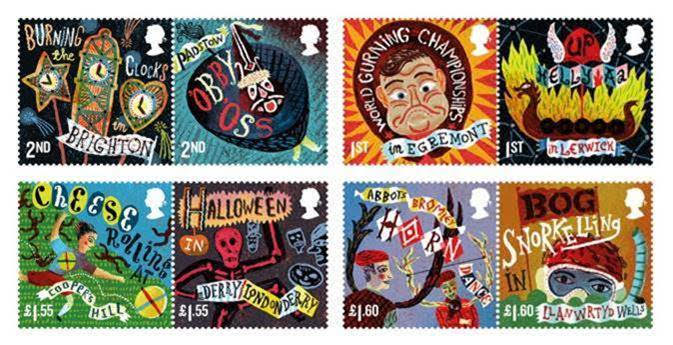 Royal Mail has revealed eight colourful and engaging illustrations, depicting and capturing the spirit of well-known, and some not so well-known, annual customs that take place around the UK. The stamps celebrate the eclectic mix of annual customs and festivals that take place across the UK. Royal Mail worked with award-winning folklorist Steve Roud on the stamp issue
 a. (55¢) Big Bird
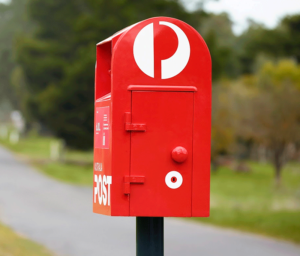 Australia Post has lodged a draft notification with the Australian Competition and Consumer Commission (ACCC) seeking an increase in the Basic Postage Rate (BPR) from $1 to $1.10 to apply from January 2020, the first increase in four years.
 It only took American Philatelic Society executives a moment to know: The “rare Jenny invert” owned by a small southwest Iowa aviation museum was a fake — and not even a good one.
 The Smithsonian Philatelic Achievement Award (SPAA) was established in 2002 to honor and celebrate living individuals for outstanding lifetime achievement in the field of philately. This achievement may include original research that significantly advances the understanding of philately, exceptional service to the philatelic community or sustained promotion of philately to the benefit of current and future collectors.
 The SPAA award medallion is a 3-inch, gold-plated bronze disc depicting a sunburst with eight straight and eight wavy rays. Derived from the family coat of arms of James Smithson, founding benefactor of the Smithsonian Institution, the sunburst became the Institution’s official seal June 3, 1966, and is incorporated into the official flag flown by Smithsonian facilities and Smithsonian-sponsored expeditions throughout the world. As such, it is a universally recognized symbol of enlightenment and learning that links the Smithsonian’s history with its future. The medallion is suspended from a grosgrain neck ribbon in Smithsonian blue and yellow.
 accomplished, lifelong philatelist who possessed a complete collection of stamps of Mexico, Helú was inspired by two foundational experiences in the mid-1990s. The first was a visit to then-recently opened National Postal Museum. The second was his participation in a temporary exhibition on the numismatics and philately of Oaxaca State, organized in 1996 by the Instituto de Artes Gráficas de Oaxaca.
 grand, a grand prix national in Australia, and an international one-frame gold.
 While still a teenager, he became an apprentice auction lot describer for Roger Koerber Auctions in Southfield, Michigan. He joined Sotheby Parke Bernet Stamp Auction Company in 1977 and left in 1980 to lead Steve Ivy Philatelic Auctions Inc., ultimately becoming a partner in Ivy, Shreve and Mader, one of the largest stamp auction houses in the country. He left to form Shreves Philatelic Galleries Inc. in 1994 and oversaw its sale to Spink and Son Ltd. of London in 2007, becoming president of Spink Shreves Galleries. Since 2012, Shreve has been a director of Robert A. Siegel Auction Galleries Inc. with responsibility for its international division.
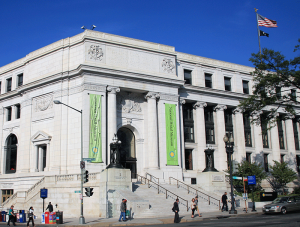 The National Postal Museum is devoted to presenting the colorful and engaging history of the nation’s mail service and showcasing one of the largest and most comprehensive collections of stamps and philatelic material in the world. It is located at 2 Massachusetts Ave. N.E., Washington, D.C., across from Union Station. The museum is open daily from 10 a.m. to 5:30 p.m. (closed Dec. 25). For more information about the Smithsonian, call (202) 633-1000 or visit the museum website at www.postalmuseum.si.edu.
 It will be open to the public Saturday, but dozens of people gathered on a hillside off Abbott Drive, just yards from the Iowa border, to get a preview. Some parked their cars in the right lane of the thoroughfare. Others walked to see


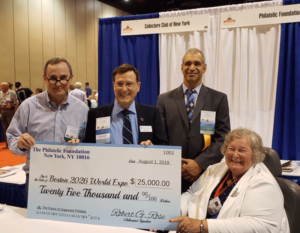 Robert G. Rose, Chairman of the Board of The Philatelic Foundation, presented a $25,000 check to Nancy B. Clark, President of Boston 2026 World Expo with Mark A. Butterline, Executive Director, and Yamil H. Kouri, Commissioner General, at APS StampShow/NTSS in Omaha on Friday, August 2.
 Elaborating on the donation, Chairman Rose said, “The PF supports Boston 2026 because our Board believes that the future of organized philately requires the support of all organizations to make the show a success and to secure our hobby into the future.”