Treasures of the Revolutionary Era (U.S. 2026)

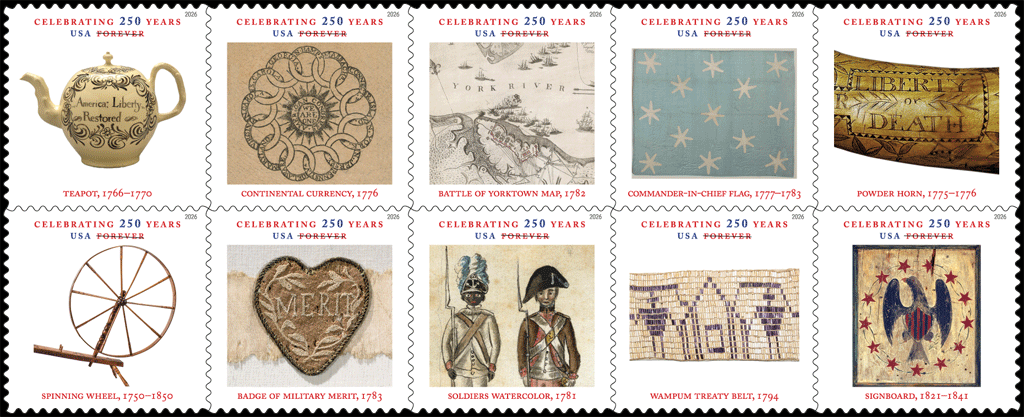
These 10 previously-unannounced stamps will be issued May 23, on the first day of Boston 2026.

From the USPS:

The Treasures of the Revolutionary Era stamps will be issued as part of the opening ceremony for the 2026 Boston World Exposition.

To mark the 250th anniversary of the American Revolution, the U.S. Postal Service presents this 20-stamp prestige booklet as part of a broader USPS initiative commemorating 250 years of American independence. Centered on 10 compelling objects from the era, the booklet offers a vivid connection to the symbols and stories that helped shape the United States. Reflecting the booklet’s focus on tangible history, the featured objects range from simple tools to powerful symbols of national purpose drawn from museum collections and historical archives. To complement the stamps, the booklet also includes images and background text that place each object in historical context, connecting everyday experiences to the larger forces at work during the Revolutionary era. Ethel Kessler, an art director for USPS, designed the booklet and stamps.

Additional information will appear below the line, with the most recent nearest the top.


Updated April 20th:
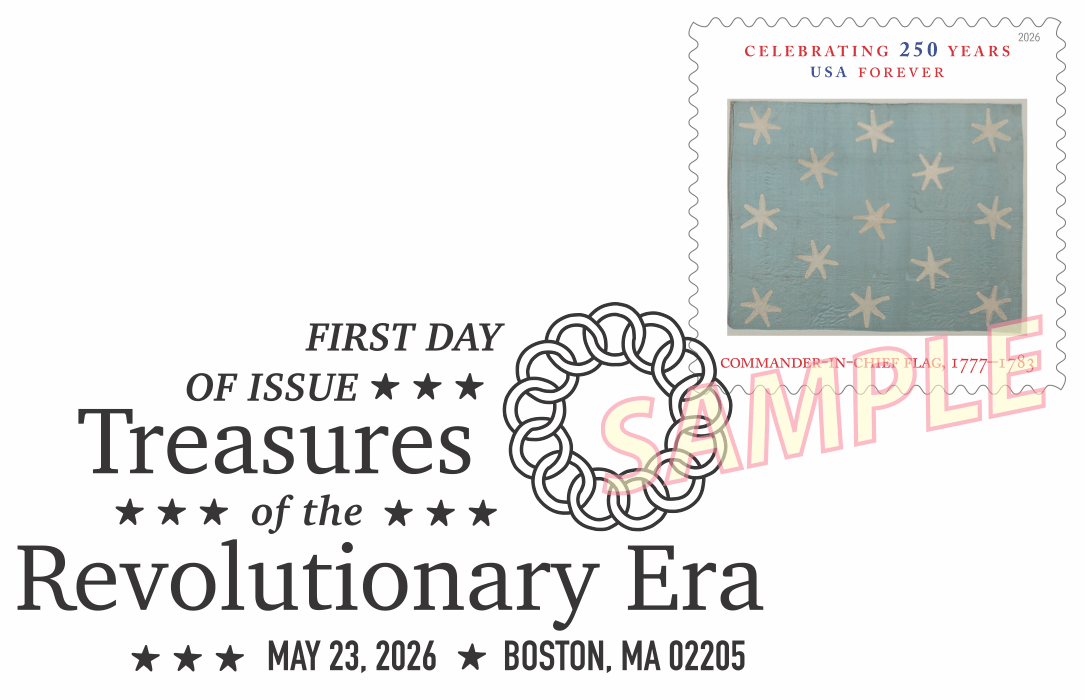
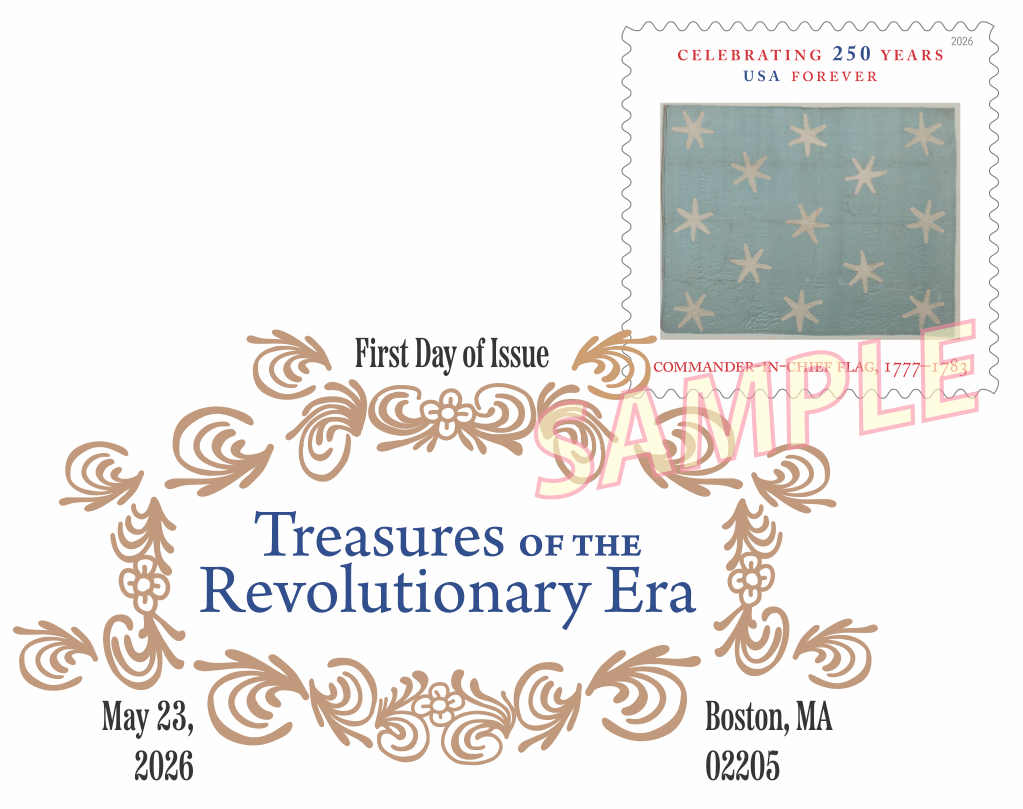
Here are the first-day postmarks for this issue:The Digital Color Postmark measures 2.88″ x 1.50″ The Pictorial Postmark measures 2.49″ x 1.24″

Updated April 15th:
On May 23, 2026, in Boston, MA, the Postal Service™ will issue the Treasures of the Revolutionary Era prestige booklet (Item Number 894700) featuring 20 commemorative stamps (Forever® priced at the First-Class Mail® rate), in ten designs, on two pressure-sensitive adhesive (PSA) sheets of 10. The prestige booklet will go on sale nationwide May 23, 2026, and must not be sold or canceled before the first-day-of-issue.

Marking the 250th anniversary of the American Revolution, this prestige booklet highlights 10 compelling objects from the era, offering a vivid way to experience the symbols and stories that helped shape the United States. It contains 20 exclusive First-Class Forever® stamps, arranged in two identical blocks of 10. The objects include an inscribed teapot, paper currency, the Commander-in-Chief Flag, a watercolor depicting George Washington’s varied army, a powder horn, a spinning wheel, a map of the Battle of Yorktown, the Badge of Military Merit, a treaty wampum belt, and a patriotic signboard. Art director Ethel Kessler designed both the stamps and the prestige booklet.

No automatic distribution.

How to Order the First-Day-of-Issue Postmark:
The first-day-of-issue postmark is a postmark notating the day a stamp is first authorized for use by the Postal Service™. Customers have 120 days to obtain the first-day-of-issue postmark by mail. All requests for first-day-of-issue postmarks (Traditional or Digital Color Postmark) must be sent to the following address with the choice of Traditional or Digital Color Postmark identified. All orders must be postmarked by September 26, 2026.

FDOI – Treasures of the Revolutionary Era Stamps
USPS Stamp Fulfillment Services
8300 NE Underground Drive, Suite 300
Kansas City, MO 64144-9900

The Technical Specifications are not yet available.

Updated April 12th:
According to the USA Philatelic catalogue Spring Edition, this prestige booklet, containing two panes of 10 stamps, will cost $28.95. (Item 894704)

Experience Nature: Butterflies of Saba (Netherlands 2026)

[press release] [click on any of the pictures for larger versions]
Experience Nature – Butterflies of Saba

• Issue date: 30 March 2026
• Format: sheet of 10 stamps in 10 different designs, denomination 1 for items up to 20 grams destined for addresses within the Netherlands
• Item number: 460361
• Design: Frank Janse, Gouda
• Photography: Alamy, Wikimedia Commons (Anne Toal, Annika Lindqvist, Charles J. Sharp)
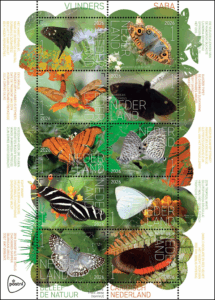
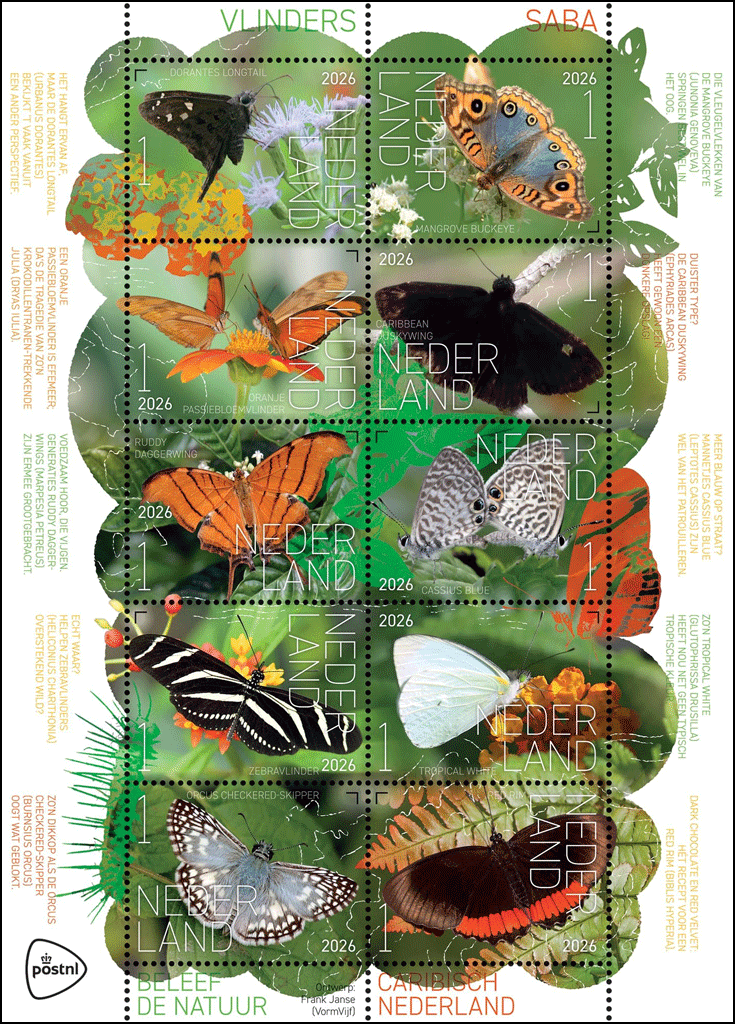
On 30 March 2026, PostNL will issue Experience Nature – Butterflies of Saba, a sheet of 10 stamps with 10 different designs. Each stamp bears denomination 1 for items up to 20 grams with a destination within the Netherlands. The price for a sheet of 10 stamps is €14.00 (currently US $16.18).

This stamp sheet featuring the butterflies of Saba is part of the multi-year Experience nature series dedicated to the Caribbean Netherlands from 2024 to 2026. Each year, 4 stamp sheets are released, each with 10 different stamps depicting plants and animals found in this part of the Kingdom. These islands boast an extraordinary biodiversity by Dutch standards, with thousands of plant and animal species.

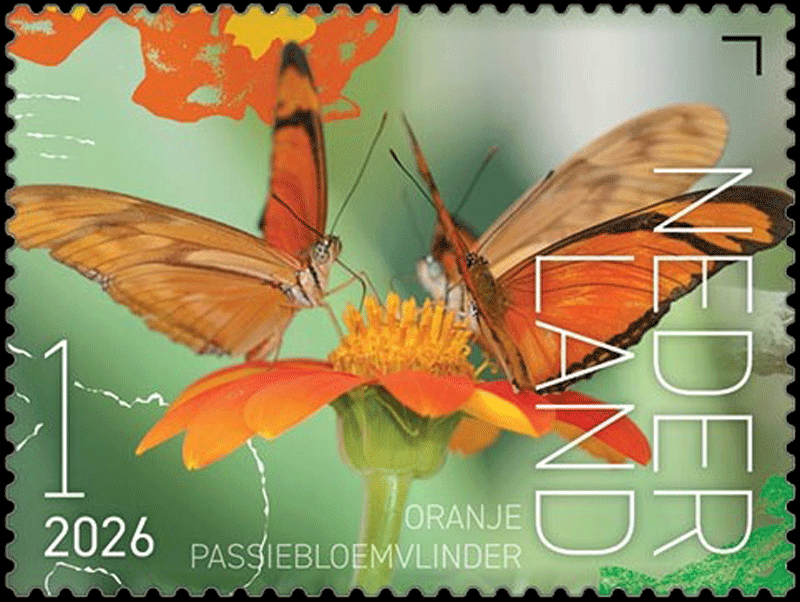
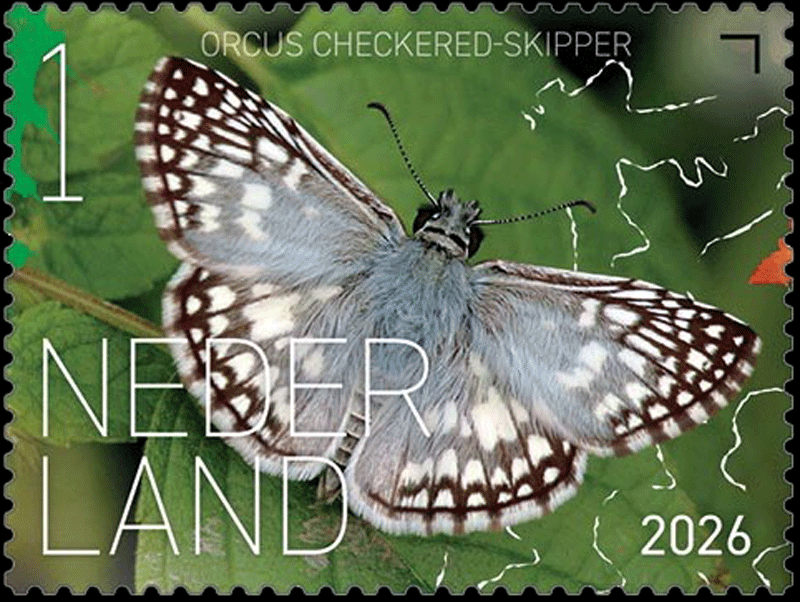
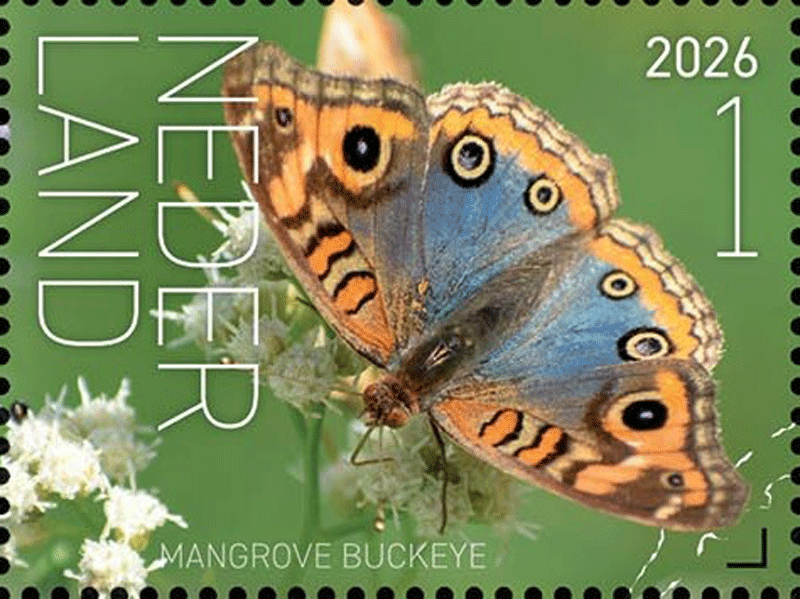
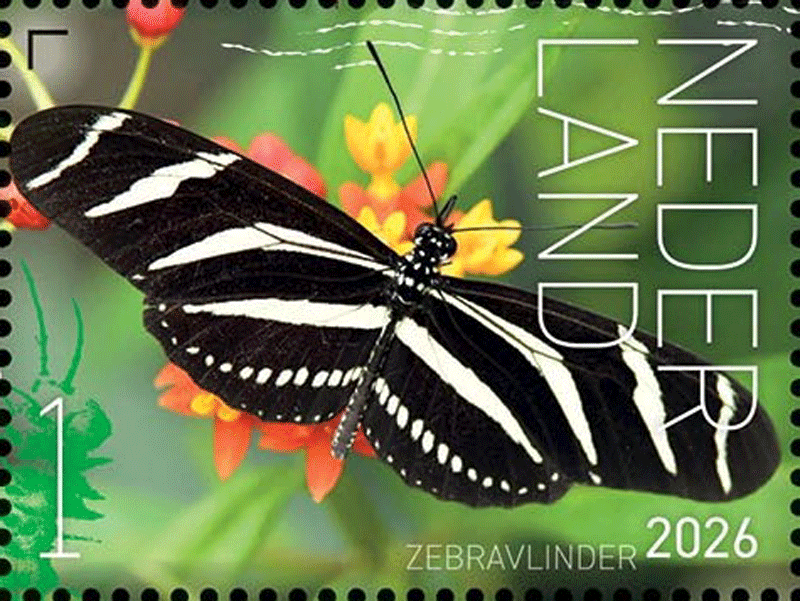
In 2026, the focus will successively be on birds, butterflies, underwater life and flora of the windward island of Saba. The 2nd stamp sheet, Experience Nature – Butterflies of Saba, gives centre stage to the following butterflies:

  • Dorantes Longtail
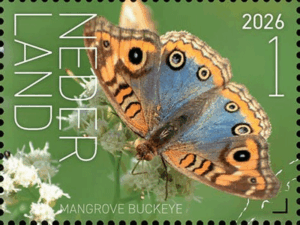
  • Mangrove Buckeye
  • Julia butterfly (orange passionflower butterfly)
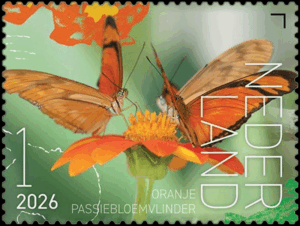
  • Caribbean Duskywing
  • Ruddy Daggerwing
  • Cassius Blue
  • Zebra Longwing
  • Tropical White
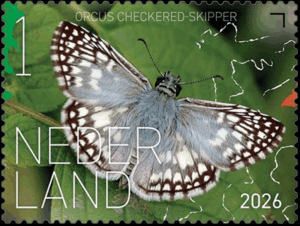
  • Orcus Checkered‑Skipper
  • Red Rim.

The island of Saba, like Bonaire and Sint Eustatius, has a special status within the Netherlands. Collectively, these three islands are known as the Caribbean Netherlands. Together with Aruba, Curaçao and Sint Maarten, they form the Caribbean part of the Kingdom of the Netherlands. Saba belongs to the windward islands, a term referring to their position relative to the prevailing north-easterly trade winds. Saba lies 30 kilometres [18.6 miles] northwest of Sint Eustatius and 45 kilometres [28 miles] southwest of Sint Maarten. Roughly circular, the island measures about 4.5 kilometres [2.8 miles] across and covers an area of 13 square kilometres [5 square miles]. Geologically, Saba is a dormant volcano with four lava domes. Its slopes descend steeply to the sea, and its coastline is rocky. At 870 metres [2,854 feet], Mount Scenery is the highest point in the Netherlands. The climate is humid tropical, and the island is covered with secondary rainforest.
North of Saba lies Green Island, a small uninhabited rocky islet that also belongs to the island territory. To the south lies the Saba Bank, an underwater coral island. The Saba Bank is part of the Saba National Marine Park, a marine reserve of 1,300 hectares (about 3200 acres) surrounding the entire coastline. Saba also has a national land park of about 43 hectares (106 acres). Butterflies on the island are mainly found in areas where flowering plants occur: in gardens, along the edges of the rainforest, in open spaces in the higher mountain zones and along hiking trails. These habitats are characterised by the necessary supply of food (nectar) and shelter. The variation in altitude and microclimate on Saba contributes to the diversity of the approximately 30 butterfly species found on the island.
Butterflies are an order of winged insects, with a total of approximately 160,000 described species. The collective name is Lepidoptera. This word comes from Greek: lepis means scale and ptera means wings. The literal translation is therefore “scale‑winged insects”. The wings of butterflies are indeed covered with scales that absorb light in different ways, creating the visible colours and patterns. Of all butterfly species in the world, around 265 occur in the Caribbean Netherlands, both resident species and occasional visitors. A study of the butterfly fauna of the Dutch Windward Islands Saba, Sint Eustatius and Sint Maarten shows that Saba alone is home to around 30 species. This number does not differ greatly from Sint Eustatius, despite the differences in size, habitability and vegetation. Species numbers on Saba are relatively stable, although threats such as habitat loss, the introduction of exotic species and changes in land use may pose risks.
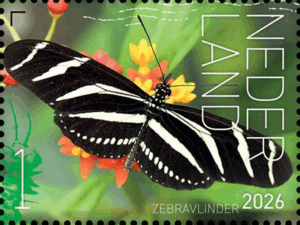
The stamp sheet Experience Nature – Butterflies of Saba was designed by graphic designer Frank Janse from Gouda. All butterflies are portrayed in their natural environment, each on their own stamp. In several locations, the designer added graphic elements derived from symbols used on old topographic maps. These symbols indicate features such as landscape formations, contour lines, vegetation, soil structures and waterways. The design is also characterised by an additional transparent layer featuring monochrome images (both white and coloured) of characteristic flora and fauna from this region. These transparent images are rendered in an almost abstract way, extend across the perforations and link the stamps both to one another and to the sheet border. The following plants and animals are depicted in this way: lantana (top left), Monkey Leaf (top right and centre of the sheet), zebra butterfly (centre right) and the caterpillar of the zebra butterfly (bottom left).

“This island, like Sint Eustatius, is a windward island. They are close to each other and very similar,” says Janse. “Saba is more volcanic, which means more fertile soil. It is also mainly hilly and mountainous, with fewer plains than Sint Eustatius. Both islands have roughly the same number of butterfly species, despite the difference in size and vegetation. In many cases, they are the same species.”

The decisions about which plants and animals to depict in this series were made in 2023.

“Because of the overlap between the butterfly species on the Windward Islands, we determined the distribution in advance. This allowed us to assign an equal number of beautiful butterflies to each island.”

Butterflies in flight are difficult to photograph. That is why only photos of butterflies at rest are used on the stamps, most of them with wings spread. “That way they fit perfectly into the landscape‑oriented stamp format,” says Janse.

Technical Specifications:
Stamp size: 40 x 30 mm
Sheet size: 122 x 170 mm
Paper: normal with phosphor coating
Gumming: self-adhesive
Printing technique: offset
Colours: cyan, magenta, yellow and black
Print run: 275,000 sheets
Format: sheet of 10 stamps in 10 different designs
Denomination: 1 for items up to 20 grams destined for addresses within the Netherlands
Design: Frank Janse, Gouda
Photography: Alamy, Wikimedia Commons (Anne Toal, Annika Lindqvist, Charles J. Sharp)
Printer: Koninklijke Joh. Enschedé B.V., Haarlem
Item number: 460361

Note: PostNL does not sell directly to collectors in North America. Its website refers to a company called Nordfirm, which says it sells Dutch new issues at face value. The Virtual Stamp Club has no connection to this company.

Collectors may also wish to contact the U.S. firm Bombay Stamps, which can also obtain first day covers upon request, with lower shipping fees. The email is sales@bombaystamps.com Again, The Virtual Stamp Club has no connection to this company.

Dutch Waterlines (Netherlands 2026)

[from PostNL press material] [click on any of the pictures for larger versions]
Dutch Waterlines

Issue date: March 30, 2026Item number: 860029
Designer: Bart de Haas, Den Haag
Photographers: Bart de Haas, Martin van Lokven, Kenneth Stamp, Kim Sterenborg, A.J. van der Wal
Floorplans: Bart de Haas, Johan van der Zwart
Topographic Maps: Rijksmuseum, Amsterdam

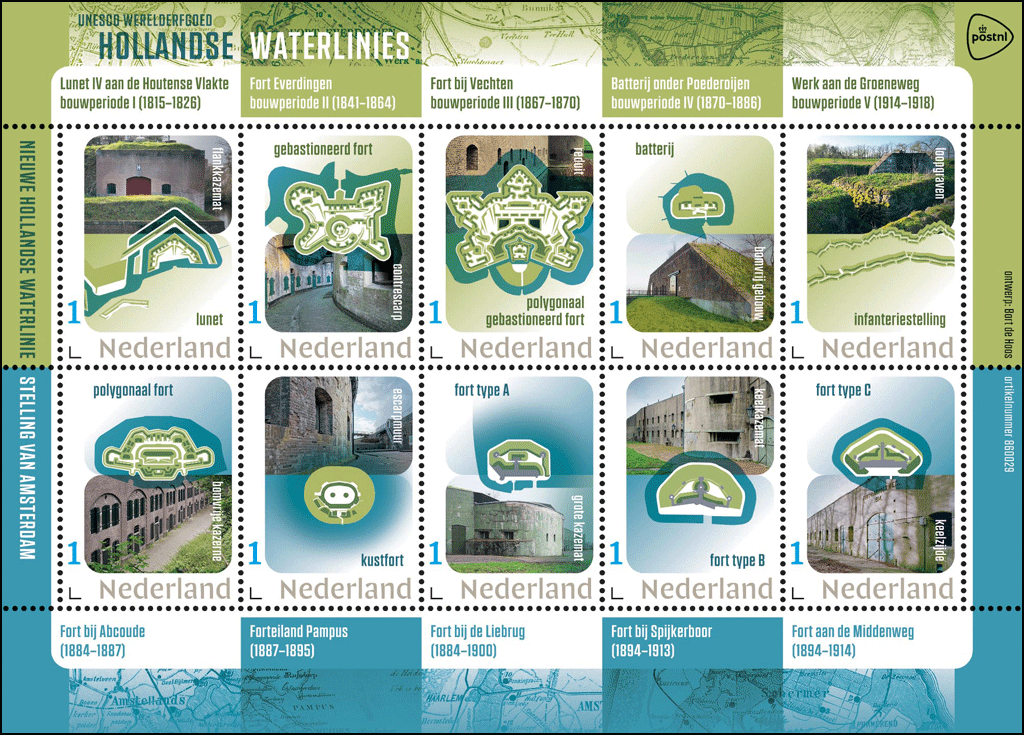
On March 30, 2026, PostNL will issue the Dutch Waterlines stamp sheet, featuring photos and maps of 19th- and early 20th-century defensive works in the Netherlands. The Dutch Waterlines is the collective name for the Nieuwe Hollandse Waterlinie and the Stelling van Amsterdam. By flooding land during wartime, these defensive lines were able to protect the west of the Netherlands against the enemy. The Dutch Waterlines stamps bear the value indication 1 for mail weighing up to 20 grams with a destination within the Netherlands. The design of the stamps was created by graphic designer Bart de Haas from The Hague. The price for a sheet of 10 stamps is €14 (current US$16.28).

In addition to the official issuance program, PostNL has an annual issuance program for framed stamps (“kaderpostzegels”). This program is flexible. Each issue is designed based on a fixed layout, with a fixed number of framed stamps. The stamps are available, while stocks last, exclusively via the webshop and from Collect Club customer service at telephone number 088 – 868 99 00.

The Subject
The New Dutch Water Line and the Amsterdam Defence Line together form the Dutch Water Lines. This UNESCO World Heritage Site is a 200-kilometer-long defensive line comprising 96 forts, 6 fortresses, and 2 castles. In wartime situations, the west of the Netherlands could be protected against the enemy by flooding wide strips of land up to knee height. This rendered the land impassable for soldiers, vehicles, or horses, while the water remained too shallow for boats.

Construction of the New Dutch Water Line began in 1815 as an improvement and expansion of the 17th-century Old Dutch Water Line. A new construction phase followed in 1880 with the creation of the Amsterdam Defence Line. Should the enemy break through the New Dutch Water Line, the Amsterdam Defence Line would serve as the last refuge for the military staff, the government, and the royal family. In addition to the system of sluices, dikes, and canals to flood land, forts were built at passages and other strategic locations. The New Dutch Water Line and the Amsterdam Defence Line are among the largest military World Heritage Sites in the world, along with the Roman Limes and the Great Wall of China. The New Dutch Water Line was flooded, either wholly or partially, three times due to threats of war: in 1870 (Franco-Prussian War), in 1914–1918 (World War I), and in 1939–1940 (in the run-up to World War II). The Amsterdam Defence Line never saw active service.

There are 96 forts that are part of the Dutch Water Lines. De Haas has depicted 10 of them on the stamps, based on three criteria: the construction period, the type of defensive structure, and the geographical location.

“Last November and December, I went on five bike rides to view and photograph the forts myself,” de Haas said. Some of the forts were not open in the winter, so instead he used existing photographs. “Cropped sections of all the photos were used, and the photo itself was sometimes edited to emphasize the characteristics of the structure,” he added, “and also to provide a bit more variety, with, for example, sunny shots juxtaposed with dramatic cloudy skies.”

The individual stamps measure 30 x 40 mm, the sheet 170 x 122 mm.

Note: PostNL does not sell directly to collectors in North America. Its website refers to a company called Nordfirm, which says it sells Dutch new issues at face value. The Virtual Stamp Club has no connection to this company.

Collectors may also wish to contact the U.S. firm Bombay Stamps, which can also obtain first day covers upon request, with lower shipping fees. The email is sales@bombaystamps.com Again, The Virtual Stamp Club has no connection to this company.
Quebec’s Sugar Shacks (Canada 2026)

[press release] [click on any of the pictures for larger versions]
New stamps from Canada Post celebrate Quebec’s sugar shacks
Rooted in Quebec’s history and identity, the sugaring-off season comes to life in an illustrated stamp issue.

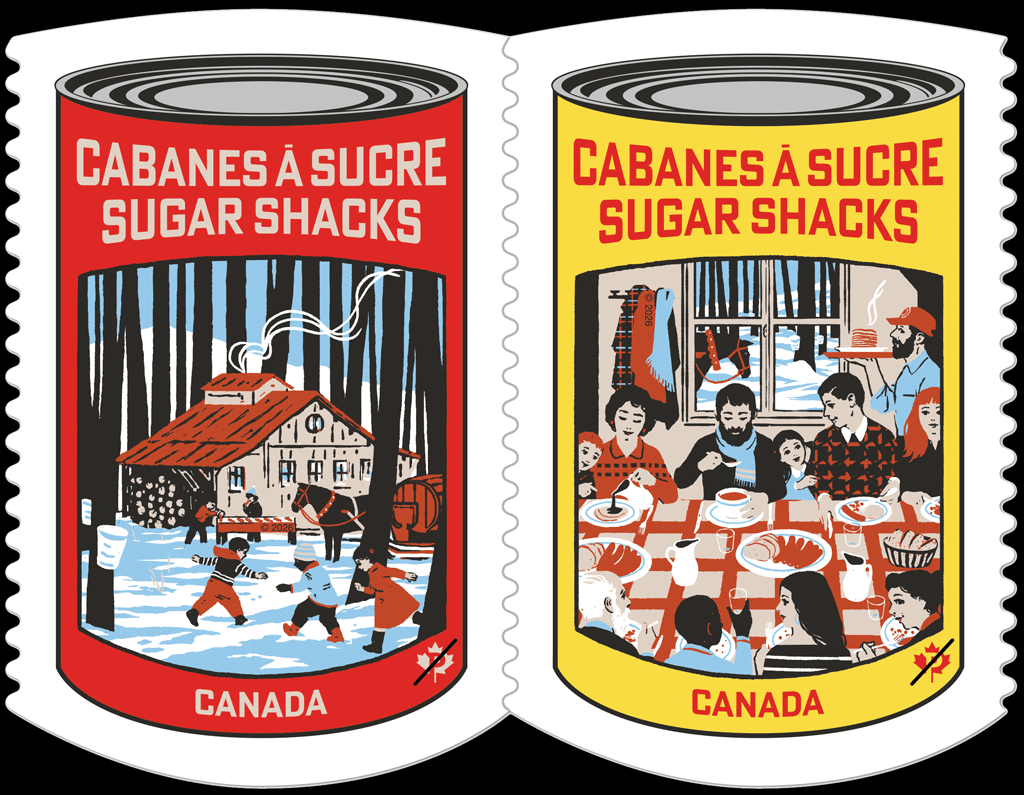
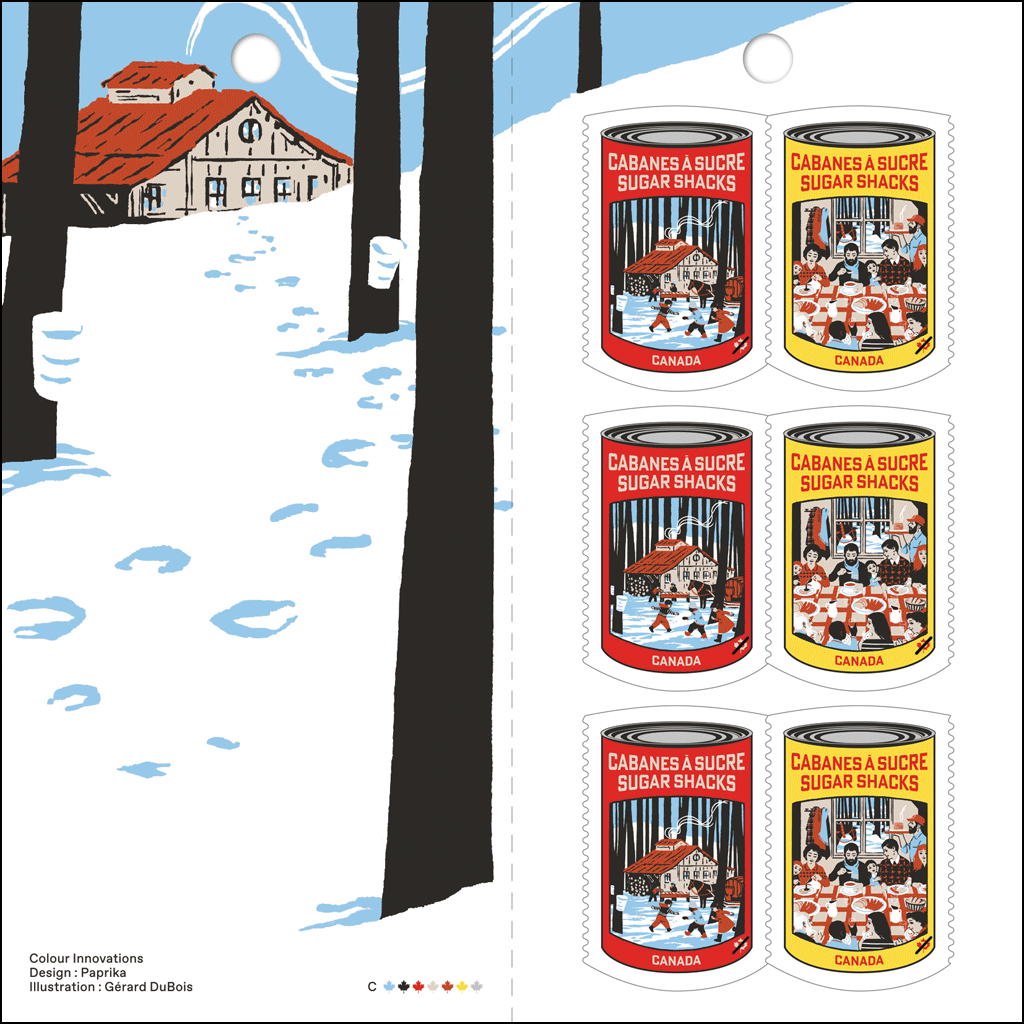
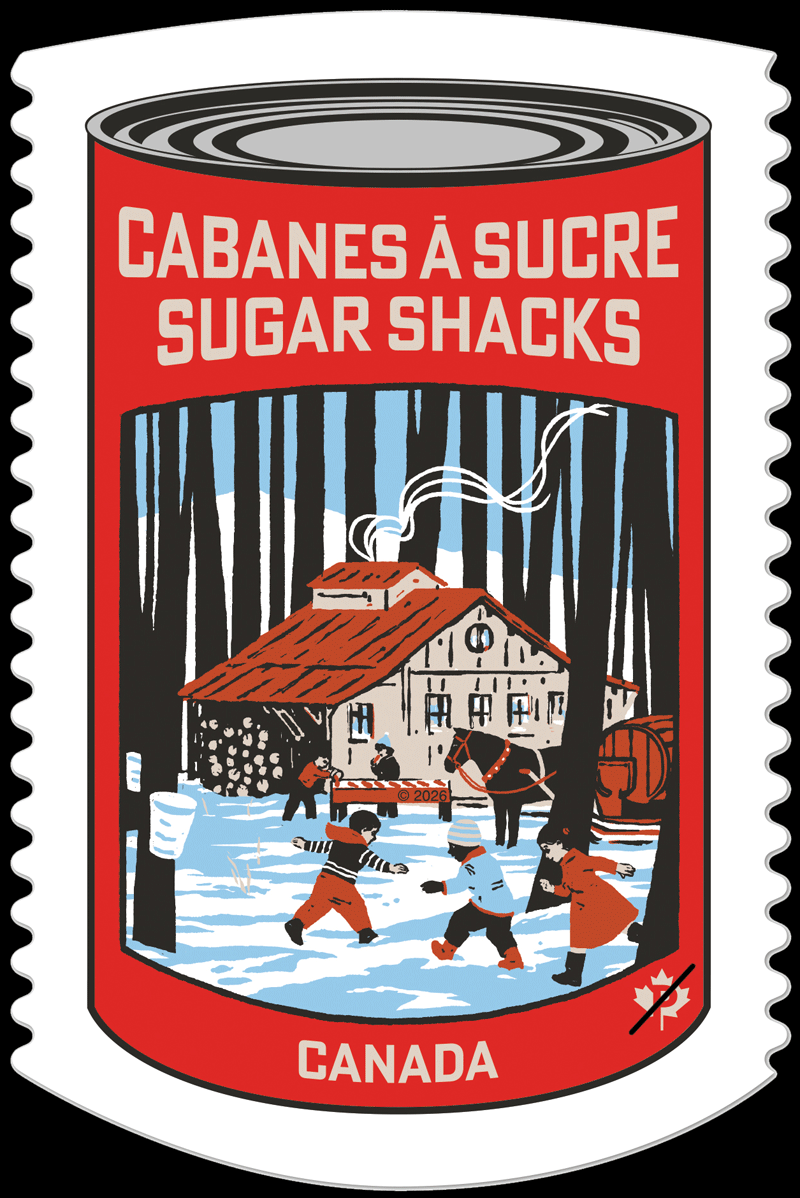
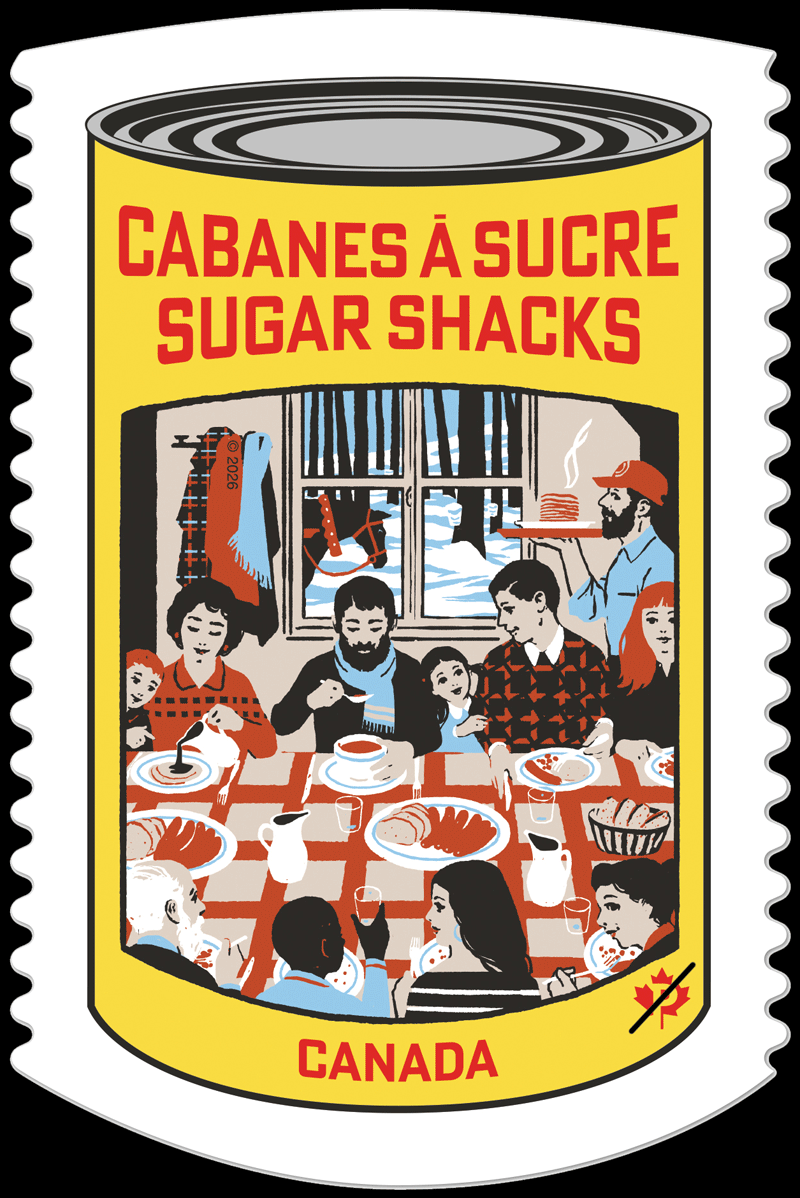
MONTRÉAL – Maple taffy in sticky little hands. The lively strains of a fiddle playing and spoons tapping. The comforting taste of hot pea soup. This spring, just as the scents, sounds and tastes of the season come to life at sugar shacks, Canada Post is issuing two stamps in the form of maple syrup cans. Unveiled today in Montréal at the Cabane Panache Festival, the stamps celebrate sugaring-off season and pay tribute to Quebec’s iconic sugar shacks.

Traditions that transcend generations
The traditions surrounding sugaring-off season are so important in Quebec that they are officially part of the province’s intangible heritage. Indigenous Peoples of the Eastern Woodlands, including the W8banakiak (Abenakis), the Anishinaabeg (Anishinabe), the Haudenosaunee (Iroquois) and the Mi’gmaq (Mi’kmaq) were producing maple products long before the arrival of European settlements. They shared their ancestral knowledge with early French colonists, who adapted their methods over time.

In the 1850s, the forerunners of modern sugar shacks began to appear – small shelters where maple sap was boiled, and that became social gathering places. A significant part of syrup production has been automated since then, and although sugar bushes have grown in size, artisanal techniques are still in practice.

Today, Quebec produces 90% of Canada’s maple syrup and over 70% of global production.

About the stamps
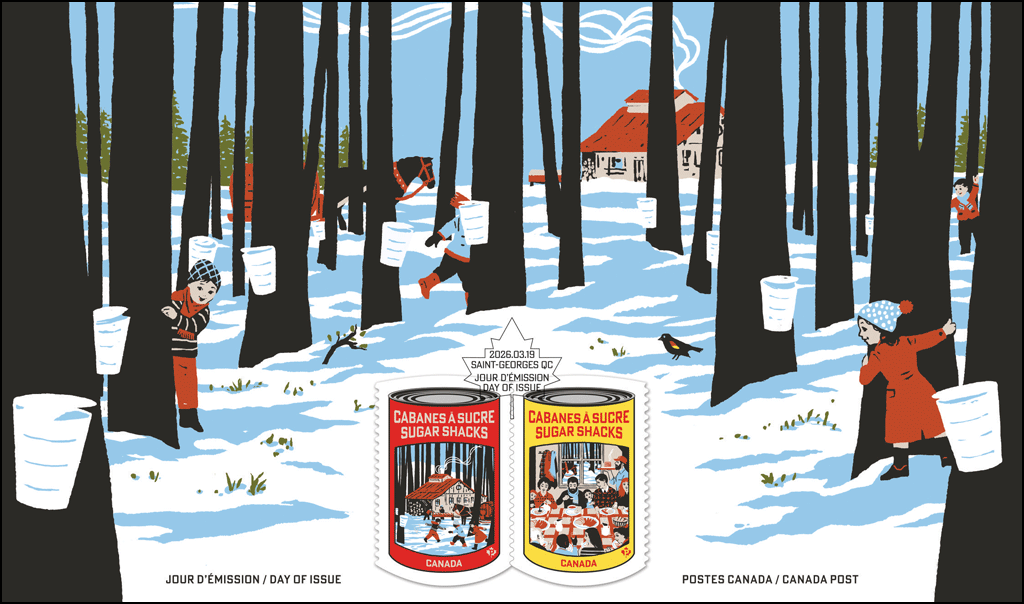
The stamps, booklet and Official First Day Cover (OFDC) are the work of illustrator Gérard DuBois and graphic design firm Paprika. Inspired by popular, commercial and advertising art from the 1940s and 1950s, the illustrations evoke colourful scenes of people enjoying shared meals and time outside. They portray the sugar shack as a place of gathering, enjoyment and tradition.

This stamp issue includes a booklet of six Permanent™ domestic rate stamps and an OFDC. Both are available at canadapost.ca and at retail outlets across the country. The OFDC bears a maple leaf cancellation in Saint-Georges, a Quebec city where the Festival beauceron de l’érable is held every year.

“Fellowship of the Ring” 25th Anniversary (UK 2026)

[press release] [click on any of the pictures for larger versions]
Royal Mail Marks 25th Anniversary Of “The Lord Of The Rings: The Fellowship of the Ring” With Special Stamp Issue

  • Issue date 20 March
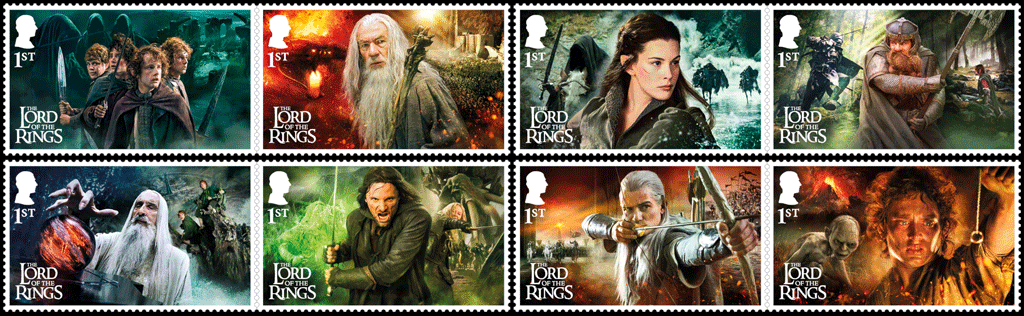
  • Each of the eight stamps in the main set features a montage from the film trilogy celebrating iconic characters and include hidden messaging – only detectable when using a UV light
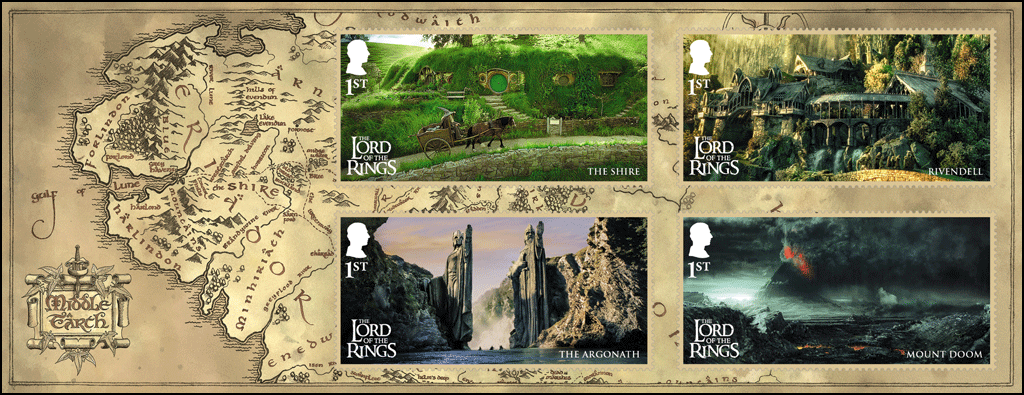
  • A further four stamps, presented in a miniature sheet, show iconic locations from across the franchise
  • The stamps and a range of collectible products are available to pre-order now at www.royalmail.com/lordoftherings and by telephone on 03457 641641

Royal Mail, in collaboration with Warner Bros. Discovery Global Consumer Products (WBDGCP), has revealed images of a set of 12 new stamps that celebrate the 25th anniversary of The Lord of the Rings: The Fellowship of the Ring.

The main set of eight stamps features a montage from the film trilogy celebrating iconic characters from across the franchise. British actors who played the characters featured are Orlando Bloom as Legolas, Ian McKellan as Gandalf, Dominic Monaghan as Merry, Billy Boyd as Pippin and Christopher Lee as Saruman.

The stamps also include hidden messaging – only detectable when using a UV light – showing Elvish writing in a ring shape.

A further four stamps presented in a miniature sheet pay homage to four iconic locations – from The Shire, where Frodo’s journey begins, all the way to Mount Doom, where he must throw the One Ring into the fires to destroy it once and for all. Also shown are Rivendell, an Elven refuge and sanctuary, and the monumental Argonath, which marks the northern border of the kingdom of Gondor.

‘The Lord of the Rings’ title used on all 12 stamps in the set, replicates that of the iconic typeface used for the films.

David Gold, Director of External Affairs & Policy, Royal Mail, said: “The Lord of the Rings ranks as one of the most iconic and beloved film series of all time, and we’re delighted to celebrate its enduring popularity with this set of Special Stamps. Each design captures the epic storytelling, artistry and imagination that have made Middle earth such a treasured part of British and global culture. We’re proud to bring these striking stamps to the nation’s letterboxes.”

Rachel Wakley, SVP & General Manager – UK & Ireland, Warner Bros. Discovery Global Consumer Products said: “We’re delighted to see this special stamp collection honour the 25th anniversary of The Lord of the Rings: The Fellowship of the Ring. The film has left an enduring mark on audiences around the world, and this beautifully crafted set captures the spirit, artistry and cinematic legacy that continue to inspire fans a quarter of a century on.”

The Lord of the Rings
Based on the revered The Lord of the Rings and The Hobbit books by J.R.R. Tolkien, New Line Cinema’s epic six-film series directed by Peter Jackson has been embraced by generations of fans, earning $6 billion at the global box office and 17 Academy Awards, becoming the most awarded series in cinematic history. Set in Middle-earth, the series begins as Frodo Baggins embarks on a perilous mission to destroy the legendary One Ring, and an adventure like no other continues from there. In 2021, the Library of Congress selected The Lord of the Rings: The Fellowship of the Ring for preservation in the United States National Film Registry. Following the first film’s milestone 25th anniversary in 2026, a new film, The Lord of the Rings: The Hunt for Gollum, is planned for release in theatres, with additional films to come.

The stamps, and a range of collectible products, are available to pre-order now at www.royalmail.com/lordoftherings and by telephone on 03457 641 641. A Presentation Pack including all 12 stamps is priced at £21.30. The stamps go on general sale from 20 March.

Eid (Canada 2026)

[press release] [click on any of the pictures for larger versions]
New stamp issue marks Eid, celebrated by more than 1.5 million Muslims in Canada
Canada Post is proud to mark Eid al-Fitr and Eid al-Adha with uniquely Canadian Muslim design

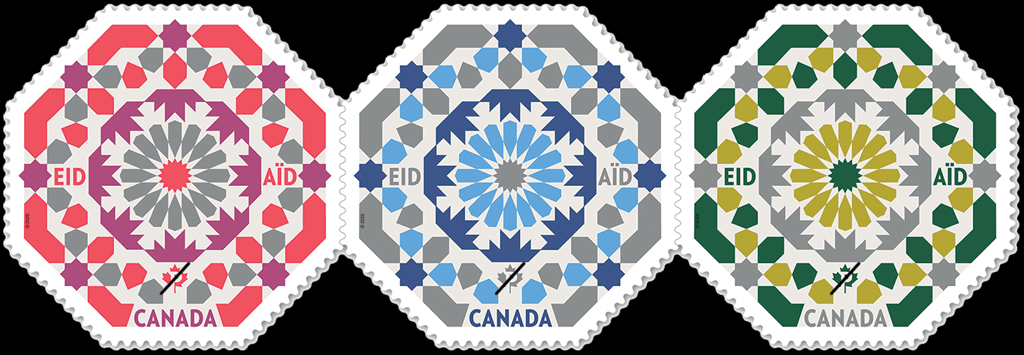
VANCOUVER – Canada Post issued new stamps March 10th to mark two of the most important holidays in Islam: Eid al-Fitr and Eid al-Adha.

The three-stamp issue incorporates stylized maple leaves into a traditional Islamic pattern to reflect Canada’s cultural diversity and inclusivity. Featuring the same design in different colour palettes, the stamps honour the significance of Eid for Muslim communities across the country.

Patterns of beauty and symbolism
Mesmerizing designs inspired by mathematics and nature are a hallmark of Islamic ornamentation. Infinitely expandable arrangements of interlacing circles and polygons are traditionally created with a compass and straightedge. Stylized floral and vegetal motifs are often weaved through these patterns, which vary across regions and eras.

The rhythm and symmetry of these patterns invite contemplation of the spiritual and natural worlds. The designs also add beauty and symbolism to Eid al-Fitr and Eid al-Adha, appearing as decorations in mosques and homes, and on lanterns and greeting cards.

Eid celebrations in March and May
Eid al-Fitr, or the Festival of Breaking the Fast, marks the end of Ramadan. The month of fasting, which is observed from sunrise to sunset, is one of the most distinctive practices in Islam. This year, Eid al-Fitr takes place in March.

Eid al-Adha, or the Festival of Sacrifice, marks the end of the Hajj pilgrimage, in which millions of Muslims journey to one of the holiest sites in Islam – the Kaaba in Mecca, Saudi Arabia. Also called Eid al-Kabir or the Greater of the Two Eids, the festival happens this year in May.

Celebrated by more than 1.5 million Muslims in Canada, both events can last several days and include communal prayers and feasts, visits with family, gift-giving and acts of charity.

The Eid issue is one of several stamps released by Canada Post each year to mark annual celebrations that are important to Canada’s culturally diverse population – others include Diwali, Hanukkah and Christmas.

About the stamps
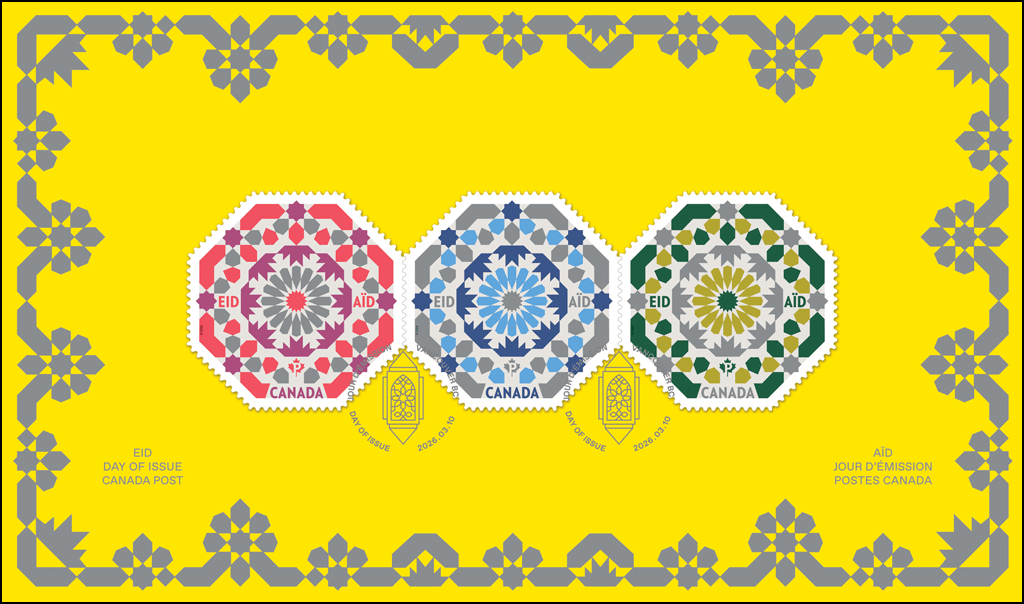
This stamp issue was designed by Paprika and printed by Colour Innovations. It includes a booklet of six Permanent™ domestic rate stamps and an Official First Day Cover [below]cancelled in Vancouver, British Columbia, home to a large and diverse Muslim-Canadian population.

Roses (UK 2026)

[press release] [click on any of the pictures for larger versions]
Blooming Marvellous: Royal Mail Celebrates the Beauty of Roses with Special Stamps

  • Each of the 10 stamps features a commissioned watercolour painting created exclusively for Royal Mail by acclaimed botanical artist, Marie Burke
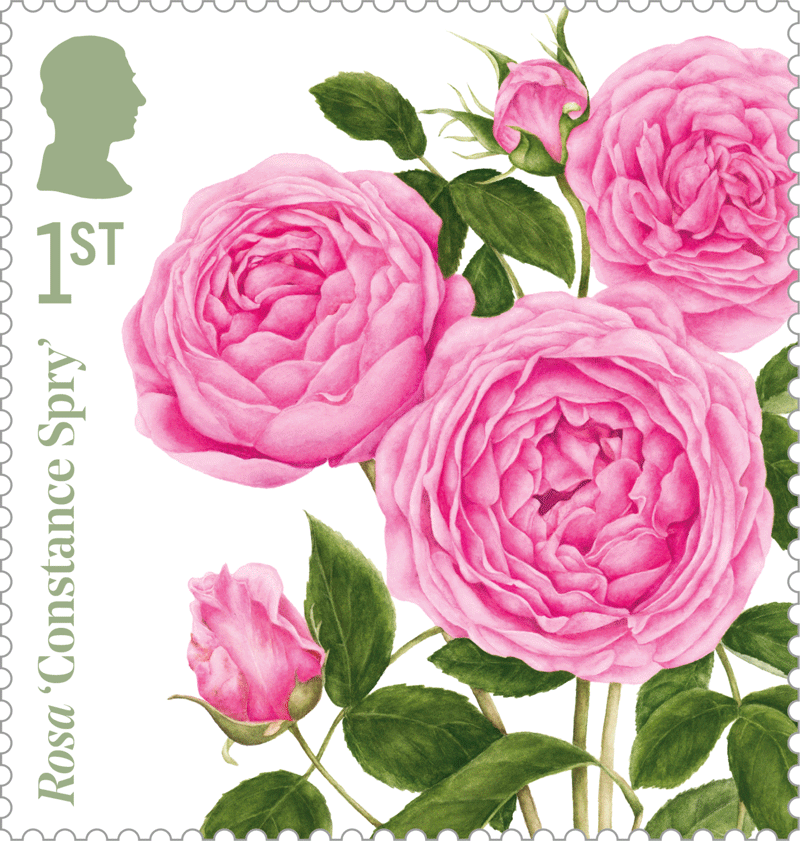
  • The set showcases a range of wild and cultivated roses, including ‘Constance Spry’, the first English Rose bred by David Austin®
  • The stamps and a range of collectible products are available now at www.royalmail.com/roses and by telephone on 03457 641641

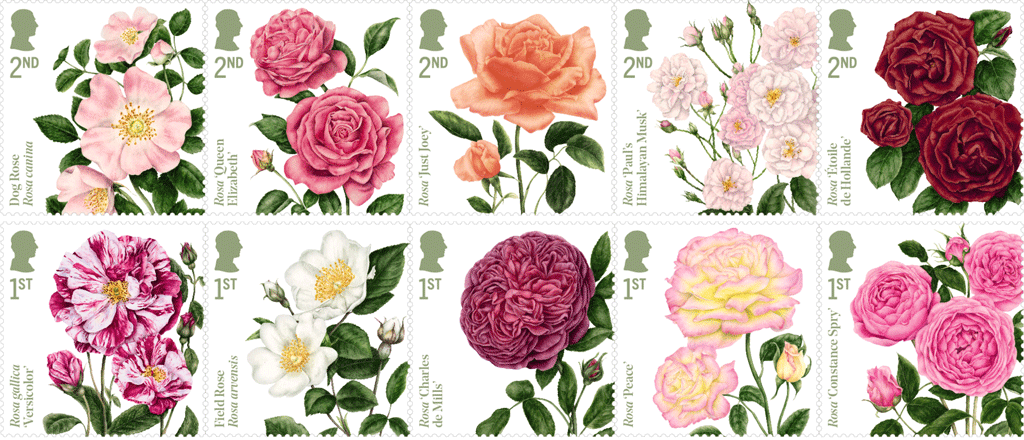
Royal Mail has revealed a set of 10 stamps celebrating the beauty of the nation’s favourite flower, the rose. The vibrant images feature original watercolour illustrations of a variety of wild and garden roses, created exclusively for Royal Mail by acclaimed botanical artist Marie Burke.

Among the roses featured is ‘Constance Spry’, the first English Rose bred by pioneering British rose breeder David C.H. Austin, which launched a new era in rose breeding.

The stamps showcase a stunning selection of roses, from delicate wild species to classic garden favourites, each capturing the unique colour, form and character of the flower.

Roses featured in the set are:

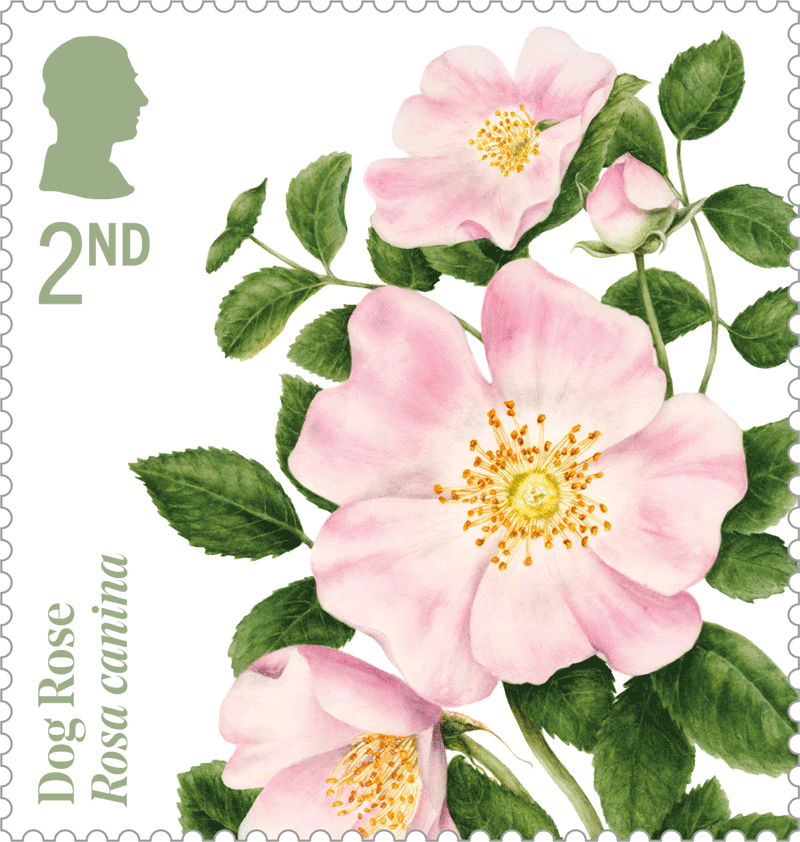
  • Dog Rose (Rosa canina)
  • Rosa ‘Queen Elizabeth’
  • Rosa ‘Just Joey’
  • Rosa ‘Paul’s Himalayan Musk’
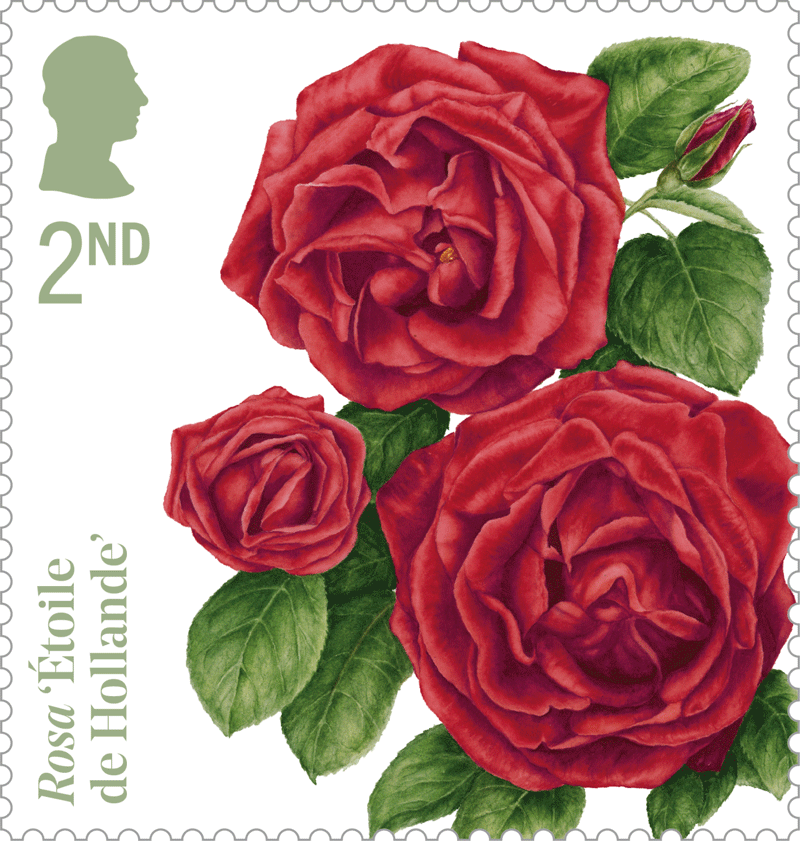
  • Rosa ‘Étoile de Hollande’
  • Rosa gallica ‘Versicolor’
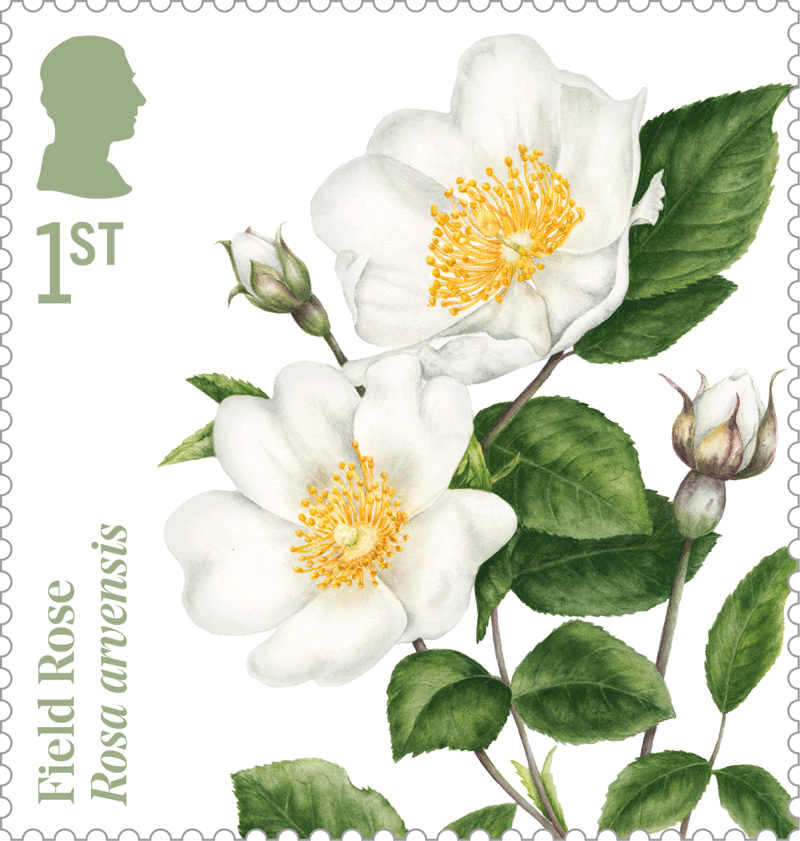
  • Field Rose (Rosa arvensis)
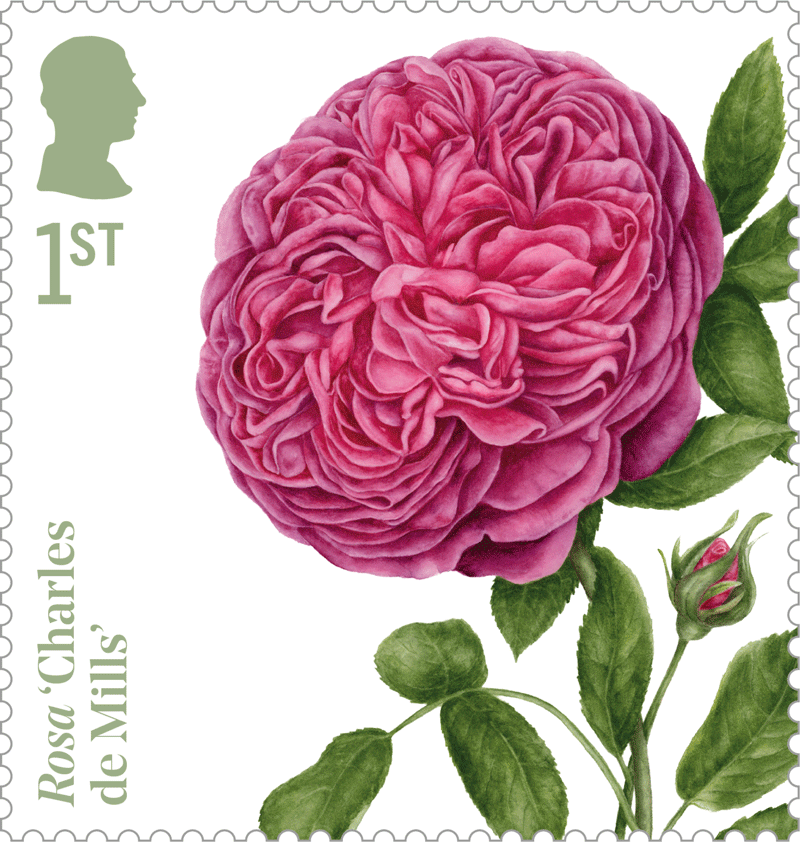
  • Rosa ‘Charles de Mills’
  • Rosa ‘Peace’
  • Rosa ‘Constance Spry’

The stamp issue coincides with the 100th anniversary of the birth of David C.H. Austin OBE, whose work transformed modern rose breeding and helped reintroduce fragrance, beauty and romance to contemporary gardens.

David Gold, Director of External Affairs & Policy, Royal Mail, said: “Roses are a familiar part of many British gardens, as well as holding a special place in British culture and heritage. These beautiful stamps bring together art and horticulture through original illustrations of ten distinctive roses, each carefully interpreted to capture its unique character.”

Royal Mail worked with horticultural historian Jennifer Potter on the stamp issue.

Roses
All roses trace their ancestry back to wild roses native to the northern hemisphere, which typically bear single, five-petalled flowers, such as the dog rose and the field rose found in the UK.

Garden varieties emerged gradually over centuries, first through natural mutations and later through deliberate breeding. Old European roses such as gallicas, albas, damasks and centifolias, including Rosa gallica ‘Versicolor’ and Rosa ‘Charles de Mills’, are celebrated for their rich scent and early summer flowering.

From the 18th century onwards, Chinese roses introduced repeat flowering, transforming rose breeding and leading to the modern hybrid tea roses that remain popular today. Notable varieties include ‘Étoile de Hollande’, ‘Peace’ and ‘Just Joey’.

In 1961, David C.H. Austin introduced ‘Constance Spry’, launching what became known as English Roses, combining the beauty and fragrance of old roses with the flowering performance of modern types.

The stamps, and a range of collectible products, are available on general sale now at www.royalmail.com/roses and by telephone on 03457 641 641. A Presentation Pack including all 10 stamps is priced at £13.75.

Flowers: Cherry Trees (Canada 2026)

[press release] [click on any of the pictures for larger versions]
Annual Flower Stamp Issue Features Delicate Blossoms of Ornamental Cherry Trees
Bestselling issue often used for wedding stationery, popular among Canadian gardeners

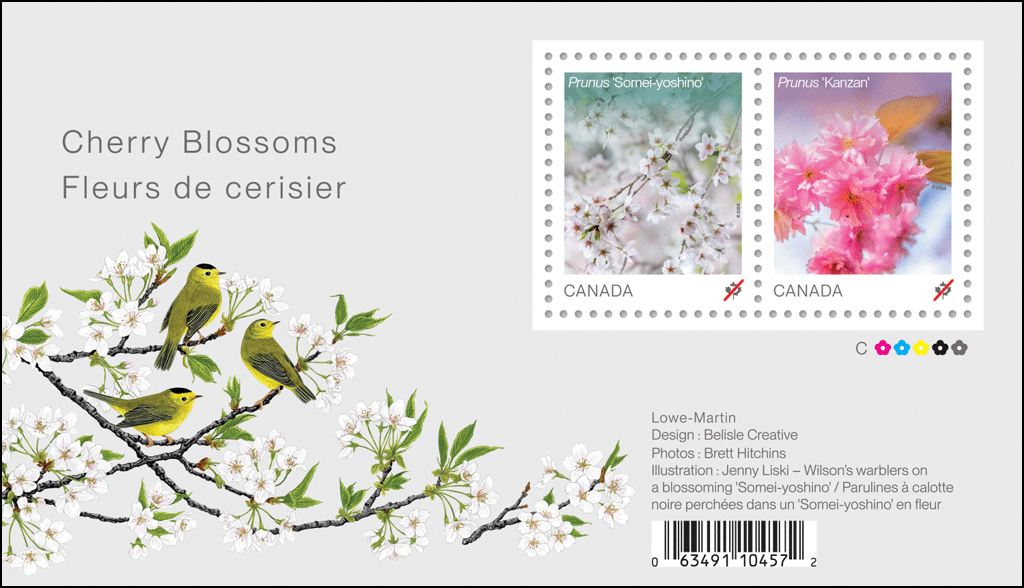
VANCOUVER – A joyful sign of spring, cherry blossoms create spectacular canopies of colour during their blooming season. The fragrant flowers leave behind a delicate carpet of petals, symbolic of beauty and the transience of life. Cherry trees, both wild and cultivated, are found in many parts of the world, and many are native to the Northern Hemisphere.

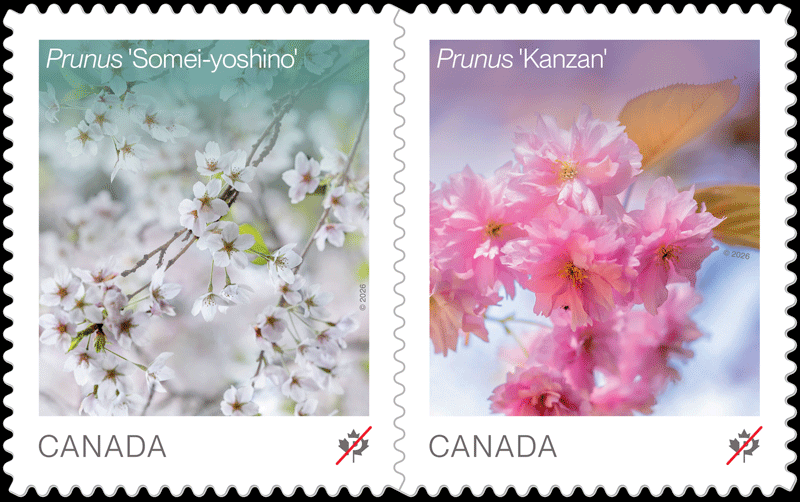
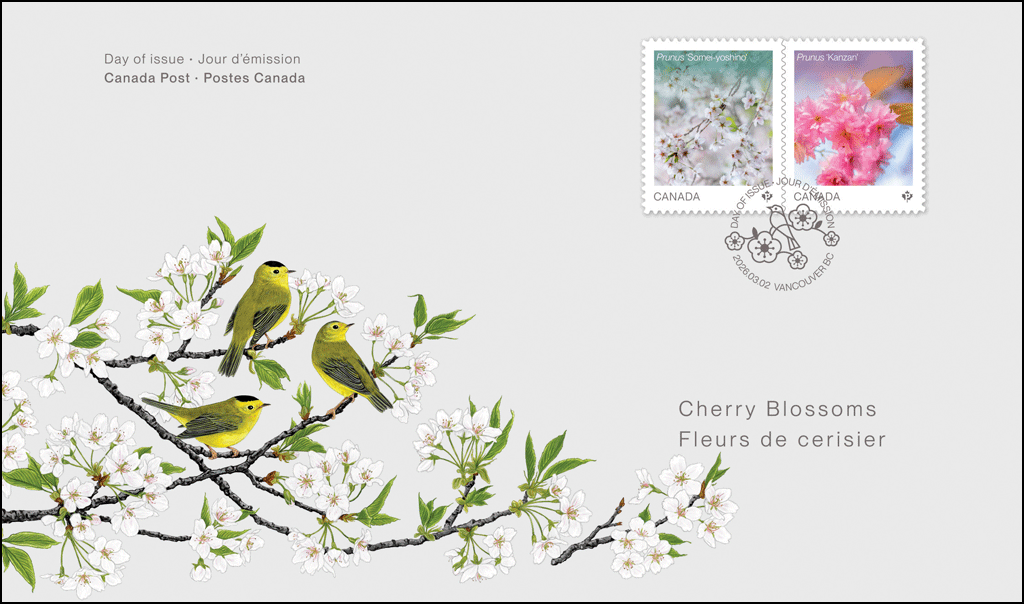
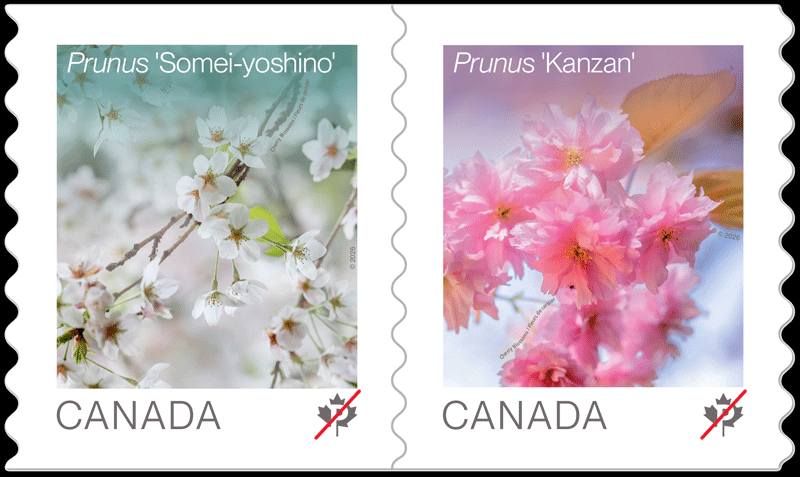
This stamp issue features two cherry blossom cultivars. Prunus ‘Kanzan’, cold-hardy and with large deep-pink double flowers, is one of the most popular Japanese cherry cultivars for blossom viewing in North America and Europe. Shrouded in clusters of white to pale-pink petals, the prolific?Prunus?‘Somei-yoshino’ is the focus of celebrations across Japan and other parts of East Asia.

In Japan, sakura (as cherry blossoms are called) are the inspiration for national celebrations. In Canada, dazzling displays can be found along city streets and in many parks and gardens across the country. Vancouver boasts thousands of specimens and hosts one of the country’s largest cherry blossom festivals.

About the stamp design
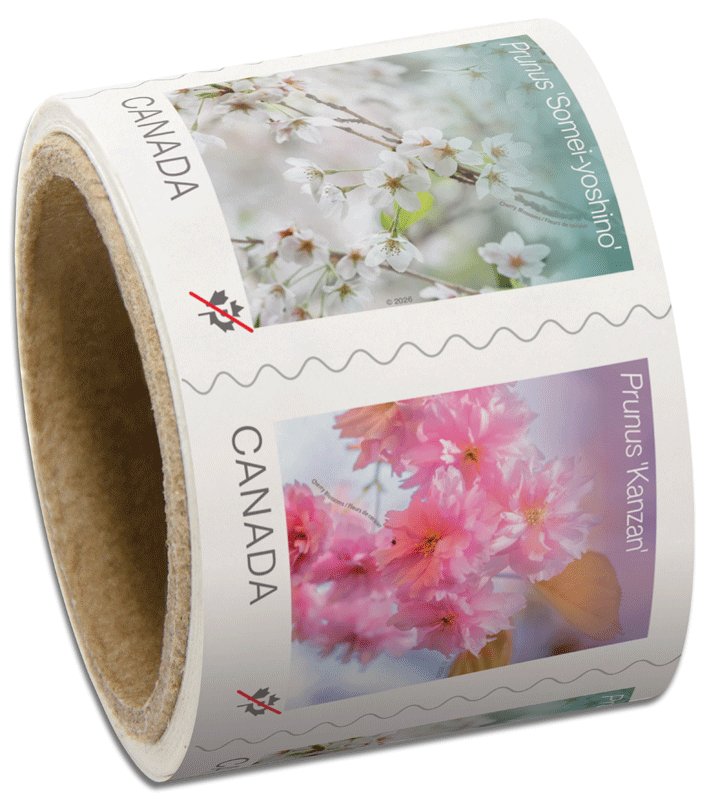
The two stamps feature original photographs of the cherry blossoms taken at the Nitobe Memorial Garden at the University of British Columbia in Vancouver. The stamps are designed by Belisle Creative, featuring photography by Brett Hitchins, and printed by Lowe-Martin. The issue includes a booklet of 10 Permanent™ stamps, a coil of 50 stamps, a souvenir sheet and an Official First Day Cover cancelled in Vancouver.

[en Francais pour les médias d’information]
Les timbres floraux de cette année mettent en vedette les délicates fleurs de cerisiers ornementaux
L’émission annuelle sur les fleurs est toujours très prisée pour les faire-part de mariage, en plus d’être appréciée des adeptes de jardinage.

VANCOUVER – Signes du printemps, les fleurs de cerisier forment des canopées colorées spectaculaires. Ces fleurs parfumées, qui laissent derrière elles un délicat tapis de pétales, symbolisent la beauté et le caractère éphémère de la vie. On trouve une grande variété d’espèces sauvages et cultivées de cerisiers dans de nombreuses régions du monde, et plusieurs sont indigènes de l’hémisphère Nord.

Cette émission met en vedette deux cultivars de cerisiers. Résistant au froid et prisé en raison de ses grandes fleurs doubles rose foncé, le Prunus ?Kanzan? est  l’un des cultivars japonais les plus populaires en Amérique du Nord et en Europe. Couvert de grappes de fleurs blanches ou rose pâle, le prolifique Prunus ?Somei-yoshino? est la vedette de célébrations au Japon et ailleurs en Asie de l’Est.

Appelées sakura au Japon, les fleurs de cerisier inspirent des célébrations nationales. Au Canada, on peut admirer le spectacle en bordure de rues et dans bon nombre de parcs et de jardins. Vancouver abrite des milliers de spécimens et tient l’un des plus grands festivals de cerisiers en fleurs du pays.

À propos des timbres
Les deux timbres sont ornés de photos originales de fleurs de cerisier prises au Nitobe Memorial Garden de l’Université de la Colombie-Britannique à Vancouver. Imprimés par Lowe-Martin, ils sont conçus par Belisle Creative et présentent des photographies de Brett Hitchins. L’émission comprend un carnet de 10 timbres PermanentsMC, un rouleau de 50 timbres, un bloc-feuillet et un pli Premier Jour officiel oblitéré à Vancouver.