See the stamp designs and descriptions below the postmarks .
[Media Advisory]
Canada Post is paying tribute to emergency responders with five stamps to be unveiled at events across Canada
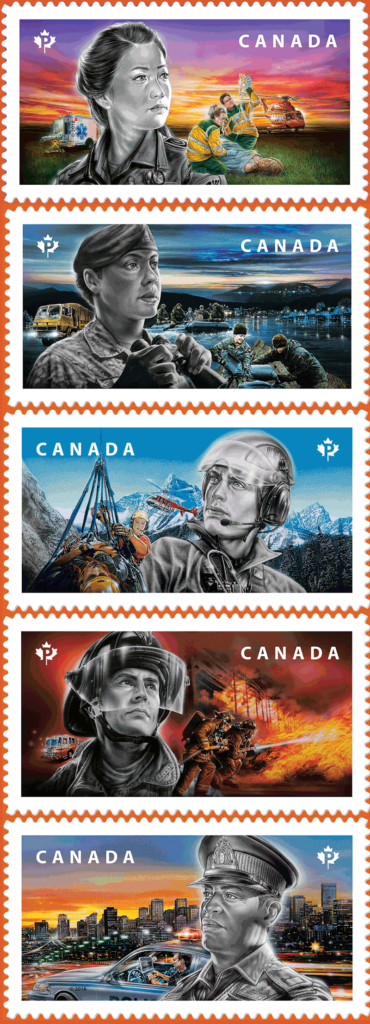 OTTAWA, Sept. 4, 2018 /CNW/ – Over five consecutive days starting Monday, September 10, Canada Post will unveil a stamp issue to pay tribute to five groups of Canada’s emergency responders. One stamp will be unveiled each day at a separate event across the country to honor a different kind of emergency responder.
The stamps express the respect and gratitude of Canadians to emergency responders, professional and volunteer. With their skills, with their service and by their sacrifices, they find and rescue the lost; treat and save the seriously ill and injured; and protect us, our homes, businesses, and communities.
What: Canada Post’s iconic stamp program is paying tribute to emergency responders with five stamps
Who, When, and Where:
- Paramedics: Monday September 10 – Fredericton, New Brunswick
- Canadian Armed Forces: Tuesday, September 11 – Valcartier, Quebec
- Search and Rescue: Wednesday, September 12 – Banff, Alberta
- Firefighters: Thursday, September 13 – Halifax, Nova Scotia
- Police: Friday, September 14 – Ottawa, Ontario
All events will begin at 10.30 am local time. 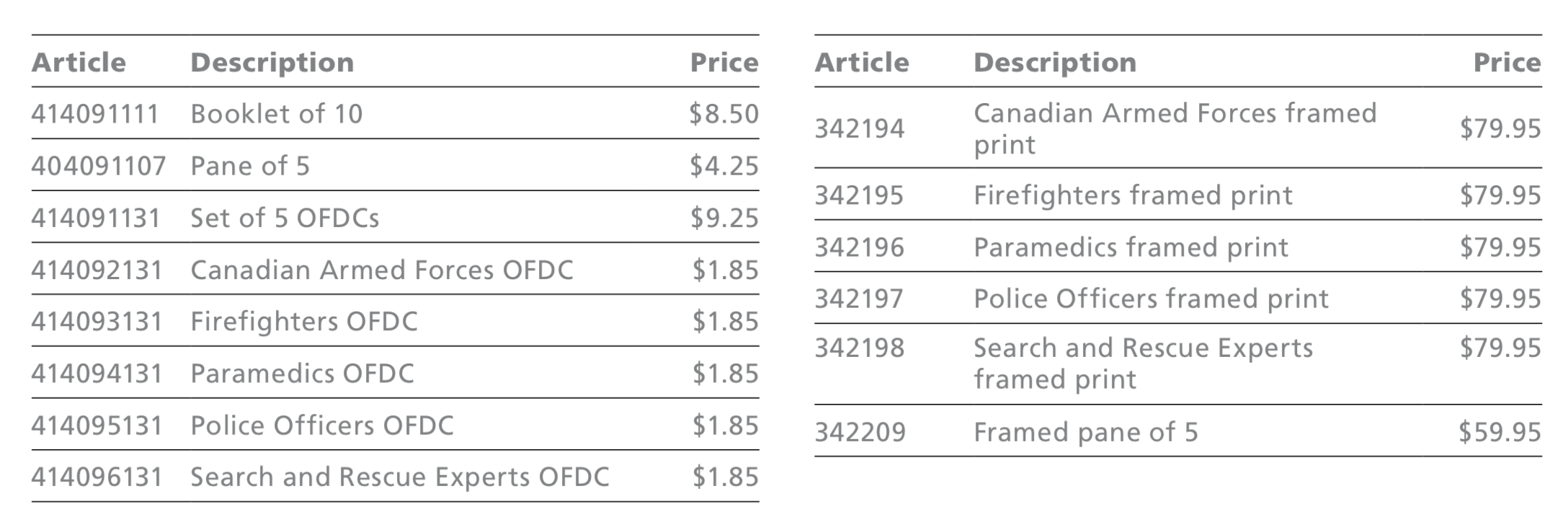 You can read more on the stamps and emergency responders in the Canada Post online magazine.
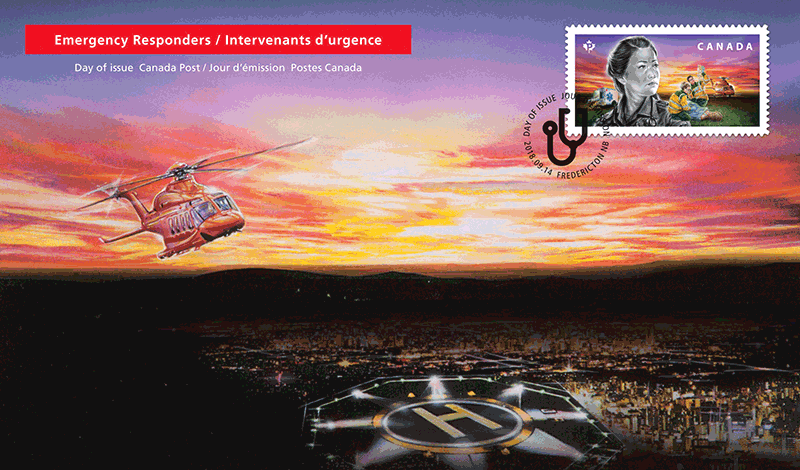
Here are the first-day postmarks:
Updated September 10th:
Paramedics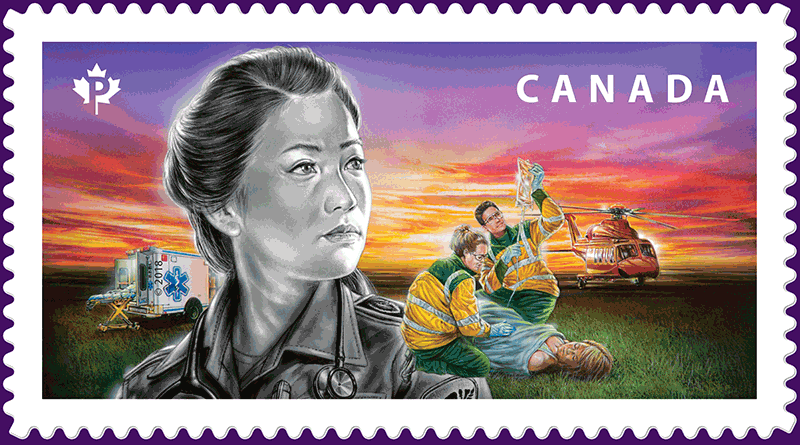
From Canada Post:
Canada’s highly trained paramedics deliver life-saving care to individuals experiencing medical emergencies in the critical minutes before they arrive at a hospital. They’re ready to face almost any situation – from heart attacks and drug overdoses to accidents, natural disasters and incidents involving multiple casualties. As front-line medical experts, they make a vital contribution to public health and safety. From treating patients and transporting them to health care facilities to delivering community paramedicine programs in areas of need, the duties of paramedics put them at the centre of our most vulnerable moments. Thanks to their courage, compassion and expertise, we know we’re in good hands.
[press release]
Canada Post stamp honours the country’s paramedics
This is the first of five stamps to be unveiled this week to reflect Canadians’ gratitude for all emergency responders
FREDERICTON, N.B. – Canada Post today unveiled a stamp that honours the country’s paramedics for providing life-saving medical care to Canadians.
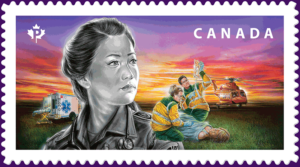 These skilled, highly-trained and compassionate front-line emergency responders provide medical care on the scene and en route to hospital. They respond to natural disasters and emergencies in our communities. They attend virtually any situation – from heart attacks, drug overdoses, trauma events, and incidents involving multiple casualties. Once dispatched to an emergency, paramedics have some daunting expectations to meet, including arriving quickly, assessing and treating their patients with urgency, expertise and empathy, and co-ordinating with other emergency responders. Their expertise and professionalism has saved countless lives.
The stamp was unveiled at the Ambulance New Brunswick headquarters in Fredericton.
Canada Post and the stamp designers consulted with the Paramedic Association of Canada, which represents more than 20,000 practitioners, to ensure the stamp image is representative of paramedics in Canada.
The five Emergency Responders stamps
The other Emergency Responders stamps pay tribute to the Canadian Armed Forces, search and rescue experts, firefighters and police. All five stamps reflect Canadians’ respect and gratitude for the skills, service and sacrifices of the men and women who protect Canadians, sometimes by risking their own lives.
The stamp honouring members of the Canadian Armed Forces will be unveiled at Base Valcartier in Quebec tomorrow. A stamp honouring search and rescue experts will be unveiled in Banff, Alta. on Wednesday. The firefighters stamp will be unveiled in Halifax on Thursday and a stamp paying tribute to police officers will be unveiled in Ottawa on Friday.
The stamps will be available for purchase on canadapost.ca and at postal outlets across Canada as of Friday, September 14.
Updated September 11th: 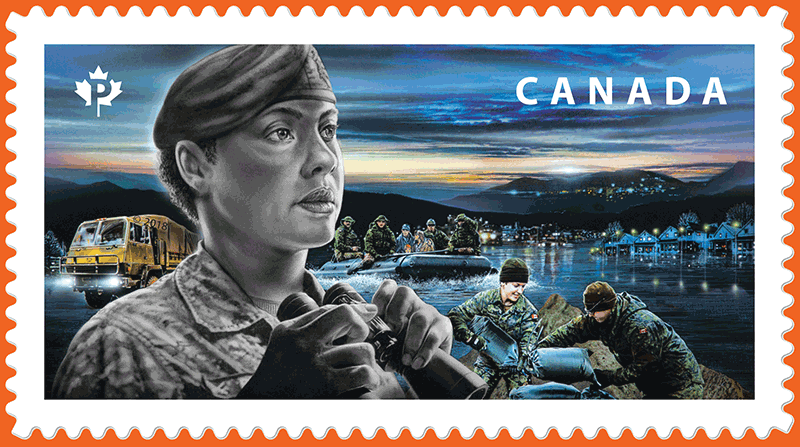
 From Canada Post:
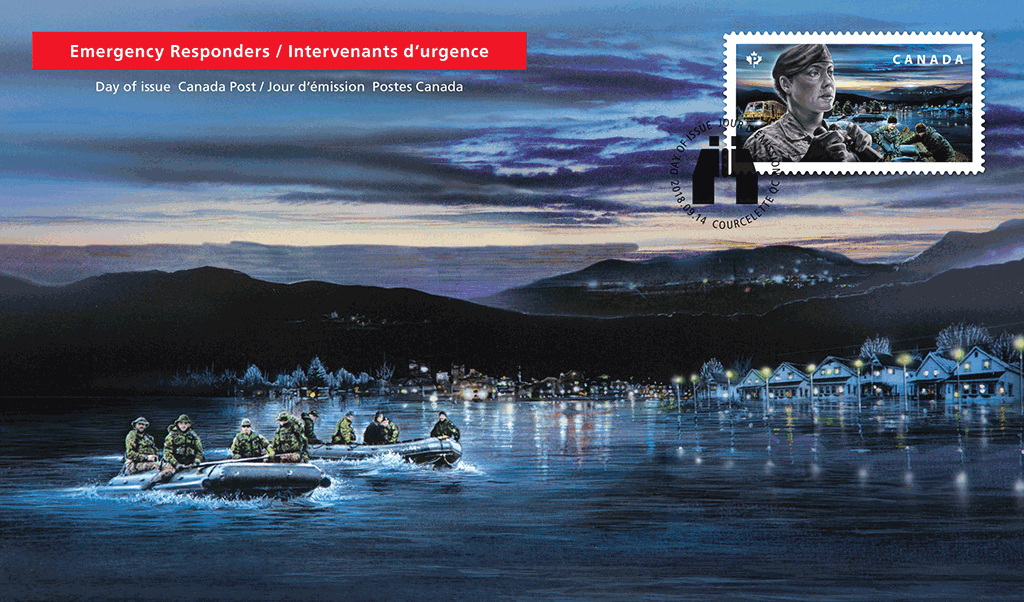
Floods, forest fires, ice storms and other natural disasters sometimes cause so much destruction that local emergency-response efforts become overwhelmed. Members of the Canadian Armed Forces are then ready to assist. Deployed around the world in international combat operations and peacekeeping missions, the Forces serve as a critical last line of defence at home. Experts in such areas as engineering, health services, aviation, logistics and the use of specialized equipment, regular and reserve members help conduct evacuations, deliver aid, provide transportation, execute search and rescue missions, and perform other critical tasks during emergencies in Canada and abroad.
[press release]
Canada Post honours Canadian Armed Forces as “last line” of help in emergencies
This is the second of five stamps to be unveiled this week that reflect Canadians’ gratitude for all emergency responders
BASE VALCARTIER, Que. – Canada Post today unveiled a stamp that pays tribute to members of the Canadian Armed Forces (CAF) for their critical role in responding to emergencies across Canada, such as wildfires, floods and ice storms.
 Dedicated members of the CAF, both Regular and Reserve members, are a last line of defence when natural disasters occur. Trained in engineering, health services, aviation, logistics and the use of specialized equipment, they conduct evacuations, deliver aid, provide transportation, execute search and rescue missions, among many other tasks. Following Government of Canada approval to a provincial or territorial government request, the CAF can deploy members and assets – including ships, aircraft and vehicles – from the Canadian Army, the Royal Canadian Air Force and the Royal Canadian Navy. These missions are known as Operation LENTUS.
This year alone, the CAF have answered the call for help in August (almost 600 forest fires in B.C.); May (the evacuation of 140 people threatened by fire in Manitoba, and flood relief in B.C. and New Brunswick); and April (floods at Kashechewan First Nation in Ontario).
The stamp was unveiled at 2nd Canadian Division Support Base Valcartier, near Quebec City, which is home to roughly 6,000 members mainly from the 5 Canadian Mechanized Brigade Group and the 2nd Canadian Division Support Group. Members from the base have assisted in Operation LENTUS missions, most recently in the spring floods of 2017 in Quebec.
The five Emergency Responders stamps
The other Emergency Responders stamps pay tribute to paramedics, search and rescue experts, firefighters and police officers. The paramedics stamp was unveiled at the Ambulance New Brunswick headquarters in Fredericton, N.B. yesterday. The next stamp will be revealed in Banff, Alta., tomorrow, and all five will be unveiled by Friday.
The stamps will be available for purchase on canadapost.ca and at postal outlets across Canada as of Friday, September 14. Click here for high resolution images of the announced stamps and their Official First Day Covers.
For more details on Operation LENTUS, see http://www.forces.gc.ca/en/operations-canada-north-america/op-lentus.page
From Canada Post September 12th: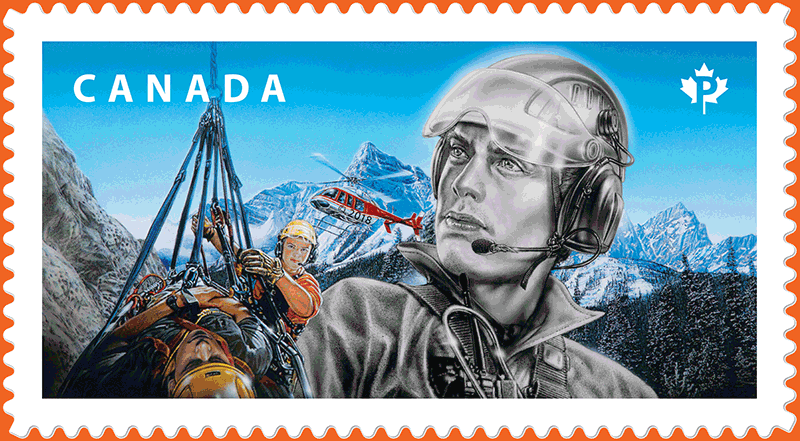 Visit Canada’s magnificent coastlines, mountains, forests and waterways and you’ll see why they attract so many outdoor enthusiasts. But changing weather, challenging terrain and human error can sometimes spell disaster. When that happens, Canada’s search and rescue technicians are there to help, trained extensively in survival, first aid, parachuting, diving and mountain climbing. Whether from the Canadian Coast Guard, Canadian Armed Forces, Parks Canada or a provincial, territorial or volunteer organization, these elite experts do their best to find and save those who are lost, hurt or stranded.
[press release]
Stamp honours Canada’s search and rescue experts
This is the third of five stamps to be unveiled across Canada this week to reflect Canadians’ gratitude for emergency responders
BANFF, Alta. – Canada Post today unveiled a stamp that pays tribute to the country’s search and rescue experts, and their willingness to spring into action with skill, determination and courage whenever called upon.
 Every year, millions of Canadians and visitors explore this country’s forests, mountains, waterways and oceans, while others work daily in remote conditions. Whether in the wilderness for recreation or work, changing weather, human error or other factors can quickly result in these individuals being lost, injured, stranded or otherwise endangered.
Search and rescue experts find, rescue and treat people in life threatening situations, and transport them to safety or advanced medical care as need be. In performing their life-saving duties, search and rescue experts often find themselves in dangerous conditions such as avalanches, extreme weather or high seas.
The stamp was unveiled in Banff, Alta., a centre for Parks Canada’s Mountain Safety Program. While the stamp portrays a helicopter extraction in the mountains, a wide variety of search and rescue operations are also performed by many Canadian groups, including the Canadian Armed Forces and the Canadian Coast Guard, as well as volunteer organizations across the country. Search and rescue experts also educate Canadians about safety, particularly in wilderness settings.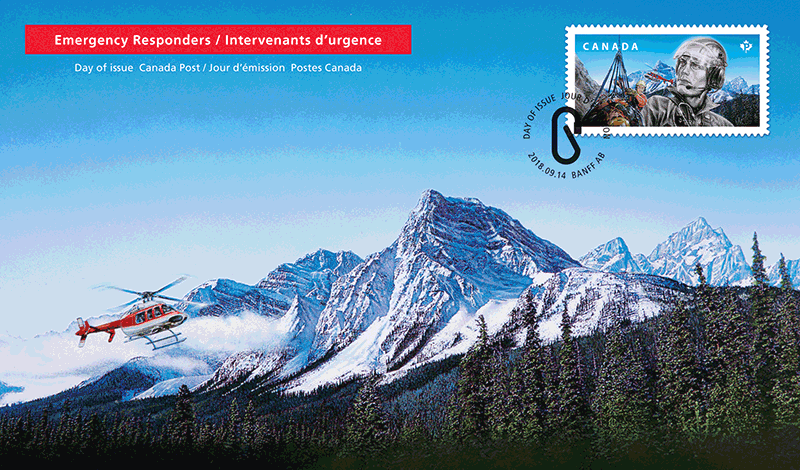
The five Emergency Responders stamps
The additional four Emergency Responders stamps pay tribute to paramedics, the Canadian Armed Forces, firefighters and police officers. All five stamps reflect Canadians’ respect and gratitude for the skills, service and sacrifices of those who protect Canadians, sometimes by risking their own lives.
The paramedics stamp was unveiled at the Ambulance New Brunswick headquarters in Fredericton, N.B. on Monday, and a stamp honouring members of the Canadian Armed Forces was unveiled at Base Valcartier in Quebec yesterday. A stamp honouring firefighters will be revealed in Halifax, N.S. tomorrow, and a stamp paying tribute to police officers will be unveiled in Ottawa on Friday.
The stamps can be purchased on canadapost.ca and at postal outlets across Canada as of Friday, September 14. Click here for high resolution images of the stamp and Official First Day Cover.
From Canada Post September 13th:
Part-time, full-time and volunteer firefighters protect lives, property and environments across Canada. At the ready 24 hours a day, they spring into action at a moment’s notice, regardless of when or where disaster strikes. Although firefighters are well known for bravely facing off against flames, their duties go beyond fighting fires and rescuing victims trapped in burning buildings. They assist with many other life-threatening events, including rescue operations, motor vehicle accidents and hazardous-material emergencies. Firefighters also make Canada a safer place by educating us about fire prevention, escape planning, and building and fire codes. 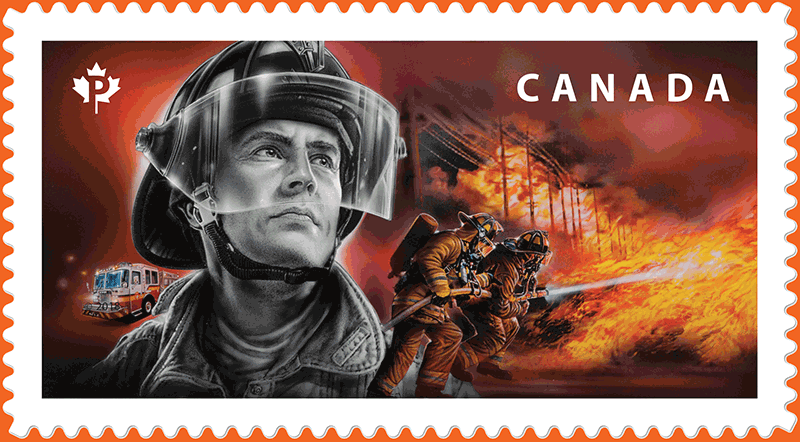 [press release]
Canada Post honours the country’s firefighters with stamp
Fourth of five stamps to be unveiled this week to reflect Canadians’ gratitude for all emergency responders
HALIFAX, N.S. – Canada Post today unveiled a stamp that honours the country’s firefighters for saving lives and protecting property and the environment with their skills and courage.
 Few emergencies trigger such an immediate sense of threat as a fire breaking out in our homes or communities, or being injured and trapped in a vehicle after a serious collision. In situations that might make most people panic, firefighters arrive well equipped and trained to intervene as a cohesive team.
Able to respond to emergencies at a moment’s notice, firefighters do much more than fight fires and rescue victims from burning buildings. They also provide emergency medical services and perform difficult technical rescues and extractions. They respond to vehicle collisions, overdoses, hazardous-material emergencies and other life-threatening events. As well, they make Canada safer by educating people about fire prevention, investigating fires and enforcing fire codes.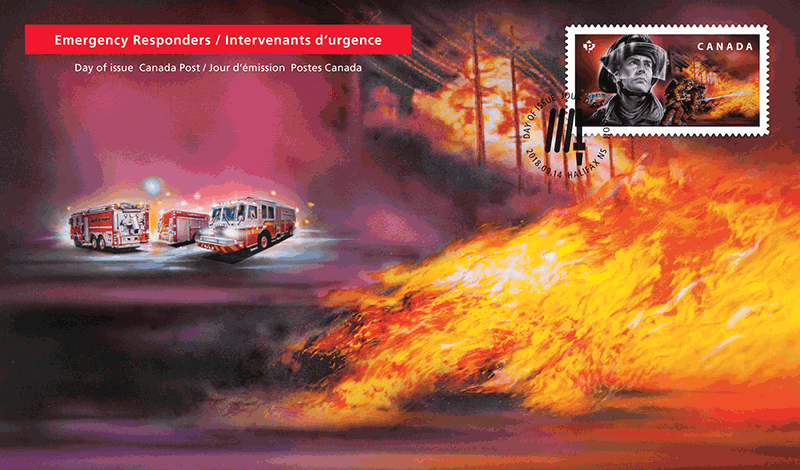
The stamp was unveiled in Halifax with the participation of Halifax Regional Fire & Emergency, Canada’s oldest firefighting department, established in 1754.
Canada Post and the stamp designers consulted with the Canadian Association of Fire Chiefs, whose members represent roughly 3,500 fire departments across Canada, to ensure the stamp accurately represents firefighters.
The five Emergency Responders stamps
The other Emergency Responders stamps pay tribute to paramedics, the Canadian Armed Forces, search and rescue experts and police. All five stamps reflect Canadians’ respect and gratitude for the skills, service and sacrifices of those who protect Canadians, sometimes by risking their own lives.
The paramedics stamp was unveiled at the Ambulance New Brunswick headquarters in Fredericton, N.B. on Monday, and a stamp honouring members of the Canadian Armed Forces was unveiled at Base Valcartier in Quebec, Tuesday. A stamp honouring search and rescue experts was unveiled in Banff, Alta. yesterday, and a stamp paying tribute to police officers will be unveiled in Ottawa tomorrow.
The stamps will be available for purchase on canadapost.ca and at postal outlets across Canada as of Friday, September 14.
From Canada Post September 14th:
Canada is one of the safest countries in the world due in large part to the civilian and sworn members of our police forces, who perform critical – and often dangerous – work with compassion, integrity and professionalism. Their many duties include providing emergency assistance in cases of crime, natural and human-caused disasters, accidents and other life-threatening situations. Through community patrols, security services, investigations and other means, police officers work tirelessly to protect Canadians and visitors from harm. Internationally respected for their expertise, our police officers are also deployed to countries around the world to assist in times of crisis.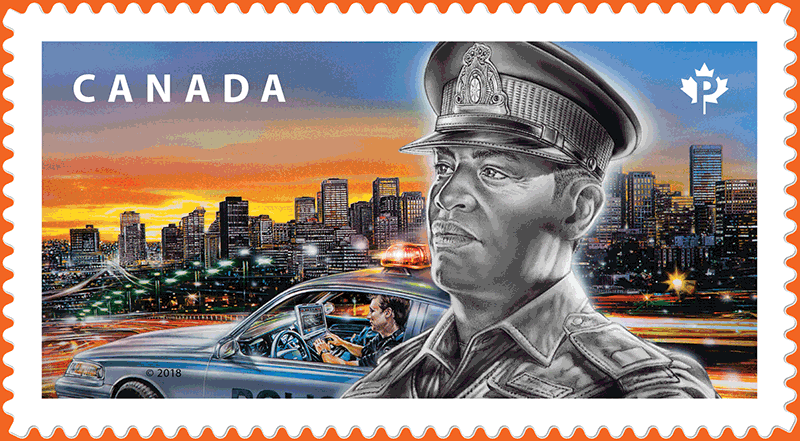
[press release]
Stamp honours police and civilians who support them
Final reveal in five-stamp issue concludes a week-long celebration of selfless emergency responders who protect and save lives
OTTAWA – Canada Post today unveiled the fifth and final stamp in an Emergency Responders issue that pays tribute to the brave people who protect and assist Canadians and visitors to our country during times of emergency.
 The stamp honours our police and the civilians who support them. These highly skilled emergency responders assist in cases of crime and during accidents and disasters. They act with compassion, integrity and professionalism and are respected around the world for their international contributions.
Their efforts to prevent crime through community outreach, security patrols and modern investigations make Canada one of the safest countries in the world.
The Police stamp was unveiled at the Ottawa Police Association in the nation’s capital, home to the Canadian Police and Peace Officers Memorial. The stamp’s unveiling completes a week-long celebration of our emergency responders at separate events held across the country.
Canada Post and the stamp designers consulted with the Canadian Police Association, whose members represent roughly 60,000 police personnel from across Canada, to ensure the stamp represents policing accurately.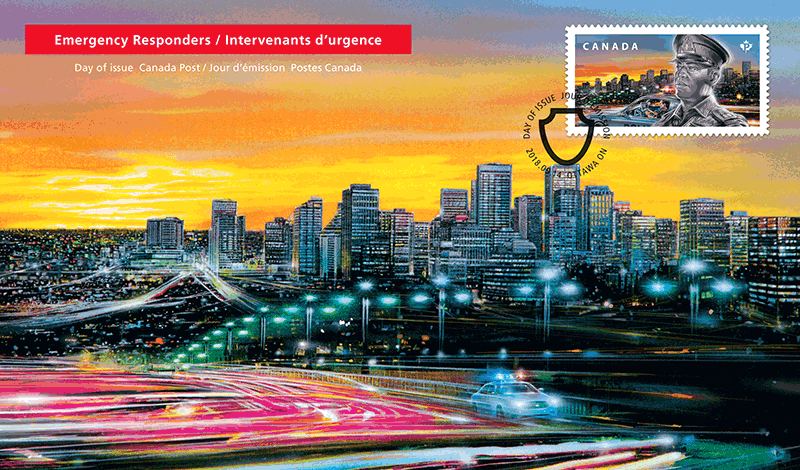
The five Emergency Responders stamps
Paramedics were honoured in Fredericton, N.B. on Monday; the Canadian Armed Forces were celebrated at CFB Valcartier, Que. on Tuesday; our Search and Rescue experts were honoured in Banff, Alta., on Wednesday; and Firefighters were celebrated in Halifax, N.S. yesterday.
The stamps express the respect and gratitude Canadians have for professional and volunteer emergency responders. As a group, with their skills, and by their sacrifices, they find and rescue the lost; treat and save the seriously ill and injured; and protect us, our homes, businesses, and communities.
The stamps are available for purchase on canadapost.ca and at postal outlets across Canada.

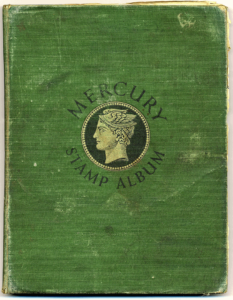 “John Lennon: The Green Album” opened Sept. 7 at the Smithsonian’s National Postal Museum and coincides with the U.S. Postal Service’s issuance of the John Lennon Forever Stamp, honoring the legendary singer and songwriter. The stamp is the latest in the Music Icons stamp series. The exhibition will be open through Feb. 3, 2019.
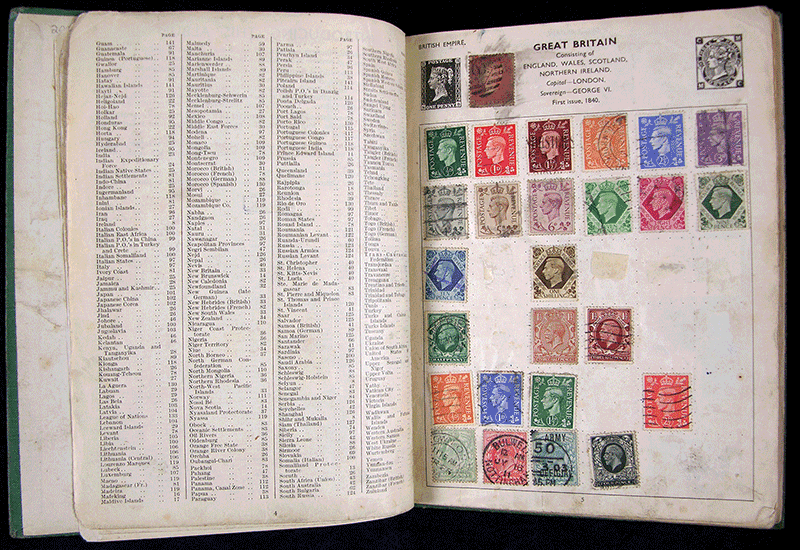 Years before his rise to fame as a musician and member of the Beatles, Lennon was a schoolboy in Liverpool, England, when his older cousin, Stanley Parkes, inspired Lennon’s interest in stamp collecting and gave him his stamp album. Lennon rubbed out Parkes’
 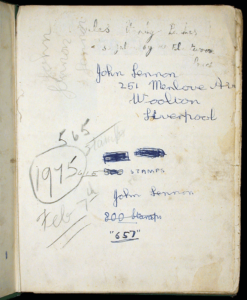 name and address on the album’s flyleaf, replacing it with his own signature and the address at Mendips, the home he shared with his aunt Mary (“Mimi”) Smith and her husband George. Already a budding artist, Lennon sketched beards and mustaches in blue ink of the likenesses of Queen Victoria and King George VI on the album’s title page. Lennon continued to collect and trade stamps for several years after receiving this album. According to Parkes, Lennon began collecting at about age 9 and actively collected stamps for several years. There is evidence throughout the album that Lennon added and removed stamps. Lennon’s handwritten notes on the flyleaf indicate the album may have contained as many as 800 stamps at some point.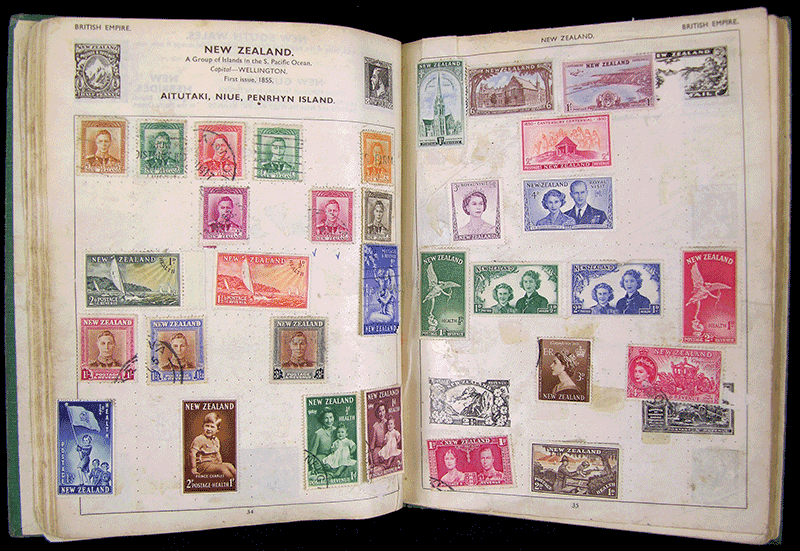
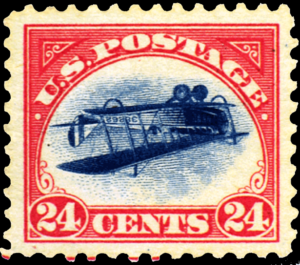 Unseen for the last 100 years, one of the famous Jenny Airmail Invert stamps, known around the world to collectors as the stamp with the “Upside Down Airplane,” has now reappeared. It comes to light just in time to celebrate the centennial year of the stamp’s issuance in 1918 at the very beginning of air mail service in the United States.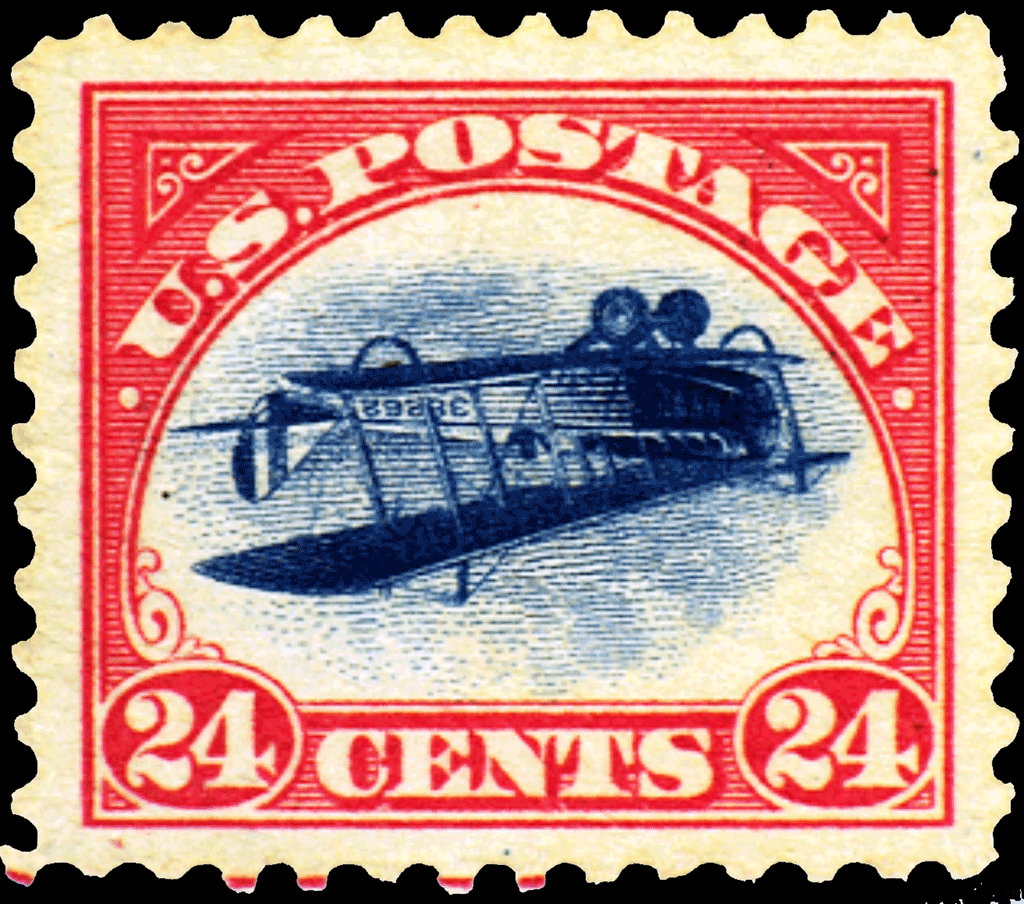
 on variety or something more interesting, and decide whether to keep it. And perhaps at the subconscious level, we also evaluate modern stamps in the context of what has gone before — and for many of us, the comparison is often not positive.
 actions. All buyers/viewers like a pretty flower stamp. But for the general public, that is where it ends. For collectors, a little of that (puppies, lighthouses, birds, costumes, etc.) goes a long way. We prefer topics with some gravitas: history illustrated though events and the people who excelled in their fields and contributed to making America great, events that advance the human condition like space stamps, scientific discoveries and medical advances.
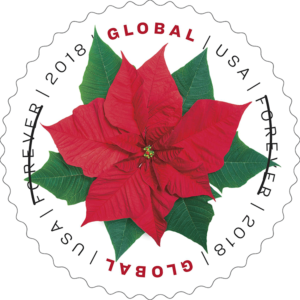 g. Stamp Shape which draws the same kinds of complaints when non-traditional circular, especially tall or wide, or triangular stamps are issued. The USPS sees these as interesting variations on what might otherwise be a boring theme, and believes they bait the stamp collecting hook (of which more later), but collector reaction is by and large not complimentary.
 Peanuts Christmas stamps, etc. It used to be this was limited to commemorative subjects, but in recent years the Postal Service has extended it into the domain of definitives. All of this tends to encourage stamp collectors to avoid mint stamps, and to concentrate on used. (But even this is more difficult to swing now that most self-sticks can’t be washed.)
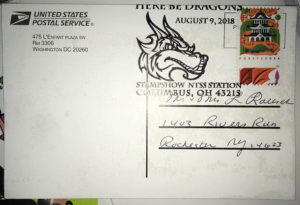 Errors, Freaks and Oddities. Each of these is a term of art that has a lengthy definition, and if you want to learn more about this area, visit
 The Dance of Death, 1967
 King Lear, 2016
 Hamlet, 1975
 Hedda Gabler, 1970
 No Man’s Land, 1975
 Carmen Jones, 1991
 Romeo and Juliet, 1960
 Henry V, 1955
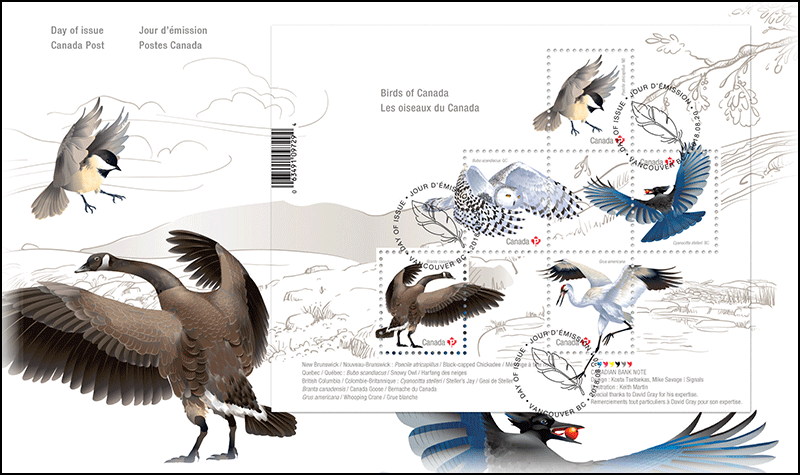
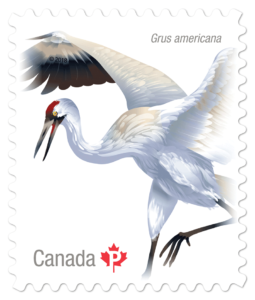 VANCOUVER – One bears our country’s name and migrates in formations that point the way from one passing season to the next. Another, bold and curious, given a name that imitates its song, will perch on your outstretched arm. A third stands as an example of a single population thriving in Canada even though the species is endangered.
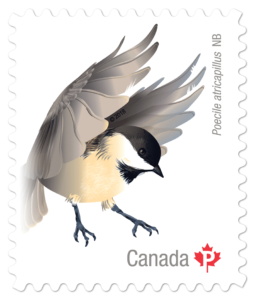 cheery “chickadee-dee-dee” call, the black-capped chickadee is found across most of Canada but holds a special place in New Brunswick, where it earned official status after a provincial Federation of Naturalists contest. Campers and hikers know this ever-curious bird will come perch nearby – or on your arm.
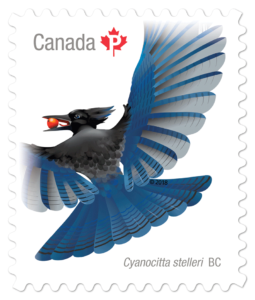 a province-wide vote, the brilliant-blue Steller’s jay is a common sight in campgrounds and coniferous forests in western Canada.
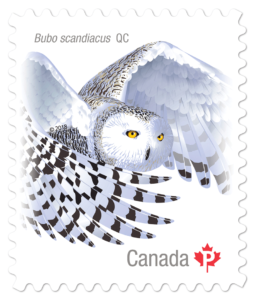 The first three birds on the list above are official provincial birds; the three-year series has now celebrated the official bird of each province and territory.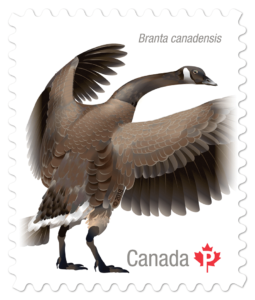
 5299 (50¢) Scooby-Doo
 The Postal Service issues four new stamps and a souvenir sheet [shown on right] showcasing classic images of Santa Claus painted by famed commercial artist Haddon Sundblom. Each stamp portrays a close-up of Santa’s face. The four images featured in the booklet are details from larger paintings created by Sundblom and originally published in ads for The Coca-Cola Company from the 1940s through the early 1960s. Sundblom is the man credited with refining the modern image of Santa Claus.
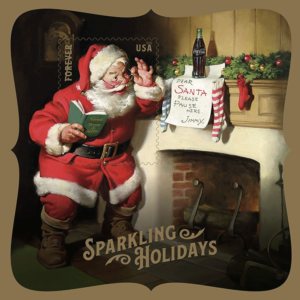 On October 11, 2018, in Pigeon Forge, TN, the U.S. Postal Service® will issue the Sparkling Holidays Souvenir Sheet (Forever® priced at the First-Class Mail® rate) in one design, in a pressure-sensitive adhesive souvenir sheet of one stamp (item 566300). The stamp will go on sale October 11, 2018.
 Foster E. Miller III of Maryland will chair Americover 2019, the American First Day Cover Society’s annual show, convention and celebration of first day covers. Miller previously handled scheduling for the Americover shows.