
Announced November 20, 2018. The most recent information will appear after the large illustration and the introductory description from the USPS.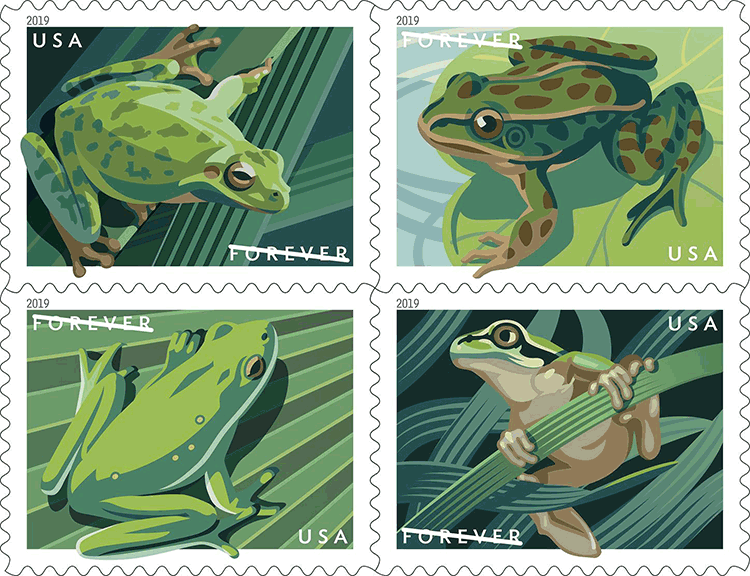 In 2019, the Postal Service issues Frogs, four new stamps in a booklet of 20, featuring digital illustrations of four North American frogs: the Pacific tree frog, the northern leopard frog, the American green tree frog and the squirrel tree frog. Working with a primarily green color palette and touches of brown, artist Nancy Stahl captured the essence of each animal with enough important defining features to make each recognizable. Art director William J. Gicker designed the stamps.
Updated March 29th:
These stamps will be issued July 9th in Boise, Idaho.
From the June 6th Postal Bulletin:
On July 9, 2019, in Boise, ID, the United States Postal Service® will issue the Frogs stamps (Forever® priced at the First-Class Mail® rate) in four designs, in a pressure-sensitive adhesive (PSA) booklet of 20 stamps (Item 680100). The stamps will go on sale nationwide July 9, 2019, and must not be sold or canceled before the first-day-of-issue.
In 2019, the Postal Service™ issues Frogs stamps in a booklet of 20, featuring digital  illustrations of four North American frogs:
- The Pacific tree frog,
- The northern leopard frog,
- The American green tree frog, and
- The squirrel tree frog.
Working with a primarily green color palette and touches of brown, artist Nancy Stahl captured the essence of each animal with enough important defining features to make each recognizable. Art director William J. Gicker designed the stamps.
Availability to Post Offices: Item 680100, Frogs (Forever Priced at the First-Class Mail Rate) PSA Double-Sided Booklet of 20 Stamps: Stamp Fulfillment Services will not make an automatic push distribution to Post Offices.
How to Order the First-Day-of-Issue Postmark:
Customers have 120 days to obtain the first-day-of-issue postmark by mail. They may purchase new stamps at their local Post Office™ or at The Postal Store® website at usps.com/shop. They must affix the stamps to envelopes of their choice, address the envelopes (to themselves or others), and place them in a larger envelope addressed to:
FDOI – Frogs Stamps
USPS Stamp Fulfillment Services
8300 NE Underground Drive, Suite 300
Kansas City, MO 64144-9900
After applying the first-day-of-issue postmark, the Postal Service will return the envelopes through the mail. There is no charge for the postmark up to a quantity of 50. There is a 5-cent charge for each additional postmark over 50. All orders must be postmarked by November 9, 2019.
Technical Specifications:
Issue: Frogs Stamps
Item Number: 680100
Denomination & Type of Issue: First-Class Mail Forever
Format: Double-sided Booklet of 20, (4 designs)
Series: N/A
Issue Date & City: July 9, 2019, Boise, ID 83708
Art Director: William J. Gicker, Washington, DC
Designer: William J. Gicker, Washington, DC
Typographer: Greg Breeding, Charlottesville, VA
Artist: Nancy Stahl, New York, NY
Modeler: Sandra Lane/Michelle Finn
Manufacturing Process: Offset
Printer: Banknote Corporation of America
Press Type: Alprinta 74
Stamps per Booklet: 20
Print Quantity: 200,000,000
Paper Type: Phosphor Tagged Paper, Block Tagged
Adhesive Type: Pressure-sensitive
Processed at: Banknote Corporation of America
Stamp Orientation: Vertical
Image Area (w x h): 1.05 x 0.77 in./26.67 x 19.558 mm
Stamp Size (w x h): 1.19 x 0.91 in./30.226 x 23.114 mm
Full Booklet Size (w x h): 2.375 x 5.743 in./60.325 x 145.872 mm
Colors: Cyan, Magenta, Yellow, Black
Plate Size: 800 stamps per revolution
Plate Numbers: “B” followed by four (4) single digits
Marginal Markings: Header. “FROGS Twenty First-Class Forever Stamps” • ©2018 USPS in peel strip area • Barcode • Promotional text in peel strip area • Plate number in peel strip area
Here are the first-day postmarks for this issue: The DCP cancel measures 2.78″x1.40″
 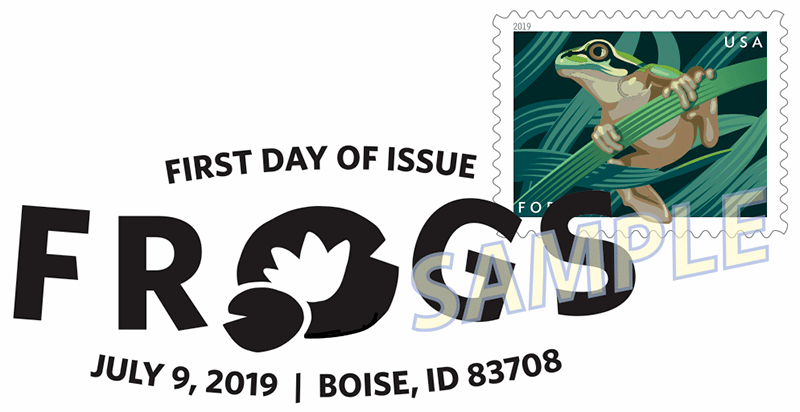 The B&W Pictorial measures 2.58″x1.07″
Updated June 13th:
[press release]
Frogs Are Forever
U.S. Postal Service Celebrates Four Species with New Forever Stamps
What: The U.S. Postal Service issues Frogs, four stamps in a booklet of 20 that feature digital illustrations of four North American frogs: the Pacific tree frog, the northern leopard frog, the American green tree frog and the squirrel tree frog. The First Day of Issue event is free and open to the public. News of the stamp is being shared with the hashtag #FrogStamps.
Who: Tom Samra, Vice President, Facilities, U.S. Postal Service
When: Tuesday, July 9, at 11 a.m. MT
Where: Morrison Knudsen Nature Center
600 S. Walnut Street
Boise, ID 83712
RSVP: Dedication ceremony attendees are encouraged to RSVP at usps.com/frogs
Updated June 13th:
Background:
Frogs live on every continent except Antarctica; more than 90 species live in the United States, including the four on these stamps.
Found throughout the western United States, the tiny Pacific tree frog (Pseudacris regilla) is nicknamed the “Hollywood frog.” Countless television shows and movies have used its rib-bit, rib-bit call in nighttime scenes.
The northern leopard frog (Rana pipiens) is commonly identified by its highly distinctive call, a rattle-like snoring noise, followed by several notes described as “chuckling” or “clucking.”
Sometimes called the rain frog for its noisy choruses after a warm rain, the American green tree frog (Hyla cinerea) is also dubbed the cowbell frog for the sound of its short call when heard from a distance.
A raspy, quack-like call much like the scolding noise of a gray squirrel identifies the squirrel tree frog (Hyla squirella), found from southeastern Virginia through Florida and along the Gulf Coast to Texas.
Working with a green color palette and touches of brown, artist Nancy Stahl captured the defining features of each frog making them recognizable. Art director William J. Gicker designed the stamps. The Frogs stamps are being issued as Forever stamps and will always be equal in value to the current First-Class Mail 1-ounce price.
Updated August 7th:
Here are the Scott catalogue numbers for this issue:
5395 Pacific Tree Frog
5396 Northern Leopard Frog
5397 American Green Tree Frog
5398 Squirrel Tree Frog
a. Convertible booklet pane of 20, 5 each #5395-5398
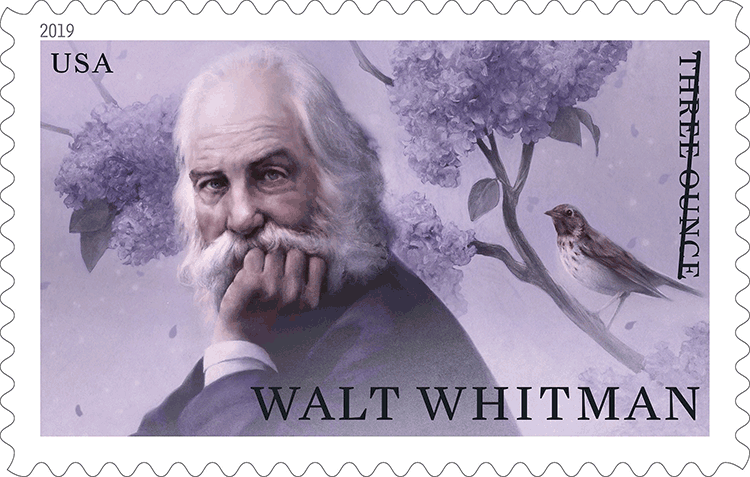 With this stamp, the 32nd in the Literary Arts series, the Postal Service honors poet Walt Whitman (1819—1892) on the bicentennial of his birth. The stamp features a portrait of Whitman based on a photograph taken by Frank Pearsall in 1869. In the background, a hermit thrush sitting on the branch of a lilac bush recalls “When Lilacs Last in the Door-yard Bloom’d,” an elegy for President Abraham Lincoln written by Whitman soon after Lincoln’s assassination on April 14, 1865. Considered by many to be the father of modern American poetry, Whitman broke away from dominant European poetic forms and experimented with free verse and colloquial expressions, writing powerfully about nearly every aspect of 19th-century America. The artist for the stamp was Sam Weber. Art director Greg Breeding designed the stamp. The words “THREE OUNCE” on this stamp indicate its usage value. Like a Forever stamp, this stamp will always be valid for the rate printed on it.
 On September 12, 2019, in Huntington Station, NY, the United States Postal Service® will issue the Walt Whitman stamp (Non-denominated priced at the 3-ounce rate) in one design, in a pressure-sensitive adhesive pane of 20 stamps (Item 120300). The stamp will go on sale nationwide September 12, 2019, and must not be sold or cancelled before the first-day-of-issue.
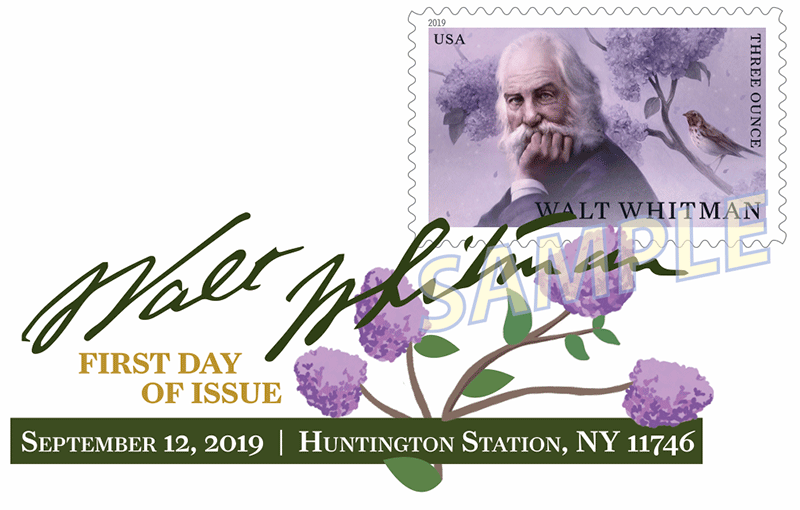 The Digital Color Postmark measures 2.96″ x 1.18″
 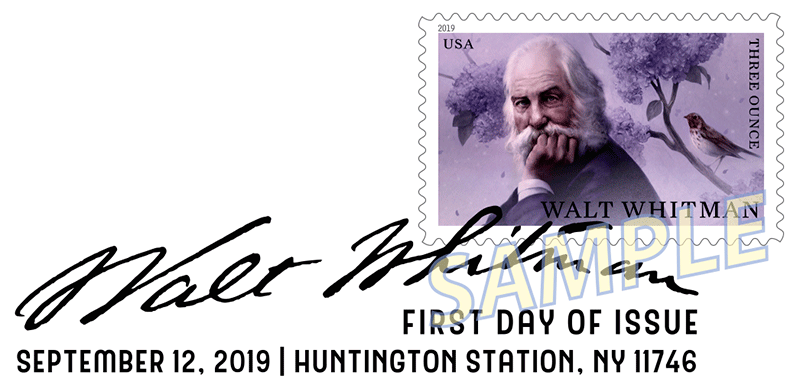 The B&W pictorial postmark measures 2.98″ x 0.74″
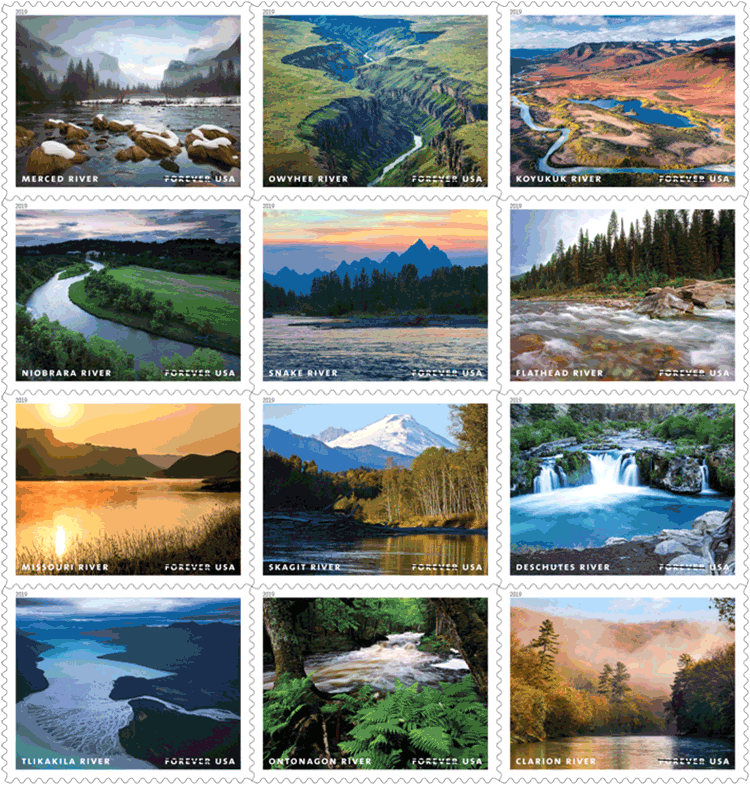 This issuance celebrates Wild and Scenic Rivers — exceptional American streams that run freely through natural landscapes without man-made alterations. The pane of a dozen different designs features photographs that represent the more than 200 rivers or river segments designated within the Wild and Scenic Rivers System.
 Second row, left to right: Niobrara River (Michael Melford, photographer), Snake River (Tim Palmer, photographer), and Flathead River (Tim Palmer, photographer).
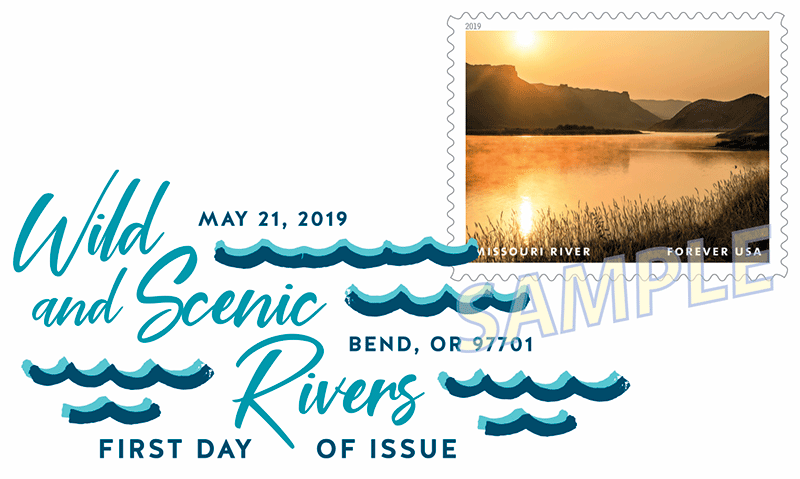 The Digital Color Postmark measures 2.88″x1.35″
 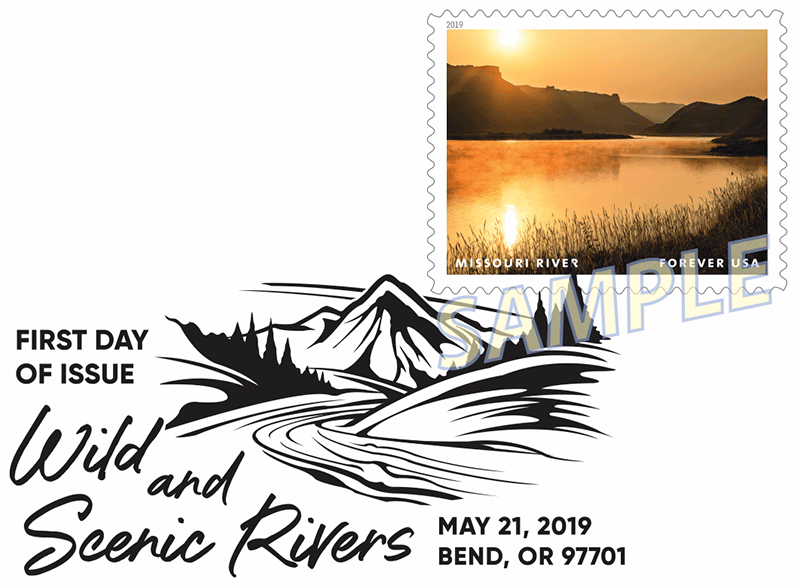 The B&W pictorial is 2.72″x1.39″
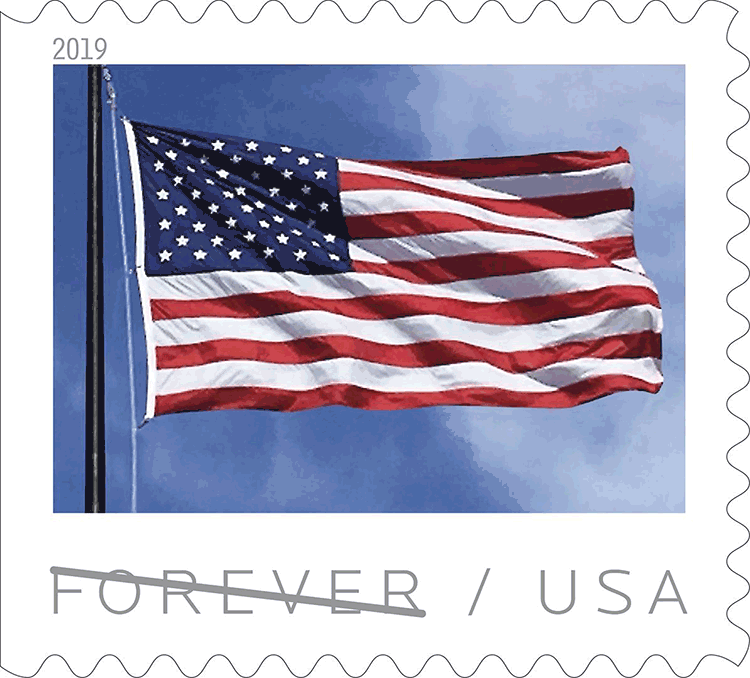 With this new 2019 stamp, the Postal Service celebrates the American flag, the most recognizable symbol of our nation. The stamp features a U.S. flag, one of several on the flagpoles near the end of Chicago’s Navy Pier, waving in a May breeze. The photograph was taken by art director Antonio Alcalá¡.

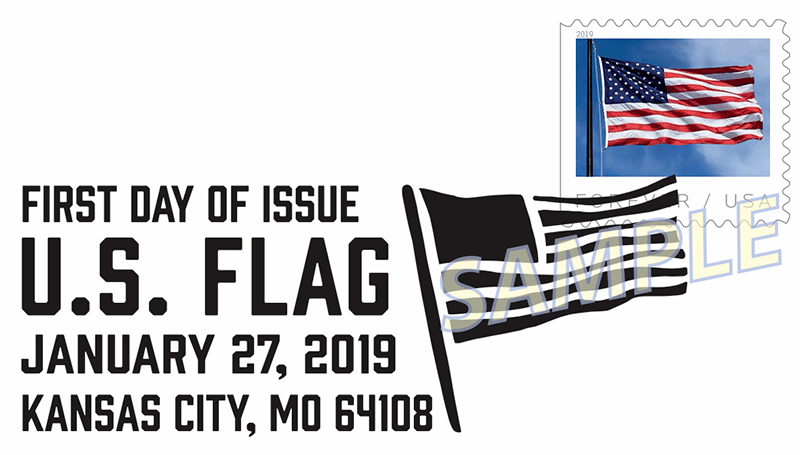 It measures 2.9″x1.14″.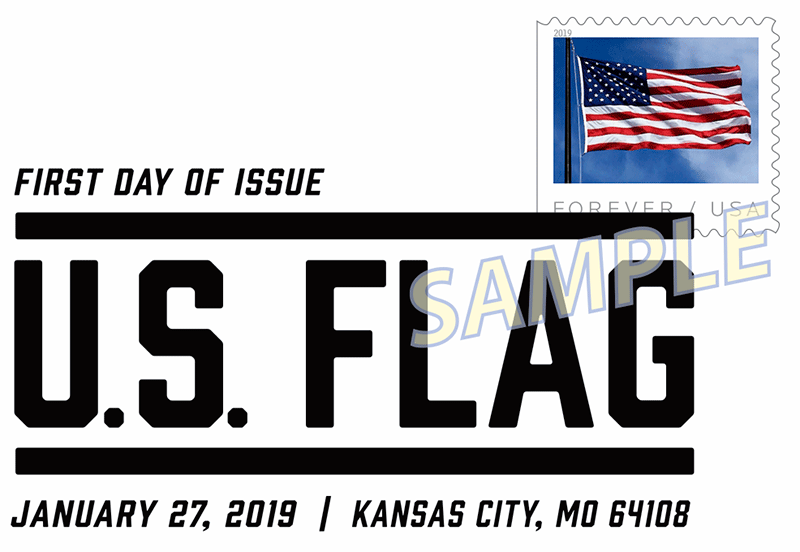
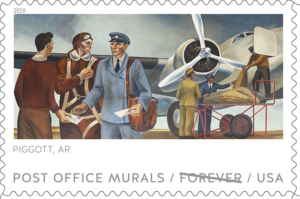
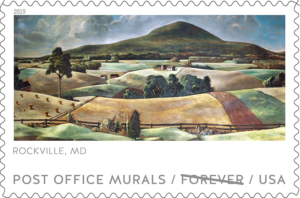
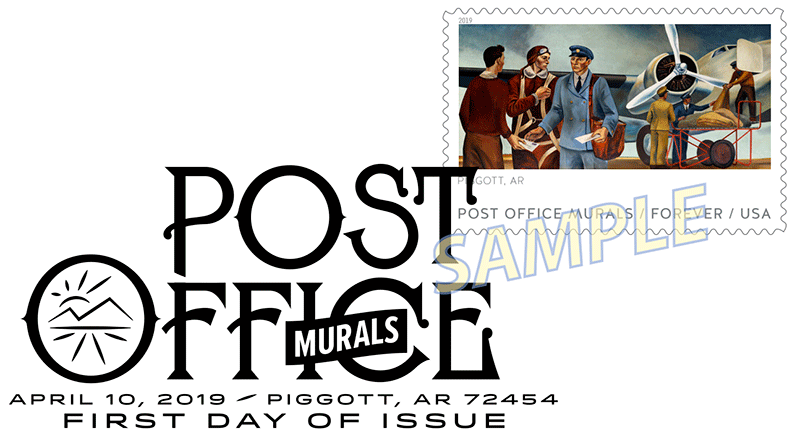
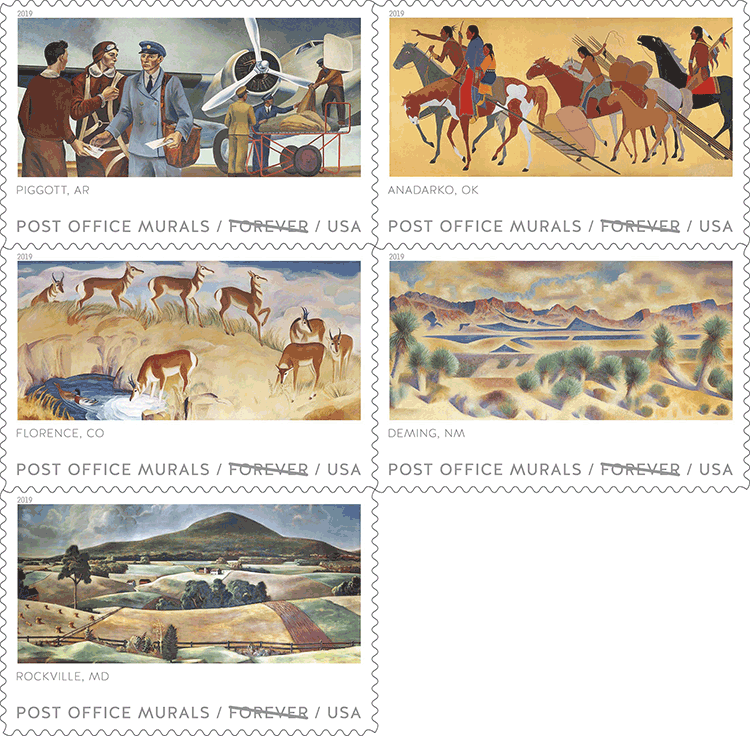 This pane of 10 stamps features five different murals designed to add a touch of beauty to Post Office walls and help boost the morale of Americans during the era of the Great Depression. On the stamp art, the town or city and state in which the work of art is located is printed underneath each mural. The murals included are: “Kiowas Moving Camp” (1936) Anadarko, Oklahoma; “Mountains and Yucca” (1937) Deming, New Mexico; “Antelope” (1939) Florence, Colorado; “Sugarloaf Mountain” (1940) Rockville, Maryland; and “Air Mail” (1941) Piggott, Arkansas. Art director Antonio Alcalá¡ designed the stamps.
 The Digital Color Postmark measures 2.98″ x 1.15″
 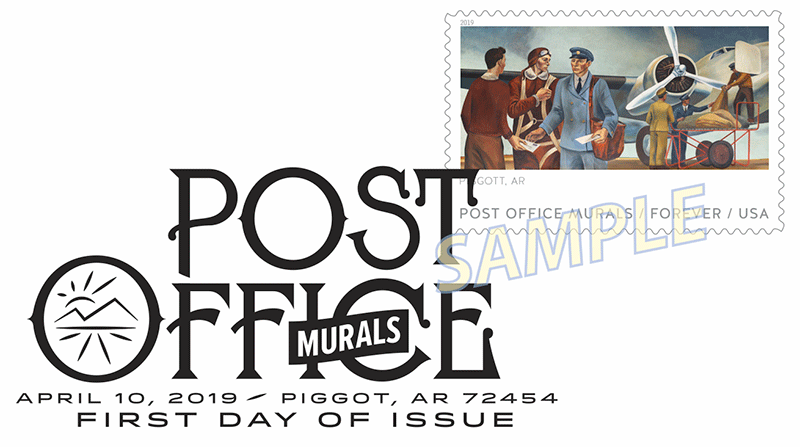 The pictorial postmark measures 2.95″ x 1.42″
 What:
What: 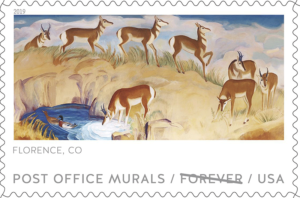 shared with the hashtags #PostOfficeMurals and #MuralStamps
 When:
When: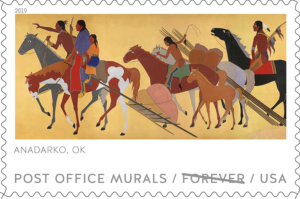 In the 1930s and 1940s, murals brought a touch of beauty to Post Offices across the United States. These works of art were designed to help boost the morale of Americans during the Great Depression.
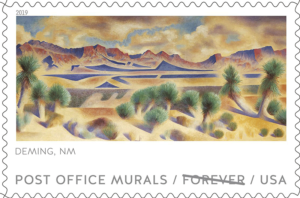 (1937), Deming, NM; “Antelope” (1939), Florence, CO; “Sugarloaf Mountain” (1940), Rockville, MD; and “Air Mail” (1941), Piggott, AR.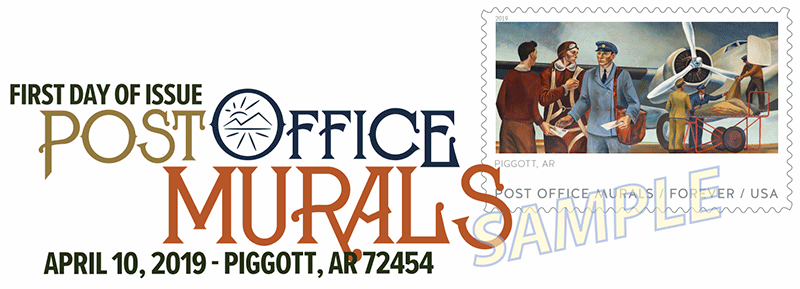
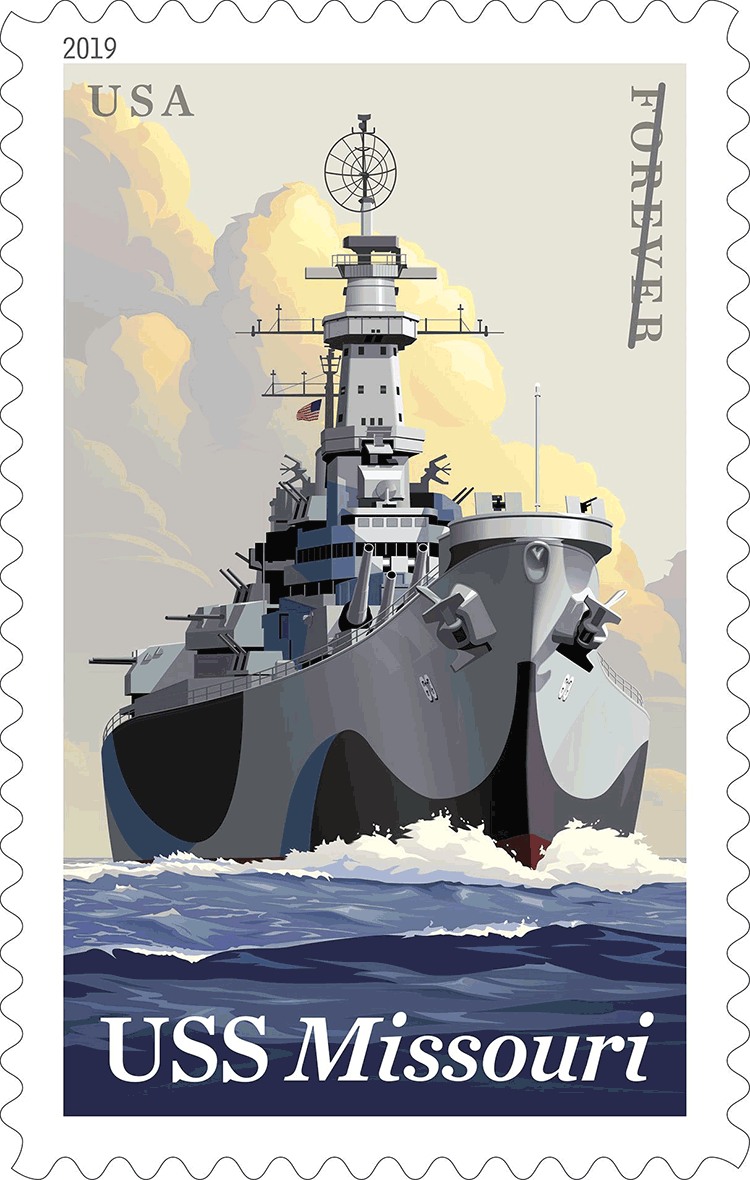 The Postal Service celebrates USS Missouri (BB-63), America’s last battleship, with the issuance of a commemorative stamp in 2019, coinciding with the 75th anniversary of Missouri’s commissioning on June 11, 1944. The stamp art depicts Missouri in the disruptive camouflage she wore from her commissioning until a refit in early 1945. Missouri earned numerous combat awards and citations during her decades of service, which include World War II, the Korean War and Operation Desert Storm. She played a momentous role when she hosted the ceremony marking Japan’s surrender and the end of World War II. Designed by art director Greg Breeding, the stamp features a digital illustration by Dan Cosgrove.
 The famed American battleship is being honored to coincide with the 75th anniversary of her commissioning on June 11, 1944. The battleship was affectionately nicknamed “Mighty Mo,” and had one of the most historic roles during World War II. On Sept. 2, 1945, military officials from the Allied powers and imperial Japan convened on her deck and signed the documents confirming Japan’s surrender and ending the war.
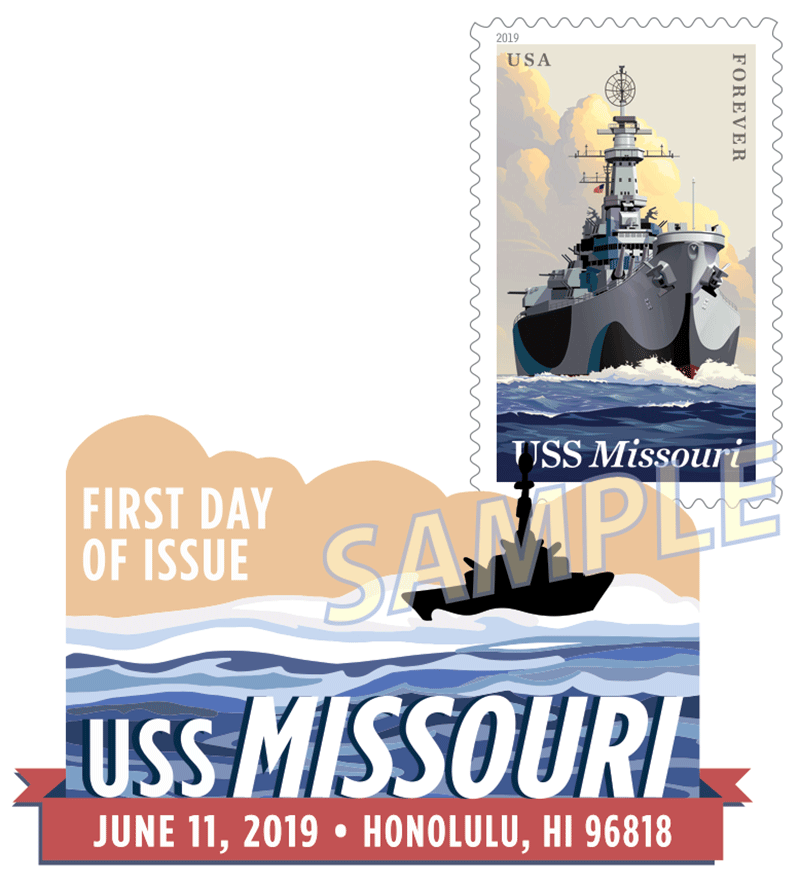 The Digital Color Postmark measures 2.40″x1.46″
 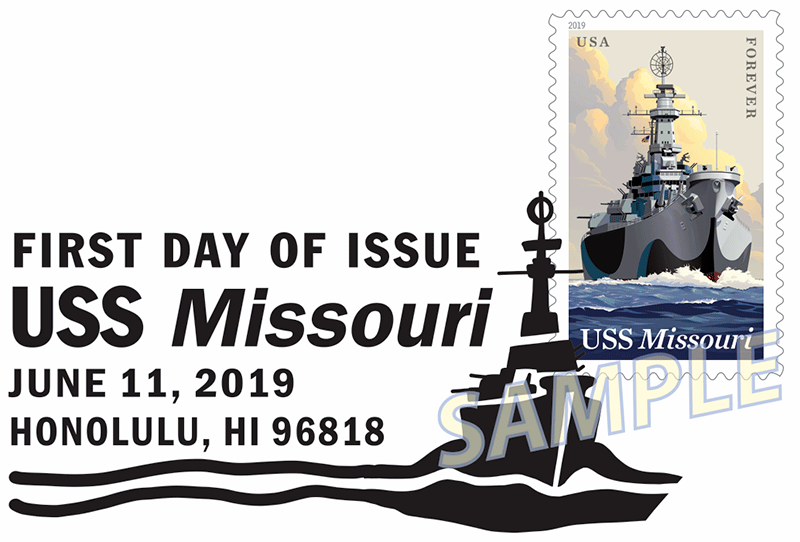 The B&W pictorial postmark measures 2.90″x1.47″
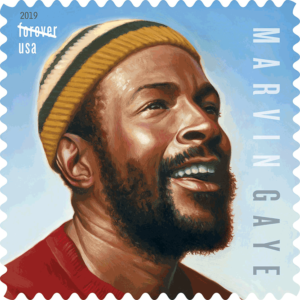
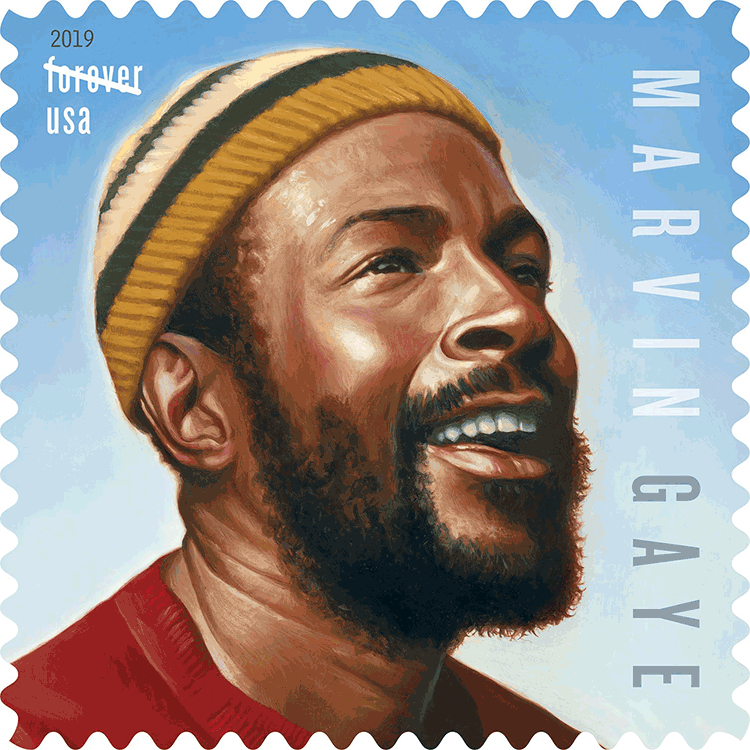 With this new stamp in the Music Icons series, the U.S. Postal Service honors Marvin Gaye (1939–1984) — the “Prince of Soul” — one of the most influential music performers of his generation. The stamp design features a portrait of Gaye inspired by historic photographs. The stamp pane is designed to resemble a vintage 45 rpm record sleeve. One side of the pane includes the stamps, brief text about Gaye’s legacy, and the image of a sliver of a record seeming to peek out the top of the sleeve. Another portrait of Gaye, also inspired by historic photographs, appears on the reverse along with the Music Icons series logo. Art director Derry Noyes designed the stamp pane with original art by Kadir Nelson.
 envelopes (to themselves or others), and place them in a larger envelope addressed to:
 The Digital Color Postmark mesaures 2.93″ x 1.14″
  The black-and-white pictorial measures 2.65″ x 0.89″
 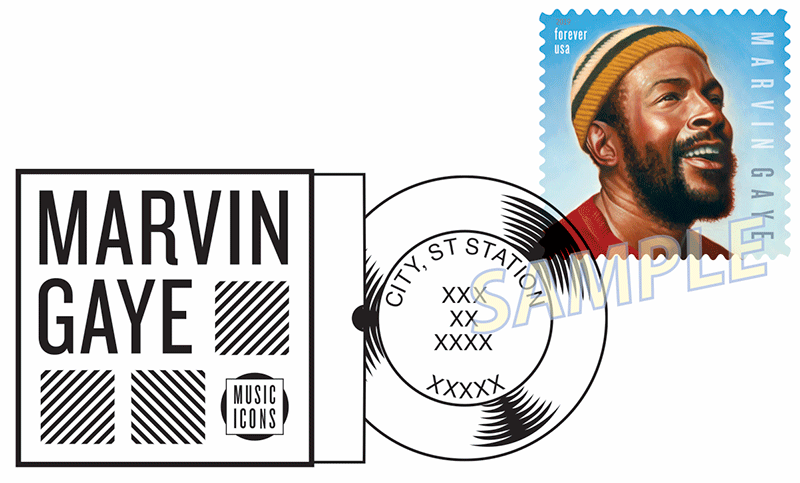 The “special” postmark for use by other post offices measures 2.95″ x 1.49″

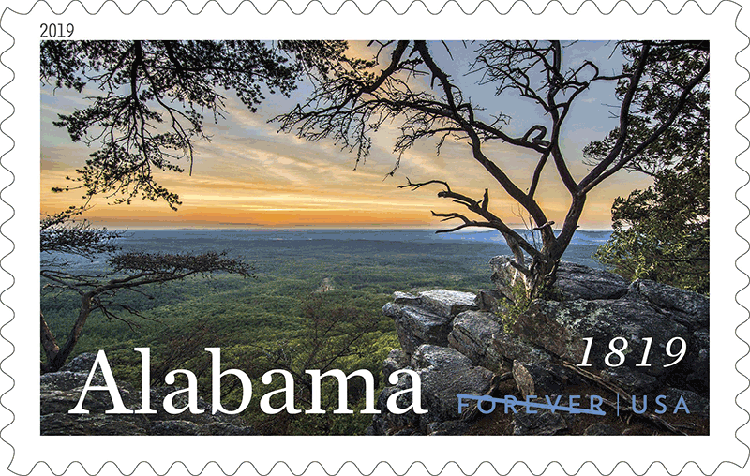 This stamp celebrates the bicentennial of Alabama statehood. Alabama became the 22nd state in the Union on Dec. 14, 1819. The stamp art is a photograph taken at sunset in Cheaha State Park. Alabama photographer Joe Miller took the picture from the park’s Pulpit Rock Trail. With Pulpit Rock in the foreground, most of the area in the valley below the overlook is part of the Talladega National Forest, which surrounds the state park. The name of the state and the year of statehood are included in the stamp art. The art director is William J. Gicker. Greg Breeding designed the stamp with Miller’s existing photograph.
 This stamp celebrates the bicentennial of Alabama statehood. Alabama became the twenty-second state in the Union on December 14, 1819. The stamp art is a photograph taken at sunset in Cheaha State Park. Alabama photographer Joe Miller took the picture from the park’s Pulpit Rock Trail. With Pulpit Rock in the foreground, most of the area in the valley below the overlook is part of the Talladega National Forest, which surrounds the state park. The name of the state and the year of statehood are included in the stamp art. The art director is William J. Gicker. Greg Breeding designed the stamp with Miller’s existing photograph.
 FDOI – Alabama Statehood Stamp
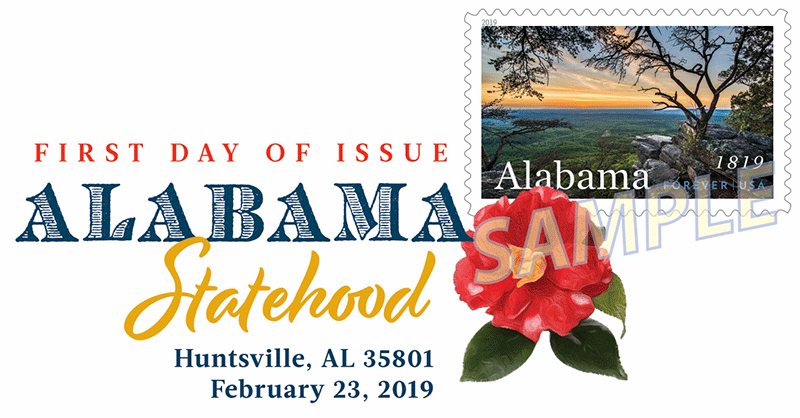 The Digital Color Postmark measures 2.98″x1.27″.
 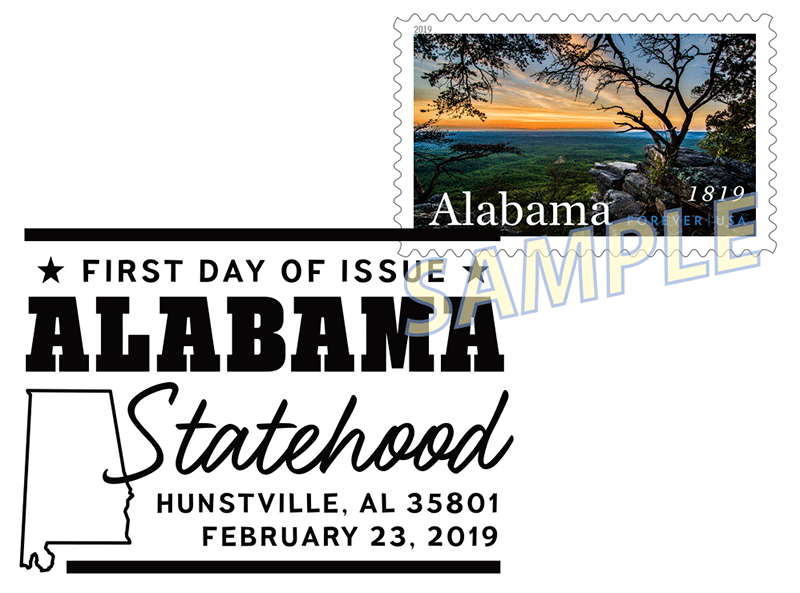 The Pictorial Postmark measures 2.05″ x 1.43″. We have reported the misspelling in the city name to USPS Cancellation Services.
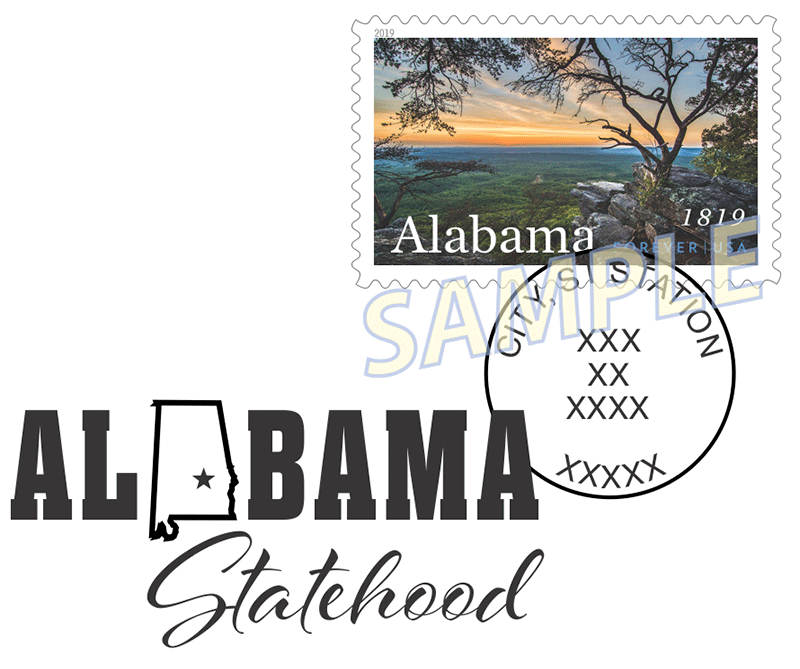 The “special” postmark for use by other post offices measures 2.69″ x 1.48″.
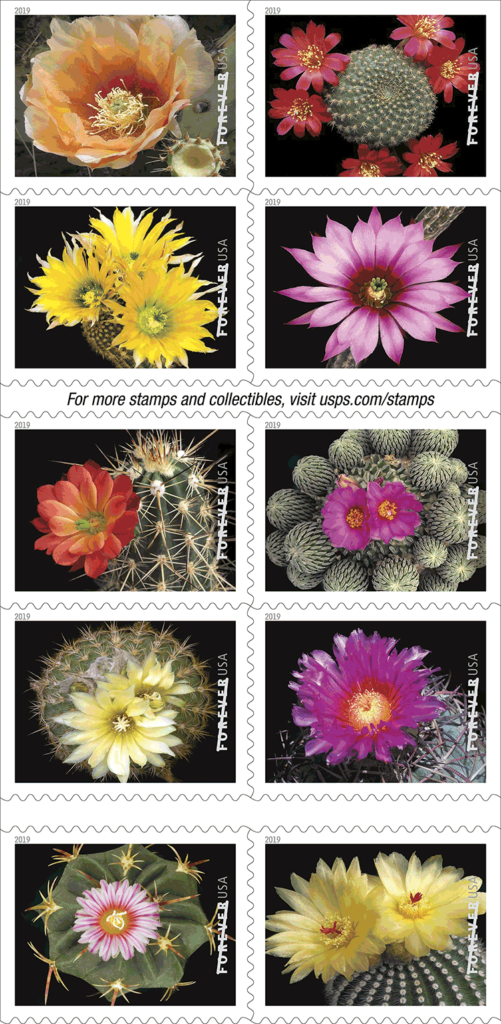
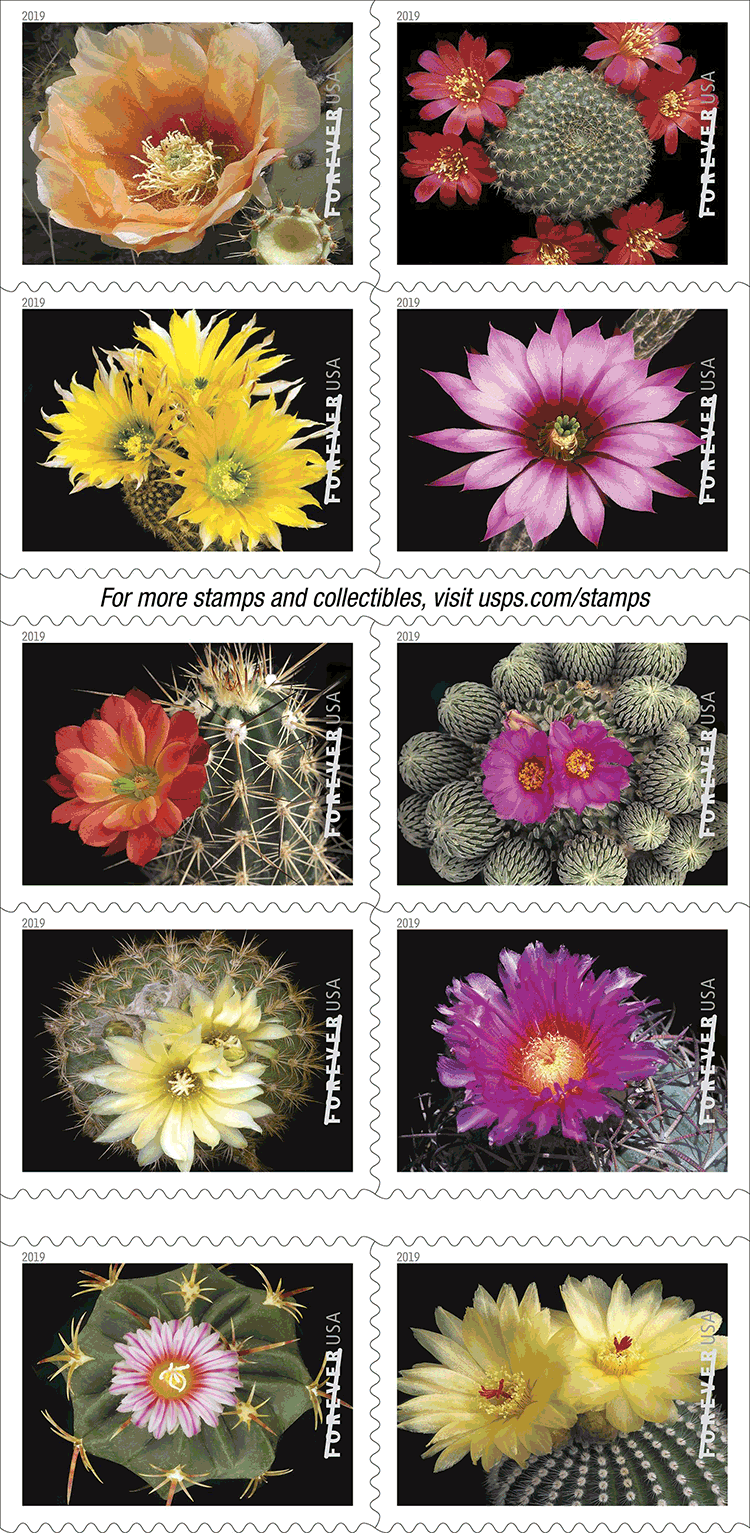 This issuance celebrates the beauty of cactus flowers with a booklet of 20 stamps. Each stamp depicts a photograph of the flower of one of these ten cacti: Opuntia engelmannii, Rebutia minuscula, Echinocereus dasyacanthus, Echinocereus poselgeri, Echinocereus coccineus, Pelecyphora aselliformis, Parodia microsperma, Echinocactus horizonthalonius, Thelocactus heterochromus and Parodia scopa. Within the booklet, each stamp design is featured twice. With new DNA studies, botanists sometimes reclassify plants. As of the printing of these stamps, the scientific names were accurate. Cacti also have common names, with some plants having several different names in popular use. Art director Ethel Kessler designed the stamps with existing photographs taken by John P. Schaefer.
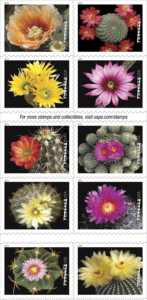 On February 15, 2019, in Mesa, AZ, the U.S. Postal Service will issue the Cactus Flowers stamps (Forever priced at the First-Class Mail rate) in 10 designs, in a pressure-sensitive adhesive booklet of 20 stamps (Item 680000). The stamps will go on sale nationwide February 15, 2019, and must not be sold or cancelled before the first-day-of-issue.
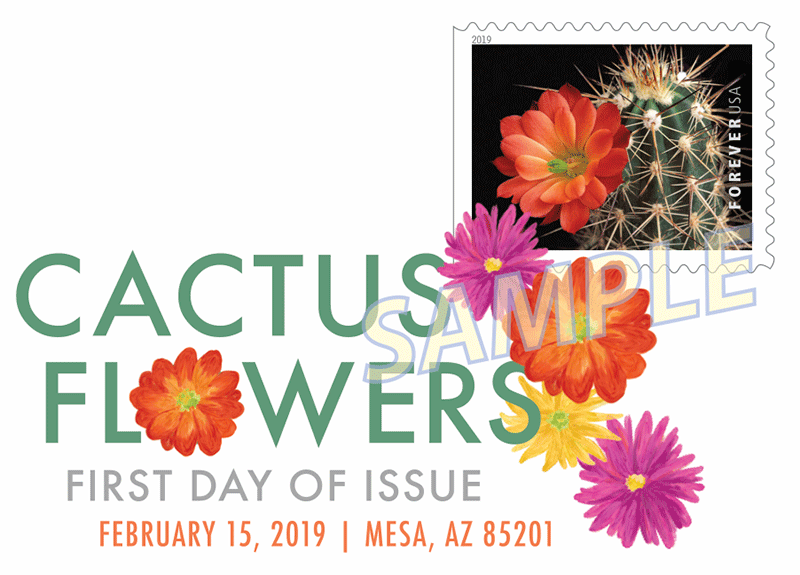 The Digital Color Postmark measures 2.59″x1.31″.
  The B&W Pictorial measures 1.44″x1.44″.
 What:
What: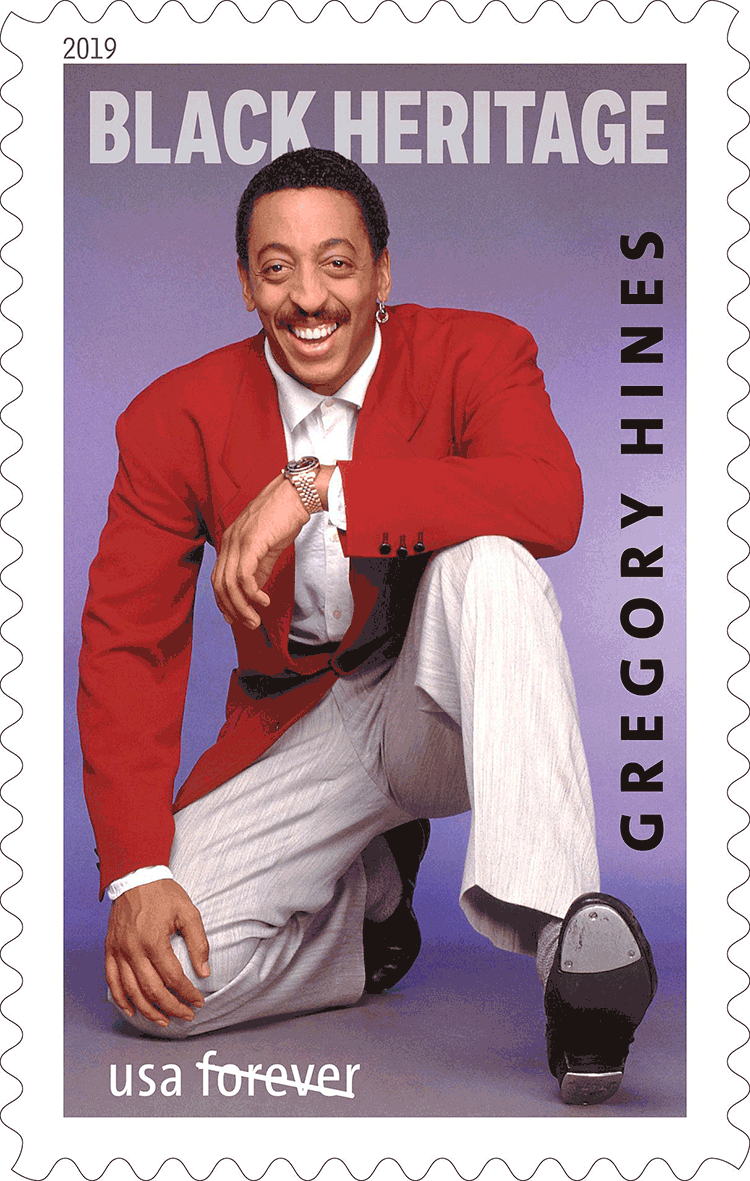 The 42nd stamp in the Black Heritage series honors Gregory Hines (1946—2003), whose unique style of tap dancing injected new artistry and excitement into a traditional American form. A versatile performer who danced, acted and sang on Broadway, on television and in movies, Hines developed the entertainment traditions of tap into an art form for a younger generation and is credited with renewing interest in tap during the 1990s. Art director Derry Noyes designed the stamp, which features a 1988 photograph by Jack Mitchell.


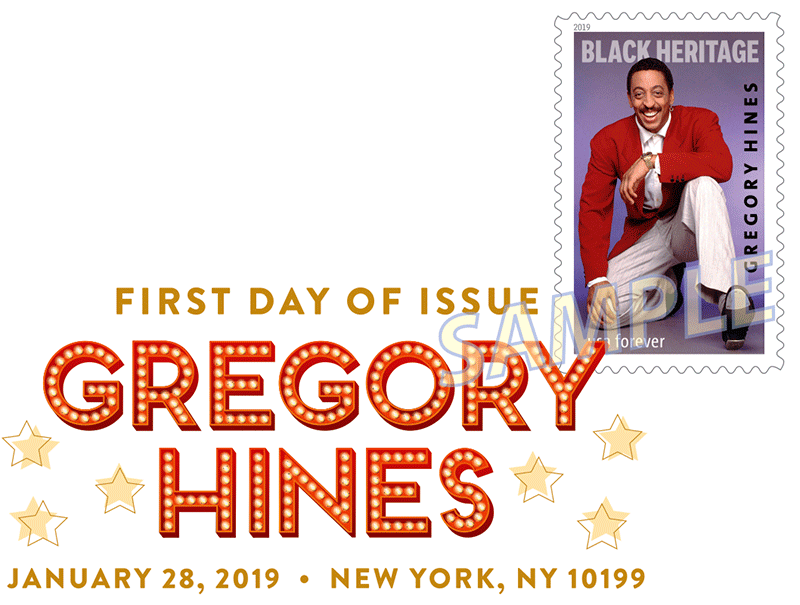 The Digital Color Postmark measures 2.85″x1.35″.
 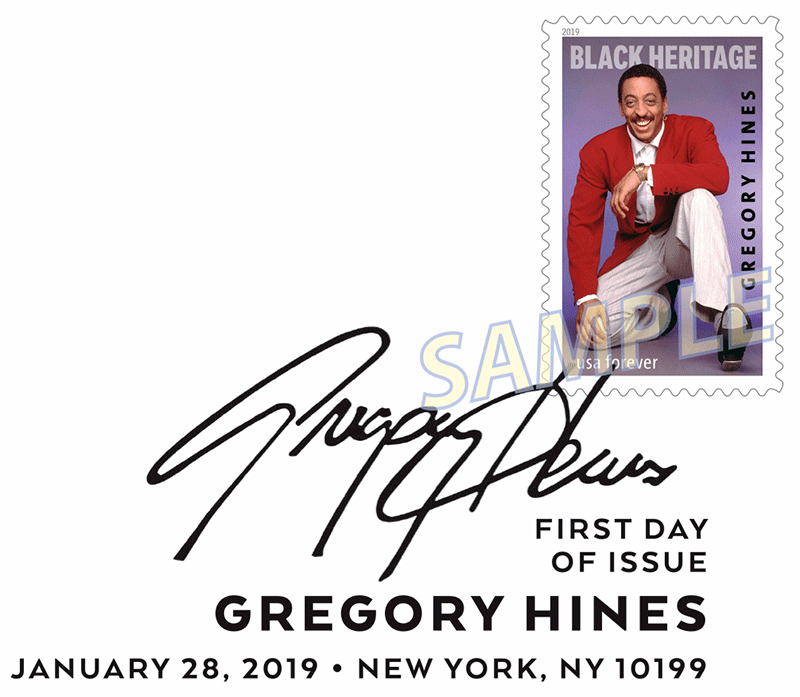 The B&W pictorial postmark measures 2.92″x1.49″.
 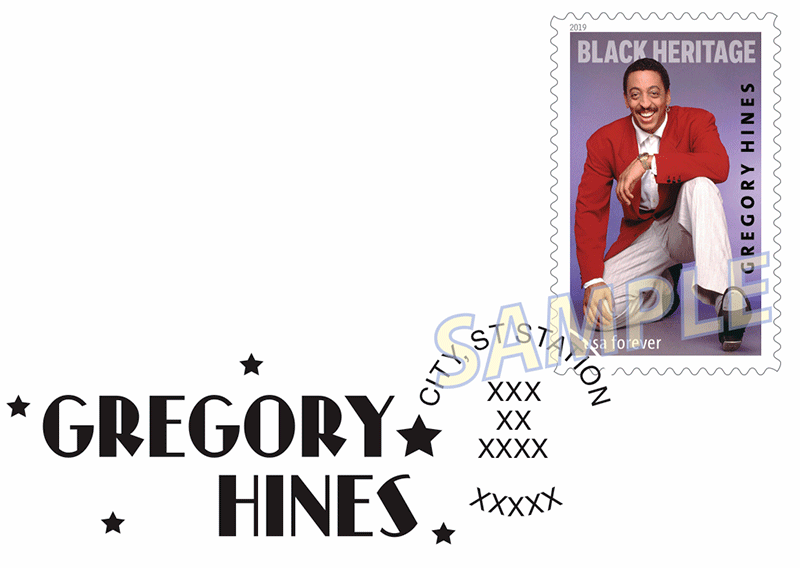 The “special” (local) postmark measures 2.70″x1.02″.