
From the U.S. Postal Service announcement on October 22, 2019: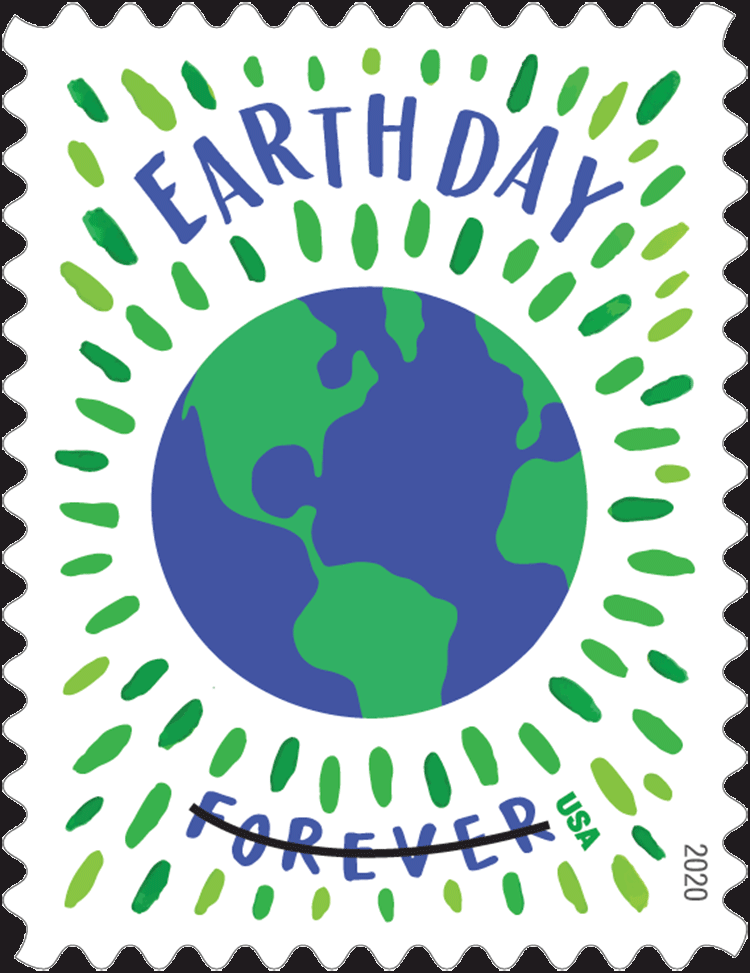
Coinciding with the 50th anniversary of Earth Day, the Postal Service issues a stamp featuring a playful painting of the planet, with small green lines surrounding Earth and hand-lettered text. Art director Antonio Alcalá was the stamp artist and designer. Ricky Altizer was the typographer.
The Scott Catalogue number for this issue is 5459.
Additional information will be posted below the line, with the most recent at the top.
This stamp will be issued Saturday, April 18th, with a Denver first-day postmark. Note that there is no automatic distribution of this stamp to post offices.
Updated April 17th:
[press release]
Celebrate Earth Day with A New Forever Stamp
 WASHINGTON, DC — The U.S. Postal Service honors the 50th anniversary of Earth Day by putting its own stamp on raising awareness of our environment and the communities in which we live and serve. The new Earth Day Forever stamp marks five decades of Americans coming together to celebrate the importance of protecting the environment. The stamp will be available for sale nationwide on April 18.
The Postal Service has canceled the first-day-of-issue ceremony for the Earth Day stamp due to social distancing guidance. News of the stamp can be shared using the hashtag #EarthDayStamps.
On the first Earth Day in 1970, millions of people across America joined to rally against pollution. The event quickly developed into an annual tradition. As time passed, educating children about the environment became a priority, with the annual celebration also providing an opportunity for businesses to showcase new goods and services that are mindful of the environment.
Today, Earth Day remains a high-profile day for people around the world to recognize the importance of the planet and the impact of their environmental footprint. The Earth Day Forever stamp is a reminder for both senders and recipients that we share the atmosphere on our planet.
The Earth Day Forever stamp is being issued in booklets of 20 stamps. Art director Antonio Alcalá created the painting of Earth, using gouache on watercolor paper. The design features small green lines surrounding the blue planet. The title of the stamp runs across the top, and the words “Forever” and “USA” appear along the bottom. Ricky Altizer was the typographer. This Forever stamp will always be equal in value to the current First-Class Mail 1-ounce price.
Background
In the 1950s and 1960s, as the dangers of pollution were becoming a common concern, a
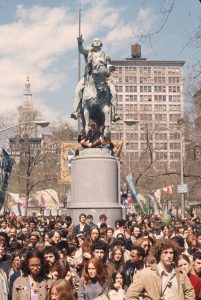
Crowds gather by a George Washington statue in Union Square for Earth Day celebrations, New York City, April 22, 1970. (Photo by Hulton Archive/Getty Images)
groundswell of support began for a day to celebrate the planet. It gained further traction in 1969 after what was then the largest oil spill in U.S. history occurred off the coast of Santa Barbara, CA.
Soon after the spill, Sen. Gaylord Nelson (D-WI), a conservationist who championed legislation to protect natural resources, resolved to unite the nation around environmental causes. Senator Nelson inspired thousands of people to organize environmental teach-ins at universities, schools and community centers around the country. April 22, between college spring break and finals, was chosen as the date for a national observance.
USPS has long been a sustainability leader through a variety of policies and programs, including recycling and renewable energy initiatives. The more than 630,000 employees of the Postal Service are “Putting Our Stamp on a Greener Tomorrow,” with more information available at usps.com/green.
Postal Products
Customers may purchase stamps and other philatelic products through the Postal Store at usps.com/shopstamps.
Updated March 23rd:
The first-day ceremony for this stamp has been canceled. The stamp will still be issued on April 18th. More details will be announced closer to the issue date.
Updated March 13th:
What do you think of the design?
Updated March 12th:
Here are the first-day cancels for this issue: 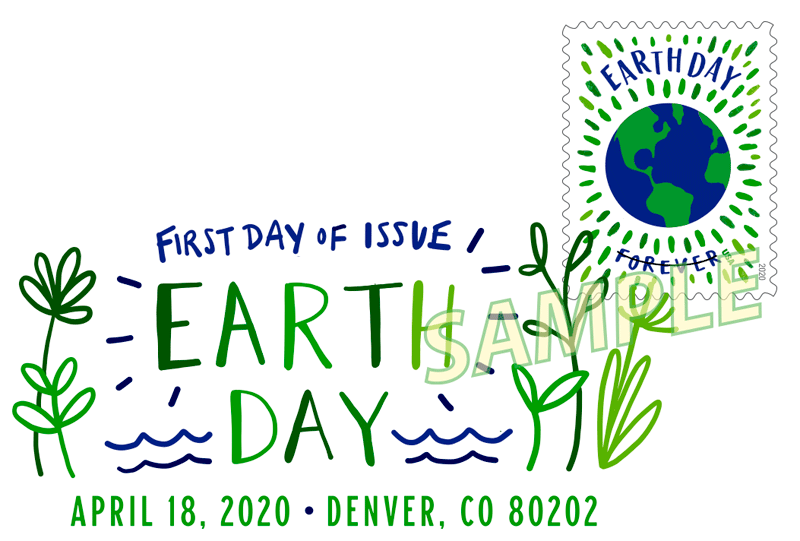 The Digital Color Postmark measures 2.92″ x 1.36″
 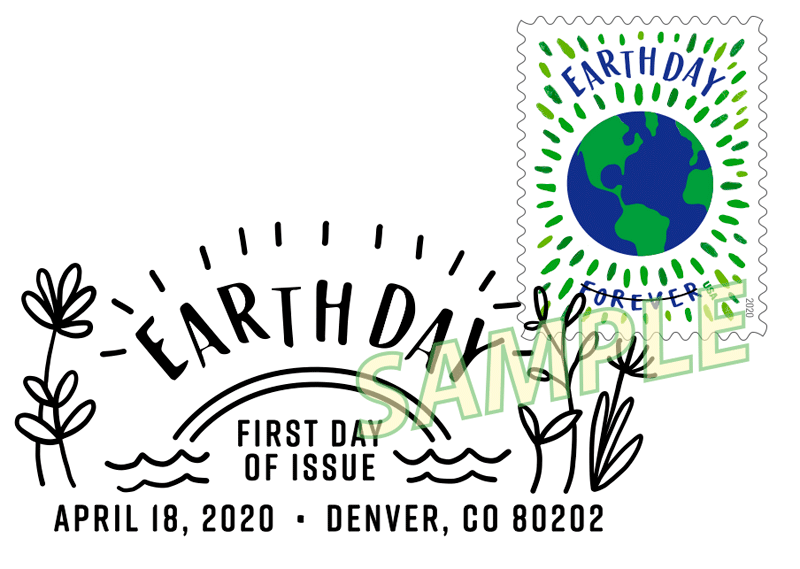 The pictorial postmark measures 2.42″ x 1.19″
Updated March 12th from the Postal Bulletin:
On April 18, 2020, in Denver, CO, the United States Postal Service® will issue the Earth Day stamp (Forever® priced at the First-Class Mail® rate) in one design, in a pressure-sensitive adhesive (PSA) booklet of 20 stamps (Item 682600). The stamp will go on sale nationwide April 18, 2020, and must not be sold or canceled before the first-day-of-issue.
Coinciding with the 50th anniversary of Earth Day, the stamp features a playful painting of the planet, with small green lines surrounding Earth and hand-lettered text. Art director Antonio Alcalá was the stamp artist and designer. Ricky Altizer was the typographer.
No automatic distribution
How to Order the First-Day-of-Issue Postmark:
Customers have 120 days to obtain the first-day-of-issue postmark by mail. They may purchase new stamps at their local Post Office™ or at The Postal Store® website at usps.com/shop. They must affix the stamps to envelopes of their choice, address the envelopes (to themselves or others), and place them in a larger envelope addressed to:
FDOI – Earth Day Stamp
USPS Stamp Fulfillment Services
8300 NE Underground Drive, Suite 300
Kansas City, MO 64144-9900
After applying the first-day-of-issue postmark, the Postal Service™ will return the envelopes through the mail. There is no charge for the postmark up to a quantity of 50. There is a 5-cent charge for each additional postmark over 50. All orders must be postmarked by August 18, 2020.
Technical Specifications:
Issue: Earth Day Stamp
Item Number: 682600
Denomination & Type of Issue: First-Class Mail Forever
Format: Double-sided Booklet of 20 (1 design)
Series: N/A
Issue Date & City: April 18, 2020, Denver, CO 80202
Art Director: Antonio Alcalá, Alexandria, VA
Designer: Antonio Alcalá, Alexandria, VA
Typographer: Ricky Altizer, Alexandria, VA
Artist: Antonio Alcalá, Alexandria, VA
Modeler: Sandra Lane/Michelle Finn
Manufacturing Process: Offset, Microprint
Printer: Banknote Corporation of America
Press Type: Alprinta 74
Stamps per Booklet: 20
Print Quantity: 175,000,000 stamps
Paper Type: Phosphor Tagged Paper, Block
Adhesive Type: Pressure-sensitive
Processed at: Banknote Corporation of America
Colors: Cyan, Magenta, Yellow, Black
Stamp Orientation: Vertical
Image Area (w x h): 0.77 x 1.05 in./19.558 x 26.67 mm
Overall Size (w x h): 0.91 x 1.19 in./23.114 x 30.226 mm
Full Booklet Size (w x h): 5.743 x 2.375 in./145.872 x 60.325 mm
Plate Size: 800 stamps per revolution
Plate Numbers: “B” followed by four (4) single digits in peel strip area
Marginal Markings: Header: EARTH DAY Twenty First-Class Forever Stamps • Plate number in peel strip area • ©2019 USPS in peel strip area • Barcode • Promotional text in peel strip area
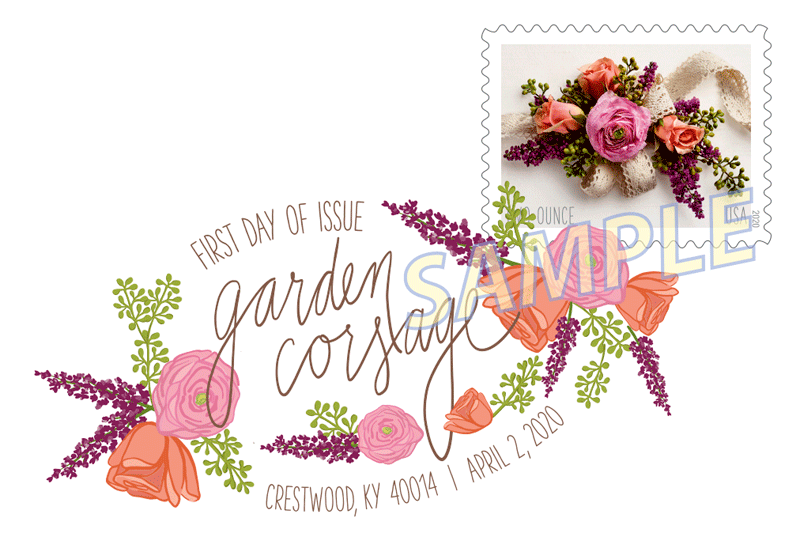 The Digital Color Postmark measures 2.85″ x 1.38″
 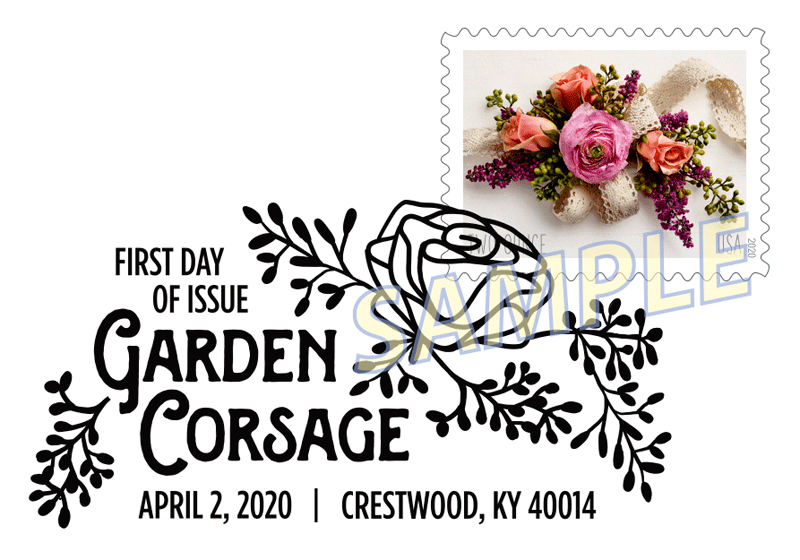 The pictorial postmark measures 2.64″ x 0.95″
 Format: Pane of 20 (1 design)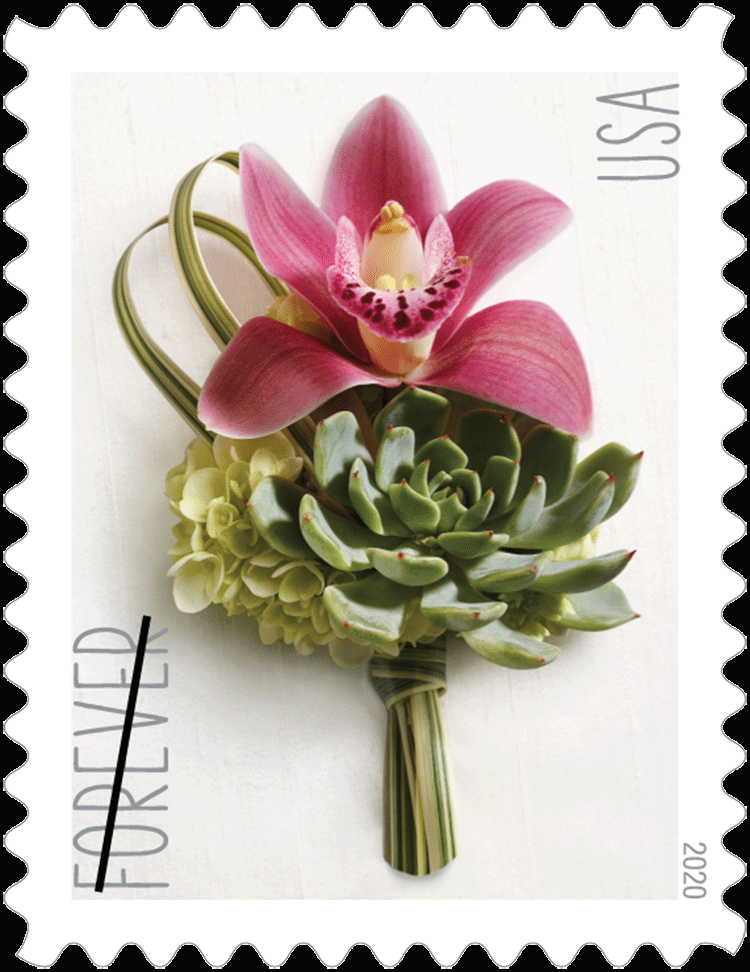
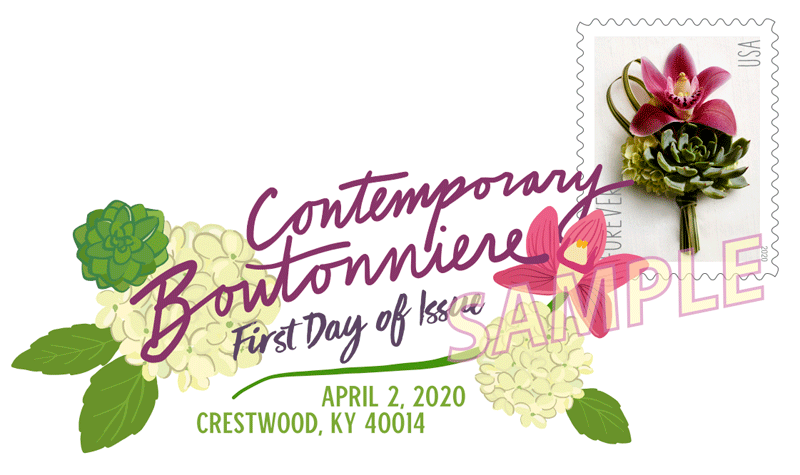 The Digital Color Postmark measures 2.98″ x 1.35″
 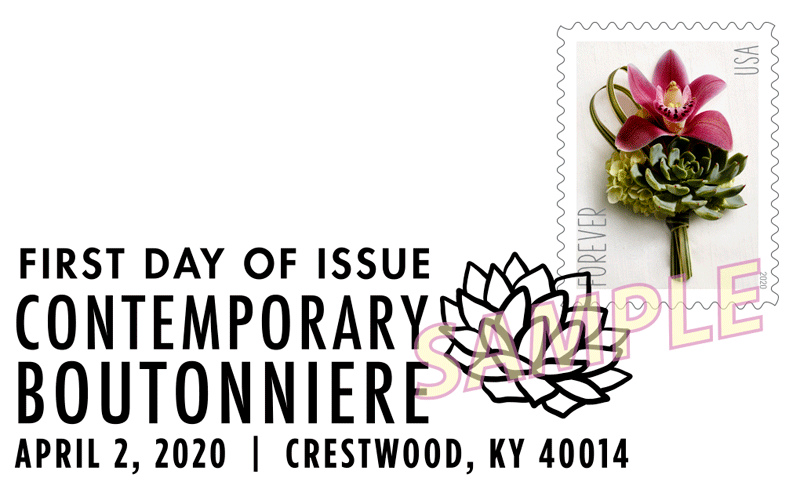 The pictorial postmark measures 2.62″ x 0.96″
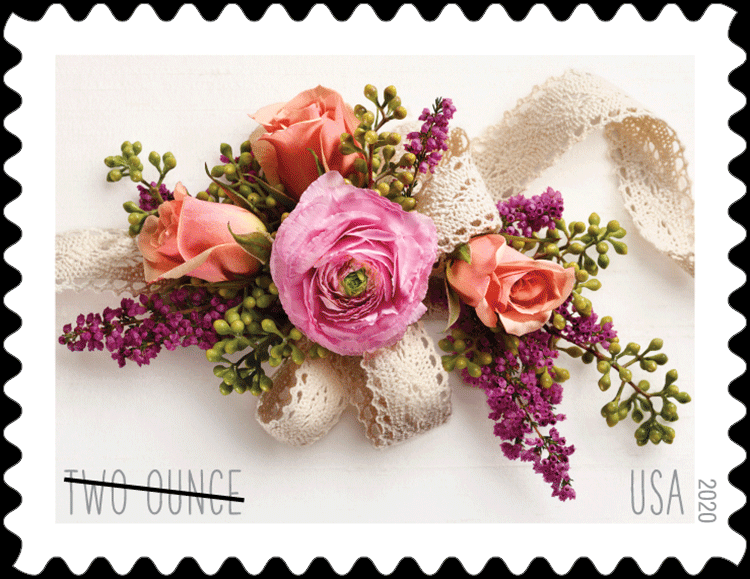
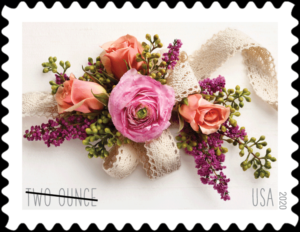
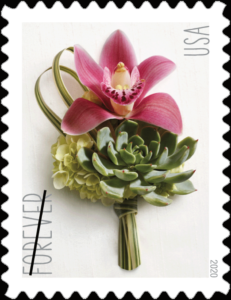 moments. The Contemporary Boutonniere Forever stamp and the Garden Corsage 2-ounce stamp form a natural pair.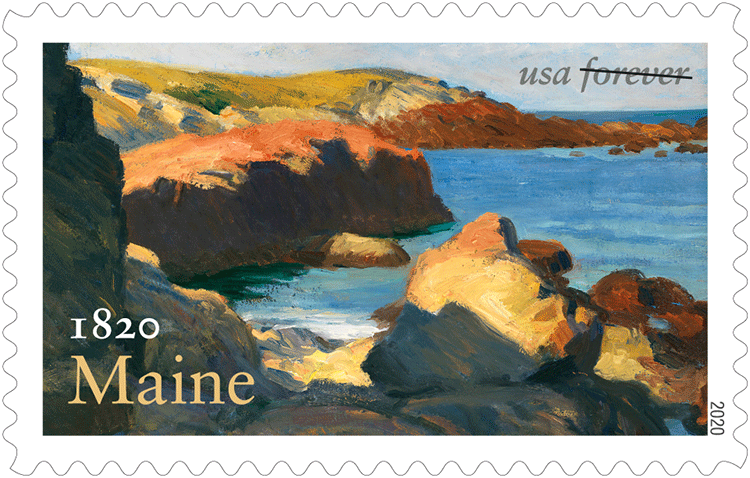
 The U.S. Postal Service dedication of the Maine Statehood Forever stamp, scheduled for March 15, 2020, will be delayed due to the postponement of the host event, the Maine Statehood Day Ceremony in Augusta, ME. The Maine Statehood Forever stamp will still be available for purchase starting Sunday, March 15.
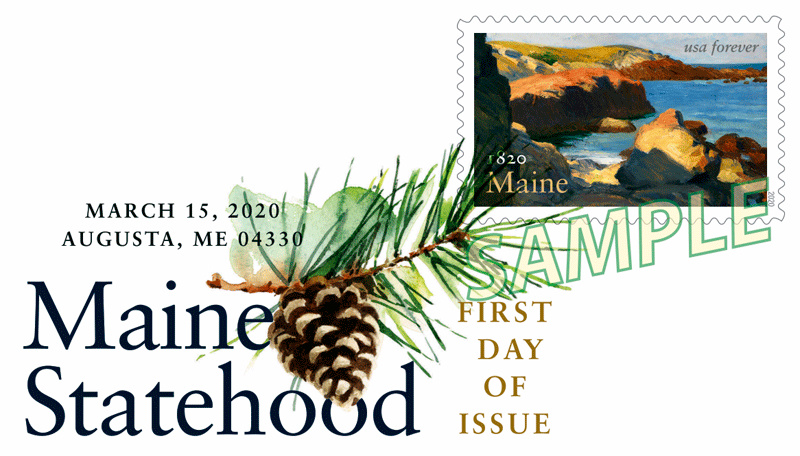 The Digital Color Postmark (DCP) measures 2.76″ x 1.46″
 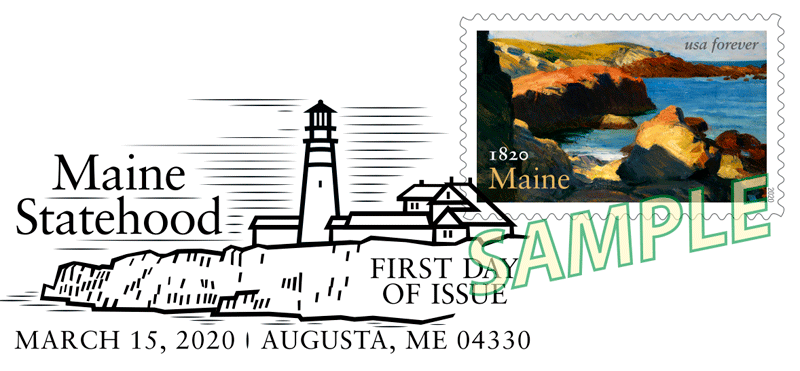 The B&W Pictorial Postmark measures 2.64″ x 1.24″
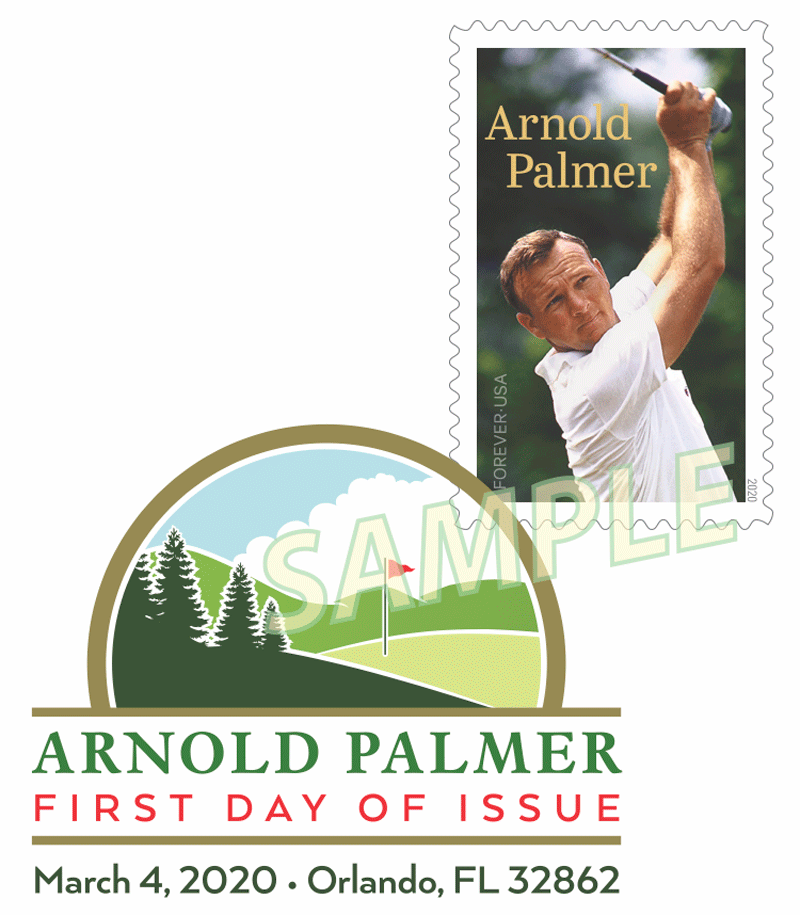 The Digital Color Postmark for this issue measures 1.84″ x 1.48″
 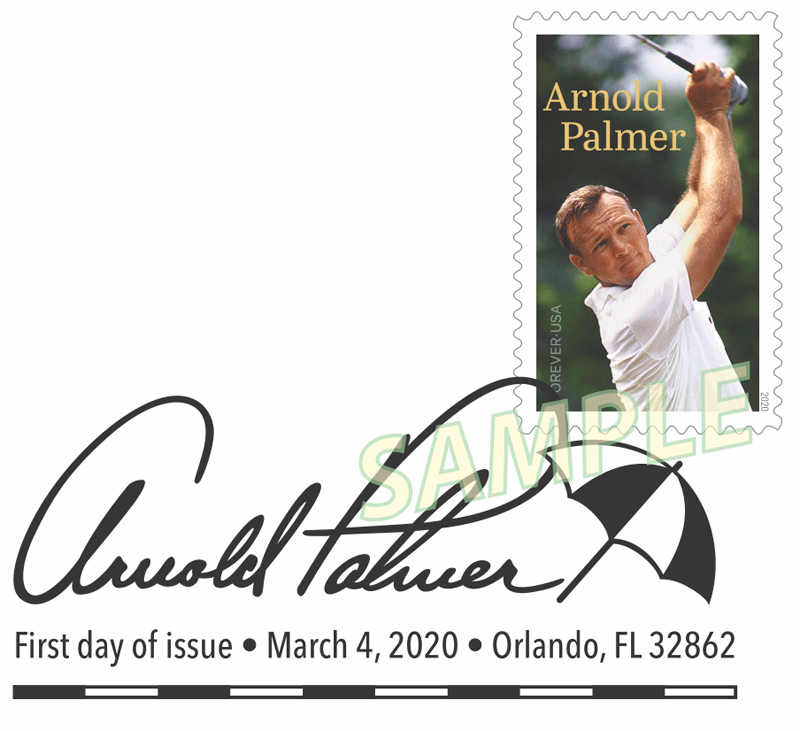 The pictorial postmark measures 2.72″ x 1.21″
 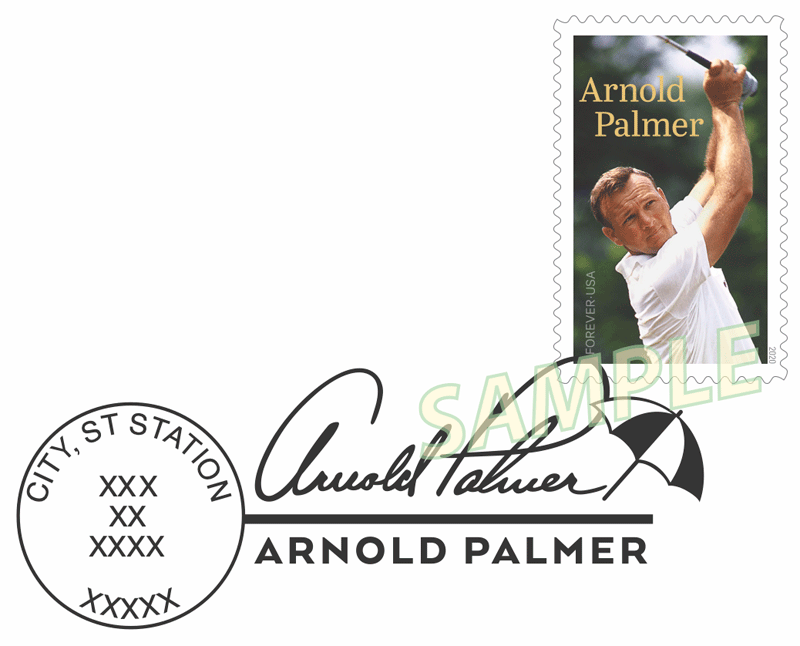 The special postmark, for use by local post offices, measures 2.97″ x 1.18″
 Palmer stamp (Forever® priced at the First-Class Mail® rate) in one design, in a pressure-sensitive adhesive pane of 20 stamps (Item 475900). The stamp will go on sale nationwide March 4, 2020, and must not be sold or canceled before the first-day-of-issue.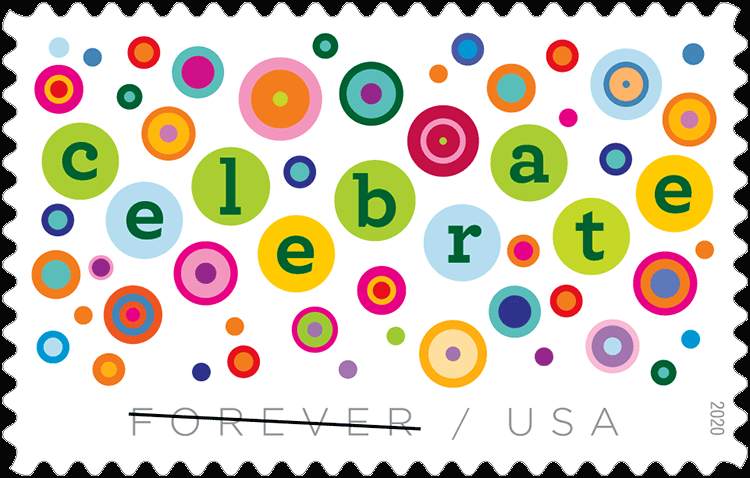
 The other two first-day postmarks are shown below.
 What:
What: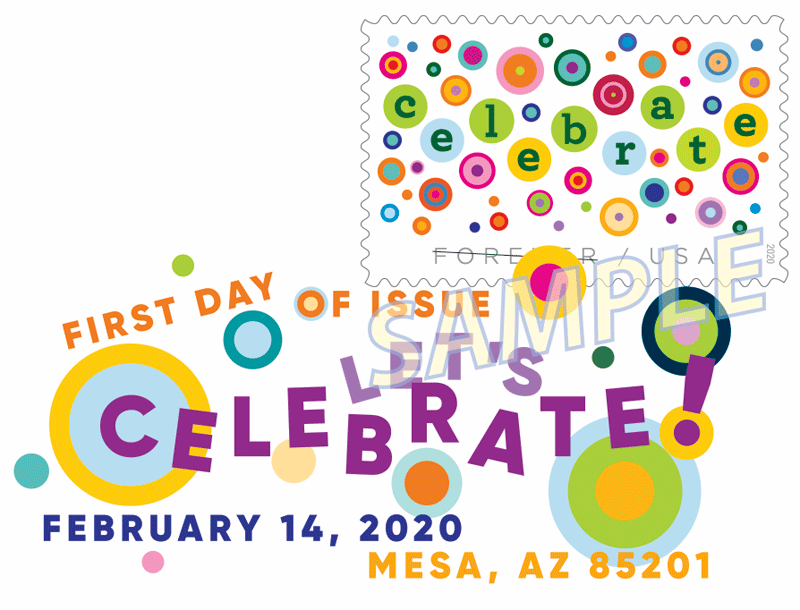 The Digital Color Postmark measures 2.67″ x 1.26″
 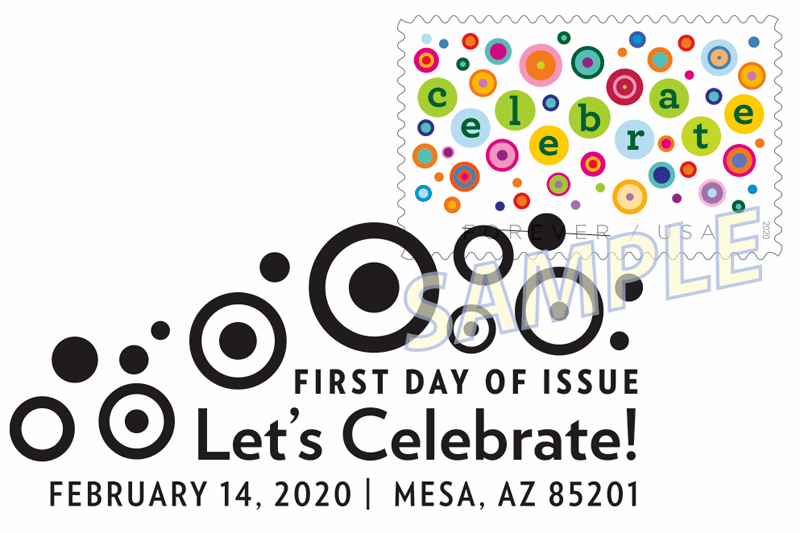 The B&W pictorial measures 2.62″ x 1.23″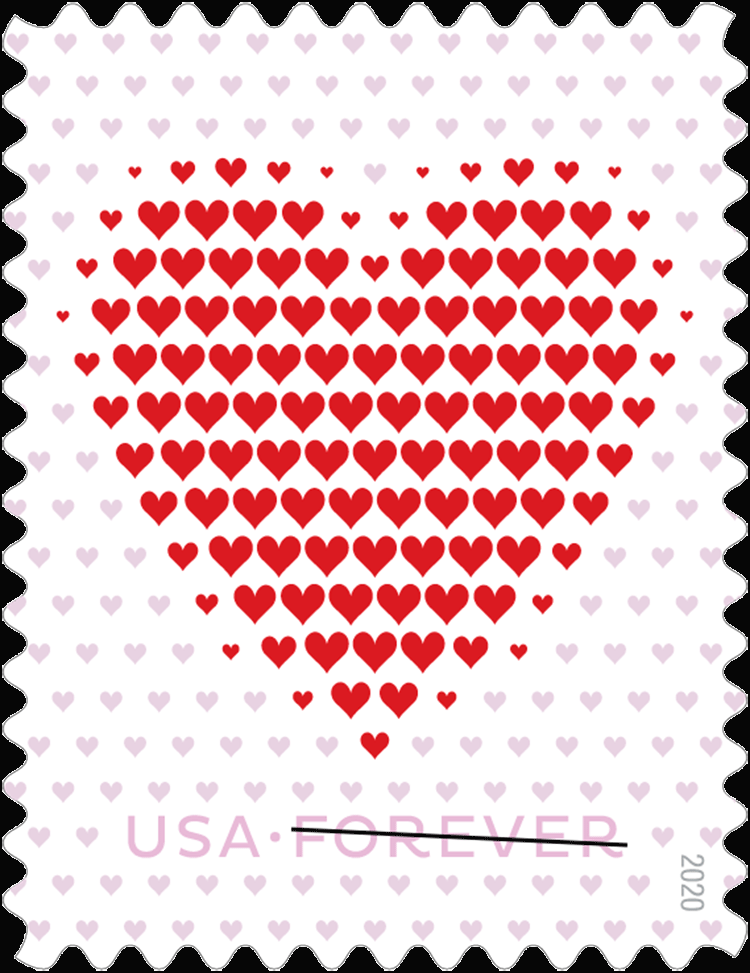
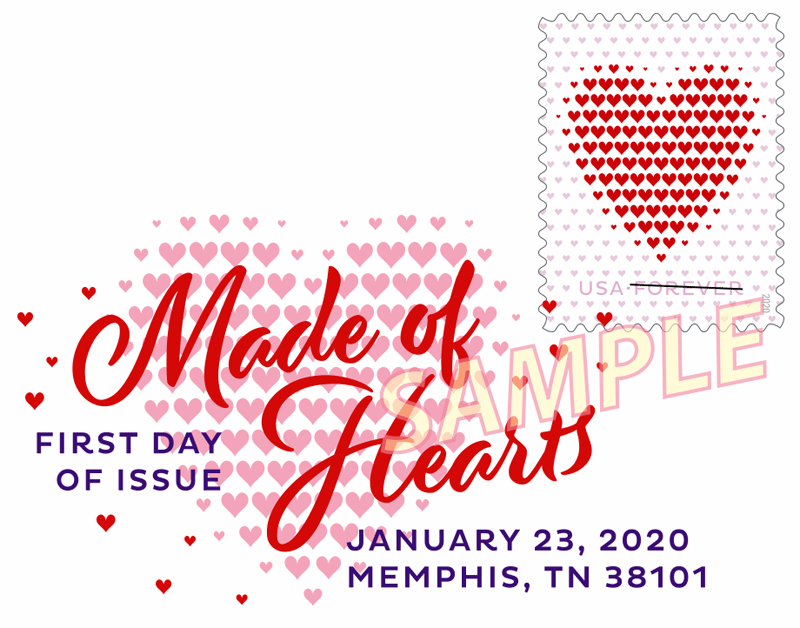
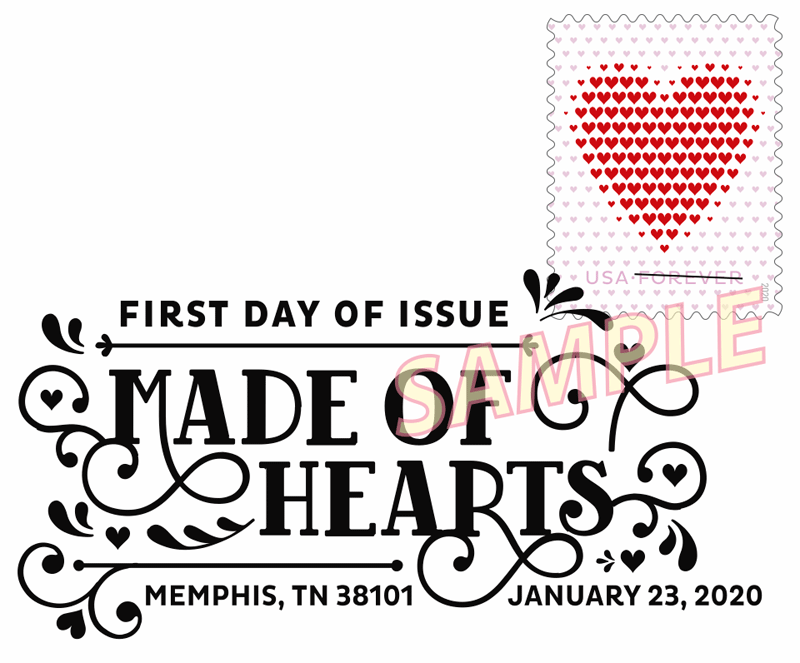 The B&W pictorial measures 2.97″ x 1.48″
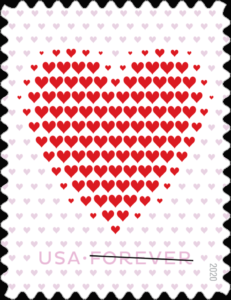 issued next month in time for Valentine’s Day. The Forever stamp features horizontal lines of red and pink hearts on a white background.
 most esteemed journalists. The stamp art features a photo of Ifill taken in 2008 by photographer Robert Severi. Art director Derry Noyes designed the stamp.
 The Digital Color Postmark for this issue 2.49″x1.20″
 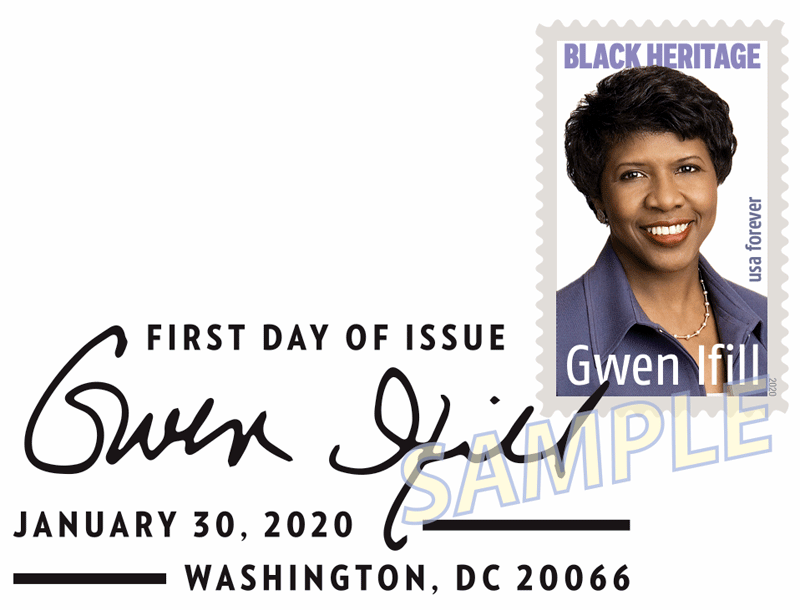 The B&W pictorial for this issue measures 2.46″ x 1.08″
 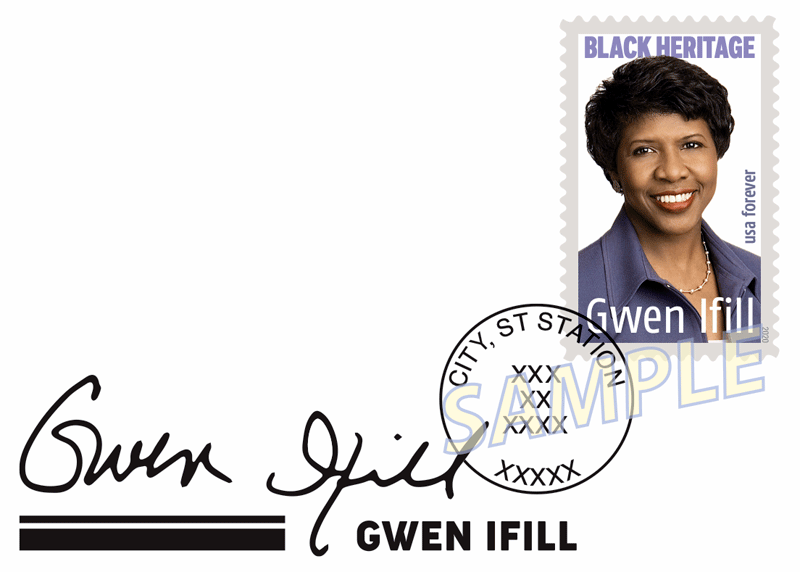 The “special” postmark measures 2.82″ x 1.15″
 From the U.S. Postal Service announcement on October 22, 2019:
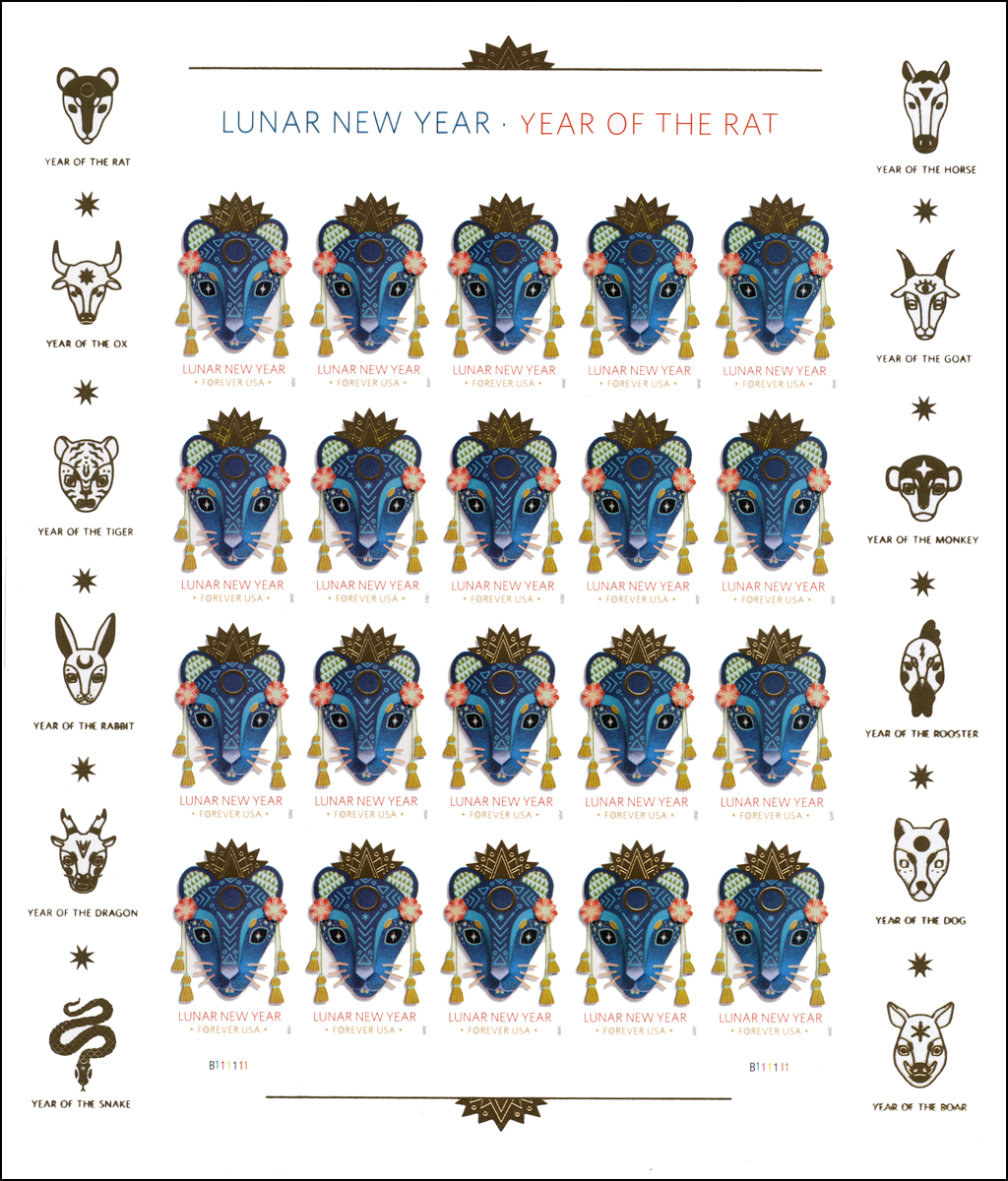 and here are just the 12 masks, taken from the selvage to make them easier to see.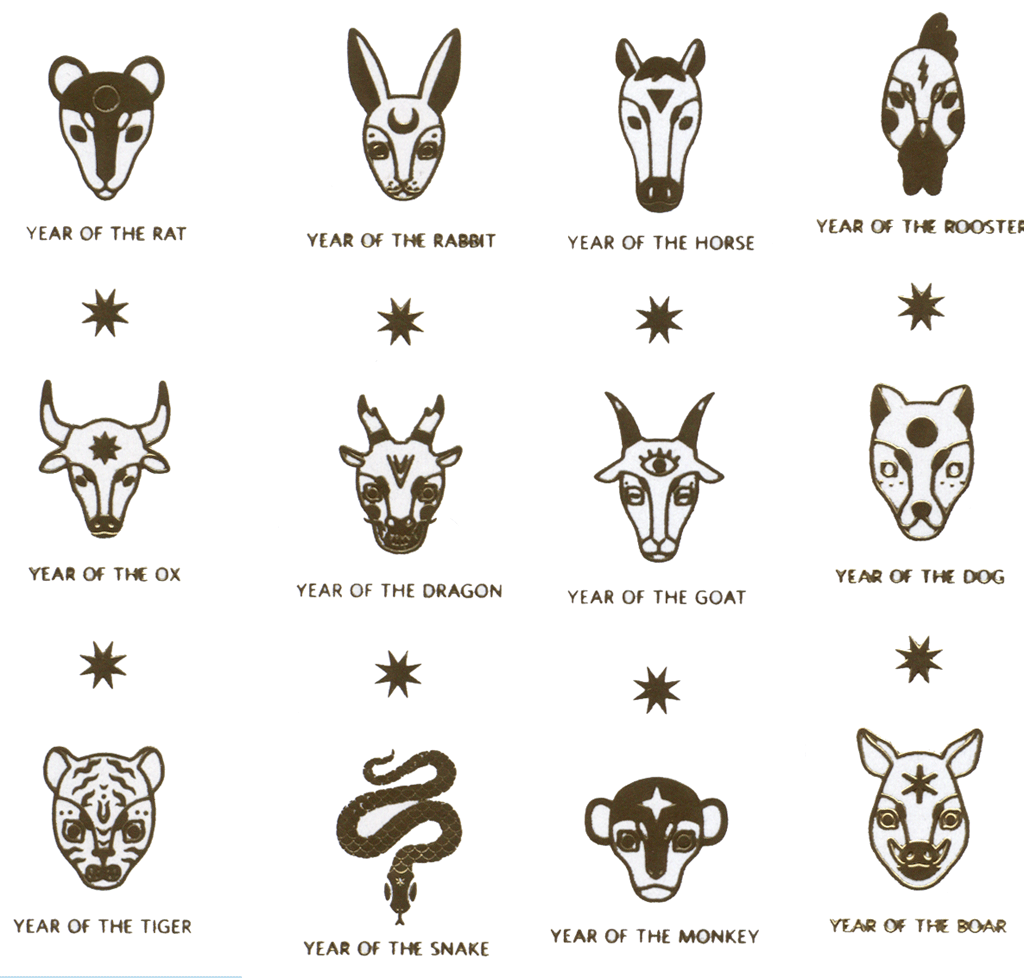

 The B&W pictorial measures 2.62″ x 1.22″
 Lunar New Year: Year of the Rat stamp (Forever priced at the First-Class Mail rate) in one design, in a pressure-sensitive adhesive pane of 20 stamps (Item 475600). The stamp will go on sale nationwide January 11, 2020, and must not be sold or canceled before the first-day-of-issue. The Lunar New Year: Year of the Rat pane of 20 stamps may not be split and the stamps may not be sold individually.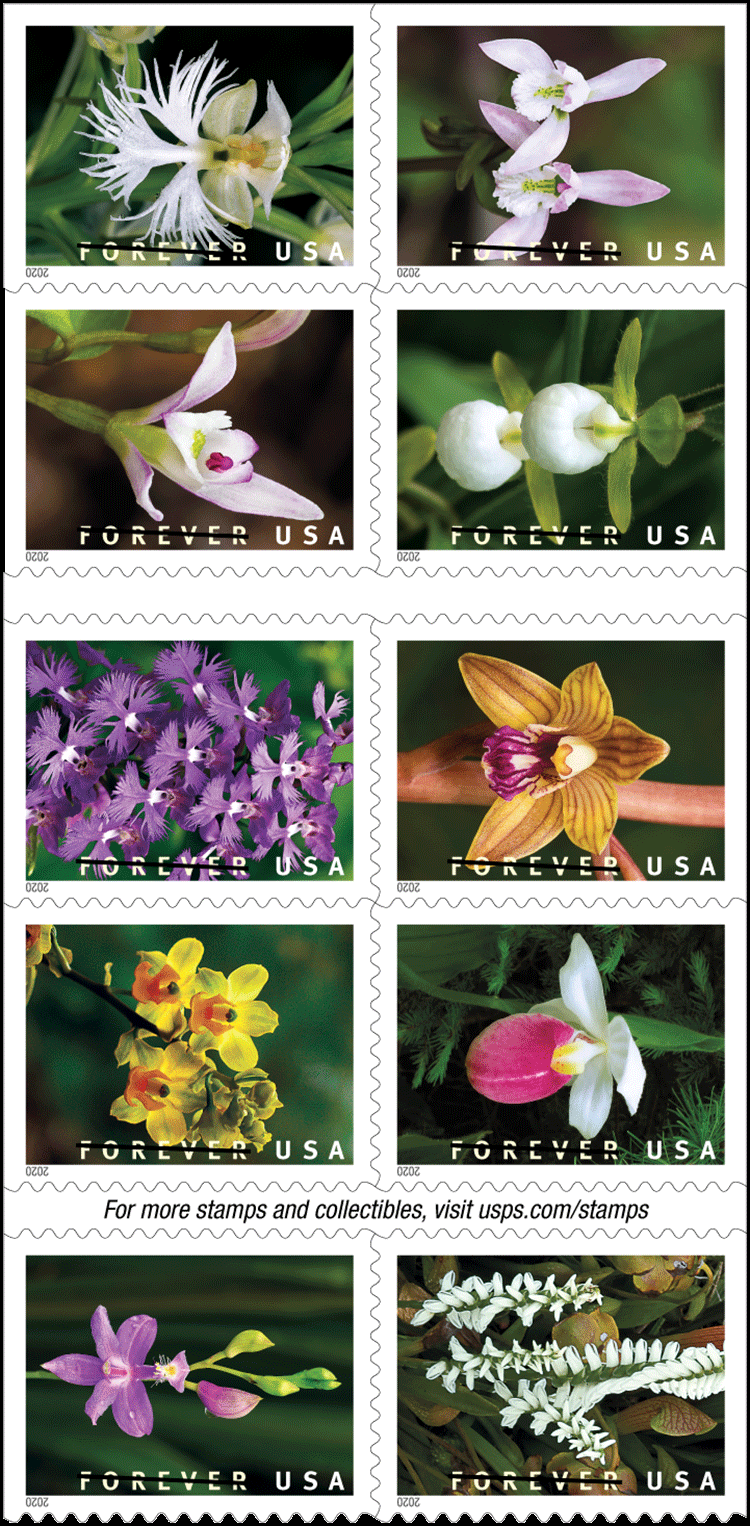
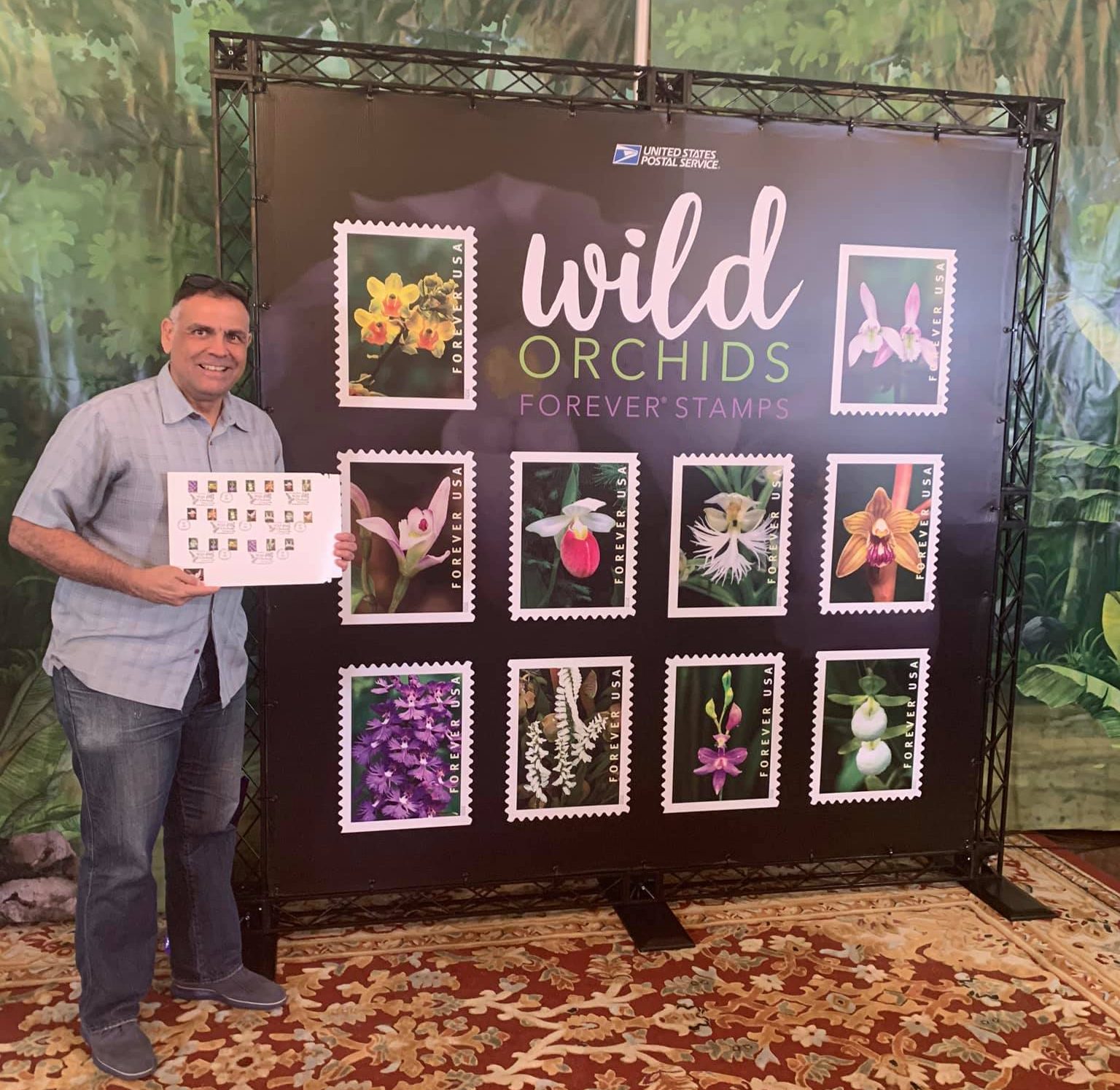 VSC member Mike DePaz at the first day ceremony.
 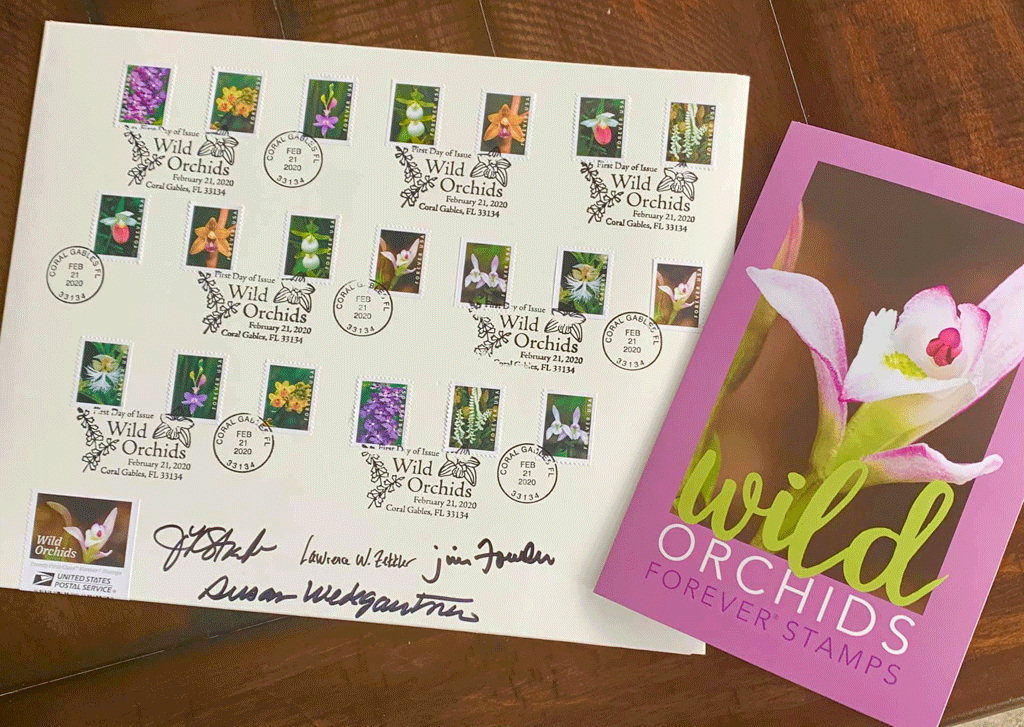 A large cover created by DePaz containing all the stamps in both the booklet and coil formats, with autographs of ceremony participants, plus the first-day ceremony program.
 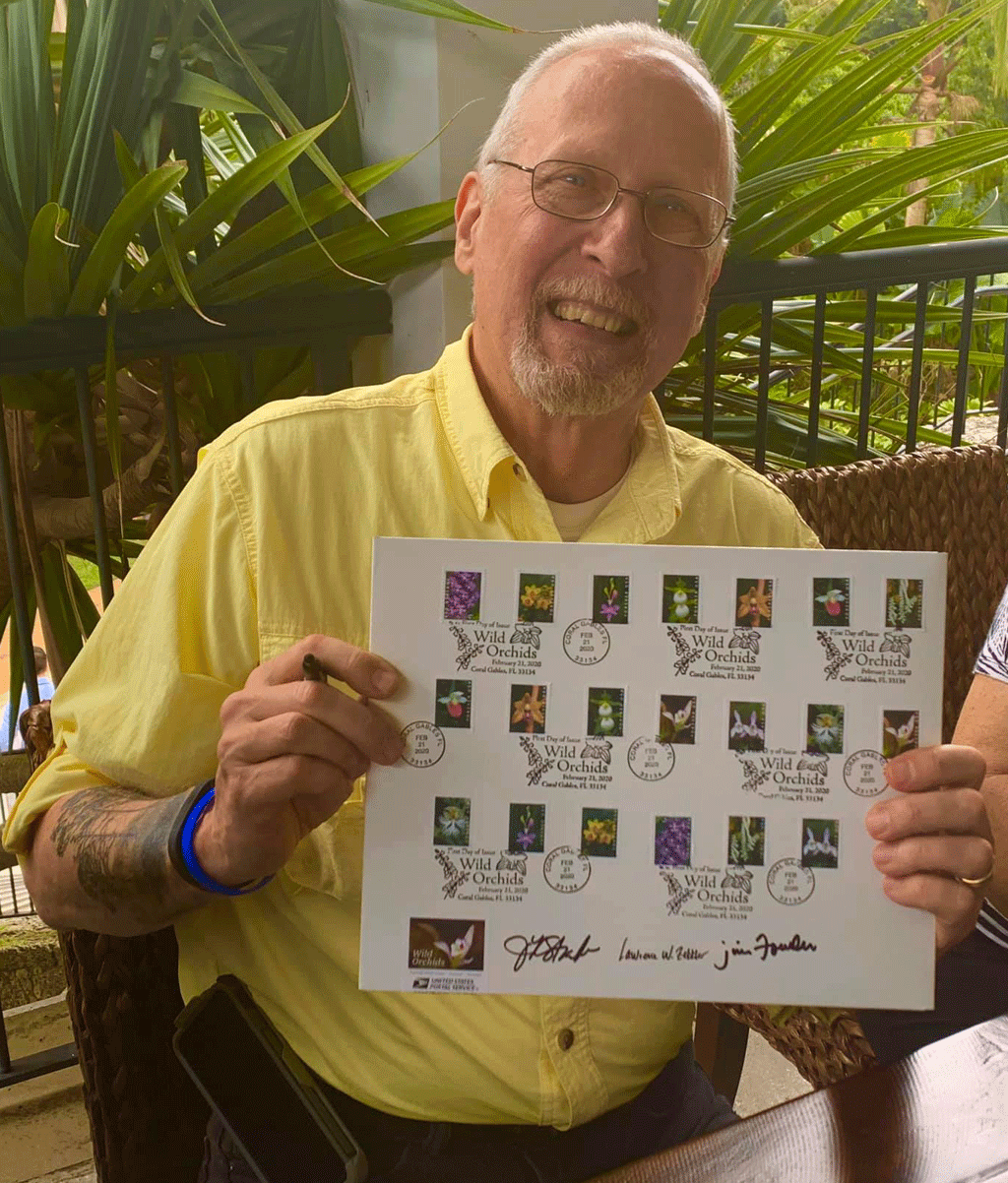 Jim Fowler, the photographer of the images used on the stamps, holds DePaz’s jumbo FDC.
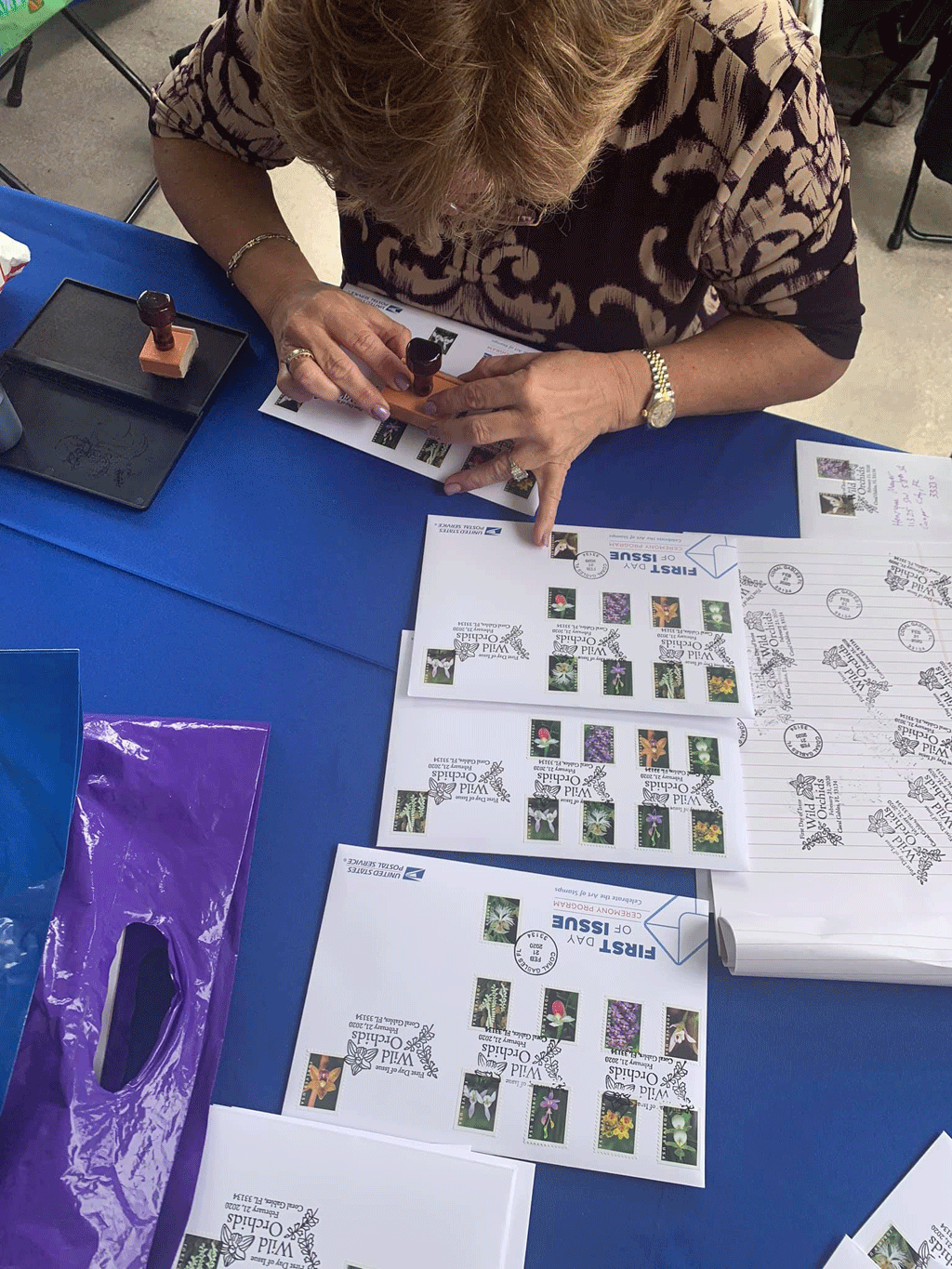 Someone canceling covers at the ceremony site. Photographs courtesy Mike DePaz.
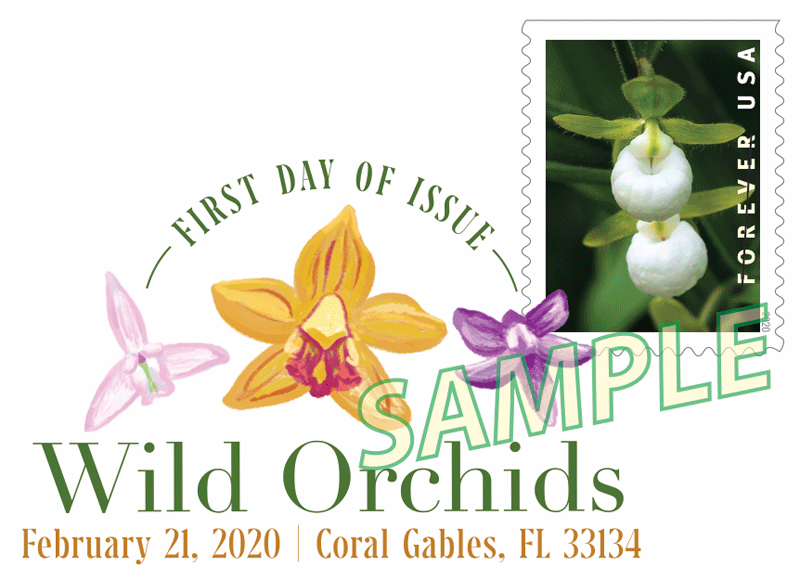 The Digital Color Postmark measures 2.38″ x 1.46″
 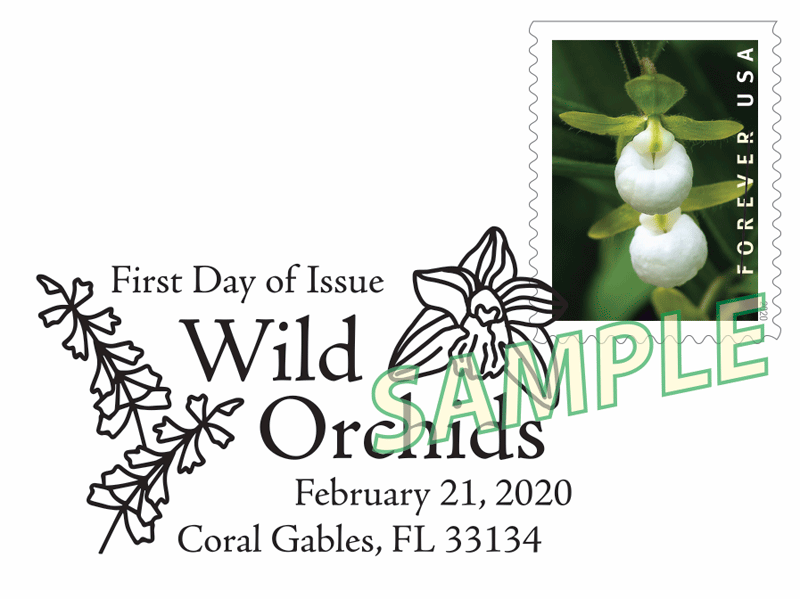 The B&W pictorial postmark measures 2.0″ x 1.23″
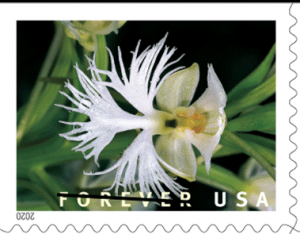
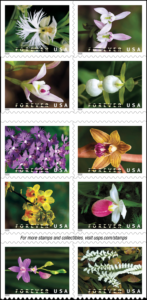 On February 21, 2020, in Coral Gables, FL, the U.S. Postal Service® will issue Wild Orchids stamps (Forever® priced at the First-Class Mail® rate) in 10 designs, in a pressure-sensitive adhesive (PSA) booklet of 20 stamps (Item 682500), a PSA Coil of 3,000 stamps (Item 750400), and a PSA Coil of 10,000 stamps (Item 760700). The stamps will go on sale nationwide February 21, 2020, and must not be sold or canceled before the first-day-of-issue.
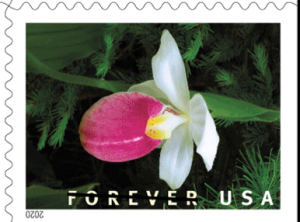 Issue: Wild Orchids Stamps
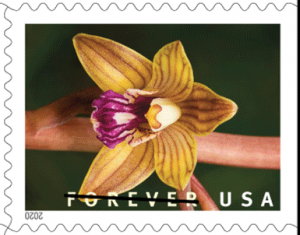 Print Quantity: 15,000,000 stamps
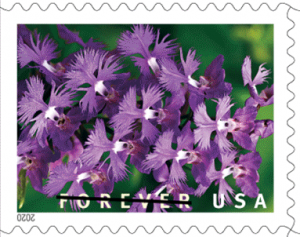 Item Number: 760700
 Print Quantity: 50,000,000 stamps