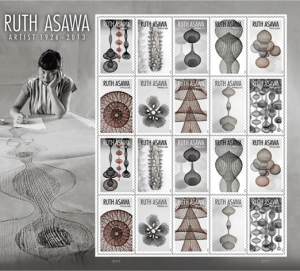
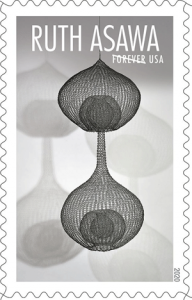
Announced by the USPS April 3rd, 2020, with no date of issue given: 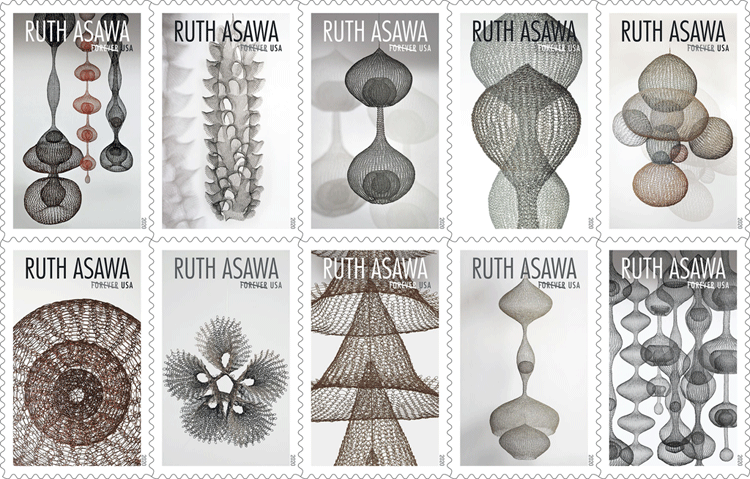 With these stamps, the U.S. Postal Service honors pioneering Japanese American artist Ruth Asawa (1926-2013). Showcasing Asawa’s wire sculptures, the pane includes 20 stamps, with two each of 10 designs, featuring photographs by Dan Bradica and Laurence Cuneo. The selvage features a photograph of Asawa taken by Nat Farbman in 1954 for Life magazine. Ethel Kessler served as art director and designer.
These stamps will be issued Thursday, August 13, in San Francisco, CA.
The stamps may be purchased here. The Scott catalogue numbers for this issue are:
5504 Three Untitled Sculptures from 1958, 1978 and 1959
5505 Untitled Sculpture from 1959
5506 Untitled Sculpture from 1958
5507 Untitled Sculpture from 1955
5508 Untitled Sculpture from 1955, different
5509 Untitled Sculpture from 1980
5510 Untitled Sculpture from 1978
5511 Untitled Sculpture from 1952
5512 Untitled Sculpture from 1954
5513 Six Untitled Sculptures from various years
a. Block of 10, #5504-5513
Further information will appear below the line, with the newest items at the top.
Updated August 6th:
This will have a virtual first day ceremony:
[press release]
U.S. Postal Service Honors Sculptor and Arts Education Advocate Ruth Asawa With Forever Stamps
WHAT: The U.S. Postal Service will dedicate stamps honoring pioneering Japanese American artist Ruth Asawa (1926-2013), who is perhaps best known for her intricate abstract wire sculptures.
News of the stamps is being shared with the hashtag #RuthAsawaStamps.
WHO: Sharon Owens, vice president, Pricing and Costing, U.S. Postal Service
George Takei, trustee, chair emeritus of the board of trustees and founding member, Japanese American National Museum
Jonathan Laib, director, David Zwirner
WHEN: Thursday, Aug. 13, 2020, at 1:30 p.m. EDT
WHERE: The virtual stamp event will be hosted on the U.S. Postal Service’s Facebook and Twitter pages. For more information, visit usps.com/asawastamps.
BACKGROUND: Inspired by natural elements such as plants, snail shells, spiderwebs, insect wings and water droplets, Ruth Asawa transformed industrial material into transparent and seemingly weightless works of art that challenged traditional definitions of 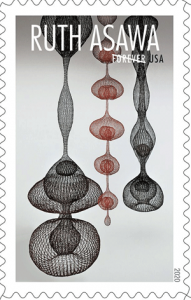 sculpture. When shown together, her sculptures can evoke an undersea domain, a magical upside-down world or an environment all their own. A tireless advocate of community-based arts education, she is also acclaimed for her drawings, paintings, prints and large public projects.
Showcasing Asawa’s wire sculptures, this pane features 20 stamps, two each of 10 designs:
- Installation view, three looped wire sculptures (left to right): Untitled (S.114, Hanging Six-Lobed Continuous Form Within a Form With One Suspended and Two Tied Spheres), circa 1958; Untitled (S.077, Hanging Miniature Seven-Lobed Continuous Form Within a Form), circa 1978; and Untitled (S.036, Hanging Seven-Lobed, Multilayered Interlocking Continuous Form Within a Form, With Spheres in the First, Sixth and Seventh Lobes), 1959
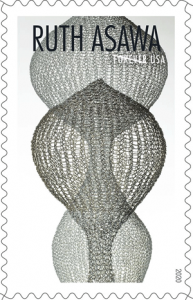 Untitled (S.039, Hanging Five Spiraling Columns of Open Windows), 1959
- Untitled (S.157, Hanging Two-Lobed, Three-Layered Continuous Form Within a Form), circa 1958
- Untitled (S.250, Hanging Seven-Lobed Continuous Interlocking Form With Four Interior Spheres), circa 1955
- Untitled (S.055, Hanging Asymmetrical Nine Interlocking Bubbles), circa 1955
- Untitled (S.018, Hanging Miniature Single-Lobed, Three-Layered Continuous Form Within a Form), circa 1980
- Untitled (S.306, Hanging Miniature Five Interlocking Double Trumpets), circa 1978
- Untitled (S.030, Hanging Eight Separate Cones Suspended Through Their Centers), circa 1952
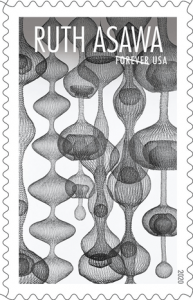 Untitled (S.042, Hanging Three-Lobed Continuous Form, With a Sphere in the Second Lobe and an Open Sphere Suspended From the Bottom), 1954
- Installation view, six looped wire sculptures (left to right): Untitled (S.227, Hanging Five-Lobed Continuous Form With Spheres Suspended in the Second, Fourth and Fifth Lobes), circa 1962; Untitled (S.154, Hanging Nine-Lobed, Single-Layered Continuous Form), circa 1958; Untitled (S.142, Hanging Five-Lobed, Multilayered Continuous Form Within a Form), 1990; Untitled (S.155, Hanging Seven-Lobed, Multilayered Interlocking Continuous Form With a Sphere Suspended in the Top and Fifth Lobes), circa 1958; Untitled (S.065, Hanging Seven-Lobed, Multilayered Continuous Form Within a Form With Spheres in the Second, Third, Fourth and Sixth Lobes), circa 1960-1963; and Untitled (S.143, Hanging Five-Lobed, Multilayered Continuous Form Within a Form), 1996
The selvage features a photograph of Asawa taken by Nat Farbman in 1954 for Life magazine.
 Asawa began making sculptures in 1947 and soon discovered that, in addition to single-layered sculptures, she could also create continuous or intersecting surfaces. Sensual and organic, these multilayered yet still transparent works created a dynamic interplay between interior and exterior surfaces.
Since her death in 2013, public and critical appraisal of her work has continued to reach wider audiences, with much-lauded exhibitions and publications organized by major museums and galleries across the country.
Ethel Kessler served as art director and designer for this stamp pane.
The Ruth Asawa stamps are being issued as Forever stamps, which means they will always be equal in value to the current First-Class Mail 1-ounce price.
Updated July 12th:
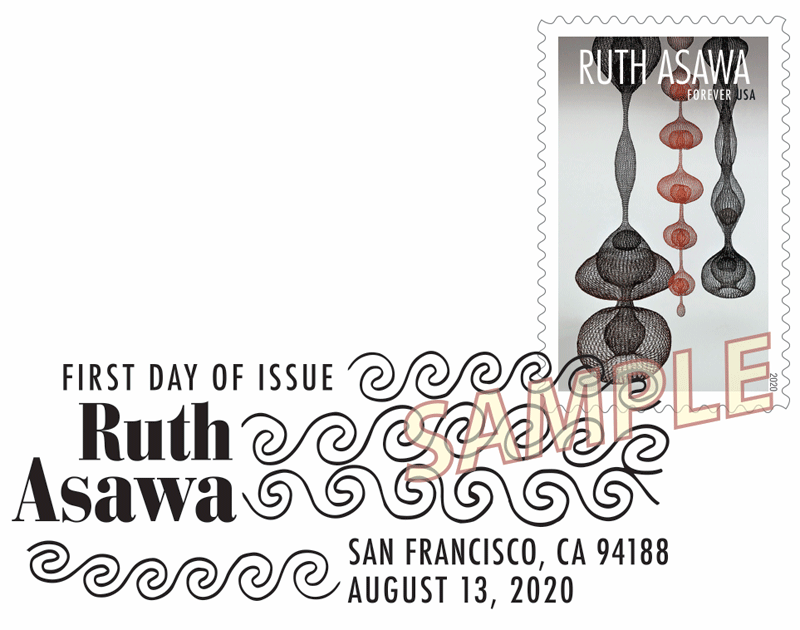
Here are the first-day postmarks for this issue: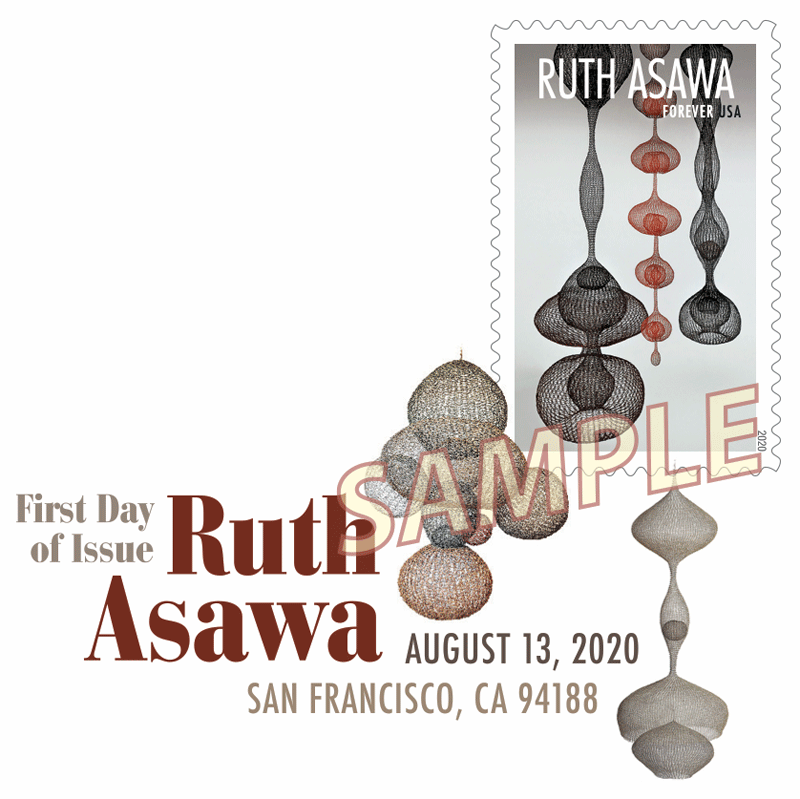 The Digital Color Postmark measures 2.49″ x 1.50″
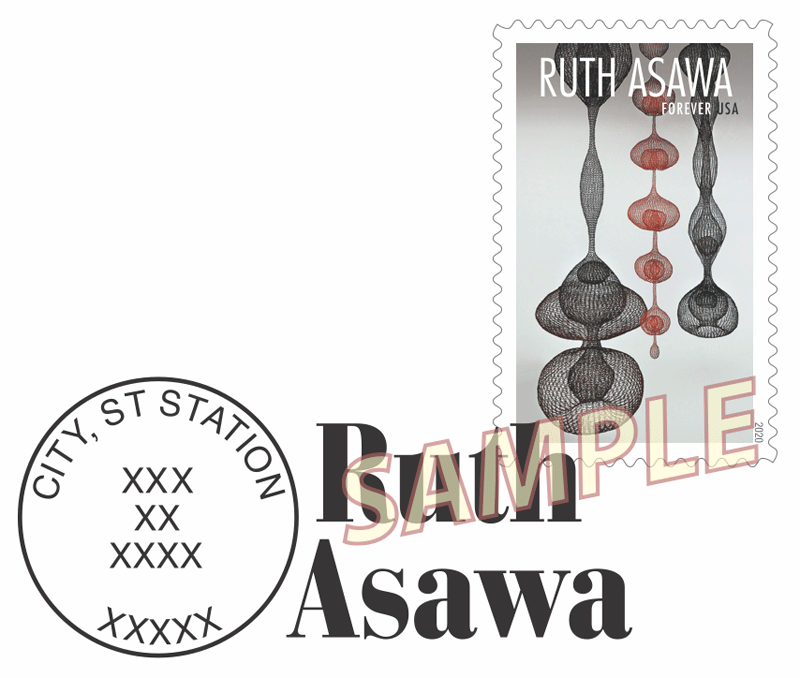
  The pictorial postmark measures 2.54″ x 1.04″
 The “special” postmark other post offices may use for this issue measures 2.19″ x 1.0″
Updated July 3rd, from the Postal Bulletin:
On August 13, 2020, in San Francisco, CA, the United States Postal Service® will issue the Ruth Asawa stamps (Forever® priced at the First-Class Mail® rate) in 10 designs, in a 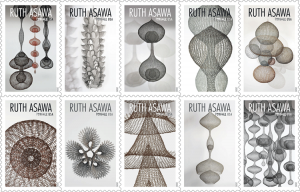 pressure-sensitive adhesive pane of 20 stamps (Item 476300). The stamps will go on sale nationwide August 13, 2020, and must not be sold or canceled before the first-day-of-issue. The Ruth Asawa pane of 20 stamps may not be split and the stamps may not be sold individually.
With these stamps, the Postal Service™ honors pioneering Japanese American artist Ruth Asawa (1926–2013). Showcasing Asawa‘s wire sculptures, the pane includes 20 stamps, two each of 10 designs, featuring photographs by Laurence Cuneo and Dan Bradica for David Zwirner gallery. The selvage features a photograph of Asawa taken by Nat Farbman in 1954 for Life magazine. Ethel Kessler served as art director and designer for this issuance.
Availability to Post Offices: Item 476300, Ruth Asawa (Forever Priced at the First-Class Mail Rate) Pane of 20 Stamps: No automatic distribution.
How to Order the First-Day-of-Issue Postmark:
Customers have 120 days to obtain the first-day-of-issue postmark by mail. They may purchase new stamps at their local Post Office™ or at The Postal Store® website at usps.com/shop. They must affix the stamps to envelopes of their choice, address the envelopes (to themselves or others), and place them in a larger envelope addressed to:
FDOI – Ruth Asawa Stamps
USPS Stamp Fulfillment Services
8300 NE Underground Drive, Suite 300
Kansas City, MO 64144-9900
After applying the first-day-of-issue postmark, the Postal Service will return the envelopes through the mail. There is no charge for the postmark up to a quantity of 50. There is a 5-cent charge for each additional postmark over 50. All orders must be postmarked by December 13, 2020.
Technical Specifications:
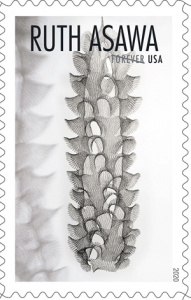 Issue: Ruth Asawa Stamps
Item Number: 476300
Denomination & Type of Issue: First-Class Mail Forever
Format: Pane of 20 (10 designs)
Series: N/A
Issue Date & City: August 13, 2020, San Francisco, CA 94188
Art Director: Ethel Kessler, Bethesda, MD
Designer: Ethel Kessler, Bethesda, MD
Existing Art: Ruth Asawa
Modeler: Sandra Lane/Michelle Finn
Manufacturing Process: Offset
Printer: Banknote Corporation of America
Press Type: Alprinta 74
Stamps per Pane: 20
 Print Quantity: 18,000,000 stamps
Paper Type: Phosphor, Block Tag
Adhesive Type: Pressure-sensitive
Processed at: Banknote Corporation of America
Colors: Custom Pantone Black 6, Cyan, Magenta, Yellow, Black
Stamp Orientation: Vertical
Image Area (w x h): 0.84 x 1.42 in./ 21.336 x 36.068 mm
Overall Size (w x h): 0.98 x 1.56 in./24.892 x 39.624 mm
Full Pane Size (w x h): 7.93 x 7.12 in./201.422 x 180.848 mm
Press Sheets Size (w x h): 21.61 x 24.596 in./548.894 x 624.738 mm
Plate Size: 180 stamps per revolution
Plate Numbers: “B” followed by five (5) single digits in two corners
Marginal Markings:
Front: Header: Ruth Asawa — Artist 1926-2013 • Plate number in bottom two corners
Back: ©2020 USPS • USPS logo • 2 barcodes (476300) • Plate position diagram (9) • Promotional text
 Netherlands. With the issue of the “The first atlases” stamp sheet on March 23, PostNL pays attention to 6 notable publishers, their atlases and their maps.
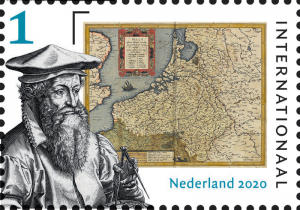 Jansz. Blaeu and Johannes Janssonius on the stamps The first atlases. These publishers from the low countries were responsible for all kinds of beautiful atlases published in the 16th and 17th centuries. The stamps show not only portraits of the 6 publishers, but also maps of the Netherlands from their atlases. All maps shown are from atlases from the Allard Pierson | collection The Collections of the UvA. The portraits were made available by the Rijksmuseum.
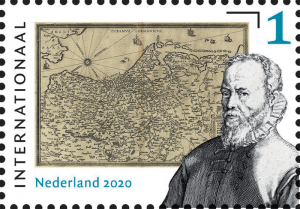 Naast Abraham Ortelius staan Gerard de Jode, Gerard Mercator, Jodocus Hondius, Willem Jansz. Blaeu en Johannes Janssonius op de postzegels De eerste atlassen. Deze uitgevers uit de lage landen waren verantwoordelijk voor allerlei prachtige atlassen die in de 16e en 17e eeuw zijn uitgeven. Op de postzegels zijn niet alleen portretten van de 6 uitgevers te zien, maar ook van kaarten van de Nederlanden uit hun atlassen. Alle afgebeelde kaarten komen uit atlassen uit de collectie Allard Pierson | De Collecties van de UvA. De portretten werden door het Rijksmuseum beschikbaar gesteld.
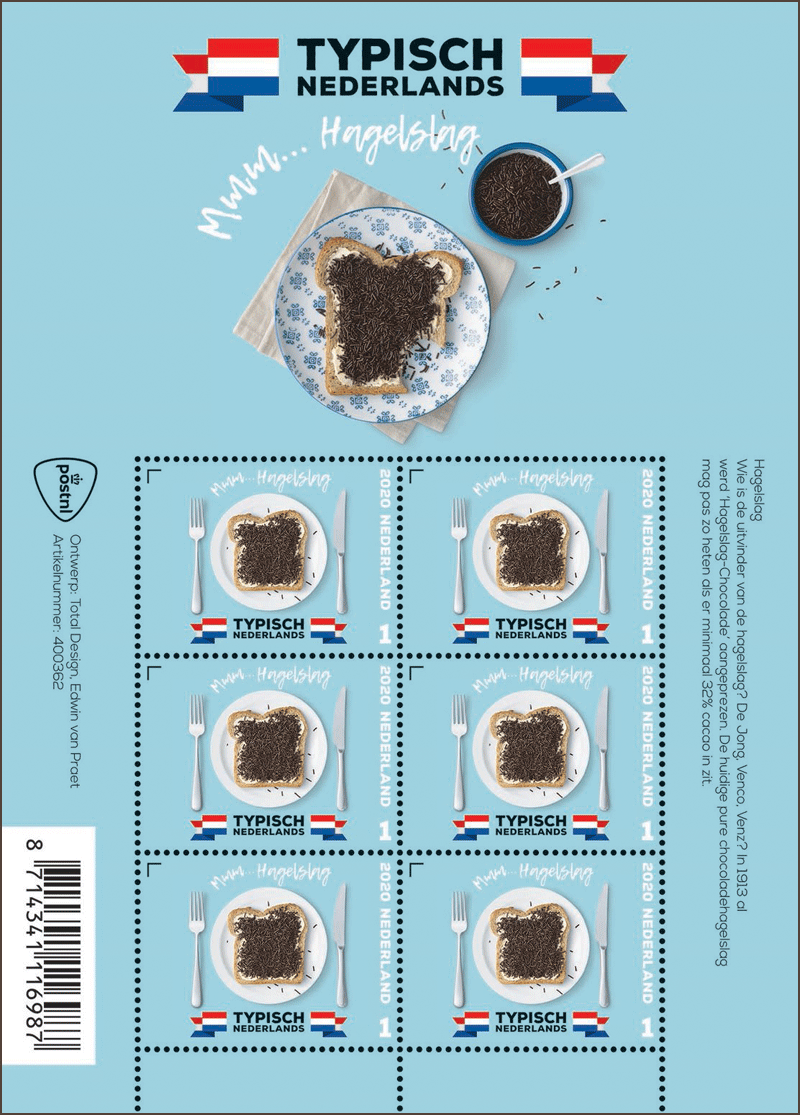
 The Hague, March 24, 2020 – The latest PostNL stamps contain the favorite sandwich spread of young and old in our country: sprinkles. The issue “Typically Dutch – Sprinkles” is the third in this series this year.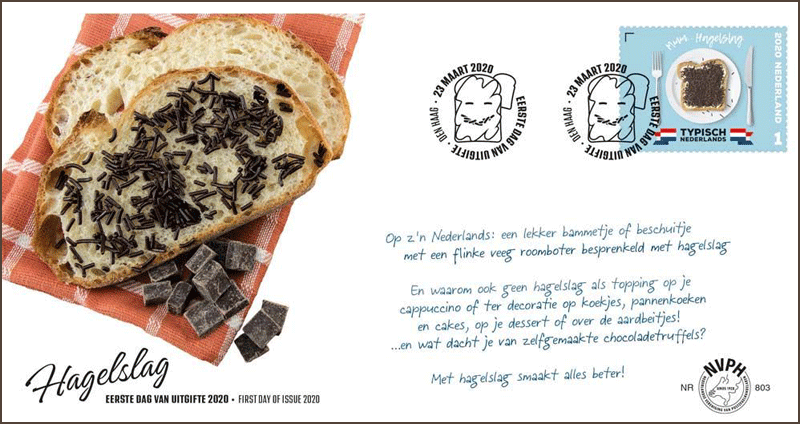
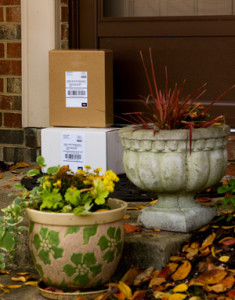
 U.S. Representative Carolyn Maloney (D-NY) and Gerald Connolly (D-Va.) are worried the U.S. Postal Service “will not survive the summer” because of the coronavirus epidemic, and is calling for billions of dollars from the federal government. She says the postal agency has seen a “drastic” reduction in mail volume, and says the end of the USPS would imperil the delivery of prescription drugs and election ballots.
 House and Senate. However, Maloney and Connoly have also introduced a bill providing $25 billion to the USPS, while requiring it to prioritize medical deliveries.
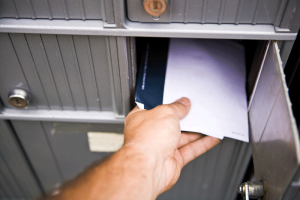 say for certain that the coronavirus cannot be transmitted from the letters, flyers and packages in the mail, especially given possible mutations of the disease and the wide variety of papers and cardboards, it appears not.
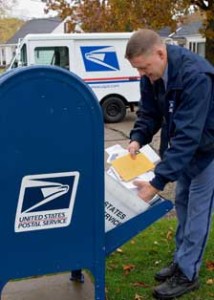 “The bottom line is that there is some hypothetical risk of viable viruses surviving on mail,” Dr. James O. Lloyd-Smith of UCLA said. “But given the time periods involved, this seems like a pretty minimal risk to the general public.”
 OTTAWA, March 23, 2020 /CNW/ – Canada Post understands the important role the postal service plays and is committed to serving Canadians while taking action to keep our people and our communities safe. To do so effectively in these challenging times, we will continue to review and quickly adapt our approach with health and safety as our primary goal.
 OTTAWA, le 23 mars 2020 /CNW/ – Postes Canada est consciente de l’importance du service postal et s’engage à servir les Canadiens tout en prenant des mesures pour assurer la sécurité de ses employés et de la population. Pour y arriver de manière efficace en ces temps difficiles, nous continuerons d’analyser nos approches et de les adapter rapidement en faisant de la santé et de la sécurité notre objectif principal.
 The Hague, March 23, 2020 – The Netherlands will commemorate the end of World War II in 2020, 75 years ago. With 4 gold stamps, PostNL pays attention to events that have left an indelible impression. Both to those who experienced it and to the next generations, to this day.
 Most major stamp collecting shows in the U.S. in March, if not all, have been postponed or canceled. Many events in April and even May have already been affected.
 •
•