
[press release]
New Members Appointed to Citizens’ Stamp Advisory Committee
WASHINGTON — The U.S. Postal Service announced the appointment of three members to the Citizens’ Stamp Advisory Committee (CSAC).
Created in 1957, the CSAC selects subjects for recommendation as future stamp issues, made with all postal customers in mind, including stamp collectors. Committee members, appointed by the Postmaster General, provide expertise on history, science and technology, art, education, sports and other subjects of public interest.
The new members are:
Kevin Butterfield
Dr. Kevin Butterfield is the executive director of the Fred W. Smith National Library for the Study of George Washington at Mount Vernon, the premier center for the study of our first  president. In his role, Butterfield oversees Mount Vernon’s efforts to safeguard original Washington books and manuscripts, while fostering new scholarly research about George Washington and the Founding Era. He is the author of “The Making of Tocqueville’s America: Law and Association in the Early United States” and a historian of the post-Revolutionary United States.
Prior to joining the Fred W. Smith National Library, Butterfield was a tenured Associate Professor of Classics and Letters at the University of Oklahoma, where he taught early American history for eight years and directed a program for the study of the U.S. Constitution.
Dr. Butterfield received a Bachelor of Arts in History from the University of Missouri, a Master of Arts in History from the College of William and Mary, and a doctoral degree in History from Washington University in St. Louis.
Joseph Kelley
Dr. Joseph L. Kelley is a gynecologic oncologist and Professor Emeritus in Obstetrics, Gynecology and Reproductive Sciences at the University of Pittsburgh. He is recognized as an accomplished clinician, surgeon, educator, researcher and administrator. Under his tenure as director, the gynecologic oncology division at the University of Pittsburgh Medical Center (UPMC) became a top-ranked program. He is board-certified in Obstetrics and Gynecology and Gynecologic Oncology. Kelley has additional expertise in the management of breast cancer and allied diseases.
Dr. Kelley has authored or co-authored over 150 articles, abstracts, and book chapters and has been recognized annually as one of Pittsburgh’s Top Doctors since 1996.
Dr. Kelley earned a Bachelor of Science in Chemistry from Colgate University, a Master of Science in Physiology from Rutgers University, and a Medical Degree from St. Louis University. His post-graduate training included a residency at the Magee-Womens Hospital and a fellowship at the MD Anderson Cancer Center at the University of Texas. He was a faculty member of the department of Obstetrics, Gynecology and Reproductive Sciences at the University of Pittsburgh School of Medicine from 1991 until his recent retirement. Kelley now serves on the board of directors of Magee-Womens Hospital of UPMC.
Roger Ream
Roger R. Ream is president and CEO of the Fund for American Studies (TFAS), an  educational organization founded in 1967 to prepare young people for leadership. During his tenure, TFAS has expanded its educational programs to four continents.
Prior to joining TFAS, Mr. Ream was a founding staff member and vice president at Citizens for a Sound Economy, served as special assistant to two members of Congress and was a senior staff member at the Foundation for Economic Education.
Mr. Ream also serves on the boards of Donor’s Capital Fund, the U.S. Air Force Academy Foundation, and the International Freedom Educational Foundation.
Mr. Ream received a Bachelor of Arts from Vanderbilt University.
Submitting Stamp Suggestions
Due to the time required for research and approval in the stamp selection process, ideas for stamp subjects should be received at least three years prior to the proposed issuance. Each submission should include pertinent historical information and important dates associated with the subject. Proposals must be in writing and submitted by U.S. Mail. No in-person appeals, phone calls or e-mails are accepted. Mail your suggestion (one topic per letter) to the address below:
Stamp Development
Attn: Citizens’ Stamp Advisory Committee
475 L’Enfant Plaza SW, Room 3300
Washington, DC 20260-3501
The Postal Service receives no tax dollars for operating expenses and relies on the sale of postage, products and services to fund its operations.
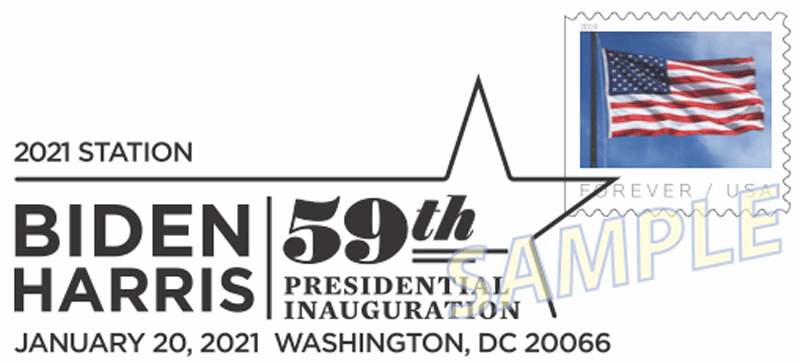 The pictorial measures 2.68″x1.25″. Also available:
 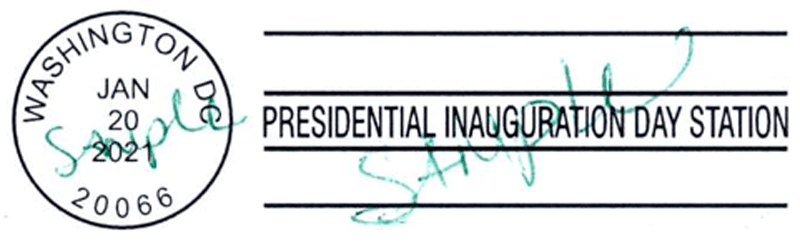 The dimensions were not given, but the standard “killerbar” postmark is approximately 3.25″x1.00.
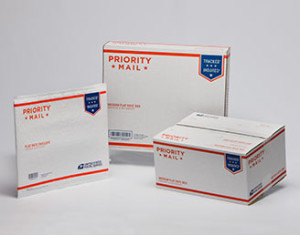 The proposed prices, approved by the Postal Service Governors, would raise Shipping Services product prices approximately 3.5 percent for Priority Mail service, and 1.2 percent for Priority Mail Express service. Shipping Services price increases vary by product. Although Mailing Services price increases are based on the consumer price index, Shipping Services prices are primarily adjusted according to market conditions. The Governors believe these new rates will keep the Postal Service competitive while providing the agency with needed revenue.
 The proposed prices, approved by the Postal Service Board of Governors, would raise Mailing Services product prices approximately 1.8 percent for First-Class Mail and 1.5 percent for other categories. Although Mailing Services price increases are based on the consumer price index, competitive International Shipping Services prices are primarily adjusted according to market conditions. The governors believe these new rates will keep the Postal Service competitive while providing the agency with needed revenue.
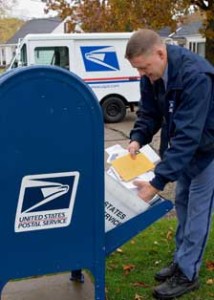 Postal Service does not add surcharges for fuel, residential delivery or regular Saturday delivery.
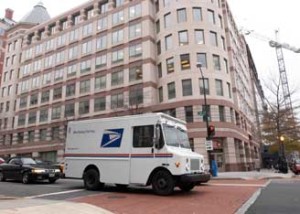 Postal agencies are rarely attention-getting issues in political races, but 2020 is a year like no other: The U.S. Postal Service is a lead item in the presidential election coverage.
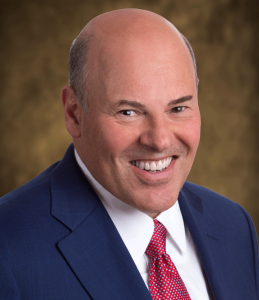 residence.
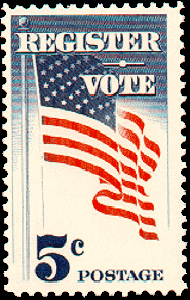 WASHINGTON, DC — Today [May 29, 2020] the U.S. Postal Service (USPS) released a letter that is being sent to local and state election officials and state party officials around the country. This letter highlights key aspects of Election Mail delivery processes — and ways to help educate the public on what to expect when using the mail to vote.
 The letter also provides Postal Service recommendations on how to ensure the efficient and timely handling of mail pertaining to elections. The Postal Service recommends that election officials use First-Class Mail, which is typically delivered in 2 to 5 days, for all Election Mail and to allow one week for delivery to voters. USPS further recommends election officials use Intelligent Mail barcodes for all Election Mail. The Postal Service has designed an Intelligent Mail barcode identifier specifically for ballots, to increase mailpiece visibility within the processing system. The identifier can be used by both the Postal Service and the mailer to track ballot deliveries and returns.