Open Letter from Former CSAC Members

An Open Letter to Postmaster General Megan Brennan
From Benjamin Franklin Bailar, Cary R. Brick and John M. Hotchner

February 1, 2015

Dear Postmaster General Brennan:

No reasonable economist can make a convincing argument that the out-of-sight financial crises of the Postal Service can be fixed with 49 cent stamps. Postal Service marketers who believe that are dead wrong. Yet some do.

In our combined three-plus decades of service on the Postmaster General’s Citizens Stamp Advisory Committee, we have seen an increasing emphasis on the part of a few senior Postal Service managers on assigning to the stamp subject and design program a burden it was never meant to bear: making a significant contribution to reducing Postal Service deficits.

Major reductions over time in its Stamp Services Office staffing and operating budgets have contributed to near-term but miniscule long term savings but at the cost of doing things to develop the program, communicate effectively with the public and support the committee as well as it should. Certainly the ideas behind these changes are understandable, but at best they are not well thought out, and at worst, the Law of Unintended Consequences has operated to produce results that we believe negatively impact the program. Over the last five years, increasing pressures for the stamp program to produce both savings and revenue have seriously derailed the program.

First, let’s establish our objective is not to trash the Postal Service. Our criticism is meant to be constructive. If we didn’t care about the Postal Service, we would remain silent. But we feel strongly about the direction a few of its managers at and above the stamp subject selection and design level are pushing the stamp program. They are doing a disservice to the respect enjoyed by an institution that touches every American every day in their own homes and neighborhoods.

The major aim of the stamp issuance program is to recognize and honor the best of America – its people, its culture, its diversity, the panorama of its history, its accomplishments in science and medicine, sports, the arts, its founding principles and societal goals, and to educate, to name just a few. Were it otherwise, the Postal Service could issue a single stamp for each prevailing postage rate.

In fact, there are collateral benefits to issuance of the wide variety of stamps. The popular commemorative stamps have the power to educate our own citizens, represent the United States to peoples abroad, recognize people and causes, and yes, encourage the collecting of US stamps domestically and abroad for the financial benefit of the USPS. Collecting reaps a monetary reward in two ways: cancelling hundreds of thousands of collectible first day covers that do not have to be processed through the mails and through the buying of stamps that are never used.

To our disappointment, the prevailing attitude on the part of some pie-in-the-sky USPS marketers has been and continues to be that this cow is not yielding the amount of milk that it could, and that more needs to be done to maximize profits.

Among the actions we have seen to that end include:

1. An increasing emphasis over time to change the content of stamps from substantive subjects with gravitas to more and more which are assumed to have wider appeal to the buying public. Let us make it very clear we don’t object to including pop culture subjects; we just believe the major aims of the stamp program should not be forgotten.

2. Sometimes repeated use of themes that were popular, and therefore are expected to sell well if used again, rather than broadening the program to honor or recognize a wider range of subjects.

3. Over the last 20 years there has been a huge increase in the number of designs per issue; capped by the controversial 20-design 2013 issue for Harry Potter, and the eight-stamp 2014 Batman issue. It is no wonder that the pop culture issues expected to sell well are also the issues most often picked to have multiple designs. Marketers sometimes hijack the primary role of the advisory committee.

4. When we joined the Stamp Committee, most of the members were substantive subject matter experts in their life’s work. In the last l5 years, increasing numbers of stamp advisory committee appointments have gone to artists and marketers. These people are too often oriented to ‘what will sell?’ As a result, they have created odd multiple designs that often tip toward art that is edgy and even incomprehensible.

5. We have seen increasing numbers of stamps with higher face values – some justified by rate changes that occur far more frequently than happened in the past; but others with no justification whatever except to test the limits of what the market will bear. Take, for instance the $8 Inverted Jenny souvenir sheet and the shameless hawking of these to those who might hope to win a lottery to get one of the 100 un-inverts. Did that lottery capture the excitement of the marketers? Sure. How about the everyday consumers? No. Collectors? No.

All of this reflects the change in the culture of the Postal Service that puts increasing emphasis on defining success of the stamp issuance program in terms of profit realized. This extends from the evaluations of mid-level managers to the ways that Stamp Services is treated in the budgeting process.

The bottom line is that this one element of profitability has become a tail that wags the USPS dog, to the exclusion of or minimizing other important program goals.

Yet the Postal Service continues to say it wants a quality program that appeals to a wide demographic; that they respect and want to cater to stamp collectors, and that it wants to maintain a high-level reputation among the world’s postal administrations.

We believe that how they actually behave says loud and clear what they truly value— revenue expansion and cost cutting.

While this is not a new phenomenon, it has grown exponentially as the USPS has faced continuing deficits due to manufactured financial burdens placed by the Congress and due to decreasing first class mail volume.

This situation is enabled by two dynamics. First, a single year budgeting cycle that discourages investment in marketing and buyer development for monetary gains on the longer term and second, a method of calculating profits that is not simply faulty in concept, but downright deceptive.

Expensive contracted and internal studies of stamp profitability over the years have not been very rigorous, and much of the profit ascribed to the stamp program may be illusory. Smoke and mirrors, if you will.

These are studies that ask respondents if they will retain any of the stamps they have purchased rather than use them as postage. The results are then swallowed whole as representing the level of profit. In fact, they represent the triumph of hope over reality.

What actually happens to stamps bought to be collected? Undeniably many, maybe even a majority, go into collections never to be used as postage. But some are ultimately re-sold to be used as postage when their collectability spirals downward.

Suffice it to say that many collectors and investors buy anything from a single pane to hundreds of panes of new issues hoping that their value will appreciate over time. In many cases, this takes decades to happen, and in most cases it does not happen at all.

The result is that quantities of mint U.S. stamps are often bought and later sold when an owner needs money, or disburses a collection, usually at markedly less than face value, sometimes as low as half the original purchase price. Savvy bargain hunters know discounted postage is easily available through the Internet, at stamp shows and in stamp publication ads. Some of those will be bought to go back into collections, but the majority will be used for mailing, thus cutting deeply into the supposed Postal Service “retention” figures.

The bookkeepers retention figures may be accurate at the single moment they are developed, but they melt away rapidly. To our knowledge there are no current studies assessing the true long-term profits

So marketers get to slap their own backs congratulating themselves on the basis of short term gains. They ignore the fact that a substantial portion of those paper-only profits have a short shelf life. That dynamic simply does not fit the narrative on which they base internal rewards. Nor do the increases reported internally take much account of the fact that increased retention revenue is often based on nothing more than the ever-higher face values of the stamps retained due to rate increases. They are dreamers.

It is fact that a marketer mentality has taken root within the Postal Service demanding that postage stamps must meet unreasonable expectations of profitability. To our dismay those expectations have been institutionalized in such a way that they operate to make it more difficult to attain non-monetary goals that are much harder to quantify.

We believe that many of the Postal Service managers, including the Postmasters General under whom we have served, were and are sincere in wanting a high quality stamp program. The problem is that elements of the Service have in actual practice ignored the bedrock purpose of the program— to honor the people, guiding principles and events that have made this nation great— and replaced it with an institutionalized effort to maximize profits.

Finally, we offer some suggestions:

Reverse the trend of appointing more and more artists and marketers to the Stamp Advisory Committee. Consider revising its makeup. How about a diverse two-thirds membership of subject matter experts from the areas of history, science, sports, international relations, law, government and the fine arts . The emphasis in designs should be on substance rather than edgy art reflecting the ooo’s and ahh’s of the artists and designers themselves. It’s not about them. It’s about the American people.

U.S. collectors have valid concerns. They are important consumers. Hear them out. They’ve been overlooked in too many instances.
 
Invest in marketing US stamps rather than simply relying on news coverage of their issuance. Promote their availability in the current television campaigns promoting package deliveries.
 
Improve the distribution of new stamp issues so that when customers ask for specific stamps, local post offices have them in stock. Increase their promotion and availability in the retail marketplace as well.
We respectfully appeal to you as you take up your new duties to grab hold of the rudder and put the stamp subject and design process back on course.

Cordially and with respect,

Benjamin F. Bailar / Cary R. Brick / John M. Hotchner

About the Authors

Bailar2Benjamin Franklin Bailar (right; Lake Forest, IL 60045-2254), Postmaster General from 1975-1978, former Dean of the Business School at Rice University, served on the Stamp Advisory Committee from 2007 to 2014. (bbailar@mba1959.hbs.edu)

Cary R. Brick (Clayton, NY 13624-0003), retired 31-year U.S. House of Representatives Chief of Staff, President of economic development council, Chair of scholarship foundation, researcher and writer, served on the Committee from 2002-2014. (cbrick@twcny.rr.com)

hotchnerJohn M. Hotchner (left; Falls Church, VA 22041-0125), retired 42-year employee of the U.S. State Department, past president of American Philatelic Society, served on the Committee from 1998 to 2010. (jmhstamp@verizon.net)


An Post Returns Santa Letter: Insufficient Address

Ireland’s postal agency An Post is apologizing for returning a 3-year-old’s letter to Santa… marked “insufficient address.”

The BBC reports that apparently “Santa Claus, Santa’s Grotto, Lapland, The North Pole” wasn’t good enough — even though An Post delivered the letter from the little girl’s eight-year-old sister.

An Post says it successfully handled 140,000 letters to Santa this year, and is very upset about this one.

It offered to send a special letter to the three-year-old, but was turned down.

USPS: No Domestic Shipping Price Hike

Buried in the second bullet point is that the USPS is asking for an increase in its international shipping services. —LdeV

[press release]

Proposed New Postal Service Shipping Prices Designed to Capitalize on Strong Package Growth
No price increase proposed for Priority Mail and Priority Mail Express products
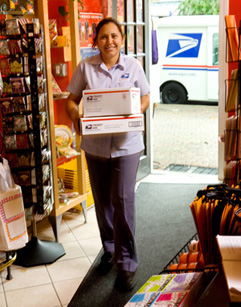
usps_pkgdelivery2WASHINGTON — In a notice filed with the Postal Regulatory Commission (PRC), the U.S. Postal Service seeks to keep Priority Mail Express and Priority Mail services at their current prices. It’s part of the Postal Service’s ongoing pricing strategy to capitalize on strong package growth.  Priority Mail is the Postal Service’s flagship Shipping Services product and is a convenient and fast way to send documents and packages requiring expedited transportation and handling.

Also, unlike other shipping companies, the Postal Service is not implementing new dimensional weight charges with this pricing proposal, continuing its commitment to deliver the best value for customers. For more information about this please visit https://www.usps.com/dimensionalweight/welcome.htm.

With affordable shipping options and improved tracking, the Postal Service hopes to attract new business customers and become their delivery platform of choice. In FY 2014, Postal Service Shipping and Package Services volume grew by 300 million pieces, an increase of 8.1 percent over the previous year.

Some of the key elements of the pricing proposal filed with the PRC today, which includes an overall 3.4 percent price increase, include the following:

  • No price increase in domestic Priority Mail Express and Priority Mail services and products.
  • Priority Mail International will increase 6.8 percent, and pricing to Canada will now be zoned.
  • Priority Mail Express International will increase 6.7 percent with Flat Rate pricing available.

Priority Mail International is a reliable, cost-effective way to send merchandise and documents to about 180 countries. Priority Mail Express International provides affordable and fast international delivery to about 180 countries. Shipments are insured against loss, damage, and /or missing contents up to $200 at no additional charge. Date-certain service with a money-back delivery guarantee is available to select countries.

The PRC will review the prices before they are proposed to become effective on April 26, 2015, to determine if prices are consistent with applicable law.

The Postal Service receives no tax dollars for operating expenses and relies on the sale of postage, products and services to fund its operations.”

Stealth U.S. Rate Hike Request

This rate change request was approved February 24th. See the update here.

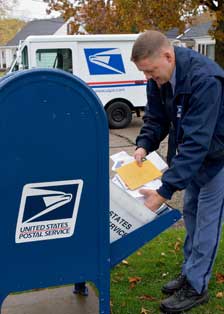
usps_mailboxpickupIn order to get a rate increase of three cents all at once, the USPS promised not to raise the cost to mail a letter for three years. Strictly speaking, it has adhered to that agreement, while at the same seeking a hike in rates. How?

The basic cost to mail a letter will remain 49 cents, but if it weighs more than an ounce, the USPS would like to collect 22 cents per additional ounce, a penny more than at present. Letters to anywhere outside the U.S., even Canada, will cost 5 cents more. And postcards will cost a penny more to mail.

All of these are requests, subject to regulatory approval. If approved, they would go into effect April 26th.

The USPS also warns that it may raise its various package-shipping services, such as Priority Mail, Priority Mail Express (overnight delivery, formerly Express Mail) and Parcel Post. These do not require regulatory approval and, since they are in competition with private services, are not capped by the rate of inflation.

One more quibble: As it often does, the USPS reminds us it does not receive tax dollars for operating expenses. However, it does get tax dollars for the “free franking” (free postage) afford the White House and Members of Congress, and it is also not subject to state and local taxes.

The USPS press release is below:

[press release]
Forever Stamp Prices Unchanged
Postal Service Committed to Growth; Action Taken to Increase Needed Revenue

WASHINGTON — The United States Postal Service today filed notice with the Postal Regulatory Commission (PRC) of a price increase for Mailing Services products based upon the Consumer Price Index (CPI) cap authority. The filing, if approved, would keep Forever Stamps at their current price of 49 cents.

The First-Class Mail prices for these products are:

  • Letters (1 oz.) remains at 49 cents
  • Letters additional ounces, from 21 cents to 22 cents
  • Letters to all international destinations, from $1.15 to $1.20
  • Postcards, from 34 cents to 35 cents

Today’s action is the latest in a series of steps the Postal Service has taken as part of a comprehensive approach to achieve financial stability. By growing volume, revenue and contribution, the Postal Service will continue to meet America’s mailing and shipping needs well into the future. While improving efficiency in streamlining its network and seeking legislative changes, the Postal Service must address an outdated business model.

Some of the key elements of the proposal include the following:

  • Maintains single-piece stamp prices at 49 cents
  • Addresses PRC concerns about underwater products
  • Simplifies Special Services to reduce redundancy and improve customer ease of use

The filing does not affect Postal Service Shipping products and services and are proposed to become effective on April 26, 2015.

The PRC will review the prices before they are proposed to become effective on April 26, 2015, to determine if prices are consistent with applicable law.

The Postal Service receives no tax dollars for operating expenses and relies on the sale of postage, products and services to fund its operations.

USPS: Record Holiday Season

[press release]
U.S. Postal Service Delivers Record Holiday Season
Double-digit package growth surpasses projections

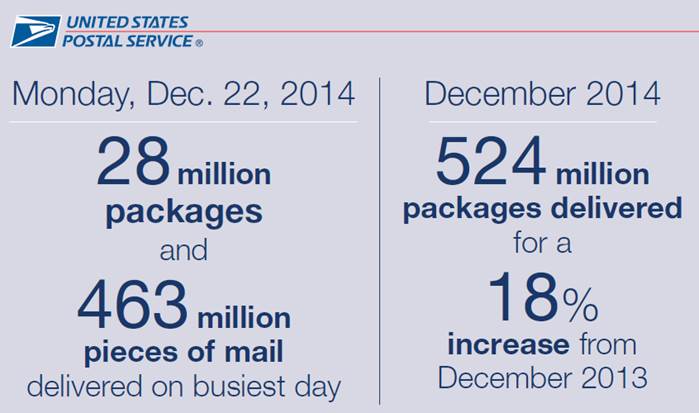
WASHINGTON — The U.S. Postal Service exceeded its holiday delivery projections this season, delivering approximately 524 million packages in December — an 18 percent increase over last year.

usps14delivOn Dec. 22 alone, the Postal Service delivered more than 28 million packages. This marked the most packages delivered in a single day in the organization’s history. The package delivery record was set while also delivering approximately 463 million pieces of mail.

Improving tracking and reliability for customers was a key factor in preparing for holiday delivery demand. In advance of the holidays, the Postal Service also lowered some prices for businesses and frequent shippers.

“The volume this holiday season demonstrates that retailers and consumers increasingly are turning to the Postal Service to deliver their packages,” said Postmaster General and Chief Executive Officer Patrick Donahoe. “We know how much our customers count on us to make sure cards, letters and gifts make it home, and I’m proud that we delivered on our promise.”

usps_deliveryIn preparation for the holiday package volume, the Postal Service enhanced its network and made adjustments to mail processing and delivery operations, including delivering packages seven days a week beginning late November. More than 20 million packages were delivered on the five Sundays prior to Christmas to keep the mail moving and networks clear. An additional 118,000 packages were delivered Christmas Day.

“The dedication and resolve of our employees is commendable,” Donahoe said. “They adapted and delivered heavier-than-ever volumes of packages. They worked extremely hard, many of them braving harsh weather. I’m honored by the commitment they demonstrated this holiday season.”

The Postal Service is continuing to anticipate holiday volume through January as consumers use the mail to return holiday gifts. Merchants and retailers can take advantage of several return services, including Priority Mail Returns Service, to help customers make their returns easier. Consumers with gifts to return can pack items in Priority Mail packaging, which comes with insurance and tracking, and is available free at Post Offices or online.

No Rate Hike For Canada In 2015

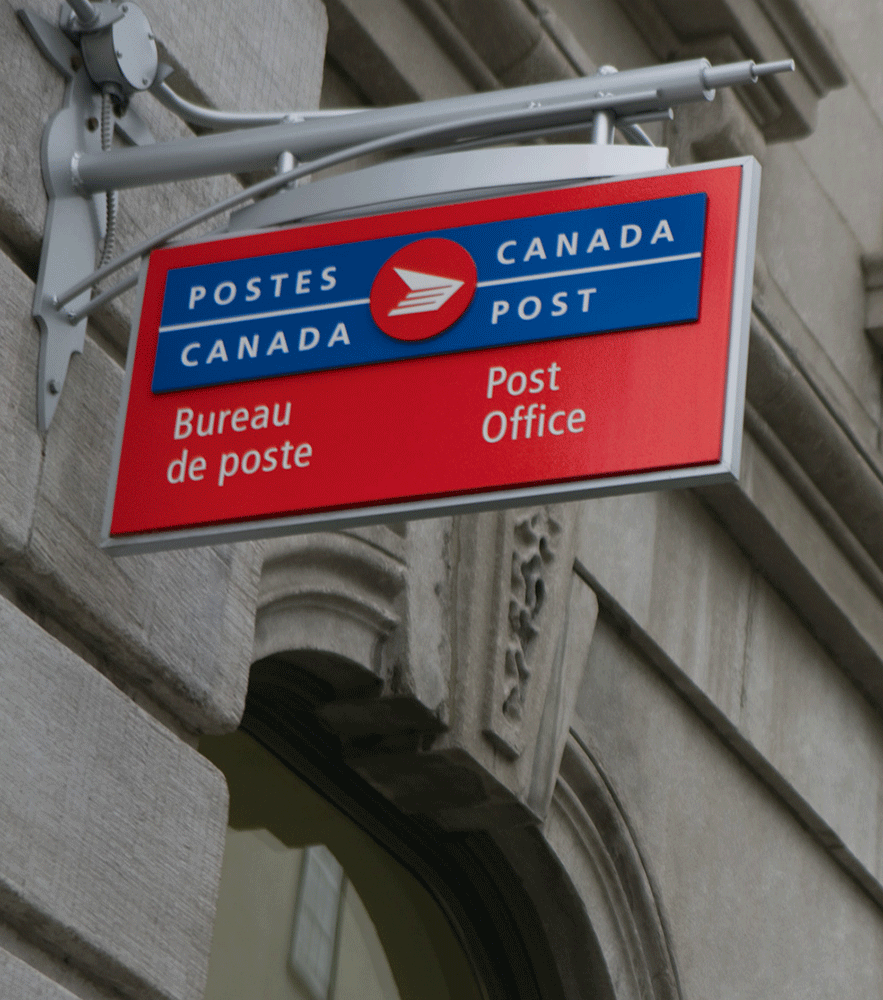
can_retailquebeccity2aFrom the middle of a long press release on third quarter results is this announcement:

    “Following a one-time strategic pricing adjustment that took effect in 2014, regulated stamp prices will remain unchanged in 2015.
    “Buyers of Permanent stamps (“P” stamps), valid on Standard Lettermail (0-30 g) items mailed within Canada, will continue to pay $0.85 per stamp when purchased in booklets, coils or panes and $1 per stamp when they are purchased one at a time.”

Canada Post: $13M Profit In 3Q

[press release]
Canada Post segment reports $13-million profit before tax in third quarter
Significant erosion of mail volumes continues, implementation of Five-point Action Plan well under way

can_mailboxquebecOTTAWA, Nov. 26, 2014 /CNW Telbec/ – The Canada Post segment reported a profit before tax of $13 million in the third quarter compared to a loss before tax of $129 million in the same quarter of 2013. As they were in the second quarter, the results are mostly due to the impact of lower employee benefit costs, continued growth in the Parcels business and new pricing measures for Transaction Mail contained in the Corporation’s Five-point Action Plan. For the first three quarters of 2014, the Canada Post segment reported a profit before tax of $39 million compared to a loss before tax of $165 million for the same period in 2013 and is expected to report a profit for 2014.

Volumes in Transaction Mail, Canada Post’s core business, nevertheless continued to fall as mailers and consumers turn to digital alternatives. Volume erosion picked up speed in the third quarter after being lower than expected in the second quarter. Compared to the same periods in 2013, volumes decreased by 58 million pieces or 6.1 per cent in the third quarter and by 175 million pieces or 5.1 per cent in the first three quarters of 2014.

Employee benefit costs for the Canada Post segment decreased by $48 million for the third quarter of 2014 and by $161 million for the first three quarters of 2014, compared to the same periods in 2013. This is the result of strong pension asset returns in 2013 and an increase in the discount rates used to calculate benefit plan costs in 2014. Employee future benefits, including pension, continue to be highly volatile and unpredictable and remain a significant factor in the Corporation’s operating results.

The Five-point Action Plan, announced in December 2013, is realigning the postal service with Canadians’ changing needs and will return it to financial self-sufficiency. To date, approximately 800,000 households have either been converted from delivery at the door to community mailbox delivery or are in various stages of the conversion process for 2015. In addition, a strong focus on consolidating processing operations in light of the declines in mail volumes is delivering savings.

The Canada Post Group of Companies1 reported a profit before tax of $35 million in the third quarter, compared to a loss before tax of $109 million for the third quarter of 2013. For the first three quarters of 2014, the Group of Companies’ profit before tax was $84 million, compared to a loss before tax of $134 million for the same period in 2013.

Parcels results
can_truckdeliveryperson2Parcels revenue for the Canada Post segment grew by 8.2 per cent to $337 million in the third quarter, while volumes increased by close to three million pieces or 8.1 per cent, compared to the same period last year. Over the first three quarters of 2014, Parcels revenue for the Canada Post segment grew by 8.9 per cent to more than $1 billion, while volumes increased by four million pieces or 4.2 per cent, compared to the same period in 2013.

Transaction Mail results
Largely as a result of the Lettermail price adjustment put in place in the second quarter, revenue from Transaction Mail, which includes mostly letters, bills and statements, rose by 13.7 per cent to $750 million in the third quarter compared to the same period in 2013. Revenue for the first three quarters rose by 6.5 per cent to approximately $2.4 billion compared to the same period last year.

Direct Marketing results
In the third quarter, Direct Marketing volumes for the Canada Post segment decreased by 65 million pieces or 5.6 per cent and revenue fell by $15 million to $279 million, compared to the same period in the prior year. In the first three quarters of 2014, Direct Marketing revenue fell by $32 million or 3.1 per cent to $874 million, and volumes declined by 99 million pieces or 2.2 per cent, compared to the same period last year.

To access the full report in PDF, visit canadapost.ca/aboutus and select “Quarterly Financial Reports” from the Corporate menu.

Five-point Action Plan update:
Canada Post is making considerable progress in implementing the Five-point Action Plan, which is expected to contribute financial benefits of an estimated $700 million to $900 million a year to the Corporation’s bottom line, once fully implemented.

1. Community mailboxes

can_customersquebec2The Corporation is on track to convert the one third of Canadian addresses that receive mail at their door to community mailbox delivery.

The multi-step conversion process is designed to gather the feedback necessary to develop local solutions for each community.

As of November 25, 2014:
–  Customers at approximately 100,000 addresses have been converted to community mailboxes.
– Customers at approximately 700,000 addresses have been notified and are in various stages of the conversion process for 2015, with more than 200,000 to be notified in the coming weeks for conversion in 2015.
– The process is now under way at various stages in every province.

This five-year initiative is forecasted to save $400 million to $500 million a year once fully implemented, the most significant savings of the plan.

2. Lettermail pricing
Following a one-time strategic pricing adjustment that took effect in 2014, regulated stamp prices will remain unchanged in 2015.

Buyers of Permanent stamps (“P” stamps), valid on Standard Lettermail (0-30 g) items mailed within Canada, will continue to pay $0.85 per stamp when purchased in booklets, coils or panes and $1 per stamp when they are purchased one at a time.

3. Expanding convenience through postal franchises
Canada Post opened 45 new franchise postal outlets across the country in the first three quarters of 2014. Typically, franchise outlets are conveniently located and offer better parking and longer hours than corporately managed post offices.

4. Streamlining operations
Throughout 2014 and in the third quarter, Canada Post has taken several significant steps to translate its investments in automation into streamlined operations, productivity gains and operational savings.
Several mail processing operations have been consolidated to allow much greater use of our high-speed automated sorting machines as Lettermail volumes decline. The consolidations move some volumes from plants in such major urban centres as Ottawa, Hamilton and London to major plants in Montréal and Toronto and some volumes from Saint John to Halifax. Other transfers of work to streamline operations have occurred in more than 10 other smaller locales.

Sequencing refers to automated machines sorting mail to the delivery agent’s line of travel, achieving greater efficiency by reducing manual sorting. This year, Canada Post has restructured 112 depots that receive sequenced mail.

In early September, Canada Post officially opened the state-of-the art Pacific Processing Centre in Richmond, B.C. The high-speed automated sorting equipment for Lettermail, parcels and packets allows us to implement motorized delivery and other measures that have produced significant savings wherever they have been introduced across the network. To support the growth of our Parcels business, Canada Post has also invested in new automated parcel sorting at the processing plant in Montréal to achieve productivity gains while meeting the needs of the fast-growing e-commerce sector.

Remote address coding work has been consolidated from several cities to two locations to improve efficiency. All the work from western Canada now occurs at the Pacific Processing Centre and all the work from eastern Canada is done in Toronto.

5. Addressing the cost of labour
Labour costs for the Canada Post segment fell by $13 million in the third quarter and have fallen by $44 million in the first three quarters of 2014, compared to the same periods last year. This is as a result of Canada Post’s continuing efforts to streamline and modernize its operations, as well as one fewer paid day in the first three quarters.

On November 14, 2014 Canada Post and the Association of Postal Officials of Canada (APOC) announced that they had reached a tentative agreement. Before the tentative agreement can be finalized, it will be subject to a ratification vote by employees represented by APOC.

Background
The operations of the Canada Post Group of Companies are funded by the revenue generated by the sale of its products and services, not taxpayer dollars. Canada Post has a mandate from the Government of Canada to remain financially self-sufficient and to provide a standard of postal service that is affordable and meets the needs of the people of Canada.

1. The Canada Post Group of Companies consists of the core Canada Post segment and its three non-wholly owned principal subsidiaries, Purolator Holdings Ltd., SCI Group Inc. and Innovapost Inc.

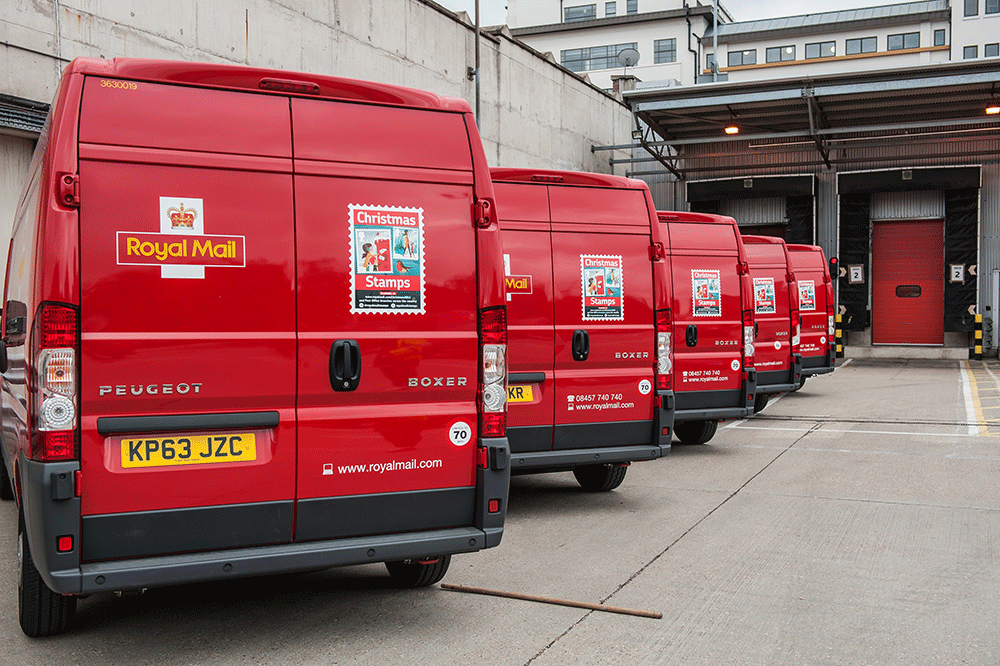
Royal Mail Vans Tout Xmas Stamps

[press release[
‘STAMPS ON VANS’ – FOR THE FIRST TIME EVER ROYAL MAIL SPECIAL STAMPS TO FEATURE ON ITS VANS IN TOWNS AND CITIES ACROSS THE COUNTRY

xmasvans02Royal Mail is, for the first time, to feature images of its Special Stamps on a number of its vehicles

The set of six Christmas Special Stamps will be the first to be publicised in this way from Monday 10 November

Around 1500 vans across the country will feature the images

The stamps will be displayed on vans in 26 towns and cities around the UK including Liverpool, Sheffield, London, Glasgow, Belfast, Cardiff, Plymouth and Leicester
Royal Mail today announced the launch of a campaign that will see, for the first time ever, images of its Special Stamps featured on its delivery vans,

Beginning with the set of six Christmas stamps, which are now on sale, images of the stamps will appear on around 1,500 Royal Mail vans across 26 towns and cities across the UK.

This will be a rolling programme that will incorporate all of the upcoming Special Stamp issues in 2015. There will be a special emphasis on places across the country that have a strong association with the image on the stamp. The images are printed on adhesive vinyls and applied to the vans.

Andrew Hammond, Royal Mail said: “This is the first in what will be an on-going campaign to feature our Special Stamp Programme across the country using our familiar red postal vans, The size and reach of our fleet should help create high levels of public awareness.”

The Christmas stamps will appear in 26 towns and cities:

London
Birmingham
Glasgow
Leeds
Edinburgh
Liverpool
Bristol
Sheffield
Bradford
Cardiff
Manchester
Leicester
Stoke-on-Trent
Hull
Coventry
Nottingham
Belfast
Plymouth
Sunderland
Brighton
Derby
Wolverhampton
Southampton
Aberdeen
Bangor
Inverness

USPS Revenue Up, But Loss Is $5.5B

[press release]
U.S. Postal Service Reports Revenue Increase, $5.5 Billion Loss in Fiscal 2014

  • Shipping and Package Services Revenue Up 9.1 Percent
  • January 2014 Price Increase and Shipping and Packages Growth Drives Operating Revenue up $569 Million
  • Persistent Losses Reaffirm Need for Comprehensive Legislative Reform

usps_mailboxpickupWASHINGTON — Due to a cyber-security intrusion that the U.S. Postal Service announced on Nov. 10, management and external auditors are currently reviewing significant financial applications to confirm that the incident did not compromise the financial data needed to file the Postal Service’s fiscal 2014 Form 10-K. There is no indication at this time that the data was compromised, but out of an abundance of caution, the Postal Service will delay filing of the 10-K—which it had planned to do  today—until review procedures are complete. The review, which has already begun, is expected to take several more weeks. View the Postal Service’s cyber intrusion statement for more information about the incident.

In the interest of transparency, however, the Postal Service presented unaudited financial results for fiscal 2014 at its open Board of Governors meeting today and will again present the unaudited financial results at a financial briefing call today at 11 a.m.

At the Board meeting, the Postal Service reported that operating revenue increased $569 million in fiscal year 2014 (Oct. 1, 2013 – Sept. 30, 2014). Excluding a one-time adjustment to revenue of $1.3 billion in 2013 resulting from a change in accounting estimate for Forever stamps, 2014 operating revenue would have increased by $1.9 billion. This revenue growth resulted from the January 2014 price increase and strong growth in the Shipping and Packages business. Offsetting this positive news, however, were legislative burdens and constraints that contributed to a $5.5 billion net loss in 2014. This eighth consecutive annual net loss underscores the need for comprehensive legislation to repair the Postal Service’s broken business model.

The net loss includes $5.7 billion for the prefunding requirement of the Postal Service Retiree Health Benefit Fund and an additional $1.2 billion in non-cash workers’ compensation expense, consisting of $485 million related to changes in interest rates and $697 million of other non-cash workers’ compensation expense. These items are outside of management’s control.

“We have grown our revenue for two years in a row, primarily through growth in our package business and price changes, and we are making strong progress in many core areas of our business — from operational performance, to data and technology use, to developing and marketing new products and services — all of which are helping to build a strong foundation for the future of the organization,” said Postmaster General and CEO Patrick R. Donahoe. “While we still have major issues to resolve with regard to our business model and legislative constraints, our message today is about momentum and progress.”

“In 2014 we set another record for productivity,” said Chief Financial Officer and Executive Vice President Joseph Corbett. “Even as we continued growing our package business, we reduced work hours, transportation expenses, and compensation and benefits expenses.

“The legally mandated $5.7 billion prefunding requirement for the Postal Service Retiree Health Benefit Fund contributed to our continuing losses,” said Corbett. “Due to lack of sufficient cash, we were forced to default on the $5.7 billion prepayment, underscoring the need for legislative change.”

The Postal Service’s key legislative requirements:

  • Require within the Federal Employees Health Benefit Program a set of specific health care plans that would fully integrate with Medicare and virtually eliminate the retiree health benefits unfunded liability and eliminate the need for multibillion dollar annual prefunding.
  • Adjust the Federal Employee Retirement System payment amount using Postal Service specific demographic and salary growth assumptions and refund any existing surplus.
  • Adjust required delivery frequency (six-day packages/five-day mail).
  • Streamline governance model and eliminate duplicative oversight.
    Provide authority to expand products and services.
  • Require a defined contribution retirement system for future Postal Service employees.
  • Require arbitrators to consider the financial condition of the Postal Service.
  • Reform workers’ compensation programs.

Results of Operations
Highlights of yearly results compared to the same period last year:
Operating revenue was $67.8 billion compared to $67.2 billion in 2013. Without the 2013 one-time adjustment as noted above, 2014 operating revenue increased by $1.9 billion over last year’s revenue. As a result of growth in our package business and the price increases implemented, this is the second consecutive year of revenue growth, reversing a four-year trend of revenue declines that began in 2008.

Total mail volume was 155.4 billion pieces compared to 158.2 billion pieces a year ago, a decrease of 2.8 billion pieces or 1.8 percent. Shipping and Package Services volume grew by 300 million pieces, an increase of 8.1 percent. First-Class Mail, our most profitable service line, and Standard Mail volume decreased by 2.2 billion and 495 million pieces, respectively.

Operating expenses were $73.2 billion in 2014 compared to $72.1 billion in 2013. A non-cash adjustment for interest rate changes associated with workers’ compensation caused $2.2 billion of the increase year over year. This was offset by a $737 million reduction in other workers’ compensation expense and a $708 million reduction in compensation and benefits expenses.

Expenses include the required $5.7 billion contribution to the retiree health care benefits fund that the Postal Service was unable to make by the due date of Sept. 30, 2014. Unless legislation reforms the retiree health care benefits program, the Postal Service will likely be forced to default on its prefunding obligations in 2015 and 2016.

The resulting net loss for the 2014 fiscal year was $5.5 billion compared to a net loss of $5.0 billion in 2013.

U.S. Names First Woman as Postmaster General

[press release]
Postal Service Board of Governors Selects Megan Brennan as 74th Postmaster General and CEO of the United States Postal Service

megan_brennan_scratchWASHINGTON — The U.S. Postal Service Board of Governors today announced the appointment of Megan J. Brennan, the current chief operating officer of the Postal Service, as the 74th Postmaster General and CEO.

Speaking at a public meeting of the Board this morning, Mickey D. Barnett, chairman of the Postal Service Board of Governors, praised Brennan – who will become the first woman to be Postmaster General – as the ideal choice to replace the current Postmaster General, Patrick R. Donahoe, who will be retiring in early 2015.

“Megan has demonstrated outstanding vision, leadership and executive ability in her role as chief operating officer, and has been extraordinarily successful in managing the operations of the Postal Service,” said Barnett.” She is highly regarded throughout the Postal Service and among the broader community of our major customers and business partners – and rightly so.”

As chief operation officer, Brennan is responsible for the day-to-day activities of 491,000 career employees working in more than 31,000 facilities supported by a fleet of more than 200,000 vehicles. She is responsible for all Postal Service operations, including mail processing, transportation, delivery and retail operations.

“As the head of operations, Megan has led important initiatives to provide Sunday delivery services, improved tracking, and greater predictability and reliability,” said Barnett. “She has also been highly successful in rationalizing our mail processing, delivery and retail operations.”

Barnett also commended Brennan’s role in maintaining a high delivery performances in the face of a significant and continued reduction in workforce and resources.  “Megan has managed some very large, complex organizational changes and the Postal Service never missed a beat in terms meeting customer expectations,” said Barnett. “She instills great confidence in the ability of the organization to succeed and achieve its business goals.”

“I am deeply honored and humbled to take on this role at such an exciting time for the organization,” said Brennan. “The Postal Service plays a vital role in America’s society and economy and I’m looking forward to strengthening that role and meeting the demands of a rapidly evolving marketplace in the years ahead.”

Megan J. Brennan was named Chief Operating Officer and executive vice president in December 2010. Reporting directly to the Postmaster General, Brennan has led the continuous improvement of the postal network operation as well as the allocations of people and resources.

Previously she was vice president of Eastern Area Operations. As the senior postal official she oversaw an area that encompassed Pennsylvania, Ohio, West Virginia, Delaware, Kentucky, Central and South Jersey, Western New York and parts of Virginia and Indiana.  A 28-year veteran of the Postal Service, Brennan served as vice president of Northeast Area Operations from May 2005 until being named vice president of Eastern Area Operations.

Brennan joined the Postal Service in 1986 as a letter carrier in Lancaster, Pennsylvania, and began her management career as a delivery and collection supervisor.   Brennan is a graduate of Immaculata College in Pennsylvania. She is a Sloan Fellow and holds a Master of Business Administration degree from the Massachusetts Institute of Technology.