The Scott catalogue numbers for these stamps are 5295 $1, 5296 $2 and 5297 $5.
The USPS announced these three stamps on May 10th, with an issue date of Wednesday, June 27th in Bellefonte, PA, the headquarters of the American Philatelic Society. That is in the middle of its annual Summer Seminar Week.
Added June 14: The date and location for the issuance of these stamps was suggested by APS executive director Scott English.
The information from the USPS:
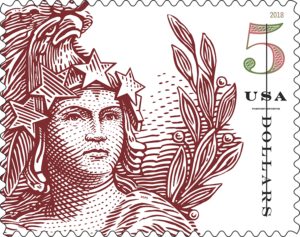
These three designs feature the head of the statue that tops the United States Capitol dome, in a modern interpretation of an engraved vignette originally cre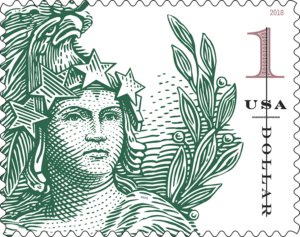 ated for a 1923 stamp ($5 Head of Freedom Statue). The engraved artwork was originally created for the U.S. Bureau of Engraving and Printing by John Eissler (1873–1962). Rendered in emerald green ($1), indigo ($2) and brick red ($5), the tightly cropped enlargements highlight the solid and dashed lines and the crosshatching characteristic of engraved illustrations.
American sculptor Thomas Crawford (1814–1857) created the allegorical Statue of Freedom during the mid-1850s. She wears a variation on a Roman helmet — circled by stars, topped with an eagle head, and embellished by feathered plumes meant to evoke Native American headdress. Installation of the statue onto the new Capitol dome was 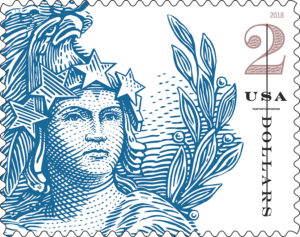 completed in 1863.
All three stamps were printed in intaglio and were designed by Art Director Greg Breeding.
$1 Statue of Freedom
The U.S. Postal Service will be issuing the $1 Statue of Freedom stamp, offering a modern take on vintage patriotic stamp art for use on packages, large envelopes and other mailings. $1 Statue of Freedom will be sold in panes of 10 stamps.
$2 Statue of Freedom
 The Postal Service will be issuing the $2 Statue of Freedom, also offering a modern take on vintage patriotic stamp art for use on packages, large envelopes and other mailings. $2 Statue of Freedom will be sold in panes of 10 stamps.
$5 Statue of Freedom
The Postal Service will be issuing the $5 Statue of Freedom for use on packages, large envelopes and other mailings. $5 Statue of Freedom will be sold in panes of four stamps.
Updated May 25th:
On June 27, 2018, in Bellefonte, PA, the U.S. Postal Service will issue the $1, $2, and $5 Statue of Freedom definitive stamps in one design each. The $1 and $2 Statue of Freedom stamps will be issued in a pressure-sensitive adhesive (PSA) pane of 10 stamps (Items 114200 and 114300). The $5 Statue of Freedom stamp will be issued in a PSA pane of 4 stamps (Item 117900). All three will go on sale nationwide June 27, 2018.
The $1, $2, and $5 Statue of Freedom stamps offer a modern take on vintage patriotic stamp art for use on packages, large envelopes, and other mailings. The design features the head of the statue that tops the U.S. Capitol dome in artwork based on an engraved vignette originally created for a 1923 stamp ($5 Head of Freedom Statue). The tightly cropped enlargement, rendered in emerald green, indigo, and brick red, highlights the solid and dashed lines as well as the cross-hatching characteristic of engraved illustration. These stamps were printed in intaglio. Art director Greg Breeding designed the stamps using John Eissler’s engraved artwork.
Availability to Post Offices: Item 114200 and 114300, $1 and $2 Statue of Freedom PSA Pane of 10 Stamps and Item 117900 $5 Statue of Freedom PSA Pane of 4 Stamps: Stamp Fulfillment Services will not make an automatic push distribution to Post Offices.
How to Order the First-Day-of-Issue Postmark:
Customers have 120 days to obtain the first-day-of-issue postmark by mail. They may purchase new stamps at their local Post Office or at the Postal Store website at usps.com/shop. They must affix the stamps to envelopes of their choice, address the envelopes (to themselves or others), and place them in a larger envelope addressed to:
FDOI – Statue of Freedom Stamps
USPS Stamp Fulfillment Services
8300 NE Underground Drive, Suite 300
Kansas City, MO 64144-9900
After applying the first-day-of-issue postmark, the Postal Service will return the envelopes through the mail. There is no charge for the postmark up to a quantity of 50. There is a 5-cent charge for each additional postmark over 50. All orders must be postmarked by October 27, 2018.
No locally produced items are authorized. Only merchandise that has been approved and assigned an item number by Headquarters Retail Marketing may be produced and sold.
Technical Specifications:
Issue: $1 Statue of Freedom Stamp
Item Number: 114200
Denomination & Type of Issue: $1 Definitive
Format: Pane of 10 (1 design)
Series: N/A
Issue Date & City: June 27, 2018, Bellefonte, PA 16823
Designer: Greg Breeding, Charlottesville, VA
Art Director: Greg Breeding, Charlottesville, VA
Typographer: Greg Breeding, Charlottesville, VA
Modeler: Sandra Lane/Michelle Finn
Manufacturing Process: Offset, Intaglio, Microprint
Printer: Banknote Corporation of America
Printed at: Browns Summit, NC
Press Type: Alprinta 74
Stamps per Pane: 10
Print Quantity: 100,000,000 stamps
Paper Type: Phosphor Tagged Paper, Block
Adhesive Type: Pressure-sensitive
Processed at: Banknote Corporation of America, Browns Summit, NC
Colors: Custom Green, Custom Black, Custom OVI
Stamp Orientation: Horizontal
Image Area (w x h): 1.42 x 1.085 in./36.07 x 27.56 mm
Overall Size (w x h): 1.56 x 1.225 in./39.62 x 31.12 mm
Full Pane Size (w x h): 4.85 x 8.27 in./123.19 x 210.06 mm
Press Sheets Size (w x h): 9.70 x 24.81 in./246.38 x 630.17 mm
Plate Size: 120 stamps per revolution
Plate Numbers: B followed by three (3) single digits
Marginal Markings:
Front: Plate Block Number
Back: ©2018 USPS • USPS logo • 10 Barcodes (114200) • Plate position diagram • Promotional text
Technical Specifications:
Issue: $2 Statue of Freedom Stamp
Item Number: 114300
Denomination & Type of Issue: $2 Definitive
Format: Pane of 10 (1 design)
Series: N/A
Issue Date & City: June 27, 2018, Bellefonte, PA 16823
Designer: Greg Breeding, Charlottesville, VA
Art Director: Greg Breeding, Charlottesville, VA
Typographer: Greg Breeding, Charlottesville, VA
Modeler: Sandra Lane/Michelle Finn
Manufacturing Process: Offset, Intaglio, Microprint
Printer: Banknote Corporation of America
Printed at: Browns Summit, NC
Press Type: Alprinta 74
Stamps per Pane: 10
Print Quantity: 30,000,000 stamps
Paper Type: Phosphor Tagged Paper, Block
Adhesive Type: Pressure-sensitive
Processed at: Banknote Corporation of America, Browns Summit, NC
Colors: Custom Blue, Custom Black, Custom OVI
Stamp Orientation: Horizontal
Image Area (w x h): 1.42 x 1.085 in./36.07 x 27.56 mm
Overall Size (w x h): 1.56 x 1.225 in./39.62 x 31.12 mm
Full Pane Size (w x h): 4.85 x 8.27 in./123.19 x 210.06 mm
Press Sheets Size (w x h): 9.70 x 24.81 in./246.38 x 630.17 mm
Plate Size: 120 stamps per revolution
Plate Numbers: B followed by three (3) single digits
Marginal Markings:
Front: Plate Block Number
Back: ©2018 USPS • USPS logo • 10 Barcodes (114300) • Plate position diagram • Promotional text
Technical Specifications:
Issue: $5 Statue of Freedom Stamp
Item Number: 117900
Denomination & Type of Issue: $5 Definitive
Format: Pane of 4 (1 design)
Series: N/A
Issue Date & City: June 27, 2018, Bellefonte, PA 16823
Designer: Greg Breeding, Charlottesville, VA
Art Director: Greg Breeding, Charlottesville, VA
Typographer: Greg Breeding, Charlottesville, VA
Modeler: Sandra Lane/Michelle Finn
Manufacturing Process: Offset, Intaglio, Microprint
Printer: Banknote Corporation of America
Printed at: Browns Summit, NC
Press Type: Alprinta 74
Stamps per Pane: 4
Print Quantity: 5,000,000 stamps
Paper Type: Phosphor Tagged Paper, Block
Adhesive Type: Pressure-sensitive
Processed at: Banknote Corporation of America, Browns Summit, NC
Colors: Custom Red, Custom Black, Custom OVI
Stamp Orientation: Horizontal
Image Area (w x h): 1.42 x 1.085 in./36.07 x 27.56 mm
Overall Size (w x h): 1.56 x 1.225 in./39.62 x 31.12 mm
Full Pane Size (w x h): 4.85 x 4.17 in./123.19 x 105.92 mm
Press Sheets Size (w x h): 9.70 x 20.85 in./246.38 x 529.59 mm
Plate Size: 80 stamps per revolution
Plate Numbers: B followed by three (3) single digits
Marginal Markings:
Front: Plate Block Number
Back: ©2018 USPS • USPS logo • 4 Barcodes (117900) • Plate position diagram • Promotional text
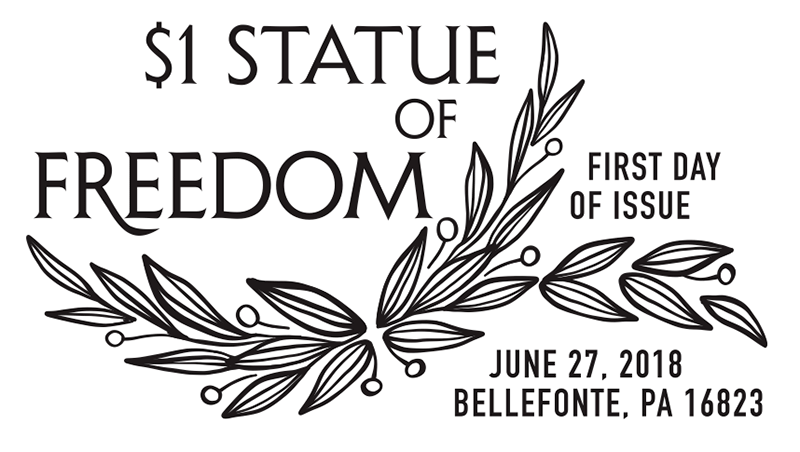
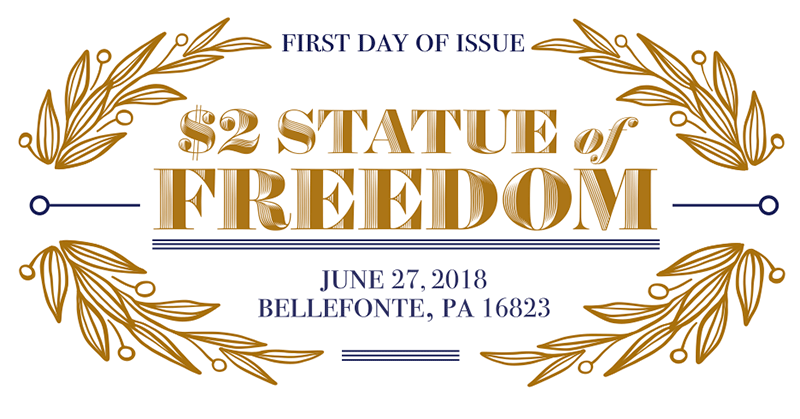
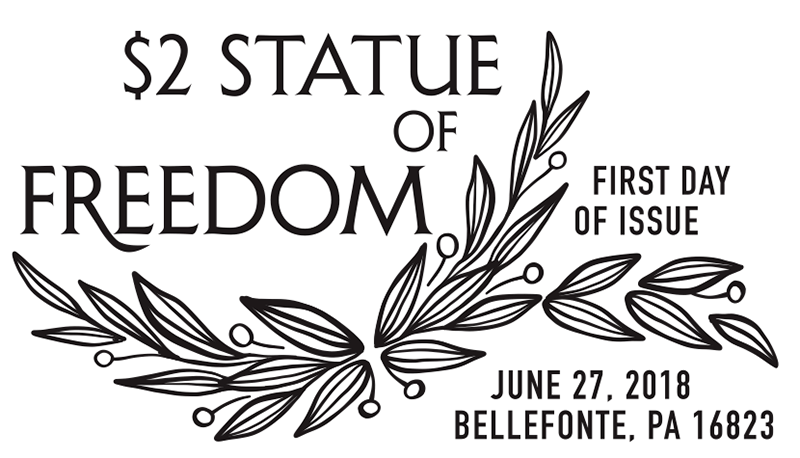
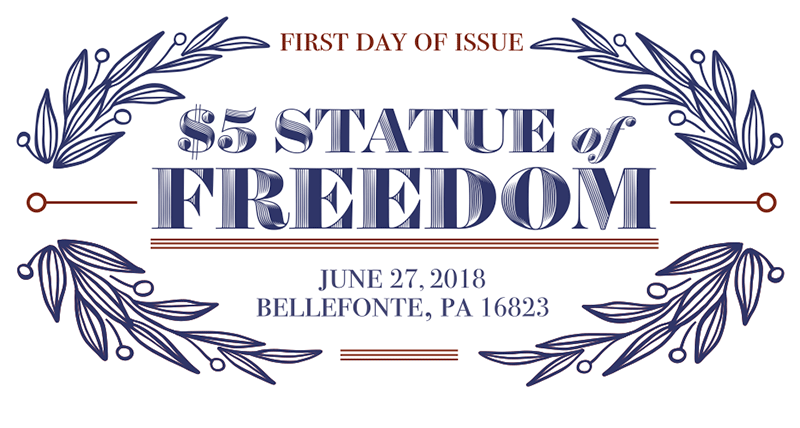
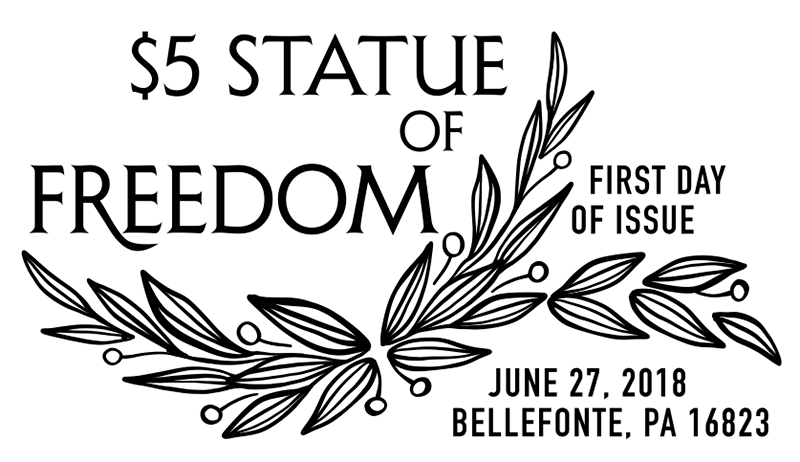
Thanks to Mary, here are the first-day postmarks. They all appear to be approximately three inches in width. 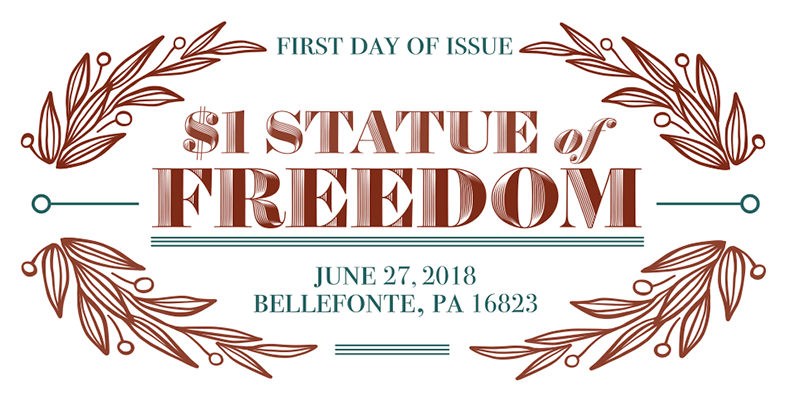

 tices in out-of-the-way literature.
 The lust of which Allpass speaks is one that every stamp collector can identify with, though the outcome of the story teaches that lust, if indulged, can have a harsh price. May we all remember that stamp collecting is a hobby, not a matter of life-and-death!
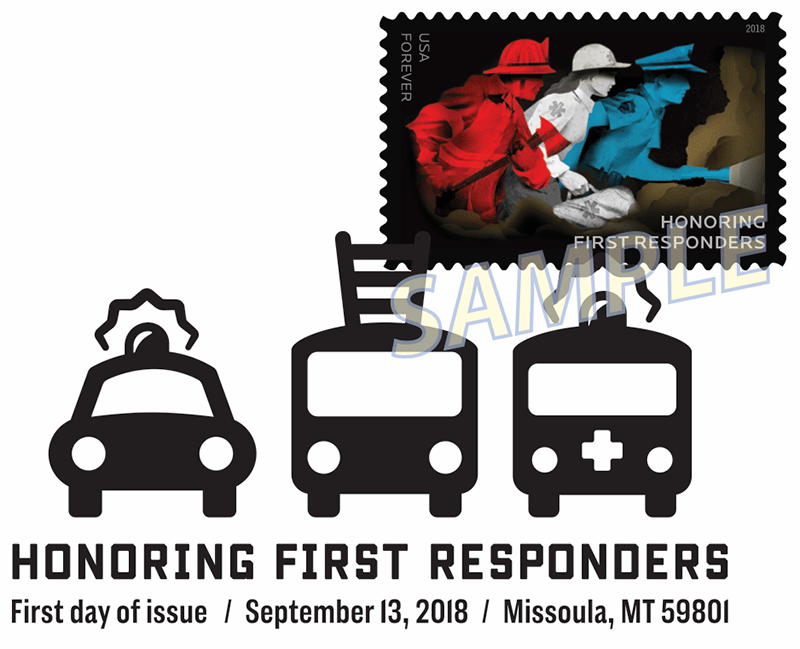
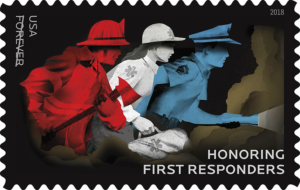 On September 13, 2018, in Missoula, MT, the U.S. Postal Service® will issue the Honoring First Responders stamp (Forever® priced at the First-Class Mail® rate) in one design, in a pressure-sensitive adhesive pane of 20 stamps (Item 478100). The stamp will go on sale nationwide September 13, 2018.
 The digital illustration on this stamp is a symbolic scene that shows three first responders in profile, facing right, as they race into action. From left to right, the first figure is a firefighter carrying an axe. The second figure is an EMS worker, with the EMS Star of Life visible on her cap, upper arm and emergency bag. The third figure is a law-enforcement officer shining a flashlight toward unknown danger ahead. The dark background and signs of smoke in around the figures suggest the wide range of situations that demand the immediate attention of a first responder.
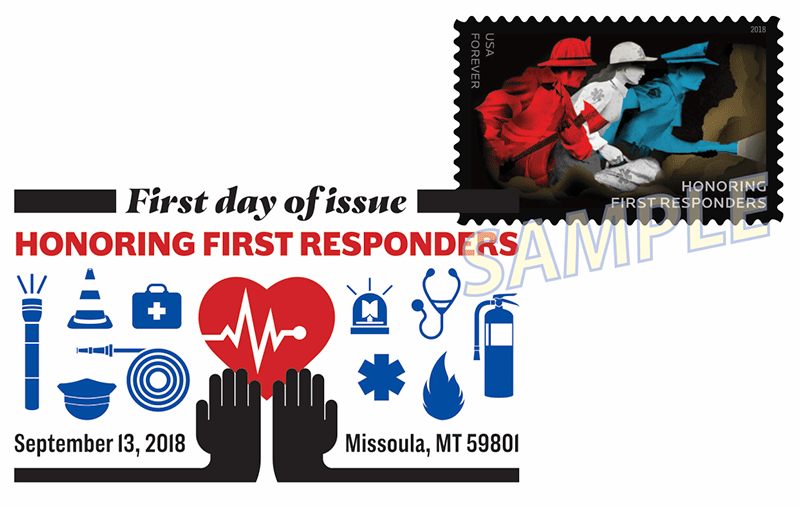 It measures 2.43″ x 1.43″. Here is the B&W pictorial postmark:
 It measures 2.79″ x 1.55″.
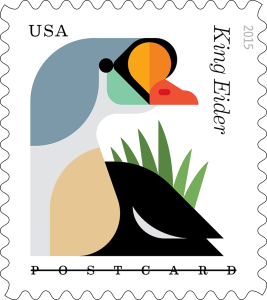 The first week in May marks National Postcard Week. Early in the 20th century, postcard enthusiasts sent “Postcard Day” postcards on May 1st, but the modern observance began in 1984 as a way to promote postcard collecting and sending. Don’t toss that shoebox of old postcards you found in grandma’s attic-they tell stories about the past and can be valuable. And people always like to get personal mail these days.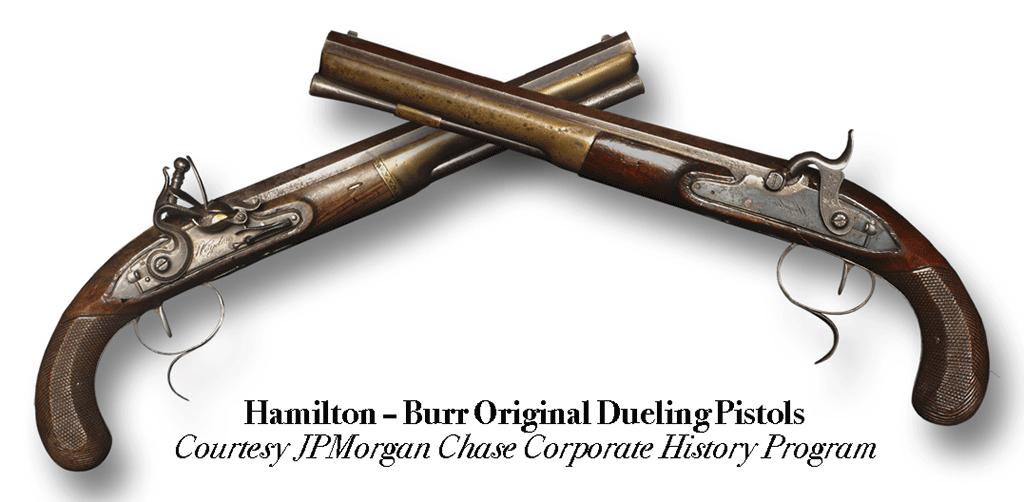
 The original dueling pistols used by Hamilton, former secretary of the treasury and retired two-star general, and Vice President Aaron Burr in the duel that resulted in Hamilton’s death are on loan to the museum from JPMorgan Chase & Co. This rare public showing represents the first time the pistols have been on public display in the Washington area.
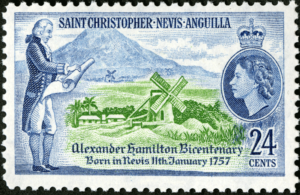 Hamilton was born on the British Caribbean island of Nevis in 1755, deserted by his father at age 11 and raised by his mother who died when he was 13. Shortly after his arrival in New York in 1772, long-simmering tensions between Great Britain and its North American colonies erupted into open war. An orphan with few influential connections, Hamilton saw the American Revolution as an opportunity for rapid social advancement. He committed to the revolution and decided he and America would sink or swim together.
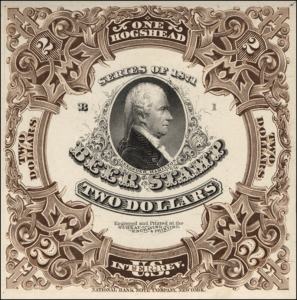 “In a Federalist-style gallery within the museum’s William H. Gross Stamp Gallery, visitors will see objects highlighting Hamilton’s extraordinary influence on our country,” said Elliot Gruber, director of the museum. “Visitors of all ages will be drawn in to the man behind the musical that is sweeping the nation.”
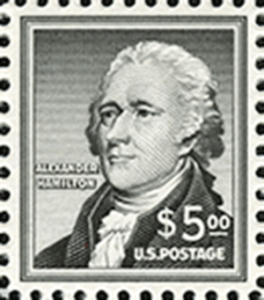 The pair of flintlock pistols have been described by Hamilton scholar and author Ron Chernow as having “the best claim to authenticity” as the pistols used in the famous duel.
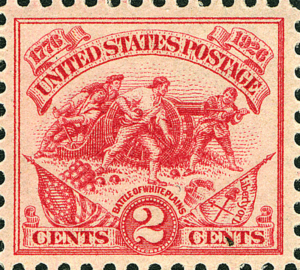 ticket, and later ordered Burr’s arrest on treason charges stemming from an alleged plot to set up an independent country in the Louisiana Purchase territories. Burr was eventually acquitted of murder, dueling and treason, and he resumed a modest law practice in New York but died bankrupt and living in a Staten Island boarding house in 1836.
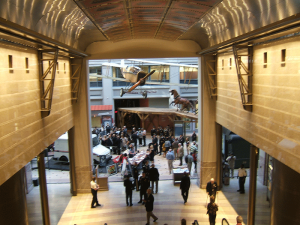 The National Postal Museum is devoted to presenting the colorful and engaging history of the nation’s mail service and showcasing one of the largest and most comprehensive collections of stamps and philatelic material in the world. It is located at 2 Massachusetts Ave. N.E., Washington, D.C., across from Union Station. The museum is open daily from 10 a.m. to 5:30 p.m. (closed Dec. 25). For more information about the Smithsonian, call (202) 633-1000 or visit the museum website at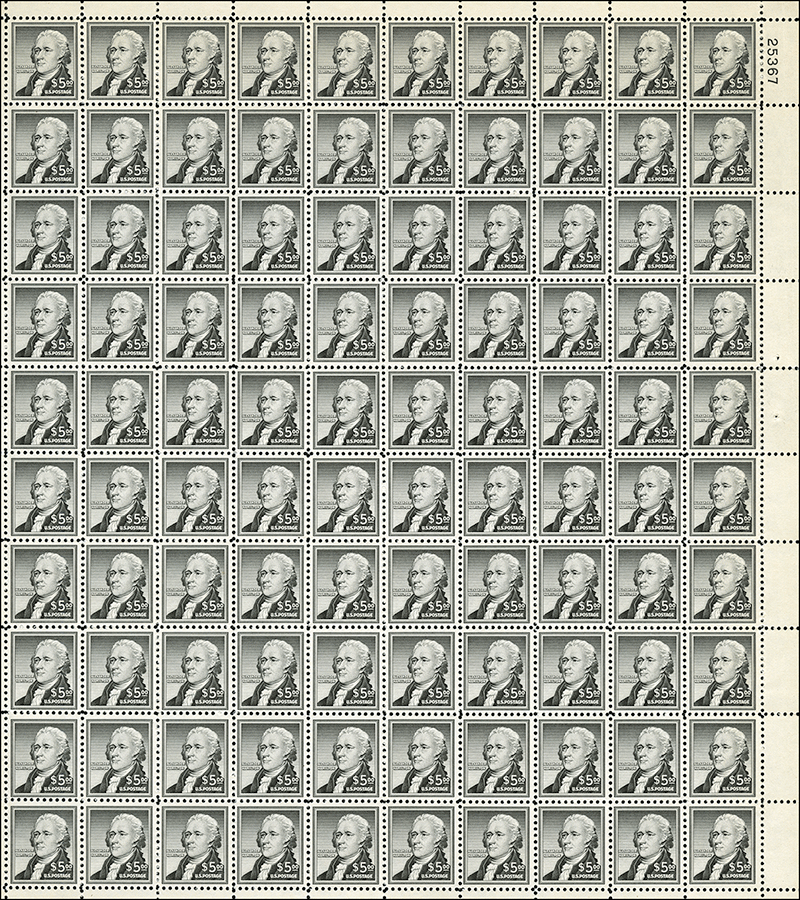
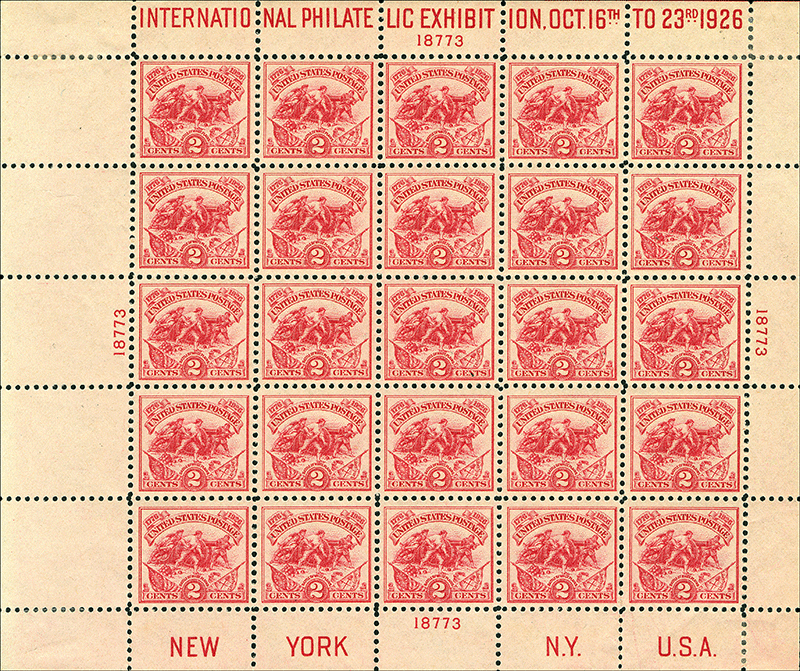
 The members of The Royal Philatelic Society London were able to admire the wonderful collection of Cayman Islands built up by Captain James Podger FRPSL at the meeting held on 3 May.
 The American Topical Association’s highest award, Distinguished Topical Philatelist, is being awarded this year to Cletus Delvaux. A 39-year ATA member, Delvaux is a prolific philatelic writer and editor.
 5275 (50¢) Mister Rogers
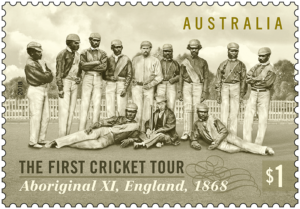 Australia Post is releasing a stamp issue to commemorate 150th anniversary of the sporting achievements of the 1868 Aboriginal XI – the first cricket team from Australia to tour internationally.
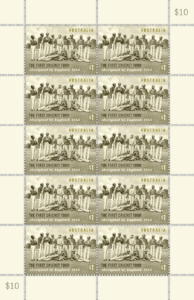 Australia Post Philatelic Manager, Michael Zsolt said: “This was an extraordinary achievement by these players, all of whom, aside from the captain, had only been playing the game of cricket for a few years”.
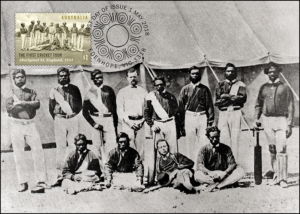 Most players returned to the restrictions of station life following the tour, with few continuing to play cricket. In 2002, the 1868 Aboriginal XI was posthumously recognised in the Sport Australia Hall of Fame as the first cricket team from Australia to tour England. In 2004, each player was posthumously assigned an official Cricket Australia number, to honour their ground-breaking achievements.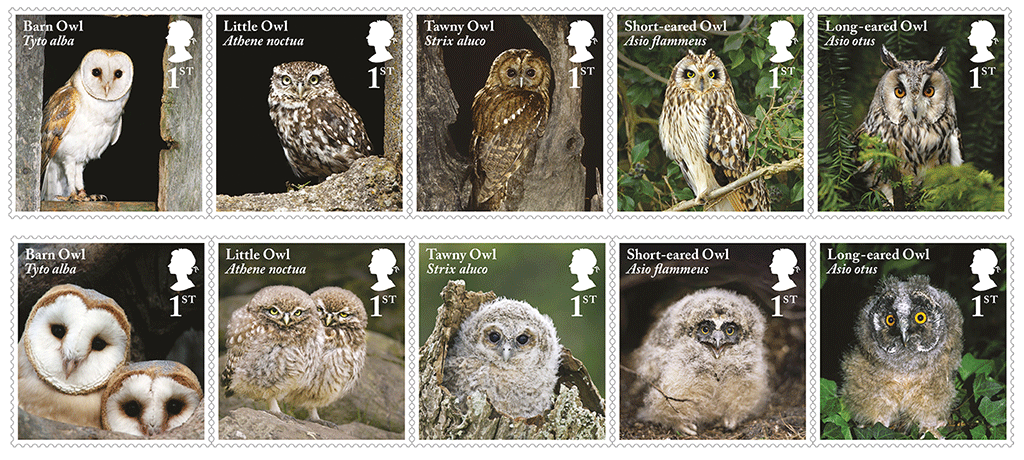
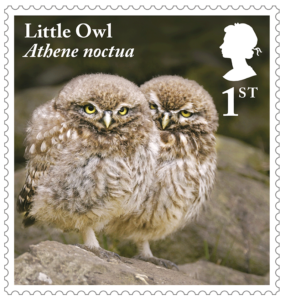
 From the mostly nocturnal Barn Owl, to the Short-eared Owl that hunts in the daylight, the stamps depict five species of Owls that breed in the UK.
 An exemplary sense of hearing is also essential for a bird that hunts in near-total darkness, and whose prey is often concealed under vegetation (or sometimes even snow). All owls have acute hearing, but it is most developed in strictly nocturnal woodland hunters, like the Long-eared Owl.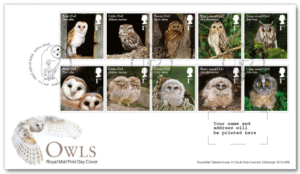
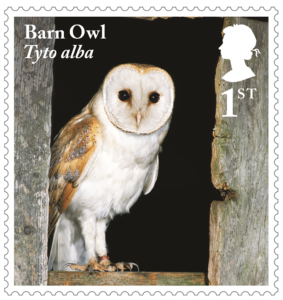
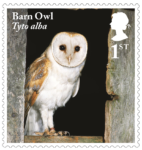 Barn Owl: Also known as the ‘white owl’ and the ‘screech owl’, the Barn Owl is perhaps the UK’s most familiar owl species – most often encountered as a ghostly shape caught in car headlights, or heard rather than seen with its unearthly screaming call. The Barn Owl hunts over all kinds of open country, and tends to nest on ledges inside farm buildings. It is unmistakeable with its white and gold plumage, heart-shaped face, long legs and small dark eyes. While it is mostly
 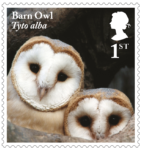 nocturnal, it can also be seen out hunting on summer evenings. It hunts in flight, flying into the breeze for uplift and often hovering before making its strike – its prey mainly located by sound. Barn Owls became very rare following widespread use of the insecticide DDT in the 20th century, but their numbers are now recovering.
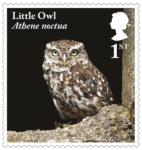 Little Owl: This small, long-legged owl with its bright yellow eyes, white-spotted brown plumage and fiercely frowning expression is common in continental Europe, but not native to the UK. It was deliberately introduced here by ornithologists in the 19th century and has spread widely across southern Britain. Little Owls inhabit woodland and parkland with open grassy areas nearby, and are often seen by day, perched in pairs close to their nest site (usually a hole or crack in a mature
 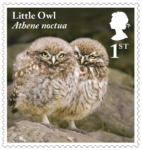 tree), or flying from tree to tree with a distinctive bounding flight action. They hunt mainly insects, dropping on them from a perch or chasing them on the ground. The Little Owl is the national bird of Greece, and has long been recognised as the emblem of Athene, the Greek goddess of wisdom.
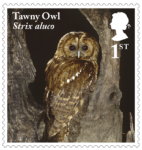 Tawny Owl: The lovely quavering hoot of the Tawny Owl is a familiar night-time sound in woodland, parks and even gardens, but although this is the UK’s most common owl, it is rarely seen, being strictly nocturnal. Tawny Owl pairs stay in their territories year-round and over time build up a great familiarity with the terrain, with favourite hunting watchpoints, roosting sites and a nest site that will be used every year. The owlets leave the nest while still downy and flightless, and climb
 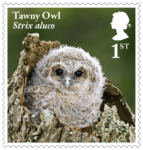 to safe spots among the branches where they wait for food from their parents. The largest of the UK’s owl species, the Tawny Owl is a powerful predator and other owls number among its prey. It is found throughout Great Britain, but is absent from Ireland.
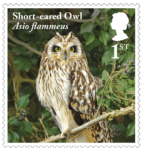 Short-eared Owl: A true nomad, the Short-eared Owl is one of the most widely distributed birds in the world, occurring on all continents except Antarctica. Individuals may travel great distances, stopping to breed where feeding conditions are good. In Britain the species breeds mainly on upland moor in the north and west, but becomes more widespread in winter (and more numerous, as birds arrive from mainland Europe, sometimes in large numbers). A diurnal owl of open moorland
 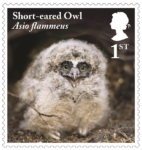 and rough grassland, it hunts on the wing, patrolling back and forth close to the ground, and dropping feet-first upon voles and other prey. In some winters, half a dozen or more may be seen ‘working’ the same field, with coastal areas particularly likely to attract large numbers. The Short-eared Owl is a long-winged owl with grey-brown and sandy, heavily streaked plumage, paler than the similar Long-eared Owl, and with yellow, staring eyes and tiny ear tufts.
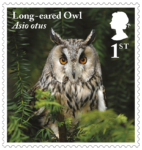 Long-eared Owl: This beautiful, slim, orange-eyed owl is named after its large, cat-like ear tufts, which help to break up its outline as it roosts by day. In the UK it breeds mainly in upland pine forests, but in Ireland (where it does not face competition from Tawny Owls) it is more common and lives in a wider range of habitats. Though the Long-eared Owl nests in woodland, often in the old nest of another bird, it prefers to
 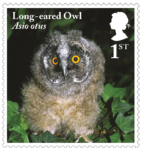 hunt on adjacent open countryside. Its prey mainly comprises small rodents, which it catches either by pouncing from a perch or by searching in flight. The waiting chicks beg with a distinctive ‘squeaky-gate’ call. Long-eared Owls disperse widely in winter, with residents joined by visitors from the Continent, and form winter roosts (which may hold ten or more birds) in thick scrubland.