By John M. Hotchner
Stamp collecting is dead! So said the venerable New York Times on September 29, 2017, in an op-ed titled “Stamped Out” by Eugene L. Meyer. The sub-head said, “In the Internet age, philately has lost its once-worldly charms.”
 In the April 2017 issue of American Stamp Dealer & Collector, the American Stamp Dealers Association magazine. I wrote a response to a similar voice of doom published in the Wall Street Journal. What I said then bears repeating now, what follows is an update of what I said in April 2017, under the heading, “A Waning Hobby? Not On Your Life!” I don’t as a matter of practice repeat columns or themes, but I’ll make an exception here as the column will be new to most readers:
What follows refers to an article in the May 31, 2016 issue of the Wall Street Journal titled “The Last Bastion of a Waning Hobby.” It talked about the author’s visit to the Champion Stamp Company, which he described as the last remaining street level stamp shop in New York City.
So the question for today is: “Is Stamp Collecting a Waning Hobby or Stamped Out?” My answer is that the hobby hit bottom some years ago, but I believe it is on the way back up. But it is coming back as a hobby nearly unrecognizable to those of us who began when stamp collecting was properly described as the King of Hobbies, and the Hobby of Kings.
 In other words, it has evolved in a great many ways. Let’s look at some of the changes over the (can it be?) 70 years since I began to collect:
The “product” has changed. What used to be mostly needs-based issuance programs, worldwide, with mostly monocolor stamps, has turned into a multicolor, collector- and profits-driven enterprise to which postal administrations cater shamelessly. Today, thousands of stamps, souvenir sheets, varieties and more are issued that will never see the country from which they purport to come. And the only mail you will see them on is the rare first day cover that has actually gone through the post.
In addition, the subjects with heft — history, national symbols, founders and rulers, and the national points of pride in industry, science, etc. — now make up a much smaller percentage of what is issued. Instead we get birds and flowers, pets, pop culture, international themes that help to sell the product abroad, and other such pap.
What is collected has changed. In the good old days, we collected countries. Some of us even attempted the world. No more. Now it is topicals that rule; with specific time periods of countries rather than the entire country a close second. Covers, a collecting category barely thought about in the mid-20th Century, are now a major draw, and the more involved the collector, the more likely he or she is to include covers.
The demographics of the hobby have changed. It used to be that almost every grade school kid gave the hobby a try. Now, most kids are unfamiliar with stamps, have never been inside a post office, and the concept of writing a letter is as foreign as dialing a rotary telephone. For these reasons, the concept of stamps as a utilitarian product or as a point of pride in country has given way to stamps as art or as a reflection of another interest (e.g. space exploration),
The methods of commerce have changed. The village stamp shop has nearly disappeared. Dealers and sales sites on the Internet have taken their place, along with some continuing periodic bourses and annual stamp show events in and near larger towns and cities. Some dealers are no longer populating bourses at all, or as often; finding that they are doing just fine with an Internet presence. The computer is now an essential tool for collectors.
Even auctions, which continue to do well, have had to set higher minimums for lots in order to cover their catalogs’ production and other business costs; which have also driven up buyers’ and sellers’ commissions.
The need to join a club or society has decreased as the presence of personal computers (and iPads, iPhones and other such tools) has proliferated. So much information and so many resources are available to collectors for free on the Internet that collectors who have never experienced the benefits of receiving a philatelic publication in the mail, philatelic friendships in person, or trading relationships, don’t see the need to pay for being involved in the organized part of the hobby.
The economics of publishing have changed. It is no secret why memberships and subscriptions are down, and costs to subscribers are going up. Paper, printing, and mailing costs are all on the upswing, and have been for the last 20 years. So, the satisfying feeling of receiving and holding hard copy in your hands is rapidly disappearing as philatelic publishing migrates to the Internet. Many of us old timers are adapting, though with some angst; but it is a change that has both positive and negative aspects.
The concept of condition has changed. Because of modern technology, perfection of printing and centering is now not only possible, but expected. And today’s collector has chosen to apply the new standards to old stamps where perfection is seldom seen. This includes the rage for undisturbed gum that has never been sullied by a hinge, a positive mania for Very Fine-or-better centering, and looking down one’s nose at any cancellation that does not look like it was cancelled-to-order.
Stamp collecting no longer looks like an obvious choice for youth, or even millennials. In the ‘40s to ‘70s maybe even a majority of grade schoolers gave stamp collecting a try — even if only to squirrel away a few stamps; just because some of your friends or siblings were doing it; and because the Postal Service supported school stamp clubs. Today, hardly any of the kids you might be friends with are doing it. They are doing electronics, organized sports, hanging out at the mall, and God knows what else that provides much more immediate pleasurable feedback. For some time now, we have been raising generations of kids who want it all NOW. Stamp collecting gives pleasure, but it is mostly a source of delayed gratification as collectors painstakingly build something they can be proud of.
The cost of involvement has changed. Even if a collector is satisfied with average condition and used stamps (and leaving aside the increased number of issuances per year with ever higher face values), the cost of albums and yearly supplements, stock books, glassines, catalogues, and other collecting implements has soared. It can be moderated by making one’s own pages using computer software, but that makes collecting more difficult. Speaking of which…
…Getting started as a novice in collecting just isn’t as easy as it used to be. Several reasons have already been mentioned, but let’s add the high face value of normal postage stamps, let alone stamps for high-value services, which puts the yearly cost of collecting current mint stamps out of the reach of youth and even young marrieds looking for a hobby. Collect used stamps, and they can no longer be removed from the envelopes for which they paid postage — if you can find such envelopes, given that computer-vended postage, meters and other such electronic stamp substitutes have all but pushed real postage stamps out of the mail system. Add to this the fact that stamp collecting is a hobby best passed from one generation to the next one-on-one. How does that happen when today’s stamp collectors won’t go to a stamp club (most of which resemble a retirement community; though a vital one), an ever smaller percentage of the population is serious about collecting, and real live dealers are not available locally to serve as mentors.
The attitude toward stamps as a collectible at the entry level has changed. Collectors used to start collecting because it was fun. If one got serious enough about it later on, then some element of the investing mindset might become part of the equation. But for a long time now, we have been emphasizing the money side of everything to our kids, and they have gotten the message. Even if fun is part of the equation, a weather eye on what the collection will sell for at some future time is now an early consideration — and those who sell are not looking to get back some moderate percentage of their “investment,” they are looking for a profit! And they are bitterly disappointed when they don’t get it — if you believe the letters to the editor columns of the philatelic press.
If there is a common theme to what has been laid out above, it is the effects of the electronic age on both the hobby and on the minds of potential collectors. But there are other themes too; chief among them being the increasing costs of being a collector, the willingness of stamp producers to kill the goose that laid the golden egg by going for short-term profits instead of long-term growth of the base, and the changing nature of the hobby and what collectors want from it.
I said in the introduction that I think the hobby’s popularity has bottomed out and we are on an upswing. The Chicken Littles among us don’t see it, but I think it is true because I think that the hobby and most individual collectors are adapting. The negative influences of the computer and the Internet also have some positives. Information and answers to questions are much easier to get, as our hobby institutions (including the dealer community) adapt to the Internet world. I also think that if stamps are less appreciated as stamps, they are more appreciated as art, and as a reflection of the breadth of our world’s activities.
I think that if stamp collecting is less attractive to kids, it is and can be much more attractive than it used to be to adults in mid-life — if we take the trouble to promote it that way. Finally, I think that the high end of the hobby is just as satisfying as it used to be in terms of the joys of owning wonderful, scarce, and even expensive material. In this way, it is not unlike being a connoisseur of art, wine, rare books, coins or other collectibles.
My conclusion is this: As long as the collector gene is part of the make-up of human beings, the hobby will continue and prosper. It will be different from what we grew up with, and we who are part of it will need to adapt rather than quit in disgust. Our hobby will still need to be passed on to new collectors one-on-one, and each of us has a role in that task.
But it is anything but a “Waning Hobby” or “Stamped Out,” both of which imply that it is just south of extinction! Nothing could be further from the truth!
Should you wish to comment on this column, or have questions or ideas you would like to have explored in a future column, please write to John Hotchner, VSC Contributor, P.O. Box 1125, Falls Church, VA 22041-0125, or email, putting “VSC” in the subject line.
Or comment right here.

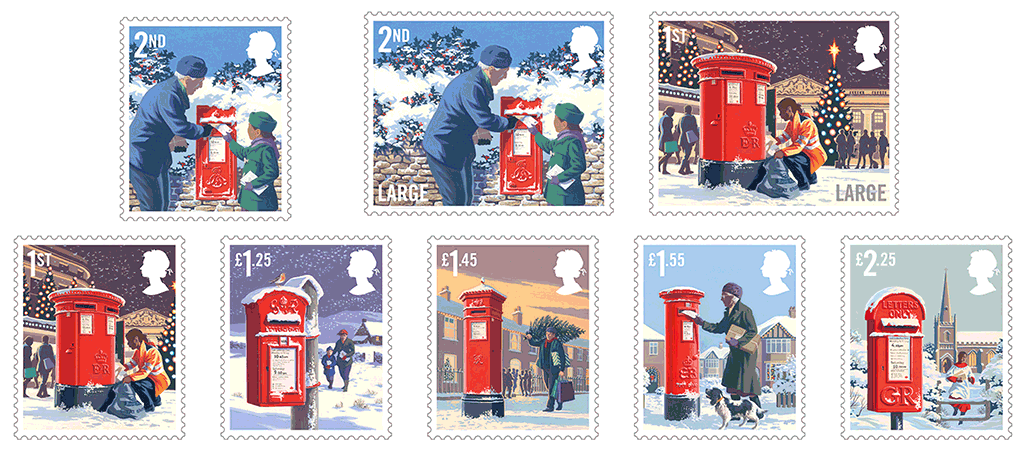

 The six stamp designs celebrate one of the UK’s best-loved Christmas traditions – sending festive greetings in the post to friends and family far and wide.
 one hundred years, there have been six Monarchs, as such, each of the postboxes on the stamps features a Monarch’s cypher.
 stamps will be winging their way around the world delivering Season’s Greetings to friends and family, gives me a real sense of festive joy.”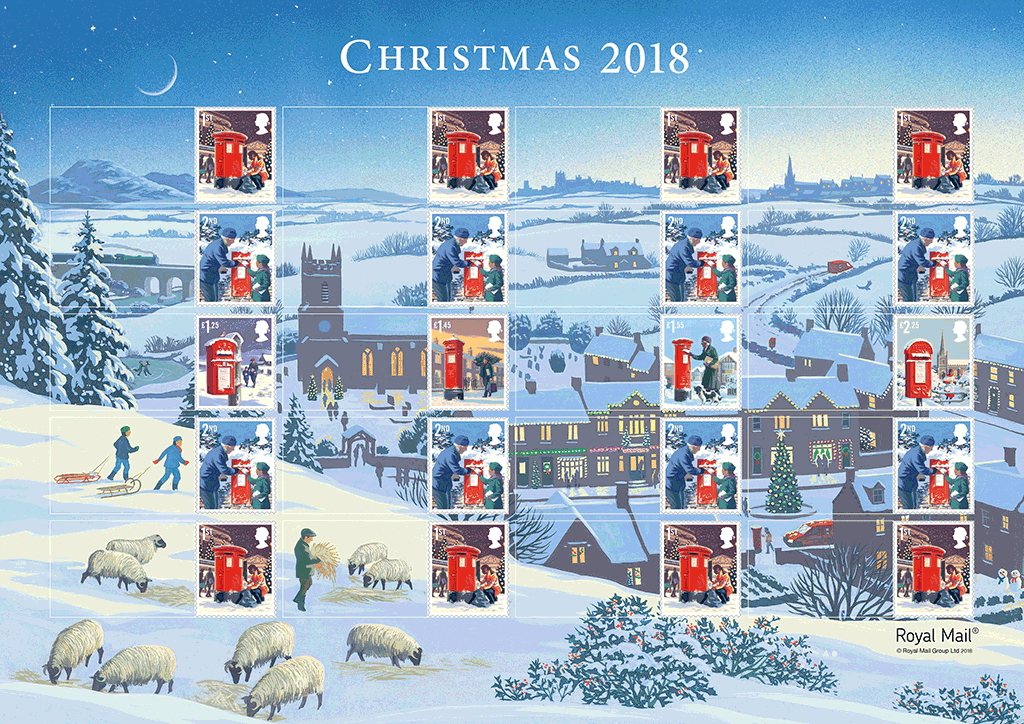
 Royal Mail is encouraging customers to post their festive greetings early, and order their online gifts and shopping well in advance, to help its postmen and women deliver the bumper festive mailbag.
 The American Topical Association has achieved 1st place in the 2018 CG International Philatelic Promotion Awards. The competition concluded at the International Stamp Fair Sindelfingen on 27 October 2018. It was conducted by Auction House Christoph Gärtner GmbH & Co. KG. The honor, consisting of stèle awards, certificates, and a cash prize, was presented for the best overall entry to promote philately. ATA’s entry included an issue of its journal Topical Time – edited by Wayne Youngblood – and its youth activity booklet The Magical World of Stamp Collecting – edited by Aimée Devine with contributions from MaryAnn Bowman. This is the first time the ATA has placed this high in the CG International Philatelic Promotion Award, having won second place in 2016. Your membership in ATA makes its participation in philatelic activities possible. Thank you for your membership support! Learn more about this award at
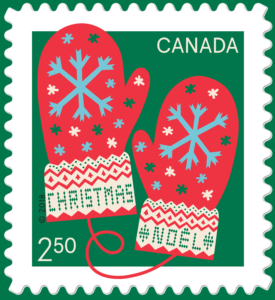
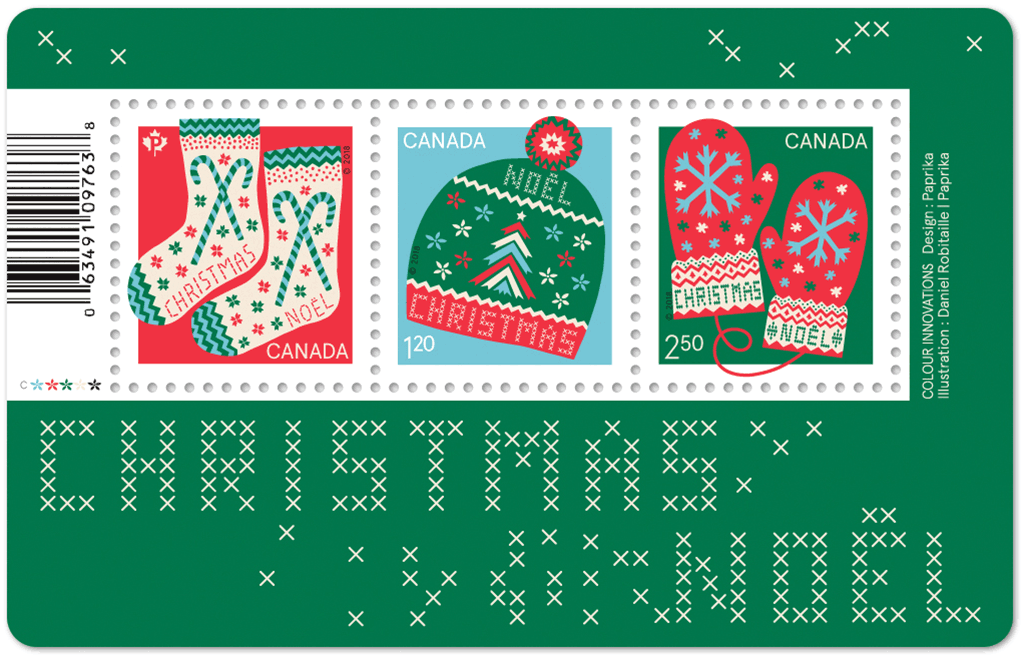
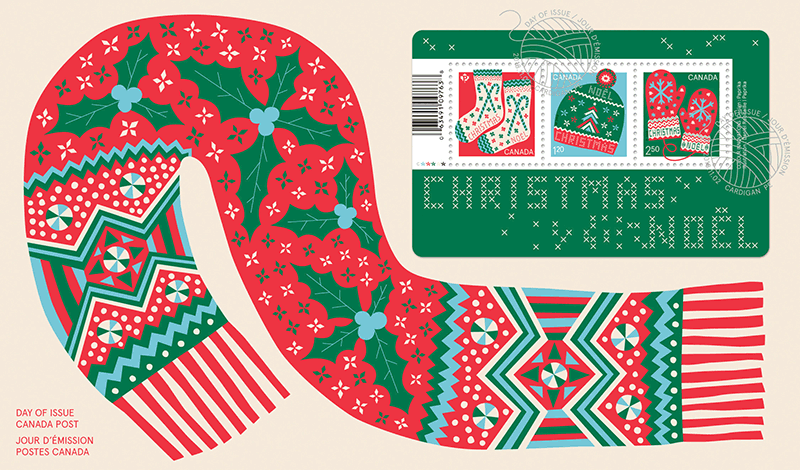
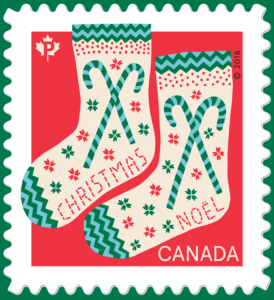 This year, Canada Post continues its long tradition of Christmas stamps with a secular issue that’s designed to inspire plenty of warm thoughts. The three stamps – domestic, U.S. and international rates – display colourful folk-art inspired depictions of traditional cold-weather wear, the very items you’ll likely find under many trees this Christmas.
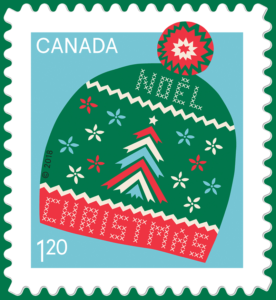 of what we now call toques? What about early Canadians who definitely warmed up with fur-lined mitts made of animal skin, a style that likely originated with the Inuit? In Canada, even dressing for the cold connects us with the past.
 sheet. Unlike uncut press sheets specifically designed as collectibles, the production press sheet is made up of actual booklets before they’re cut for sale. This Canada Post first is sure to make the season very merry and bright for collectors.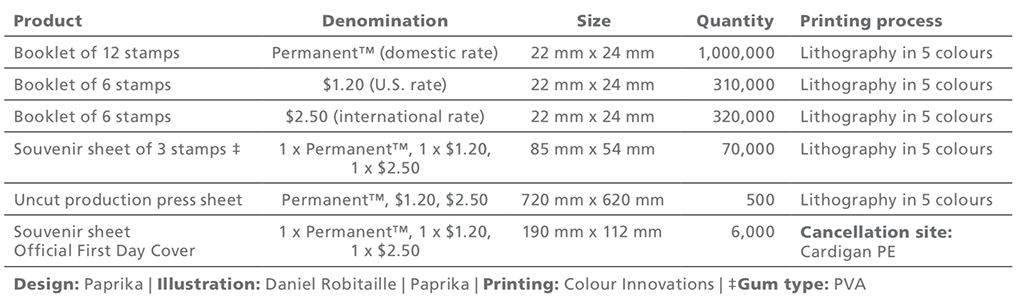
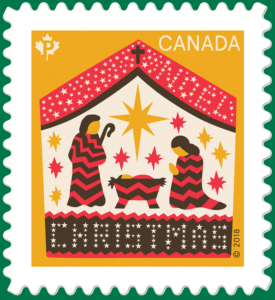
 The religious
  Few
Few

 Canada Post has a preview (“sneak peak”) of its 2019 stamp programme in the latest issue of its Details philatelic catalogue:
 OTTAWA, Oct. 24, 2018 /CNW/ – Canada Post unveiled a stamp today that celebrates the 100th anniversary of the armistice that ended the First World War, a conflict that irrevocably changed Canada and its status on the world stage.
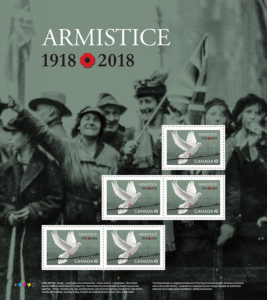 sacrifice of our soldiers earned the country widespread recognition and had a profound impact on Canada.
 At the unveiling event, Thomas D. Irvine, Dominion President of The Royal Canadian Legion, introduced the Legion’s Bells of Peace Initiative in partnership with Veterans Affairs Canada. At the setting of the sun on November 11, the Parliament Hill carillon and bells at Legion branches and spiritual centres across the country will ring 100 times to mark the sacrifices of our veterans and the joy that peace brought at the end of the war. Youth will
 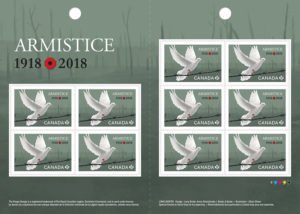 also be engaged to research locations and place flags on the graves of Canadian Veterans of the Great War.
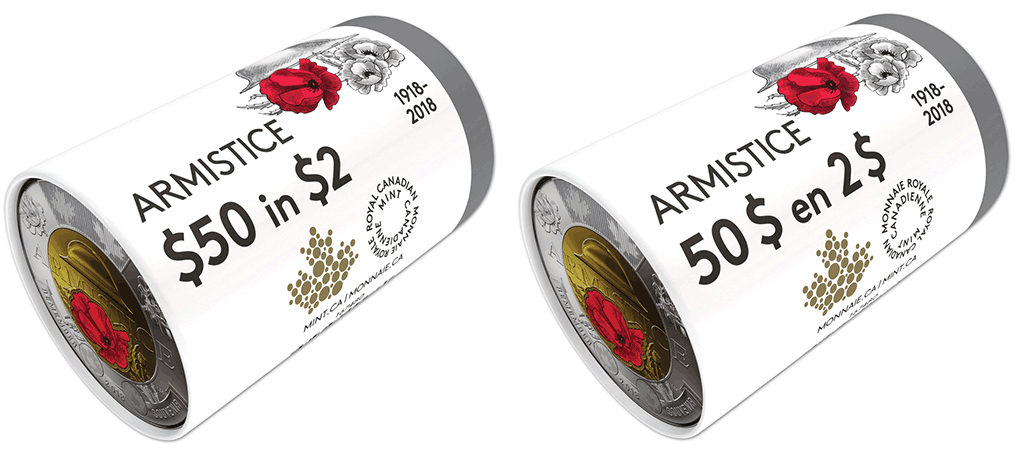 From Details magazine:
 The Royal Philatelic Society of Canada (RPSC) is pleased to announce that Robin Harris FRPSC has been appointed to the role of editor of The Canadian Philatelist, its flagship publication. Founded in 1950, The Canadian Philatelist is the official journal of The Royal Philatelic Society of Canada. Members receive six issues yearly as part of their membership. Each issue of The Canadian Philatelist contains compelling philatelic articles, business and news of The RPSC, philatelic news, auction and events calendars, meeting notices and Society reports.
 This message is basically to put the latest news on the VSC home page. You can find the completely story, as it unfolded,
  Washington Stamp Exchange was incorporated in 1933, in the depths of the Great Depression, when Leo and Sam August pooled their meager assets to start a business selling first day covers and stamps to collectors. Their first location in Newark, New Jersey at the corner of Washington and Market Street, became their inspiration to name their business Washington Stamp Exchange.
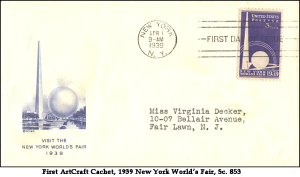 d to their introduction of ArtCraft Engraved first day covers in 1939. [The first ArtCraft cachet is shown on the right.]
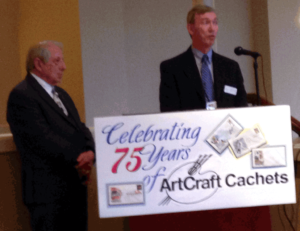 At left, company owners Michael August, son of one of the August Brothers, and Tim Devaney, son-in-law of the other, celebrated ArtCraft’s 75th anniversary at Americover 2014, the annual show and convention of the American First Day Cover Society, held that year in Somerset, NJ.
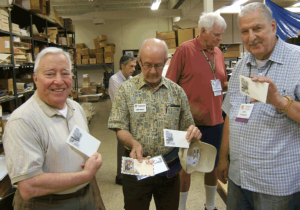 Starting with this announcement and continuing until it is sold out, everything remaining in stock – ArtCraft First Day Covers, White Ace Albums and supplies – will be offered at steeply discounted prices. Much of what is available can be found on the company’s website