Issue Date: March 14, 2019[press release]
Royal Mail Reveals Images Of New Marvel Super Heroes Special Stamps To Mark Celebration Of The UK’s Comics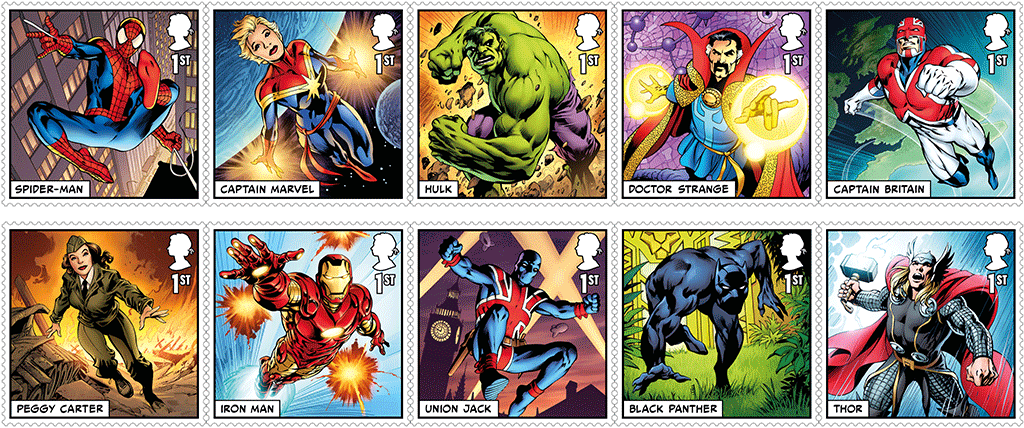
- 15 stamp set features some of the most popular and well-known Marvel characters
- Included in the set are: Spider-Man; Hulk; Thor; Iron Man; Doctor Strange; Captain Marvel; Peggy Carter; Black Panther, Captain Britain and Union Jack
- A further five stamps are presented in a miniature sheet in the form of a unique comic-strip entitled, Avengers UK
- The stamps are illustrated by renowned comic book artist Alan Davis, who has worked with Marvel since 1981
- Marvel is one of the world’s most prominent character-based entertainment companies with a catalogue of iconic Super Hero characters and marks its 80th anniversary in 2019
- The first Marvel Super Hero created for the UK was Captain Britain in 1976
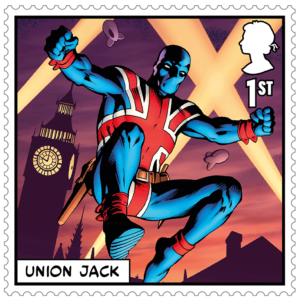
- That same year, Super Hero Union Jack made his first appearance in the classic Marvel series, Invaders
- The stamps and a range of collectible products are available now to pre-order from www.royalmail.com/marvel and go on general sale from Thursday 14 March by phone on 03457 641 641 and in 7,000 Post Offices throughout the UK
 Royal Mail has revealed the images of the Marvel Super Hero stamps issued to mark the UK’s celebration of Marvel’s iconic comic stories.
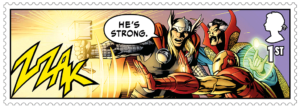
The 15-stamp set features some of the most popular Super Heroes from the comic books.
Ten stamps show: Spider-Man; Hulk; Thor; Iron Man; Doctor Strange; Captain Marvel; Peggy Carter; Black Panther; Captain Britain and Union Jack. A further five stamps are part of an exclusive short comic strip story contained in a miniature sheet.
The world-famous Marvel Comics grew out of Timely Comics, which in 1939 published its first comic book, Marvel Comics #1.
 Editor Stan Lee and artist Jack Kirby created a Super Hero revolution when they devised a new world of characters in the early 1960s, including Hulk and Thor.
In 1963, Lee and Steve Ditko hit upon a new idea for a hero; a teenager who accidentally takes on Super Hero abilities – and tested it out in a magazine that was about to be retired. However, the character caught the attention of the readers and Spider-Man was born.
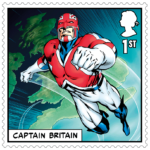
In 1972, Marvel UK was formed, publishing weekly comics that repackaged the stories for a British audience. This changed in 1976 when Captain Britain Weekly was launched, featuring the adventures of the first Marvel Super Hero created for the UK.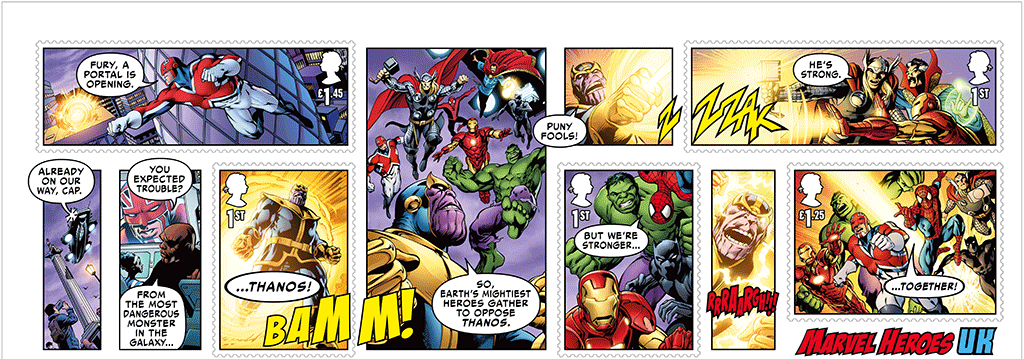 The 1980s, in particular, saw US comic publishers heavily recruiting British writers and illustrators, who increasingly worked on the American publications and began to inject darker storylines to widen the appeal of the characters. One such artist is Alan Davis, who
  designed the new Special Stamps, and has worked with Marvel since the early 1980s and first illustrated Captain Britain in 1985.
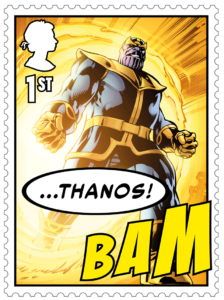
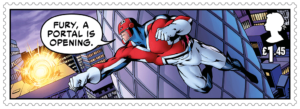
A specially-created story, also illustrated by Davis, features five further stamps printed in a miniature sheet. The story, entitled Avengers UK, sees Captain Britain rallying Super Heroes to face the arch villain Thanos.
 Stamp illustrator, artist, Alan Davis, said: “I really can’t take all the credit for producing these stamps. The speed of production required in US comics makes it necessary to separate the creative disciplines into four individual jobs. Writer, penciller, inker and colourist. My primary focus is writing and pencilling.
“My long-time collaborator Mark Farmer supplied the blackline inks for the stamps and Laura Martin added the colour.”
Philip Parker, Royal Mail, said: “Generations have grown up, spellbound by the adventures and the personalities of these Super Heroes. Our epic new stamps celebrate each in characteristic pose, emerging from the stamp frame.”
 The stamps and a range of collectible products are available now to pre-order from www.royalmail.com/marvel and go on general sale from Thursday 14 March by phone on 03457 641 641 and in 7,000 Post Offices throughout the UK.
Stamp-by-Stamp:
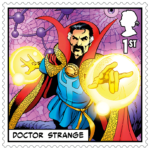 Doctor Strange – Once a brilliant yet vain neuro-surgeon, Stephen Strange sought out the help of the Ancient One when his hands were badly damaged in a car crash. Strange’s path led him to become a Master of the Mystic Arts and Earth’s Sorcerer Supreme, protecting the world from evil forces.
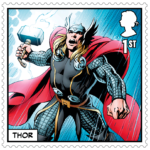 Thor – The mighty Thor is the Norse God of Thunder. Once cast out of Asgard for his pride, he was trapped on Earth as the injured doctor, Donald Blake. Thor’s banishment is long ended and now he protects both Earth and Asgard as an Avenger.
Captain Marvel – Carol Danvers was an Air Force officer when she 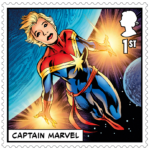 met Kree hero Captain Mar-vell. After her DNA mixed with his during an explosion, she gained super powers and took the name Ms Marvel. Following the original’s death, Carol took on the mantle of Captain Marvel to honour his legacy. Marvel Studios’ Captain Marvel is in cinemas from 8 March, 2019.
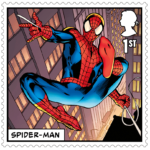 Spider-Man – Peter Parker is Spider-Man, New York’s amazing web-slinging hero. Bitten by a radioactive spider as a teenager, Peter Parker gained arachnid-like abilities and, after his Uncle Ben was murdered, swore to use his abilities to help others – having realised that with great power comes great responsibility.
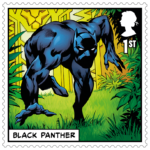 Black Panther – T’Challa is the Black Panther, ruler of the technologically advanced African nation of Wakanda and protector of its valuable vibranium supply. T’Challa first travelled to America to learn more about the country’s heroes and soon became a leading member of the Avengers.
Hulk – When mild-mannered scientist Bruce Bann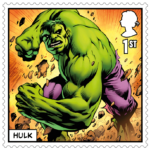 er was bombarded by radiation from a gamma bomb, he was transformed into the Incredible Hulk. The green-skinned behemoth is one of the planet’s most powerful and misunderstood heroes – feared by a world he has saved numerous times.
 Peggy Carter – Peggy Carter was working for the French Resistance in the Second World War when she met and fell in love with Captain America. The two fought the Axis powers together before they were separated by the war. Peggy went on to become a leading agent of S.H.I.E.L.D. (Strategic Homeland Intervention, Enforcement and Logistics Division).
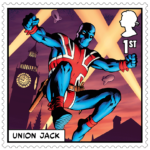 Union Jack – The original Union Jack was Lord James Falsworth, who fought in the First World War. When his descendant refused to take on the role, the mantle was passed to Joey Chapman, a working class hero from Manchester, who has gone on to fight alongside the Knights of Pendragon and the Invaders.
Captain Britain – Brian Braddock was chosen by Merlyn to be Britain’s greatest protector. Granted amazing powers, Brian became Captain Britain. He soon learned he was part of a multidimensional Captain Britain Corps and has fought alongside Excalibur and the Avengers to keep his country – and the world – safe from harm.
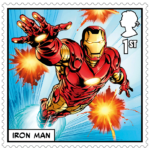 Iron Man – When terrorists captured billionaire inventor Tony Stark, they forced him to create weapons. With shrapnel near Stark’s heart endangering his life, Stark tricked the terrorists, building a suit of powered armour to defeat them. It was the birth of the armoured Avenger – the invincible Iron Man.
Philatelic Products
Product name
Stamps
Miniature Sheet
Stamp Pack
Miniature Sheet Pack
Presentation Pack
First Day Cover Stamps
First Day Cover Minisheet
First Day Cover PSB pane
Stamp Souvenir Cover
Miniature Sheet Souvenir Cover
First Day Envelope – Hulk
First Day Envelope – Thor
Prestige Stamp Book
Collector Sheet (Generic Sheet)
Retail Stamp Book
Full Stamp Sheet 1
Full Stamp Sheet 2
Half Stamp Sheet 1
Half Stamp Sheet 2
Spider-man BU Medal Cover
Spider-man Silver Medal Cover
Hulk BU Medal Cover
Hulk Silver Medal Cover
Avengers BU Medal Cover
Avengers Silver Medal Cover
Stamp cards
Classic Comics Stamp Souvenir Folde
Stamp Artwork Collector Set
Limited Edition PSB
Press Sheet
Framed Stamps & Minisheet
Framed Collector Sheet
Framed Gallery Prints
Framed Stamps & Minisheet signed by Alan Davis
Framed Stamps signed by Neil Edwards |
Code
AS4355
MZ138
AS4355R
MZ138A
AP457
AF442
MF136
HF086
AW099
AW100
AE397
ME133
YB082
AT107
UB421
AS4355BFS
AS4355CFS
AS4355BHS
AS4355CHS
AM062
AM065
AM063
AM066
AM067
AM068
AQ274
AW104
AW110
YB083
PZ039
N3156
N3157
(various)
N3165
N3166 |
Price
£6.70
£4.71
£6.99
£4.99
£12.15
£8.60
£6.20
£6.00
£8.60
£6.20
£0.30
£0.30
£17.45
£7.70
£4.02
£33.50
£33.50
£16.75
£16.75
£24.99
£99.99
£24.99
£99.99
£24.99
£99.99
£7.20
£24.99
£34.99
£64.99
£93.25
£49.99
£39.99
£79.99
£195
£145 |

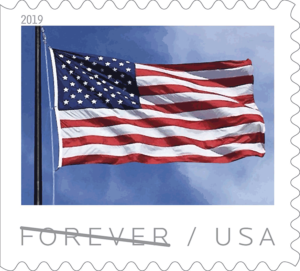 5342 (55¢) Flag coil (Ashton-Potter printing), serpentine die cut 11 horiz., microprinted “USPS” at lower flag grommet
 tz Israel west of the Jordan River and is one of the rainiest areas in Israel, and even has occasional snowfall during the winter months. These conditions allow plants such as the Wild Peony featured on the stamp, which are typical of the mountains in Turkey and Lebanon, to grow on Mount Meron, the southernmost point of their dispersion. Hiking trails are marked around the summit and along the slopes, leading visitors among the mountain’s many delightful natural and archeological treasures. Important prayer sites lie at the foot of the Mount Meron range, the most significant of which are the grave of Rabbi Shimon bar Yochai which is sacred to the Jews and the grave of Nabi Sablan, a sacred prophet of the Druze people.
 Negev Desert as well as the Sinai Desert. More than 40,000 rock drawings have been discovered on Mount Karkom and in the immediate area. These were carved by humans and include figures such as the Long Horned Deer that appears on the stamp. Many of the rock drawings show humans with their arms outstretched toward the heavens as if in prayer. The aridness of the area surrounding the mountain (which does not allow permanent inhabitance) along with the existence of the many rock drawings have led researchers to conclude that Mount Karkom served as a sacred place of worship and prayer, visited by caravans of merchants passing through the area and groups of believers who travelled there from distant lands. Prof. Emmanuel Anati, who devoted many years to researching the site, identified Mount Karkom as the Mount Sinai noted in the Bible, however this opinion is not accepted by most researchers in the field.
 The St. Louis Stamp Expo will be the site for the Single Frame Champion of Champions competition, beginning with the March 27-29, 2020 show. The announcement was made recently by Mike Ley, president of the American Association of Philatelic Exhibitors (AAPE), which sponsors the competition. The agreement is for three years.
 and cooperation from the show committee. The agreement may be extended after the initial three years, or the competition moved to another show at the request of either party.
 Australians are fast adopting international shopping traditions with Black Friday and Cyber Monday combining to form the busiest online shopping week in the country, according to the latest research by Australia Post.
 General Manager Parcel & Express Services, Ben Franzi, said the research shows a continuing shift in the timing and channels shoppers use to make their key purchases.
 The Board of Directors of NAPEX is pleased to announce the composition of the jury that will judge the exhibits at this year’s show.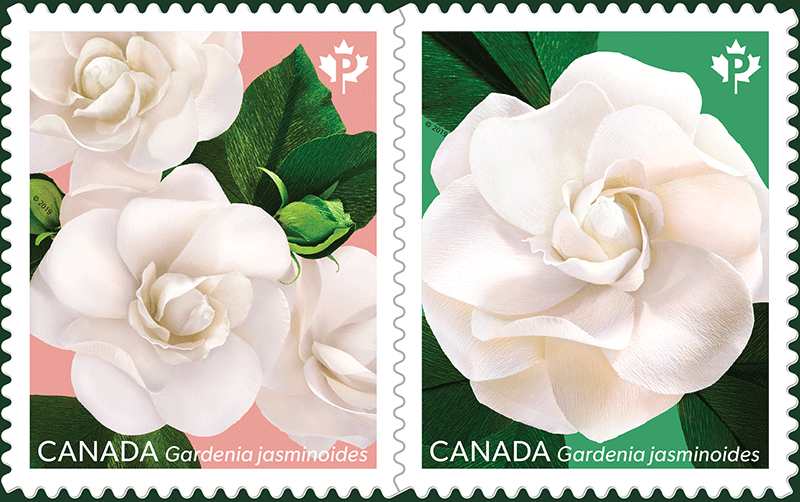
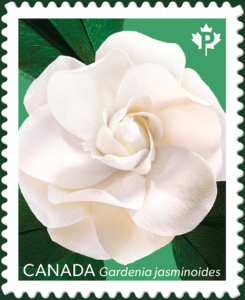 traditional choice for wedding bouquets, corsages and boutonnières. In the days of the Victorians, the gifting of a gardenia conveyed a tender message to one’s beloved for those too shy to do so in person.
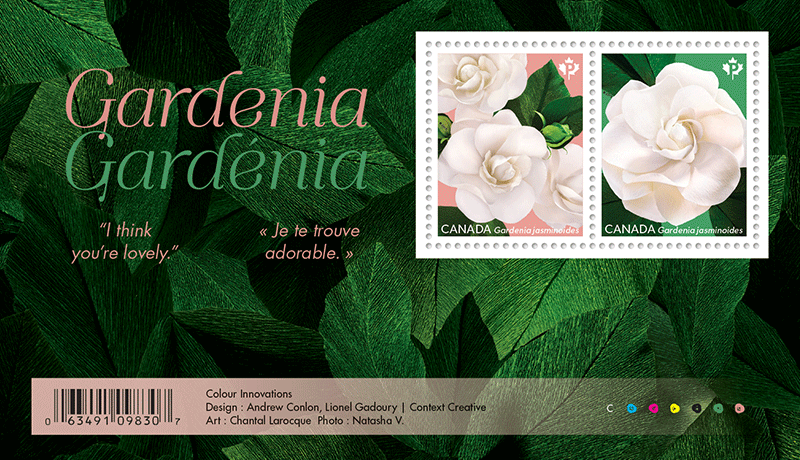
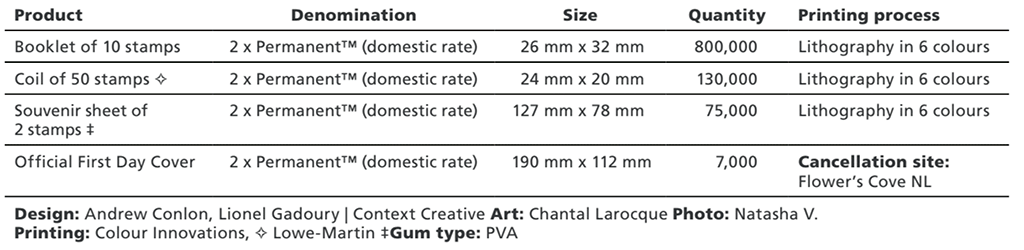
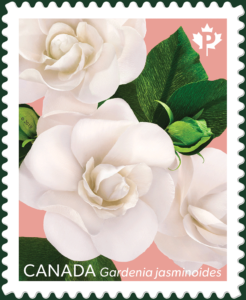 For added convenience for use on wedding invitations and stationery, the stamps are available in booklets of 10, with five of each design, or coils of 50 offering 25 of each design. A two-stamp souvenir sheet is available for collectors, along with strips of four and 10 stamps from the coil. An Official First Day Cover featuring both stamps is cancelled in Flower’s Cove, N.L. The stamps were designed by Andrew Conlon and Lionel Gadoury of Context Creative, with art by Chantal Larocque, inspired by a photo by Natasha V. The booklet, souvenir sheet and Official First Day Cover were printed by Colour Innovations and the coils printed by the Lowe-Martin Group.
 OTTAWA – Étant donné le nombre de timbres floraux utilisés par les futurs mariés sur les faire-part, il semble tout indiqué que Postes Canada ait choisi pour son émission annuelle une fleur traditionnellement associée à l’amour. Portant un parfum enivrant, le délicat gardénia blanc crème a longtemps orné les bouquets de mariage et de corsage ainsi que les boutonnières. À l’époque victorienne, les grands timides l’offraient pour exprimer leur tendresse à la personne aimée.
 The Happy Birthday stamp joins the definitive Greetings stamps, which are also issued in the My Own Stamp sheet format.
 Science-Oriented Youth is an enrichment program operated in universities and other academic institutions in Israel with the support of the Ministry of Education. The program began offering expanded knowledge of science to Israeli youth at the Weizmann Institute of Science in 1964 and at Tel Aviv University in 1969 and currently operates in a number of additional institutions and units throughout Israel.