
[press release]
Captivating Images:
Six Forests of the UK Feature on New Royal Mail Special Stamps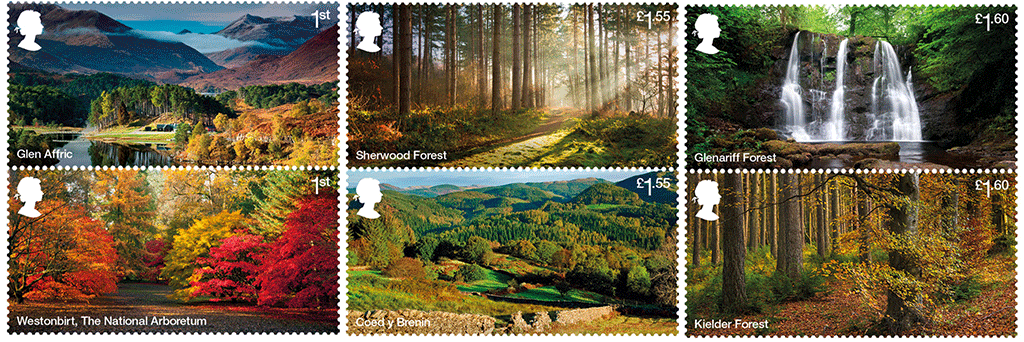 The forests that feature are:
- Glen Affric, Inverness-shire
- Sherwood Forest, Nottinghamshire
- Glenariff Forest, County Antrim
- Westonbirt, The National Arboretum, Gloucestershire
- Coed y Brenin, Gwynedd
- Kielder Forest, Northumberland
• Forests are valued for their environmental benefits, such as cleaner air, flood prevention and providing habitats for wildlife
• With hundreds of millions of visits per year, the public enjoy woodlands for a range of activities – from walking to birdwatching to mountain biking
• The stamp issue coincides with the 100th anniversary of the Forestry Commission
• The stamps can be ordered now from www.royalmail.com/forests and by phone on 03457 641 641
Royal Mail recently revealed a set of six Special Stamps that capture beautiful and inspirational views of forests from across the four countries of the UK.
Valued for their environmental benefits, such as cleaner air, flood prevention and providing habitats for wildlife, the UK’s forests generate hundreds of millions of visits per year — enabling the public to enjoy woodlands for activities from walking and picnicking to birdwatching and mountain biking.
The stamps showcase the character and varied colours of the nation’s forests and are on general sale from www.royalmail.com/forests and in 7,000 Post Offices throughout the UK.
Featured in the set are images of the following forests: Glen Affric; Sherwood Forest; Glenariff Forest; Westonbirt; The National Arboretum; Coed y Brenin and Kielder Forest.
The stamp launch coincides with the 100th anniversary of the Forestry Commission. Founded on 1st September 1919, the Forestry Commission’s remit was to reforest the UK for timber after the First World War had seen clearances of huge areas for the war effort. It is now the public body responsible for protecting, improving and expanding forests and woodland in England.
Responsibility for forests and woodland across the remainder of the UK has, over the years, devolved to different government agencies in Scotland, Wales and Northern Ireland.
As well as providing sustainable timber to UK industry, in the last 50 years the Commission’s focus has grown to embrace other areas. It is active in wildlife conservation, especially endangered bird and butterfly species, and the preservation of National Parks and Sites of Special Scientific Interest.
PK Khaira-Creswell, Director, Forestry Commission centenary, said, “Our centenary is all about inspiring people to share our passion for forests and help us protect and improve them for generations to come. We are proud to be custodians of these stunning landscapes, which are indispensable for people and wildlife.”
Philip Parker, Royal Mail, said: “On the Forestry Commission’s centenary these striking new stamps celebrate the beauty and tranquillity of our public woodlands, and the inspiring range of environments which receive hundreds of millions of visits each year.”
Stamp-by-stamp:
Glen Affric
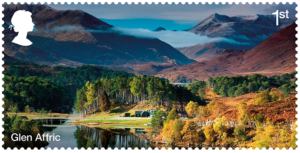 Glen Affric in Inverness-shire, is managed by Forestry and Land Scotland and is a fragment of the once extensive Caledonian Forest. Its rugged Scots pines and graceful birches are the signature trees in a landscape where forest, lochs, river and mountains combine to create the perfect Highland setting, which is breath-taking at any time of year but especially when the birches take on their golden apparel.
Sherwood Forest
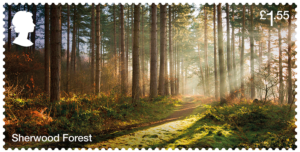 Sherwood Forest in Nottinghamshire is famous for its rich assemblage of ancient oak trees, such as the Major Oak. The atmospheric image on the stamp shows a fine stand of conifers in the early morning light, reflecting the mixed planting found across the whole forest.
Glenariff Forest
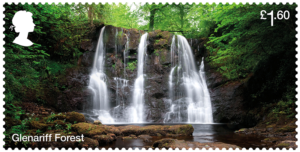 Managed by the Forest Service Northern Ireland, Glenariff Forest Park in County Antrim, boasts a beautiful mixture of views and trails that allow the visitor to enjoy a wide variety of walks and activities. Probably the most spectacular of these is the Waterfall Walk, a steep path up the vertical sides of the gorge and along elevated boardwalks taking in a succession of dramatic and world-famous waterfalls.
Westonbirt, The National Arboretum
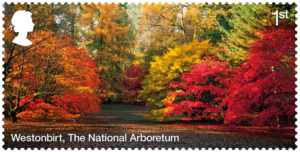 Westonbirt, The National Arboretum is the Forestry Commission’s flagship collection of trees in England. First created by the wealthy Holford family almost 200 years ago, it is one of the most beautiful and diverse botanical collections in the world. The 600-acre (243ha) site with 17 miles (27km) of paths showcases 3,000 tree species, including the Japanese maples seen on the stamp in autumnal colours.
Coed y Brenin
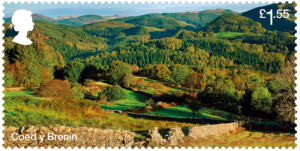 Located near Dolgellau in the Snowdonia National Park, Coed y Brenin is now one of the flagship forests of Natural Resources Wales. Commercial softwood forestry across some 7,650 acres (3,093ha) of Forest Park combines with recreational facilities for mountain-bikers and a network of spectacular scenic trails for hikers, based around the impressive visitor centre.
Kielder Forest
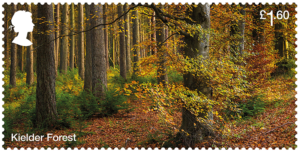 Kielder Forest in Northumberland is the largest human-made forest in Britain, stretching 250 square miles (647sq km); around 75 per cent is covered by trees. The Forestry Commission harvests around 500,000 cubic metres of timber here each year. The felled areas are replanted using a mixture of conifer and broadleaf trees, and parts are left open to create a diversity of habitats.
Forests through the ages:
The first written evidence of forests designated as royal reserves comes from the Domesday Book of 1086, which recorded only about 25 of these sites. Most forests known today were established by the 13th century. When the Magna Carta was sealed in 1215, there were almost 150 forests in England alone, amounting to nearly a million acres.
Over time, the Crown relaxed its hold over the forests, and the local landowners and commoners usually came to mutually beneficial modes of forest governance and management.
In the early 20th century, extensive tree felling left the country’s timber resources severely depleted. The First World War in particular had a huge impact; by the end of it, with forests ravaged in support of the war effort, the UK’s woodland cover was at an all-time low of just five per cent. In response, the Forestry Act was passed, and in September 1919 the Government established the Forestry Commission, demonstrating its support for the creation of productive, state-owned forests to replenish the much-depleted supplies of home-grown timber.
The first Forestry Commission trees were planted in Devon’s Eggesford Forest in December 1919, and in the following years a large programme of land acquisition and tree planting took place across the UK. During the 1930s, the Commission’s estate grew to over 900,000 acres (364,217ha) across England, Scotland and Wales, while the demand for timber increased as tensions in Europe mounted once again. By the end of the Second World War, the country had consumed around a third of its timber supplies.
In its centenary year, Forestry Commission England looks after more than 1,500 woods and forests and provides expert advice and guidance regarding forests owned by others. It is the country’s largest landowner, managing diverse landscapes, including forests, heathlands, mountains, moors and urban green spaces. It works closely with Scottish Forestry, Forestry and Land Scotland, Natural Resources Wales and Forest Service Northern Ireland, and it strives to ensure that our forests are as resilient as possible to the threats of climate change, pests and diseases.


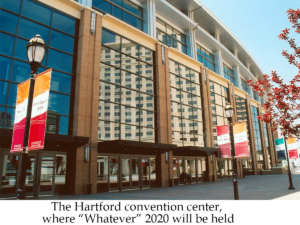 Beginning in Hartford 2020, the annual American Philatelic Society stamp convention will be a joint show with the American Topical Association and the American First Day Cover Society. In the past, the annual show has been called StampShow, StampShow / National Topical Stamp Show, StampShow/NTSS, and other variations on these themes. We need your helpful suggestions to create a new and permanent name for the yearly show.
 he American Association of Philatelic Exhibitors has announced the winners of its top awards for 2019.
 or pressure you to make an immediate decision or payment. All official APS correspondence occurs through the phone number (814) 933-3803 and email domain stamps.org.
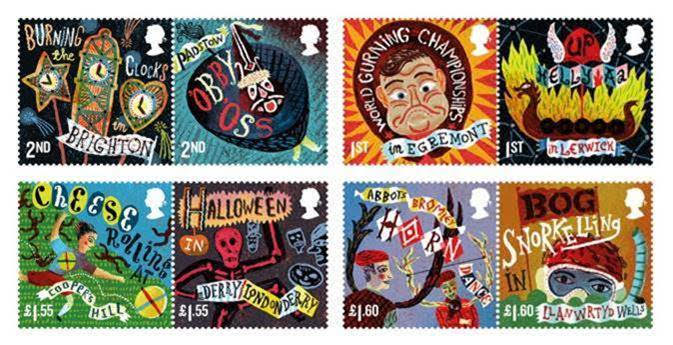 Royal Mail has revealed eight colourful and engaging illustrations, depicting and capturing the spirit of well-known, and some not so well-known, annual customs that take place around the UK. The stamps celebrate the eclectic mix of annual customs and festivals that take place across the UK. Royal Mail worked with award-winning folklorist Steve Roud on the stamp issue
 a. (55¢) Big Bird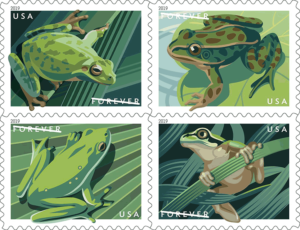
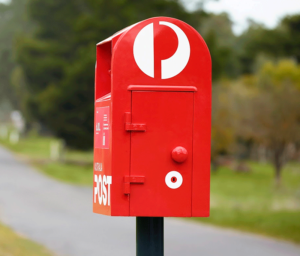 Australia Post has lodged a draft notification with the Australian Competition and Consumer Commission (ACCC) seeking an increase in the Basic Postage Rate (BPR) from $1 to $1.10 to apply from January 2020, the first increase in four years.
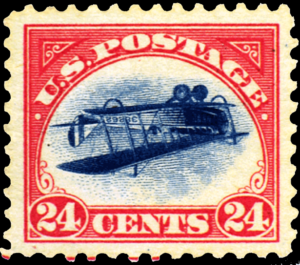 It only took American Philatelic Society executives a moment to know: The “rare Jenny invert” owned by a small southwest Iowa aviation museum was a fake — and not even a good one.
 The Smithsonian Philatelic Achievement Award (SPAA) was established in 2002 to honor and celebrate living individuals for outstanding lifetime achievement in the field of philately. This achievement may include original research that significantly advances the understanding of philately, exceptional service to the philatelic community or sustained promotion of philately to the benefit of current and future collectors.
 The SPAA award medallion is a 3-inch, gold-plated bronze disc depicting a sunburst with eight straight and eight wavy rays. Derived from the family coat of arms of James Smithson, founding benefactor of the Smithsonian Institution, the sunburst became the Institution’s official seal June 3, 1966, and is incorporated into the official flag flown by Smithsonian facilities and Smithsonian-sponsored expeditions throughout the world. As such, it is a universally recognized symbol of enlightenment and learning that links the Smithsonian’s history with its future. The medallion is suspended from a grosgrain neck ribbon in Smithsonian blue and yellow.
 accomplished, lifelong philatelist who possessed a complete collection of stamps of Mexico, Helú was inspired by two foundational experiences in the mid-1990s. The first was a visit to then-recently opened National Postal Museum. The second was his participation in a temporary exhibition on the numismatics and philately of Oaxaca State, organized in 1996 by the Instituto de Artes Gráficas de Oaxaca.
 grand, a grand prix national in Australia, and an international one-frame gold.
 While still a teenager, he became an apprentice auction lot describer for Roger Koerber Auctions in Southfield, Michigan. He joined Sotheby Parke Bernet Stamp Auction Company in 1977 and left in 1980 to lead Steve Ivy Philatelic Auctions Inc., ultimately becoming a partner in Ivy, Shreve and Mader, one of the largest stamp auction houses in the country. He left to form Shreves Philatelic Galleries Inc. in 1994 and oversaw its sale to Spink and Son Ltd. of London in 2007, becoming president of Spink Shreves Galleries. Since 2012, Shreve has been a director of Robert A. Siegel Auction Galleries Inc. with responsibility for its international division.
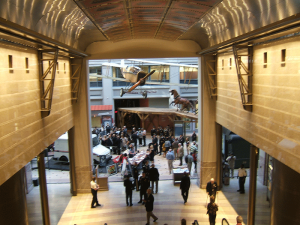
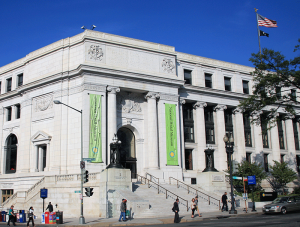 The National Postal Museum is devoted to presenting the colorful and engaging history of the nation’s mail service and showcasing one of the largest and most comprehensive collections of stamps and philatelic material in the world. It is located at 2 Massachusetts Ave. N.E., Washington, D.C., across from Union Station. The museum is open daily from 10 a.m. to 5:30 p.m. (closed Dec. 25). For more information about the Smithsonian, call (202) 633-1000 or visit the museum website at www.postalmuseum.si.edu.