Updated September 3rd: The Scott Catalogue numbers for these are:
- 5101 1938 International Harvester D-2
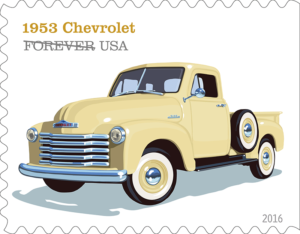
- 5102 1953 Chevrolet
- 5103 1948 Ford F-1
- 5104 1965 Ford F-100
Updated July 8th:
 The USPS has a very limited number of free tickets to the Pickup Trucks Forever stamps dedication ceremony and that day’s Car Show that takes place July 15 in Syracuse, NY.
The tickets are limited to no more than two individuals per RSVP. Visit www.usps.com/trucks to apply for the tickets. (Note: once you’re in the registration area, you’ll see a notation for 1 to 99 tickets. Note that this limit is to two tickets only per RSVP).
Tickets may be picked up July 15 at the will call center at Gate #1 which is the main entrance.
The event will take place Friday, July 15 at 1 p.m.,
The Syracuse Nationals Car Show
New York State Fairgrounds, Horticultural Center
581 State Fair Blvd.
Syracuse, NY 13209
Here’s the link to the show’s website.
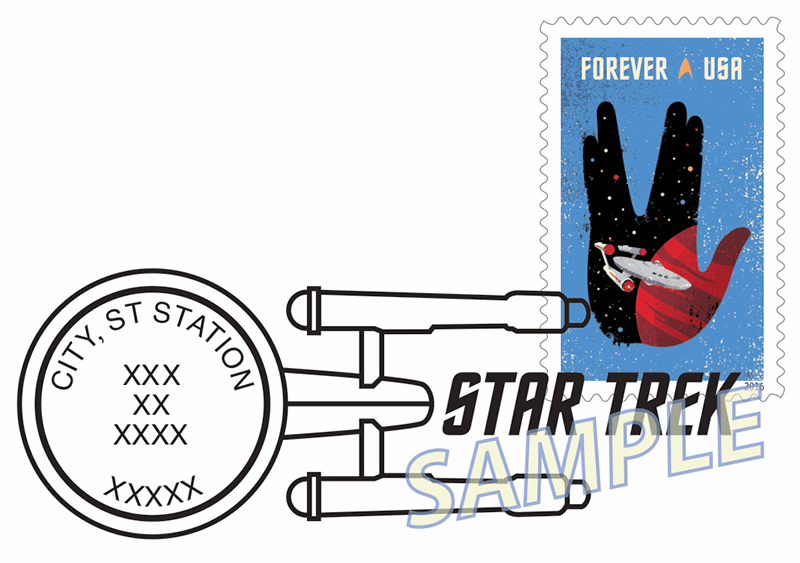
Updated July 3rd: Here are the first-day cancellations for this issue: 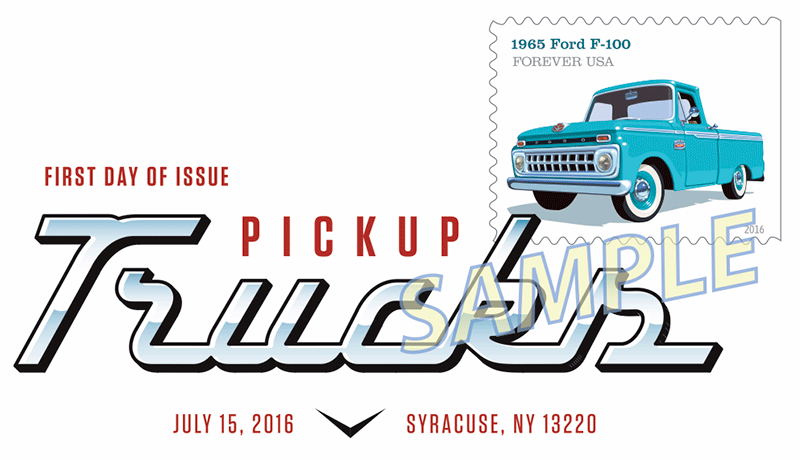 The Digital Color Postmark measures 2.6” x 1.25″
 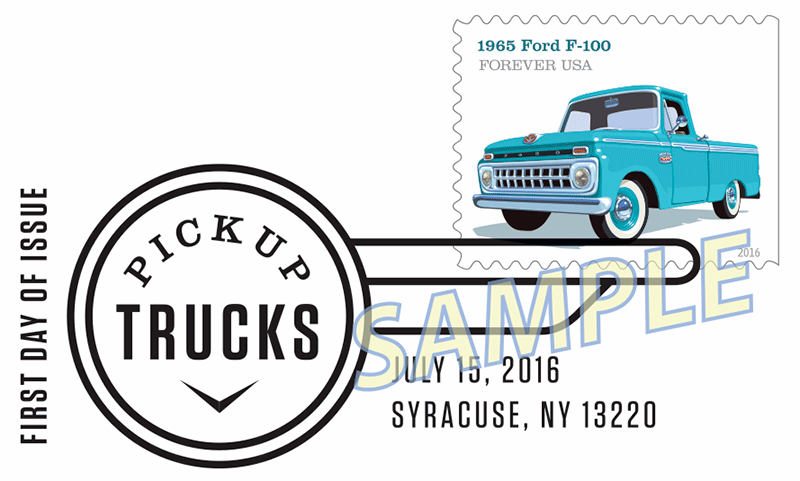 The B&W pictorial measures 2.52” x 1.13”.
Updated June 23rd: The dedicating official will be USPS Chief Human Resource Officer Jeff Williamson.
Updated June 10, from the USPS:
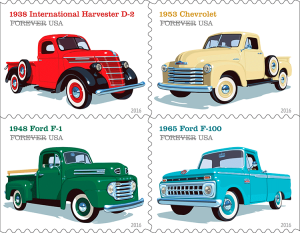 Pickup Trucks Forever Stamps
Friday, July 15, 2016 at 1:00 p.m.
Syracuse Nationals
New York State Fairgrounds
Horticultural Center
581 State Fair Blvd.
Syracuse, NY 13209
Background:
In 2016, the U.S. Postal Service celebrates pickup trucks, the rugged and reliable work vehicles that Americans have driven for nearly a century. The stamps feature four iconic models: the 1938 International Harvester D-2, the 1948 Ford F-1, the 1953 Chevrolet, and the 1965 Ford F-100.
Artist Chris Lyons of Pittsford, NY, used Adobe Illustrator to create stylized renderings of the pickup trucks. Art director Antonio Alcalá of Alexandria, VA, designed the stamps.
The origin of pickup trucks can be traced back to the early 20th century, when automobiles first became popular in the United States. They made personally hauling cargo, which once was the job of horse-drawn wagons, easier than ever. By the early 1900s, several manufacturers first began producing light-duty trucks in limited numbers.
 International Harvester supplied and maintained trucks on stateside military bases during World War I. In 1917, Ford released the Model TT, which had a one-ton chassis. For 1918, Chevrolet introduced the Model 490 truck. But because drivers had to purchase their own cargo beds and bodies, these vehicles weren’t considered true pickup trucks.
The first fully factory assembled pickup truck didn’t arrive until the middle of the next decade, when the 1925 Ford Model T Runabout with Pick-Up Body made its debut. A fortified version of Ford’s landmark Model T, it had a base price of $281, featured a steel bed, and was powered by a modest 20-horsepower engine. Ford sold nearly 34,000 Model T pickups, helping kick start the popularity of pickup trucks.
Automaker Studebaker used the word “pickup” in an advertisement in 1913, but the exact root of the term “pickup” is unclear. By the Great Depression, it had become part of the American lexicon. U.S. Federal Regulations currently classify the pickup truck as “a non-passenger automobile which has a passenger compartment and an open cargo area (bed).”
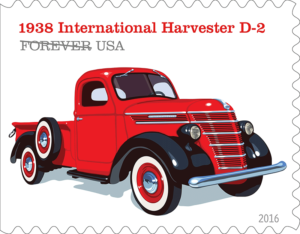
Known for its production of agricultural equipment, International Harvester also made acclaimed light-duty trucks. In the 1930s, the company introduced its D line of pickups. With its six-cylinder engine and half-ton payload capacity, the 1938 International Harvester D-2 was a strong, sturdy pickup. The model was also visually striking. It had a distinct barrel-shaped grille and its elegant styling mirrored the look of luxury automobiles of the era.
By the end of World War II, pickups had become ubiquitous, especially in rural America. The nation’s major manufacturers soon began designing well-equipped trucks that no longer resembled the bare-bones models they once offered.
In 1947, Chevrolet rolled out the Advance-Design Series, the first all-new post-World War II pickup truck line. The new Chevys were roomier and more powerful than ever before. Advance-Design pickups, such as the 1953 Chevrolet, featured large windshields that provided drivers with excellent visibility, a distinctive curvy grille that bulged in the middle, and a six-cylinder engine. Advance-Design trucks were America’s top-selling pickups for nearly a decade.
The same year Chevy debuted its new line, International Harvester introduced its KB-Series of trucks. During World War II thousands of soldiers drove IH trucks, and once back home, welcomed the chance to own a stylish KB-1, -2 or -3 pickup.
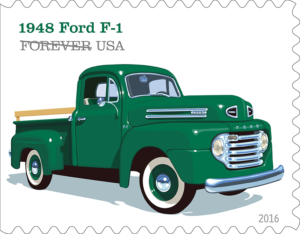 Ford’s F-Series also differed greatly from relatively sparse models previously available. Also known as the “Bonus Built” line, F-Series trucks were, in the words of Ford’s famous advertising campaign, “built stronger to last longer.” Ford launched the new line with the 1948 Ford F-1. It included features like the roomy “Million Dollar Cab,” a sharp horizontal five-bar grille, and a six- or eight-cylinder engine. Ford sold more than 300,000 trucks in the first model year of the F-Series.
In the 1960s and 1970s, International Harvester’s line of light trucks flourished. In addition to the pickup version of the popular Scout, the company offered the C-Series, including the C-110. Most IH pickups of the era were available in a number of different wheelbases, a variety of engines, and with a larger, “Bonus-Load” bed. These models also offered a crew cab option, a popular concept introduced by IH in 1957.
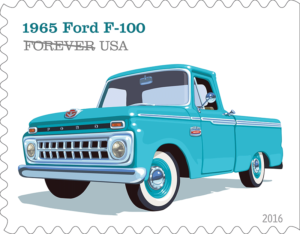 For the 1965 model year, the F-Series pickup got a facelift. The 1965 Ford F-100 had a new grille that featured 18 small rectangular openings. It also featured what Ford dubbed “Twin-I-Beam” independent front suspension, which improved the quality of the ride, and a powerful six- or eight-cylinder engine. The F-Series is still in production today and remains the country’s top-selling truck line. As of 2015, there have been 13 generations of F-Series pickups.
From the Postal Bulletin:
On July 15, 2016, in Syracuse, NY, the U.S. Postal Service will issue the Pickup Trucks First-Class Mail stamps (Forever priced at 47 cents), in four designs, in a pressure-sensitive adhesive (PSA) double-sided booklet of 20 stamps (Item 680900).
These stamps will go on sale nationwide July 15, 2016.
In 2016, the U.S. Postal Service celebrates pickup trucks, the rugged and reliable work vehicles that Americans have driven for nearly a century. Each of four new stamps features one of the following iconic models: the 1938 International Harvester D-2, the 1948 Ford F-1, the 1953 Chevrolet, and the 1965 Ford F-100. The strong, sturdy 1938 International Harvester D-2 had a distinct barrel-shaped grille and its elegant styling mirrored the look of luxury automobiles of the era. The 1953 Chevrolet, featured large windshields that provided drivers with excellent visibility, a distinctive curvy grille that bulged in the middle, and a six-cylinder engine. The 1948 Ford F-1 included features like the roomy “Million Dollar Cab,” a sharp horizontal five-bar grille, and a six- or eight-cylinder engine. The 1965 Ford F-100 had a new grille that featured 18 small rectangular openings. It also featured what Ford dubbed “Twin-I-Beam” independent front suspension. Art director Antonio Alcal· designed the stamps with original artwork by Chris Lyons.
Stamp Fulfillment Services will make an automatic push distribution to Post Offices of a quantity to cover approximately 30 days of sales.
How to Order the First-Day-of-Issue Postmark:
Customers have 60 days to obtain the first-day-of-issue postmark by mail. They may purchase new stamps at their local Post Office, at The Postal Store website at http:??www.usps.com?shop, or by calling 800-782-6724. They should affix the stamps to envelopes of their choice, address the envelopes (to themselves or others), and place them in a larger envelope addressed to:
Pickup Trucks Stamps
Postmaster
5640 East Taft Road
Syracuse, NY 13220-9810
After applying the first-day-of-issue postmark, the Postal Service will return the envelopes through the mail. There is no charge for the postmark up to a quantity of 50. There is a 5-cent charge for each additional postmark over 50. All orders must be postmarked by September 15, 2016.
There are six philatelic products for this stamp issue:
- 680906 Press Sheet with Die-cut, $75.20 (print quantity 2,000).
- 680910 Digital Color Postmark Keepsake, $15.95.
- 680916 First-Day Cover (set of 4), $3.64.
- 680921 Digital Color Postmark (set of 4), $6.48.
- 680924 Framed Art, $39.95.
- 680930 Ceremony Program (random single), $6.95.
Technical Specifications:
Issue: Pickup Trucks Stamps
Item Number: 680900
Denomination & Type of Issue: First-Class Mail Forever
Format: Double-sided Booklet of 20 (4 designs)
Series: N?A
Issue Date & City: July 15, 2016, Syracuse, NY 13220
Art Director: Antonio Alcal·, Alexandria, VA
Designer: Antonio Alcal·, Alexandria, VA
Typographer: Antonio Alcal·, Alexandria, VA
Artist: Chris Lyons, Pittsford, NY
Modeler: Sandra Lane?Michelle Finn
Manufacturing Process: Offset, Microprint
Printer: Banknote Corporation of America
Printed at: Browns Summit, NC
Press Type: Alprinta 74
Stamps per Booklet: 20
Print Quantity: 250 million stamps
Paper Type: Phosphor Tagged, Block
Adhesive Type: Pressure-sensitive
Processed at: Banknote Corporation of America, Browns Summit, NC
Colors: Cyan, Magenta, Yellow, Black, PMS Cool Gray 7
Stamp Orientation: Horizontal
Image Area (w x h): 1.05 x .77 in.?26.67 x 19.56 mm
Stamp Size (w x h): 1.19 x .91 in.?30.22 x 23.11 mm
Full Pane Size (w x h): 2.375 x 5.743 in.?60.33 x 145.88 mm
Press Sheet Size (w x h): 11.486 x 9.5 in.?291.74 x 241.30 mm
Plate Size: 800 stamps per revolution
Plate Numbers: “B” followed by five (5) single digits
Marginal Markings: ï Plate numbers in peel strip area ï © 2015 ï USPS in peel strip area
From the USPS:
4 designs
FDOI: Information to come. (3rd Quarter)
Format: Booklet of 20
Celebrating the rugged and reliable work vehicles that Americans have driven for nearly a century, each of the four new stamps features one of the following iconic models:
- the 1938 International Harvester D-2,
- the 1948 Ford F-1,
- the 1953 Chevrolet, and
- the 1965 Ford F-100.
The strong, sturdy 1938 International Harvester D-2 had a distinct barrel-shaped grille and its elegant styling mirrored the look of luxury automobiles of the era.
The 1953 Chevrolet, featured large windshields that provided drivers with excellent visibility, a distinctive curvy grille that bulged in the middle, and a six-cylinder engine.
The 1948 Ford F-1 included features like the roomy “Million Dollar Cab,” a sharp horizontal five-bar grille, and a six- or eight-cylinder engine.
The 1965 Ford F-100 had a new grille that featured 18 small rectangular openings. It also featured what Ford dubbed “Twin-I-Beam” independent front suspension.
Art Director: Antonio Alcalá
Illustrator: Chris Lyons
 [This issue was rumored in 2014. See this story And also in June 2014, I asked then-Postmaster General Patrick Donahoe about future automotive series, ““Yeah, I need to— we need to get rolling. I’ve got to try to talk to the Citizens Stamp Advisory Committee to come up with… maybe pickup trucks. That would be a good one. We’ve done a number of car series, including the Hot Rods, so trucks might be good next.”. —LdeV]
 It measures 3.0” x 1.5”. The B&W postmark for this issue is the standard 4-bar First Day of Issue postmark.
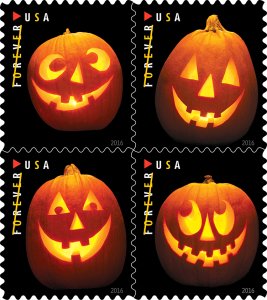 On September 29, 2016, in Anoka, MN, the U.S. Postal Service will issue the Jack-O’-Lanterns stamps (Forever® priced at 47 cents), in four designs, in a pressure-sensitive adhesive (PSA) booklet of 20 stamps (Item 681400).
 . Javits Convention Center
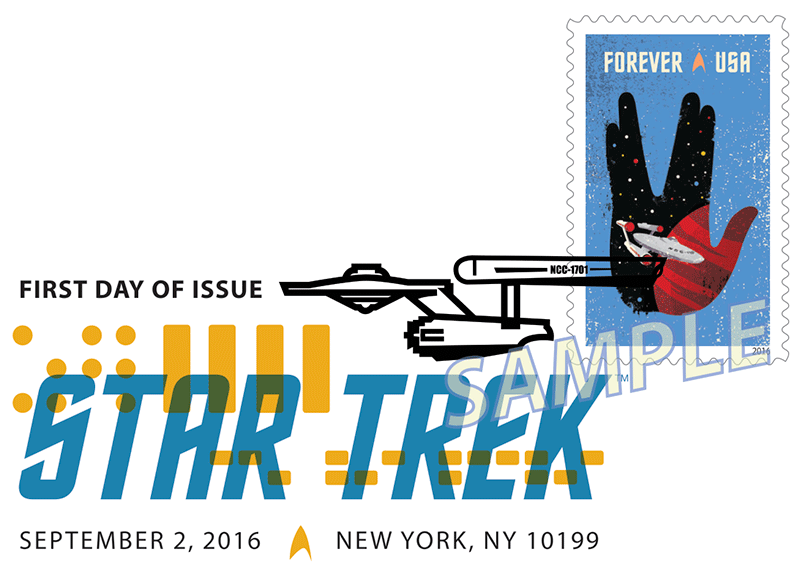 The Digital Color Postmark measures 3.0” x 1.39”
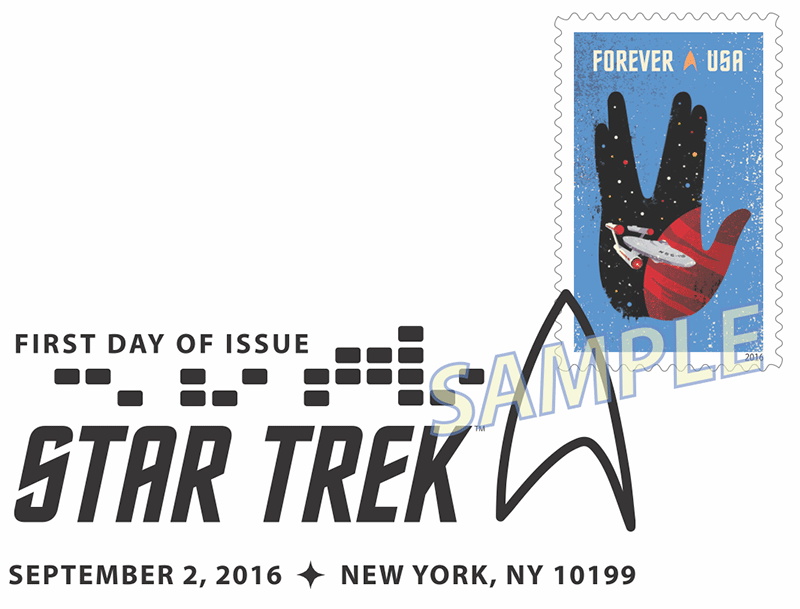 The B&W pictorial measures 2.78” 1.33”
 The “special” postmark that local post offices may use measures 3.0” x 1.12”.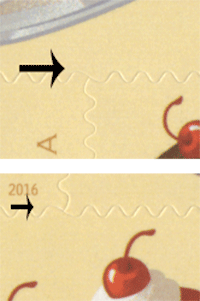
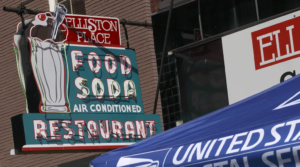 NASHVILLE — The U.S. Postal Service Thursday June 30 dedicated the Soda Fountain Favorites Forever Stamp booklet featuring the cold, sweet treats beloved by people of all ages. The ceremony was held at the Elliston Place Soda Shop in Nashville.
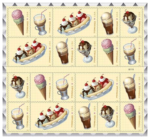 This booklet includes four of each design. The words “FOREVER*USA” are featured along the right edge of each stamp. The geometric silver-toned patterns in the selvage and on the booklet cover evoke a classic chrome-accented soda fountain. The words “Soda Fountain Favorites” appear across the top of the booklet cover. Art director Ethel Kessler designed the stamps, with illustrations by Nancy Stahl.
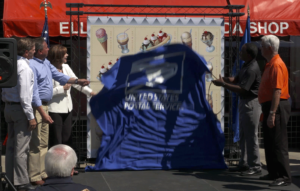 “The Postal Service issues a few dozen stamps each year. And each year, there are usually one or two edibles on the list,” said Rettinhouse. “In the past few years, grapes, pears and even wedding cakes have been immortalized with postage stamps. But I venture to say that we have tapped into something special with Soda Fountain Favorites.”
 The ice cream soda’s precise origin is not clear, but by the turn of the 20th century, it had become a fountain staple. Adding a creamy scoop or two of chocolate or strawberry to a soft drink only added to its already considerable allure. The rise of refrigeration helped establishments produce, serve and store frozen confections, whose popularity surged. After all, it was difficult to resist thick milkshakes, malts, and sundaes topped with syrups, sauces, whipped cream and cherries.
 In cities and towns across the United States, the soda fountain was an important gathering place. When Prohibition banned alcohol sales, people flocked to soda fountains. During World War II, soda fountains popped up at military bases in the United States and abroad, because drinking a soda or indulging in a sundae reminded soldiers of simple pleasures at home.
 Soda Fountain Favorites is being issued as a First-Class Mail Forever booklet of 20. These Forever stamps will always be equal in value to the current First-Class Mail one-ounce price.
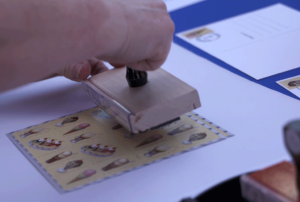
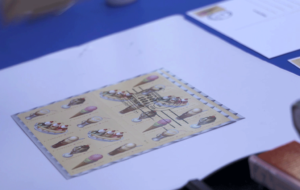
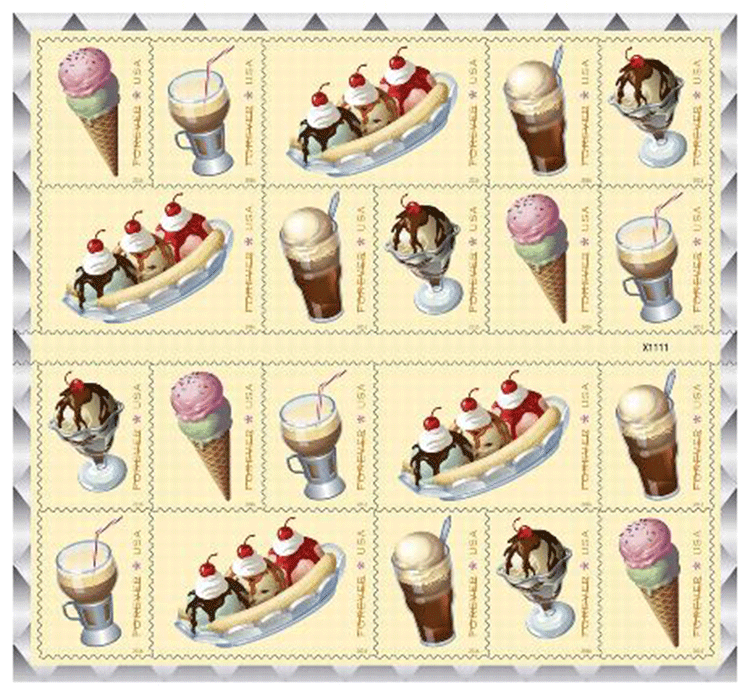 On June 30, 2016, in Nashville, TN, the U.S. Postal Service® will issue Soda Fountain Favorites stamps (Forever® priced at 47 cents) in five designs, in a pressure-sensitive adhesive (PSA) convertible booklet of 20 stamps (Item 680800).
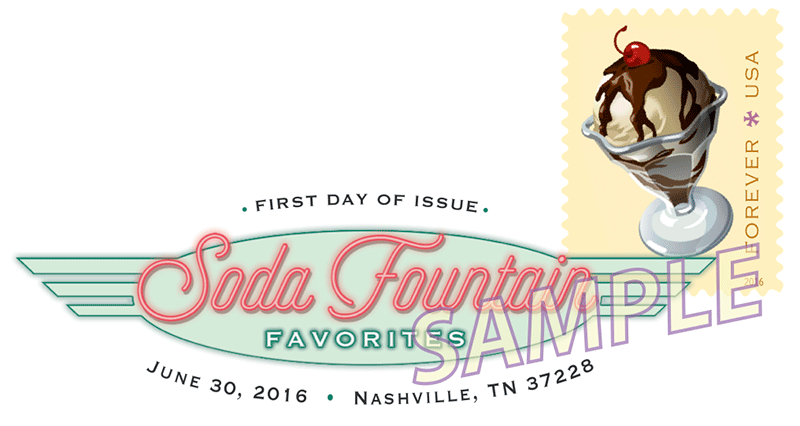 This postmark measures 3.0″ x 0.9″
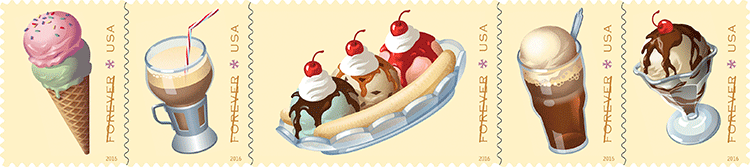 5 designs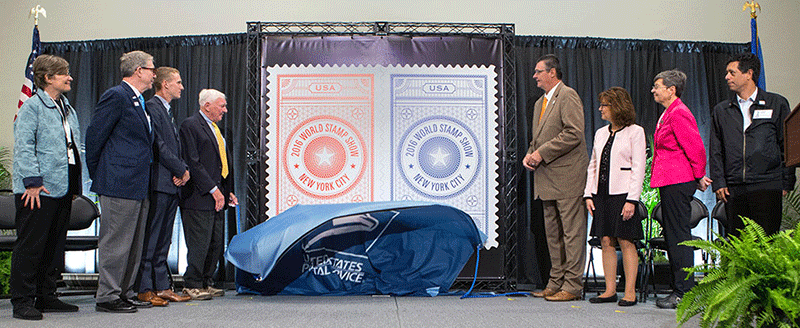
 “Whether you’re a seasoned collector or you’re new to the hobby, these stamps will serve as a wonderful souvenir of the show,” said U.S. Postal Service Chief Marketing and Sales Officer Jim Cochrane while dedicating the new stamps. “The show gives visitors the unique opportunity to meet with thousands of fellow philatelists, expand their own collections and gain a greater appreciation of the many stamps and collections on display from around the world,” added Cochrane.
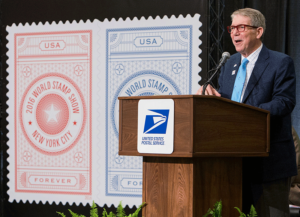 To add to the excitement and appeal for stamp collectors, these new stamps have been printed in intaglio – line engraving reminiscent of fine 19th-century stamps and banknotes. These stamps will be sold only at the stamp show in New York, and through mail, telephone and online ordering channels for those unable to attend the show. The stamps will not be available through local Post Offices. They will be sold only as a complete set / Folio of 24 stamps, and the price is $11.28 (24 X $0.47). (Photo left: Randy Neil, editor, American Stamp Dealer & Collector, who as a boy
 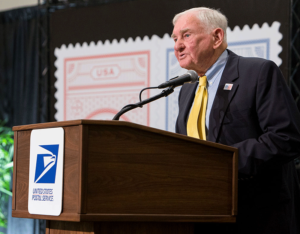 attended the last “international” held in New York, FIPEX, in 1956. Photo right: Bob Lamb, former executive director, American Philatelic Society.)
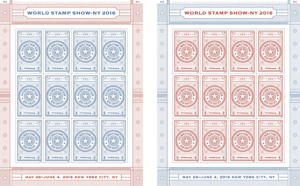 Issue: World Stamp Show-NY 2016 Folio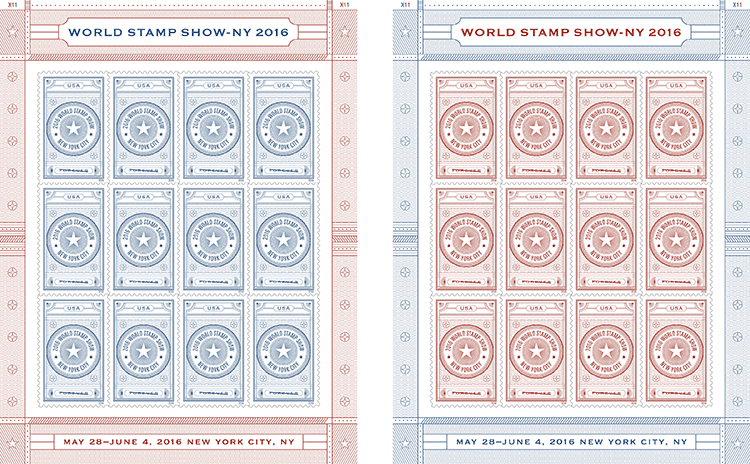
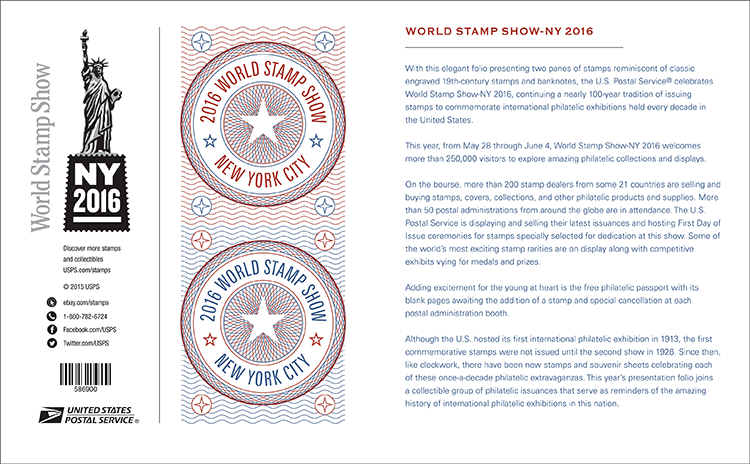
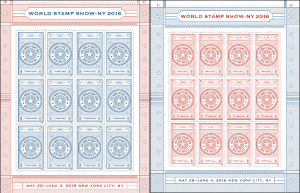 The folio, which will appear in the May 12, 2016 edition of the Postal Bulletin (PB 22441), will go on sale nationwide May 28, 2016.
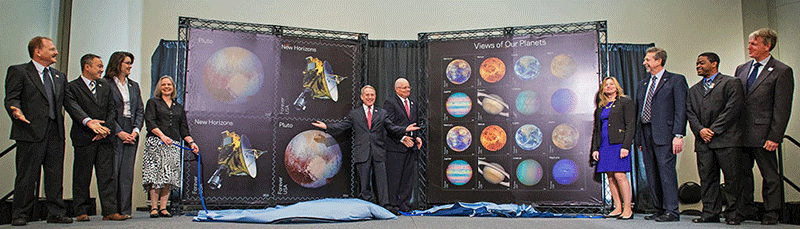 Left to right, Dr. Dan Durda; Dr. Constantine Tsang; Cindy Conrad; Alice Bowman; Dr. Alan Stern, New Horizons Principal Investigator, Southwest Research Institute; David Williams, COO and Executive VP, USPS; Dr. Ellen Stofan, NASA Chief Scientist; Dr. Jim Green, NASA Director of Planetary Science; Delontae Jenkins, National Oceanic and Atmospheric Administration; Norman Kuring, Oceanographer, NASA Goddard Space Flight Center, Greenbelt MD. (Ceremony photographs courtesy USPS/Daniel Afzal.)
 “In 1991, the Postal Service issued a Pluto: Not Yet Explored stamp that served as a rallying cry for those who very much wanted to explore it,” said U.S. Postal Service Chief Operating Officer and Executive Vice President David Williams in dedicating the stamps. “At the time, Pluto was still considered a planet, and it was the only one in our solar system that hadn’t been visited by a spacecraft.”
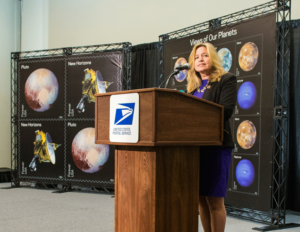 America,” added Williams. “We trust they’ll find a home in your own collections too.”
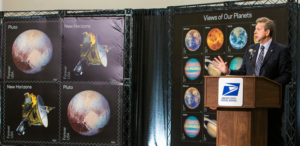 “These breathtaking new images of Pluto and our planets make for an exciting day for NASA and for all who love space exploration,” said Green (left). “With the 2015 Pluto flyby, we’ve completed the initial reconnaissance of the solar system, and we’re grateful to the U.S. Postal Service for commemorating this historic achievement.”
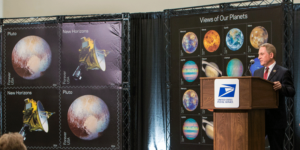 “The 1991 stamp that showed Pluto ‘not yet explored’ highlighted some important, unfinished business for NASA’s first exploration of the planets of our solar system,” said Dr. Alan Stern, principal investigator for the New Horizons mission. “I’m thrilled that 25 years later, these new stamps recognize that Pluto has indeed been explored by the New Horizons spacecraft and revealed to be a complex and fascinating world.”
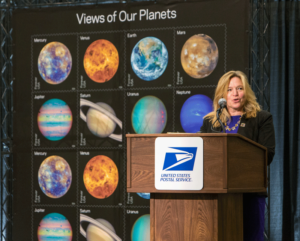 “The issuing of these ‘Views of our Planets’ and ‘Pluto Explored’ stamps has special significance for NASA, since this represents the culmination of a half-century of space exploration,” said NASA Chief Scientist Ellen Stofan. “With the July 14, 2015 flyby of Pluto, we’ve completed the checklist of all the classical planets and can now declare—‘mission accomplished.’”
 ue Marble” image of Earth.
 The 45-minute ceremony was followed by an autograph session, in which speakers and VIPs signed first day of issue programs for hundreds of stamp enthusiasts—the line snaking through the hallways of the Javits Center in New York City (Photos above (USPS), left, and below (NASA)).
  The planetary stamps are now being sold at most U.S. post offices. The Pluto—Explored! Forever stamps are available online or by calling 800-782-6724.
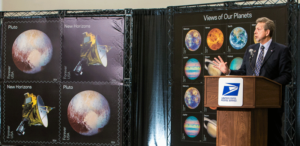 “These breathtaking new images of Pluto and our planets make for an exciting day for NASA and for all who love space exploration,” said Green (left). “We’re grateful to the U.S. Postal Service for commemorating this historic achievement.”
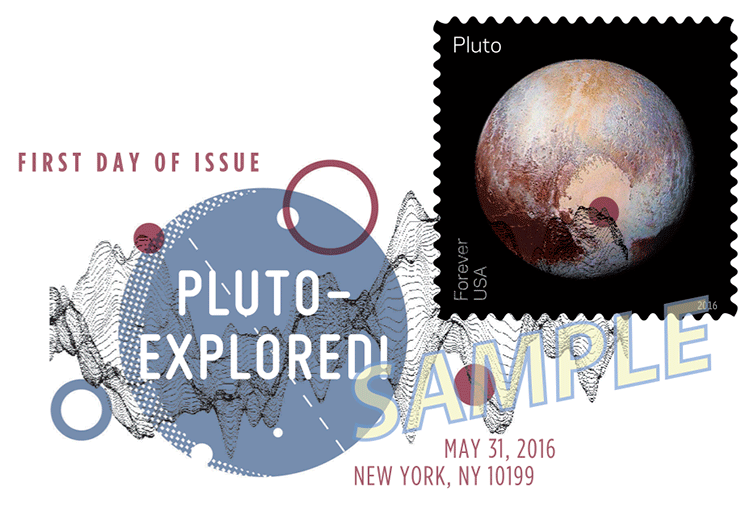 The DCP measures 2.51” x 1.38”
 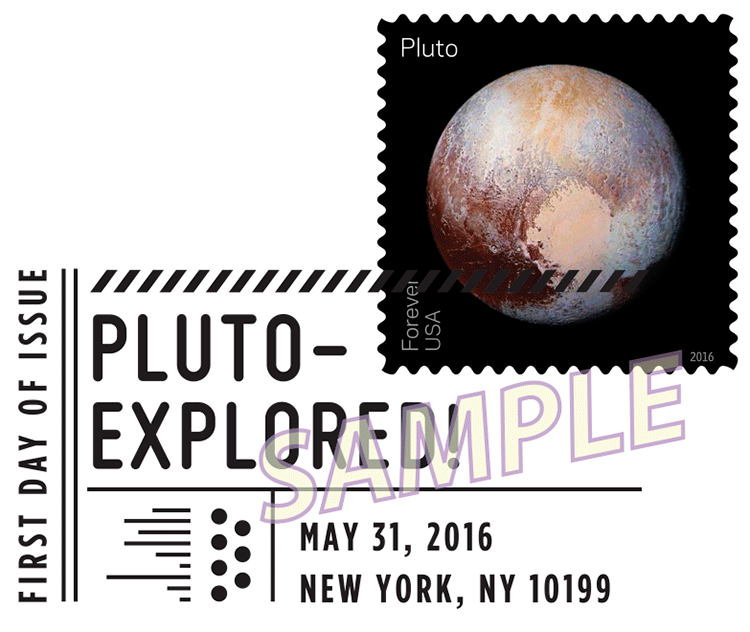 The pictorial measures 2.19 x 1.17”
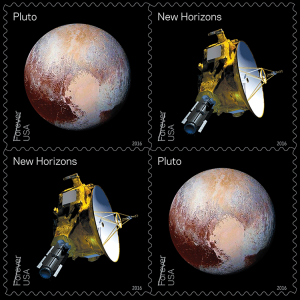 On May 31, 2016, in New York, NY, the U.S. Postal Service® will issue the Pluto – Explored! stamps (Forever® priced at 47 cents) in two designs, in a pressure-sensitive adhesive (PSA) pane of four stamps (Item 586600). The Pluto – Explored! pane of stamps may not be split, and the stamps may not be sold individually.
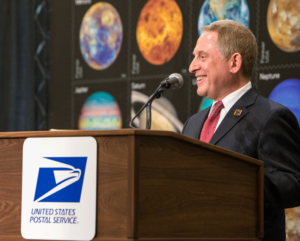 “The 1991 stamp that showed Pluto ‘not yet explored’ highlighted some important, unfinished business for NASA’s first exploration of the planets of our solar system,” said Dr. Alan Stern, principal investigator for the New Horizons mission. “I’m thrilled that 25 years later, these new stamps recognize that Pluto has indeed been explored by the New Horizons spacecraft and revealed to be a complex and fascinating world.”
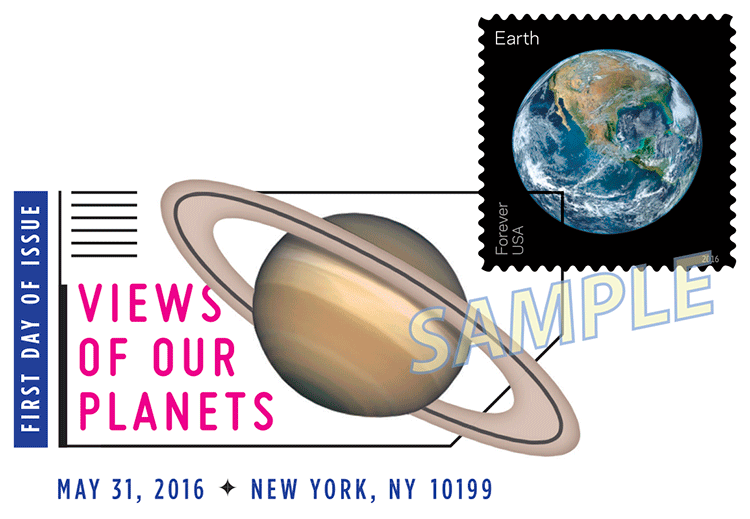 The DCP measures 2.76” x 1.57”
  The pictorial postmark measures 2.42 x 1.45”
 On May 31, 2016, in New York, NY, the U.S. Postal Service® will issue the Views of Our Planets stamps (Forever® priced at 47 cents) in eight designs, in a pressure-sensitive adhesive (PSA) pane of 16 stamps (Item 473600). The Views of Our Planets pane of 16 stamps may not be split, and the stamps may not be sold individually.
 [press release]
 The U.S. Postal Service® has issued stamps to commemorate these two Islamic holidays since 2001. The first Eid stamp, featuring gold calligraphy on a blue background, was issued on September 1, 2001. A new Eid stamp with gold calligraphy against a reddish background debuted in 2011 and was reissued with a green background in 2013. All Eid issuances to date have featured the work of world-renowned calligrapher Mohamed Zakariya of Arlington, Virginia.
 On June 10, 2016, in Dearborn, MI, the U.S. Postal Service® will issue the EID Greetings stamp (Forever® priced at 47 cents) in one design, in a pressure-sensitive adhesive (PSA) pane of 20 stamps (Item 556200).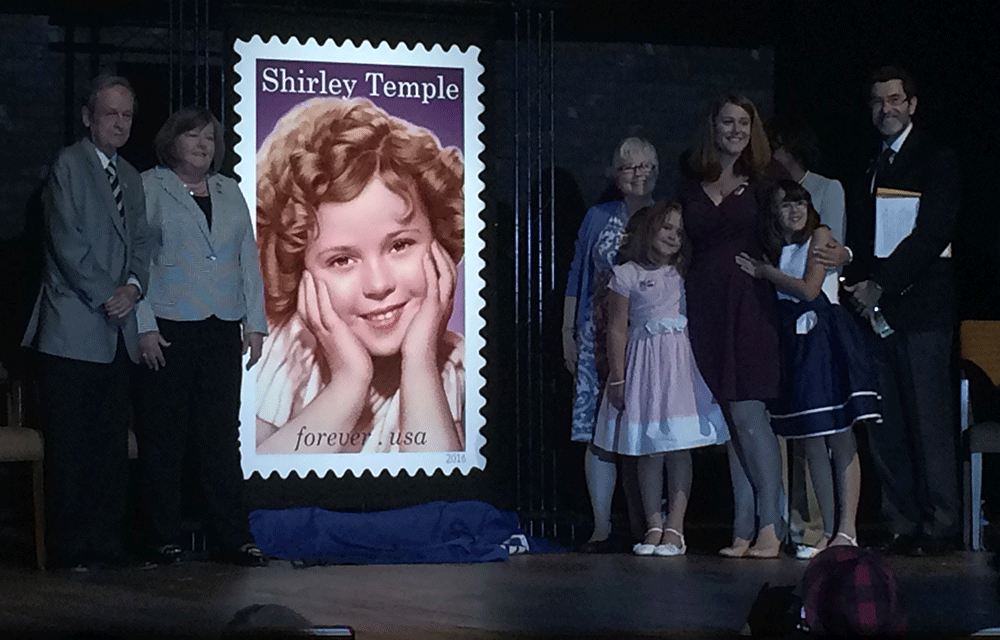
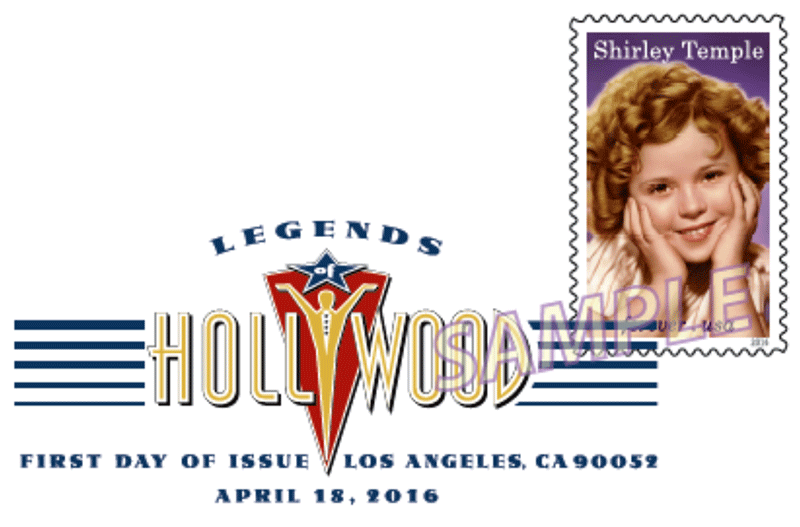 The Digital Color Postmark measures 3″x1.3″
 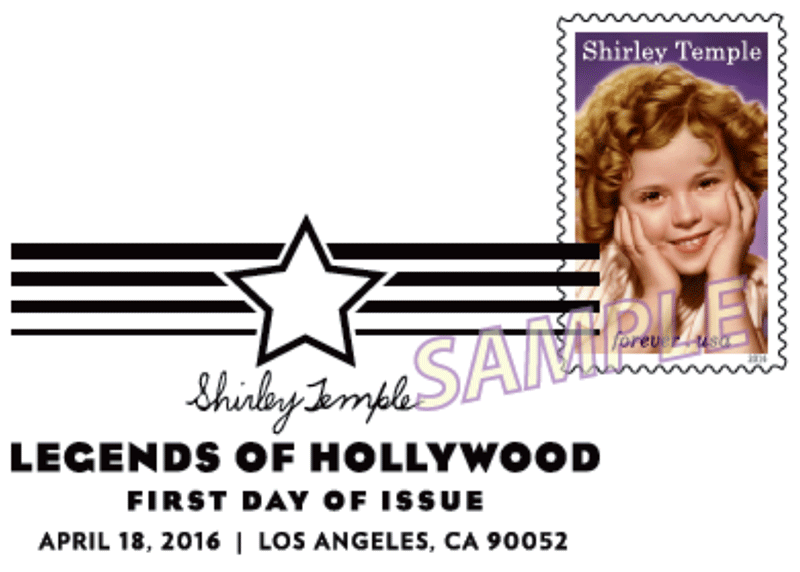 The B&W “hand cancel” measures 2.6″x1.5″
 On April 18, 2016, in Los Angeles, CA, the U.S. Postal Service® will issue the Shirley Temple stamp (Forever® priced at the First-Class Mail® rate) in one design, in a pressure-sensitive adhesive (PSA) pane of 20 stamps (Item 473900).
 Updated March 16th:
 The stamp art is a painting by artist Tim O’Brien; it is based on a 1935 image from Curly Top, one of the child star’s iconic movie roles. The stamp has the words “Shirley Temple” along the top, with “Forever” and “USA” on the bottom. The selvage features a publicity photo from the 1933 short film Managed Money. The Shirley Temple artwork is based on photos © Twentieth Century Fox Film Corporation. The pane’s selvage and verso include biographical text about her acting and diplomatic careers. Art director Ethel Kessler designed the stamp and pane.
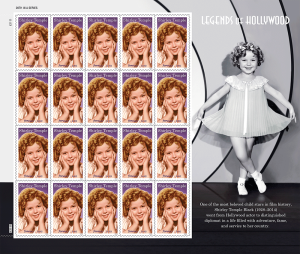 Mired in the economic tribulations of the Great Depression, moviegoers found joy and escape from everyday cares in the child star’s bright smile, deep dimples, and irrepressible spirit. Her hairstyle, made up of 56 perfect corkscrew curls, was the envy of little girls everywhere. However, her adorable looks were not her only asset; Shirley Temple was also a talented performer. She took the roles written for her—usually involving a motherless or orphan child who melts the hearts and fixes the problems of the adults around her—and raised them to a level beyond cliché.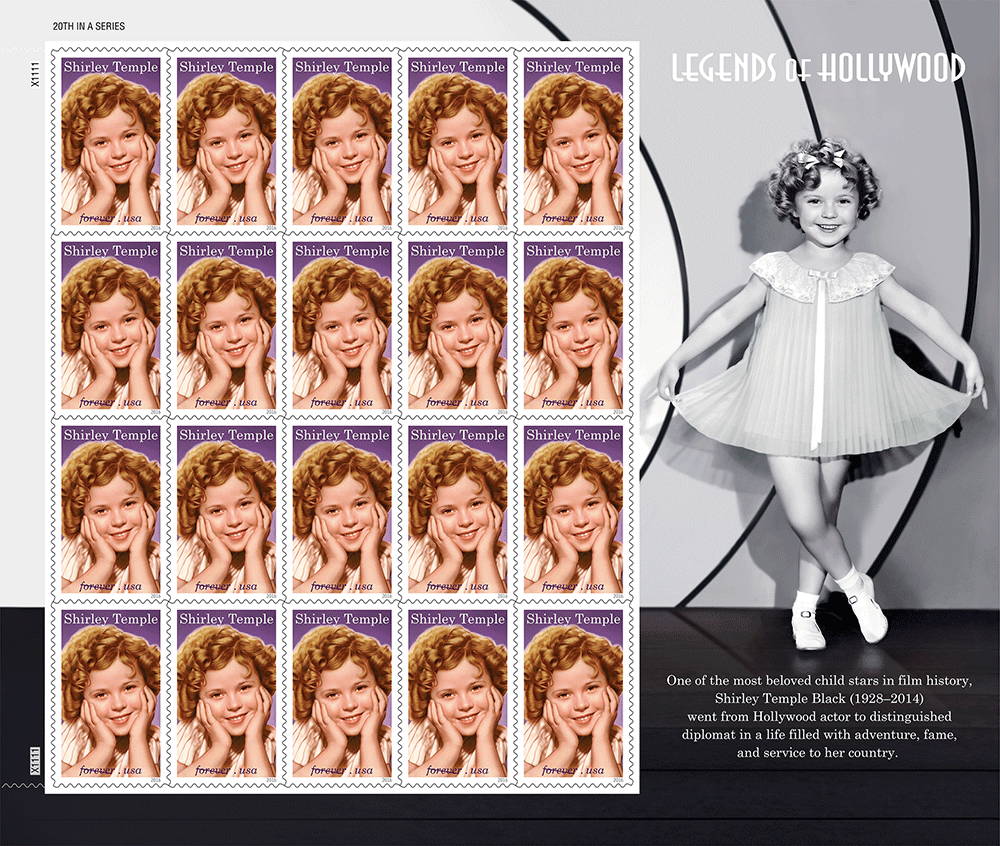
 5145-5148 (47¢) Holiday Window Views
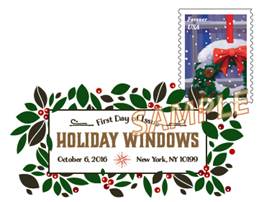 It measures 2.94” x 1.48”. The B&W postmark for this issue is the standard 4-bar First Day of Issue postmark.
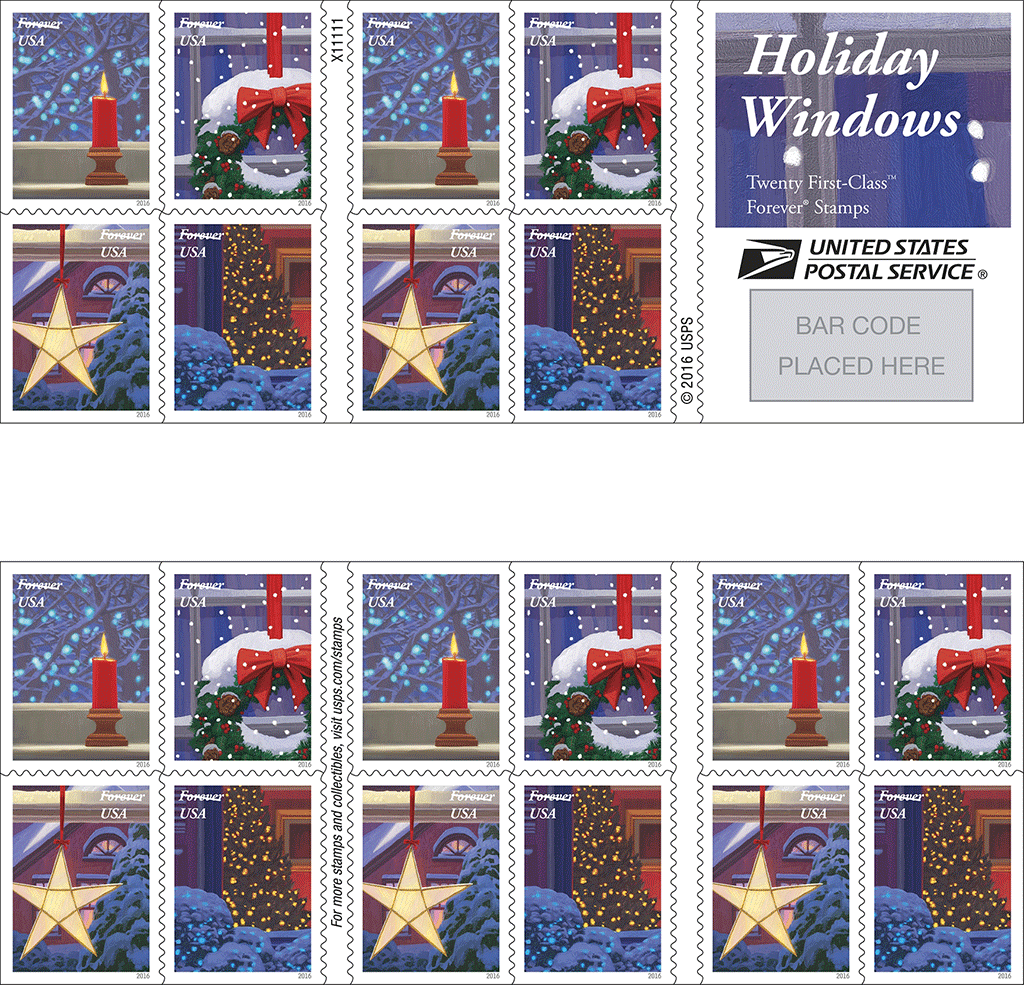
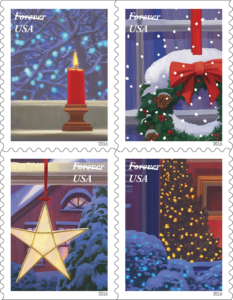 On October 6, 2016, in New York, NY, the U.S. Postal Service® will issue the Holiday Windows stamps (Forever® priced at 47 cents), in four designs, in a pressure-sensitive adhesive (PSA) booklet of 20 stamps (Item 681500).