[press release] [click on any of the pictures for larger versions]
Royal Mail Marks the 50th Anniversary of Concorde’s First Commercial Flight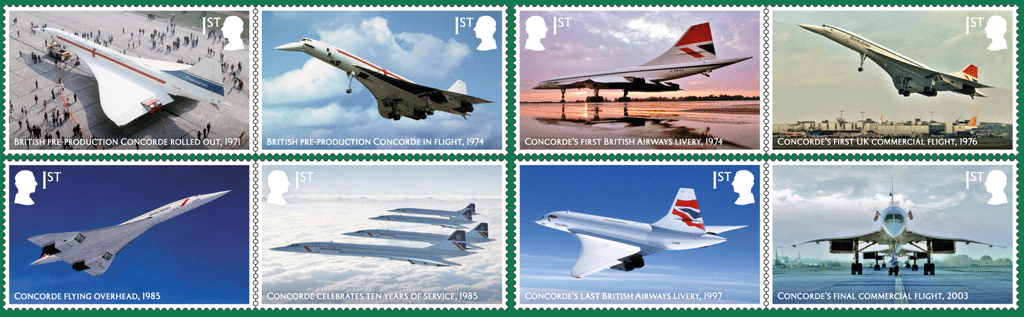
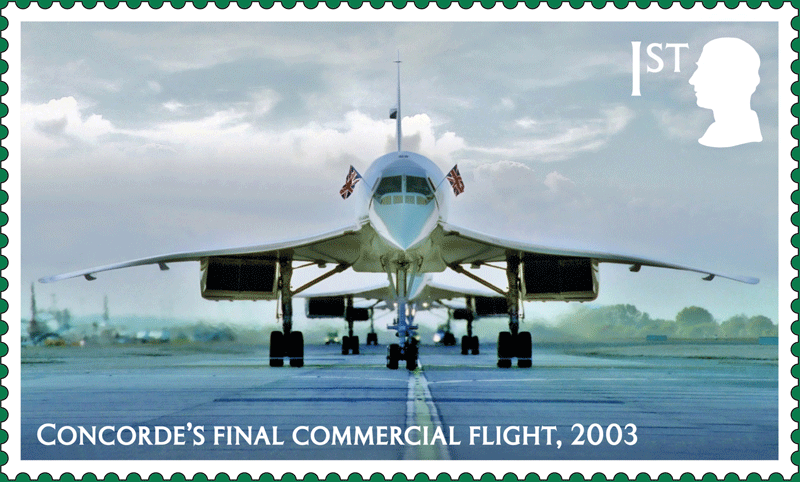
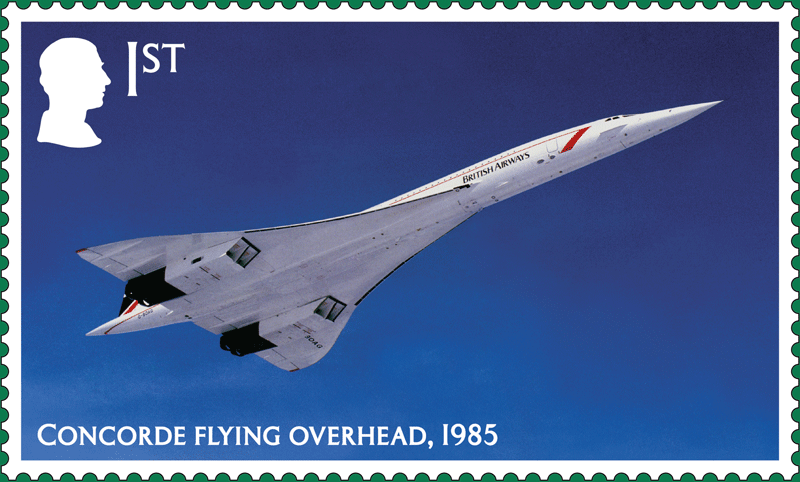
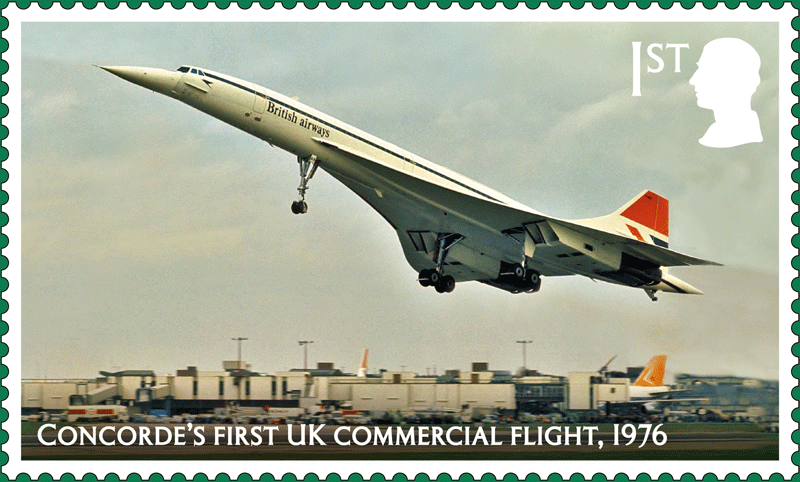
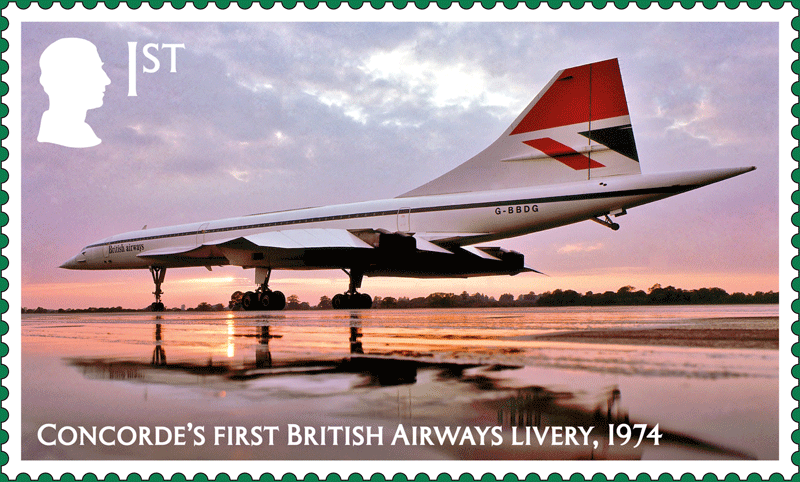
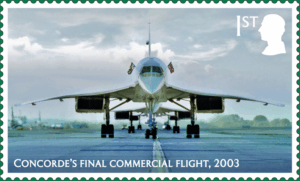
- The set comprises eight stamps featuring stunning photography of the British Airways aircraft throughout its history, including its first and last commercial flights
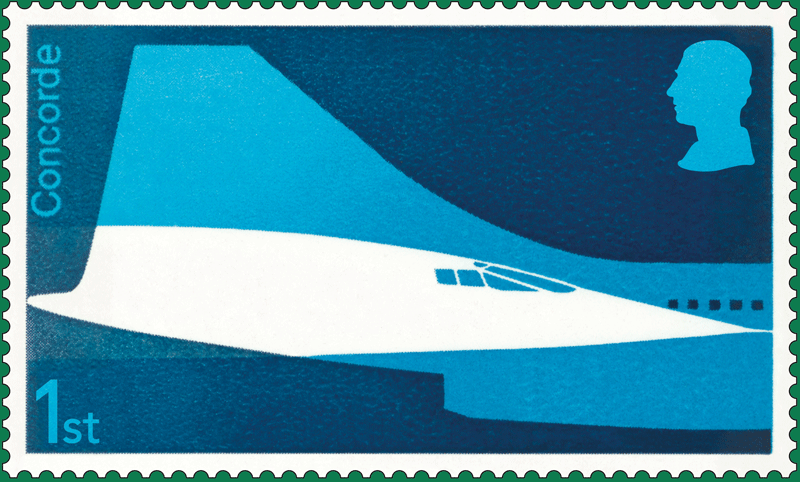
- A further four stamps, presented in a miniature sheet, includes three re-released
 stamp images and a never-before-seen design, previously shortlisted but not adopted
- The stamps and a range of collectible products are available now at www.royalmail.com/concorde and by telephone on 03457 641641
Royal Mail on 21 January issued a set of 12 stamps to mark the 50th anniversary of Concorde’s first commercial flight, in 1976.
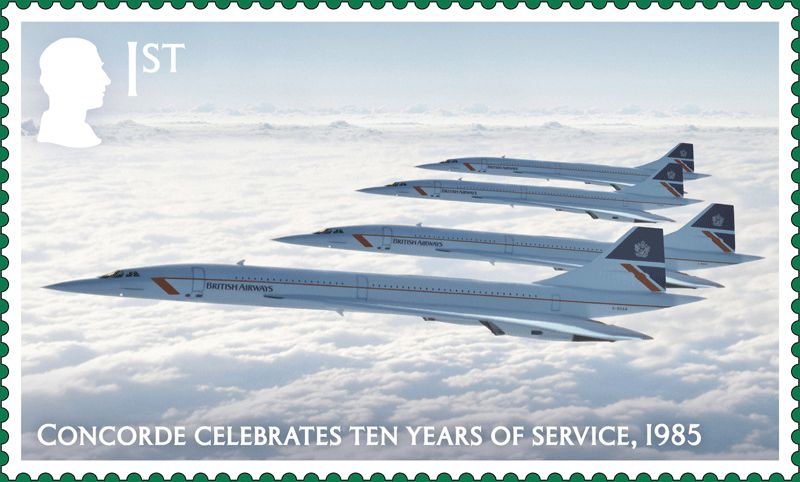
The main set of eight stamps features stunning photography of the British Airways aircraft throughout its history, including its first and last commercial flights. One of the stamps uses photography of four Concordes flying in formation to celebrate 10 years of service.
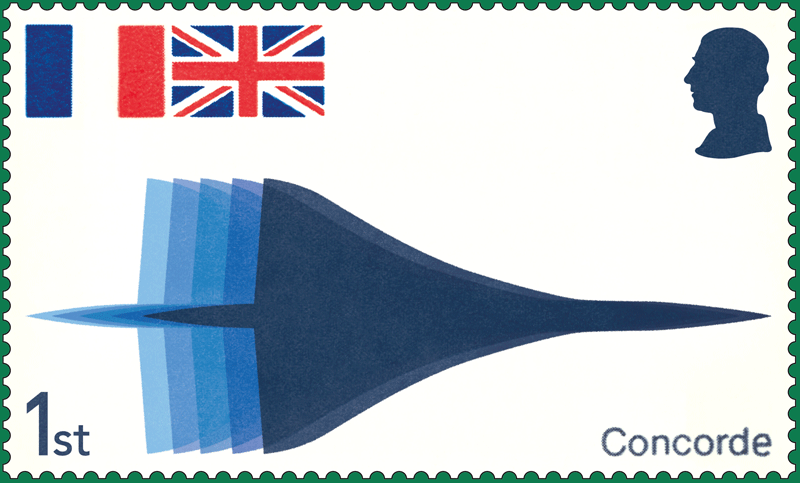
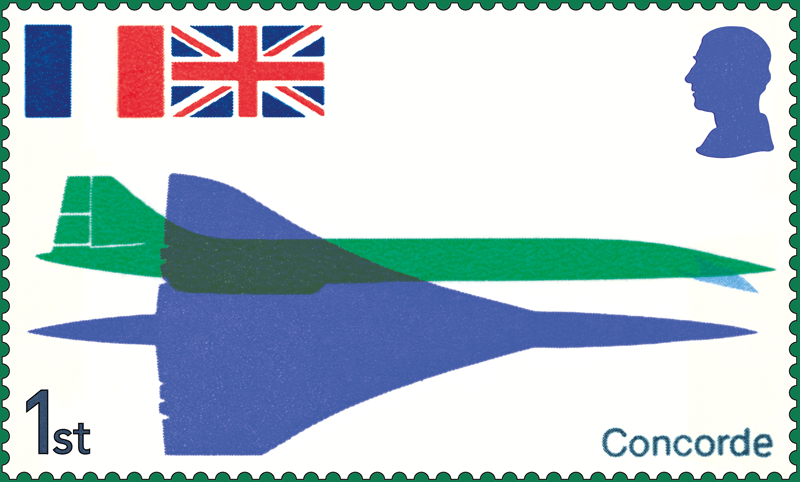
A further four stamps, presented in a miniature sheet, include three previously issued stamp images and one never-before-seen design.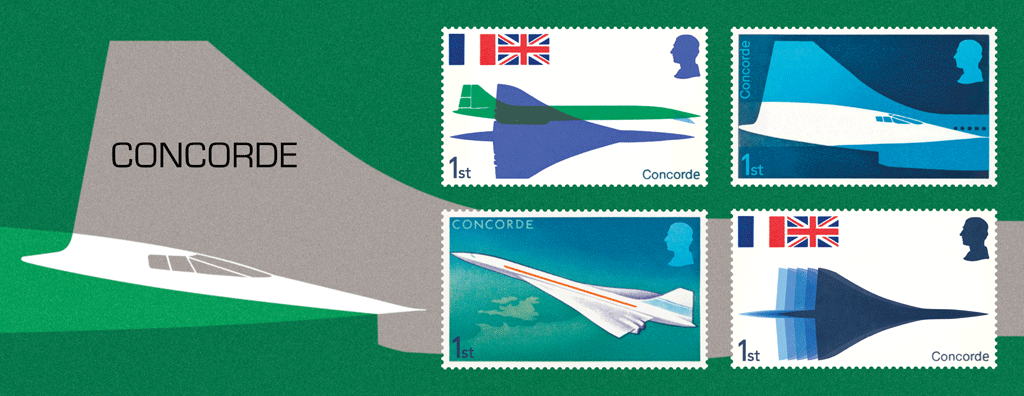
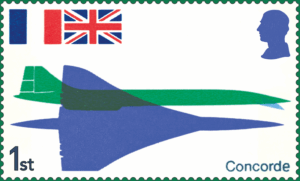
Commissioned for the 1969 ‘First Flight of Concorde’ issue, two are designed by influential British stamp designer David Gentleman, and one by Michael and Sylvia Goaman. Royal 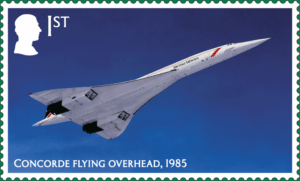 Mail are re-releasing the stamps, now showing the King Charles III silhouette, along with a fourth stamp design by David Gentleman that was previously shortlisted but not adopted in the 1969 set.
The miniature sheet border image is inspired by the design of the original presentation pack from 1969.
The idea of stamps to be issued following the first flight of Concorde was agreed in July 1967 by the British and French postal services, albeit not using a common design. The 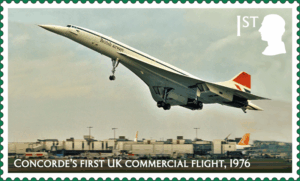 decision was revealed to the British public on 14 December that year.
Five leading designers were invited to submit concepts for a new series of British stamps celebrating Concorde and the collaboration between France and the United Kingdom. The stamps were intended to capture the innovation and international partnership behind the supersonic aircraft.
Postmaster General Edward Short shortlisted five designs from the submissions. His final choice – one by the Goamans, two by Gentleman – received the approval of Queen 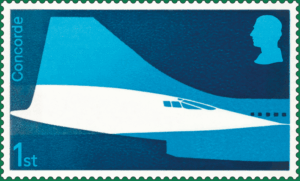 Elizabeth II in January 1968.
David Gold, Director of External Affairs & Policy, Royal Mail, said: “Concorde remains one of the most iconic achievements in aviation history, and we’re proud to celebrate its legacy with this special set of stamps. These designs pay tribute to the innovation, elegance, and engineering excellence that made Concorde a symbol of British ingenuity and ambition.”
Hamish McVey, Director of Marketing, British Airways, said: “Concorde represents a 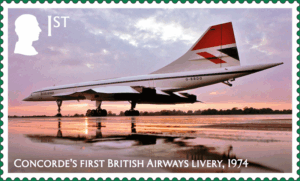 landmark chapter in our history at British Airways, embodying the pioneering spirit of British innovation and creativity that remains integral to our brand today. The Royal Mail’s celebration of 50 years since her maiden flight highlights the enduring admiration many people still hold for this remarkable aircraft.”
First commercial flight of Concorde – 21 January 1976:
On Wednesday, 21 January 1976, at precisely 11:40 GMT, the captains of two Concordes – British Airways in London and Air France in Paris – simultaneously pushed forward the throttles and unleashed, for the first time with commercial passengers, the full force of their 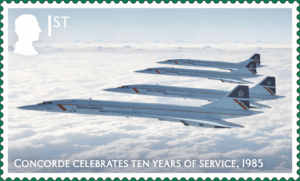 reheated, Rolls-Royce Olympus engines.
Supersonic passenger services had begun.
Air France Concorde F-BVFA, the first of seven Concordes destined for Air France, flew to Dakar in West Africa to refuel and then on, across the Atlantic Ocean, to Rio de Janeiro. British Airways had taken delivery of G-BOAA, the first of its seven Concordes, just a week before and, on 21 January 1976, ‘Alpha Alpha’ spearheaded the British assault on the sound barrier.
Flying at subsonic speeds initially, over Paris, the Alps and Venice, ‘Alpha Alpha’ then 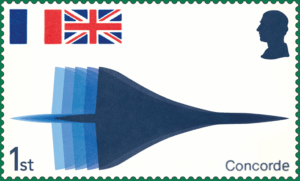 broke through the sound barrier over the Adriatic Sea and accelerated to Mach 2, faster than a rifle bullet, while the champagne flowed. Crossing Lebanon and Syria in just six minutes and arriving in Bahrain just over three-and-a-half hours after leaving Heathrow, the passengers had experienced something special that day and were whisked away to a celebratory banquet hosted by the Amir of Bahrain.
Fifty years ago, history was made, with supersonic travel undoubtedly becoming one of the greatest milestones in aviation history.
 The stamps, and a range of collectible products, are available from today (21 January) at www.royalmail.com/concorde and by telephone on 03457 641 641. A Presentation Pack including all 12 stamps is priced at £21.30.
Supersonic fact file:
1. CONCORDE GREW UP TO 20CM IN LENGTH DURING SUPERSONIC FLIGHT
Once through the sound barrier, the air in front of the aircraft was compressed and, like a hand-operated bicycle pump, would get hot, causing materials to expand. The temperature on the nose of the aeroplane would reach 127°C, despite the ambient air being –60°C. On slowing, Concorde cooled down again and shrank back to its original size. A special type of aluminium alloy was used, which could withstand the long-term stress.
2. THE ENGINE INTAKES WERE CONTROLLED BY THE FIRST DIGITAL COMPUTERS IN CIVIL AVIATION
Just ahead of each Olympus engine, the air intakes had hydraulically driven ramps fitted in the roof which, at speeds above Mach 1.3, would lower and create a supersonic shockwave in the mouth of the intake. This would slow down the air from about 1,350mph (Mach 2) to 350mph (Mach 0.5) in just 11ft (3.4m), boosting the thrust by up to 25 percent.
3. CONCORDE WAS THE ONLY CIVIL AIRCRAFT TO BE FITTED WITH AFTERBURNERS
Used on take-off and to blast through the sound barrier (Mach 1), afterburners gave a further boost in thrust of some 20 percent. They were not needed above speeds of Mach 1.7, as the engine intakes were efficient enough by then to help Concorde ‘supercruise’, meaning the aircraft could climb and accelerate in supersonic flight without needing its afterburners.
4. CONCORDE HAD A ‘DROOPED SNOOT’
As Concorde’s wings were not fitted with flaps and slats like a conventional aeroplane, it came in to land at a very high nose-up ‘attitude’ (angle). To enable the pilots to see the runway ahead of them, Concorde’s nose and integrated visor could be lowered by 12.5 degrees. Above 280mph, the nose was fully raised and the visor acted as a heat shield in supersonic flight.
5. RECORD FLIGHT TIME ACROSS THE ATLANTIC: 2 HOURS, 52 MINUTES AND 59 SECONDS
In a record that still stands today, Concorde completed the fastest journey between London and New York by any passenger airliner. On 7 February 1996, Concorde ‘Alpha Delta’ flew from New York to London in a second under 2 hours and 53 minutes.

 was issued January 13 by the Postal Regulatory Commission. The restriction goes into effect on March 1 and is in effect through September 30, 2030. The USPS had been raising rates each January and July, although it had already said it would not raise rates in January 2026.
 present), the mail agency is seeing deeper net losses each year and is far from breaking even.