
By John M. Hotchner
The thrill of the chase often ends with a long sought pur- chase, and then begins the fun. The thrill of the chase beckons again, and the new purchase goes in a box to be put into the album some rainy day when there is nothing else to do. The problem is that it is far more satisfying to own something than to do the work to get it where it belongs. So, often times the box gets full of sets, mixtures, and covers; which spawns other boxes, and a few  years down the road, a closet full.
If you are among the collectors who go from dealer or mail box directly to your album, I congratulate you. You don’t need this column and you can move on to the next article. But if you are less diligent, and need a prod to prevent sloth and get organized, perhaps the following may be helpful.
My confession: I know whereof I speak. I am part sloth. My own method is to have a row of Kleenex boxes; each labeled with the name of a country or subject that I collect. But that is where my organizing stops. I can go years before a box gets to the point of overflowing and something must be done. Of course by that time, I have usually forgotten what is in the bottom of the box, and clearing the box and checking its contents against the catalogue and album has achieved major project status— something that, depending upon the complexity of the country I’m working with, Chinese overprints for example—may take literally weeks of my not so copious spare time to accomplish.
 Had I done them as I got them, the looming hulk of a project could have been avoided. But oh, how easy it is to put off to tomorrow what I don’t feel like doing today.
The logic is inescapable. It just makes more sense to get things into the album as rapidly as possible. And maybe a review of the logic will be useful to you; recognizing that sloth has a tendency to overcome logic. In my mature years, I have gotten better, but I have a way to go!
So, here are a baker’s dozen benefits of avoiding sloth:
- If you know what you have, you won’t buy it again. How many times have you thought, “I think I have that but I’m not sure. It’s a good price (or a premier copy) so I better pick it up just in case.” Then somewhere down the road, you discover that you have four of the item!
- If you know what you need, not only to fill holes but to improve condition, you can home in on offerings and not waste time on poking through material you don’t need.
- It is actually fun to put items into your album, and a joy to fill in and complete a set or a page. Why deny yourself or delay that sense of accomplishment?
 It is always easier to deal with a small task than to let it become one that looks overwhelming as you face it.
- By identifying what you need right out of the gate, and just as importantly, what is excess, allows you to trade off or sell what you can make some bucks on. Few of us have unlimited resources, so some inflow of dollars will often permit you to hunt for more material.
- I have seen in my time as an appraiser too many instances where boxes and closets of accumulated material costs the collector or the collector’s heirs significant sums. Why? Because there were pearls hidden among the swine (not to criticize pigs—a fine and useful animal). But a dealer, an auctioneer, or an appraiser may not have the time to open every envelope, assess perforations and watermarks, and thus identify goodies that are not marked as such. At least in their proper place in an album, they will be more obvious.
- If you or your heirs have to pay for the time it takes to do a thorough evaluation of a “mess”, literally hundreds if not thousands of dollars can be added to the bill. And if the col- lection is substantial, it may have to be inventoried with some accuracy as part of probate.
- One of the fun parts of checking new acquisitions against the catalogue and your album is that once in a while you will find something that is a listed variety; most often worth more than the routine version. The accumulation-in-a-box method at best delays those finds.
- When YOU know what you have, you are in a position to brief your heirs and assigns about the value of your collec- tion, where to find the good stuff, and what to do with it. Too often I have seen an ill-prepared spouse make a bee-line for the trash compactor with a collection that could have realized real money; let alone that this wanton destruction deprives the hobby of significant collectible material. Their aim is to get their closet back and they have no idea of the potential value of the collection. It might as well be old floor sweepings.
- In general, you will have a happier spouse or significant other. Piles of box lots in the corner of the spare bedroom, on the dining room table, or eating up closet space, is often an affront to the senses; if not yours then the person or people with whom you live. Organizing to the point of album checking tends to reduce consumption of space to what is essential, and an organized collection is much easier on the eyes.
- If you are organized, and everything is in its rightful place, you can find things. This is especially meaningful to me and to other authors who just know we have something that is needed as an illustration, and have to “waste” hours looking for it. Infuriating! Ditto for exhibitors who discover a need for an item to complete a page, know they have it, but can’t find it.
- You will be more attractive to dealers who always ap- preciate a customer who knows what s/he wants, can state it, evaluate rapidly what the dealer has on offer, and if there is a match, make a decision without shilly-shallying.
- One of the benefits of the hobby, and a reason why it is attractive to many collectors, is that a major activity of the collector is to bring order out of chaos. Our hobby becomes a way that we can exercise some level of control in a world which seems quite out of control—because, in fact, it is. We lose that benefit when a jumble of philatelic material becomes overwhelming.
So, there you have it. Organize and you will be doing yourself a favor!
Should you wish to comment on this column, or have questions or ideas you would like to have explored in a future column, please write to John Hotchner, VSC Contributor, P.O. Box 1125, Falls Church, VA 22041-0125, or email, putting “VSC” in the subject line.
Or comment right here.
 The Republic’s English-language website can be found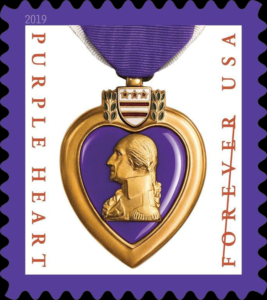
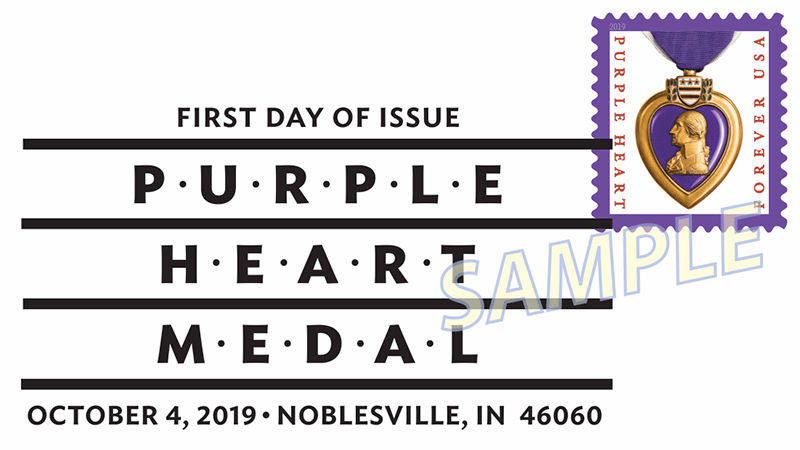 It measures 2.72″ x 1.48″. There is no DIgital Color Postmark for this issue. There is, however, a “special” postmark other post offices may use in connection with this issue:
 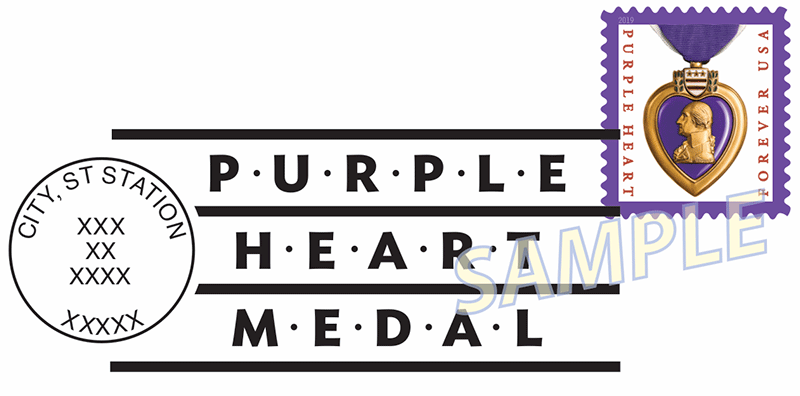 It measures 2.89″ x 1.15″
 [American Philatelic Society chief content officer Thomas Loebig says the ceremony’s start time is 11 a.m. One of the speakers will be APS president Bob Zeigler, an Indianapolis resident [shown on the left]. “If anyone knows of a Purple Heart recipient in the Indianapolis area, please connect me with them,” he posted on Facebook. “I’d like to make sure they are part of the ceremony.” His email address is
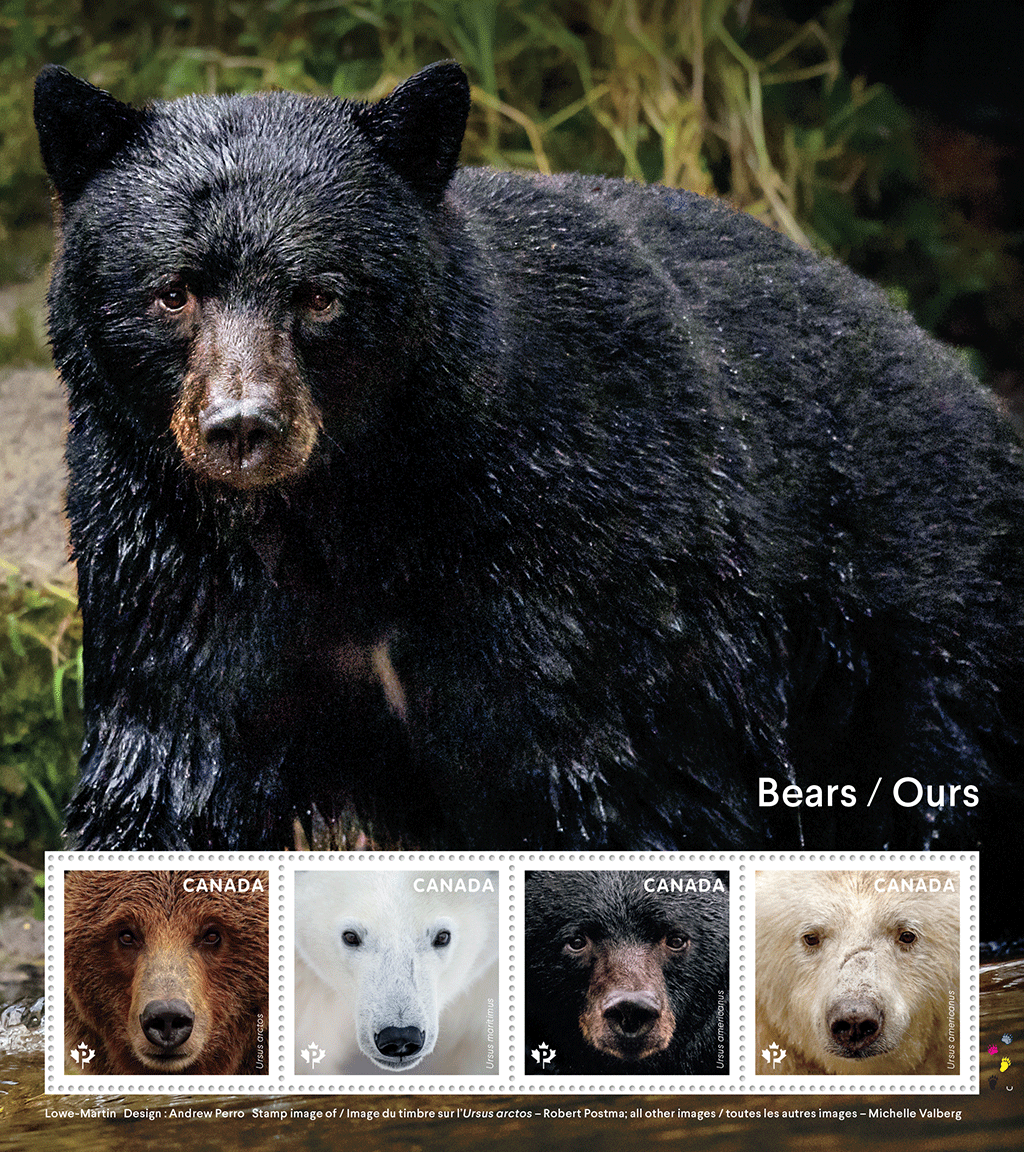
 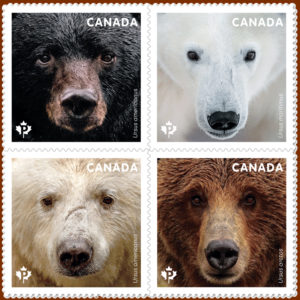 Unfortunately, some populations are threatened by habitat loss and human activity – making conservation efforts critical to their survival. The Committee on the Status of Endangered Wildlife in Canada (COSEWIC) has assessed polar bears and western populations of the grizzly bear as being of special concern. Polar bears are affected significantly by the loss of sea ice due to climate change, while grizzlies are dwindling in number due to human encroachment.
 The
The  Found in coastal regions of British Columbia, the
 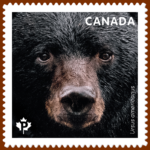 the world for more than 20 years capturing award-winning images.
 [The link directly to the Bears stamps is
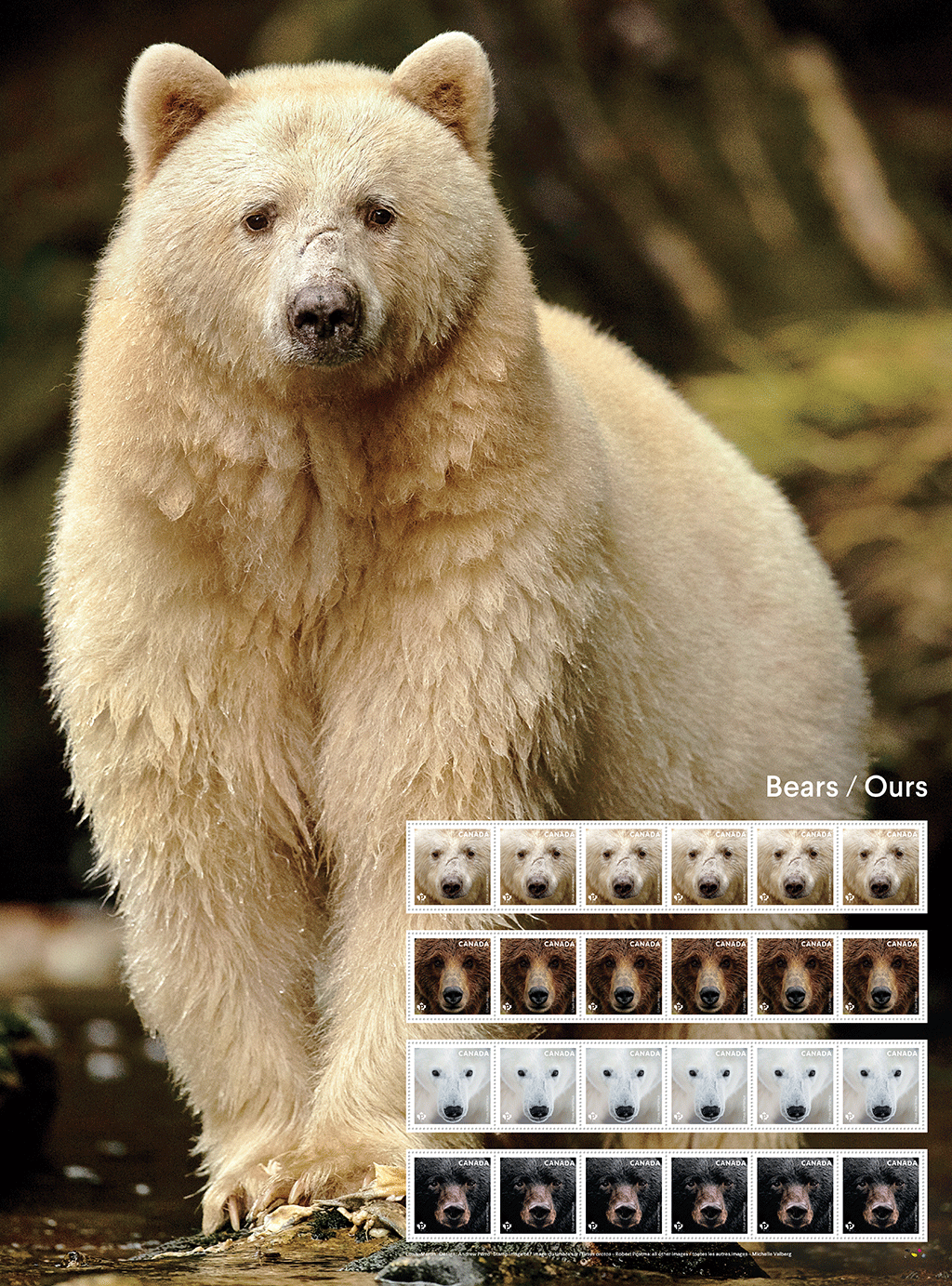
  Here is the press sheet for this issue:
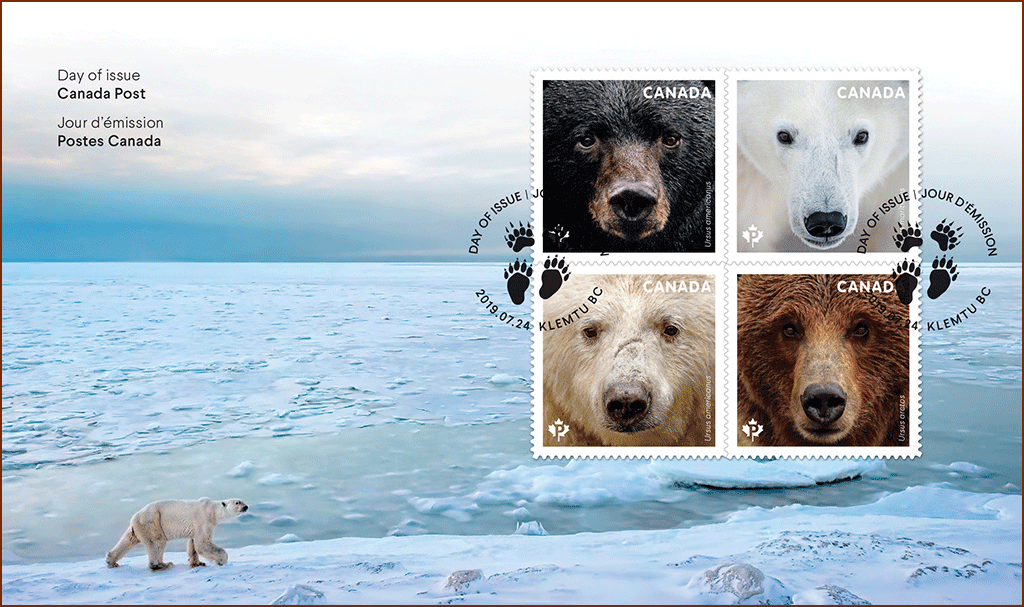
  Here is the Official First Day Covers:
  Here is the pane of stamps:
  Here is the booklet version: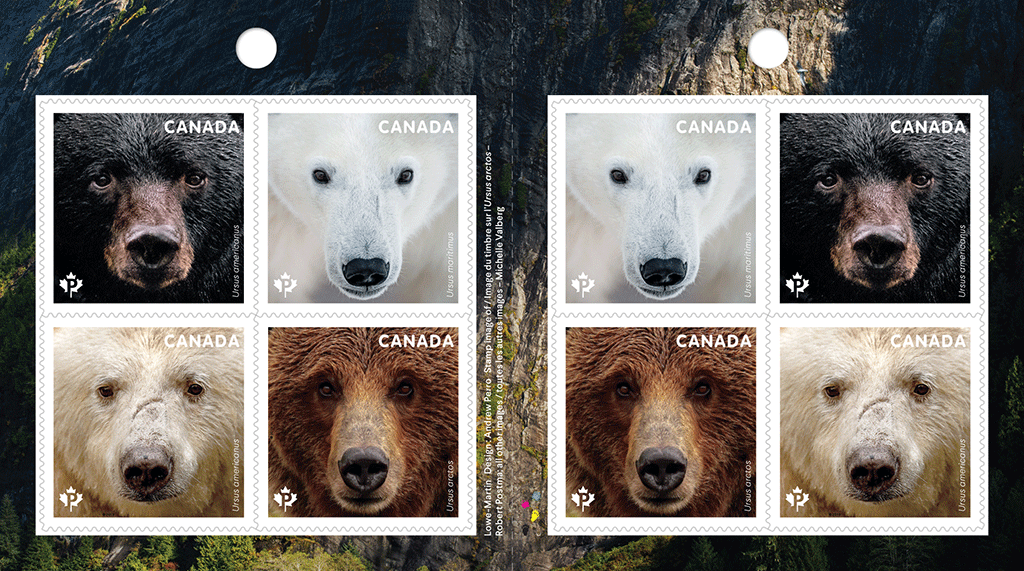
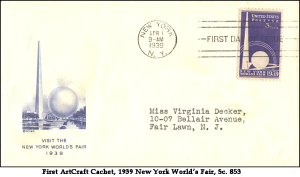 ft (cachet) archives: Plates, original artwork and 20 boxes of envelope proofs. He will have this material at his super-booth at Americover 2019, held next weekend, July 26-28, at the Renaissance St. Louis Airport Hotel.
 Bellefonte, PA— July 17, 2019 — Today, the American Philatelic Society, the largest, non-profit organization for stamp collectors in the world, announced its sponsorship of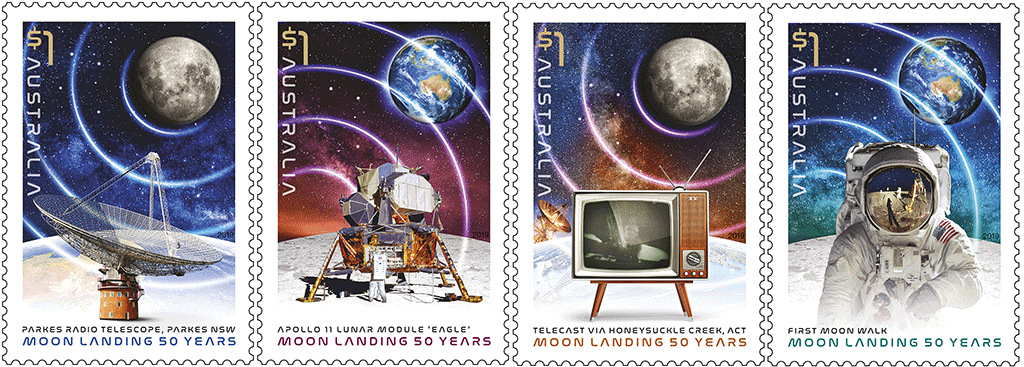
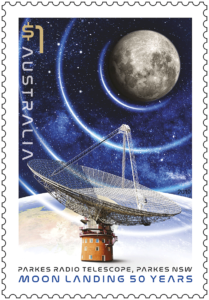
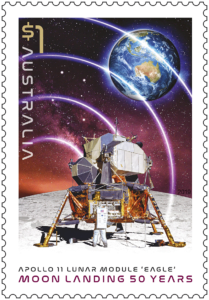 Australia Post Philatelic Manager Michael Zsolt said the stamp release celebrates the magnitude of the occasion but also Australia’s small but significant part in it.
 was used for descent to the lunar surface and served as a base while the astronauts were on the Moon.
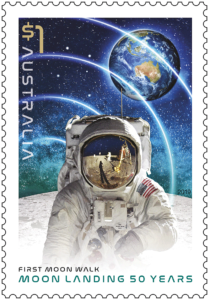 With around 600 million people watching on television, he climbed down the ladder and proclaimed: “That’s one small step for [a] man, one giant leap for mankind.”
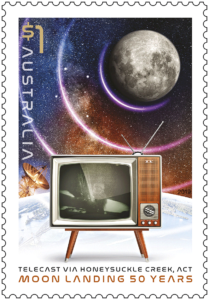 medallion cover, and four booklets of 10 x $1 self-adhesive stamps.
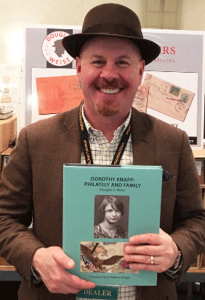 The show is being held July 26-28 at the Renaissance St. Louis Airport Hotel (9801 Natural Bridge Road in St. Louis). The FDCs will be at the booth of Weisz Stamps & Covers. Proprietor Doug Weisz [right] is assisting the H.R. Harmer auction firm with getting Eldon Mohler’s vast collection of cacheted first day covers ready for sale. Some of the material will be sold at a series of auctions beginning in the fall, but Weisz will have nearly two hundred boxes of covers from the collection at his booth at Americover 2019.