[press release]
Iconic British Owls
-
- 10 stamps feature five species of Owls that breed in the UK
- Stamp images show the: Barn Owl; Little Owl; Tawny Owl; Short-eared Owl and Long-eared Owl
- Five stamps feature adults and a further five stamps depict them as juveniles
- These much loved iconic British birds have been the source of fascination over the ages
- There are more than 200 species of owls worldwide and all are deadly hunters
- The stamps are available to pre-order from today at www.royalmail.com/owls and from 7,000 Post Offices nationwide from 11 May
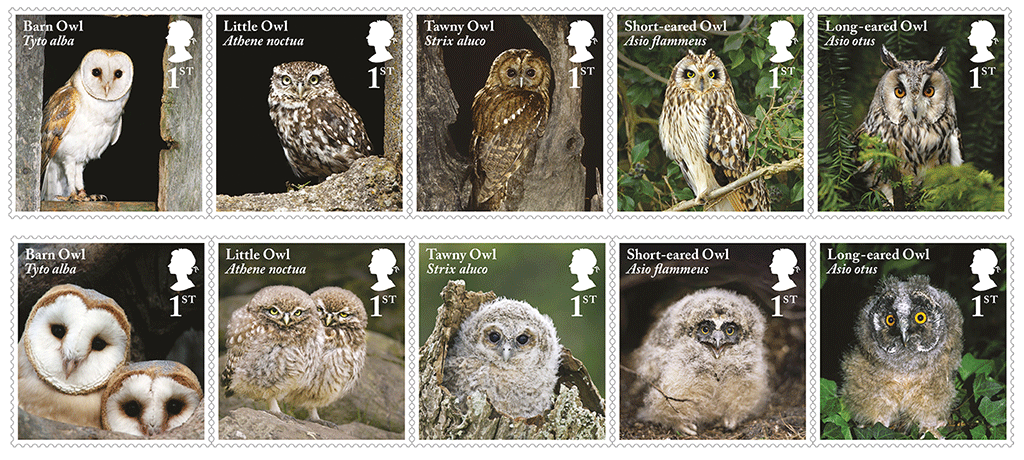
Royal Mail will issue 10 stamps that pay tribute to the much loved, iconic, British owl.
The stamp set, issued on 11 May, shows adult and juvenile images of the: Barn Owl; Little Owl; Tawny Owl; Short-eared Owl and Long-eared Owl.
 From the mostly nocturnal Barn Owl, to the Short-eared Owl that hunts in the daylight, the stamps depict five species of Owls that breed in the UK.
There are more than 200 species of owls worldwide and all are deadly hunters – from the tiniest pygmy owl to the most imposing eagle owl – thanks to an array of remarkable physical and behavioural adaptations.
A few owl species are active by day, but most hunt between dusk and dawn, and so need eyesight that excels in low-light conditions. The typical owl eye is adapted to make the very most of all available light being tubular in shape rather than round.
 An exemplary sense of hearing is also essential for a bird that hunts in near-total darkness, and whose prey is often concealed under vegetation (or sometimes even snow). All owls have acute hearing, but it is most developed in strictly nocturnal woodland hunters, like the Long-eared Owl.
Owl communication is primarily through sound, and the various calls they make have distinct meanings. Most familiar are the territorial calls – often a complex series of notes that are analogous to the songs of smaller birds. These serve to announce ownership of a territory to rivals and, in males, also function to attract a mate.
Owls, perhaps more than any other birds, have been regarded with such fascination over the ages. Their haunting calls are often the only clue to their presence and when meeting one face to face, it is possible to see almost human-like expressiveness in that direct, intense gaze.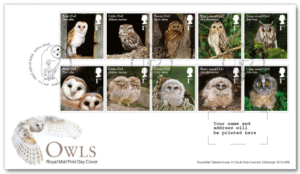
The stamps are available to pre-order from today at www.royalmail.com/owls and from 7,000 Post Offices nationwide from 11 May.
Royal Mail spokesperson Philip Parker says: “Owls are among our most iconic bird species, with their soundless flight and eerie calls, and our new stamps celebrate their beauty.”
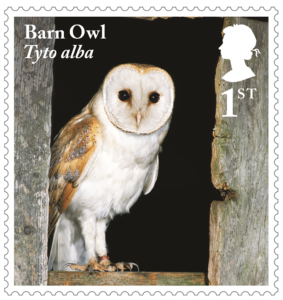
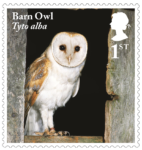 Barn Owl: Also known as the ‘white owl’ and the ‘screech owl’, the Barn Owl is perhaps the UK’s most familiar owl species – most often encountered as a ghostly shape caught in car headlights, or heard rather than seen with its unearthly screaming call. The Barn Owl hunts over all kinds of open country, and tends to nest on ledges inside farm buildings. It is unmistakeable with its white and gold plumage, heart-shaped face, long legs and small dark eyes. While it is mostly
 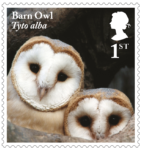 nocturnal, it can also be seen out hunting on summer evenings. It hunts in flight, flying into the breeze for uplift and often hovering before making its strike – its prey mainly located by sound. Barn Owls became very rare following widespread use of the insecticide DDT in the 20th century, but their numbers are now recovering.
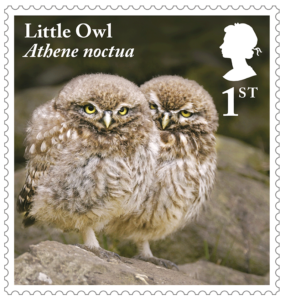
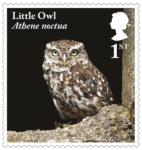 Little Owl: This small, long-legged owl with its bright yellow eyes, white-spotted brown plumage and fiercely frowning expression is common in continental Europe, but not native to the UK. It was deliberately introduced here by ornithologists in the 19th century and has spread widely across southern Britain. Little Owls inhabit woodland and parkland with open grassy areas nearby, and are often seen by day, perched in pairs close to their nest site (usually a hole or crack in a mature
 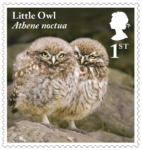 tree), or flying from tree to tree with a distinctive bounding flight action. They hunt mainly insects, dropping on them from a perch or chasing them on the ground. The Little Owl is the national bird of Greece, and has long been recognised as the emblem of Athene, the Greek goddess of wisdom.
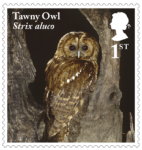 Tawny Owl: The lovely quavering hoot of the Tawny Owl is a familiar night-time sound in woodland, parks and even gardens, but although this is the UK’s most common owl, it is rarely seen, being strictly nocturnal. Tawny Owl pairs stay in their territories year-round and over time build up a great familiarity with the terrain, with favourite hunting watchpoints, roosting sites and a nest site that will be used every year. The owlets leave the nest while still downy and flightless, and climb
 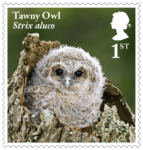 to safe spots among the branches where they wait for food from their parents. The largest of the UK’s owl species, the Tawny Owl is a powerful predator and other owls number among its prey. It is found throughout Great Britain, but is absent from Ireland.
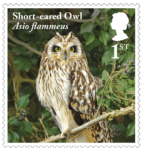 Short-eared Owl: A true nomad, the Short-eared Owl is one of the most widely distributed birds in the world, occurring on all continents except Antarctica. Individuals may travel great distances, stopping to breed where feeding conditions are good. In Britain the species breeds mainly on upland moor in the north and west, but becomes more widespread in winter (and more numerous, as birds arrive from mainland Europe, sometimes in large numbers). A diurnal owl of open moorland
 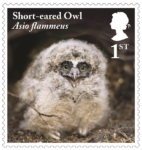 and rough grassland, it hunts on the wing, patrolling back and forth close to the ground, and dropping feet-first upon voles and other prey. In some winters, half a dozen or more may be seen ‘working’ the same field, with coastal areas particularly likely to attract large numbers. The Short-eared Owl is a long-winged owl with grey-brown and sandy, heavily streaked plumage, paler than the similar Long-eared Owl, and with yellow, staring eyes and tiny ear tufts.
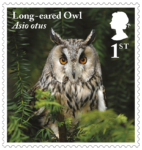 Long-eared Owl: This beautiful, slim, orange-eyed owl is named after its large, cat-like ear tufts, which help to break up its outline as it roosts by day. In the UK it breeds mainly in upland pine forests, but in Ireland (where it does not face competition from Tawny Owls) it is more common and lives in a wider range of habitats. Though the Long-eared Owl nests in woodland, often in the old nest of another bird, it prefers to
 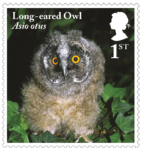 hunt on adjacent open countryside. Its prey mainly comprises small rodents, which it catches either by pouncing from a perch or by searching in flight. The waiting chicks beg with a distinctive ‘squeaky-gate’ call. Long-eared Owls disperse widely in winter, with residents joined by visitors from the Continent, and form winter roosts (which may hold ten or more birds) in thick scrubland.
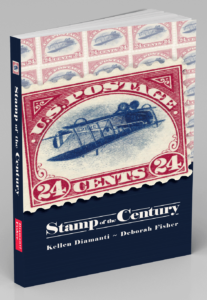 One small error that produced 100 years worth of stories
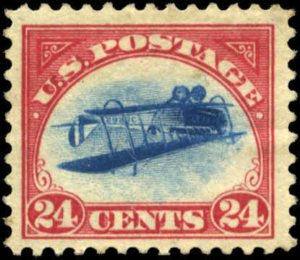 s. Among those you will meet are William Robey, who discovered a sheet of 100 error stamps at a Washington, D.C. post office and ultra-rich collector Colonel Ned Green, whose wealth came from his mother, “the Witch of Wall Street.”
 The book will be officially unveiled May 1 at the National Postal Museum in Washington, D.C. In a day filled with activities at the National Postal Museum, the U.S. Postal Service will issue [the first of] two first-class forever postage
 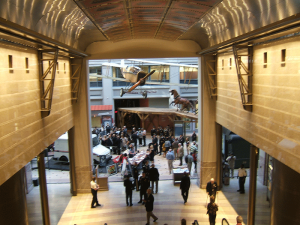 The National Postal Museum is devoted to presenting the colorful and engaging history of the nation’s mail service and showcasing one of the largest and most comprehensive collections of stamps and philatelic material in the world. It is located at 2 Massachusetts Ave. N.E., Washington, D.C., across from Union Station. The museum is open daily from 10 a.m. to 5:30 p.m. (closed Dec. 25). For more information about the Smithsonian, call (202) 633-1000 or visit the museum website at
  With nearly 29,000 members in more than 110 countries, the APS is the largest, non-profit organization for stamp collectors in the world. Founded in 1886, the APS serves collectors, educators, postal historians, and the general public by providing a wide variety of programs and services.
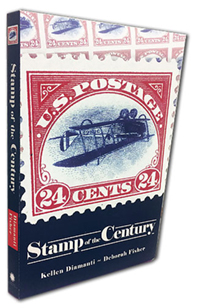 Join us for an evening talk with Kellen Diamanti and Deborah Fisher, authors of Stamp of the Century.
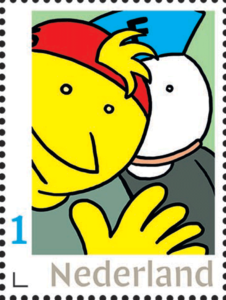 The Hague, 23 April 2018 – PostNL today introduces two new frameworks for the Personal Stamp. Fokke & Sukke decorate the first two completed sheets of Personal Postage Stamps with the new framework in honour of the 25th anniversary of the most famous duck and canary of our country.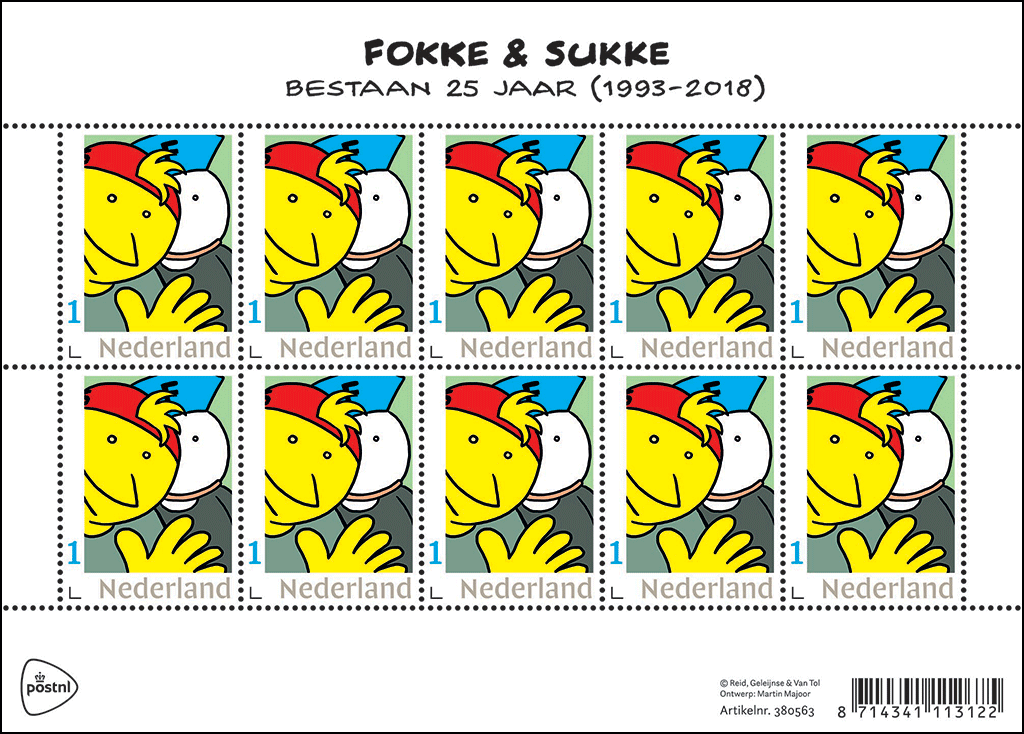
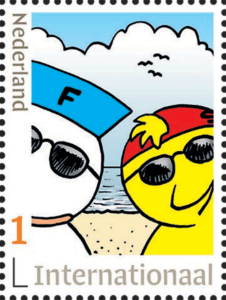 Major also designed a new sans serif letter for the Personal Stamps. “But with the thick-thin variations that you normally associate with serif letters” says Major. “That also fits in with my philosophy to achieve the maximum possible effect with as few elements as possible. As the famous letter designer, Eric Gill, once said about stamps: the more you use them, the simpler they must be.”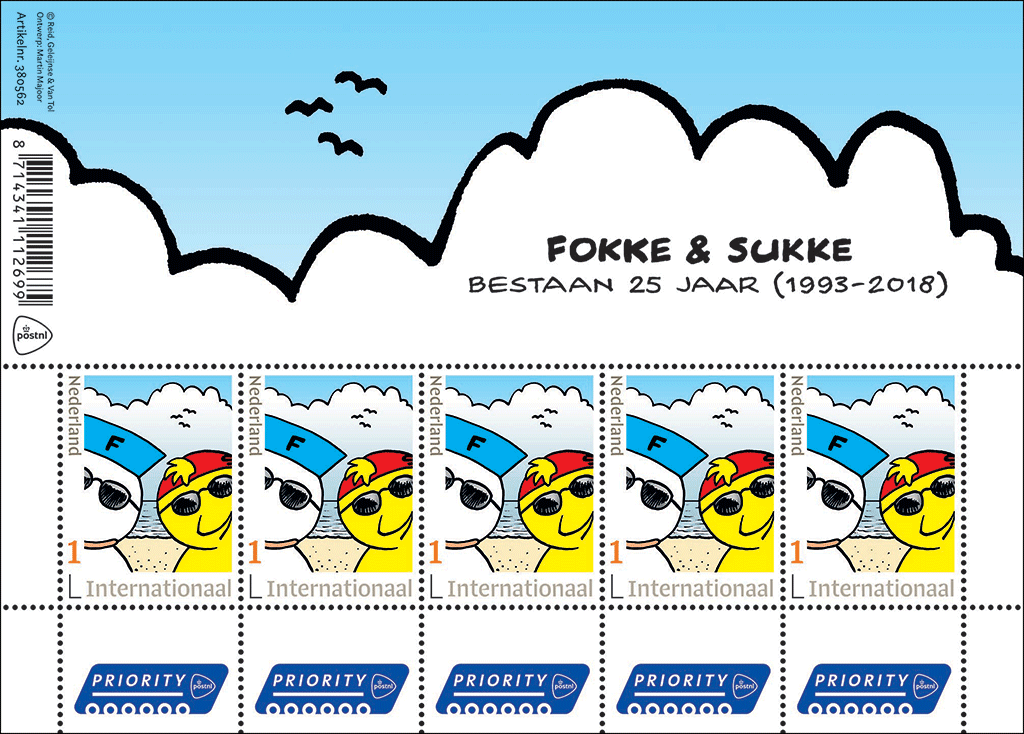
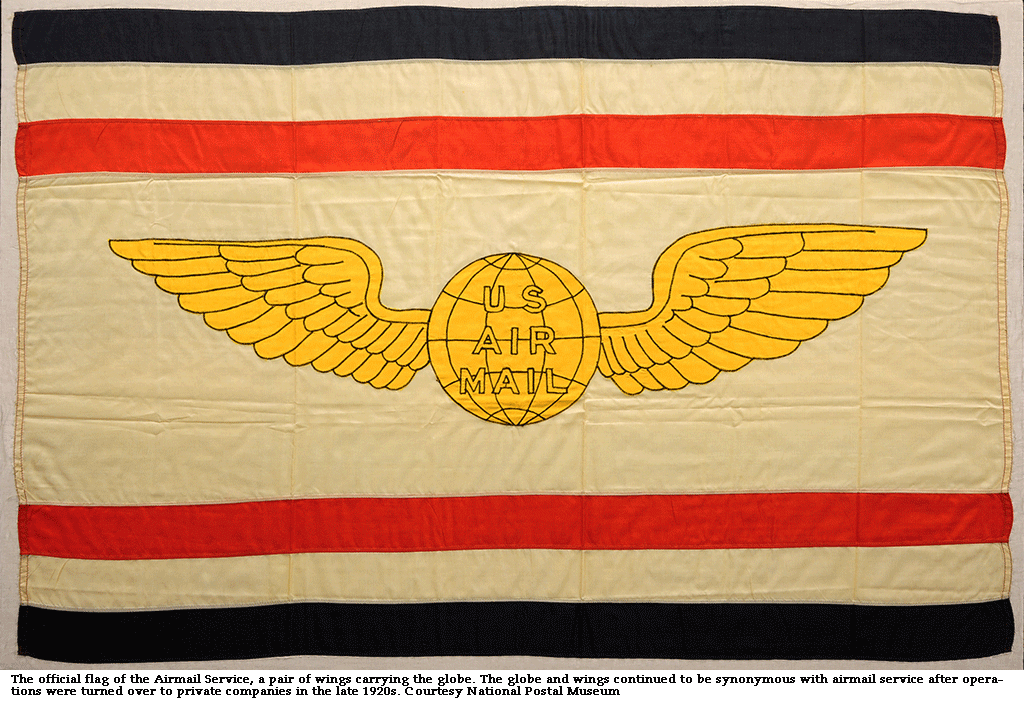
 Postmen of the Skies,” opening Tuesday, May 1, at the Smithsonian’s National Postal Museum, celebrates the 100th anniversary of the first regularly scheduled airmail flights. The exhibition, on view through May 27, 2019, invites visitors to step into the exciting and memorable stories of the airmail pilots whose pioneering flights set the stage for today’s advanced airmail system and commercial aviation.
 In 1918, the first regularly scheduled airmail service began operations. Planes carried mail between Washington, D.C., Philadelphia and New York City. The nation greeted the new service with enthusiasm. Crowds surrounded airfields in all three cities, eager to watch history in action. The nation became more enamored with their postal pilots as the service grew and news of the service traveled. By Sept. 8, 1920, mail was flying between New York and San Francisco.
 “Dozens of pilots sacrificed their lives to fly the mail for the Post Office,” said Nancy Pope, curator of the exhibition. “At a time when mail was the central communication system, moving it securely and speedily was critical to businesses and important to individuals.”
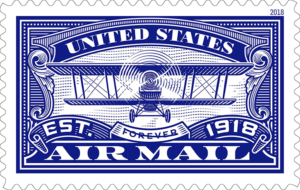
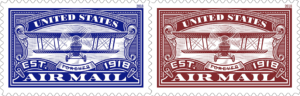 The U.S. Postal Service will honor the beginning of airmail service by dedicating two U.S. Air Mail Forever stamps this year. The first, depicted in blue, commemorates the pioneering spirit of the brave pilots who first flew the mail in the early years of aviation. The first-day-of-issue ceremony will take place May 1 at 11 a.m. at the museum. The event is free and open to the public.
 The National Postal Museum is devoted to presenting the colorful and engaging history of the nation’s mail service and showcasing one of the largest and most comprehensive collections of stamps and philatelic material in the world. It is located at 2 Massachusetts Ave. N.E., Washington, D.C., across from Union Station. The museum is open daily from 10 a.m. to 5:30 p.m. (closed Dec. 25). For more information about the Smithsonian, call (202) 633-1000 or visit the museum website at
  The American First Day Cover Society’s pre-Americover 2018 tour will provide an opportunity for participants to visit some of Atlanta’s best tourist attractions. It will drop off the Americover attendees within two blocks of the College Football Hall of Fame, the Georgia Aquarium, the World of Coca Cola, the Center for Civil and Human Rights museum, and CNN World Headquarters.
 ation, and is $25 if purchased on or before June 30, and $30 after that date, if space is still available.
 are automatically entered in the annual Champion of Champions competitions.
 The Royal Philatelic Society London is to organise a philatelic visit to London for young philatelists aged between 18 and 35. This follows a successful initiative arranged by the Club de Monte Carlo last year.
 Compex
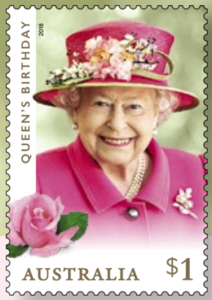
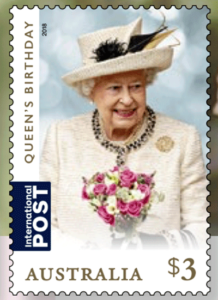 The domestic stamp also features a close-up photograph of the ‘Queen Elizabeth’ (also known as ‘Queen of England’)
– a tall grandiflora rose introduced in 1954. The Queen Elizabeth rose was named to recognise the Queen’s ascension to the British throne in 1952 and subsequent coronation in 1953.
The domestic stamp also features a close-up photograph of the ‘Queen Elizabeth’ (also known as ‘Queen of England’)
– a tall grandiflora rose introduced in 1954. The Queen Elizabeth rose was named to recognise the Queen’s ascension to the British throne in 1952 and subsequent coronation in 1953.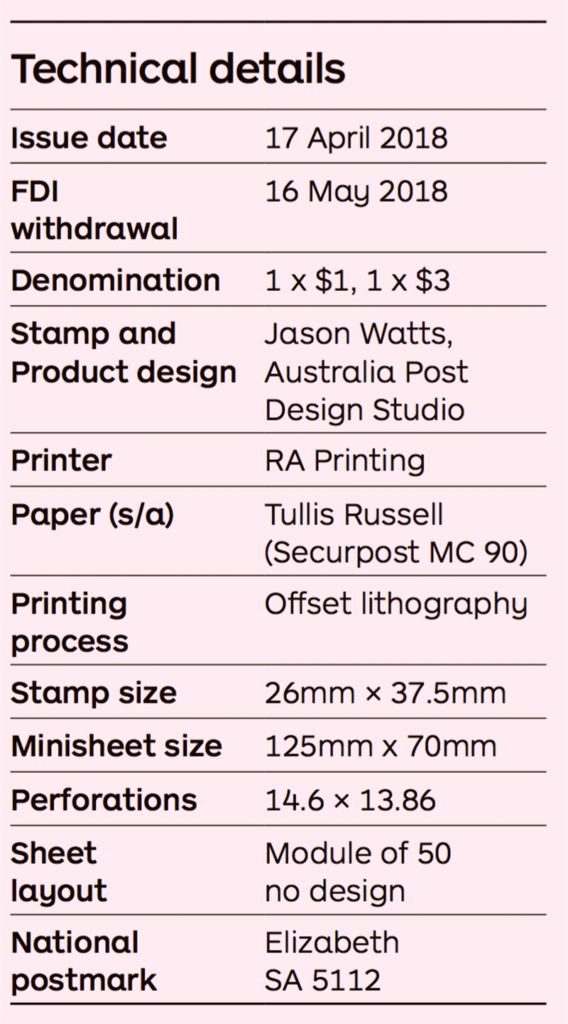
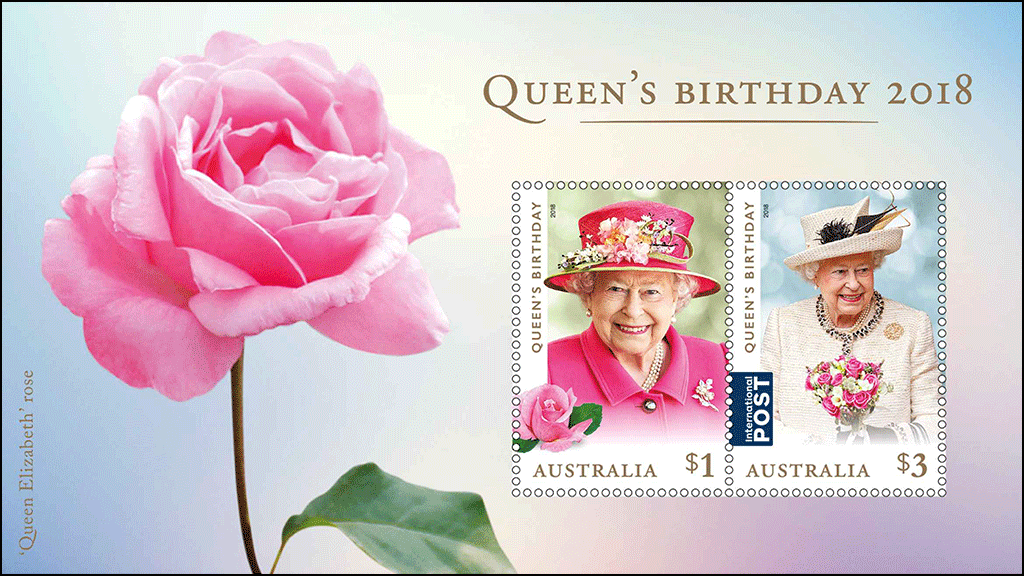 The Queen’s Birthday 2018 stamp issue is available from 17 April 2018 at participating Post Offices, via mail order on 1800 331 794 and online at auspost.com.au/stamps, while stocks last. Please visit