From Israel Post, October 9th:
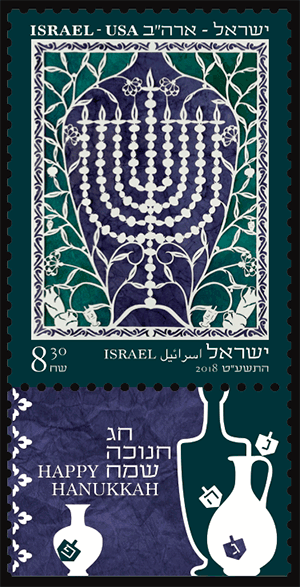
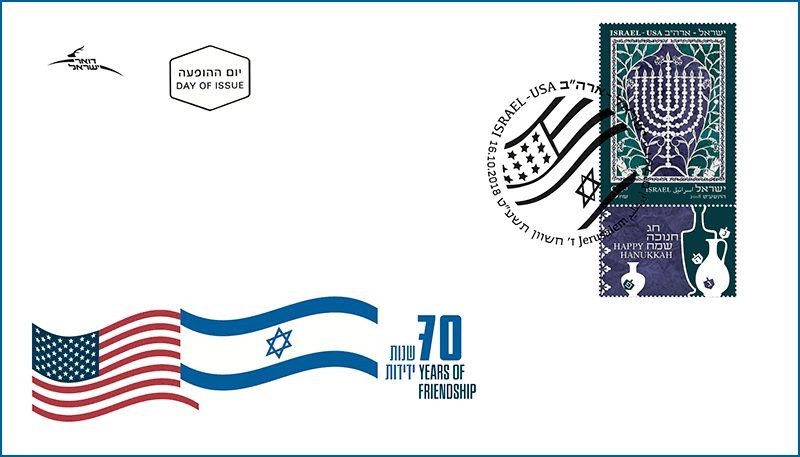
Israel–USA Joint Issue – Happy Hanukkah
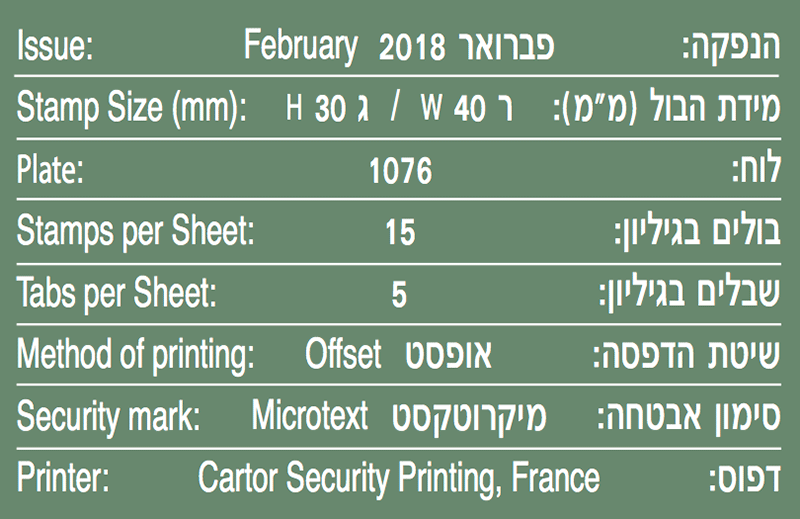
 [Issue date: October 16, 2018, same as the U.S. version. Details on the U.S. version are here.]
Just 11 minutes after Israel declared its independence on May 14, 1948, American President Harry S. Truman recognized the new State. This action marked the beginning of a relationship based on common values and characterized by a deep friendship and mutual respect.
The special relationship between Israel and the United States is a key element in Israel’s political strength and power. This relationship also has strategic significance for the State of Israel.
In the early 1980’s, Israel was considered to be a strategic asset for the United States and was noted as such (1987) in legislation passed a year earlier as its main non-NATO ally.
The friendship between Israel and the United States is bolstered by the supportive American Jewish community and large portions of the American people.
The Hanukkah festival marks the Maccabean victory over their enemies – the Hellenistic monarchy of the House of Seleucus, as well as the miracle that took place in the Holy Temple in Jerusalem. It is customary to light candles on each of the eight nights of Hanukkah, setting them near the entrance to the home in order to make the miracle known.
 In the year 167 BCE the Hellenistic king Antiochus IV forbade the Jewish residents of Eretz Israel to study the Torah and to perform the Jewish mitzvahs. Mattathias the Hasmonean and his sons led the people’s revolt against the cruel regime, and after harsh battles successfully freed Jerusalem and the Temple.
The Babylonian Talmud (tractate Shabbat 21:2) describes how the Maccabees found only one small cruse of pure oil, enough to light the Temple menorah for just one day. But a miracle occurred and the oil lasted for eight days, until more pure oil could be prepared. In honor of that miracle, it was determined that the festival would last eight days. For the Jewish people, the Hanukkah candles symbolize the victory of good over evil and of justice over injustice.
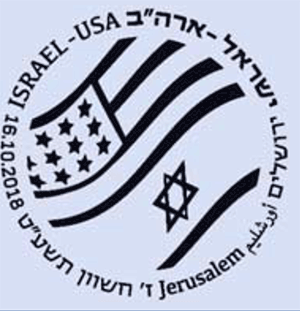
According to the USPS, the Israeli cancellation measures 1.25″x1.27″. —VSC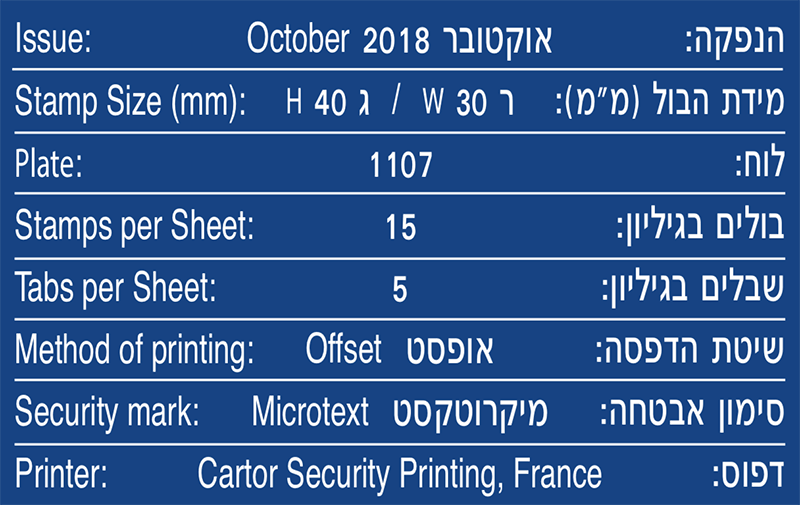
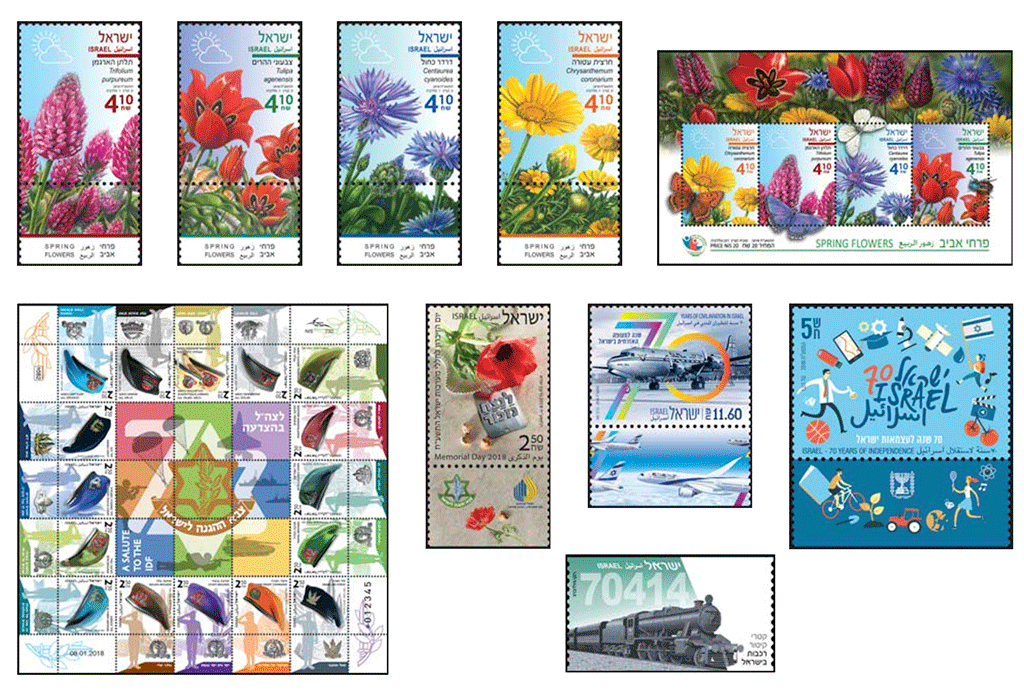
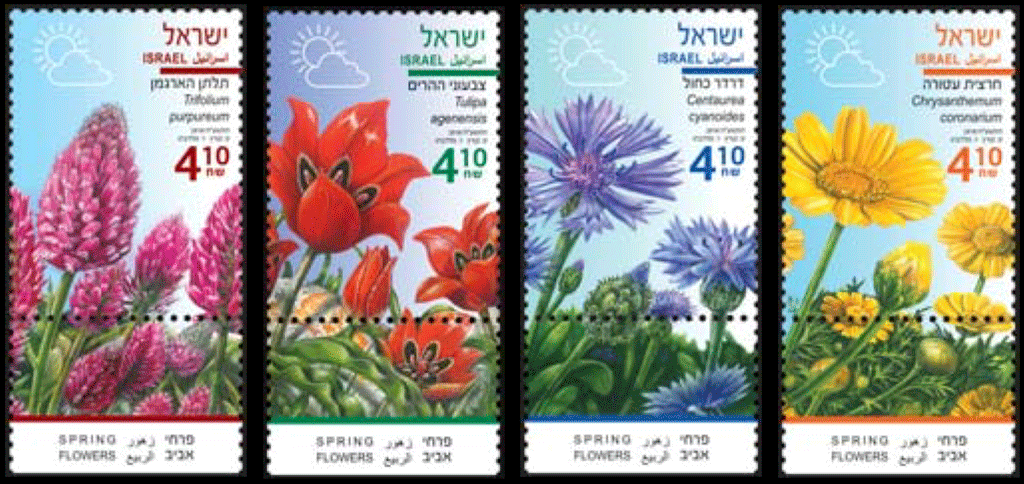 These stamps and the souvenir sheet will be issued April 9th. From Israel Post: The issue “reflects that season and the element of revival.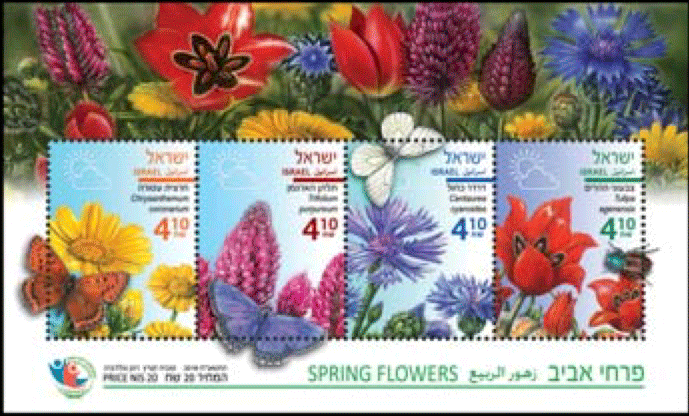
 This stamp will be issued April 9th. From Israel Post: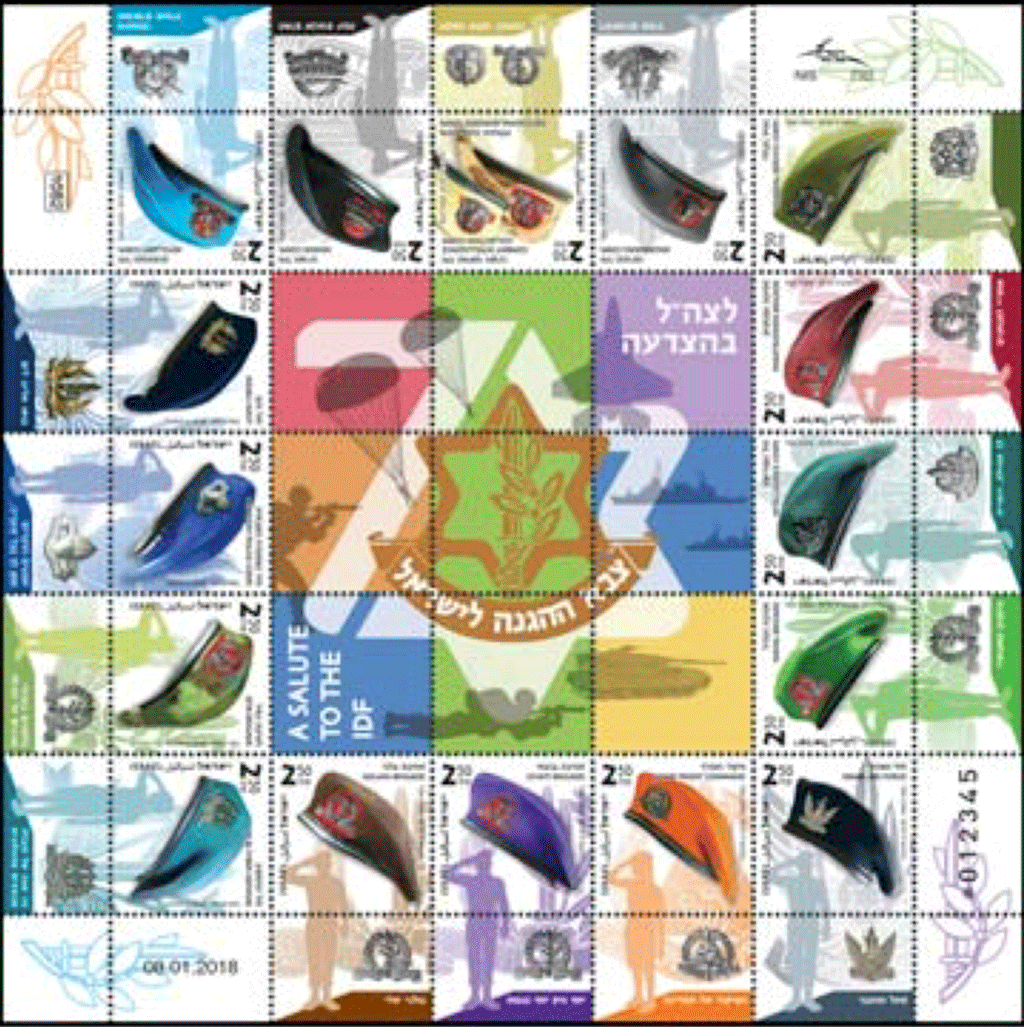
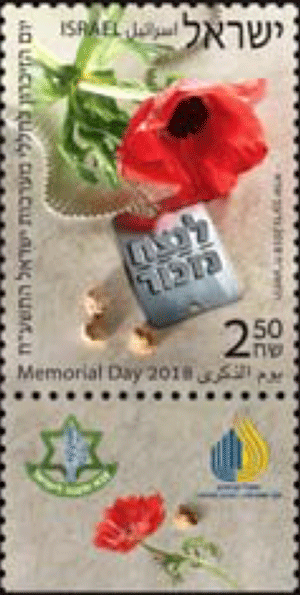 This stamp will be issued April 9th. From Israel Post:
 This stamp will be issued April 9, 2018. From Israel Post:
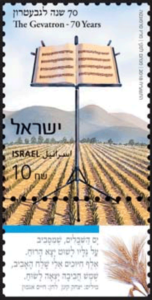 The Gevatron Chorus was founded in 1948 by a group of young people from Kibbutz Kvutzat Geva in the Jezreel Valley to perform at the dedication ceremony for a new basketball court.
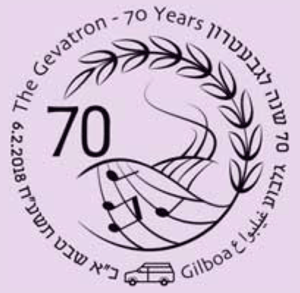 The Gevatron has a rich repertoire, comprised of songs written especially for the troupe as well as its own versions of familiar Israeli songs. The troupe is mostly identified with “songs of the homeland” and songs about settling the country, although it has recorded numerous styles and arrangements. Some of its most well known songs are: Yam Hashibolim (Sea of Grain Stalks), Emek Sheli (My Valley), Gvanim (Color Shades), Nitsanim Niru Ba’aretz (Flowers Appeared in the Land), El Borot Hamayim (To the Cisterns), Or Ve’Yerushalayim (Light and Jerusalem), Ha’Hita Zomachat Shuv (The Wheat Sprouts Again) and Bat Shishim (At Sixty).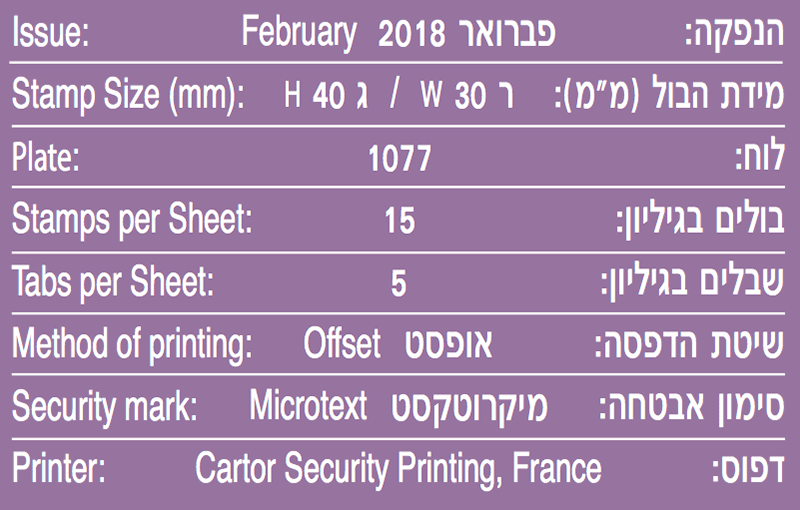
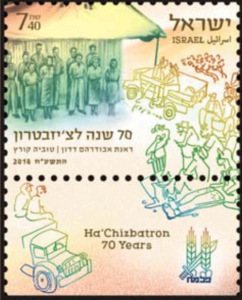 “The Chizbatron Troupe was established from within the Palmach during Israel’s War of Independence and accompanied the paupers’ army that arose from the underground organizations to face intense war”, said poet Haim Gouri.
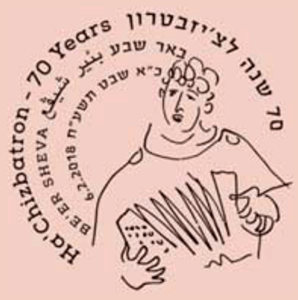 The first production included improvised skits and foreign melodies to which Haim Hefer added well written texts. Shaike Ophir and Naomi Polany were recruited from among the Palmach ranks, accompanied by Yoel Zilber on the accordion. The Negev desert area was under siege at that time, and was accessible only via air. The troupe flew south and went from post to post, where they were received very warmly. While en route to Kibbutz Be’eri, the troupe’s truck drove over a landmine. Troupe member Ohela Halevy was seriously injured and recognized as an IDF disabled veteran. This event of course changed things and it was necessary to reorganize and even write new material. Director Shmuel Bunim came into the picture and new troupe members were recruited.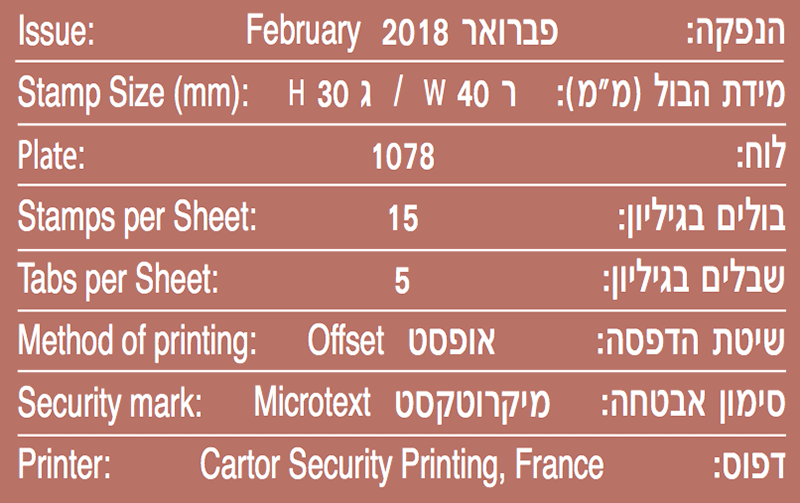
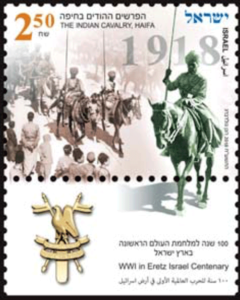 When WWI broke out in August 1914, the Ottoman Empire formed an alliance with the Central Powers (Germany and Austria) against the Allies (Britain, France and Russia). The Great War, as it was known at the time, went on for more than four years and fundamentally changed world history in general and the situation in Eretz Israel in particular.
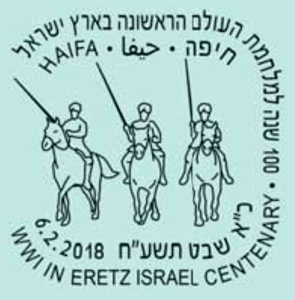 The stamp features an Indian cavalryman (Library of Congress, from photos of the American Colony in Jerusalem) against the background of the Indian Cavalry battalion in the streets of lower Haifa (Imperial War Museum). The tab features the insignia of the Indian army’s Ramchi Jodphur battalion.