[press release]
Typically Dutch: Iconic canal houses on new stamps
The Hague, March 25, 2021 – Wherever you go in the world, almost everyone knows the 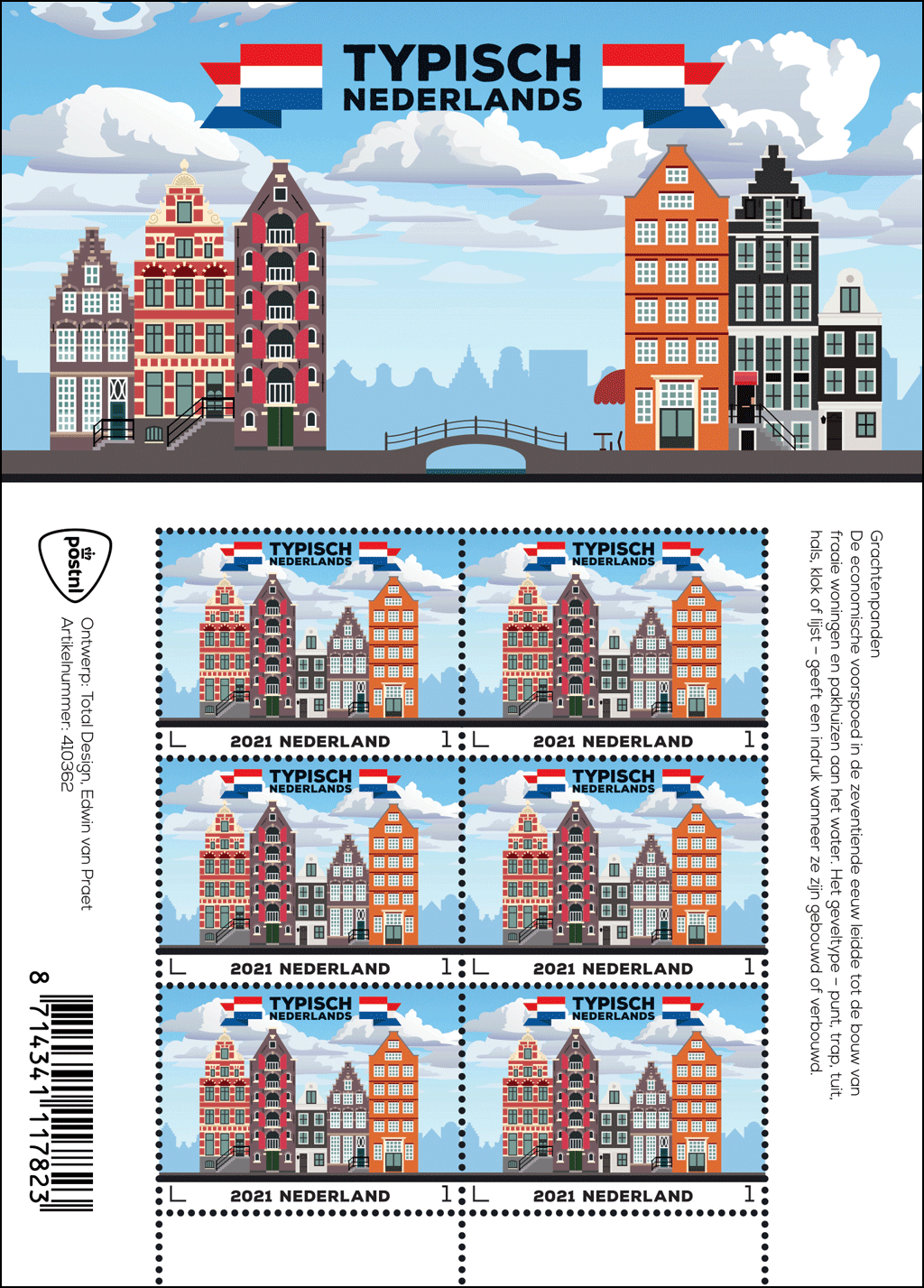 canals of Amsterdam. Five beautiful buildings on these canals have now been immortalized on the latest PostNL stamps from the Typically Dutch series.
In 2021, the series will focus on housing types and facades that are characteristic of our country. Stamps about traditional farmhouses and wooden houses have already been published. Issues on houseboats and terraced houses will follow later this year.
Colorful illustration
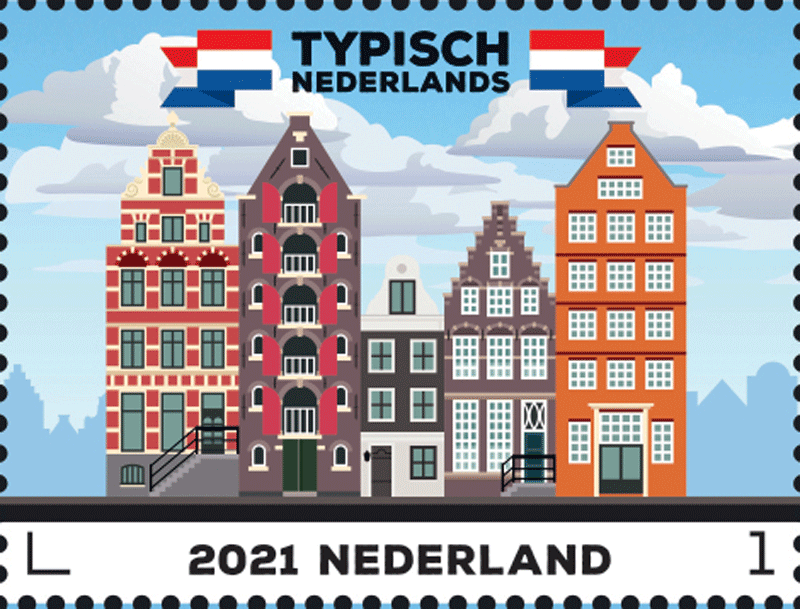
The Typically Dutch canal houses stamps show a colorful illustration of 5 canal houses from Amsterdam. The buildings, large and small, are adjacent. The silhouette of the façades on the canal behind it is visible on the left and right in the background. The depicted canal houses can be admired in real life on the Herengracht, the Oude Turfmarkt, the Brouwersgracht and the Leidsegracht.
Crescent shape
 The Amsterdam canal belt, now a UNESCO World Heritage Site, has been laid out in phases. The Prinsengracht, Keizersgracht and Herengracht were dug in the early 17th century. From around 1660, the city extended the canals to the Amstel. Finally, the expansion to the Eastern Islands came about around 1680. This is how the map of Amsterdam got the typical crescent shape.
Painting
The stamps on the Amsterdam canal houses were designed by Edwin van Praet of Total Design from Amsterdam. Van Praet’s choice was based on the desire to show different buildings with different uses and different types of facades from different periods. He also wanted to emphasize that large and small buildings stand next to each other on the canals. Based on the typical appearance of the canal houses, Van Praet tried, as he says, to make “a painting”. “A romantic illustration as an ideal image of the canal house. There can be a list around it. ”
Availability
The Typically Dutch canal houses stamp sheet has 6 identical stamps with the denomination Nederland 1, intended for mail up to and including 20 grams with a destination within the Netherlands. The stamps are available from March 22, 2021 at the Bruna stores and via www.postnl.nl/bijzondere-postzegels. The stamps can also be ordered by telephone from the Collect Club customer service on telephone number 088 – 868 99 00. The period of validity is indefinite.
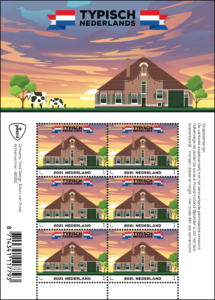 More stamps in the Typically Dutch series will appear in the coming months about wooden houses (22 February), canal houses (22 March), houseboats (6 April) and terraced houses (14 June).
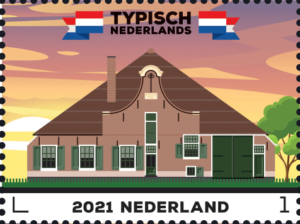 The 1742 farmhouse depicted on the stamp is called Broedersbouw and can be found in the North Holland village of Zuidoostbeemster. In the illustration on the stamps, the farm is flanked on the side by a tree, the front shows the green grassland. There is a black line at the bottom of the stamp that refers to the street level. To the left of the farm, the rising sun can be seen against a sky with blown strips of sky.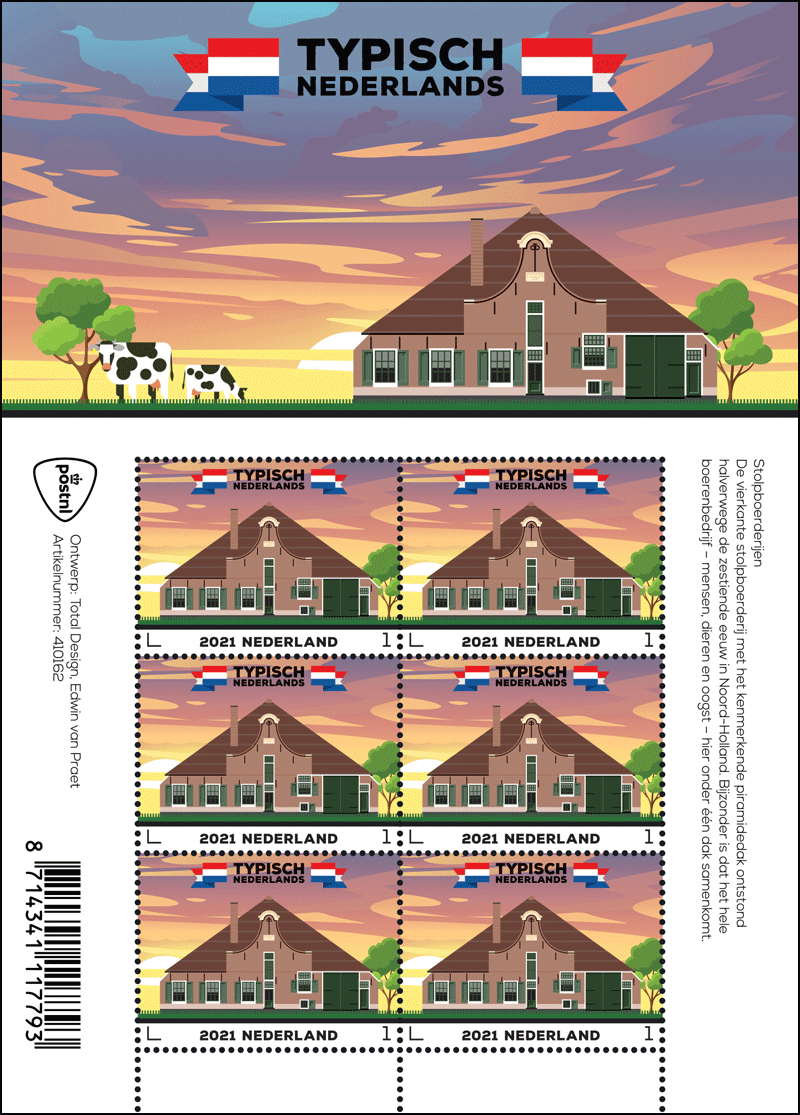
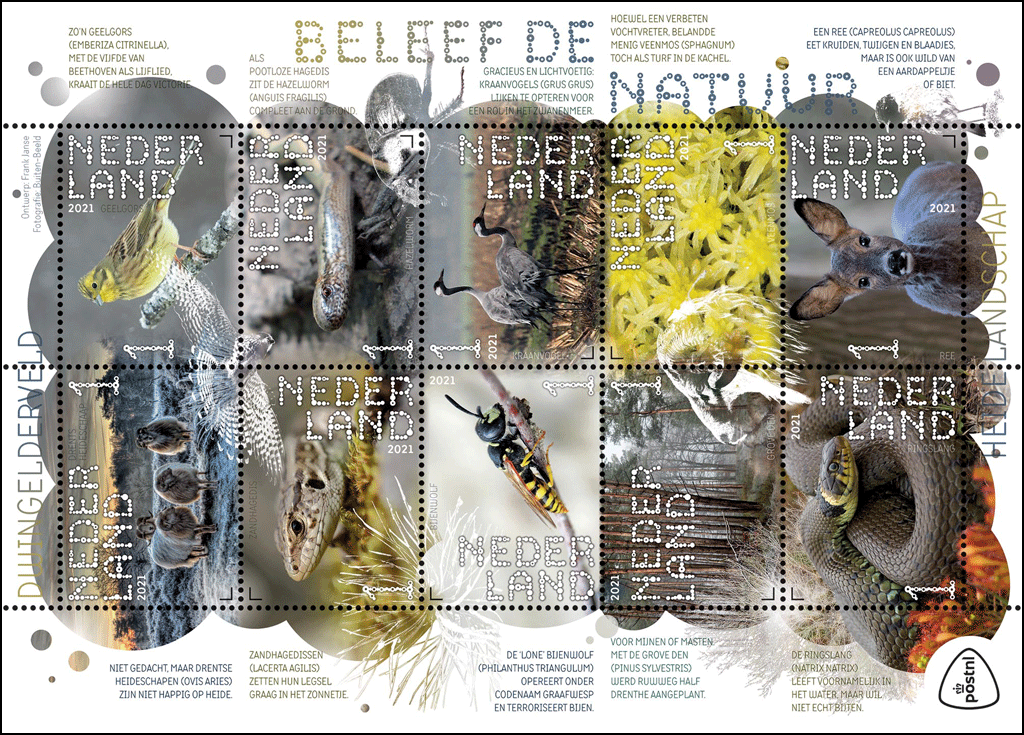
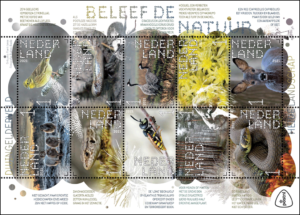 sheet Experience Nature – Dwingelderveld pays attention to the unique flora and fauna of this heather landscape in the middle of Drenthe.
 The Dwingelderveld National Park is the largest wet heathland area in Western Europe. This protected nature area was also voted the quietest area in the Netherlands at the end of 2020. Wet ditches and dry sand ridges alternate on the extensive moist heathland of the Dwingelderveld. As a result, there is a lot of variation in plant growth and animal life.
 separate graphic layer on the stamp sheet contains transparent images of a kestrel with spread wings, the needles of a Scots pine, a creeping dung beetle, the profile of the head of a Drenthe heather sheep and a bare pedunculate oak.
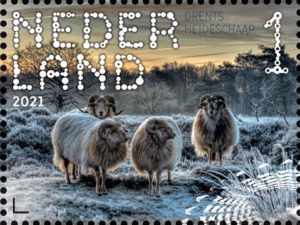
 The stamp sheetlet opens with an intense winter image of the Drenthe heath sheep. According to Janse, this animal can still be considered as semi-wild because it can keep itself alive. “On the stamp next to it, there is the yellowhammer, a beautiful bird, on a twig. Typical for the east of our country, especially in Drenthe. And, very special, his vocals resemble the opening bars of Beethoven’s 5th symphony.”