Concorde Supersonic Airliner (UK 2026)

[press release] [click on any of the pictures for larger versions]
Royal Mail Marks the 50th Anniversary of Concorde’s First Commercial Flight

  • The set comprises eight stamps featuring stunning photography of the British Airways aircraft throughout its history, including its first and last commercial flights
  • A further four stamps, presented in a miniature sheet, includes three re-released stamp images and a never-before-seen design, previously shortlisted but not adopted
  • The stamps and a range of collectible products are available now at www.royalmail.com/concorde and by telephone on 03457 641641

Royal Mail on 21 January issued a set of 12 stamps to mark the 50th anniversary of Concorde’s first commercial flight, in 1976.

The main set of eight stamps features stunning photography of the British Airways aircraft throughout its history, including its first and last commercial flights. One of the stamps uses photography of four Concordes flying in formation to celebrate 10 years of service.

A further four stamps, presented in a miniature sheet, include three previously issued stamp images and one never-before-seen design.

Commissioned for the 1969 ‘First Flight of Concorde’ issue, two are designed by influential British stamp designer David Gentleman, and one by Michael and Sylvia Goaman. Royal Mail are re-releasing the stamps, now showing the King Charles III silhouette, along with a fourth stamp design by David Gentleman that was previously shortlisted but not adopted in the 1969 set.

The miniature sheet border image is inspired by the design of the original presentation pack from 1969.
The idea of stamps to be issued following the first flight of Concorde was agreed in July 1967 by the British and French postal services, albeit not using a common design. The decision was revealed to the British public on 14 December that year.

Five leading designers were invited to submit concepts for a new series of British stamps celebrating Concorde and the collaboration between France and the United Kingdom. The stamps were intended to capture the innovation and international partnership behind the supersonic aircraft.

Postmaster General Edward Short shortlisted five designs from the submissions. His final choice – one by the Goamans, two by Gentleman – received the approval of Queen Elizabeth II in January 1968.

David Gold, Director of External Affairs & Policy, Royal Mail, said: “Concorde remains one of the most iconic achievements in aviation history, and we’re proud to celebrate its legacy with this special set of stamps. These designs pay tribute to the innovation, elegance, and engineering excellence that made Concorde a symbol of British ingenuity and ambition.”

Hamish McVey, Director of Marketing, British Airways, said: “Concorde represents a landmark chapter in our history at British Airways, embodying the pioneering spirit of British innovation and creativity that remains integral to our brand today. The Royal Mail’s celebration of 50 years since her maiden flight highlights the enduring admiration many people still hold for this remarkable aircraft.”

First commercial flight of Concorde – 21 January 1976:
On Wednesday, 21 January 1976, at precisely 11:40 GMT, the captains of two Concordes – British Airways in London and Air France in Paris – simultaneously pushed forward the throttles and unleashed, for the first time with commercial passengers, the full force of their reheated, Rolls-Royce Olympus engines.
Supersonic passenger services had begun.

Air France Concorde F-BVFA, the first of seven Concordes destined for Air France, flew to Dakar in West Africa to refuel and then on, across the Atlantic Ocean, to Rio de Janeiro. British Airways had taken delivery of G-BOAA, the first of its seven Concordes, just a week before and, on 21 January 1976, ‘Alpha Alpha’ spearheaded the British assault on the sound barrier.

Flying at subsonic speeds initially, over Paris, the Alps and Venice, ‘Alpha Alpha’ then broke through the sound barrier over the Adriatic Sea and accelerated to Mach 2, faster than a rifle bullet, while the champagne flowed. Crossing Lebanon and Syria in just six minutes and arriving in Bahrain just over three-and-a-half hours after leaving Heathrow, the passengers had experienced something special that day and were whisked away to a celebratory banquet hosted by the Amir of Bahrain.

Fifty years ago, history was made, with supersonic travel undoubtedly becoming one of the greatest milestones in aviation history.

The stamps, and a range of collectible products, are available from today (21 January) at www.royalmail.com/concorde and by telephone on 03457 641 641. A Presentation Pack including all 12 stamps is priced at £21.30.

Supersonic fact file:
1. CONCORDE GREW UP TO 20CM IN LENGTH DURING SUPERSONIC FLIGHT
Once through the sound barrier, the air in front of the aircraft was compressed and, like a hand-operated bicycle pump, would get hot, causing materials to expand. The temperature on the nose of the aeroplane would reach 127°C, despite the ambient air being –60°C. On slowing, Concorde cooled down again and shrank back to its original size. A special type of aluminium alloy was used, which could withstand the long-term stress.

2. THE ENGINE INTAKES WERE CONTROLLED BY THE FIRST DIGITAL COMPUTERS IN CIVIL AVIATION
Just ahead of each Olympus engine, the air intakes had hydraulically driven ramps fitted in the roof which, at speeds above Mach 1.3, would lower and create a supersonic shockwave in the mouth of the intake. This would slow down the air from about 1,350mph (Mach 2) to 350mph (Mach 0.5) in just 11ft (3.4m), boosting the thrust by up to 25 percent.

3. CONCORDE WAS THE ONLY CIVIL AIRCRAFT TO BE FITTED WITH AFTERBURNERS
Used on take-off and to blast through the sound barrier (Mach 1), afterburners gave a further boost in thrust of some 20 percent. They were not needed above speeds of Mach 1.7, as the engine intakes were efficient enough by then to help Concorde ‘supercruise’, meaning the aircraft could climb and accelerate in supersonic flight without needing its afterburners.

4. CONCORDE HAD A ‘DROOPED SNOOT’
As Concorde’s wings were not fitted with flaps and slats like a conventional aeroplane, it came in to land at a very high nose-up ‘attitude’ (angle). To enable the pilots to see the runway ahead of them, Concorde’s nose and integrated visor could be lowered by 12.5 degrees. Above 280mph, the nose was fully raised and the visor acted as a heat shield in supersonic flight.

5. RECORD FLIGHT TIME ACROSS THE ATLANTIC: 2 HOURS, 52 MINUTES AND 59 SECONDS
In a record that still stands today, Concorde completed the fastest journey between London and New York by any passenger airliner. On 7 February 1996, Concorde ‘Alpha Delta’ flew from New York to London in a second under 2 hours and 53 minutes.

Where Are the Jews on the Revolution Stamps?

The following is solely the opinion of the author and does not necessarily represent the views of any philatelic organization.

by Lloyd A. de Vries
The upcoming 25-subject Figures of the American Revolution stamps, announced for issuance by the U.S. in 2026, honors “25 individuals whose ideas, leadership and sacrifices were vital to achieving American independence and shaping the new nation,” according to the U.S. Postal Service (as quoted on The Virtual Stamp Club‘s page for that issue). In addition to the well-known patriots such as Washington, Jefferson and Franklin, they include two Native Americans, five women, three African-Americans, three citizens of other countries — but no Jews.

Perhaps the planners thought that Deborah Sampson, who disguised herself as a man and served in the Continental Army, was Jewish. No, sorry: She was born in the Congregationalist denomination of Christianity but left it to become a Baptist as a young woman. As one biography puts it, “She never felt committed to any one religious denomination, believing only in the principles of Christianity.” (Freeman & Bond)

Nathaniel Greene? He was a Quaker.

It is not that Jews sat on the sidelines during the Revolutionary War. Although only 0.1% of the population, “of the roughly 2,000 Jews in Colonial America, most cast their lot with the Patriot cause.” (Diamond) Their participation continued after the war. “Jews played a critical role both in winning the American Revolution—fighting for the patriot cause from Bunker Hill to Yorktown—and in defining the republic that was created from it. As the most visible non-Christian religion, Judaism was central to the debate over religious freedom in America at a critical juncture.” (ARI intro to Jortner)

What about Haym Salomon, whom Wikipedia calls “the prime financier of the American side.” He bankrupted himself, underwriting the American war effort. In particular, he put forth the funds that allowed Washington’s to join the final, deciding Battle of Yorktown. Yes, he was honored on a stamp in 1975 (Scott 1561) but how many stamps have been issued for Abigail Adams, John Jay, Alexander Hamilton and all the presidents including in this set.

No stamp has yet been issued for Mordecai Sheftall, the highest ranking Jewish officer in the Continental Army. Captured, imprisoned and tortured by the British, he was a leader of both the Patriot opposition to British rule as well as the Jewish community in Savannah.

There are other Jewish patriots who also could be honored. Do a web search for “Jews in the American Revolution” for a variety of articles and works.

Certainly, other cultural and ethnic groups may wonder where their representatives are in this very-large set of stamps. Even 25 stamps probably is not enough to commemorate all the major figures of the American Revolution. However, I am disappointed that not even one of these stamps features a Jew.

Sources:

“Jews, despite their small numbers, played a significant role in the Revolutionary conflict.”
Carmi, Ziv R. (2023) “To Bigotry No Sanction, To Persecution No Assistance: Jews in the American Revolutionary Period,” The Gettysburg Historical Journal, Vol. 22, Article 6.
Available here.

Diamond, Richard, Times Of Israel Blogs, November 30, 2025.

Finkelstein, Norman H., The Revolutionary War and the Jews, available here.

Freeman, Lucy and Alma Halbert Bond. America’s First Woman Warrior. New York: Paragon House, 1992.

Jortner, Adam, in his talk A Promised Land: Jewish Patriots, the American Revolution, and the Birth of Religious Freedom to The American Revolution Institute, October 24, 2024. Watch here.

Wikipedia on Haym Salomon.

Wikipedia on Mordecai Sheftall.

Young, Alfred F. Masquerade: The Life and Times of Deborah Sampson, Continental Soldier. New York: Random House. 2004.

Boston 2026 Names Dutt Volunteer Chair

[press release] [click on any of the pictures for larger versions]
Volunteer Chair Appointment

The Boston 2026 Executive Committee is pleased to announce the appointment of Jere Dutt as the exhibition’s Volunteer Chair.

A resident of Doylestown, Ohio, Jere is a well-respected exhibitor and national judge best known as a specialist in the philately of Dahomey/Bénin and greater French Colonies. He has shared his knowledge of these areas through numerous in-person and virtual presentations, as well as published works.

Jere is a current board member of the American Association of Philatelic Exhibitors, an APS/APRL finance committee member, former corresponding secretary and now president of the France & Colonies Philatelic Society.

Reflecting on his new responsibilities and the work ahead, Chairman Dutt said, “Volunteers are the heartbeat of any stamp show, especially one on the scale of Boston 2026. The size of this event will be a challenge to ensure all goes smoothly and is a great experience for both volunteers and attendees alike. I know with the amazing team assembled it will be an Expo to remember! I am privileged to be a small part of the team and able to work with such excellent philatelists to bring Boston 2026 to life.”

Outside of the hobby he is a third-generation officer of Dutt Enterprises, specializing in personal and household products, an active Rotary member in his community, and a patron of both the Akron Art Museum and Akron Symphony Orchestra.

Boston 2026 World Expo takes place May 23-30, 2026, at the Boston Convention & Exhibition Center. Full show details may be found at Boston2026.org and on Facebook, X and Instagram. Sign up to be added to the Boston 2026 email list and receive updates when available.

Boston 2026 Names Ozdinc Intl. PO Chair

[press release] [click on any of the pictures for larger versions]
International Post Office Relations Chair Named

Armağan Özdinç has been selected to coordinate the various non-U.S. post office administrations participating in Boston 2026 World Expo, taking on the role of International Post Office Relations Chair.

Explaining the appointment, Boston 2026 Executive Director Mark Butterline commented, “As the list of participating postal administrations from around the world continues to grow, it was time that a dedicated manager handles their needs and recruit others to join them now that importation and tariff hurdles are cleared. Armağan, who has been helping us in our recruiting effort for some time, was the most appropriate person to be appointed for this role.”

Mr. Özdinç is perhaps best known in philatelic circles as a specialist in the study of engraved issues by the two foremost stamp designers of our time, the late Czesław Słania and Martin Mörck. Both have produced over 1,000 items for postal administrations around the world, especially those of Nordic countries. His interests go beyond stamps to include sketches, drawings and die proofs of the engraved stamps from those two master engravers. Over the years, he has authored several works and given presentations on the subject many times.

A Fellow of the Royal Philatelic Society London since 2024, he is very active in Scandinavian philately, serving as a Board of Directors member of the Scandinavian Collectors Club for the past four years, First Vice President and Contributing Editor of The Posthorn, its quarterly journal.

In his professional life, Armağan has close to 40 years’ experience in software development, medical device design controls, along with project and quality management, much of that time with Siemens Healthineers in Delaware, New York and Pennsylvania.

Boston 2026 World Expo takes place May 23-30, 2026, at the Boston Convention & Exhibition Center. Full show details may be found at Boston2026.org and on Facebook, X and Instagram. Sign up to be added to the Boston 2026 email list and receive updates when available.

Boston 2026 Adds Seaport Hotel

[press release] [click on any of the pictures for larger versions]
Additional Boston 2026 Hotel Space Available

Reservation demand for discounted Boston 2026 hotel accommodations has been so great that two hotels are already sold out and the rest have limited availability, Boston 2026 hotelnecessitating additional options for show visitors.

A new hotel close to the waterfront and three blocks away from the Boston Convention and Exhibition Center has joined the ten properties offered earlier. Marriott’s Renaissance Boston Seaport District is a four-star hotel that has earned high ratings from guests. Reviews from just the past month say it all: “Great location on the harbor/Seaport – walk to all the best restaurants. The views from the room are great, staff provides excellent personalized service,” and “The service was excellent, and the family-friendly atmosphere made it a great place to stay. The rooms were clean and up-to-date, and the beds were incredibly comfortable.”

The regular standard room rate is discounted to $329 only when reserved through the Boston 2026 hotelspecial link found on the Hotel page on the Boston 2026 web site. All discounted hotel offerings are managed through Boston 2026’s partner, onPeak.

The Aloft Boston Seaport District, another Marriott property already offered to Boston 2026 visitors, has released an additional block of rooms, doubling its original room night contract. It is adjacent to the convention center and the discounted room rate remains at $270 per night.

Boston 2026 World Expo takes place May 23-30, 2026, at the Boston Convention & Exhibition Center. Full show details may be found at Boston2026.org and on Facebook, X and Instagram. Sign up to be added to the Boston 2026 email list and receive updates when available.

The Bull (Netherlands 2026)

[from press materials] [click on any of the pictures for larger versions]
The Bull

Issue date: 15 January

To mark the unveiling of the restored painting by Paulus Potter, “The Bull,” PostNL, in collaboration with the Mauritshuis art museum [English language website and Wikipedia entry] in The Hague, will release the “The Bull” stamp sheet on January 15, 2026. The stamps feature the main characters from the 1647 painting: the cow, the oak tree, the farmer, the bull, and the sheep. A sheet of 5 stamps costs €7.00 and are available only from PostNL’s philatelic outlets and in the Mauritshuis gift shop.

The PostNL stamp program allows the flexibility to issue stamps to commemorate special events, such as this.

What makes the 1647 oil painting The Bull so remarkable is that such an ordinary thing as a bull appears on this enormous canvas. At 236.5 x 341 cm (about 93 x 134 inches, or 7 feet 9 inches by 11 feet), Paulus Potter (1625-1654) paid meticulous attention to the smallest details, such as the skylark, the green frog in the foreground, the flies on the bull’s back, and the cow’s wet nose with whiskers. The painting is therefore known as the epitome of Dutch naturalistic painting.

The bull looks at the viewer, as do the reclining cow and the standing ram. Potter has rendered the animals’ coats in detail, with thickly applied layers of paint. Even the marks of the shearing are visible on the reclining dairy sheep, which has just been shorn.

During the nearly two-year restoration, yellowed varnish layers were removed, as well as most of the retouching paint from previous restorations. The painting was then given a new layer of varnish that discolors more slowly. Only then did the restorers retouch the damaged areas. By working on the varnish, the restoration work is always reversible.

Janse depicted the painting in its entirety on the stamp sheet margin, extending below the five stamps. The stamps themselves feature portraits of the various protagonists in the painting: the cow, the oak tree, the farmer, the bull, and the sheep. The characters are described in large capital letters on the stamps, in a vibrant yellow. The same typography is applied to the sheet margin, alongside the green frog, the lark, and the willow. The name of the painter Paulus Potter also appears on the sheet margin and the stamps, either above, below, or above the title of the issue, “The Bull.”

Technical Specifications:
Stamp size: 30 x 40 mm (wxh)
Sheet size: 170 x 122 mm (wxh)
Plain paper with phosphor print
Gummed gum
Printing technique: Offset
Printing colors: cyan, magenta, yellow, black, and gold
Count of 6,000 sheets
Appearance: Sheet of 5 frame stamps in 5 different designs
Value indication: 1 for mail up to 20 grams destined for the Netherlands
Design: Frank Janse, Gouda
Printing company: Royal Joh. Enschedé B.V., Haarlem
Item number: 860018

Finale of “Stranger Things” (UK 2026)

[press release] [click on any of the pictures for larger versions]
Royal Mail Celebrates Finale of Global Hit Series Stranger Things

Issue date: 13 January

  • The main set of 10 stamps depict key characters across the series
  • The stamps were exclusively created by British artist, Kyle Lambert – the illustrator who creates posters for each season of Stranger Things
  • The stamps and a range of collectible products are available to pre-order now at www.royalmail.com/strangerthings and by telephone on 03457 641641

Royal Mail has issued a set of 14 stamps to celebrate the critically acclaimed science-fiction series from Netflix, Stranger Things.

The 10 stamps in the main set show key characters from across the series. Five stamps represent the characters in the Rightside Up – the ‘real’ world – with a red background, and five represent the alternate dimension with a blue background, known as the ‘Upside Down’. Each vertical pair of the stamps represents a season, beginning with the two left-hand stamps from season one.

When shining a UV light over the stamps, iconic logos from the series appear:In addition, the font used for the ‘1ST’ value of the stamps replicates the typeface used for the series.

The four stamps in the miniature sheet consists of an illustration showing the four friends riding their iconic 80s bikes.

Royal Mail worked with British artist Kyle Lambert, the illustrator who creates posters for each season of Stranger Things, to design bespoke illustrations for the stamp issue. He has created iconic illustrated posters for all five seasons of the series, and his artwork has been featured on billboards, merchandise, comic books and global advertising campaigns making him a major visual storyteller for the franchise.

Set in the 1980s, the series centres around the residents of the fictional small town of Hawkins, Indiana, who are plagued by a hostile alternate dimension known as the Upside Down.

Since the series was first released on Netflix in July 2016, it has attracted a record viewership and a global fanbase, winning numerous awards across the entertainment industry. Praised for its characterisation, atmosphere, writing, soundtrack and acting – with an ensemble cast including British actors in leading roles – the fifth and final series launched on 27 November 2025 and concluded on New Year’s Day, available only on Netflix.

David Gold, Director of External Affairs & Policy, Royal Mail, said: “We’re thrilled to celebrate Stranger Things with this striking stamp collection. Each design captures the essence of the series – from its unforgettable characters to the eerie imagery that has gripped audiences worldwide – making this a true tribute to one of modern television’s most popular shows.”

The stamps, and a range of collectible products, are available to pre-order now at www.royalmail.com/strangerthings and by telephone on 03457 641 641. A Presentation Pack including all 14 stamps is priced at £24.70. The stamps go on general sale from 13 January.

Experience Nature — Birds of Saba (Netherlands 2026)

[from PostNL material] [click on any of the pictures for larger versions]
PostNL brings birds from Saba to life on new stamp sheet

Issue: Experience Nature — Birds of Saba
Issue date: 5 January 2026
Format: sheet of 10 stamps in 10 different designs, denomination 1 for items up to 20 grams destined for addresses within the Netherlands
Item number: 460161
Design: Frank Janse, Gouda
Photography: Dreamstime, Shutterstock and Wikimedia Commons (Korall, lwolfartist, Mykola Swarnyk)

PostNL is issuing the “Experience Nature – Birds of Saba” stamp sheetlet. The sheetlet consists of ten different stamps featuring birds found on the Caribbean island of Saba. With this issue, PostNL continues its multi-year “Experience Nature” stamp series, which focuses on the nature of the Caribbean Netherlands.

These islands boast an extraordinary biodiversity by Dutch standards, with thousands of plant and animal species. In 2026, the focus will successively be on birds, butterflies, underwater life and flora of the windward island of Saba.

Biodiversity of the Caribbean Netherlands
The stamp sheetlet features images of the red-billed tropicbird, bananaquit, smooth-billed ani, black-necked stilt, brown pelican, blue grosbeak, belted kingfisher, osprey, black-and-white warbler and Antillean crested hummingbird. The birds are depicted in their natural habitat and demonstrate Saba’s high biodiversity. Despite its small size, the island boasts a remarkably rich bird life.

“Experience Nature – Birds of Saba” is part of a series dedicated to the Caribbean Netherlands from 2024 to 2026. In 2026, Saba will be the focus, with stamp sheets featuring not only birds but also butterflies, underwater life, and the island’s flora.

The island of Saba, like Bonaire and Sint Eustatius, has a special status within the Netherlands. Collectively, these three islands are known as the Caribbean Netherlands. Together with Aruba, Curaçao and Sint Maarten, they form the Caribbean part of the Kingdom of the Netherlands. Roughly circular, the island measures about 4.5 kilometres across (about 2.8 miles) and covers an area of 13 square kilometres (5 square miles). Geologically, Saba is a dormant volcano with four lava domes. Its slopes descend steeply to the sea, and its coastline is rocky. At 870 metres, Mount Scenery is the highest point in the Netherlands. The climate is humid tropical, and the island is covered with secondary rainforest.

Birds are a popular subjects for stamps. “I think it’s mainly the freedom of birds that appeals to people,” said designer Frank Janse. “For a graphic designer, bird photos are rewarding images to work with. Birds are easily recognisable thanks to their iconic shapes, whether circling in the sky or perched on a branch.”

Design
The stamp sheet was designed by graphic designer Frank Janse from Gouda. Through the use of continuous images, circular shapes, and transparent layers, the ten stamps form a cohesive whole, emphasizing the interconnectedness of nature.

When selecting bird species for these stamps, Janse aimed for maximum variety. “Large and small species, forest, water and coastal birds – and of course, with the osprey, a bird of prey. Based on this distribution, I looked for striking photos I could crop for more variation.” Groups of birds usually don’t work well on stamps because of the small format. “Still, I made an exception for the amusing photo of the smooth-billed anis,” Janse said [above right]. “It looks like a cartoon scene, with them chatting on a twig. The photo’s colours help, with deep black against a light green background.”

Availability
The stamp sheet is available, while supplies last, at PostNL sales points, through the post office in Bruna stores, and online via the PostNL website. The ten stamps have a denomination of “1” for mail up to 20 grams destined for mail within the Netherlands.

Technical Specifications:
Stamp size: 40 x 30 mm
Sheet size: 122 x 170 mm
Paper: normal with phosphor coating
Gumming: self-adhesive
Printing technique: offset
Colours: cyan, magenta, yellow and black
Print run: 275,000 sheets
Format: sheet of 10 stamps in 10 different designs
Denomination: 1 for items up to 20 grams destined for addresses within the Netherlands
Design: Frank Janse, Gouda
Photography: Dreamstime, Shutterstock and Wikimedia Commons (Korall, lwolfartist, Mykola Swarnyk)
Printer: Koninklijke Joh. Enschedé B.V., Haarlem
Item number: 460161

The Species:

Red-billed tropicbird (Phaethon aethereus)
A seabird from the tropicbird family, found over tropical oceans and breeding on islands in the tropics. Adults are almost entirely white, with a red bill – hence the name – and a wingspan of about one metre. Both sexes have similar plumage. Body length is 91 to 107 cm, including the distinctive elongated tail feather of 46 to 56 cm. This migratory bird is not a strong swimmer and is often seen far out at sea, sometimes hundreds of kilometres from land. It feeds on flying fish and squid, caught by plunge-diving from considerable heights.

Bananaquit (Coereba flaveola)
A songbird from the tanager family, found in northern and eastern South America and the Caribbean. Both sexes have a black crown, a white eyebrow stripe and a bright yellow breast and belly. The chin is light grey and the upperparts blackish-grey. The bananaquit grows up to 11 cm long. Usually solitary, it gathers in groups only where food is abundant. It feeds mainly on nectar, sometimes on fruit. To reach nectar, it pierces the flower base, avoiding pollination – hence its name ‘little thief’.

Smooth-billed ani (Crotophaga ani)
A member of the cuckoo family, found in Florida, Central and South America and the Galápagos Islands. This black bird, also called gladsnavelani in Dutch, has a long tail, short wings and a large, distinctive bill. Both sexes have similar plumage. It measures up to 35 cm and weighs about 125 grams. It nests low in dense shrubs during the warm season and is always seen in noisy groups. It forages mainly on the ground, eating grasshoppers and other insects, and follows livestock to snatch disturbed insects. It even perches on animals to remove ticks.

Black-necked stilt (Himantopus mexicanus)
A wader with very long legs from the stilt family, found as a resident in much of South and Central America, including the Caribbean. This black-and-white bird has long pink legs that extend well beyond the tail in flight. A continuous black area runs from the back along the nape to the head, forming a cap that covers the entire top of the head down to just below eye level, except for a small white patch around the bill and above the eye. It grows to about 35 cm. It forages mainly in mudflats and lake shores, and in very shallow coastal waters, feeding on invertebrates such as shrimp, worms, flies, molluscs, small fish and tadpoles.

Brown pelican (Pelecanus occidentalis)
A waterbird from the pelican family, found along the coasts of North and Central America, the Caribbean and northern South America. Mostly silver-grey and brown, with a white or whitish-yellow head and a chestnut-brown neck. The greenish bare facial skin and throat pouch become more colourful during breeding. Both sexes have similar plumage. It measures 100 to 150 cm and weighs over 3.5 kg. This bird uses its throat pouch as a fishing net. Unlike other pelicans that hunt cooperatively, brown pelicans plunge-dive from height to catch fish.

Blue grosbeak (Passerina caerulea)
A songbird from the cardinal family, found from the southern United States to Costa Rica. This migratory species breeds in northern Mexico and the southern US and winters in Central America. The male is 13 to 20 cm long, with reddish-brown wing bars and stripes on its back, brown eyes, rounded wings and a deep blue bill. The female is similar in size but mostly brown with a hint of blue. Naturally shy, they nest in low trees or shrubs 1 to 2.5 metres above ground, often at the edge of open areas for quick access to food. Summer offers the best chance to spot them as they forage for seeds in fields.

Belted kingfisher (Megaceryle alcyon)
A kingfisher species migrating from Canada and Alaska southwards to Mexico, Central America and the South American and Caribbean coasts. It has a dark head with a broad white collar around the neck. A dark, often iridescent band crosses the chest, giving the bird its name. The rest of the underparts are white, while most of the plumage is grey, with females showing reddish patches along the breast and belly under the wings. It measures 28 to 33 cm and weighs 113 to 178 grams. The nest is in an underground chamber at the end of a tunnel, usually dug into

Osprey (Pandion haliaetus)
The osprey is the only species in the osprey family. With the exception of Antarctica, it is found across all continents. In flight, it is easily recognised by its entirely white underside, chocolate-brown upperparts and slightly ‘angled’ wings. A dark stripe runs through the eye. Both sexes share the same plumage.
It is a relatively small eagle that likes to hover motionless above water before diving for a fish just below the surface with outstretched talons. When it spots a fish, the osprey plunges headfirst and, at the last moment, throws its legs forward to seize its prey. Its talons are razor-sharp, and its feet are equipped with small spines to grip the slippery catch more securely.

Black-and-white warbler (Mniotilta varia)
The black-and-white warbler is a songbird from the American warbler family. It breeds in Canada and the eastern United States and winters further south, as far as northern South America. This bird has a long bill and striking black-and-white plumage, which explains its English name. Its call is a high-pitched whistle, and its body length ranges from 11.5 to 14 cm.
Unlike most American warblers that forage among leaves, the black-and-white warbler climbs and creeps along trunks and thick branches, searching for food such as insects, larvae and spiders, which it extracts from bark crevices with its long bill. The nest is usually built low to the ground in a shrub or at the base of a tree, well hidden. Only the female incubates the eggs, but the male helps feed the chicks.

Antillean crested hummingbird (Orthorhyncus cristatus)
The Antillean crested hummingbird belongs to the hummingbird family. It occurs on Puerto Rico and the windward islands of the Caribbean. The male has an iridescent green plumage on its upperparts that, depending on the light, can appear yellowish or even coppery. Only the flight feathers are dark grey with a purple sheen. The bill is black, slender and straight. The male also sports an upright, shimmering cyan-green crest. The female is less colourful and lacks the crest. This tiny bird measures 8 to 9 cm and weighs between 3½ and 4 grams. It inhabits mangroves, wet and dry tropical lowland forests, thickets and gardens. It feeds mainly on nectar, which it extracts while hovering in front of flowers like a miniature helicopter. The female catches up to 2,000 insects and spiders per day to meet the protein needs of her growing chicks.

Note: PostNL does not sell directly to collectors in North America. Its website refers to a company called Nordfirm, which says it sells Dutch new issues at face value. The Virtual Stamp Club has no connection to this company.

Collectors may also wish to contact the U.S. firm Bombay Stamps, which can also obtain first day covers upon request, with lower shipping fees. The email is sales@bombaystamps.com Again, The Virtual Stamp Club has no connection to this company.

APS Hires CFO, Promotes Masorti

[press release] [click on any of the pictures for larger versions]
APS Announces New CFO and VP of Operations

The APS is pleased to announce that two senior positions at the society have now been filled. Our new Chief Financial Officer, Mark Yucha (left) joined the APS team last week and is already digging into upgrading administrative software and systems to help us serve our members better. Mark is a seasoned finance and accounting executive with over 25 years of experience at a diverse range of organizations, from Inside Higher Ed to a film production company. A graduate of Penn State University, Mark recently returned to the State College area after four years in Cape Town, South Africa.

If you’ve ever attended the Great American Stamp Show, you probably already know our new Vice President of Operations, Wendy Masorti [right], and her can-do spirit. Wendy has been with the APS for more years than she would like us to put in writing and has worn many hats in that time, from webmaster to Sales Director to her most recent position, Director of Membership and Shows. Her vast institutional knowledge, stemming from her experience in nearly every department of the society, will be an invaluable asset in this newly created role, which oversees Membership, Shows, Sales, and APEX.

Please join us in welcoming Mark to the APS, and congratulating Wendy on her promotion to VP!


I first met Wendy more than 20 years ago, when she was the assistant to then-executive director Bob Lamb. Not mentioned in the above press release is that she also handled Complaints for much of her time at the APS, one of the toughest jobs there in my opinion. The complaints manager tries to resolve disputes before they “go to trial” with the Board of Vice Presidents. In my opinion, she has succeeded in every position she has held at the APS.       — Lloyd de Vries

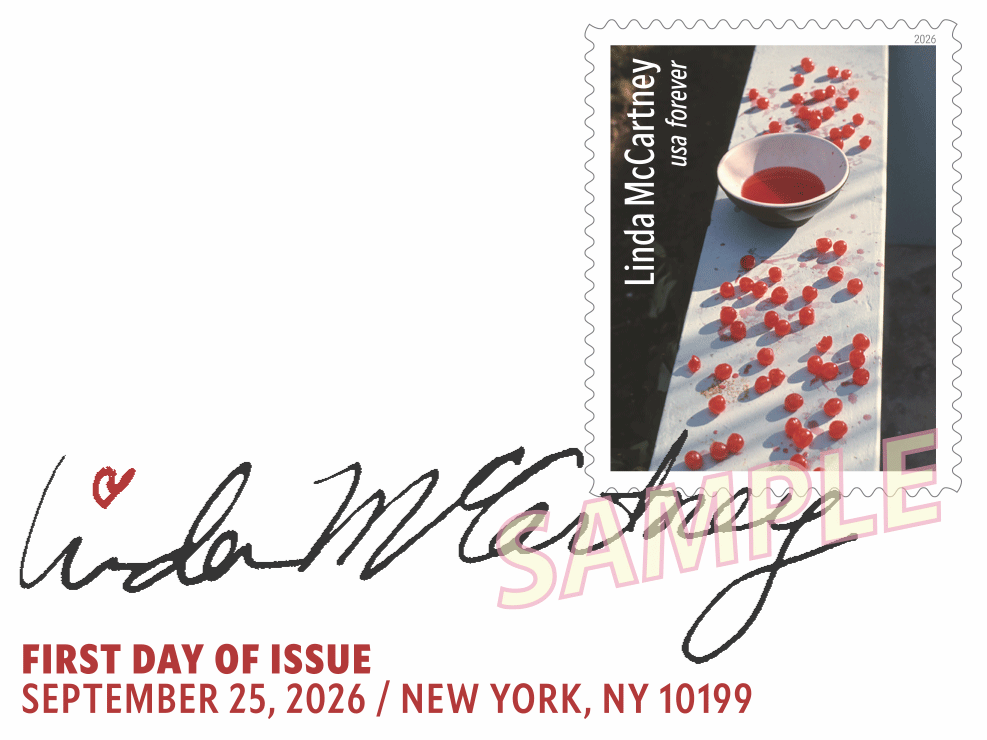
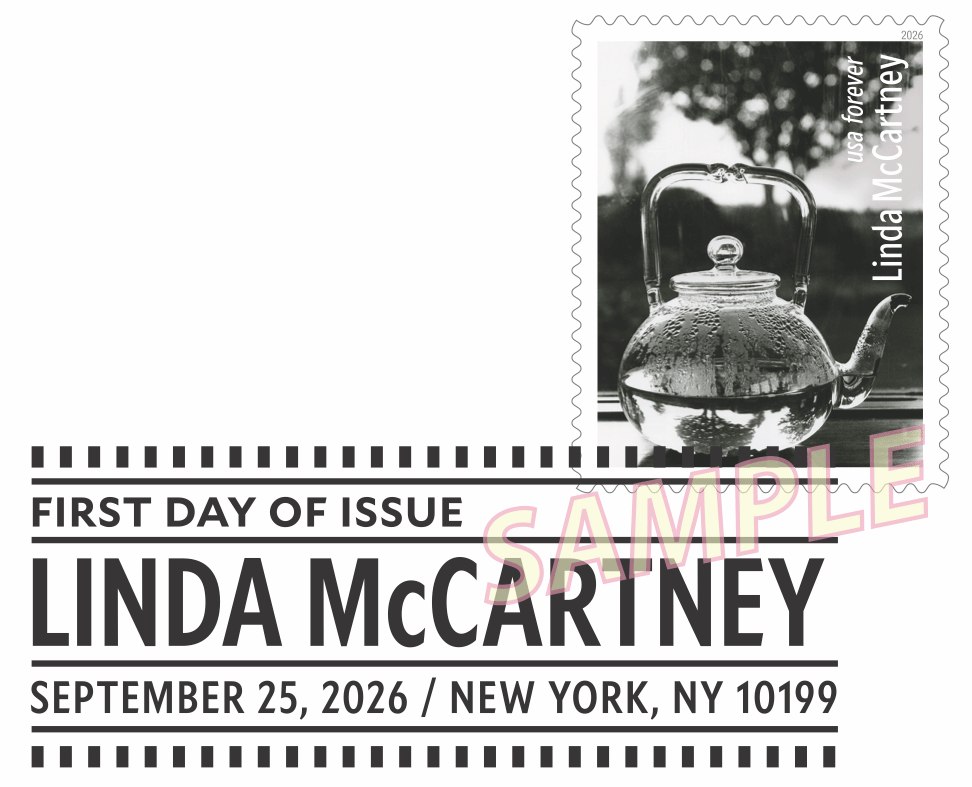
Nominations Open for FDC Writing Award

Nominations Open for FDC Writing Award
For Works Published In 2025

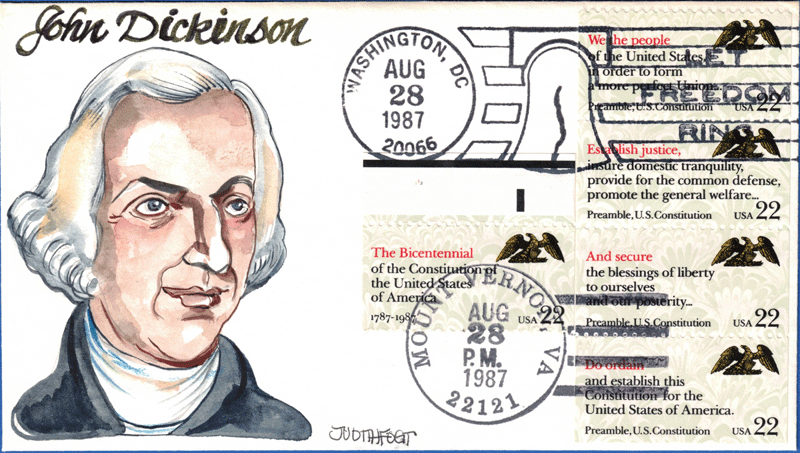
Nominations will be accepted through May 30, 2026, for the Philip H. Ward Award for Excellence in First Day Cover Literature, presented annually by the American First Day Cover Society. All works published in 2025 are eligible.

All articles and published in First Days, the AFDCS journal, are automatically considered. Other articles and works may be submitted to the Ward Award Committee chair, Mark Goodson, 315 East Dewey Street, Ellettsville, IN 47429-1901, bgdsn@comcast.net, either as clippings or .pdf scans of the material as published.

The award is presented each year at Americover, the annual convention of the AFDCS, which will be held August 7-9, 2026, in conjunction with BALPEX. A complete list of past winners can be found at www.afdcs.org/Awards-&-Honors#phw

Past works honored by the AFDCS reflect a wide variety of sources, including journals of other organizations and books.

The award is named in honor of Philip H. Ward (1890-1963), the distinguished Philadelphia stamp collector, dealer and journalist who was a pioneer in the field of first day covers. The award was instituted by the AFDCS in 1964.

The American First Day Cover Society is a not-for-profit educational organization, established in 1955. In addition to First Days, the AFDCS also publishes handbooks and catalogues, and promotes the collecting of both modern and “classic” issues and cachets, as well as the exhibiting of FDCs.

For more information about the AFDCS, visit www.afdcs.org, e-mail afdcs@afdcs.org or write the AFDCS at Post Office Box 57, Somerset, WI 54025-0057.