UK: 50th Anniv. of Special Stamps

[Royal Mail press release]
SPECIAL STAMPS CELEBRATE 50TH ANNIVERSARY

    • 2015 marks the 50th anniversary of Royal Mail’s modern Special Stamp programme, which celebrates the UK and our national character.  A total of 2,663 Special Stamps have been issued since July 1965
    • Every new stamp design is approved by Her Majesty The Queen before it is issued
    • Postmaster General Tony Benn introduced changes to the criteria for Special Stamps and made key decisions in 1965 which changed stamps forever
    • Other than The Queen, The Duke of Edinburgh is the most featured person on Special Stamps since 1965 followed by William Shakespeare
    • uk_beatleswithSome of the most popular stamp issues in recent years include:
      • Battle of Trafalgar (2005)
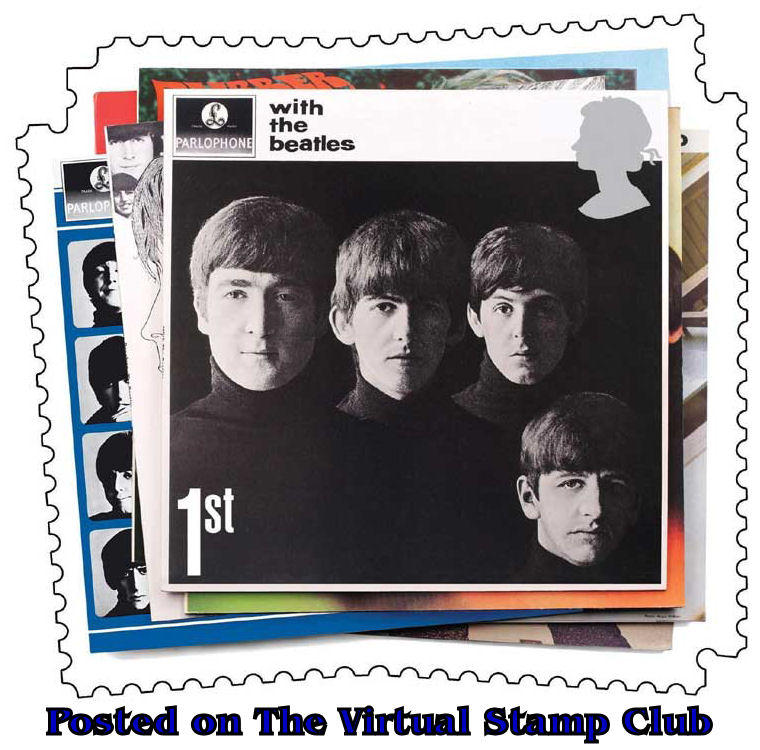
      • The Beatles (2007)
      • Olympic and Paralympic Gold Medal Winners (2012)
      • Doctor Who (2013)
    • Outside London, the most featured city in the Special Stamp programme is Edinburgh followed by the town of Battle, East Sussex
    • Royal Mail has launched an online gallery of every Special Stamp issued since 1965. A short video presented by broadcaster and historian Dan Snow is also available. Both can be found at www.rmspecialstamps.com
    • Royal Mail today announced that 2015 marks the 50th anniversary of the Special Stamps programme, which celebrates the UK and our national character.Criteria for the creation of Special Stamps to celebrate events and commemorate anniversaries relevant to UK heritage and life was devised by the then Postmaster General, Tony Benn, who worked with designer David Gentleman to modernise stamp design. The stamp of Sir Winston Churchill, issued in July of that year, was designed by Gentleman and was the first under Benn’s administration. It was the first British stamp to feature a contemporary individual and with its bold modernist approach with no words, it set the scene for the future. Including these, 2,663 Special Stamps have been issued.
Reflecting changes in society and culture
Over the past 50 years, Royal Mail stamps have mirrored the changes in society and culture at large. Stamps in the late 1960s celebrated the technological innovations of Britain, like the 1966 set which included the Jodrell Bank radio telescope, the hovercraft and the car industry. By 1982 stamps were commemorating the growing role of computers with Information Technology stamps depicting the then cutting-edge technology of lasers reading bar codes. infotechThis stamp is an early example of computer-assisted design. It remains Britain’s widest-ever stamp. Popular culture has been charted by stamps. As the Sixties generation grew up, many of their influences, such as pop music, moved into the mainstream. In the 1988 stamps celebrating the bicentenary of Australian settlement, an image of John Lennon appears alongside Shakespeare to represent Britain’s cultural contribution. The Beatles moved centre stage with their own stamp issue in 2007. This featured their classic album sleeves and remains the most popular stamp issue of the last ten years, and was one of the first to feature identifiable living people.


hamletThe commemoration of Shakespeare underlines how stamps have changed. In 1982 a set of stamps on the performing arts included a colourful painting of Hamlet. Thirty years later, a photo of actor David Tennant as Hamlet in contemporary dress and text in striking calligraphy reflected evolving interpretations of the Bard’s work.

drwho11Explorations of our love of popular culture have continued with highly successful stamps celebrating Harry Potter, Doctor Who and children’s TV icons like Bagpuss.

Stamp issues featuring sport have always generated interest with ‘England Win the Rugby World Cup’ (2003) and Gold Medal Winners at the Olympic Games and Paralympic Games among the most popular.

Most featured subjects
One of the consistently popular subjects featured on Special Stamps is the Royal Family, in particular national events such as Royal Weddings, the most recent being the marriage of Prince William to Catherine Middleton in 2011.

lizOver the past 50 years, The Queen is the person to feature most on Royal Mail Stamps. That doesn’t count Her Majesty’s silhouette in the corner of each Special Stamp. The next most popular individual to feature is The Duke of Edinburgh. He is followed by William Shakespeare – his face, as well as his work. The following have also appeared or had their contribution celebrated: Charles Darwin, HRH Prince Charles, HM The Queen Mother and Winston Churchill.

The UK’s towns and cities have influenced stamp designs over the past 50 years. Unsurprisingly, London is the city that features most followed by Edinburgh, Battle (East Sussex), Liverpool, York, Abbotsbury (Dorset) and Bath, Birmingham, Caernafon and Stratford-upon-Avon.

The most featured building or specific location is Buckingham Palace. Kew Gardens and St Paul’s Cathedral are next, followed by Abbotsbury Swannery (Dorset) and York Minster, Caernafon Castle and the Palace of Westminster.

Animals and transport have always proved popular subjects for stamps. Various species of bird have appeared most frequently followed by dogs, horses and cats. Reflecting the nation’s maritime heritage, ships and boats top the list of modes of transport followed by trains, aircraft, cars and buses.

As part of the programme to celebrate the 50th anniversary of the Special Stamp programme, Royal Mail has launched an online gallery of every Special Stamp issued since July 1965. Visitors to the site at www.rmspecialstamps.com can browse through the stamps by the decade and also view the stamps that were issued in the year that they were born.

A short video presented by broadcaster and historian Dan Snow explores how the Special Stamp programme has been shaped by the changing face of the UK and is also on www.rmspecialstamps.com.

Special Stamp Programme – Criteria
The criteria have remained virtually unchanged since introduced by Postmaster General, The Right Honourable Tony Benn. They are to:

      1. Commemorate important anniversaries
      2. Commemorate events of national importance, including major contemporary UK successes on the international stage
      3. Reflect the contribution of the UK to world affairs in the broadest range of activities, from the arts and humanities to science and technology
      4. Explore ‘the British way of life’, celebrating the diversity of cultures and interests within the UK
      5. Contribute to the cultural life of the UK through the patronage of art and design

Other key facts
Counties that have been featured on Special Stamps (with identifiable content)

      • Greater London: 100 stamps
      • Edinburgh: 12
      • Gwynedd: 12
      • East Sussex: 11
      • Kent: 10
      • Dorset: 9
      • Yorkshire: 9
      • County Antrim: 8
      • Somerset: 8
      • Surrey: 8

Themes that have been featured on Special Stamps

      • Social History and Politics: 72 stamp issues
      • Animals and Natural World: 62 stamp issues
      • Christmas: 49 stamp issues
      • Visual & Performing Arts: 45 stamp issues
      • Royalty: 37 stamp issues
      • Sport: 35 stamp issues
      • Architecture & Built Environment: 34 stamp issues
      • Science/Engineering/Space: 32 stamp issues
      • Literature: 32 stamp issues
      • Transport: 28 stamp issues

Current stamps and stamp products are available at 8000 Post Office branches, online at www.royalmail.com/stamps and from Royal Mail Tallents House (tel. 03457 641 641), 21 South Gyle Crescent, Edinburgh, EH12 9PB.


USPS: Record Holiday Season

[press release]
U.S. Postal Service Delivers Record Holiday Season
Double-digit package growth surpasses projections

WASHINGTON — The U.S. Postal Service exceeded its holiday delivery projections this season, delivering approximately 524 million packages in December — an 18 percent increase over last year.

usps14delivOn Dec. 22 alone, the Postal Service delivered more than 28 million packages. This marked the most packages delivered in a single day in the organization’s history. The package delivery record was set while also delivering approximately 463 million pieces of mail.

Improving tracking and reliability for customers was a key factor in preparing for holiday delivery demand. In advance of the holidays, the Postal Service also lowered some prices for businesses and frequent shippers.

“The volume this holiday season demonstrates that retailers and consumers increasingly are turning to the Postal Service to deliver their packages,” said Postmaster General and Chief Executive Officer Patrick Donahoe. “We know how much our customers count on us to make sure cards, letters and gifts make it home, and I’m proud that we delivered on our promise.”

usps_deliveryIn preparation for the holiday package volume, the Postal Service enhanced its network and made adjustments to mail processing and delivery operations, including delivering packages seven days a week beginning late November. More than 20 million packages were delivered on the five Sundays prior to Christmas to keep the mail moving and networks clear. An additional 118,000 packages were delivered Christmas Day.

“The dedication and resolve of our employees is commendable,” Donahoe said. “They adapted and delivered heavier-than-ever volumes of packages. They worked extremely hard, many of them braving harsh weather. I’m honored by the commitment they demonstrated this holiday season.”

The Postal Service is continuing to anticipate holiday volume through January as consumers use the mail to return holiday gifts. Merchants and retailers can take advantage of several return services, including Priority Mail Returns Service, to help customers make their returns easier. Consumers with gifts to return can pack items in Priority Mail packaging, which comes with insurance and tracking, and is available free at Post Offices or online.

Hotchner: Challenges Of Being A Dealer

So, You Think Being A Dealer Would Be Easy?
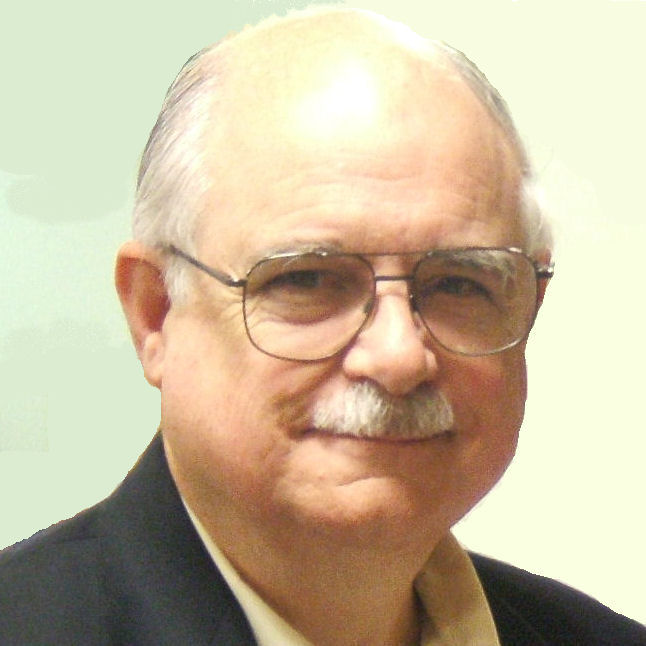
by John M. Hotchner

(This is written in first person for effect, though I have only worked for a dealer.)

  1. hotchnerIf I were to calculate the value of my time spent cataloging and looking up references in order to price my material fairly and to sell, my return per hours spent would be minimal.
  2. And that’s before I spend additional time calculating offers on material collectors and dealers are selling. And the time spent keeping up with philatelic news and trends by means of reading philatelic periodicals and other literature.
  3. For every item I sell, I must buy something on which I can make a reasonable profit in the future. Since only half or less of what I buy will sell again within a year, I actually need to buy more, knowing that I may have to discount some of it eventually to clear it out.
  4. Every transaction has to be recorded for the benefit of the tax man — federal, state and local. And it has to be recorded in a consistent and usable format. I wish I’d paid better attention in my “business math” course in high school. College calculus doesn’t help much.
  5. I am expected to be an expert on all things philatelic by my customers: to be able to spot fakes at 500 paces, to answer even the most elemental questions as well as the tough ones patiently and in depth, and to be able to predict what will gain or lose value on the long term. The good news is that philately is a continuing education. One cannot help but learn new things.
  6. Increasingly, I need to be a technical wizard to reach my potential customers “where they are” on the Internet, Twitter, texting, etc. None of this comes for free — either in terms of time or money. This is a good thing as I can now speak my children’s language, though I could use more of their technical savvy.
  7. And I must balance those methods of outreach with more traditional direct and in-person outreach such as print advertising, taking a table at stamp shows, getting involved as an active member of a local club, and even contributing articles on my business or my specialties to the philatelic press.
  8. I must — often a pleasurable experience, but just as often not — to shows, to evaluate prospective purchases, to meet clients. And once I make a commitment to be there, neither rain nor snow nor hurricane is an adequate excuse for not showing up as promised. Even illness doesn’t cut it unless I or one of my nearest and dearest is in extremis. And yes, I must keep track of all those expenses, including the extra hotel nights when weather cancels planes or closes highways.
  9. Connected to #8, I have to explain to my significant other and family members why their spur-of-the-moment or short-term plans for birthday parties, school events, weddings, births, and even deaths conflict with my commitments made sometimes two or three years into the future. Against this problem is the fact that mostly when I am home, my time is my own. I’m not punching a clock.
  10. I must maintain a home office — or even more significant, a business address — where I do my work, run my business, communicate with my customers, and store my stock. While a tax-deductible set of expenses (again that accounting!), those costs have to be figured into the pricing of my material,
  11. They know me at the post office, where the increasingly intricate rules for mailing flats and using controlled mail mean I must stand in line just about every day. Oh, yes, and there are the constantly increasing rates, too.
  12. I must maintain a significant philatelic library covering the areas in which I am active, including “investing” in the most current catalogues and specialty society literature, as well as the standard references from the past.
  13. I need to be master of the watermark tray, the perforation gauge, color charts, and cancellation measurement devices — even a small mistake can cost me a bundle of bucks, or make me look like a complete idiot to my customers.
  14. My customers are not only my bread-and-butter; they are the reason I got into the business. I enjoy them and enjoy filling their wants. And yet, some few seem to go out of their way to be ill-humored, overly contentious on prices, and/or are so taken by their own importance that they treat me like a bug they can squash. I try to stay detached and not take it personally.
  15. Studying the souk in Damascus is a sport for me as I have had to integrate the lessons of human impulse, financial motivations, and the game of bargaining in how I negotiate with customers. Reaching a mutually agreed price — whether buying or selling — is a good deal more complicated than marking an item at $5 (or $500) and waiting for someone who wants it that badly to show up. Some dealers will not move on price. I don’t like to, but for good customers, or ones who buy a lot…
  16. I often need to find and employ knowledgeable and honest part-time help to keep my stock in order, to service customer orders, to help cover my booth at shows, but also to design my web interfaces, and to help with my accounting and tax chores. This brings a new level of complexity to my “sole proprietorship”.
  17. I must maintain good relations with other dealers in the community; not only because it is the right thing to do, but because we often help each other with knowledge, with references to available material, with mentoring, and in many other ways.

And yet despite the requirements and the obstacles, I love the hobby, the great majority of its practitioners, their lust for challenge and discovery, and simply handling stamps and covers. I enjoy seeing material I’ve sold being used in exhibits, in articles, and achieving new catalogue status. I enjoy the discoveries I make, and even the ones that others make in my stock. (After all, I got the price I needed when I sold the item.)

No occupation is without its hurdles, and despite mine, I enjoy most of the work, and it does put dinner on the table!


Should you wish to comment on this column, or have questions or ideas you would like to have explored in a future column, please write to John Hotchner, VSC Contribu-tor, P.O. Box 1125, Falls Church, VA 22041-0125, or email, putting “VSC” in the subject line.

Or comment right here.

Scott Catalogue Numbers – January 2015 update

4945 (49¢) Christmas – Magi
a. Convertible booklet pane of 20
rudolph1_8004946 (49¢) Christmas – Rudolph, the Red-Nosed Reindeer
4947 (49¢) Christmas – Hermey and Rudolph
4948 (49¢) Christmas – Santa Claus
4949 (49¢) Christmas – Bumble
a. Block of 4, #4946-4949
b. Convertible booklet pane of 20, 5 each #4946-4949
4950 (49¢) Wilt Chamberlain in Philadelphia Warriors uniform
4951 (49¢) Wilt Chamberlain in Los Angeles Lakers uniform
a. Pair, #4950-4951

CVP88A (49¢) Computer vended stamp with USPS Eagle emblem

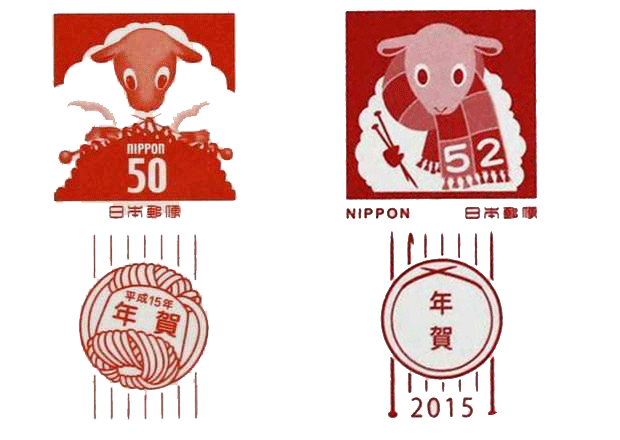
Japan’s Sheep Completes Scarf

japan_sheep_comparisonTending to its knitting paid off for Japan Post.

Its lunar new year stamp (left) a dozen years ago showed a fluffy sheep knitting a scarf.

This year’s lunar new year stamp (right) shows the same sheep wearing the scarf.

The Associated Press reports it’s traditional in Japan to send New Year’s greetings on postcards. Many Japanese send hundreds of them, to friends, colleagues and relatives. Although most stores and businesses are closed January 1st, Japan Post employees will be hard at work to get all the cards delivered.

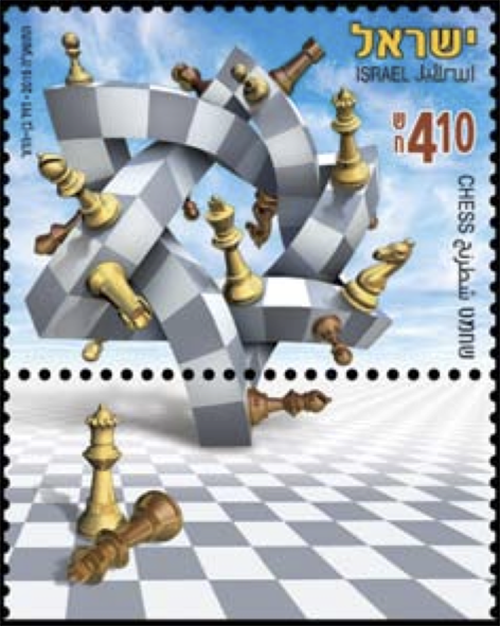
Chess (Israel, 2015)

This stamp will be issued February 10th.

[from Israel Post
isr_chessChess is one of the most prevalent games in the world. It is thought to have been invented in India in the 6th century CE and was popular among the Arab nations and in Persia. The game reached Europe around the 10th century, and the modern rules of the game were established there in the 15th century. Since then, this version of the game has spread throughout the world.

Chess is mentioned in the Kuzari, written by medieval Spanish philosopher and poet Rabbi Yehuda Halevi, as well as in writings by Rashi and Maimonides, and Abraham ibn Ezra even dedicated one of his poems to the game. Chess was mentioned many times in our literary sources for a good reason: this game has been extremely popular among Jews, who have also had significant achievements in this field. Four of the 16 World Champions were Jewish and three others were half-Jewish. Many other Jewish players were (and still are) at the international pinnacle of the game. Jewish excellence in chess is so prominent that the game has been called “the national Jewish game”.

This tradition has continued in Israel, and Israeli chess masters have achieved more than sportsmen in any other field: the Israeli national team is among the top-ranked in the world, with its highest achievements being second place at the Chess Olympic Games in Dresden in 2008 and third place at the Khanty-Mansiysk Games in Russia in 2010. The national team won second place at the European Championships in 2003 and 2005.

Israeli chess Grandmaster Boris Gelfand challenged then World Champion Viswanathan Anand for the World Chess Championship in 2012. Although the match ended in a draw, Gelfand lost by a minimal margin in the rapid tiebreaker games and had to settle for the title of World Championship runner-up.

Israeli women have also recorded a number of substantial achievements, among them winning the Women’s Chess Olympic Games in Haifa 1976 (which was boycotted by the strong Eastern- European countries). In 1978, Grandmaster Alla Kushnir-Stein fell just short of competing for the world title when she was beaten in the final round of the contenders’ competition by Maia Chiburdanidze of the USSR.

Thanks to these achievements and many more, Israel was granted the opportunity to host a number of important events: the Chess Olympic Games in 1964 (Tel-Aviv) and 1976 (Haifa), the European National Championship (Haifa, 1989), the World Youth Chess Championship (Jerusalem, 1967), the Team World Cup (Beer Sheva, 2005) and more.

Israel’s integration into the international chess arena began even before the establishment of the State. In fact, the first sports delegation to participate in an international competition under the flag of Eretz Israel was the delegation to the Warsaw Chess Olympic Games in 1935, which was comprised solely of members of the Jewish Yishuv. The first official sports meeting between Israel and any of the Arab countries took place at the Chess Olympic Games in Varna (1962), when Israel’s national chess team beat the Tunisian team with the score of 3:1.

This stamp is being issued to mark the European Individual Chess Championship 2015 which will be held in Jerusalem. The design reflects the connection between chess and Judaism and Israel, as well as chess’ status as Israel’s national sport and its number one representative sport.

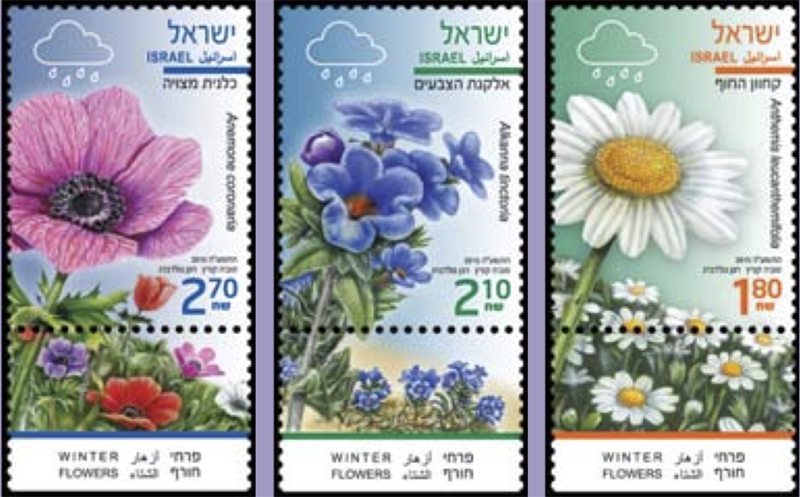
Winter Flowers (Israel, 2015)

These stamps will be issued February 10th.

[from Israel Post]
isr_winterflowersMost of Israel’s wild flowers bloom in spring, the soil is moist from the winter rains and temperatures are warm.

However, some of Israel’s wild flowers bloom much earlier during the growth season. Such are the well known Sternbergia and Autumn Crocus (Colchicum) which bloom in fall; and quite a number of flowers bloom at the height of winter, when the weather is cold and rainy. Most autumn flowers are sparse or bloom in small patches, while the early winter flowers normally form spectacular blooming carpets. Their short growth season enables them to bloom several weeks after the first rains of the season in mid-winter. The early blooming helps these flowers avoid competition for resources – water and soil nutrients, light, and especially pollination services (mostly by insects such as bees and beetles), as opposed to spring blooming flowers.

Early blooming is typical to relatively arid areas such as sandy areas of the Coastal Plain, and the Northern Negev, where the soil dries early, so early blooming is an advantage.

Coast False-Chamomile (Anthemis leucanthemifolia)
This semi-recumbent annual plant forms spectacular blooming carpets on the coastal sand fields as early as January. Unlike other species of False-Chamomile of Israel, it has succulent leaves which are wedge-shaped, and not pinnate; and the inflorescences are relatively large and dense.

The False-Chamomile species belong to the Daisy family, which is characterized by its flower-like inflorescences. It has many white flowers which look like petals, arranged in the outer circle of the inflorescence and numerous yellow flowers in the center which resemble stamens. The inflorescence appears to pollinating insects to be a flower (as it does to humans).

The Coast False-Chamomile is endemic to the coastal plains of Israel and Southern Lebanon, and grows nowhere else in the world.

Dyer’s Alkanet (Alkanna tinctoria)
This recumbent perennial plant is covered with rough bristles, as are many other plants belonging to the Borage family. During much of the year the Alkanet is a dull looking plant, but in winter and early spring it displays a profusion of bright blue flowers.

The root coat of Dyer’s Alkanet is red and was used in the past to produce a red dye. When rubbed on paper, it dyes the paper bright red. The plant’s scientific name stems from this: Alkanna is the Latin form of the Arabic word “Al- Hinna” – the general term for yellow-red dyes produced from plants. The word tinctoria means “of the dyers”.

Crown Anemone (Anemone coronaria)
Everyone in Israel knows the Crown Anemone, one of Israel’s most beautiful wild flowers. The Hebrew name “Kalanit” is derived from the same source as the word for bride – “Kala”. Crown Anemones bloom from early winter through the end of spring, forming magnificent flowering carpets.

The red variety of the Crown Anemone grows through much of the country, while the multicolored variety, in colors ranging from white to deep purple through all shades of pink and blue, grows mainly in the north. The multi-colored variety is sensitive to lime, and thus is rare in lime-rich soils. It is abundant mainly in the basaltic soils of the eastern Galilee and the Golan, and in the deep soils of the northern valleys. The red variety which grows through much of the country is drought-hardy and creates blazing flowering fields in the south.

—Hagar Leschner
Collection Manager of the National Herbarium, The Hebrew University of Jerusalem

Year of Light/Chemistry Nobel (Israel, 2015)

This stamp will be issued February 10th.

[from Israel Post]
The International Year of Light 2015:
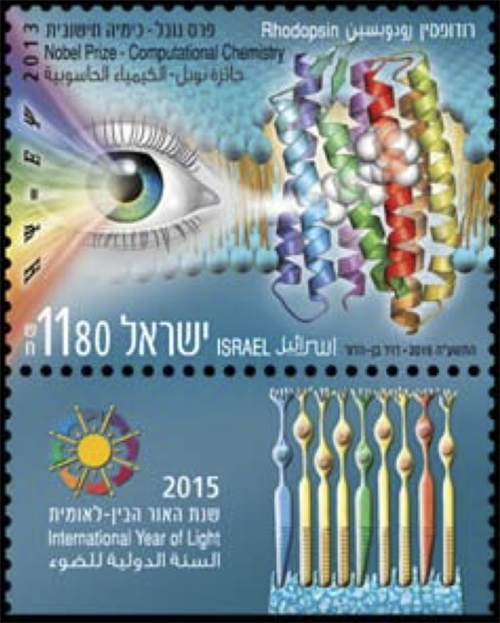
Nobel Prize 2013 – Computational Chemistry, Rhodopsin

isr_lightyearThis stamp marks two events that have much in common.

The first is the 2013 Nobel Prize in Chemistry that was jointly awarded to Martin Karplus (Harvard University), Michael Levitt (Stanford University) and Arieh Warshel (University of Southern California) for the development of multi-scale models for complex chemical systems. The prize recognized their revolutionary contributions during the years 1968–1976, which created the new field of computational molecular biophysics and provided new approaches and techniques for understanding complex biological molecules. Their approach changed the way we think about proteins and defined a new area of science, which has influenced and inspired many other fields.

The second event is the International Year of Light 2015, which was declared by the United Nations to celebrate the light sciences, light-based technologies and their importance to humankind.

The Israeli component of this Nobel Prize is significant. Michael Levitt, born in 1947 in Pretoria, South Africa, holds both British and Israeli citizenship. Arieh Warshel, born in 1940 in Kibbutz Sde-Nahum, Israel is a citizen of both the USA and Israel. Martin Karplus, born in Vienna in1930 to an Austrian Jewish family, fled with his family from the Nazi occupation to the USA in 1938. A substantial portion of the honored work was undertaken at the Weizmann Institute of Science when Warshel and Levitt were independent scientists and even earlier when both worked as students under the supervision of Shneior Lifson (1914-2001). Martin Karplus also conducted some of his research during a sabbatical year he spent working with the Lifson research group. It was a happy coincidence that the Nobel Prize committee recognized this group effort very close to what would have been Shneior Lifson’s 100th birthday.

One of the most impressive achievements of these Nobel laureates’ work is the molecular dynamics simulations of biological processes, such as enzymatic reactions, electron transfer reactions and ion transport in proteins. These simulations provide a computerized description of the actual events that occur in nature. One of the earliest and most significant examples of this strategy is the deciphering of the precise molecular events that occur during the process of vision. Arieh Warshel was the key researcher who described the role played by the protein Rhodopsin, which is the biological pigment in retina cells.

— Ehud Keinan
Professor of Chemistry at the Technion – Israel Institute of Technology
President of the Israel Chemical Society
Editor-in-Chief of the Israel Journal of Chemistry
Chairman of the Advisory Council, High School Chemistry Education, Ministry of Education

Description of the Stamp and the First Day Cover
The right side of the stamp features the protein Rhodopsin, which is a bundle of seven helices connected to each other by peptide loops. This protein, which is embedded within the cell membrane, binds retinal, a small light-sensitive molecule shown as a group of grey spheres that represent atoms. The left side of the stamp exhibits the Schrödinger equation, which is the most fundamental tool of quantum mechanics. Nobel Prize laureate Erwin Schrödinger formulated this equation in 1925 as a way to describe various states of atoms and molecules, opening the door for the science of theoretical and computational chemistry and physics.

The stamp tab features the logo of the International Year of Light as well as a schematic representation of the two major types of light-sensitive cells in the human retina: the rods (in yellow) and the cones (in blue, green and red). The rods are responsible for black-and-white vision and the cones are responsible for color vision. The human eye contains three types of cone cells, which discern red, green or blue light. All of the retinal cells translate the light stimulus to chemical changes and electrical impulses, which are transmitted to the vision centers in the brain via the optic nerves.

The First Day Cover shows two equations. The top row displays the Newton equation whereas the other three rows exhibit the Force Field U, which is the total potential energy of a molecule. Arieh Warshel and Shneior Lifson originally developed this equation in the late 1960’s to study the stability of small molecules. Levitt and Warshel used this equation to study large biomolecules. Karplus used it to study the dynamics of proteins by solving the Newton equation.

Ariel Sharon (Israel, 2015)

This stamp will be issued January 27th.

[from Israel Post
isr_sharonMajor General Ariel Sharon, 11th Prime Minister of the State of Israel, was born in Kfar Malal on February 26, 1928 and joined the Haganah at age 14. In May 1948, while serving as a platoon commander in the Alexandroni Brigade during the War of Independence, Sharon was severely wounded in the Battle of Latrun as he led the offensive that attempted to open the way to the besieged city of Jerusalem.

In August 1953, Ariel Sharon established Unit 101 and served as its commander. This elite unit worked against Palestinian terrorism behind enemy lines. Although Unit 101 only operated for five months and consisted of no more than 50 combat soldiers, it dramatically altered the IDF’s capabilities and achievements. The fighting spirit that Sharon brought to the unit became the IDF’s winning offensive combat doctrine and the basis for the establishment of the military’s special forces units.

In January 1954, he was made Commander of the Paratroopers Battalion, which became a brigade under his command, and implemented virtually all of the IDF’s retaliation operations. In the 1956 Suez War, Paratroopers Battalion 890 parachuted into Egypt near the Mitla Pass. Under Sharon’s command, the rest of the brigade traversed more than 200 kms inside Egyptian territory, capturing Egyptian posts along the way, and eventually met up with the battalion that had parachuted.

In 1966, Sharon was promoted to the rank of major general. During the Six Day War he commanded Division 38, which broke through Egypt’s key fortified line in the Sinai. At the end of the war Sharon was appointed as Commander of the Sinai.

In December 1969, Sharon was appointed as Commander of the Southern Command. One of the most difficult tasks assigned to him was to rid the Gaza strip of terrorism. It took seven months of intense activity, but from February 1972 onward, the area was quiet for ten years.

In July 1973, Ariel Sharon left the military and within a short period of time founded the Likud political party. During the Yom Kippur War, on the night of October 15-16 1973, the reserve division he commanded crossed the Suez Canal and led the way to victory over the Egyptians.

After the war Sharon was promoted to the position of Reserve Corps Commander.

At the behest of Prime Minister Yitzhak Rabin, Sharon was appointed as the Prime Minister’s Military Affairs Advisor in 1975. He filled this post until 1976.

In 1977, Sharon was elected to the Knesset as a member of the Shlomzion party, which he founded, and was appointed as the Minister of Agriculture and Chairman of the Ministers’ Committee on Settlement Affairs in Prime Minister Menachem Begin’s first government. Within the framework of this position he established more than 100 towns in the Golan, Galilee, Judea and Samaria, the Gaza Strip, the Negev and the Arava.

In June 1981, he was appointed as the Minister of Defense in Begin’s second government. A year later Israel entered into the Lebanon War. Within a week the IDF reached the Beirut-Damascus road, thwarted the terrorists and the Syrian army posts where the terrorists hid, removing the threat of rockets toward northern Israel. The expulsion of 15,000 men from Beirut, 9,000 terrorists and over 6,000 Syrian soldiers began eleven weeks after the glory of the operation. The reign of PLO terror in Lebanon was wiped out and the towns of northern Israel enjoyed years of quiet. In February 1983 Sharon was forced to resign his position as Minster of Defense following the massacre of Muslims by Christian Phalanges in the Sabra and Shatila neighborhoods of Beirut.

Later Sharon served as Minister for Trade and Industry, Minister of Housing Construction and Minister of National Infrastructure. In 1988 he was also appointed to the position of Foreign Minister. In February 2001, he was elected Prime Minister for the first time by a large margin. Sharon led the fight against rampant terrorism, Operation Defensive Shield and construction of the separation fence. After his second overwhelming election victory in January 2003, he initiated the plan for unilateral disengagement from Gaza. As Prime Minister, Sharon enjoyed great public support. Terrorism had been eradicated, the economy was growing and Israel gained international prestige.

On January 4, 2006 Sharon suffered a stroke and never regained consciousness.

On January 11, 2014 Ariel Sharon passed away and was buried on a hillside near his home in Havat Shikmim.

The portrait of Ariel Sharon featured on the stamp is based on a photograph by Saar Yaacov, GPO.

Israel-Philippines Joint Issue: Holocaust (2015)

This stamp will be issued January 27th.

[from Israel Post
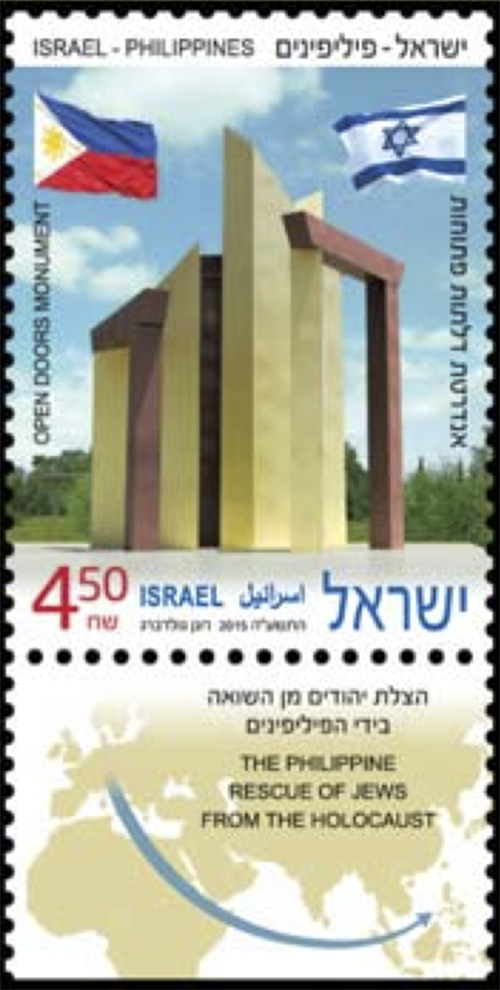
Israel-Philippines Joint Issue, The Philippine Rescue of Jews from the Holocaust

isr_philippinesThe relations between Israel and the Philippines are founded upon two events that were morally and politically significant for the Israeli and Philippine peoples.

The first event was the decision made by Manuel L. Quezon, the President of the Philippines at the time, to open his country’s gates to Jewish refugees from Germany and Austria on the eve of WWII, which stood in stark contrast to the conduct of the “enlightened” nations during that period.

The second event was that the Philippines was the only Asian country to vote in favor of Israel at the United Nations on November 29, 1947 during the historic decision that led to the establishment of the State of Israel and the recognition thereof by the family of nations.

This friendly relationship is also related to the fact that Israel is the Holy Land and the land of the Bible, which greatly affects the Philippino people. According to a study conducted by the Anti-defamation League, the Philippines is one of the only countries in the world that has virtually no anti-Semitism, a fact that is in line with the two countries’ joint history.

Israel has a significant Filipino population, whose contribution to the welfare for incurable patients and the disabled is greatly appreciated. Against the background of this appreciation, a Filipino nursing worker won Israel’s “X-Factor” competition in 2014, creating waves of support for Israel as an open and tolerant society.

In support of their special relationship, Israel was the first country to provide aid to the Philippines in late 2014 as it was faced with disaster in the wake of the strongest typhoon in history and the Philippines’ gratitude was felt throughout Filipino society. Israel and the Philippines cooperate in the realm of infrastructural development, mainly in the field of agriculture. Some 3,000 people participated in educational training programs in various fields in Israel, run by Mashav – the Center for International Cooperation, and thousands of Filipino agriculture students have come to Israel in recent years to participate in a year-long training program.

The Philippines’ rapid development makes it a promising partner for diverse economic cooperation to the benefit of our two Nations.

— Effie Ben Matityau
Ambassador of Israel to the Philippines

The Open Doors Monument is located at the center of the Memorial Garden in the city of Rishon LeZion. It was dedicated in 2007 and marks the assistance the Philippines provided to Jewish refugees during WWII.

In the late 1930’s most countries of the world closed their doors to Jews who were being persecuted by the Nazi regime. During this difficult period Philippine President Manuel L. Quezon agreed to issue 10,000 immigrant visas to European Jews. Some 1,300 Jews utilized these visas to immigrate to the Philippines. Many of them worked in the cigarette factory founded by the Freidar family in Manila and lived in blocs that President Quezon had built especially for them.

The monument, created by Philippine artist Mr. Jun Yee, consists of three doors in graded sizes symbolizing the courage and humanity of the Filipino people in welcoming the Jewish refugees. The triangular shape of the open doors represents the triangle on the Philippine flag and the triangles that comprise the Star of David. This integration of triangles is a symbol of the close friendly ties that exist between the Philippine Republic and the State of Israel.

The concrete floor below each door features an impression of a pair of feet crossing the threshold into the open door. These footprints belong to George Levinstein, a Jewish refugee who arrived in the Philippines in 1939, Max Weissler, who arrived in the Philippines in 1941 at age 11 and Dorilis Goffer, a 10-year old Filipino Israeli girl who is the granddaughter of Holocaust survivors. Her footprints represent the continued friendship between the two countries.