End of an Era: ArtCraft Cachets Discontinued

by Lloyd A. de Vries
Manager, The Virtual Stamp Club
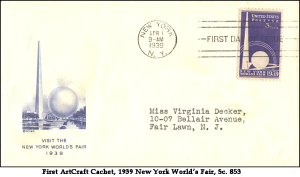
ac_39fair_vscThe 1939 New York World’s Fair stamps was the first ArtCraft cachet.

The 2015 Geometric Snowflakes was the last.

In January 2016, Washington Stamp Exchange “concluded that the decreasing volume of sales could no longer sustain the high costs of production.”

Each modern ArtCraft cachet required two printing processes, applied in different facilities: The color was lithography, the lettering was engraving.

Engraved printing is expensive, but “We like the engraved look,” Washington Press president Mike August, told The Virtual Stamp Club in a 2014 interview. “It’s a signature of what we’ve produced for 75 years.”

ac_wssnyc16_vsc“We certainly want to maintain that connection with our heritage and our legacy,” added co-owner Tim Devaney. “It began with engraving, we still use engraving as an integral part of our product.”

Founder Leo August (Tim Devaney’s father-in-law) first began producing cachets in the late 1920s for flight covers, when the Newark Chamber of Commerce and city government didn’t want to be bothered with collector requests. By the early 1930s, brother Sam (Michael’s father) had joined the business and WSE had branched out to include first day covers under the trade name “WSE” and others.
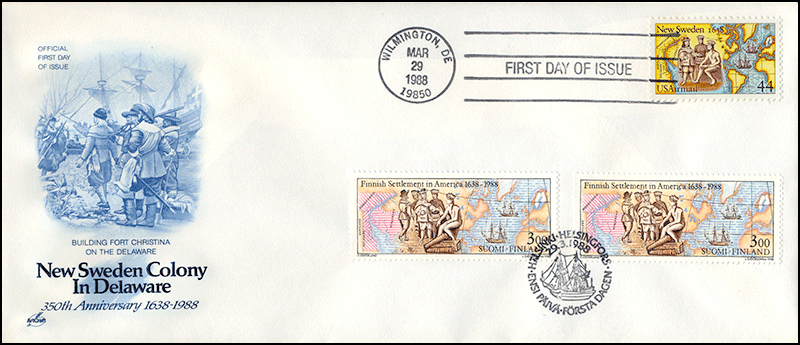
ac_sweden_joint_vscIn a 1973 interview for the American First Day Cover Society archives, the brother told interviewer Curtis Patterson they couldn’t afford to license the use of the fair’s symbols, the Trylon and Perisphere.

However, Woodbury Engraving, which specialized in engraved stationery for businesses and had been printing envelopes for WSE, did have the rights to use the symbols, and ArtCraft was able to use the Woodbury design shown here.

ac_tedwms1_vscWoodbury printed every ArtCraft cachet from that first issue through the West Point issue in 2001 (Sc. 3560).

ArtCraft wasn’t the first commercially-produced FDC cachet, and there are arguments whether it lasted longer than any other. However, it was certainly the longest ever produced by the same family or company.

ArtCraft was one of the few cachetmakers producing designs for every U.S. issue and also possibly the only one still selling unserviced cacheted envelopes. Both were available individually or through subscriptions.

VSC has been told that FDC dealer Marilyn Nowak is taking over the subscriptions, using cachets produced by Panda Cachets, owned by Rollin Berger. Berger confirmed online that he is producing cachets for at least two companies formerly served by ArtCraft.

ac_simpsons2The January announcement only affects ArtCraft Cachets for new issues. “Contrary to rumors currently circulating, Washington Press [the publishing arm of Washington Stamp Exchange] is not going out of business,” Devaney told The VSC in e-mail. The press release amplified that, saying that the company would continue to sell back issues, stamps and other collectibles, and produce White Ace stamp albums and StampMount mounts.

But no more new issue FDCs.

“Our conclusion was that producing new ArtCraft first day covers had been a burden on our resources for a several years and that we could not continue to do this,” Michael August posted online.

• • •

lloyd2008Thoughts:

ArtCraft was, in some ways, the victim of its own success. WSE did such a good job of selling the serviced and unserviced FDCs, both to collectors and to mass marketers, that they became common. Every first day cover collection had or had had some. Dealers offered pennies on the dollar for them, knowing there would be more available whenever they wanted them. Experienced collectors skipped them, knowing there would be more available whenever they wanted them.

There were probably other factors at work: The U.S. Postal Service is issuing more “face-different” stamps than ever, and more sets: 20 Harry Potter, 10 “A Charlie Brown Christmas,” 10 Songbirds, 8 Vintage Circus Posters, 20 Pets in 2016 and so on. ArtCraft had a commitment to produce a cachet for every U.S. issue.

The Postal Service also hasn’t been as forthcoming with advance information about new issues in recent years. For many cachetmakers, that means rushing cachet design development and production. It can add to the expenses for a commercial concern.

ac_celebrate1More and more U.S. new issues (and those of other countries) depict commercial properties, such as celebrities, cartoon characters, and other pop culture. Their likenesses and sometimes even names should not be used without obtaining (i.e., buying) a license. Most collectors, especially non-philatelists, don’t want a generic design, they want to see Han Solo or Professor Dumbledore or 1948 Ford F-1 pickup or whatever. An individual cachetmaker producing a few dozen FDCs might get away with violating a copyright; a commercial entity producing thousands is more of a target.
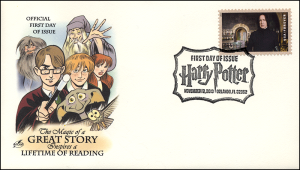
ac_hpotter1_vscArtCraft was also slow to adopt color. Collectors began to favor hand-painted and –colored cachets or those produced using color inkjet computer printers.

And finally, ArtCraft may also have been hiding its light under a bushel. Those of us who saw ArtCraft’s current cachets at Americover 2014 were amazed at how good they were. Yet the company’s ads in First Days and elsewhere featured very small pictures of recent FDCs — easy to skip over or miss.

Like many FDC collectors upon hearing this news, I feel a little guilty: I could have, perhaps should have, subscribed to ArtCraft after seeing its work at Americover 2014. But I’m not sure it would have made a difference.

Hotchner: How to Collect U.S. Commemoratives

How to Collect U.S. Commemoratives
by John M. Hotchner

hotchnerIn the last column, we talked in this space about How to Collect the Presidential Series of 1938-1954. This prompted a couple of readers to remark on a trend that has been growing among stamp show exhibitors: They are picking a specific commemorative or commemorative series, and finding everything about it that can be collected in order to tell the story of how it came to be created, to how it was used to move the mails.


How big a trend is this? I have either seen or been told of exhibits that have already appeared centered on the following commemoratives: 1904 Louisiana Purchase set of five (1¢, 2¢, 3¢, 5¢, 10¢) 1909 2¢ Hudson-Fultons 1909 2¢ Alaska-Yukon-Pacifics 1926 2¢ Sesquicentennial Exposition 1929 2¢ George Rogers Clark 1939 3¢ New York World’s Fair 1945-6 Roosevelt Memorial set of four (1¢, 2¢, 3¢, 5¢), 1945 5¢ Toward the United Nations, 1947 3¢ Centennial Philatelic Exhibition commemorative & 15¢ souvenir sheet, 1956 3¢ King Salmon, 1958 3¢ International Geophysical Year, 1958 4¢ Forest Conservation, 1959 4¢ Oregon Statehood, 1959 4¢ St. Lawrence Seaway, 1959 4¢ Dental Health, 1962 4¢ World United Against Malaria, 1964 5¢ New York World’s Fair, 1965 5¢ Churchill Memorial, 1968 6¢ Walt Disney, 1984 20¢ Smokey Bear, 1984 20¢ Roberto Clemente, 1928 5¢ Beacon Air Mail, and 1948 5¢ New York City Air Mail.

In addition, there are exhibits that are focused on the Black Heritage stamps, a series that began in 1978 and continues; and on the Chinese New Year series that began in 1991 and was capped with a 2005 sheetlet showing all of the 12 designs that had been previously issued. Finally there is also a very well done exhibit that covers the joint issues that the United States has had with other countries; usually with similar designs.

I know of other exhibits being built but not yet ready for prime time, and there are undoubtedly others both on the circuit and in planning that I’m not aware of. Even so, with fewer than 100 commemorative stamps having been given this kind of attention, there are still plenty of commemoratives to choose from if this form of collecting appeals to you.

There are a few exhibits I have not included here because they are totally focused on usages of the stamps and do not include the development of the stamp(s) themselves. Among these are, for example, the 1940 Famous Americans series, and the 3¢ 1946 Smithsonian issue.

Which brings me to the question of what a comprehensive exhibit contains. They start with the photo, painting or other basis for the stamp design, then come such essays as are in public hands. Next in the frames would be photo essays and publicity photos of the stamp(s) released by the Bureau of Engraving and Printing and/or the Postal Service; followed by such proofs as may be in public hands. Check the Scott U.S. Specialized Catalogue to see what might exist in the way of essays and proofs for your favorite stamp(s).

Next come the first day ceremony souvenirs, which should include a program (autographed if possible), and perhaps other items such as covers or blocks of the stamps signed by dignitaries not on the formal program. Then come the issued stamps starting with an absolutely superb copy of the featured stamp, plate blocks or other memorabilia signed by the designer/modeler and the engravers involved in the production of the stamp.

Issued stamps showing the type and location of normal or exceptional marginal markings are featured next, followed by such errors and varieties as have been discovered. It can be especially difficult to find these as errors (which exist in very small quantities) are listed, but there is no central listing for varieties such as misperforations, constant plate varieties, and color misregistrations — most of which will be equally scarce — and the collector has to search high and low for whatever may exist.

Now we get to the First Day Cover cachets. It will probably be the longest section of the exhibit. Much of what exists in this category has been recorded in publications of the American First Day Cover Society, but there are often small unrecorded productions of cachets that can be found randomly in dealer stocks, other collections, and in the archives of cachet makers. And there may be, especially with older stamps, uncacheted covers from unusual sources such as U.S. Navy ships.

Finally, the exhibit will end with commercial usages of the stamp showing how it was used to pay various rates and on mail to unusual destinations. This section is often frustratingly small. Why is this?

While definitives were and are often produced in quantities of many hundreds of millions, and sometimes in billions, commemorative production figures have mostly topped out in the 150 million range up until the 29¢ era (early ‘90s, when per-stamp production dropped to under 100 million in most cases, reflecting the larger number of stamps being issued). In addition, definitives are available for years; sometimes a dozen or more. Commemoratives can sell out much earlier, but in almost every case what is still not sold after 18 months is withdrawn and destroyed.

The result is that finding usages of any given stamp beyond routine first class, in the period when the commemorative was current, requires a lot of searching, a lot of knowledge as to where to look, diligent advertising of what is being sought, and much correspondence. The good news is that when you find the covers cost is generally pretty reasonable. It isn’t affording them, it is finding them that is the challenge; made more difficult by the fact that most dealers don’t stock “modern” (which is often anything in the last 75 years!) covers, because it is low profit margin material.

So, to do a commemorative exhibit requires, usually, years of acquisition and learning about what exists to be found. The learning is not trivial as it encompasses knowledge of production, EFOs, the range of First Day cachets, and contemporary rates and possible usages. I have a couple of ongoing projects in the acquisition/learning stage, and it may be that I will never be able to come up with enough material to get to an exhibit. But the journey in that direction is much of the fun of forming a commemorative collection.

If you are working on such a collection, D.A. Lux has continued my original list and publishes it monthly. If you would like your commemorative interest(s) included on The Hotchner Commemorative List, contact D.A. at dalux2041@gmail.com and include the Scott number and first day of issue of your stamp. Once on the list, other list members will be able to search their collections for the covers you need and will know your interests when they dig through the dollar and quarter boxes at their local stamp shows. This could be a way of helping to unearth new material to improve your collection!


Should you wish to comment on this column, or have questions or ideas you would like to have explored in a future column, please write to John Hotchner, VSC Contributor, P.O. Box 1125, Falls Church, VA 22041-0125, or email, putting “VSC” in the subject line.

Or comment right here.

Israel’s February 9, 2016 Stamps

From The Israel Philatelic Service; links go to specific pages for those issues:

isr_winterOur February stamps celebrate Winter, Israel-Greece relations, influential writers and the importance of rescuing Turtles and Dogs!

Winter is upon us and in Israel we enjoy clear crisp air, sun-filled moments, much needed rainy days and green landscape filled with flowers. Everyone is excited when snow falls in Jerusalem and on the high mountain peaks.

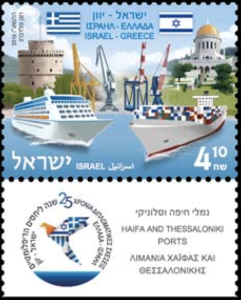
The Israel – Greece Joint issue features our ports Haifa and Thessaloniki. Interestingly most of the Thessaloniki dockworkers were Jewish and when they immigrated to Israel they continued their expertise and hard work in the Haifa port. Israel and Greece celebrate 25 years of diplomatic relations and have forged multidimensional partnerships in many fields.

isr_kishonAuthor, playwright, film and theater director, Ephraim Kishon is considered to be one of the greatest Israeli satirists of all time. This stamp celebrates his life and work which is enjoyed by millions around the world.

Our Pioneering Women stamp series continues this month with a writer and a poet: Nehama Pohatchevsky and Zelda. Both women have fascinating life histories and have been most influential in Israeli culture.

Let’s delve into the sea and discover the slow but sure Marine Turtles. These steady, harmless creatures are endangered due to human activity and Israel runs a national center for their rescue and rehabilitation.

isr_dogadopt1Our 2016 ATM labels pay tribute to man’s best friend and the importance of adopting rescue dogs. The first label introducing the Dog Adoption in Israel series features a beautiful silhouette picture showing the love between humans and dogs.

Willy from Southern Israel is pictured on February’s label. He’s just waiting for you to throw him the ball!

Dog Adoption ATM Labels (Israel 2016)

From The Israel Philatelic Service; links go to specific pages for those issues:

isr_dogadopt2Our 2016 ATM labels pay tribute to man’s best friend and the importance of adopting rescue dogs. The first label introducing the Dog Adoption in Israel series [issued January 1st and shown below]  features a beautiful silhouette picture showing the love between humans and dogs.
Willy from Southern Israel is pictured on February’s label. He’s just waiting for you to throw him the ball!

The issue date is February 9, 2016.

The first label in the series: isr_dogadopt1

Israel–Greece Joint Issue – 25 Years of Diplomatic Relations (Israel 2016)

Haifa and Thessaloniki Ports
isr_greeceThe issue date is February 9, 2016.

This year, 2015, marks the 25th anniversary of full diplomatic relations between Israel and Greece. Both are modern democratic states, Mediterranean neighbors, with common values representing the proud independence of two ancient nations. The two countries have forged a multidimensional partnership with wide-ranging cooperation in all fields reflecting our peoples’ shared history, close cultural ties and common interests. This historic commemorative stamp symbolizes the close friendship between Israel and Greece as they strive to build a better future, working together to promote the progress and prosperity of our nations and our region.

— Irit Ben Abba
Israeli Ambassador to Greece

The Jews of Thessaloniki stood facing the sea, while other Jewish communities throughout the Diaspora and in Eretz Israel lived with their backs to it.

Yitzhak Ben Zvi, one of the forefathers of the Zionist movement and later President of Israel, visited Thessaloniki in 1914 and was amazed by the Jewish command of the port: “On the eve of the Sabbath, even before sunset, all transport halts at the port. At once, all the Jewish sailors fill the port with their rowboats, dinghies and ships, all sailing to shore… Sabbath!”

Due to the deep economic ties between Thessaloniki and the sea, which reflected the Jewish power on the docks and beyond, the “pearl of the Aegean” became known as “Jerusalem of the Balkans”, in other words – like a city in Israel whose Jewish residents were linked to nature and to physical labor.

The “Jewish muscle” exhibited on the docks of Thessaloniki led the Zionist leadership to include the Thessalonikians in the conquest of the sea in Eretz Israel. Between 1933 and1935 hundreds of Jewish dockworkers from Thessaloniki immigrated to Eretz Israel and helped to realize the national vision of Hebrew labor with their own hands in the key sea ports of Haifa and Jaffa. The routine daily work on the docks was both tedious and dangerous. During the Arab strike that broke out in 1936, Arab workers failed in their attempts to lock the gates of the Haifa and Jaffa ports. Haifa Port remained open thanks to the Thessalonikian dockworkers who continued to come to work despite the atmosphere of terror, and in Tel Aviv the Thessalonikians built the first Hebrew port, as an alternative to the striking Jaffa port. These heroic actions destroyed the Arab blockade of the transfer of goods, passengers and immigrants through the ports of Eretz Israel and garnered the Thessalonikians a place in the national pantheon for their key role in the realization of the Zionist vision during the period of the Jewish Yishuv as it moved toward statehood.

— Dr. Shai Srougo
Researcher of Jewish Communities of the Mediterranean Region
Lecturer, Department of Jewish History, Haifa University

Description of the stamp
The stamp features Haifa Port as represented by a typical freighter and cranes, with the Baha’i Gardens on the slopes of Mt. Carmel in the background; and the Port of Thessaloniki as represented by a typical cruise ship and cranes, with the ancient white tower on the beach in the background.

The stamp tab features the 25 Years of Diplomatic Relations between Israel and Greece logo, designed by graphic artist and illustrator Kelly Matathia Covo.

Turtles in the Marine Environment (Israel 2016)

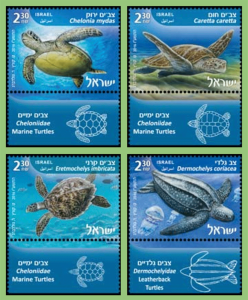
isr_turtlesMarine Turtles are the largest reptiles in Israel. They live mostly in the sea, but the females come ashore on summer nights to lay dozens of eggs in cavities they dig in the sand. The offspring hatch in about two months.

In some turtle species, the offspring’s gender is determined by the temperature in the nest. In the 1920’s and 1930’s sea turtle populations suffered greatly, with some 2000 green turtles being hunted each year along Israel’s coast. Despite that, in the 1950’s 15 nests per kilometer were reported on Israel’s northern beaches. The fact that in 2011 only one nest per kilometer was found on average in those areas highlights the sharp decline in the marine turtle populations, despite conservation efforts and legal protections.

Marine Turtles are endangered for various reasons: adults are injured by ship propellers, by ingesting waste and plastic bags, by fishing nets and hooks; nests are harmed by vehicles driving on the beaches, by human activity on the beaches at night and by animal predators; reduced numbers of beach sites available for nesting and artificial lighting along the beaches deters females from laying their eggs, as well as causing the offspring to lose their innate sense of direction, which guides them to the sea upon hatching.

Israel Nature and Parks Authority rangers and volunteers operate a national center that rescues and rehabilitates injured marine turtles. They also work to protect nests and when necessary, transfer eggs to protected incubation farms. The general public assists the Authority by reporting sightings of egg laying and injured turtles. (For urgent reports regarding injured turtles call: *6911).

Hawksbill Turtle Eretmochelys imbricate
The Hawksbill Turtle is the smallest of the marine turtles and is considered to be the most beautiful, thanks to the brown, black and yellow scutes tiled on its shell. This species is endangered mainly due to hunting in Southeast Asia. The turtle’s narrow head allows it to extract prey from among the coral. The Hawksbill Turtle occasionally frequents the Gulf of Eilat. The background of the stamp features the seabed and sea creatures typical to the Gulf of Eilat. The stamp tab features a schematic sketch of the Hawksbill Turtle’s scutes and scales, and clearly shows its narrow head.

Green Turtle Chelonia mydas
The Green Turtle is the only marine turtle that is mainly herbivorous in adulthood. Only 15 nests on average belonging to this species are found along Israel’s beaches. However, 63 of the 192 turtles, dead or injured, that wash onto the shore on average each year are Green Turtles.

The stamp features the underbelly of the Green Turtle, with the surface of the sea as seen from underwater shown in the background. The stamp tab features the scutes and scales of the Green Turtle’s back shell.

Loggerhead Turtle Caretta caretta
The Loggerhead Turtle is the most prevalent marine turtle in the Mediterranean Sea and it lays the largest numbers of eggs along Israel’s beaches (some 135 nests per year in recent years). It is mostly carnivorous, eating jellyfish, fish and crabs.

The stamp features the Loggerhead Turtle near the sandy seabed, with barnacles clearly shown attached to its shell. The stamp tab features the unique scutes and scales pattern that differentiates this species from the Green Turtle, clearly showing the fifth scute in rows along the sides.

Leatherback Turtle Dermochelys coriacea
The Leatherback Turtle is the largest and heaviest turtle species in the world, measuring up to 3 meters in length and weighing up to 930 kgs. As opposed to other marine turtles, its shell is covered with hard skin rather than scutes. The Leatherback Turtle migrates great distances across the oceans, swims faster than all other marine turtles (up to 35 km/h) and can dive to a depth of 1280 meters. This species feeds mainly on jellyfish and only rarely appears along Israel’s shores, in the Mediterranean Sea and the Gulf of Eilat. The background of the stamp features jellyfish, which are the Leatherback Turtle’s main food source. The ridges on the turtle’s back are prominent. The stamp tab highlights this species’ hydrodynamic body.

—Prof. Amos Bouskila
Ben-Gurion University of the Negev

Description of the First Day Cover
A marine turtle hatching from an egg is in the foreground.

A newly hatched turtle making its way toward the sea, leaving typical tracks in the sand, is featured in the background.

Seasons in Israel – Winter (Israel 2016)

The issue date is February 9, 2016.

Our calendar consists of twelve months – the amount of time it takes the Earth to complete one full cycle around the Sun.

The 365 days of the year are divided into four different seasons, each of which complements another: winter and summer, spring and autumn. Each season is characterized by its own typical weather, changes in the animals and plants and by its designated songs. Every season creates a certain type of atmosphere. In Israel the transitional seasons – autumn and spring – are short and often bring surprising weather changes.

Winter
isr_winter“The chill of morning, the shriek of the crow, awakened me. And I know not why holiday joy suddenly came upon me” wrote poet Haim Nachman Bialik (from Songs of Winter).

Winter is the coldest season, and it brings the rain. Each year we wait and hope for abundant winter rains and look forward to using our warm blankets, boots, umbrellas and coats. “Come rain!” sang the IDF Nachal entertainment troupe, lyrics by Tirza Atar and melody by Alona Turel.

Snow falls in Jerusalem and on the high mountain peaks. Water gushes in the rivers and even in the previously dry riverbeds. The Israeli landscape turns from dry grey to bright green. The green orchards are dotted with orange and yellow citrus fruit.

The days grow shorter as the nights lengthen. But we still enjoy clear warm days, as opposed to countries far to the north where the sun barely shines at all during the winter months. Good visibility, clear crisp air, the “smell of rain” – and the green landscape fills with flowers: Shoshana Damari sang “Anemones, anemones, reddish red-haired anemones,graceful anemones” in the wonderful song by Natan Alterman and Moshe Wilensky.

From the theme song for the children’s television program “Carousel,” which described the seasons of the year:

“So come whirl round on the carousel
Down and up and all around,
So come whirl round on the carousel
In summer, winter, autumn and spring…”

—Leah Naor
Author, translator and poet

* All songs have been loosely translated from the original Hebrew.

Pioneering Women (Israel 2016)

Nehama Pohatchevsky, Zelda

isr_womenThe issue date is February 9, 2016.

Early signs of women’s aspirations for gender equality in Eretz Israel were apparent as far back as the First Aliyah, as some women chose to take part in public affairs or nonconventional professions. Although the pages of history have not granted them their proper place – they operated in a world of preconceptions and discrimination against women, their fight for self-realization and equal opportunity cleared a path and inspired others.

The State of Israel embraced equality as a core principle early on, and just three years after the establishment of the State the Knesset passed the Women’s Equal Rights Law of 1951, guaranteeing equal treatment of women and men.

Women have yet to be fully included in society’s most influential bodies, but the efforts of these pioneering women set a quiet social revolution in motion, furthering gender equality and changing our society.

Nehama Pohatchevsky
1869, Brest, White Russia – 1934, Rishon LeZion, Israel
Author Nehama Pohatchevsky, known as Nefesh (“soul” in Hebrew, based on her maiden name, Nehama Feinstein) wrote articles in Hebrew as a youth in Russia and corresponded with poet and scholar Yehuda Leib Gordon (Yalag,Y.L.G). Her desire to immigrate to Eretz Israel was realized in 1889, following her marriage to Michel Pohatchevsky of Rishon LeZion.

Writing was in her blood. Nehama Pohatchevsky wrote about the lives of the pioneers and about building the national Jewish homeland in Eretz Israel, focusing on the struggles of the “new woman” in the newly developing Jewish community in the ancient homeland and her position in the family and in society. Thus she is known as the first female Hebrew author of Eretz Israel.

Life in the agricultural community was difficult during the First Aliyah and she worked hard raising her children, on the family farm and in the community. Although her two eldest sons passed away in infancy, she raised her son and daughter Asahel and Efrat. Nefesh was a pioneer and a woman ahead of her time. While working as a farmer and an author, she was also a public activist who fought for Hebrew labor and for instilling the Hebrew language, and also promoted equal rights and voting rights for women. She founded and was active in the Bikur Cholim Association, served as a mediator in the Rishon LeZion Magistrates Court, assisted new immigrants from Yemen and was a member of the Moshava Committee and the National Committee. She published articles and stories. Her collections of stories BeYehuda HaHadasha (In the New Yehuda) (1911) and BaKfar UbaAvoda (In the Village and at Work) (1930) were published in her lifetime, while her novel BaMidron (On the Decline) was published 70 years after her death, in 2004.

—Dr. Ora Asahel Silverstein

Zelda
1914, Ukraine – 1984, Jerusalem
Zelda Schneerson-Mishkovsky is one of the most significant and beloved Hebrew poets of our generation. Tens of thousands of copies of her collected poems from the six books published in her lifetime have been printed to date. Her poems are read and adored by an extremely broad audience: young and old, religious and secular, people from different places and from varying spiritual worlds.

Zelda was a direct descendant of the Lubavitcher Rebbes. She immigrated to Israel as an only child with her parents and grandfather in 1925. Several months later, her grandfather and father both passed away in Jerusalem. Although Zelda published poems and articles in newspapers and magazines over the years, her first collection of poems P’nai (Leisure) did not appear until 1967, when she was 53 years old. The book achieved immediate success among critics as well as a broad section of the reading public.

Thirty years after Zelda’s death in Jerusalem, her friends published a book of her unpublished writings and drawings, Tzipor Ahuzat Kesem (An Enchanted Bird). As writer and critic Dror Burstein remarked in his review of the book (Haaretz, July 2014): “These pages confirm Zelda’s place as one of the most important spiritual figures in Israeli poetry of the 1960’s and 1970’s and far beyond.”

Description of the Stamps and First Day Coversisr_womenNehama Pohatchevsky
Stamp: portrait adapted from a photo, courtesy of Ora Asahel; photo of Hacarmel St. in Rishon LeZion, 1912, photo by Leon Kahan / Rishon LeZion Museum

Tab: quote from a letter written by Nehama Pohatchevsky, from the Michel and Nehama Pohatchevsky Collection, Rishon LeZion Museum.

First Day Cover: Quote from “On the Decline”, 1920. Published by Sifrei Iton 77, 2004.

Zelda
Stamp: portrait adapted from a photo by Yisrael Simionski / Israel Sun; photo of the young Zelda, 1932, from a class photo – Mizrahi Teachers College for Women.

Tab: Zelda’s poem “Everyone has a Name” in her own handwriting.

First Day Cover: quote from Zelda’s poem “Shlomi”, from the collection P’nai, Hakibbutz Hameuhad Publishing House, 1967.

With thanks to Dr. Rivka Goldberg.

Ephraim Kishon (Israel 2016)

Budapest, Hungary – Tel-Aviv, Israel, 1924–2005

isr_kishonThe issue date is February 9, 2016.

Ephraim Kishon was an author, satirist, journalist, playwright, screenwriter, film and theater director and 2002 Israel Prize recipient. He is considered to be one of the greatest Israeli satirists of all time.

Kishon, a Hungarian Holocaust survivor, immigrated to Israel in 1949 and within just a few months learned to speak Hebrew fluently. His first play in Hebrew, “Shmo Holech Lefanav” (His Reputation Precedes Him) was staged by Habima three years after his arrival.

Kishon wrote more than 50 books in Hebrew, which were translated into 37 different languages. Over 45 million copies of his books have been sold worldwide and he is considered to be the most widely sold and translated Israeli author in the world.

Kishon wrote about simple people and their ordinary problems, but also addressed social and political issues. He exposed the tangled web of the bureaucracy and focused on the gaps between different sectors of the population, all from a perspective of love for the country and involvement in the national experience.

Kishon wrote some 20 plays, which achieved global success. Among some of the most renowned were “HaKetubbah” (The Jewish Marriage Certificate), ”Hu VeHi” (Him and Her), ”Ho, Ho Yulia” (Oh, oh Juliet) and more. His plays have been translated into many languages and continue to be performed today on stages around the world.

Kishon was also among the leading figures in Israeli cinema. His films, including ”Sallah Shabati”, ”HaShoter Azoulay” (The Policeman), ”Ta’alat Blaumlich” (The Big Dig) and more, were nominated for Oscars and won three Golden Globe awards as well as many other international awards.

Kishon elevated humor to an art form. His diverse and astute works reflect the diversity of Israeli society and successfully get across Israeli viewpoints to a wide audience of readers throughout the world.

New generations continue to be brought up on Kishon’s works, which remain just as relevant and sharp today as when they were written. These works are an Israeli cultural asset and millions of readers around the world continue to both laugh and cry as they enjoy them.

Description of the Stamp and the First Day Cover
The stamp was designed by Renana Kishon and Pini Hamou based on a photograph by Isolde Ohlbaum ©.

The stamp features the titles of articles, books, plays and screenplays by Ephraim Kishon. The stamp tab features Ephraim Kishon’s handwriting and signature.

The First Day Cover displays 12 of the numerous Hebrew phrases coined by Ephraim Kishon. With thanks to Ephraim Kishon’s cultural estate.

Duke of Edinburgh’s Awards (UK 2016)

[press release]
ROYAL MAIL SUPPORTS DUKE OF EDINBURGH’S AWARD’S DIAMOND ANNIVERSARY 2016

  • Royal Mail’s limited edition Commemorative Sheet of stamps goes on sale on 12 January 2016 to celebrate The Duke of Edinburgh’s Award’s Diamond Anniversary year
  • The sheet features images over six decades since the scheme was founded in 1956 by HRH Prince Philip, Duke of Edinburgh
  • The sheet is limited to an edition of 7,500 and each one is numbered
  • Royal Mail is also supporting the DofE Award 60th anniversary as a Diamond Partner by encouraging its employees to take part in a personal Diamond Challenge in 2016
  • The commemorative sheet is priced at £14.95 and is available online at
    www.royalmail.com/dofe or by calling 08457 641 641

uk_dukeawardRoyal Mail’s limited edition The Duke of Edinburgh’s Award’s Diamond Anniversary Commemorative Sheet goes on sale on 12 January 2016 celebrating 60 years since the scheme was first launched, which is the world’s leading youth achievement award.


The images on the sheet alongside each First Class stamp feature DofE candidates and founders at work and enjoying outdoor pursuits over six decades of its existence, helping young people reach their full potential. The sheet is limited to an edition of 7,500 and each is serially numbered.

Royal Mail is also marking the 60th anniversary year as a Diamond Partner by encouraging employees of all ages to get involved and complete a Diamond Challenge of their own to raise money for the charity. Royal Mail will fund the enrolment fee for every Royal Mail entry.

Royal Mail has enabled many of its apprentices to take part in The Duke of Edinburgh’s Award scheme. For the 60th anniversary, Royal Mail will also be opening its doors for more employees of all ages to take part and experience the challenges of DofE in a special Diamond Challenge 2016.

Royal Mail’s Chief Operations Officer, Sue Whalley, added: “It is really encouraging to see our continuing commitment to supporting The Duke of Edinburgh’s Award programme within our business. I hope many more of our people will get involved with the Diamond Challenge this year and dare to set themselves a challenge to celebrate the 60th anniversary of the scheme.”

Peter Westgarth, CEO of The Duke of Edinburgh’s Award said: “In our 60th year we are grateful to Royal Mail not only for marking the occasion with this wonderful commemorative stamp sheet, but for their enduring support of the aims of The Duke of Edinburgh’s Award. Helping young people achieve a greater goal in life is not only rewarding in itself, but also, when the DofE is run in a business setting, represents an investment in the people that work for those organisations. This valuable support, that Royal Mail gives to its apprentices, is ultimately of benefit to their customers and communities they serve, whilst also helping the apprentices themselves to nurture and grow within the company and develop important work-ready skills.”

Darren Borthwick, Royal Mail DofE Apprentice Manager, said: “We are proud to support The Duke of Edinburgh’s Award scheme, to improve the learning and careers of our young apprentices and to help celebrate its Diamond Anniversary year 2016.
“We hope that by showing our commitment to the programme it will highlight the excellent work that the Awards scheme offers to young people in the wider workplace and encourage more potential recruits to join the scheme.”

Sam Bontempo, 19, from South Wales, a Duke of Edinburgh Gold Award apprentice at Royal Mail, said: “I am looking forward to a career with Royal Mail and working towards a Gold Award with The Duke of Edinburgh’s scheme, at the same time, is an added bonus. I didn’t think I would get the chance to follow this challenge, but Royal Mail has made it possible.”

The commemorative sheet is priced at £14.95 and is available online at www.royalmail.com/dofe or by calling 08457 641 641

The ten Duke of Edinburgh Diamond Anniversary commemorative stamp labels are as follows:

HRH WITH THE FIRST DIRECTORS
Sir John (later Lord) Hunt (second left, back row), who had led the successful British Mount Everest expedition in 1953, was the first director of The Duke of Edinburgh’s Award.

FIRST GOLD AWARDS
In 1958, HRH The Duke of Edinburgh presented the first Gold Awards to a group of young people at a ceremony at Buckingham Palace.

PROGRAMME LAUNCHED FOR WOMEN
Two years after The Duke of Edinburgh’s Award for Boys was launched, a similar programme was established for girls. In 1969, the two programmes came together as one.

HRH MEETS YOUNG PEOPLE
HRH meets Sea Cadets learning rope skills and boating for their DofE in the late 1970s.

PRINCE EDWARD GETS GOLD
In 1986, HRH The Prince Edward received his Gold Award. He is a trustee of the DofE and chairman of The Duke of Edinburgh’s International Award Foundation.

VOLUNTEERING
From helping people in need to protecting the environment, the Volunteering section of a DofE programme is about making a difference to other people’s lives.

PHYSICAL
In this section, young people spend time developing skills in their favourite sport or learning a new activity that will improve their health and fitness.

SKILLS
The Skills section of a DofE programme helps young people to nurture their interests and talents, such as cooking, music and web design, and to gain valuable skills for the future.

EXPEDITION
As part of a small team, young people plan and complete an adventurous journey in the great outdoors – by bike, boat, canoe, foot, horse or wheelchair.

RESIDENTIAL
Gold DofE participants complete an additional Residential section over five days, taking part in a shared activity with new people, either in the UK or overseas.
Technical Details:

Number of stamps: 10 x 1st Class Union Flag stamp based on an original design by Dick Davies, featuring an illustration by Anton Morris.
Pack and Commemorative Sheet design: Jack Renwick Studio Ltd
Words: Vicky Prior
Illustrations: Lisa Crone
Acknowledgements: stamp sheet – all images © The Duke of Edinburgh’s Award, except map of the Lake District © OS Data; backing card – all images © The Duke of Edinburgh’s Award, except photo of Kurt Hahn © Thurston Hopkins/Stringer/Getty Images; map of the Lake District (on the front) © OS Data; 1950s map (on the rear) © National Library of Scotland
Sheet Format: A4
Stamp Format: Portrait
Stamp Size: 20mm x 24mm
Printer: International Security Printers
Print Process: Lithography
Perforations: Die – cut simulated
Phosphor: Bars as appropriate
Gum: Self-adhesive