Celebrities to Unveil Canadian Stamps

[press release]
In honour of Canada 150, notable Canadians will help unveil stamps celebrating 10 unforgettable moments since 1967
Maple leaf-shaped stamps will be a first for Canada Post

OTTAWA – Canada Post has enlisted the help of several distinguished Canadians to unveil 10 special commemorative stamps that celebrate the most significant moments in the life of the country since it proudly marked its Centennial.

In a video message (view here), Canada Post President and CEO Deepak Chopra, joined by Canada Post employees and Steven MacKinnon, Parliamentary Secretary to the Minister of Public Services and Procurement, proudly introduces this special stamp program in celebration of Canada 150, the country’s sesquicentennial.

The impressive Canadians include a country music star, a world-renowned architect, successful business leaders, influential community activists, legendary athletes and an astronaut. Over the next five weeks, separate unveilings will occur, each one at a location chosen to illustrate the story behind the achievement, event or milestone that the stamp commemorates.

This will also be the first time in Canada Post’s history that stamps will be issued in the shape of a maple leaf.

With each stamp unveiling, videos with these notable Canadians, other key participants and archival footage will tell the story of that stamp subject on canadapost.ca/canada150.

The first of the 10 stamps will be unveiled on April 27 in Montréal. The remainder will be revealed separately over five weeks, culminating with the unveiling of two stamps on June 1. On that day, all 10 Permanent™ domestic-rate stamps will be available in various formats – at post offices and online, via mail order or phone. Customers can also pre-order at canadapost.ca/canada150 or by phone.

As with all Canada Post stamps, the subjects were chosen by the Canada Post Stamp Advisory Committee. These 12 members of the public are experts in their particular field. They include historians, archivists, graphic designers, philatelists and others.

[COMMUNIQUÉ]

Pour les 150 ans du Canada, des personnalités canadiennes dévoileront 10 timbres célébrant des moments marquants depuis 1967
Postes Canada émettra pour la toute première fois des timbres en forme de feuille d’érable

OTTAWA – Postes Canada a invité plusieurs Canadiens de renom à participer au dévoilement de 10 timbres commémoratifs soulignant les moments les plus marquants de l’histoire du pays depuis son centenaire.

Dans un message vidéo (visionner ici), le président-directeur général de Postes Canada Deepak Chopra, accompagné d’employés de la Société et de Steven MacKinnon, secrétaire parlementaire de la ministre des Services publics et de l’Approvisionnement, a fièrement présenté le programme de timbres-poste Canada 150 célébrant le cent cinquantenaire du pays.

L’impressionnante liste de personnalités canadiennes invitées compte notamment une vedette de musique country, un architecte de renommée mondiale, des chefs d’entreprise prospères, des activistes communautaires influents, des athlètes légendaires et un astronaute. Au cours des cinq prochaines semaines, les dévoilements individuels auront lieu à des endroits symboliques choisis selon la réalisation ou le moment qu’illustre le timbre présenté.

De plus, pour la toute première fois dans l’histoire de Postes Canada, les timbres émis auront la forme d’une feuille d’érable.

Pour chaque timbre dévoilé, des vidéos mettant en vedette des Canadiens célèbres, d’autres acteurs importants et des images d’archives raconteront l’histoire derrière la vignette sur le site postescanada.ca/150canada.

Le premier des 10 timbres sera dévoilé le 27 avril à Montréal. Les autres seront présentés individuellement sur cinq semaines; les deux derniers seront révélés le 1er juin. Ce jour-là, les 10 timbres PermanentsMC du régime intérieur seront offerts en différents formats. Il sera possible de se les procurer dans les bureaux de poste ou de les commander en ligne, par la poste ou par téléphone. Les clients peuvent également les précommander à l’avance sur le site postescanada.ca/150canada ou par téléphone.

Comme pour tous les timbres de Postes Canada, ces sujets ont été choisis par le Comité consultatif sur les timbres-poste de Postes Canada. Ce comité est composé de 12 membres du public, dont des historiens, des archivistes, des concepteurs, des philatélistes et d’autres experts qui sont tous des sommités dans leur domaine.
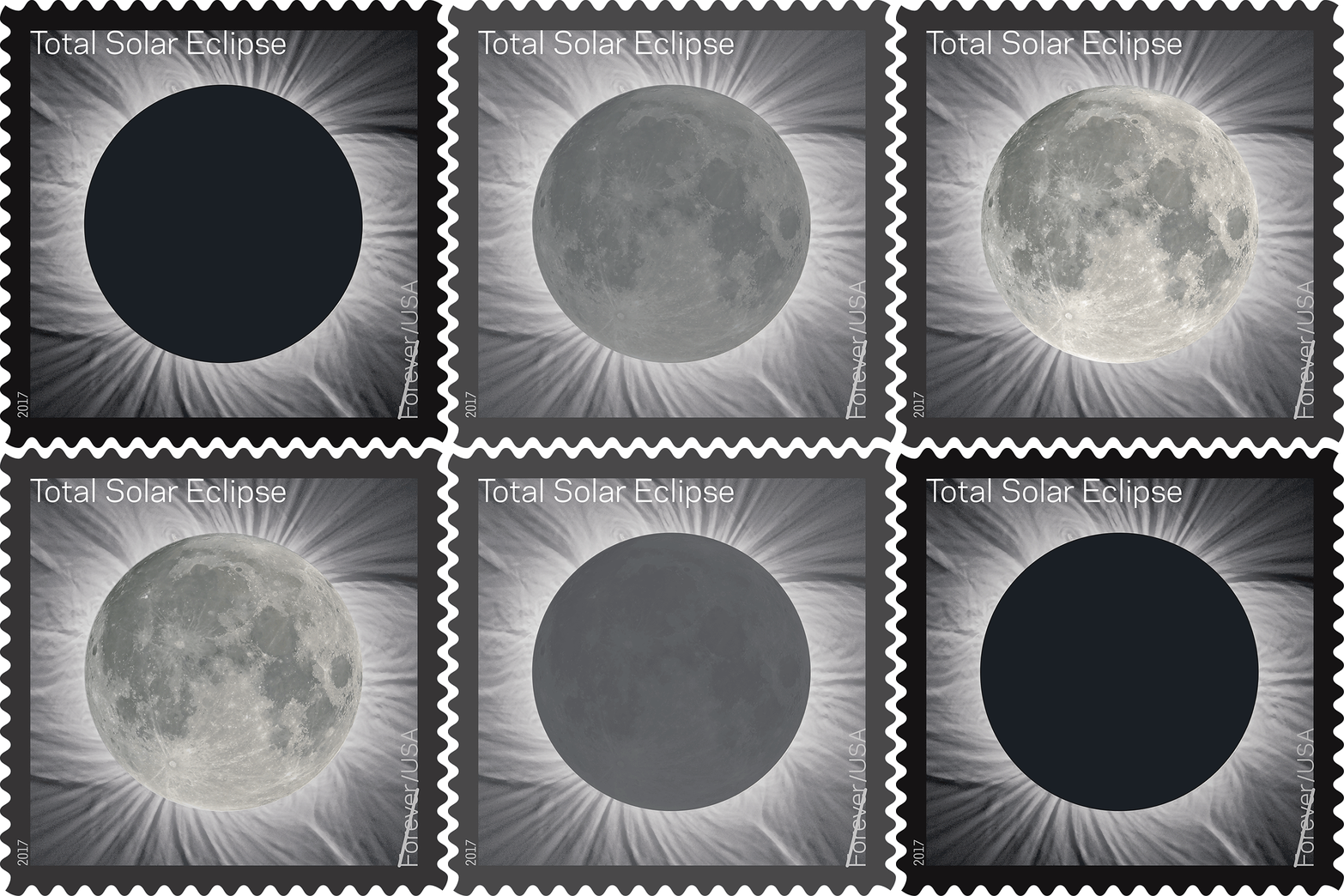
Total Eclipse (U.S. 2017)

Updated May 29th:

Issue: Total Eclipse of the Sun Stamp
Item Number: 475300
Denomination & Type of Issue: First-Class Mail Forever®
Format: Pane of 16 (1 design)
Series: N/A
Issue Date & City: June 20, 2017, Laramie, WY 82072
Designer: Antonio Alcalá, Alexandria, VA
Art Director: Antonio Alcalá, Alexandria, VA
Typographer: Antonio Alcalá, Alexandria, VA
Existing Photos: Fred Espenak
Modeler: Sandra Lane/Michelle Finn
Manufacturing Process: Offset, Microprint
Printer: Banknote Corporation of America
Printed at: Browns Summit, NC
Press Type: Alprinta 74, ABG Digicon Series 2
Stamps per Pane: 16
Print Quantity: 60 million stamps
Paper Type: Phosphor Tagged Paper, Overall
Adhesive Type: Pressure-sensitive
Processed at: Banknote Corporation of America, Browns Summit NC
Colors: Cyan, Magenta, Yellow, Black, Thermochromic/Black
Stamp Orientation: Vertical
Image Area (w x h): 1.085 x 1.085 in./27.56 x 27.56 mm
Overall Size (w x h): 1.225 x 1.225 in./31.12 x 31.12 mm
Full Pane Size (w x h): 6.00 x 6.00 in./152.40 x 152.40 mm
Press Sheets Size (w x h): 12.00 x 24.50 in./304.8 x 622.30 mm
Plate Size: 128 stamps per revolution
Plate Numbers: “B” followed by five (5) single digits
Marginal Markings:
Front: Plate numbers in two corners of pane
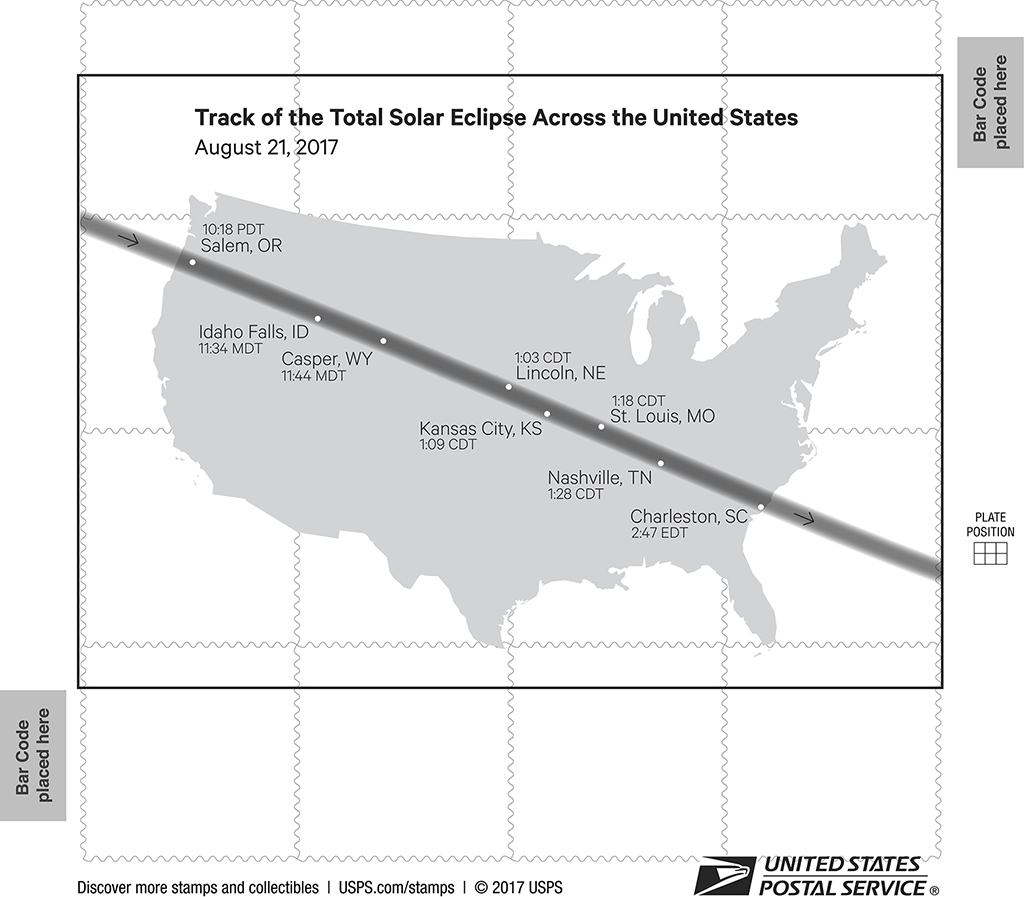
Back: © 2017 USPS • USPS logo • Plate position diagram • Barcode (475300) in upper right and lower left corners of pane • 1 map, “Track of the Total Solar Eclipse Across the United States, August 21, 2017” • Promotional text

Updated May 12th:
On June 20, 2017, in Laramie, WY, the U.S. Postal Service® will issue the Total Eclipse of the Sun stamp (Forever® priced at 49 cents), in one design, in a pressure-sensitive adhesive (PSA) pane of 16 stamps (Item 475300). The $7.84 Total Eclipse of the Sun pane of 16 stamps may not be split, and the stamps may not be sold individually. The stamps will go on sale nationwide June 20, 2017.

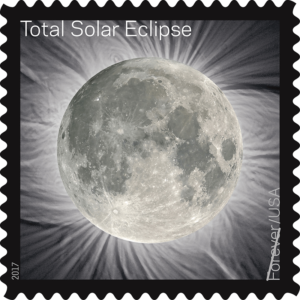
On August 21, 2017, a total solar eclipse will be visible to millions of Americans as it sweeps a narrow path across parts of the entire country. The U.S. Postal Service anticipates this rare event with a stamp celebrating the majesty of total solar eclipses. A total eclipse of the Sun occurs when the Moon completely blocks the visible solar disk from view, casting a shadow on the Earth. The image on the Total Eclipse of the Sun stamp shows a total solar eclipse that was seen over Jalu, Libya, in 2006.

The Total Eclipse of the Sun stamp is the first U.S. stamp to use thermochromic ink, which reacts to the heat of your touch. Placing your finger over the black disc on the stamp causes the ink to change from black to clear to reveal an underlying image of the moon. The image reverts back to the black disc once it cools. The back of the stamp pane shows a map of the eclipse path. Art director Antonio Alcalá designed the stamp with existing photographs taken by astrophysicist Fred Espenak.

Stamp Fulfillment Services will make an automatic push distribution to Post Offices™ of a quantity to cover approximately 30 days of sales.

Special Dedication Postmarks:
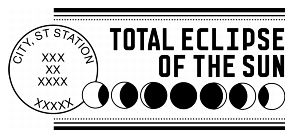
Only the following pictorial postmark is permitted for the Total Eclipse of the Sun stamp. The word “Station” or the abbreviation “STA” is required somewhere in the design, because it will be a temporary station.
How to Order the First-Day-of-Issue Postmark:
Customers have 60 days to obtain the first-day-of-issue postmark by mail. They may purchase new stamps at their local Post Office, at The Postal Store® website at usps.com/shop, or by calling 800-782-6724. They must affix the stamps to envelopes of their choice, address the envelopes (to themselves or others), and place them in a larger envelope addressed to:

FDOI – Total Eclipse of the Sun Stamp
USPS Stamp Fulfillment Services
8300 NE Underground Drive, Suite 300
Kansas City, MO 64144-9900

After applying the first-day-of-issue postmark, the Postal Service™ will return the envelopes through the mail. There is no charge for the postmark up to a quantity of 50. There is a 5-cent charge for each additional postmark over 50. All orders must be postmarked by August 20, 2017.

Philatelic products for this stamp issue are as follows:

  • 475306 Press Sheet with Die-cut, $62.72
  • 475310 Digital Color Postmark Keepsake, $9.95
  • 475316 First-Day Cover, $0.93
  • 475321 Digital Color Postmark, $1.64
  • 475329, Protective Sleeve, $0.25
  • 475330 Ceremony Program, $6.95
  • 475333 American Commemorative Collectible Panel, $10.95

Technical Specifications are not yet available.

April 27th:

According to a USPS spokesman, this “cool” “first of its kind” issue is a “Forever Stamp that turns into TWO images from the heat of your finger!” The stamp will be issued June 20

[press release]
Total Eclipse of the Sun to be commemorated on a Forever Stamp
One Stamp: Two Images

WASHINGTON — The Postal Service will soon release [June 20] a first-of-its-kind stamp that changes when you touch it. The Total Solar Eclipse Forever stamp, which commemorates the August 21 eclipse, transforms into an image of the Moon from the heat of a finger. The public is asked to share the news on social media using the hashtag #EclipseStamps.

Tens of millions of people in the United States hope to view this rare event, which has not been seen on the U.S. mainland since 1979. The eclipse will travel a narrow path across the entire country for the first time since 1918. The path will run west to east from Oregon to South Carolina and will include portions of 14 states.

The June 20, 1:30 p.m. MT First-Day-of-Issue ceremony will take place at the Art Museum of the University of Wyoming (UW) in Laramie. The University is celebrating the summer solstice on June 20. Prior to the event, visitors are encouraged to arrive at 11:30 a.m. to witness a unique architectural feature where a single beam of sunlight shines on a silver dollar embedded in the floor, which occurs at noon on the summer solstice in the UW Art Museum’s Rotunda Gallery. The back of the stamp pane provides a map of the August 21 eclipse path and times it may appear in some locations. Visit NASA’s website to view detailed maps of the eclipse’s path.
Thermochromic Ink
The stamp image is a photograph taken by astrophysicist Fred Espenak, aka Mr. Eclipse, of Portal, AZ, that shows a total solar eclipse seen from Jalu, Libya, on March 29, 2006.

In the first U.S. stamp application of thermochromic ink, the Total Solar Eclipse stamps will reveal a second image. Using the body heat of your thumb or fingers and rubbing the eclipse image will reveal an underlying image of the Moon (Espenak also took the photograph of the Full Moon). The image reverts back to the eclipse once it cools.

Thermochromic inks are vulnerable to UV light and should be kept out of direct sunlight as much as possible to preserve this special effect. To help ensure longevity, the Postal Service will be offering a special envelope to hold and protect the stamp pane for a nominal fee.

A total eclipse of the Sun occurs when the Moon completely blocks the visible solar disk from view, casting a shadow on Earth. The 70-mile-wide shadow path of the eclipse, known as the “path of totality,” will traverse the country diagonally, appearing first in Oregon (mid-morning local time) and exiting some 2,500 miles east and 90 minutes later off the coast of South Carolina (mid-afternoon local time).
A total solar eclipse provides us with the only chance to see the Sun’s corona — its extended outer atmosphere — without specialized instruments. During the total phase of an eclipse the corona appears as a gossamer white halo around the black disk of the Moon, resembling the petals of a flower reaching out into space.

Art director Antonio Alcalá of Alexandria, VA, designed the stamp.

The Total Eclipse of the Sun stamp is being issued as a Forever stamp, which is always equal in value to the current First-Class Mail 1-ounce price.

The Postal Service receives no tax dollars for operating expenses and relies on the sale of postage, products and services to fund its operations.

Football Star Johan Cruijff (Netherlands 2017)

[press release]
Silver stamp for football icon Johan Cruijff

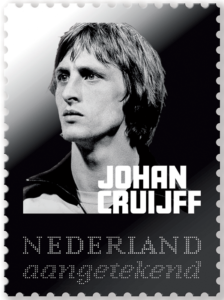
PostNL honours Johan Cruijff by issuing a pure silver stamp. This special stamp comes exactly one year after the death of the Dutch football legend, and marks the fifth time that PostNL has issued a silver postage stamp.
Support the Johan Cruyff Foundation
PostNL marketing director Ludo Voorn reflects on the death of Johan Cruijff a year ago. “Everyone loved Johan Cruijff. Besides his widely respected great skill on the football field, he was always committed to bringing children together through sports. The Cruyff Foundation has built on this notion for years. We are proud to support their work by donating part of the proceeds from sales of this silver stamp.”
Niels Meijer, director of the Cruyff Foundation, feels it’s very special that PostNL is issuing such a valuable stamp in honour of the footballer. “Johan always filled a social role. We continue to do that. We will certainly be investing the proceeds from the stamp sales in a project such as Schoolyard 14. This will challenge students both during and after school to play and exercise together.”

Availability
PostNL has commissioned the Royal Dutch Mint to manufacture the postage stamp, which is made from pure silver. The stamp, in a deluxe storage box, is available for €25 via www.postnl.nl/cruijff. The stamp has a limited run of 1,400 copies. The postage stamp has the ‘Registered Mail’ designation, and may be therefore be used to send letters as registered mail. The stamps are valid for an unlimited period.

[Cruijff was a world-renowned and -beloved player and coached who died March 24, 2016, at the age of 68 from complications resulting from lung cancer. For more, see Wikipedia. —Virtual Stamp Club]

Special Moments (Netherlands 2017)

[press release]
Special moments featured on stamps

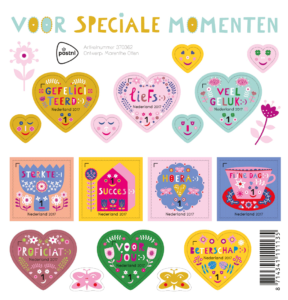
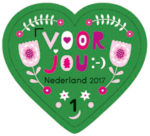
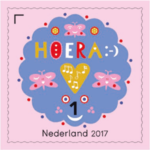
Many of life’s special moments deserve personal attention. For that reason, the ten stamps feature wishes including gefeliciteerd (Congratulations), liefs (Love), veel geluk (Lots of luck), sterkte (Feel better), succes (Good luck), hoera (Hooray), fijne dag (Have a nice day), proficiat (Well done), voor jou (For you) and beterschap (Get well soon). Every stamp features an emoticon; a face depicted by punctuation marks. The stamp sheetlet also contains seven stickers that can be used to decorate the envelope or card, also with an emoticon.
Special designs for special wishes
For this stamp sheetlet, Marenthe Otten designed both heart-shaped and square stamps. “The focus of each stamp is a wish appropriate to a special moment in the life of a loved one. The shape of a heart or flower emphasises the personal nature of the message. These wishes are in the form of colourful handwriting with cheery illustrations,” says the designer.
Availability
The ‘For Special Moments’ stamp sheetlet consists of ten stamps marked with ‘Nederland 1’, which can be used for items weighing up to 20g destined for mail in the Netherlands. These stamps will be available from 27 March at all Bruna shops and via Collectclub.nl. From 10 April the stamp sheetlet will be available from all PostNL sales points. The stamps are valid until further notice.
De Stijl Art Movement (Netherlands 2017)

[press release]
New stamps tell the story of the De Stijl art movement

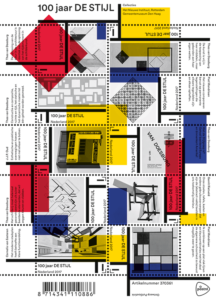
On Monday 27 March, PostNL issues the De Stijl (“The Style”) Centennial stamp sheetlet, celebrating this influential 20th century Dutch art movement. The stamps feature iconic works by Theo van Doesburg, Piet Mondriaan, Cornelis van Eesteren, Gerrit Rietveld and J.J.P. Oud. As artist, designer or architect, all are important representatives of De Stijl. At the Gemeentemuseum Den Haag, mayor Pauline Krikke received [in advance] the first issue of the De Stijl Centennial stamps from Herna Verhagen, CEO of PostNL [photo below].
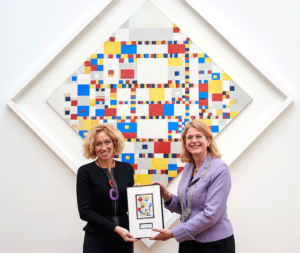
The PostNL head office is currently also decorated in the De Stijl Centennial style, inspired by Piet Mondriaan’s Victory Boogie Woogie. [see video] In this way, PostNL supports the celebration of the national theme year ‘Mondriaan to Dutch Design’ in The Hague. [text continues after video]

Special introduction to De Stijl
Mayor Pauline Krikke is honoured that the first stamp sheetlet was issued in The Hague. “It’s extraordinary that, with these stamps and the decoration of the head office, PostNL is connecting itself with Mondriaan and his De Stijl contemporaries. Our city is also closely linked via the Gemeentemuseum Den Haag. Only this museum has organised three large exhibitions, including The Discovery of Mondriaan featuring 300 art works by the internationally renowned artist. This stamp sheetlet will enable the Netherlands to become acquainted with the founders of this art movement in a whole new way.”
Contemporary character
CEO Herna Verhagen, about the new stamps: “It’s impressive to see how De Stijl artworks, each with its own individual surface distribution of horizontal and vertical black lines, also maintain a contemporary look in stamp format. The designers René Put and Brigitte Gootink have deliberately used black and white images in their design. With the addition of the distinctive red, yellow and blue colours in transparent areas, they give a unique twist to the illustrious collections in the Gemeentemuseum Den Haag and Het Nieuwe Instituut in Rotterdam.”

New inspiration
2017 marks one hundred years since the founding of the Dutch art movement De Stijl. Throughout the year, numerous events and exhibitions will be organised in the Netherlands. Artists who joined De Stijl at the time were looking for a totally ‘new art’ that also had to modernise society. Along with Rembrandt, Vermeer, Van Gogh and Escher, Piet Mondriaan is now globally recognised as one of the most celebrated Dutch artists.

Availability
Each ‘De Stijl Centennial’ stamp sheetlet consists of ten stamps marked with ‘Nederland 1’, which can be used for items weighing up to 20g destined for mail in the Netherlands. These stamps will be available from 27 March at all Bruna shops and via Collectclub.nl. The stamps are valid until further notice.

Passover Haggadah (Israel 2017)

Passover HaggadahIssue date April 4, 2017

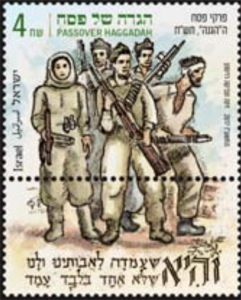
Hundreds of different Passover Haggadahs have been designed at kibbutzim, by kibbutz movements, pioneer trainings, youth groups tied to the kibbutz movement, in Hebrew military units that operated in Eretz Israel during WWII, by groups of those uprooted in Europe after the war, by Jews attempting to enter Eretz Israel illegally during the British Mandate, by the Haganah, the Palmach and the IDF.

These Haggadahs were geared toward large public Seders, which were very different than an intimate family Seder. These public Seders were more like the mass pilgrimages of ancient times. At the Seder, participants read biblical chapters related to the exodus from Egypt and discussed Moses, who is not mentioned in the traditional Haggadah. When the Holocaust became known, a heart wrenching memorial prayer was added to the Seder.

These non-traditional Haggadahs meant no disrespect to the story of the exodus from Egypt. Their authors felt that they were the ones who had been enslaved and were going forth into freedom. At the Passover Seder they expressed the spring, the love in the Song of Songs and the story of their times, which they had lived through personally. These Haggadahs included Hebrew literature and chapters on current events.

Over the years, many traditional texts were brought back into the Haggadahs, but they continued to include poems, chapters on spring, the Song of Songs and the biblical story of the exodus from Egypt.

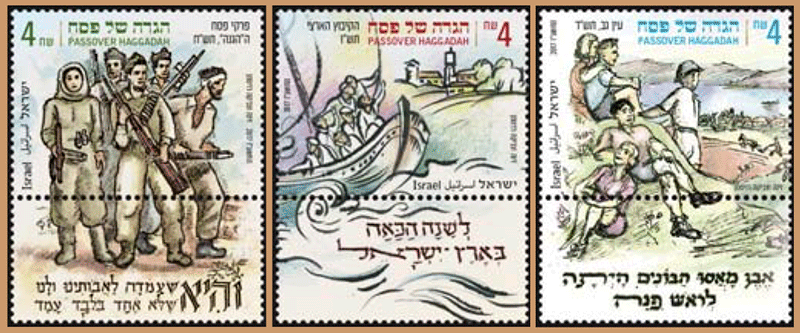
The editors of the texts in these Haggadahs were members of the various groups that conducted the Seders, including teachers, authors and cultural figures. Some of the most well known Israeli and local artists and illustrators contributed illustrations to the Haggadahs. The three Haggadahs featured on the stamps represent three Zionist values: security, Aliyah and settlement.

The Kibbutz Artzi Federation, 1944 (Aliyah)
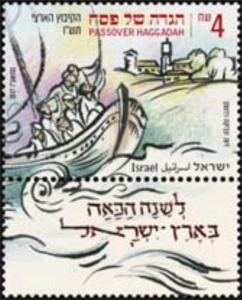
Avraham (Tushek) Amarent was a member of Kibbutz Mizra, an artist and a scholar. He bequeathed all of his artistic works to his kibbutz. He decorated for the Seder and was among the designers of the Haggadah that was used by all the Kibbutz Artzi Federation kibbutzim. He wrote in his memoirs: “… when the spring returned, the Jewish people were in danger of being annihilated in the diaspora, Eretz Israel was at war and the human spirit reinforced the longing for salvation and freedom”. Illustration courtesy of Dalia Hadshi.

Pirkei Pesach (Passover Chapters), Haganah, 1948 (security)
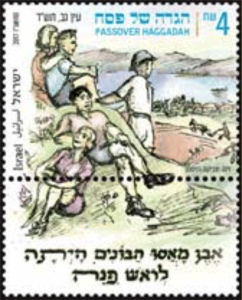
This Haggadah was written and edited by the Haganah cultural service for Haganah soldiers during Israel’s War of Independence. It was titled: For the Festival of Freedom – Chapters for Passover Parties, 1948. It was purposely not called a Haggadah in order to preserve the honor of the traditional Haggadah.

It was designed by artist Arieh Allweil, one of the founders of the Hashomer Hatzair kibbutzim who specialized in traditional script and painting Jewish motifs.
Photos of the Haggadah from the National Library collection, Jerusalem.

Illustrations courtesy of Ruth Sperling.

Kibbutz Ein Gev, 1944 (settlement)
In 1943, when the Holocaust became known, a “black” Haggadah was prepared at Ein Gev. A year later Ludwig Schwerin, who was close to the members of the kibbutz, designed a Haggadah of consolation featuring a view of the kibbutz: a group of members and children overlooking the kibbutz from Mount Sussita – an expression of hope despite the ongoing world war. Photos of the Haggadah: Ein Gev archive; illustrations courtesy of Dorit Bodker and Anat Fuchs.

Muki Tsur
Researcher and educator, member of Kibbutz Ein Gev. Co-wrote with Yuval Danieli the book “Leaving in the Month of Spring” (Passover Haggadahs from the kibbutz), .2004
Co-edited the book by Zvi Shuah “Today you Leave for a New Land” (texts from the Kibbutz Haggadah), 2011.

Aviram Paz
Author of the book “The Exodus from Egypt – Then and Now” (rare Haggadahs from the 1940’s), Maarechet Publishing House, Kibbutz Dalia, 2015.

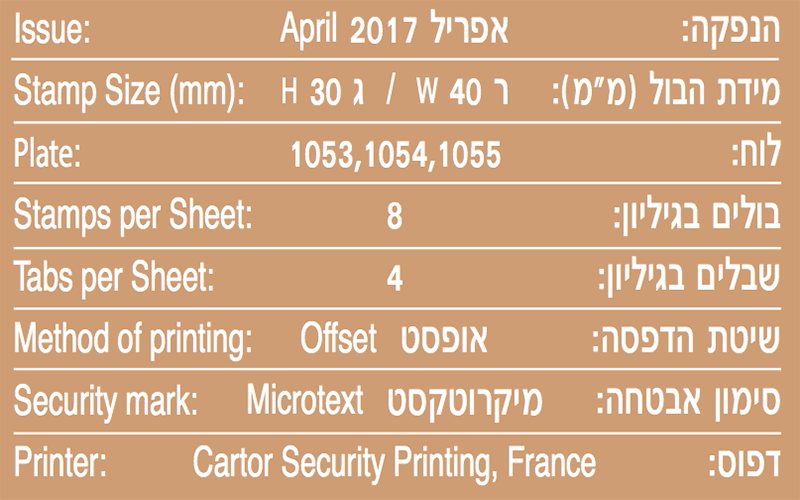
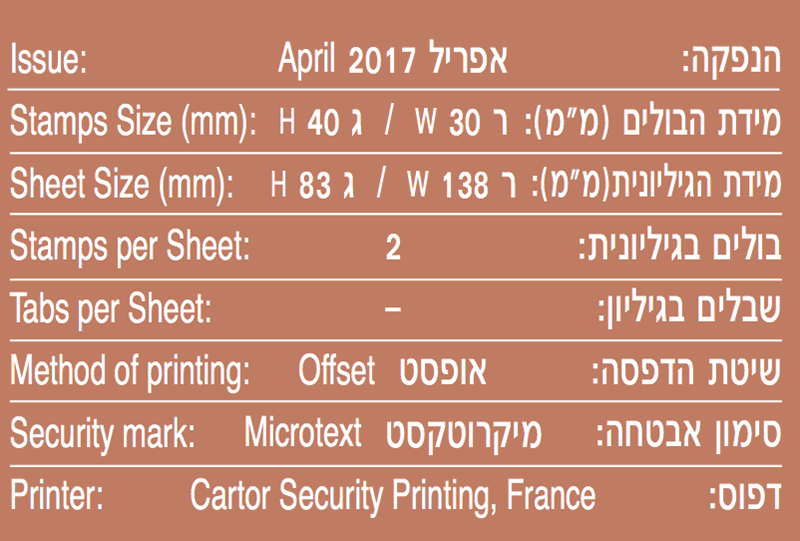
The three stamps in the series are issued in stamp sheets with decorated margins. The margin designs are based on the Haggadah featured in each stamp.
The FDC design is based on the Kibbutz Artzi Haggadah.

50 Years Of Settlements (Israel 2017)

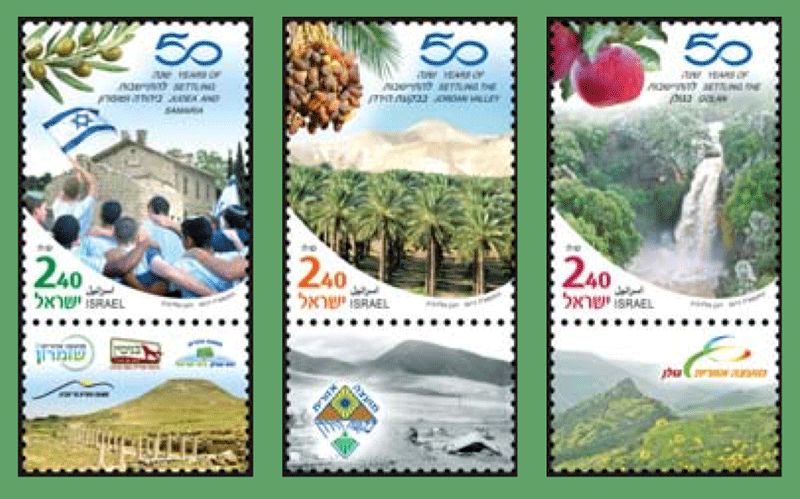
50 Years of Settling the Golan, Jordan Valley, Judea and Samaria Issue date April 4, 2017

Since its earliest days, settling the land was at the forefront of Zionist activity in Eretz Israel and great efforts were made to acquire land and build communities throughout the country. The moshavot (agricultural colonies) established by immigrants of the First Aliyah, the kibbutzim and moshavim (communal agricultural communities) originating from the British Mandate period and the urban towns founded in the early years after the establishment of the State of Israel in 1948 – are all examples of links in the golden chain of the momentum of settlement which has existed continuously throughout the period of the Jewish people’s return to Eretz Israel.

Immediately following the Six Day War in 1967, new towns were established in portions of the country that had recently come under Israeli rule. A group of young people from kibbutzim in the Galilee established a new community in the Golan Heights in July 1967, which subsequently developed into Kibbutz Merom Golan; and children of the original settlers of Gush Etzion, which was destroyed during the War of Independence in 1948, reestablished the town of Kfar Etzion in September 1967. Some three months after the Six Day War, the Israeli government led by Prime Minister Levi Eshkol adopted a plan to establish towns in the Golan Heights and the Jordan Valley, and within a decade dozens of new communities were established in these areas. The momentum of establishing new settlements in Judea and Samaria grew in the mid-1970’s, and increased significantly from 1977 after the new government headed by Prime Minister Menachem Begin took office.
Due to the lack of agricultural land and water in the mountainous areas of Judea and Samaria, a new model of rural communities called “community settlements” was established. This model was based mainly on production industries, tourism and services as well as employment outside the community. Urban towns were also established in the new areas, some of which eventually became cities.

Agriculture developed in fields that were advantageous in the unique climate and soil of each area. Apples are grown very successfully in the elevated area, the Golan Heights. The hot dry climate of the Jordan Valley was crucial to the development of the date-growing industry and the traditional vineyards and olive groves of the mountainous areas of Judea and Samaria have been rejuvenated.

Remnants of ancient Jewish towns have been unearthed in archeological excavations near many of the new communities in the Golan Heights, Jordan Valley and Judea and Samaria. These communities renew and strengthen the historical bond between the Jewish people and its historic homeland.
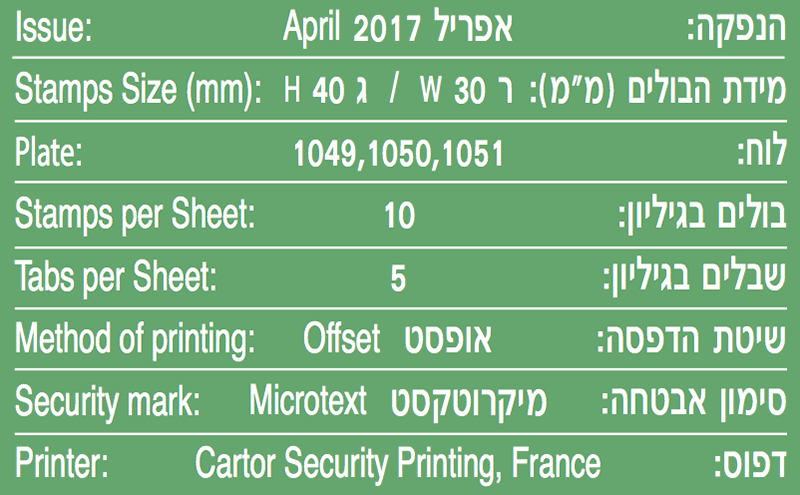
Based on a publication by the Settlement Department and Division of the Jewish Agency for Israel and World Zionist Organization.

Description of the Stamps and the First Day Covers
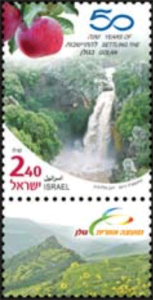
Golan
Stamp: apples against the background of the Sa’ar River. Tab: the ancient city of Gamla (Rina Nagila, courtesy of the Golan Regional Council).
FDC: Kibbutz Merom Golan (photo from the early 1970’s, courtesy of Tova Mendel, head of the Golan Archive, current photo – Albatross).

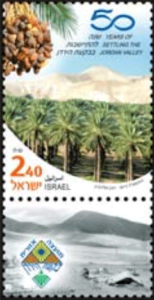
Jordan Valley
Stamp: date grove against the background of the Samaria Mountains (Penny Elimelech, courtesy of the Jordan Valley Regional Council).
Tab: Alexandrion (“Sartaba”) (IDF Archive).

FDC: Mehola (older photo — Ariel, courtesy of the Jordan Valley Regional Council Archive, current photo — Penny Elimelech).

Judea and Samaria
Stamp: olive branch against the background of a group of youths at the Sebastia train station (train station — National Photo Collection, youths — Kobi (Yaakov) Dagan, olive branch — Shutterstock).

Tab: Herodion (www.goisrael.com).
FDC: Kfar Etzion (photo dated April 30, 1947 — National Photo Collection, current photo courtesy of Moria Halamish).

Memorial Day 2017 (Israel 2017)

Memorial Day 2017
Issue date April 4, 2017

The letter card, cover and stamp – all of which are special and unique to Memorial Day – constitute the basis of a sensitive, original and extraordinary tradition that came into being following the War of Independence.

Since Memorial Day 1952, a long line of Presidents, Prime Ministers and Ministers of Defense have signed personal letters to bereaved families of the fallen and Israel’s premier artists take part in designing the covers and stamps for this commemorative day. Thus, from year to year, an unprecedented tradition has formed which, over time, has become one of the most recognized and extraordinary ambassadors of Israel’s commemorative culture.

(From: “Dear Families” published by the Ministry of Defense, on the occasion of Israel’s 50th Anniversary)

The graphic design of the Memorial Day stamps has been expressed over the years symbolically and through monuments.

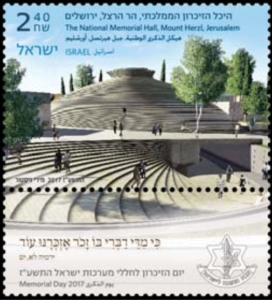
The National Memorial Hall
at Mount Herzl, Jerusalem

Dedication and sacrifice in defense of the State of Israel take an invaluable toll, which is the silver platter on which our independence and sovereignty were achieved.

On the eve of Memorial Day 2010, the government of Israel approved the establishment of a National Memorial Hall on the grounds of the military cemetery at Mount Herzl to commemorate Israel’s fallen soldiers (government meeting no. 147).
For the first time since the establishment of the State, the names of all of Israel’s fallen, who gave their lives to defend Israel at home and abroad, will be united in one place.

The Memorial Hall’s location at Mount Herzl – the pantheon of Israeli heroism, constitutes a continuation of the Zionist vision of revival and realization.
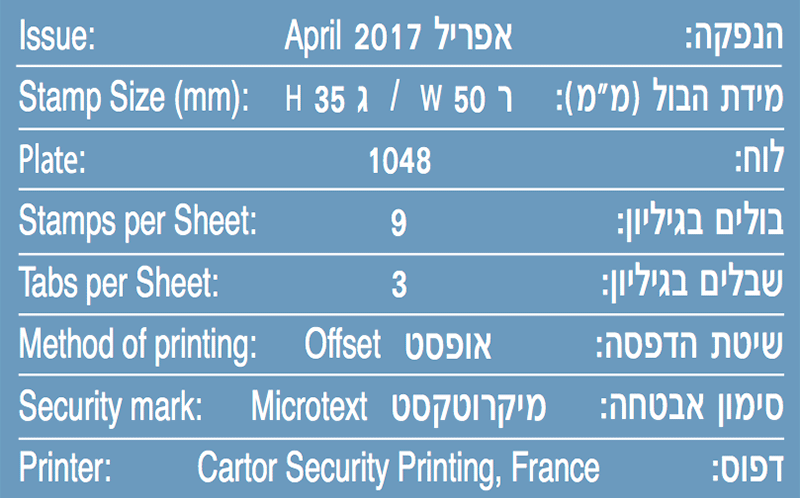
The torch-shaped Memorial Hall will be 18 meters high and feature a perpetual flame. The name and date of death for each of the fallen will appear on a plaque beside a memorial candle that will be lit on that date each year. A military cantor shall perform a memorial service every morning for soldiers who fell on that date.

The memorial plaques will be made out of tank steel and produced at the Merkava tank factory. Bereaved families, heads of state and the general public will be able to come to the Memorial Hall every day throughout the year.

National ceremonies will be conducted in the Memorial Hall center, including memorial wreaths marking the nation’s solidarity and appreciation of its fallen warriors.

The team planning the commemorative site includes Kimmel Eshkolot Architects in collaboration with Kalush Chechik Architects and curator Dr. Orit Shaham-Gover.

The project is managed by the Ministry of Defense’s Families and Commemoration Department, in collaboration with a steering committee of public figures and representatives of the bereaved families, commemoration experts and former IDF commanders.

A cornerstone laying ceremony for the Memorial Hall building was conducted on April 30, 2014, the eve of the Hebrew month of Eyar (“the month of heroism”). Construction is scheduled to be completed in 2017.

Based on the Ministry of Defense Families and Commemoration Department website.

Images of the National Memorial Hall on the stamp and FDC — courtesy of Kimmel Eshkolot Architects.

Jerusalem – 50 Years of Reunification (Israel 2017)

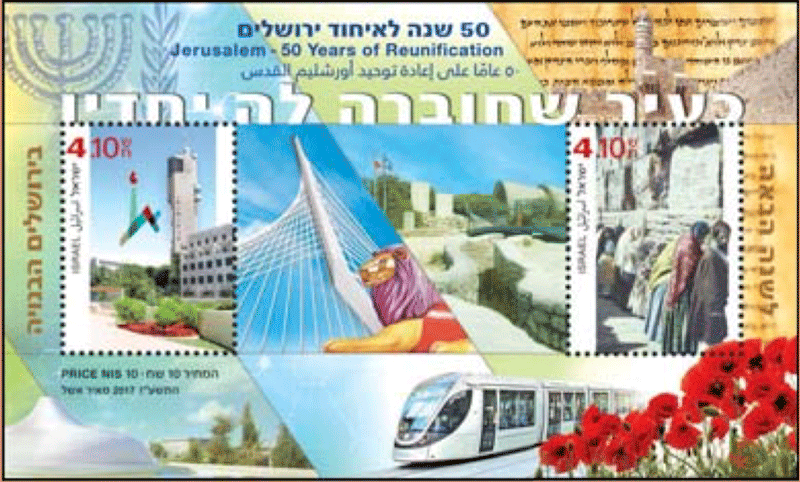
Jerusalem – 50 Years of Reunification – Souvenir Sheet
Issue date April 4, 2017 

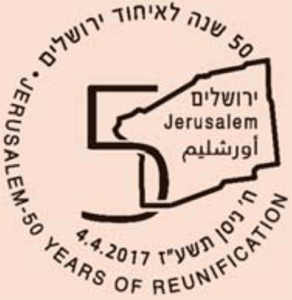
The year 2017 marks fifty years since the unification of Jerusalem. The 50th anniversary of unified Jerusalem is a local, national and global event that is meaningful for the State of Israel, for the Jewish people around the world and for all the communities and peoples that cherish Jerusalem.

The fact that the capital of Israel and of the Jewish people no longer sits alone with a wall at its heart will be celebrated throughout the year.

Jerusalem is a metropolis that attempts to balance different beliefs and opinions, opposing tastes and habits. The Old City inside the ancient walls, the old neighborhoods outside those walls and the new neighborhoods built in this generation are all one city, special and unified.

From the time King David declared Jerusalem as the capital of his kingdom to the present day, daily life in Jerusalem has always existed alongside its stance as an object of desire and longing.

Fifty years ago the two parts of the divided city were united in a historic turn of events. During the subsequent fifty years, Jerusalem has also known heartache and suffering, but despite the hardships it has become one city.

The capital of the Jewish world fulfills its calling as the capital of the State of Israel and as the heart of the Jewish people, while also maintaining the places that are holy to people of all religions.

On the 50th anniversary of the unification of Jerusalem, the State of Israel is marking the historic event that took place in June 1967 with a series of events in Israel and abroad.
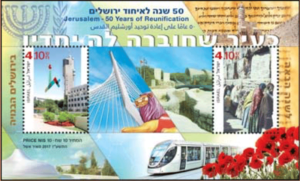
Jerusalem salutes its soldiers, embraces its residents, welcomes its guests and celebrates with all those who love it.

Hundreds of thousands of peoples from all around Israel and the world will march, visit and pray during the festivities. A wide range of participants will take part in the many various festivities, in the spirit of the diverse nature of Jerusalem — a vibrant city that is open to different opinions and to people of all backgrounds. The city combines the old and the new, tradition and innovation and has its own unique character.

A single thread runs from the excavations in the City of David through the digging of the foundations of the light railway: one central city where everyday life is intertwined with history.

Description of the Souvenir Sheet
Western Wall stamp
Jews at the Western Wall: photographers from the photography department of the American Colony, circa 1900. G. Eric and Edith Matson Photograph Collection, Library of Congress, Washington DC.

The Hebrew University of Jerusalem stamp
The water tower at the Hebrew University of Jerusalem, Mount Scopus campus – courtesy of the Hebrew University Archive.

Sheet Background
A section of the Temple Scroll; Israel Museum Photo Archive; Anemone and digital background — Shutterstock.

The light railway, the Knesset and the Shrine of the Book — Pini Hemo; Ammunition Hill and the Bridge of Strings ñ Meir Eshel; Lion Statue — courtesy of Ariel Events.

Israel-Portugal Joint Issue – Dolphin Research (Israel 2017)

Israel-Portugal Joint Issue – Dolphin Research
Issue date April 4, 2017

The diplomatic relations between Israel and the Portuguese Republic developed in stages. An Israeli consulate was first opened in Lisbon in the late 1950’s. After the Carnation Revolution in Portugal in April 1974, this was upgraded to a general consulate and in 1977 to an embassy, the highest indication of full diplomatic relations. Since then the two countries have benefitted from friendly and collaborative relations in many fields.

The Jewish people have ancient ties to Portugal, but the Portuguese Jewish community experienced dramatic changes beginning in the early 15th century: expulsion, forced conversion and the Inquisition. In 1989, a formal apology from the Portuguese people was issued to the Jews and in 1996 the Decree of Expulsion was nullified on the 500th anniversary of its issuance.

During WWII, many Jews passed through Portugal, mostly immigrating to other countries and later also to Israel.
Israel recognized four Portuguese “Righteous Gentiles”. The most well known is Aristides de Sousa Mendes, who issued visas to thousands of Jews while serving as the Portuguese consul-general in Bordeaux, France during the Holocaust. An Israeli stamp was issued in his honor in 1998.

This stamp is issued to mark 40 years of friendship between the countries.

Tzipora Rimon
Israeli Ambassador to Portugal

Dolphin Research
The study of coastal dolphins is a relatively young field of research that has developed in both Portugal and Israel in recent decades. In both countries, the coastal dolphin population exists alongside fishing activity and at times dolphins are caught by fishing equipment, causing them injury and even death. Bottlenose dolphins are top predators of the coastal marine environment in both countries. They are considered to be a sentinel species for a healthy sea, both in the broad sense of the health of the system as well as in the narrow sense of human health, as consumers of food products from the sea.

Common Bottlenose Dolphin
(Tursiops truncatus)
This dolphin species belongs to the family Delphinidae and is most commonly found in tropical to temperate oceans, mainly in the shallow waters of the continental shelf, where water depths are up to 200 meters. Mature dolphins range from 2-4 meters in length and weigh between 150-650 kgs. Dolphins tend to live in groups of up to 12 members, although a number of groups may join together to create a larger super-group of 100 or more dolphins. The two main factors that contribute to group size are food availability and danger from predators.

Dr. Aviad Scheinin, PhD.
Dolphin & Sea Center Manager, IMMRAC – Israeli Marine Mammals Research & Assistance Center
The Morris Kahn Marine Research Center – Top Predators Project manager, University of Haifa, Israel

Photos of the dolphin, boat and flags – Shutterstock.