
 From the U.S. Postal Service announcement on October 22, 2019:
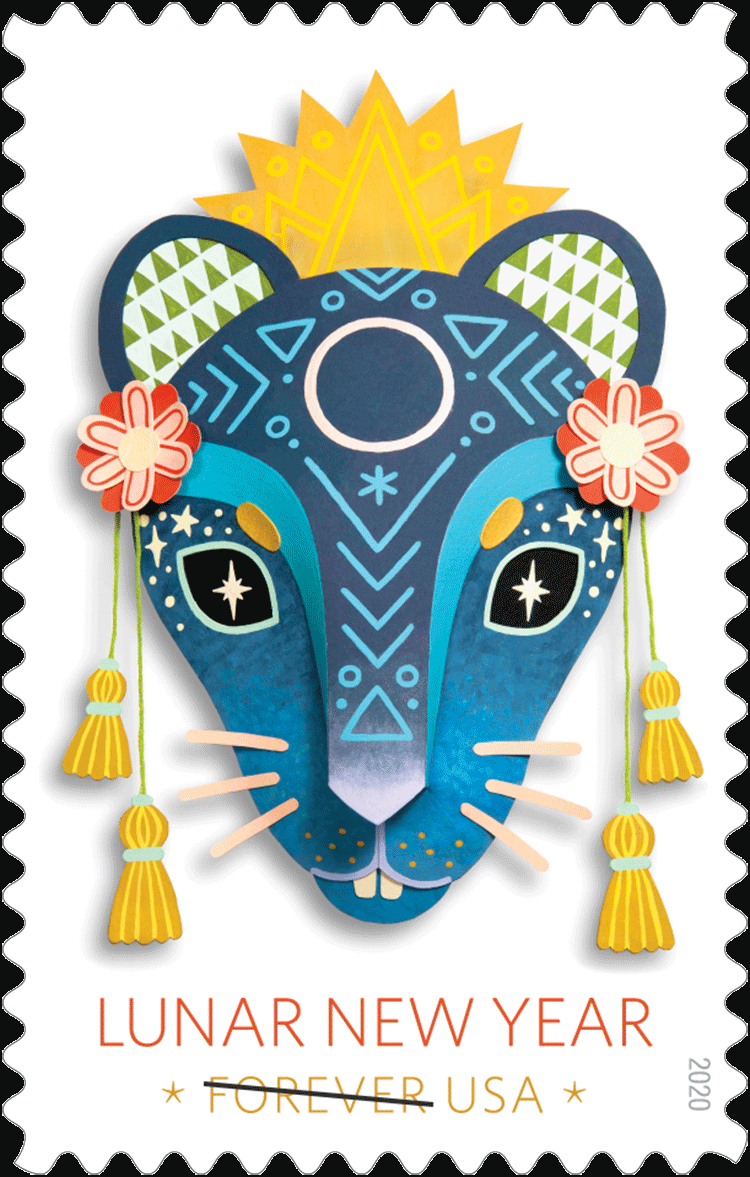
In 2020, the Postal Service is launching its third Lunar New Year series with the issuance of the Lunar New Year: Year of the Rat Forever stamp. The Year of the Rat stamp will be the first of 12 stamps in the series. The Year of the Rat observance begins Jan. 25, 2020, and ends Feb. 11, 2021. Calling to mind the elaborately decorated masks used in the dragon dance often performed in Lunar New Year parades, this three-dimensional mask depicting a rat is a contemporary take on the long tradition of paper-cut folk art crafts created during this time of year. Art director Antonio Alcalá designed the stamp with original artwork by Camille Chew.
Additional information will be posted below the line, with the most recent at the top.
This stamp will be issued Saturday, January 11, in Monterey Park, Calif.
January 22nd:
VSC member Mary here and “Israel Stamp Reviews” in The VSC’s Facebook Group correctly figured out that Camille Chew’s masks will comprise a series of 12 Lunar New Year Stamps. “The silhouettes of the masks are included on the selvage design,” USPS spokesman Roy Betts tells us. Here’s a look at the entire sheet… 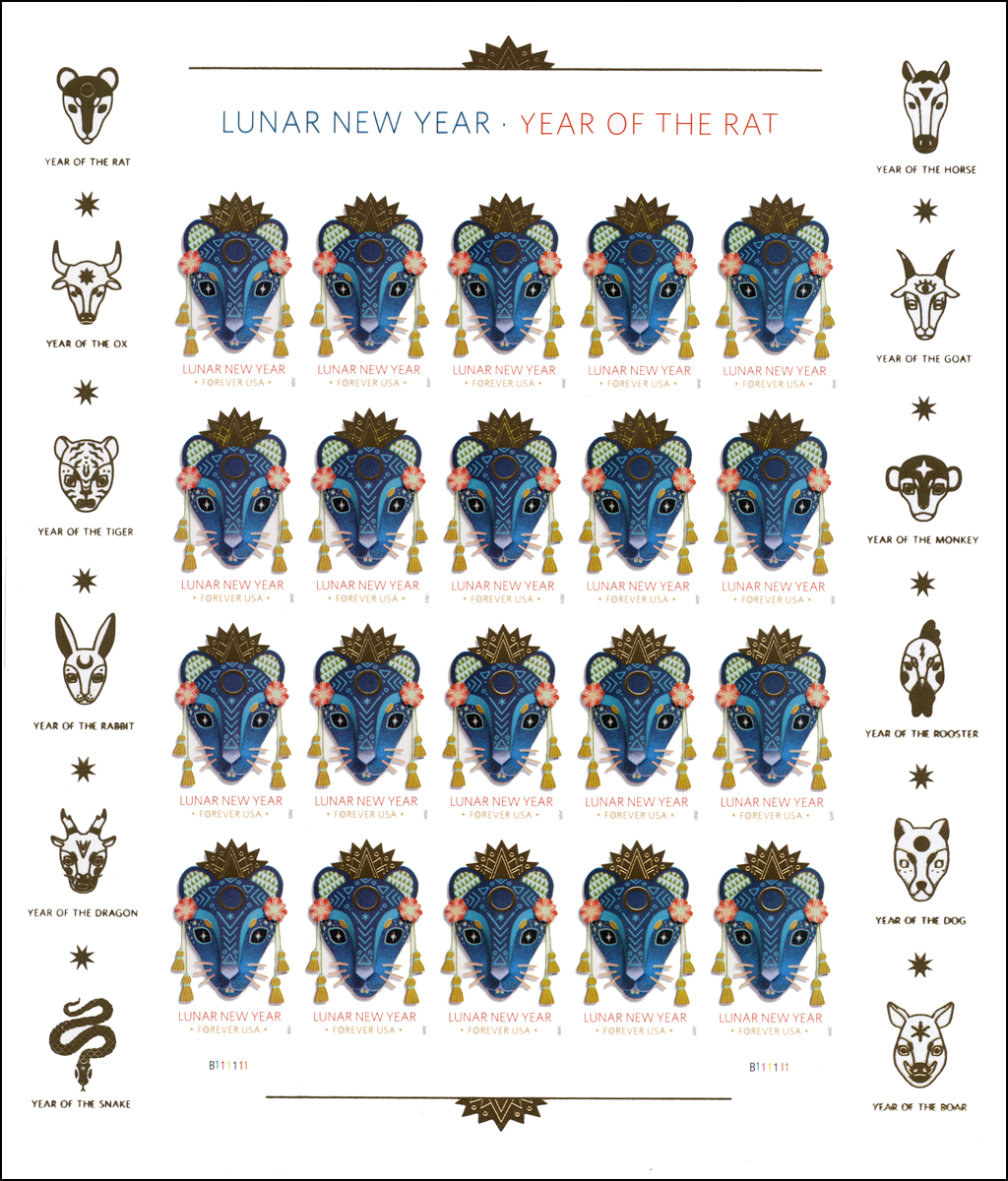 and here are just the 12 masks, taken from the selvage to make them easier to see.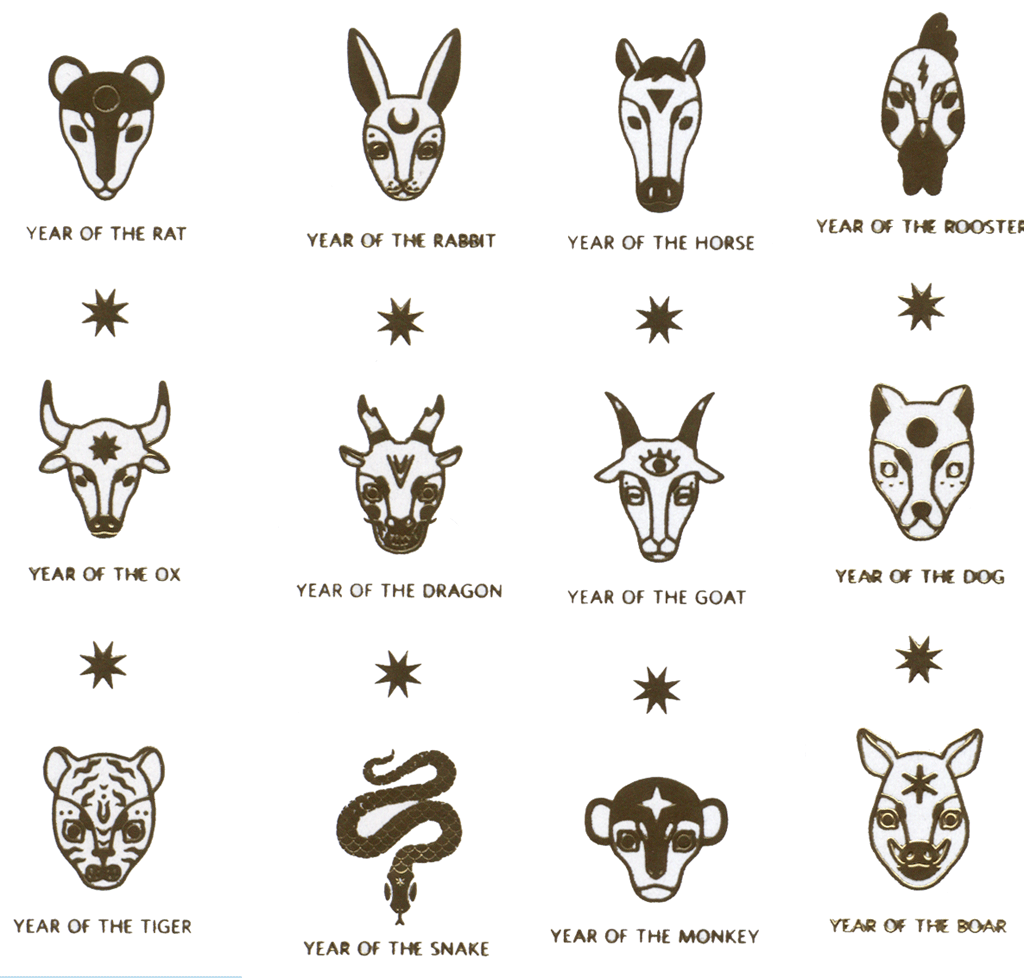
December 20th: Here are the first day cancels for this issue: 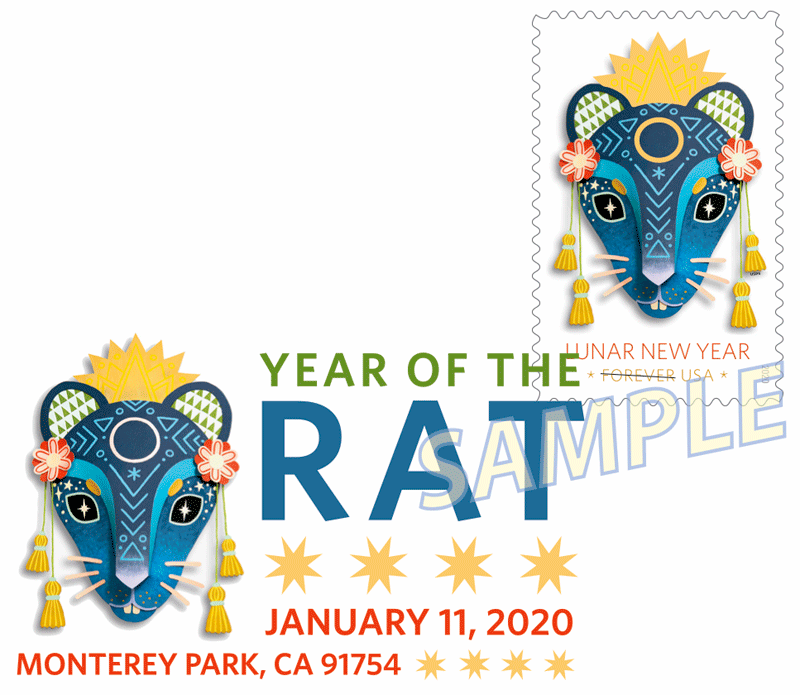
The DCP measures 2.29″ x 1.43″ 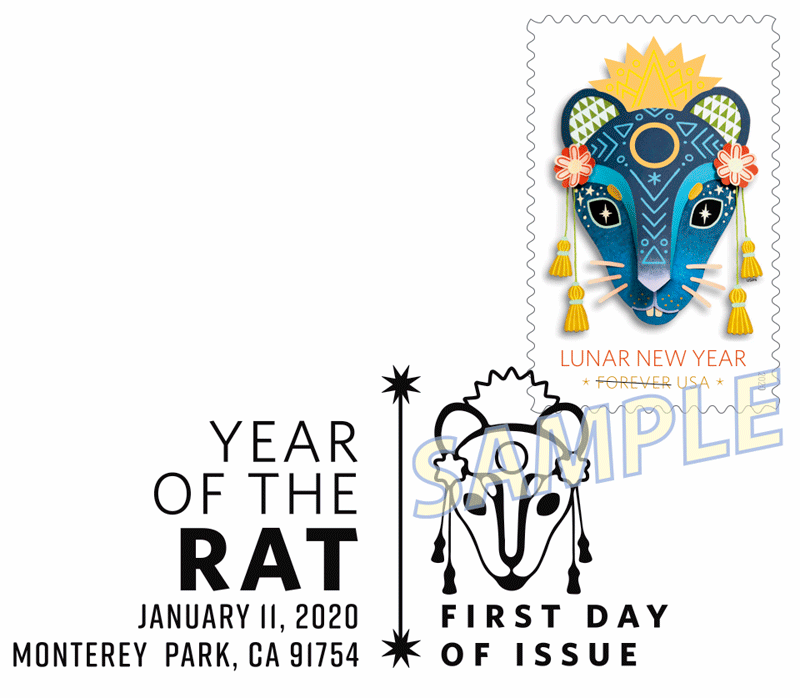 The B&W pictorial measures 2.62″ x 1.22″
December 19th: From the Postal Bulletin
On January 11, 2020, in Monterey Park, CA, the United States Postal Service will issue the 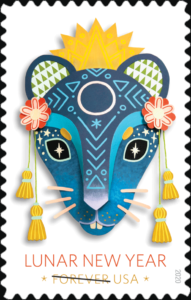 Lunar New Year: Year of the Rat stamp (Forever priced at the First-Class Mail rate) in one design, in a pressure-sensitive adhesive pane of 20 stamps (Item 475600). The stamp will go on sale nationwide January 11, 2020, and must not be sold or canceled before the first-day-of-issue. The Lunar New Year: Year of the Rat pane of 20 stamps may not be split and the stamps may not be sold individually.
In 2020, the United States Postal Service will issue the first of 12 stamps in its third Lunar New Year series. The Year of the Rat begins January 25, 2020, and ends on February 11, 2021. Calling to mind the elaborately decorated masks used in the dragon dance often performed in Lunar New Year parades, this three-dimensional mask depicting a rat is a contemporary take on the long tradition of paper-cut folk art crafts created during this auspicious time of year. Art director Antonio Alcalá designed the stamp with original artwork by Camille Chew.
Availability to Post Offices: Item 475600, Lunar New Year: Year of the Rat (Forever Priced at the First-Class Mail Rate) Pane of 20 Stamps
Stamp Fulfillment Services will make an automatic push distribution to Post Offices of a quantity to cover approximately 30 days of sales.
How to Order the First-Day-of-Issue Postmark:
Customers have 120 days to obtain the first-day-of-issue postmark by mail. They may purchase new stamps at their local Post Office™ or at The Postal Store website at usps.com/shop. They must affix the stamps to envelopes of their choice, address the envelopes (to themselves or others), and place them in a larger envelope addressed to:
FDOI – Lunar New Year: Year of the Rat Stamp
USPS Stamp Fulfillment Services
8300 NE Underground Drive, Suite 300
Kansas City, MO 64144-9900
After applying the first-day-of-issue postmark, the Postal Service™ will return the envelopes through the mail. There is no charge for the postmark up to a quantity of 50. There is a 5-cent charge for each additional postmark over 50. All orders must be postmarked by May 11, 2020.
Technical Specifications:
Issue: Lunar New Year: Year of the Rat Stamp
Item Number: 475600
Denomination & Type of Issue: First-Class Mail Forever
Format: Pane of 20 (1 design)
Series: Lunar New Year
Issue Date & City: January 11, 2020, Monterey Park, CA 91754
Art Director: Antonio Alcalá, Alexandria, VA
Designer: Antonio Alcalá, Alexandria, VA
Typographer: Antonio Alcalá, Alexandria, VA
Artist: Camille Chew, Providence, RI
Modeler: Sandra Lane/Michelle Finn
Manufacturing Process: Offset, Foil Stamping, Flexographic, Microprint
Printer: Banknote Corporation of America
Press Type: Gallus RCS
Stamps per Pane: 20
Print Quantity: 24,000,000 stamps
Paper Type: Phosphor, Block Tag
Adhesive Type: Pressure-sensitive
Processed at: Banknote Corporation of America
Colors: Cyan, Magenta, Yellow, Black, Pantone 7579 Orange, Pantone 7563 Brown, Gold Foil Luxor MTS 413 Gold
Stamp Orientation: Vertical
Image Area (w x h): 0.84 x 1.42 in./ 21.336 x 36.068 mm
Overall Size (w x h): 0.98 x 1.56 in./24.892 x 39.624 mm
Full Pane Size (w x h): 7.25 x 8.5 in./184.15 x 215.9 mm
Press Sheets Size (w x h): 14.5 x 18.25 in./368.3 x 463.55 mm
Plate Size: 80 stamps per revolution
Plate Numbers: “B” followed by six (6) single digits
Marginal Markings:
Front: Header: Lunar New Year: Year of the Rat • Plate number in bottom two corners
Back: ©2019 USPS • USPS logo • 2 barcodes (475600) • Plate position diagram (4) • Promotional text
Updated December 11th:
[press release]
Stamp of New Beginnings
USPS to Issue Lunar New Year Forever Stamp Celebrating Year of the Rat
WHAT: The U.S. Postal Service celebrates the Lunar New Year with the release of the Year of the Rat Forever stamp. The Year of the Rat begins Jan. 25, 2020, and ends Feb. 11, 2021.
The stamp features a rat mask that calls to mind the elaborately decorated masks used in the dragon dance, a hallmark of Lunar New Year parades. The mask is mostly blue, which is said to be one of the lucky colors for individuals born during the Year of the Rat, and incorporates elements with symbolic meaning. Several of the patterns were created with the style of Asian textiles, and the circle in the center of the rat’s head represents the new moon on which the Lunar New Year begins. The yellow motif atop the rat’s head, similar to a crown, highlights the importance of the animal’s position as the first of the 12 zodiac animal signs associated with the lunar calendar. A pop of red, another lucky color, ties the design to other common celebratory decorations.
Art director Antonio Alcalá designed the stamp with original artwork by Camille Chew.
News of the stamp is being shared with the hashtag #LunarNewYear.
WHO: Luke Grossmann, senior vice president of finance and strategy, stamp ceremony’s dedicating official, U.S. Postal Service.
WHEN: Saturday, Jan. 11, 2020, 11 a.m. PST
WHERE: Lunar New Year Festival
Garvey Avenue, between Garfield and Alhambra avenues
Monterey Park, CA 91754
RSVP: The event is free and open to the public. Registration is not necessary.
BACKGROUND:
Lunar New Year is the most important holiday of the year for many Asian communities around the world and is primarily celebrated by people of Chinese, Korean, Vietnamese, Tibetan, Mongolian, Malaysian and Filipino heritage.
Known as Tet in Vietnam and the Spring Festival in China and elsewhere, Lunar New Year begins on the second new moon after the winter solstice and historically marks the arrival of spring. In communities across the United States, people shop for food and other supplies, hang decorations and ceremonially clean their homes and streets to welcome the new year with a fresh start. Filled with symbolic meaning, the colors red and gold appear everywhere during this auspicious time of year. Red is considered very lucky, while gold is said to bring wealth.
Postal Products
Customers may purchase stamps and other philatelic products through The Postal Store at usps.com/shopstamps, by calling 800-STAMP24 (800-782-6724), by mail through USA Philatelic, or at Post Office locations nationwide. Forever stamps will always be equal in value to the current First-Class Mail 1-ounce price. Information on ordering first-day-of-issue postmarks and covers is at usps.com/shopstamps under “Collectors.”
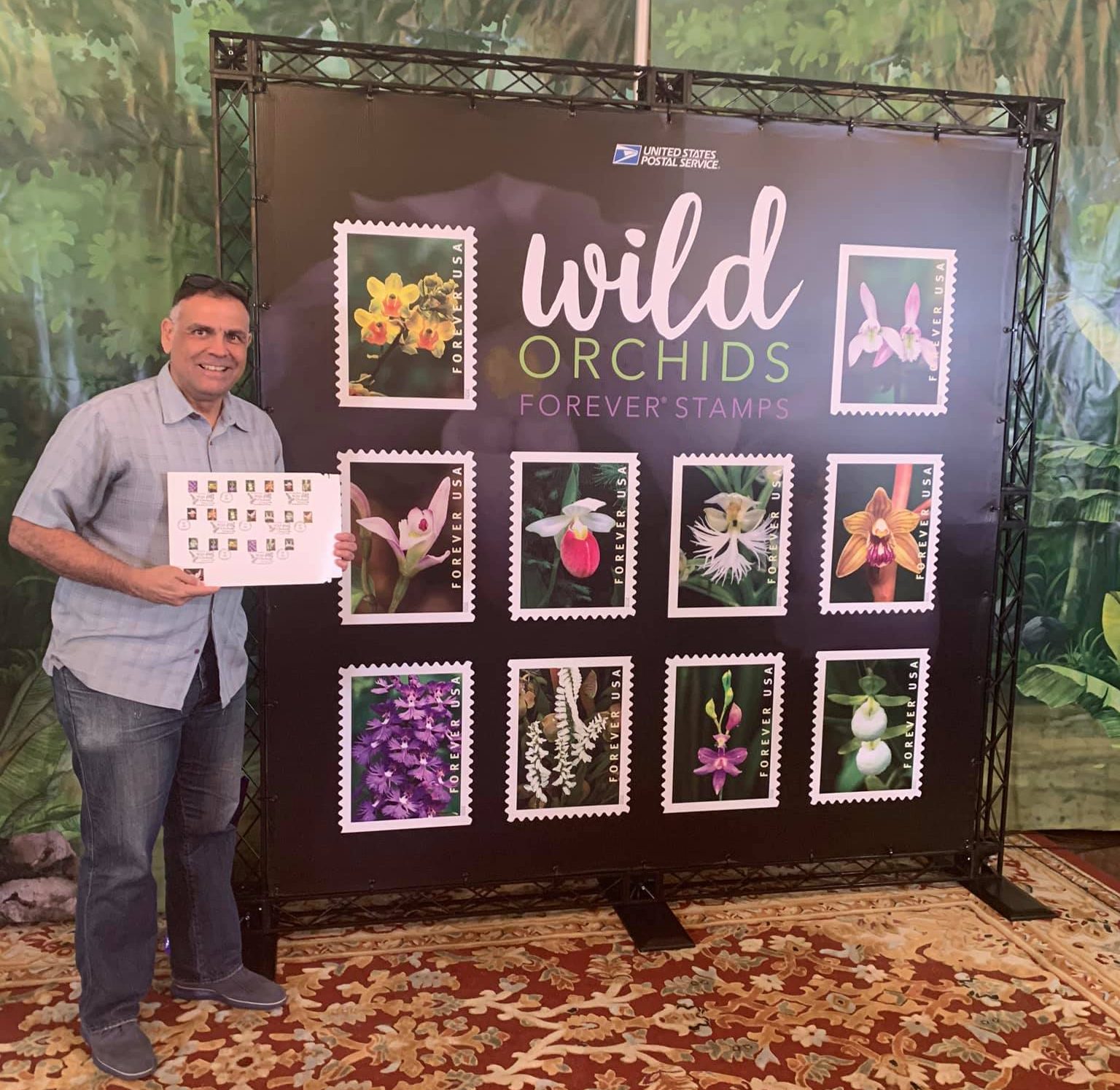 VSC member Mike DePaz at the first day ceremony.
 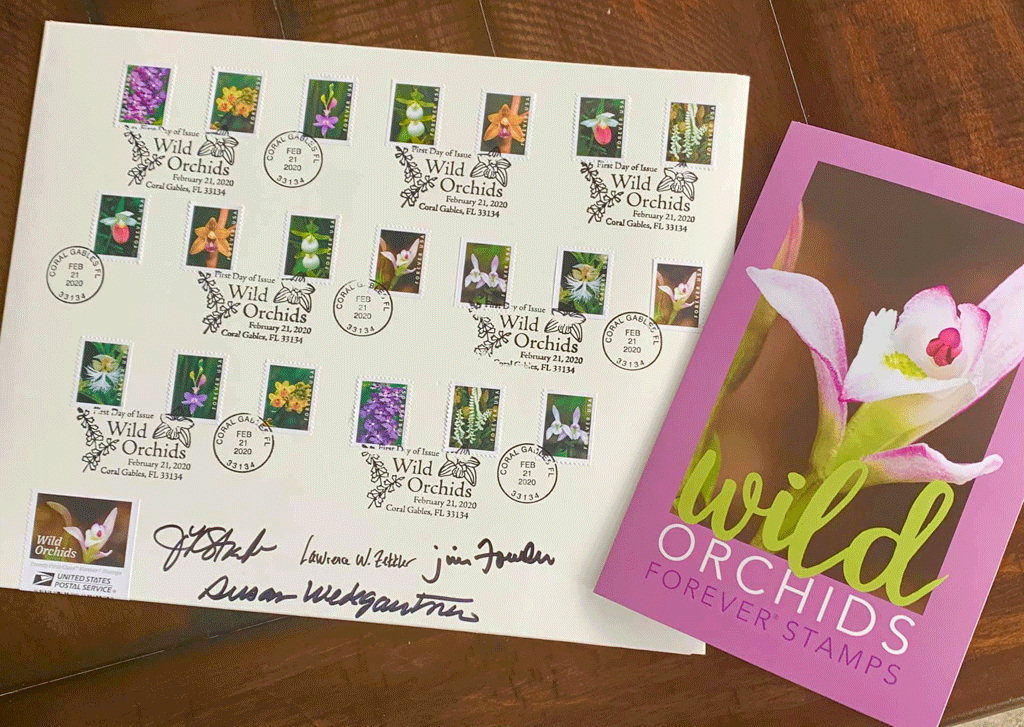 A large cover created by DePaz containing all the stamps in both the booklet and coil formats, with autographs of ceremony participants, plus the first-day ceremony program.
 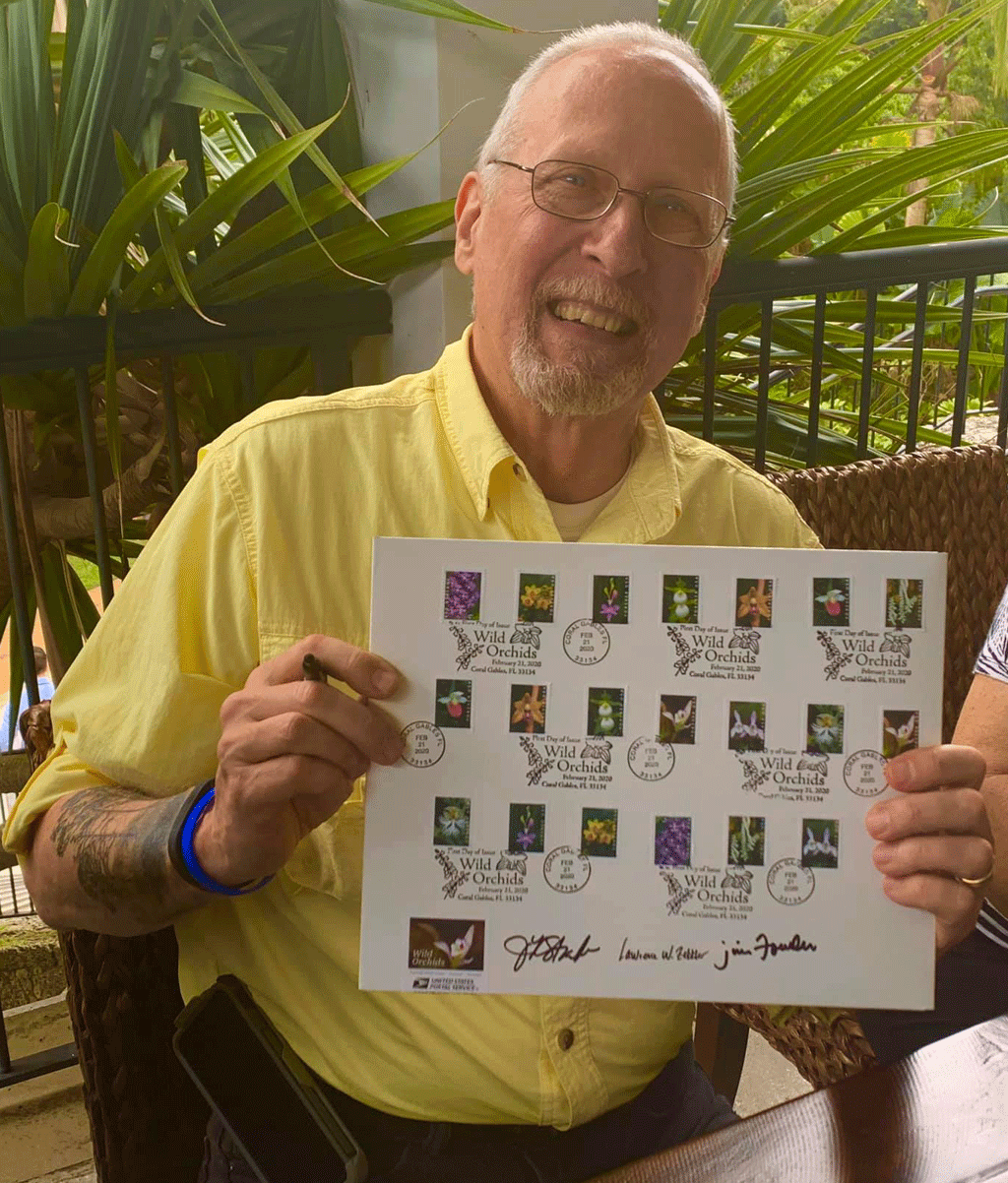 Jim Fowler, the photographer of the images used on the stamps, holds DePaz’s jumbo FDC.
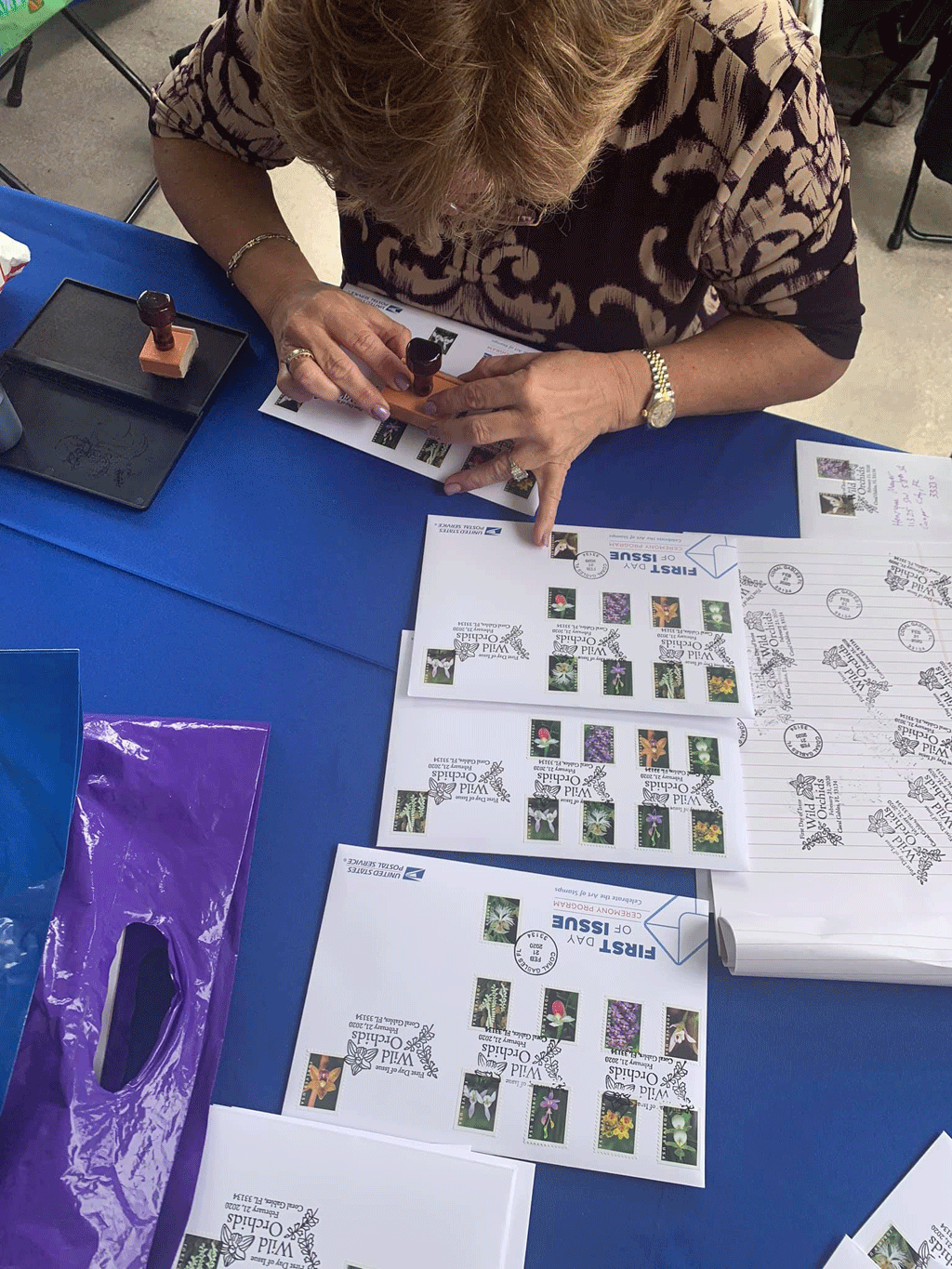 Someone canceling covers at the ceremony site. Photographs courtesy Mike DePaz.
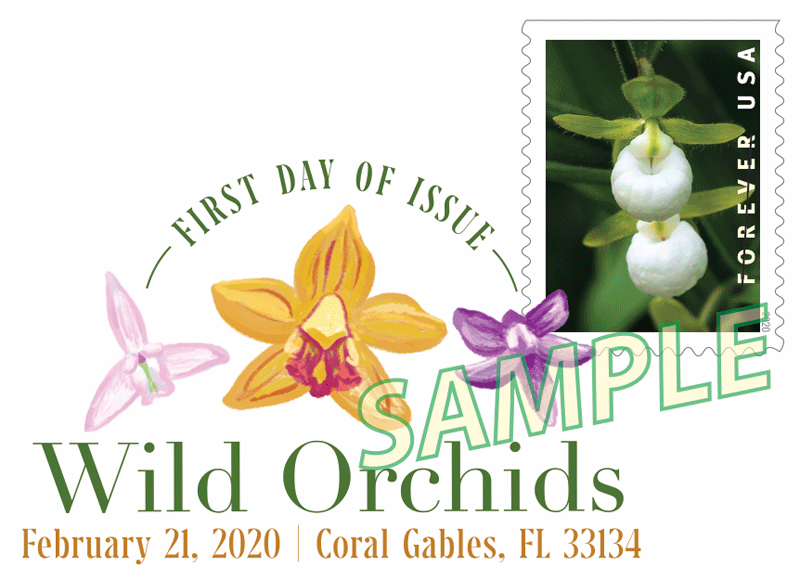 The Digital Color Postmark measures 2.38″ x 1.46″
 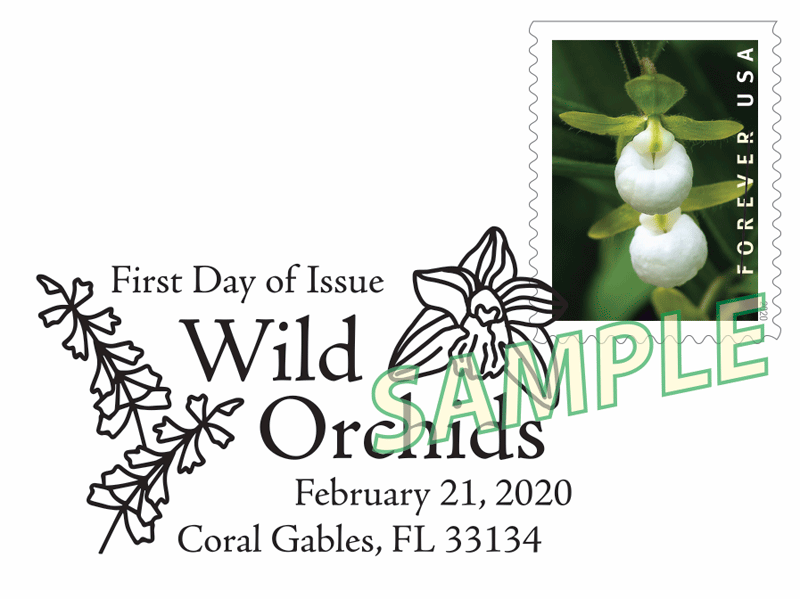 The B&W pictorial postmark measures 2.0″ x 1.23″
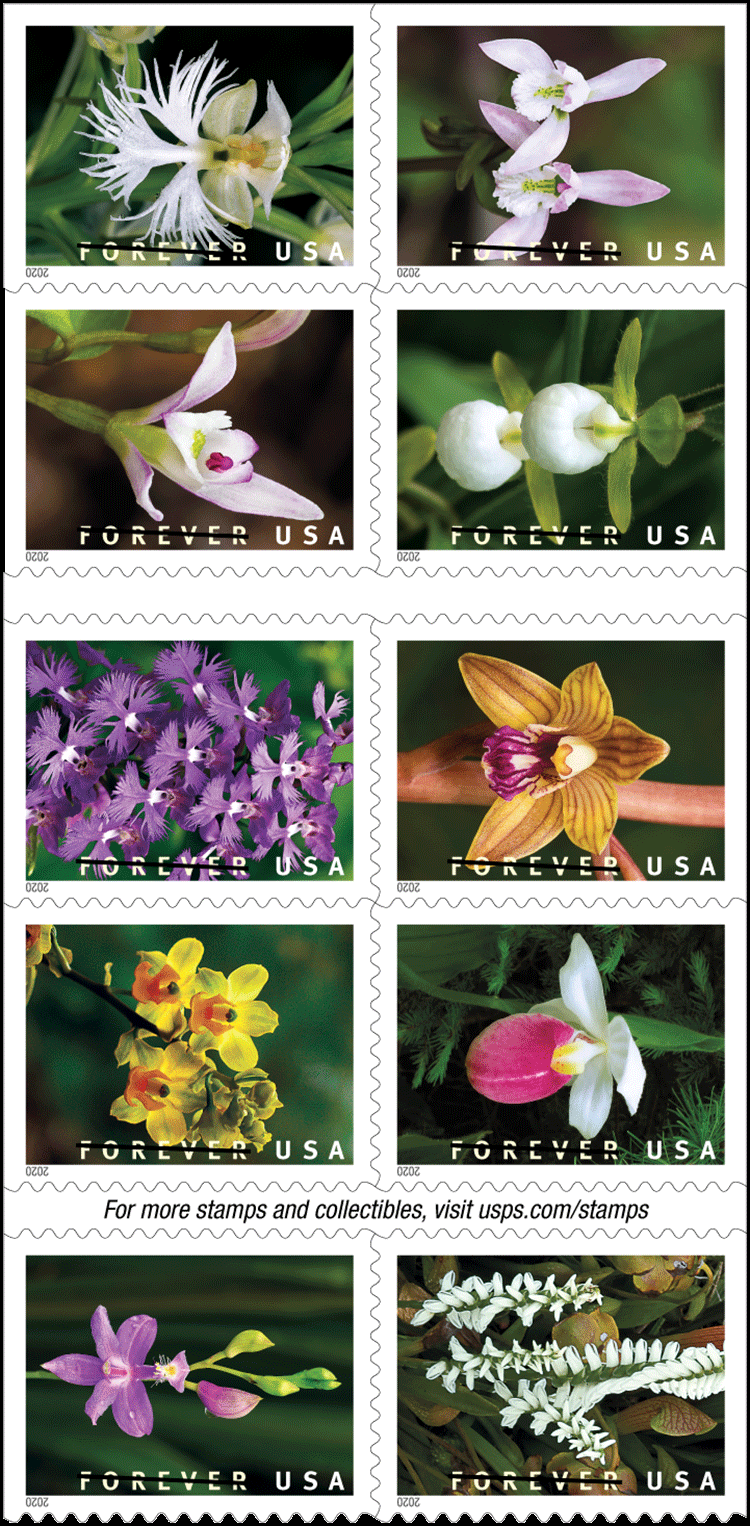
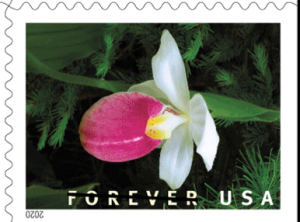
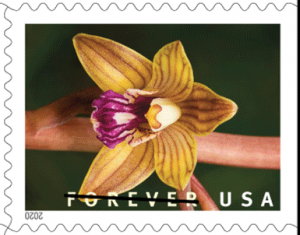
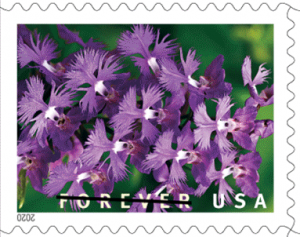
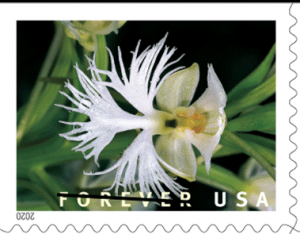
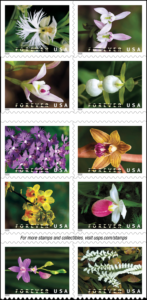 On February 21, 2020, in Coral Gables, FL, the U.S. Postal Service® will issue Wild Orchids stamps (Forever® priced at the First-Class Mail® rate) in 10 designs, in a pressure-sensitive adhesive (PSA) booklet of 20 stamps (Item 682500), a PSA Coil of 3,000 stamps (Item 750400), and a PSA Coil of 10,000 stamps (Item 760700). The stamps will go on sale nationwide February 21, 2020, and must not be sold or canceled before the first-day-of-issue.
 Issue: Wild Orchids Stamps
 Print Quantity: 15,000,000 stamps
 Item Number: 760700
 Print Quantity: 50,000,000 stamps
 are preliminary and subject to change.
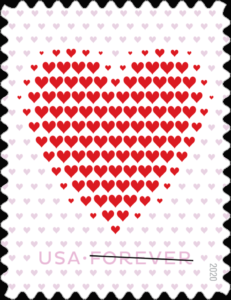 Made of Hearts is a continuation of the Postal Service tradition of creating stamps that celebrate love. The stamp features horizontal lines of red and pink hearts on a white background. Toward the center, red hearts in varying sizes replace pink hearts in a formation that creates one large red heart, the focal point of this graphic design. This stamp is just right for thank-you notes, get-well cards or any occasion when love is the perfect message. Art director Antonio Alcalá designed the stamp.
 The 43rd stamp in the Black Heritage series honors Gwen Ifill (1955–2016), one of America’s most esteemed journalists. The stamp features a photo of Ifill taken in 2008 by photographer Robert Severi. Among the first African Americans to hold prominent positions in both broadcast and print journalism, Ifill was a trailblazer in the profession. Art director Derry Noyes designed the stamp.
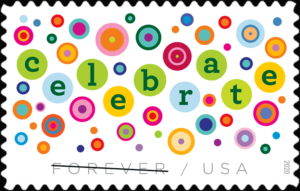 In 2020, the Postal Service issues Let’s Celebrate!, a new stamp that adds fun to celebratory greeting cards, invitations and gift-bearing envelopes and packages. No matter the occasion — birthday, anniversary, holiday, engagement, new job, retirement — Let’s Celebrate! helps send cheer along with well wishes. The stamp features an array of colorful circles in varying sizes arranged in a random pattern. The letters in the word “celebrate,” cast in a dark green hue, appear inside several brightly colored circles on a white background. Art director Antonio Alcalá designed the stamp.
 This stamp honors champion golfer Arnold Palmer (1929–2016). With drive and charisma, he helped transform a game once seen as a pastime for the elite into a sport enjoyed by the masses. The stamp features James Drake’s action photograph of Palmer at the 1964 United States Open at Congressional Country Club in Bethesda, MD. Art director Antonio Alcalá designed the stamp.
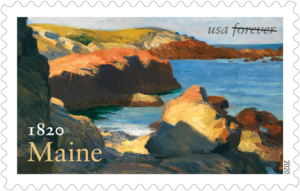 This stamp celebrates the 200th anniversary of Maine statehood. Nicknamed the Pine Tree State, Maine became the 23rd state in the Union on Mar. 15, 1820. American painter Edward Hopper (1882-1967) was among the many prominent artists who sought the tranquility of the state’s coastal towns during the summer. His painting “Sea at Ogunquit” (1914) captures the rugged beauty characteristic of Maine. Art director Derry Noyes designed the stamp.
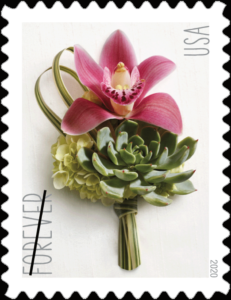 Contemporary Boutonniere is a new Forever stamp similar in design to the new 2-ounce Garden Corsage stamp. It can be used for wedding RSVP cards and is also perfect for party invitations, thank-you notes, announcements, birthday cards, Father’s Day cards and other occasions when a beautiful stamp is fitting. The stamp features a photograph of an arrangement of a burgundy mini-cymbidium orchid bloom, a succulent and a touch of green hydrangea, accented with loops of variegated lily grass. These materials are on trend for today’s modern designs, as arranged by floral designer Carol Caggiano and photographed by Renée Comet. Art director Ethel Kessler designed the stamp.
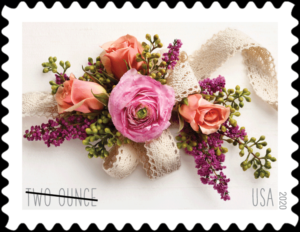 The Postal Service introduces Garden Corsage, a new 2-ounce stamp. This stamp can accommodate the weight of heavy invitations for birthdays, weddings, anniversaries and other celebrations, oversize greeting cards for all occasions, and mailings such as small gifts that require extra postage. The stamp features a photograph of a corsage containing a spray of peach roses and a pink ranunculus, accented with deep-pink heather and seeded eucalyptus. A cream-colored lace ribbon entwines the flowers. Garden Corsage is similar in design to the Contemporary Boutonniere Forever stamp, and the two form a natural pair. The corsage was arranged by floral designer Carol Caggiano and photographed by Renée Comet. Art director Ethel Kessler designed the stamp.
 Coinciding with the 50th anniversary of Earth Day, the Postal Service issues a stamp featuring a playful painting of the planet, with small green lines surrounding Earth and hand-lettered text. Art director Antonio Alcalá was the stamp artist and designer. Ricky Altizer was the typographer.
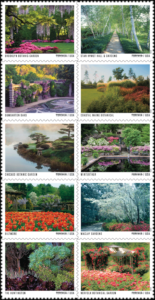 With these stamps the Postal Service celebrates the beauty of American gardens. This pane of 20 stamps features 10 different photographs of botanic, country estate and municipal gardens taken between 1996 and 2014. The gardens include: Biltmore Estate Gardens (North Carolina); Brooklyn Botanic Garden (New York); Chicago Botanic Garden (Illinois); Coastal Maine Botanical Gardens (Maine); Dumbarton Oaks Garden (District of Columbia); The Huntington Botanical Gardens (California); Alfred B. Maclay Gardens State Park (Florida); Norfolk Botanical Garden (Virginia); Stan Hywet Hall & Gardens (Ohio); and Winterthur Garden (Delaware). Art director Ethel Kessler designed the stamps with existing photographs by Allen Rokach.
 These stamps celebrate one of the great artistic and literary movements in American history, the Harlem Renaissance of the 1920s, which firmly established African Americans as a vital force in literature and the arts. Twenty stamps showcase four stylized pastel portraits of these literary figures: writer, philosopher, educator and arts advocate Alain Locke; novelist Nella Larsen; bibliophile and historian Arturo Alfonso Schomburg; and poet Anne Spencer. African-inspired motifs are used as background elements of each portrait. The pane header shows a cityscape in silhouette with a sun in its midst and the title “Voices of the Harlem Renaissance.” The artist for these stamps was Gary Kelley. Art director Greg Breeding designed the stamps.
 With the release of the Enjoy the Great Outdoors Forever stamps, the Postal Service celebrates the many ways individuals experience America’s abundance of natural beauty. These hand-sketched and painted designs depict five different scenes of outdoor activities — building a sand castle, hiking, cross-country skiing, canoeing and biking. Art director Derry Noyes designed the stamps with original art by Gregory Manchess.
 The Postal Service celebrates hip hop with four new stamps in a pane of 20. Since its inception more than four decades ago, the electrifying music, dance and art movement has profoundly influenced American and global popular culture. The stamp art features photographs taken by Cade Martin that depict four elements of hip hop: MCing (rapping), b-boying (breakdancing), DJing and graffiti art. The bold, digitally tinted images are intended to appear in motion. The words “Forever” and “USA,” “Hip Hop,” and the name of the element featured appear across the top of each stamp. Art director Antonio Alcalá designed the stamps, which are highlighted with a vivid yellow, green, red and black color scheme. The title of the stamps, printed in red and black, is centered on the top of the pane.
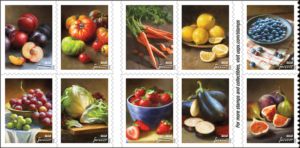 The Postal Service captures the classic beauty of still-life paintings in a booklet of 20 stamps featuring 10 different portraits of fruits and vegetables. Each stamp features a collection of one kind of fruit or vegetable: red and black plums, heirloom and cherry tomatoes, carrots, lemons, blueberries, red and green grapes, lettuces, strawberries, eggplants and figs. Art director Derry Noyes designed the stamps with existing art by Robert Papp.
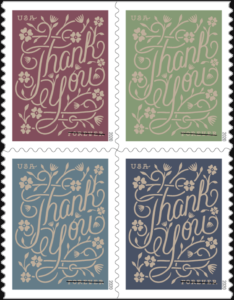 In 2020, the Postal Service issues four new stamps in a booklet of 20 available for notes, cards and letters of thanks sent to acknowledge a favor, an act of kindness, a job well done or gifts sent for any occasion. Highlighted in gold foil are the words “Thank you” in cursive script and an elegant floral design that swirls through and around the words. Each stamp features one of four background colors: blue gray, deep blue, muted green or soft maroon. Greg Breeding was the art director. Dana Tanamachi was the stamp designer and lettering artist.
 With this stamp, the Postal Service commemorates the centennial of the ratification of the 19th Amendment to the U.S. Constitution, which guarantees women the right to vote. Inspired by historic photographs, the stamp features a stylized illustration of suffragists marching in a parade or other public demonstration. The clothes they wear and the banners they bear display the official colors of the National Woman’s Party — purple, white and gold. Art director Ethel Kessler designed the stamp with original art by Nancy Stahl.
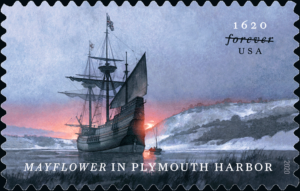 With this commemorative stamp, the Postal Service marks the 400th anniversary of the arrival of the Mayflower in Plymouth Harbor. The stamp’s image is based on artwork of watercolor, acrylic and gouache, a method of painting that uses opaque pigments ground in water and thickened to a glue-like consistency. The painting was digitally refined to convey a scene of desolate beauty at the end of the Pilgrims’ long journey to an unfamiliar world. Art director Greg Breeding designed the stamp with original art by Greg Harlin.
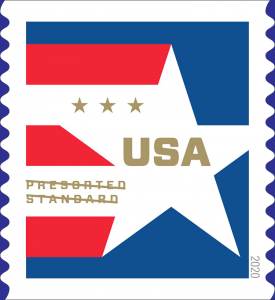 In 2020, the Postal Service will offer the Presorted Star stamp, sold in self-adhesive coils of 3,000 and 10,000, intended for use by business mailers. This new stamp celebrates the beloved American Stars and Stripes by focusing on its vital components. The asymmetrical design includes one large white star, two white and three red stripes, and a brilliant blue background, as well as lettering and three small stars in gold. Greg Breeding was the art director and Matthew Pamer was the designer for the stamp. It will be issued Feb. 3. No dedication event is planned.
 Chrysanthemum is a new Global Forever international rate stamp that can be used to mail a 1-ounce letter to any country where First-Class Mail International service is available. The stamp is round and features a photograph of a pink chrysanthemum on a white background. Taken from above, the photograph highlights the intricate beauty of the bloom. The art director was William J. Gicker. Greg Breeding designed the stamp with an existing photograph by Hong Vo. This stamp will be issued April 24 in Burlingame, CA. Details about the dedication event will be announced at a later date.
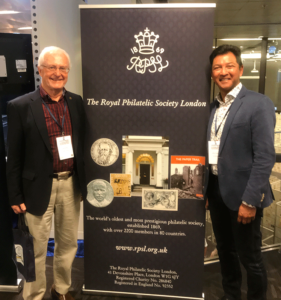 The Smithsonian’s National Postal Museum will host the 16th Maynard Sundman Lecture Wednesday, Nov. 6, from noon to 1 p.m. in the museum’s Discovery Center. Admission is free, with no reservation required. The moderated discussion about the postal history of World War II will be held with Kees Adema and Jeffrey Groeneveld (L-R at left), co-authors of The Paper Trail: World War II in Holland and Its Colonies as Seen Through Mail and Documents.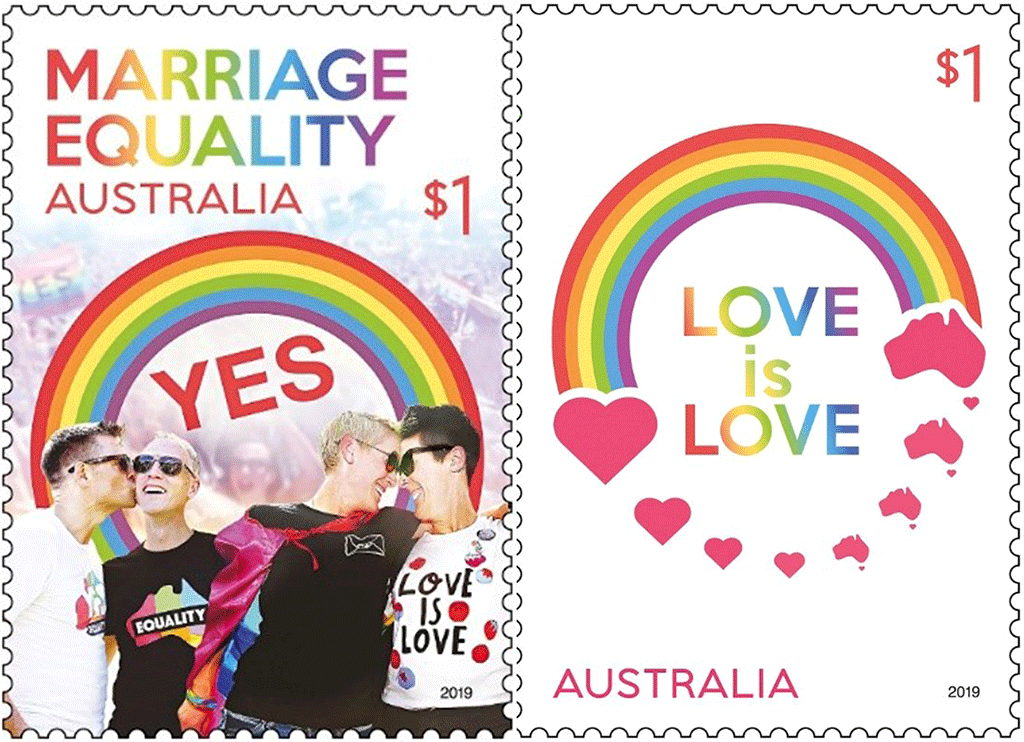
 The legislation followed a voluntary postal vote with 61.6 per cent voting “Yes” to the question, “Should the law be changed to allow same-sex couples to marry?”.
 David Brine and Nick Higgins celebrate the postal vote result announcement on 15 November 2017 in Sydney and on the same day, Rebecca Davies and Paula Van Bruggen celebrate the result at the State Library, Melbourne.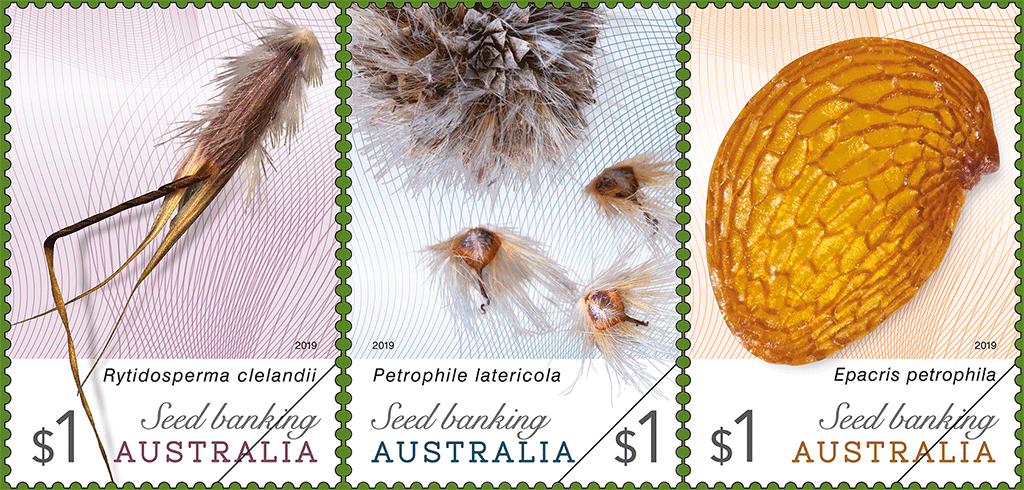
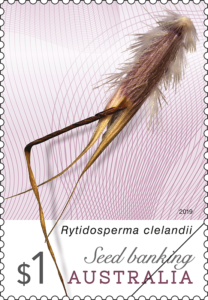
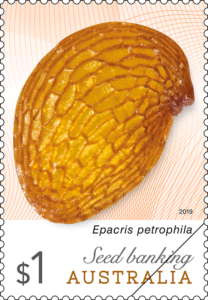 Australia’s several major seed banks are associated with state, territory and council-run botanic gardens that collect and conserve wild native flora.
 naked eye,” he said.
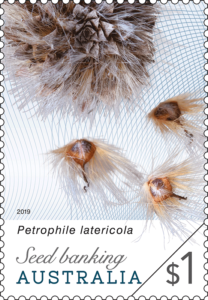
 Petrophile latericola is listed as endangered and occurs naturally only in areas south-east of Busselton on Western Australia’s southern Swan Coastal Plain. Its shuttlecock-like seeds suggest they are dispersed by the wind. This seed image was captured by Andrew Crawford, Western Australian Seed Centre, Kensington.
 “Megan Brennan is a devoted public servant who has helped lead the United States Postal Service through some very challenging circumstances,” said Robert M. Duncan, Chairman of the Board of Governors. “The Governors greatly appreciate her leadership and devotion to the Postal Service.”
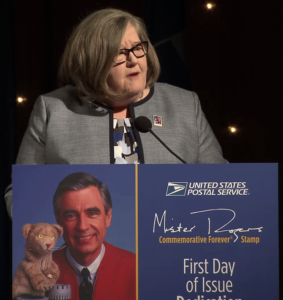 Brennan expressed her sincere gratitude to the men and women of the United States Postal Service. “I have had the privilege to work with you over the course of my 33-year career. You embody the spirit of public service, you earn the trust of the American people every day, and you continually reinforce my reverence for this institution and my abiding belief in our mission.”
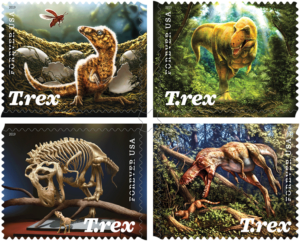 Tyrannosaurus Rex: