
[press release; translated by Google]
Colorful stamps full of optical illusions
The Hague, September 14, 2020. Today PostNL is releasing multi-colored stamps with  kaleidoscopic patterns. In the cheerful and playful stamp sheetlet full of optical illusions, graphic designer Hansje van Halem, winner of the Dutch Design Award for Communication in 2018, has applied all the colors from the color box. [A larger picture of the full sheet is shown at the end of this page.]
The issue of the ‘Kaleidoscope’ stamp sheetlet is part of a new series in which PostNL gives winners of prestigious design competitions a free assignment to design stamps. They may allow themselves to be guided by their own interests, by what fascinates and affects them. The first in this series appeared in 2019 the stamp sheetlet “Ordinary”. These stamps about marbles were designed by Michiel Schuurman, winner of the Dutch Design Award for Communication in 2017.
Invention early 19th century
The optical illusions of reflected light have been described in ancient times. The kaleidoscope as we know it today was invented in the early 19th century by Scottish physicist David Brewster. Since its invention by Brewster, the kaleidoscope has fulfilled many functions: as a toy for children, as entertainment for adults and as a source of inspiration for artists, jewelers and architects.
Narrow areas of color, wavy lines
Van Halem, known as the permanent designer of the annual Lowlands music festival, filled the “Kaleidoscope” stamp sheetlet completely with colorful symmetrical patterns. These consist of narrow areas of color separated by wavy white lines. Where the lines meet, a white butterfly shape is created.
Drawing is discovering
 Van Halem started her design by drawing simple lines in a random pattern. “Without a goal, just try it out. For me, drawing equals searching, discovering. You have to look closely at what you are doing to understand what you have done. In the process I try to discover what I want to achieve. For example, I make a lot of endpapers for books and they are of course decorative. There too I look for harmony by creating optical illusions, just as happened with these stamps. ”
Availability
The stamp sheet “Kaleidoscope” has 6 different stamps with the value indication international 1, intended for mail up to 20 grams with an international destination. The stamps are available from September 14, 2020 at Bruna stores and via the website [direct link]. The stamps can also be ordered by telephone from the Collect Club customer service on telephone number 088 – 868 99 00. The period of validity is indefinite.
[in de Nederlandse taal]
Kleurrijke postzegels vol optische illusies
Den Haag, 14 september 2020. PostNL brengt vandaag veelkleurige postzegels uit met caleidoscopische patronen. In het vrolijke en speelse postzegelvel vol optische illusies heeft grafisch ontwerper Hansje van Halem, winnaar van de Dutch Design Award for Communication in 2018, alle kleuren uit de kleurendoos toegepast.
De uitgifte van het postzegelvel ‘Caleidoscoop’ past in een nieuwe serie waarbij PostNL aan winnaars van prestigieuze ontwerpwedstrijden een vrije opdracht geeft om postzegels te ontwerpen. Ze mogen zich hierbij laten leiden door hun eigen interesses, door wat hen boeit en raakt. Als eerste verscheen in deze serie in 2019 het postzegelvel ‘Gewoontjes’. Deze postzegels over knikkers werden ontworpen door Michiel Schuurman, winnaar van de Dutch Design Award for Communication in 2017.
Uitvinding begin 19e eeuw
De optische illusies van weerspiegeld licht zijn al in de oudheid beschreven. De caleidoscoop zoals wij die nu kennen, werd begin 19e eeuw uitgevonden door de Schotse natuurkundige David Brewster. Sinds de uitvinding door Brewster heeft de caleidoscoop allerlei functies vervuld: als speelgoed voor kinderen, als vermaak voor volwassenen en als inspiratiebron voor kunstenaars, juweliers en architecten.
Smalle kleurvlakken, golvende lijnen
Van Halem, onder meer bekend als vaste ontwerper van het jaarlijkse muziekfestival Lowlands, vulde het postzegelvel ‘Caleidoscoop’ volledig met kleurrijke symmetrische patronen. Deze bestaan uit smalle kleurvlakken die van elkaar zijn gescheiden door golvende witte lijnen. Waar de lijnen samenkomen, ontstaat een witte vlindervorm.
Tekenen is ontdekken
Van Halem begon haar ontwerp door simpele lijntjes te tekenen in een willekeurig patroon. “Zonder doel, gewoon maar uitproberen. Tekenen staat voor mij gelijk aan zoeken, aan ontdekken. Je moet goed kijken naar wat je doet om te kunnen snappen wat je hebt gedaan. Al doende probeer ik te ontdekken wat ik wil bereiken. Ik maak bijvoorbeeld veel schutbladen voor boeken en die zijn vanzelfsprekend decoratief. Ook daar zoek ik de harmonie door optische illusies te creëren, net zoals bij deze postzegels is gebeurd.”
Verkrijgbaarheid
Het postzegelvel ‘Caleidoscoop’ telt 6 verschillende postzegels met de waarde aanduiding internationaal 1, bedoeld voor post tot en met 20 gram met een bestemming internationaal. De postzegels zijn vanaf 14 september 2020 verkrijgbaar bij Bruna-winkels en via de website. De postzegels zijn ook telefonisch te bestellen bij de klantenservice van Collect Club op telefoonnummer 088 – 868 99 00. De geldigheidstermijn is onbepaald.
 The Hague, September 14, 2020. On the latest stamp sheetlet from the “Experience nature” series, forest and heather birds play the leading role. The ten depicted birds on the stamps are the raven, coal tit, keep, great spotted woodpecker, red-collared redstart, greylag flycatcher, gray shrike, black grouse, wryneck and rump head. [Larger illustration of full sheet at end]
 sheetlet “Experience nature” costs € 9.10. The price for the full series 2020 is € 36.40, including storage folder.
 nature. Janse: “It has become a beautiful autumnal sheet with a mossy green in the background, which fits exactly with this season. In the center of the sheet, red accents draw the attention: the background by the gray shrike, the eyebrows of the black grouse, the berries at the keep and the “pants” of the great spotted woodpecker.”
 Heather birds in particular have a difficult time in our country due to the deterioration in the quality of heathland areas and the sharp decrease in the number of insects. Many bird species have therefore entered the danger zone. The black grouse, for example, is on the verge of disappearing. The wheatear can hardly be found on heaths anymore, but it can still be found in dune areas. The gray shrike only occurs as a winter guest in our country.

 5484 (55¢) Fruits and Vegetables – Red and black plums
 5495 (55¢) Bugs Bunny, 80th Anniv. – Basketball player
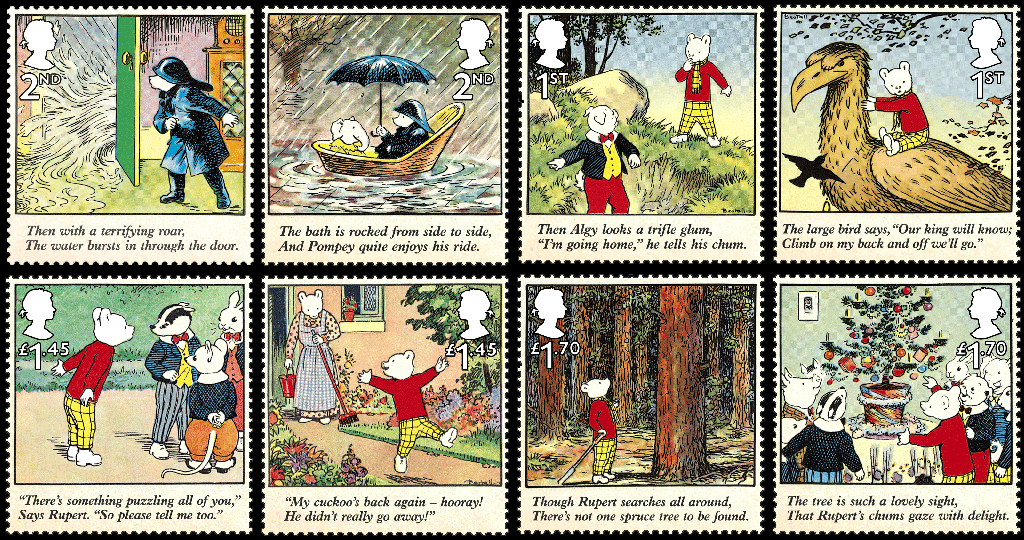
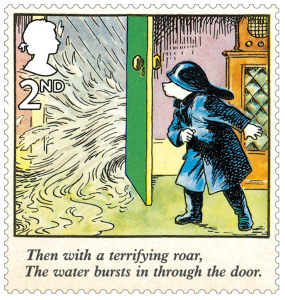
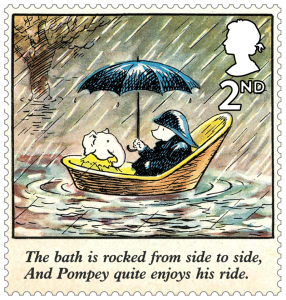
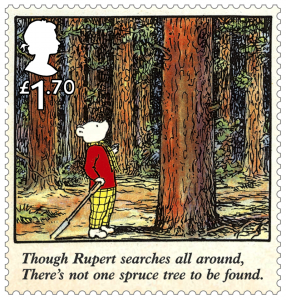
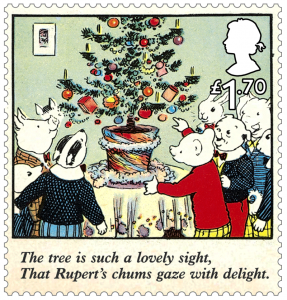 Mare’s Nest (1952), Rupert And The Lost Cuckoo (1963) and Rupert’s Christmas Tree (1947)
 Rupert Bear. The stamps feature the artwork of Alfred Bestall, who wrote and illustrated more than 270 Rupert stories after he took on the role in 1935.
 at the Express, and his wife, Mary, was the illustrator.
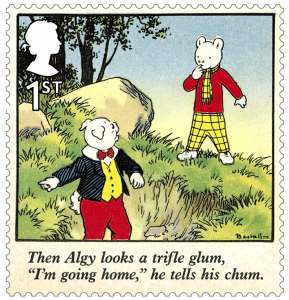 Her replacement was Alfred Bestall, an established artist with Punch and other magazines, who also illustrated children’s books. In total, he wrote and illustrated 224 Rupert stories for the newspaper and provided 47 other stories, mostly for the Rupert Annuals. In 1985 he was awarded the MBE for his work. He died the following year. It is his illustrations which are reproduced on the stamps which feature Rupert in adventures with some of friends including Algy Pup, Bill Badger and Pompey the baby elephant.
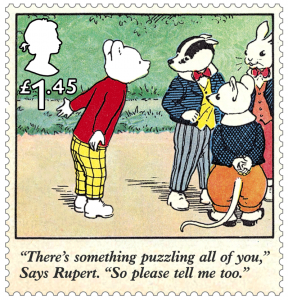
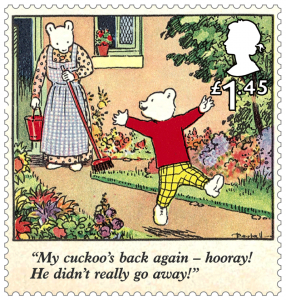
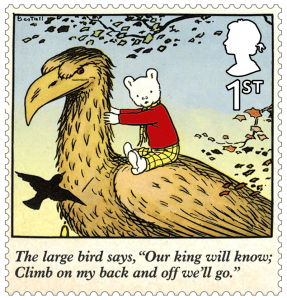 whereby every picture had a rhyming couplet underneath, plus a few lines of story text to accompany them. Bestall’s couplets often ended with the promise of a mystery, so that the next day’s paper was eagerly awaited by children, curious to see how the story would unfold. Bestall also introduced new characters to add variety, including Lily Duckling, Gregory Guineapig, the Old Professor, Bingo and the Imps of Spring and Autumn. Most Rupert stories commence with the bear leaving home and end with him returning after an adventure in time for tea to tell his mother of his experiences.
 While books of reprinted Rupert stories appeared in the 1920s, it was decided that an annual publication would appear every Christmas. It was titled, Monster Rupert. The first volume was issued in 1931 and continued up to 1934, ceasing after Mary Tourtel retired.
 World War, the government sanctioned sufficient paper for the annuals to be printed, to help boost the morale of the public.
 generations of children to a wonderful make-believe world of magic and adventure.”
 The Allied Military Government Collectors’ Club (AMGCC) is proud to announce the initial class of inductees to the newly formed AMGCC Hall of Fame. These three individuals were instrumental in establishing post-World War II AMG philately as a challenging and respected area of collecting; creating resources that encouraged involvement in the field and further study. They are:
 A new book from the American First Day Cover Society shares a collector’s love for the 1945 U.S. stamp that heralded the formation of the United Nations. The Al Raddi Collection of Scott 928 Toward United Nations Conference FDCs shows more than 170 different first day covers and related items for the issue commemorating the meeting of delegates from 50 countries toward the end of World War II.
 The book starts with a brief history of the conference, and then information about the stamp.
 The American First Day Cover Society is a not-for-profit educational organization, with 501(c)(3) tax-exempt status granted by the IRS. Established in 1955, the AFDCS also publishes handbooks, catalogues and its award-winning bimonthly journal, First Days. It also promotes first day cover exhibiting, both at its own Americover show and at other stamp shows.
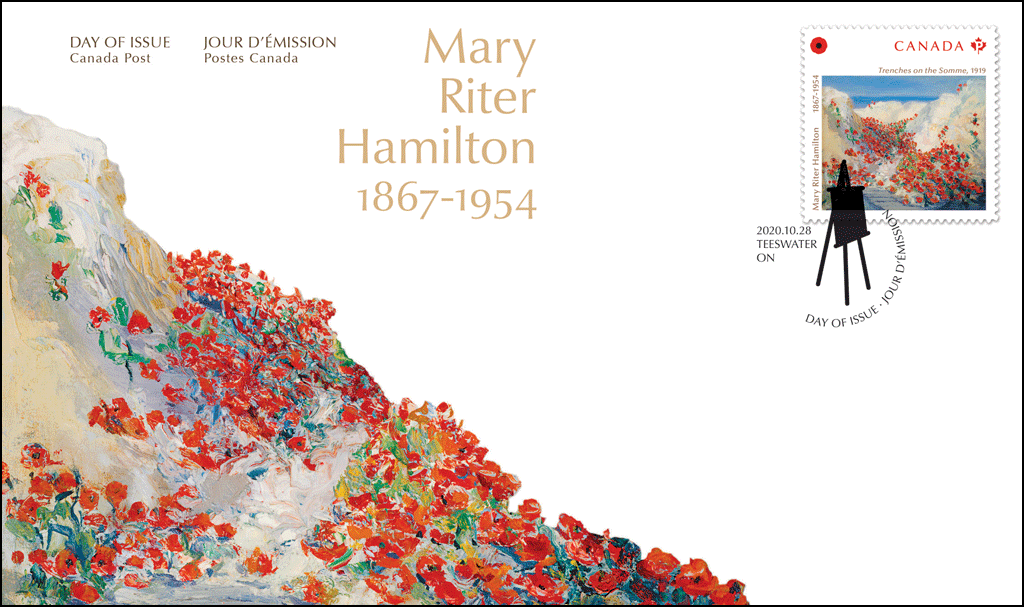
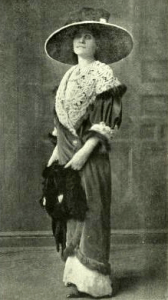 Canada Post will issue a stamp or stamps to honor Hamilton on October 28th. (press release below)
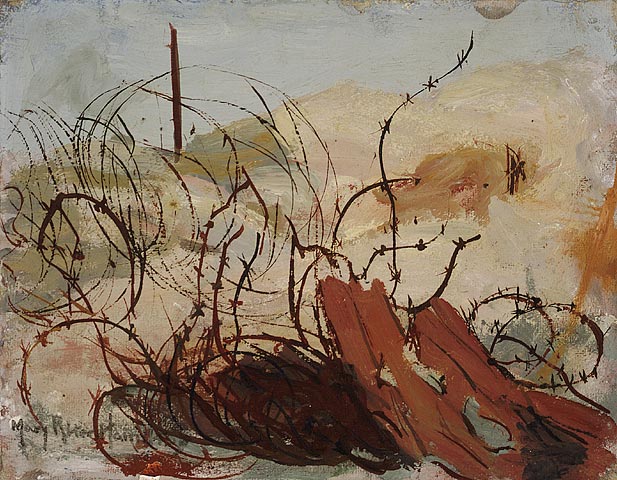 War Material, c. 1920
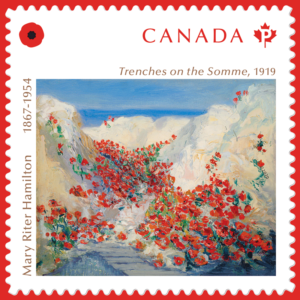 OTTAWA – Canada Post on October 28th released a new stamp issue featuring Mary Riter Hamilton’s Trenches on the Somme (1919) in honour of the painter, who was unofficially Canada’s first woman battlefield artist.
 [en Francais]

 Former APS executive director — but also a former member of the boards of the APS and American Topical Association, former Deputy Secretary of State and U.S. Ambassador — Robert E. Lamb received Ernest Kehr Award, which is bestowed annually helping to guarantee the future of the hobby.

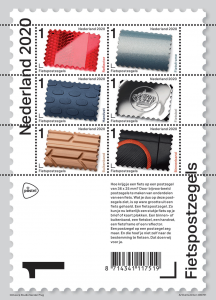 With 6 new stamps, PostNL pays tribute to the two-wheeler, in particular to its parts.
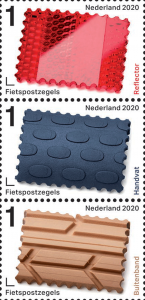 37,000 kilometers of cycle paths. Local drivers from all over the world come to look at our cycling infrastructure, especially now that the bicycle is increasingly seen as a fast and healthy alternative to cars and public transport.
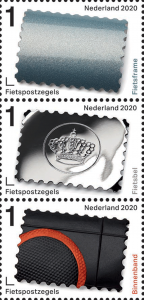 stamp. In this way, a fragment of a bicycle ends up on a bicycle stamp. “The entire stamp sheet also has the appearance of a stamp thanks to the perforation all around,” says Plug.
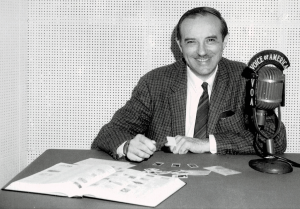 out. He was among those stamp collectors who, coming out of World War II, surveyed the value of U.S. new issues of the 1920s and 1930s, and thought “Hmmm…Mint U.S. commemorative stamps are popular, and the retail value seems to go up. So, I’ll buy a couple of sheets of every new issue, and when little Johnny gets to be college age, there is a little nest egg.”
 he bought only what he could afford, and what he could afford to lose; because when it came time to sell in the early 1960s, the market for sheets of U.S. commemoratives had tanked.
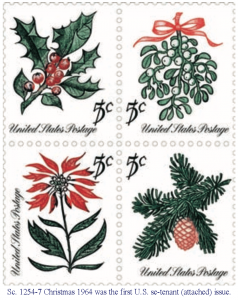 So, when all the little Johnnies and Janies got to college age in the late ‘50s and early ‘60s, the tens (if not hundreds) of thousands who had the same idea went to the well to collect on their investments, and found that there was far more supply than demand. If they could get 75% of face for routine stamps and full face for plate blocks, they were doing very well. Crank in the reduced purchasing power of the dollar, thanks to inflation, and even the realizations received were not nearly high enough to cover the initial outlay.
 printings that have topical value — such as Space-related, some sports heroes, the first stamps of a continuing series (such as Black Heritage) — still bring a modest premium. Also, some booklet panes, line pairs, plate number coils, and souvenir sheets. But for the vast majority of post WWII stamps, people selling them in quantity are now able to realize a mere 50-60% of face. And even some booth-holders at stamp shows who used to offer sheets of stamps to collectors for face value, are now forced to undercut their prior pricing in order to remain competitive.
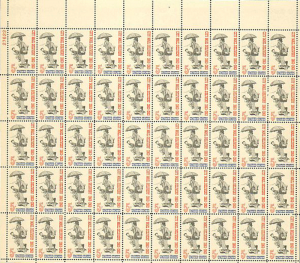 Now, don’t expect this dynamic to hold for single stamps being sold to collectors. Dealers who retail modern- era U.S. singles have to do more than buy and sell in large quantities. Even if they buy cheap, they have to break up sheets, put single stamps in glassines or make up year sets, advertise by individual Scott numbers, provide storage space for what is pending sale, and haul their wares to wherever they retail; or pay commissions if they are selling online using established websites. It all takes an investment of time and space, in addition to the investment of money. So you will pay more than face for single stamps to complete your album pages.
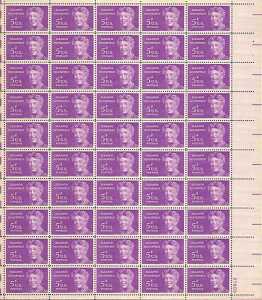 The holder of quantities of U.S. mint, often in my experience survivors of the original purchaser, rarely have a clue that what they have is not so much windfall as white elephant. I can’t count the number of times I’ve had to explain to the new owners the facts of philatelic life; that they have only a few alternatives: