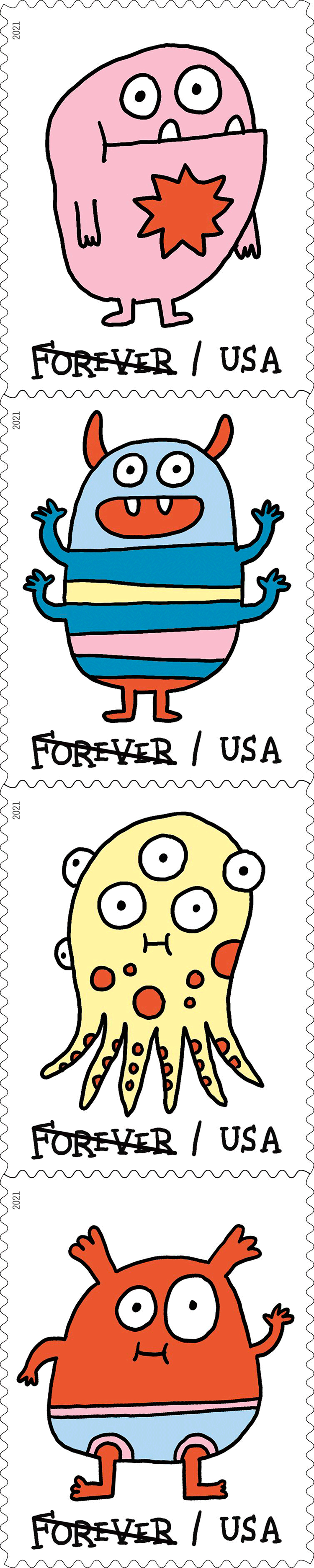
From the U.S. Postal Service announcement on November 17, 2020:From the USPS: 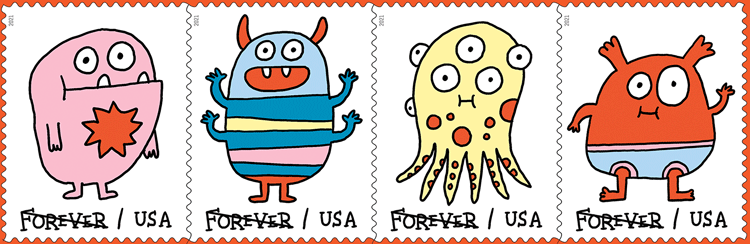 The four fun designs on this new pane of 20 stamps invite interactivity with dozens of self-adhesive accessories that personalize your cards, letters and envelopes for delighted recipients. Decorations include hearts, hats, voice balloons, flowers and thought bubbles. Art director Antonio Alcalá designed the pane with new illustrations by Elise Gravel.
Here are the Scott catalogue numbers for this issue:
5636 Pink and Red Monster
a. Imperforate
5637 Four-armed Monster
a. Imperforate
5638 Tentacled Monster
a. Imperforate
5639 Red-headed Monster
a. Imperforate
b. Horiz. or vert. strip of 4, #5636-5639
c. Imperforate strip of 4, #5636a-5639a
Additional information will be posted below the line, with the most recent at the top.
Updated August 25th:
Here is the first-day postmark for this issue: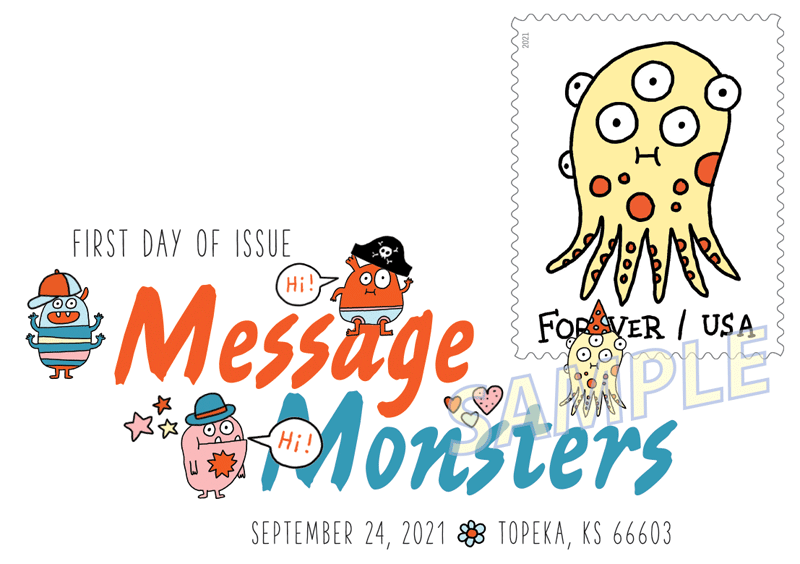 The Digital Color Postmark measures 3.0″ x 1.48″. There is no pictorial postmark for this issue.
[ceremony advisory]
Message Monsters Ready to Bring a Smile to Your Mail
WHAT: The U.S. Postal Service will celebrate Message Monsters with the most playful, customizable Forever stamp design ever. The four monster illustrations on this pane of 20 stamps invite interactivity with dozens of self-adhesive accessories on the selvage. The monster-ific accoutrements include cartoony voice balloons and thought bubbles with exclamations and salutations, hats and crowns, hearts, stars, crazy daisies and other fun flair.
Art director Antonio Alcalá designed the pane with original artwork by Elise Gravel, author and illustrator of popular children’s books.
The first-day-of-issue event for the Message Monsters Forever stamp is free and open to the public. News of the stamp is being shared with the hashtag#MessageMonstersStamps.
WHO: Jeffery A. Adams, vice president, corporate communications, U.S. Postal Service
Angie Grau, owner, Paper June Books
Tom Underwood, executive director, NOTO Arts & Entertainment District
WHEN: Friday, Sept. 24, 2021, at 11 a.m. CDT
WHERE: Redbud Park
924 N Kansas Ave
Topeka, KS 66608
RSVP: Dedication ceremony attendees are encouraged to RSVP at: usps.com/messagemonsters.
BACKGROUND: The U.S. Postal Service unleashes the most playful, participatory postage stamps ever — stamps that welcome you to customize a collection of cute and crazy critters. They’ll ride through the mail, adapted by you, adding mirth to your messages.
 The 20 Message Monsters on the pane, in four different designs, invite you to enhance your mail with the included adhesive accessories. These little monsters are totally adorn-able. Make them yours and they’re even more delightful!
The stamp designs start with the playful illustrations of Elise Gravel, whose characters are frisky, fresh and full of fun. Colorful characters populating the pane include a roundish, rosy rascal with a sunny tummy; a silly, striped imp waving a four-armed howdy; a squiggly, squid-ly yellow critter with enough eyes to go around; and a reddish rapscallion in short shorts. Whimsical, wacky and inviting your inventiveness, these creatures appeal across generations.
The Message Monster stamp dedication event falls during “Thinking of You Week,” which runs Sept. 20–26. It was first launched in the United Kingdom in 2014 and brought to the United States in 2018 by the Greeting Card Association. What better way to let someone know you’re thinking of them than to send a funny, friendly monster through the mail?
Preorders for the Message Monsters Forever stamps can be made online at usps.com/stamps beginning Aug. 30.
Customers may purchase stamps and other philatelic products through the Postal Store at usps.com/shopstamps, by calling 844-737-7826, by mail through USA Philatelic, or at Post Office locations nationwide.
The Postal Service generally receives no tax dollars for operating expenses and relies on the sale of postage, products and services to fund its operations.
From the Postal Bulletin:
On September 24, 2021, in Topeka, KS, the United States Postal Service® will issue the Message Monsters stamps (Forever® priced at the First-Class Mail® rate) in four designs, in a pressure-sensitive adhesive (PSA) pane of 20 stamps (Item 481300). These stamps will go on sale nationwide September 24, 2021, and must not be sold or canceled before the first-day-of-issue. The Message Monsters pane of 20 stamps may not be split and the stamps may not be sold individually.
The four designs on this new pane of 20 stamps invite interactivity with dozens of self-adhesive accessories that personalize these comical characters for delighted recipients. Decorations include hearts, hats, voice balloons, flowers, and thought bubbles. Art director Antonio Alcalá designed the pane with new illustrations by Elise Gravel.
No automatic distribution.
How to Order the First-Day-of-Issue Postmark:
Customers have 120 days to obtain the first-day-of-issue postmark by mail. They may purchase new stamps at their local Post Office™ or at The Postal Store® website at usps.com/shop. They must affix the stamps to envelopes of their choice, address the envelopes (to themselves or others), and place them in a larger envelope addressed to:
FDOI – Message Monsters Stamps
USPS Stamp Fulfillment Services
8300 NE Underground Drive, Suite 300
Kansas City, MO 64144-9900
After applying the first-day-of-issue postmark, the Postal Service™ will return the envelopes through the mail. There is no charge for the postmark up to a quantity of 50. There is a 5-cent charge for each additional postmark over 50. All orders must be postmarked by January 24, 2022.
Technical Specifications:
Issue: Message Monsters Stamps
Item Number: 481300
Denomination & Type of Issue: First-Class Mail Forever
Format: Pane of 20 (4 designs)
Series: N/A
Issue Date & City: September 24, 2021, Topeka, KS 66603
Art Director: Antonio Alcalá, Alexandria, VA
Designer: Antonio Alcalá, Alexandria, VA
Artist: Elise Gravel, Montreal, Quebec
Modeler: Sandra Lane/Michelle Finn
Manufacturing Process: Offset
Printer: Banknote Corporation of America
Press Type: Gallus RCS
Stamps per Pane: 20
Print Quantity: 18,000,000 stamps
Paper Type: Phosphor, Block Tag
Adhesive Type: Pressure-sensitive
Colors: Black, Cyan, Magenta, Yellow
Stamp Orientation: Vertical
Image Area (w x h): 1.085 x 1.42 in./ 27.559 x 36.068 mm
Overall Size (w x h): 1.225 x 1.56 in./31.115 x 39.624 mm
Full Pane Size (w x h): 7.75 x 8.19 in./196.85 x 208.026 mm
Press Sheets Size (w x h): 14.5 x 18.25 in./368.3 x 463.55 mm
Plate Size: 60 stamps per revolution
Plate Number: “B” followed by four (4) single digits in two corners
Marginal Markings:
Front: Header: Message Monsters • Plate number in bottom two corners
Back: ©2020 USPS • USPS logo • 2 barcodes (481300) • Plate position diagram (3) • Promotional text
The full pane: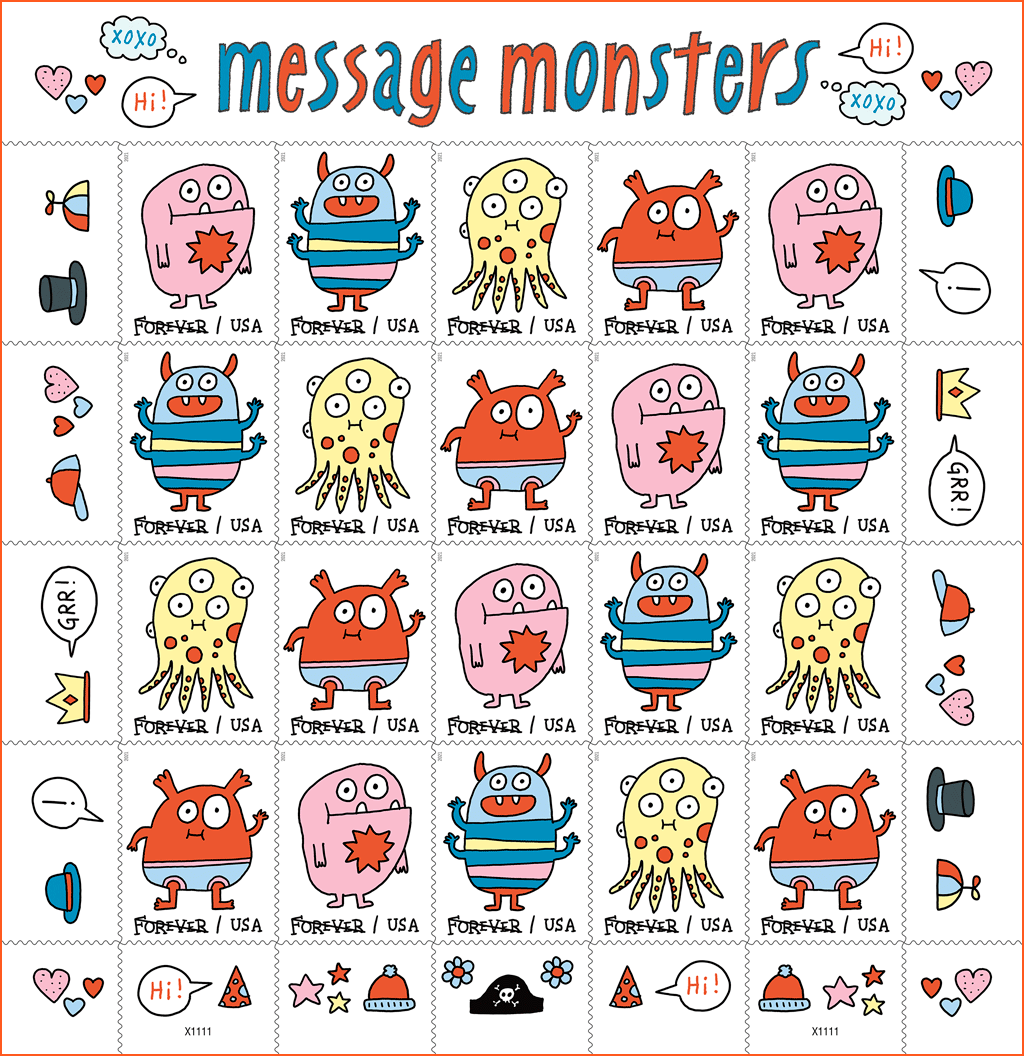
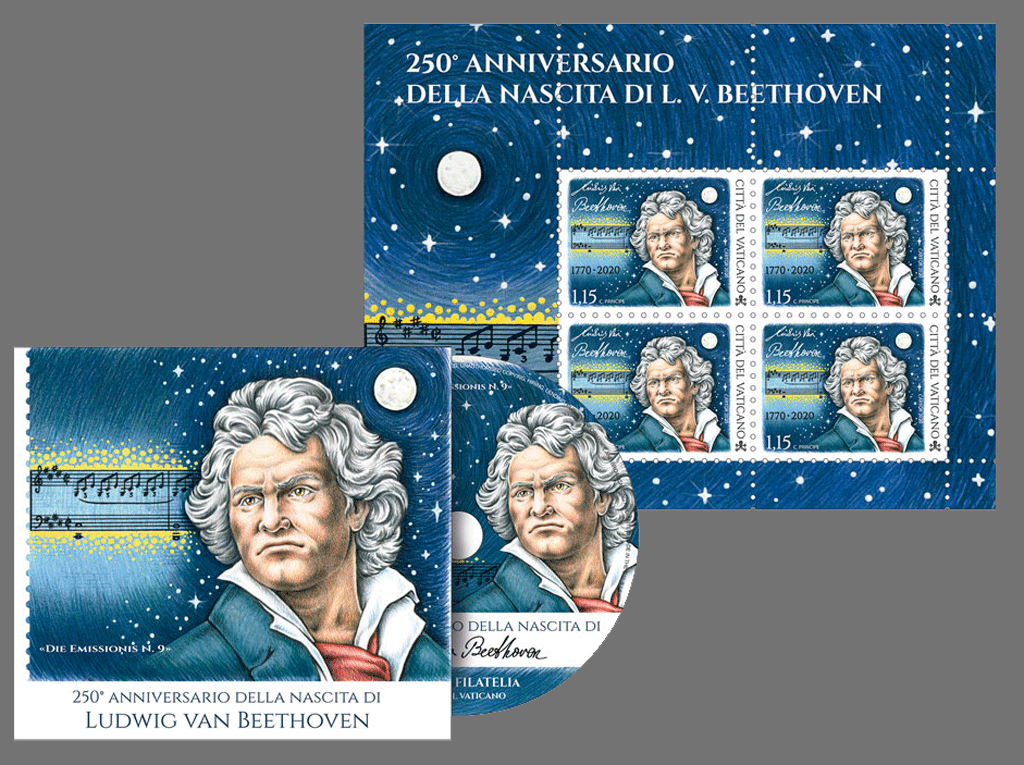
 TORONTO – On November 5, Canada Post issued a new commemorative stamp to mark Hanukkah – the Jewish Festival of Lights. The eight-day celebration begins at nightfall on the 25th day of Kislev in the Hebrew calendar, this year December 10. The stamp is available in advance, so Canadians can use it to send holiday greetings.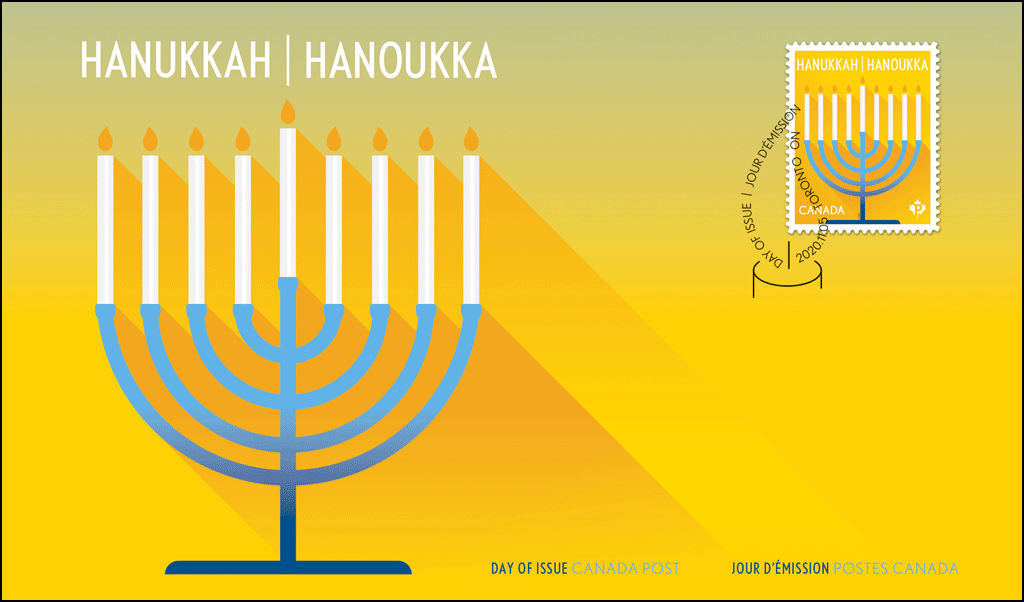

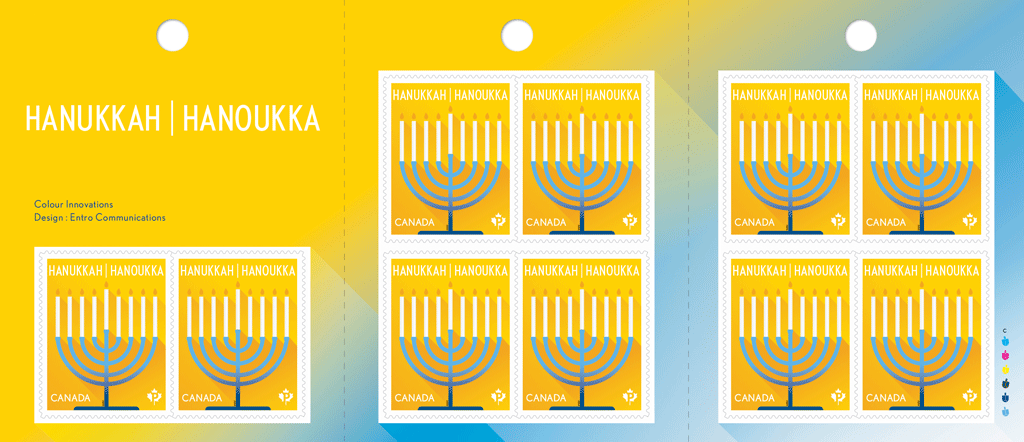
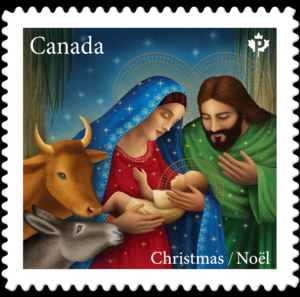 issues to help Canadians make their cards and letters more festive. Once again this year, Canadians can make their mail merrier with their choice of stamps bearing either sacred or secular holiday imagery.
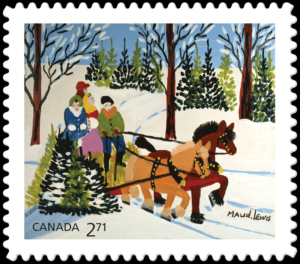
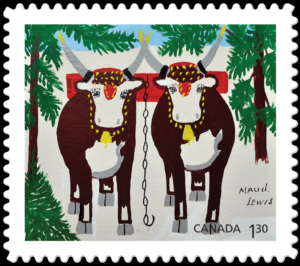
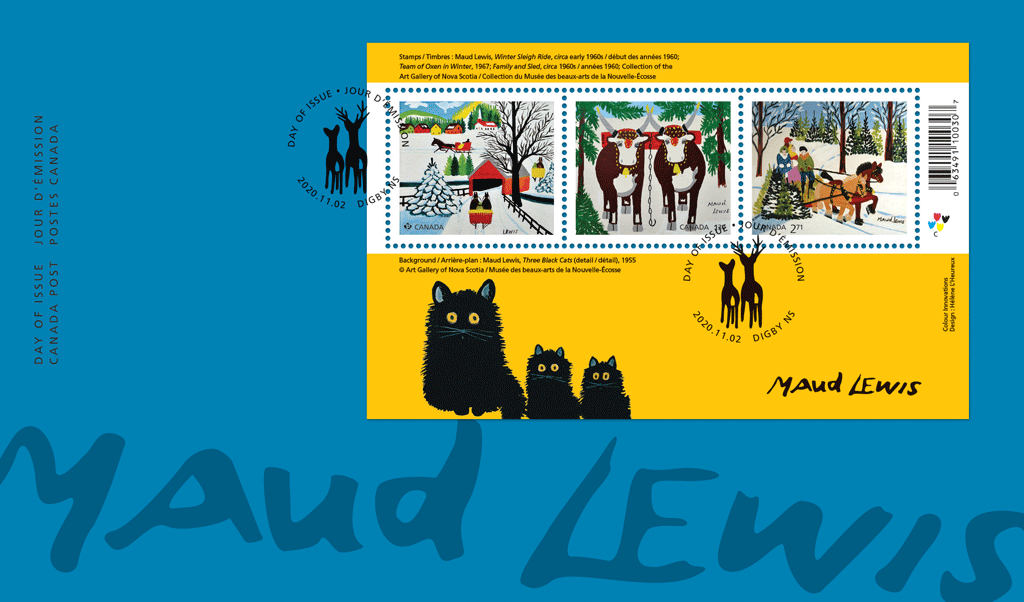
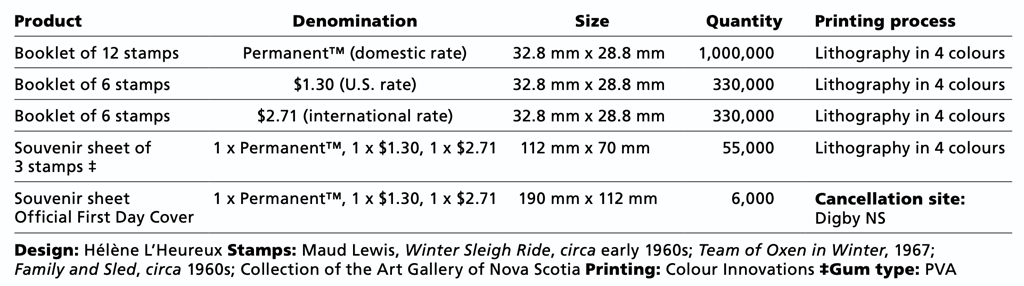
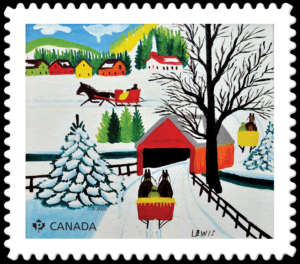 scenes by Canadian folk artist Maud Lewis. Lewis’ earliest works were Christmas cards painted under the guidance of her mother and sold door to door to her neighbours in rural Nova Scotia. This issue features seasonal works from the collection of the Art Gallery of Nova Scotia in Halifax: Winter Sleigh Ride (12-stamp booklet at the Permanent™ domestic rate), Team of Oxen in Winter (six-stamp booklet at the U.S. rate) and Family and Sled (six-stamp booklet at the international rate). A souvenir sheet, depicting Lewis’ whimsical cats, and a souvenir sheet Official First Day Cover, cancelled in Digby, Nova Scotia, round out the issue.
 nouveaux jeux de timbres qui égayeront les cartes et les lettres des Canadiens. Cette année encore, ces derniers pourront mettre un peu de joie sur leur courrier des Fêtes avec des timbres consacrés à un thème religieux ou profane.
 L’Heureux, sont ornés de trois scènes joyeuses de l’artiste folklorique canadienne Maud Lewis. Les premières œuvres de l’artiste sont des cartes de Noël qu’elle peint en suivant les conseils de sa mère et qu’elle vend à des voisins en faisant du porte-à-porte en Nouvelle-Écosse. Cette émission est composée de trois œuvres qui font partie de la collection du Musée des beaux-arts de la Nouvelle-Écosse à Halifax : Winter Sleigh Ride (carnet de 12 timbres PermanentsMC au tarif du régime intérieur), Team of Oxen in Winter (carnet de 6 timbres au tarif des envois à destination des États-Unis) et Family and Sled (carnet de 6 timbres au tarif du régime international). Le bloc-feuillet, présentant une illustration fantaisiste de chats créée par Maud Lewis, et le pli Premier Jour officiel du bloc-feuillet, oblitéré à Digby, en Nouvelle-Écosse, complètent l’émission.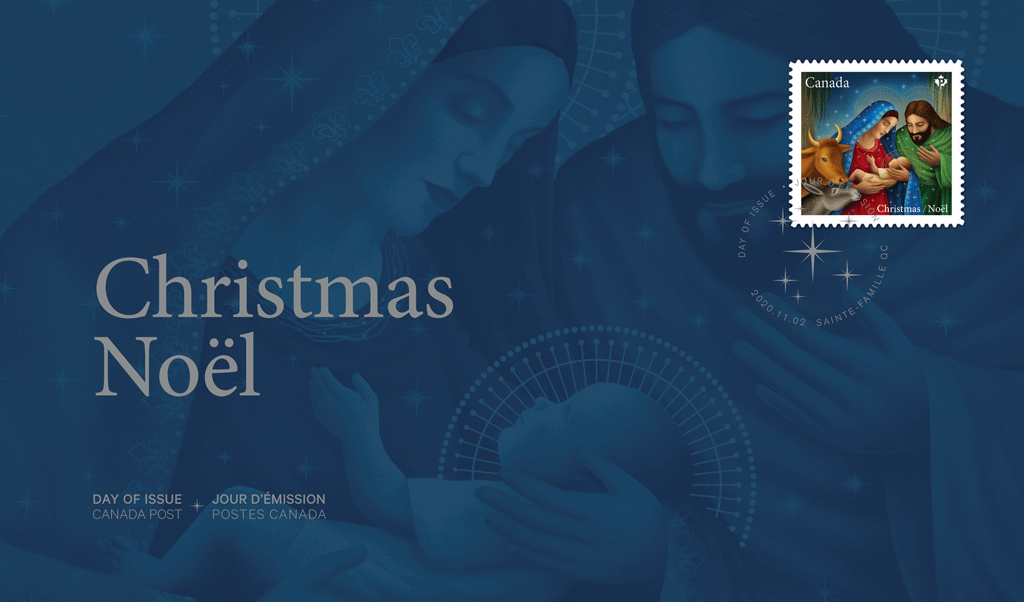

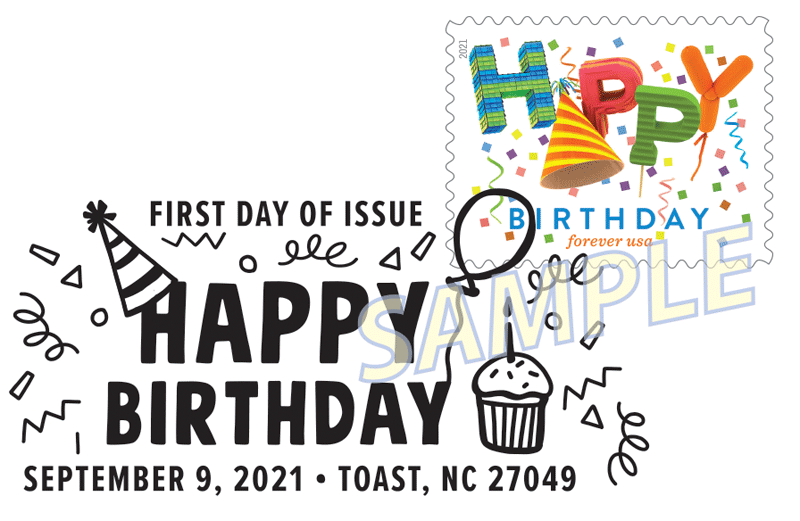
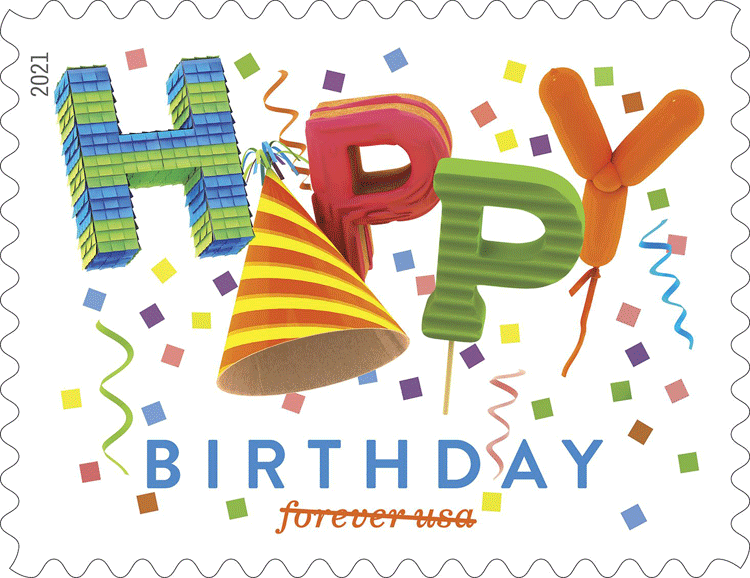 From the USPS: This Happy Birthday stamp conveys exuberant greetings by calling to mind the childhood excitement of a birthday party. Each of the five letters in the word “HAPPY” is inspired by a different party decoration in the midst of a flurry of multicolored ribbons and confetti. This stamp was designed by Lisa Catalone Castro and Rodolfo Castro, featuring a digital illustration by the latter. Ethel Kessler served as art director.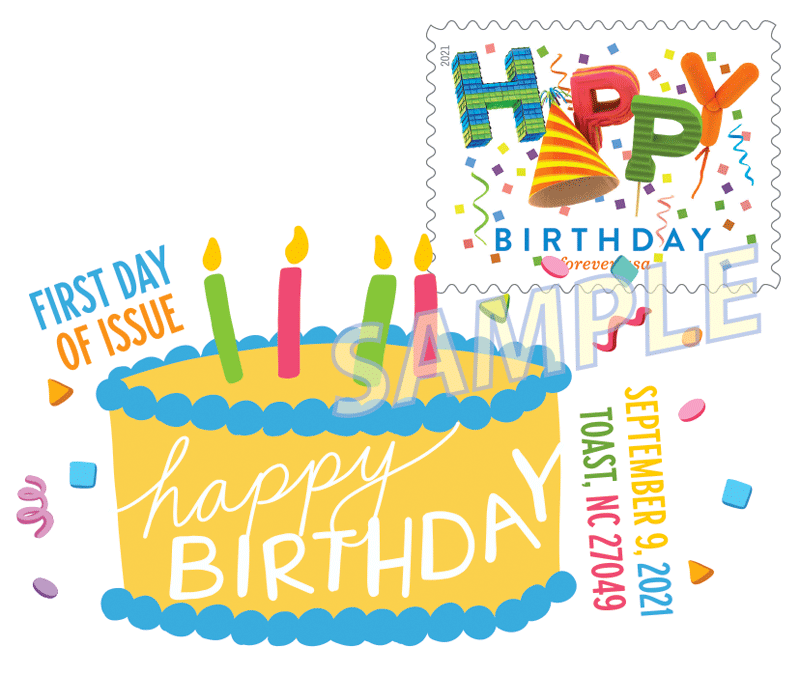
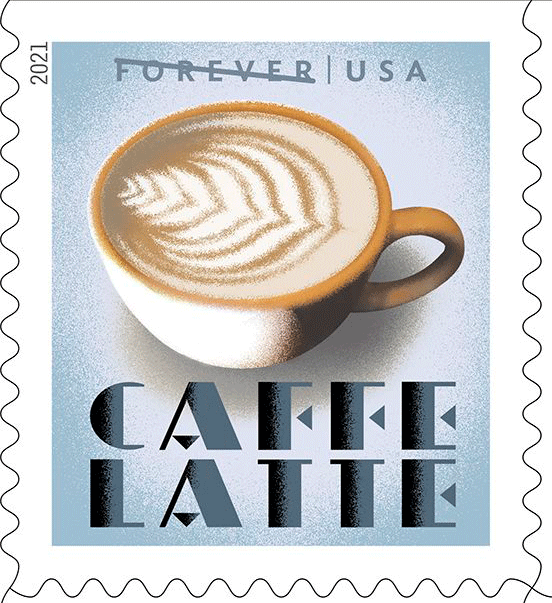
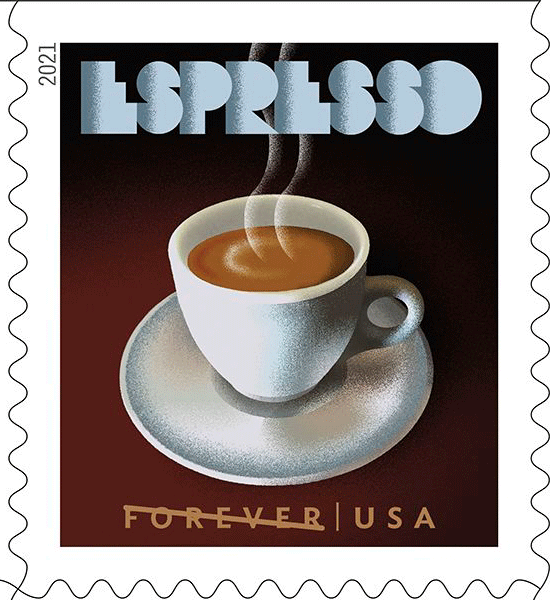
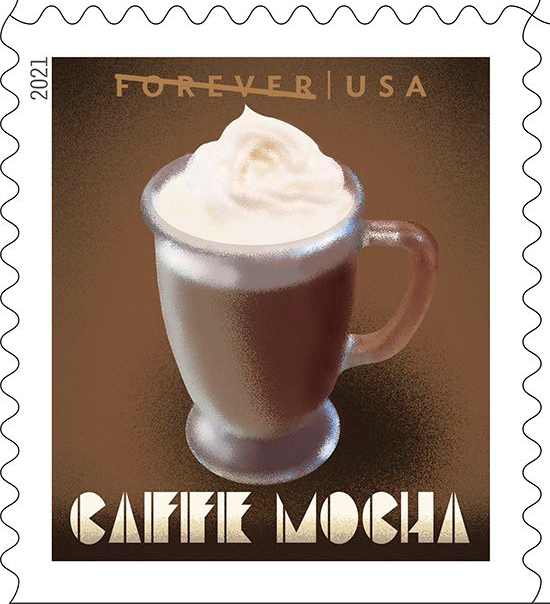
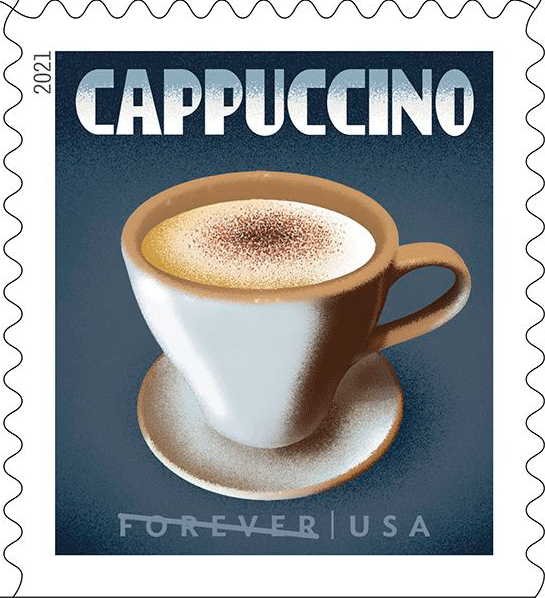
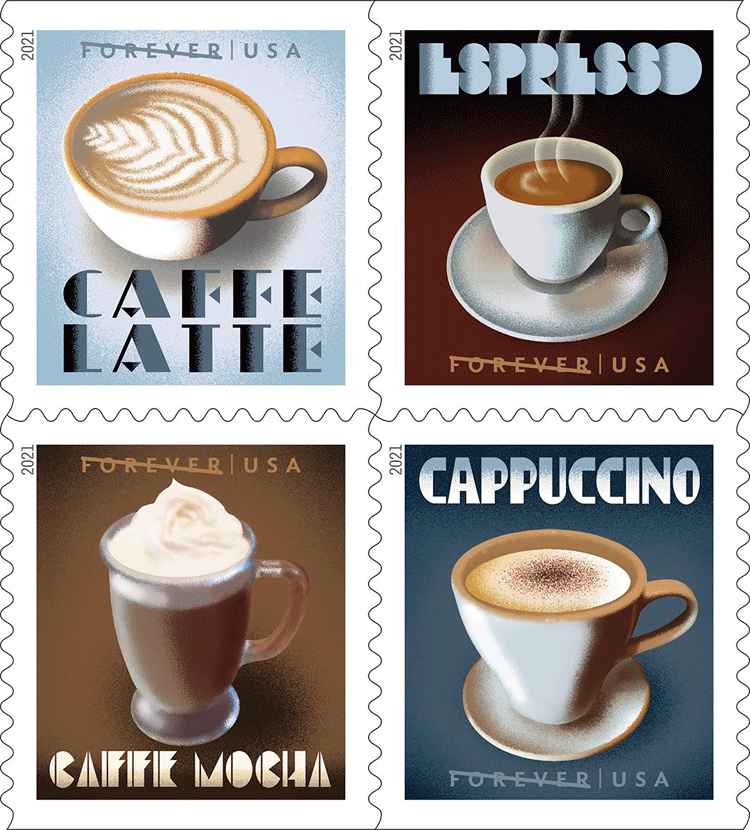 From the USPS: America’s love of coffee is celebrated with four new stamps in a booklet of 20. Four digital illustrations feature cups of four different drinks: caffe latte, espresso, caffe mocha and cappuccino. The names of the espresso drinks appear in art-deco-inspired lettering above or below each cup. Art director Greg Breeding designed the stamps with original artwork by Terry Allen.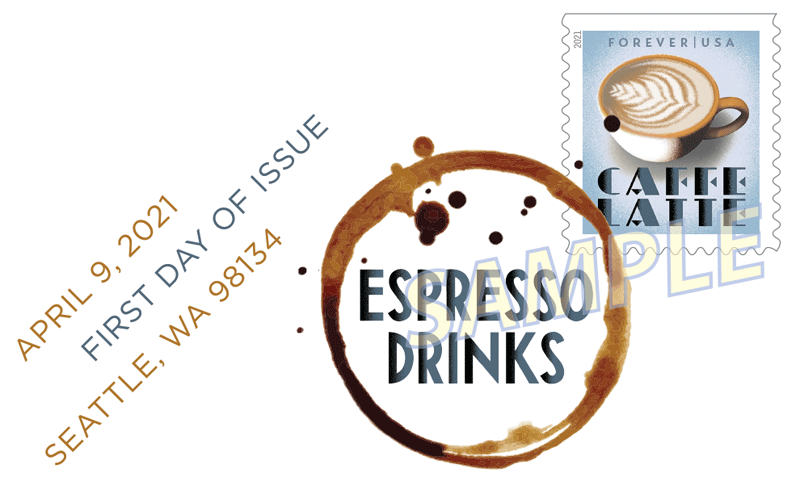
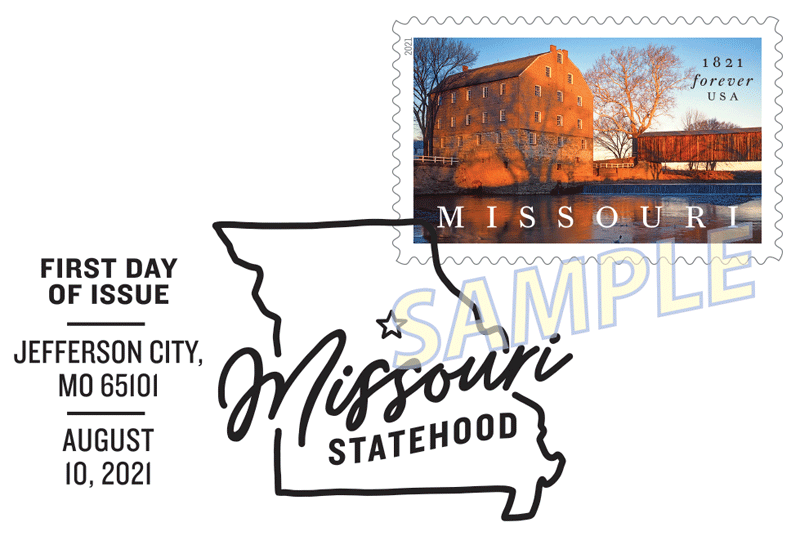
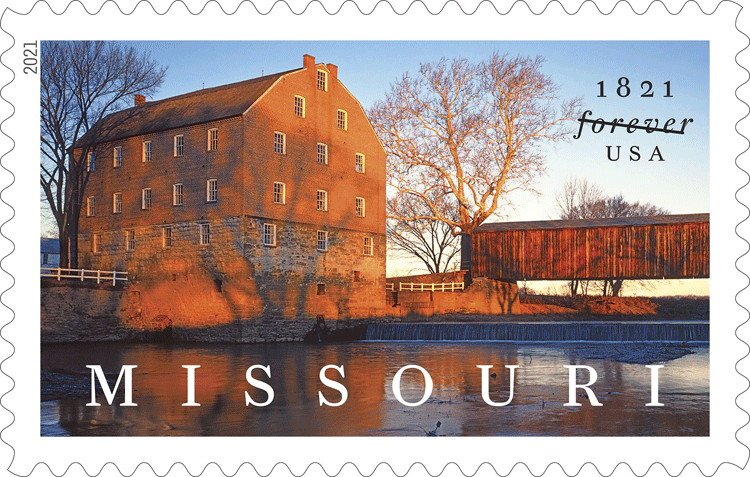 From the USPS: This stamp celebrates the bicentennial of Missouri statehood. Missouri became the 24th state in the Union on Aug. 10, 1821. The stamp art is an existing photograph of Bollinger Mill State Historic Site by noted landscape photographer Charles Gurche. Art director Greg Breeding designed the stamp.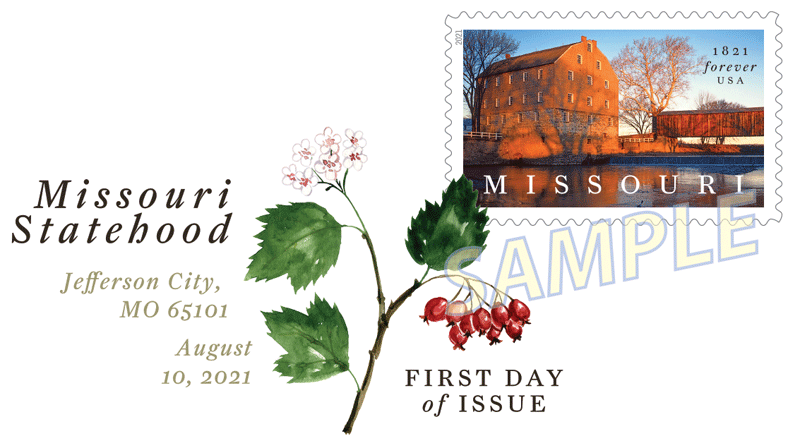
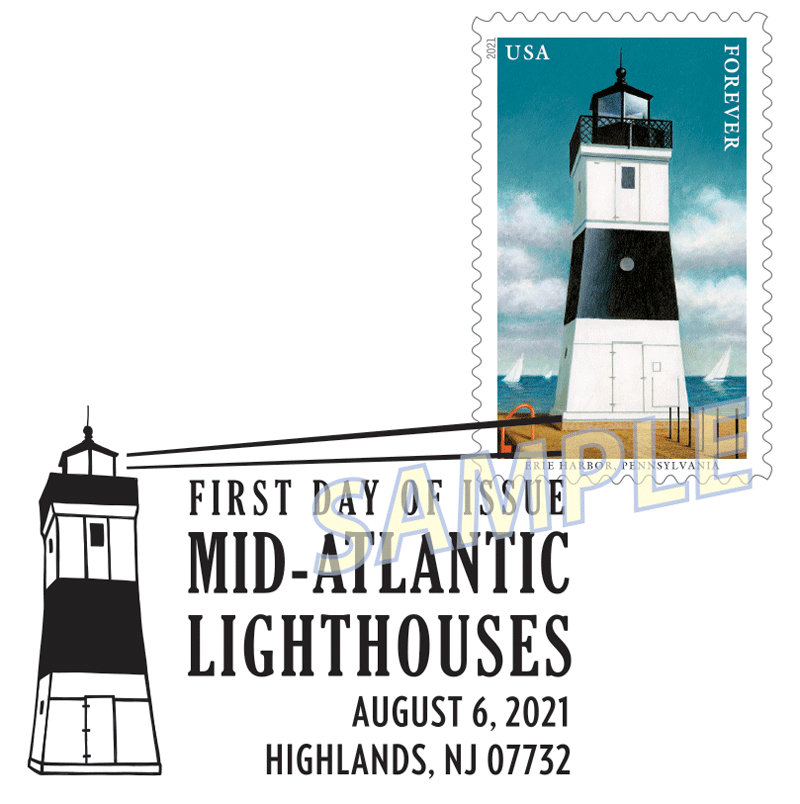
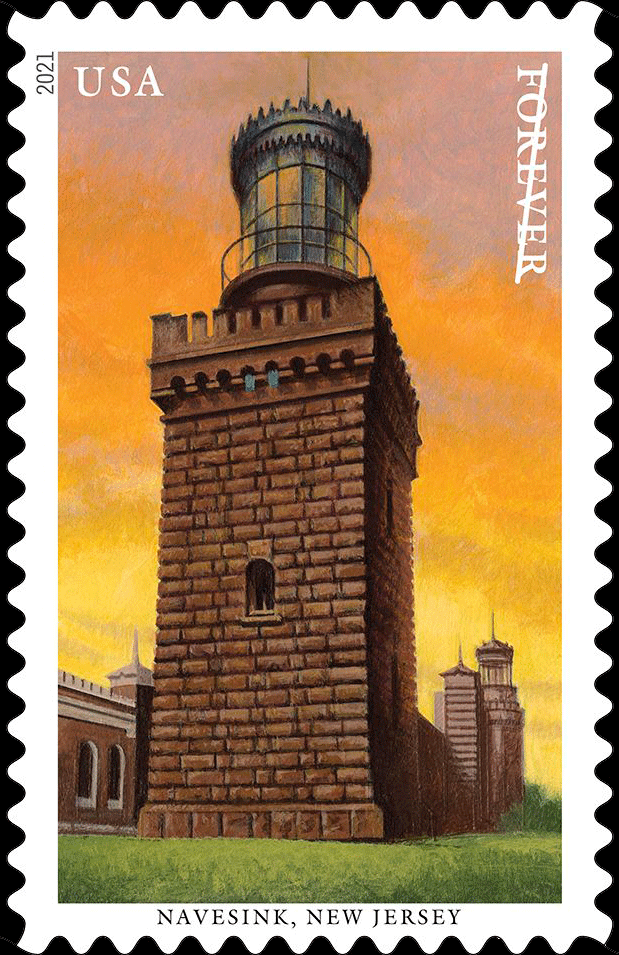
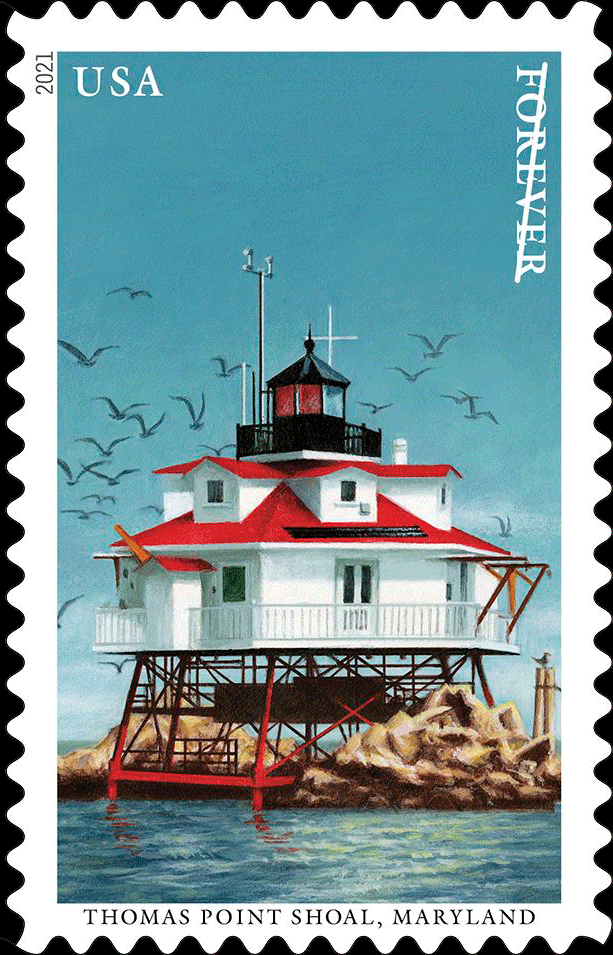
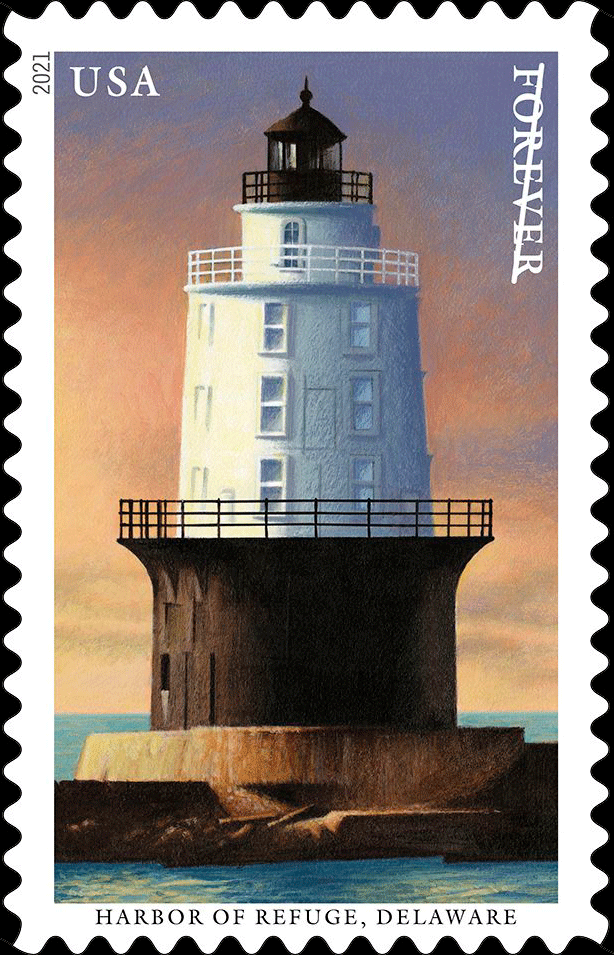
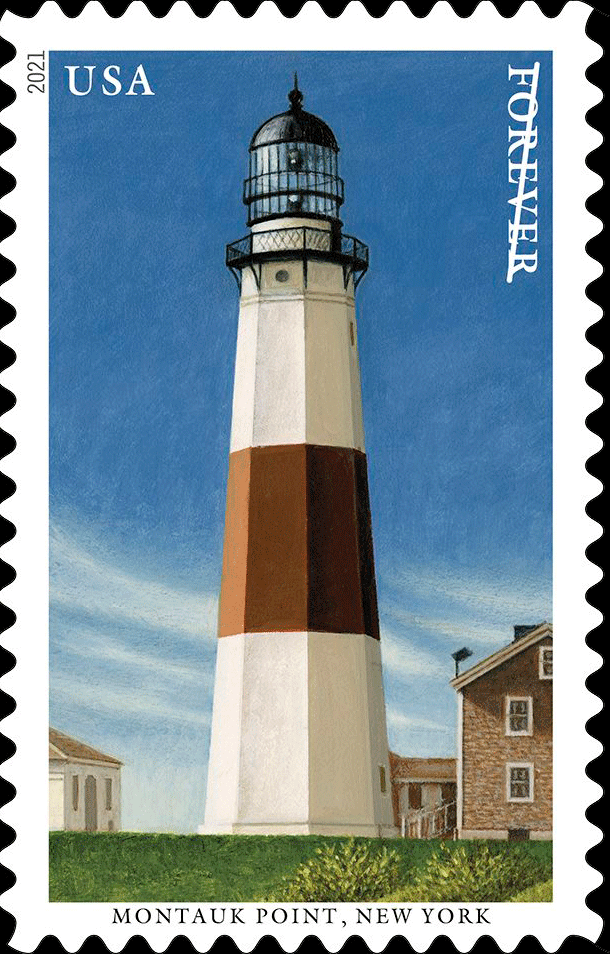
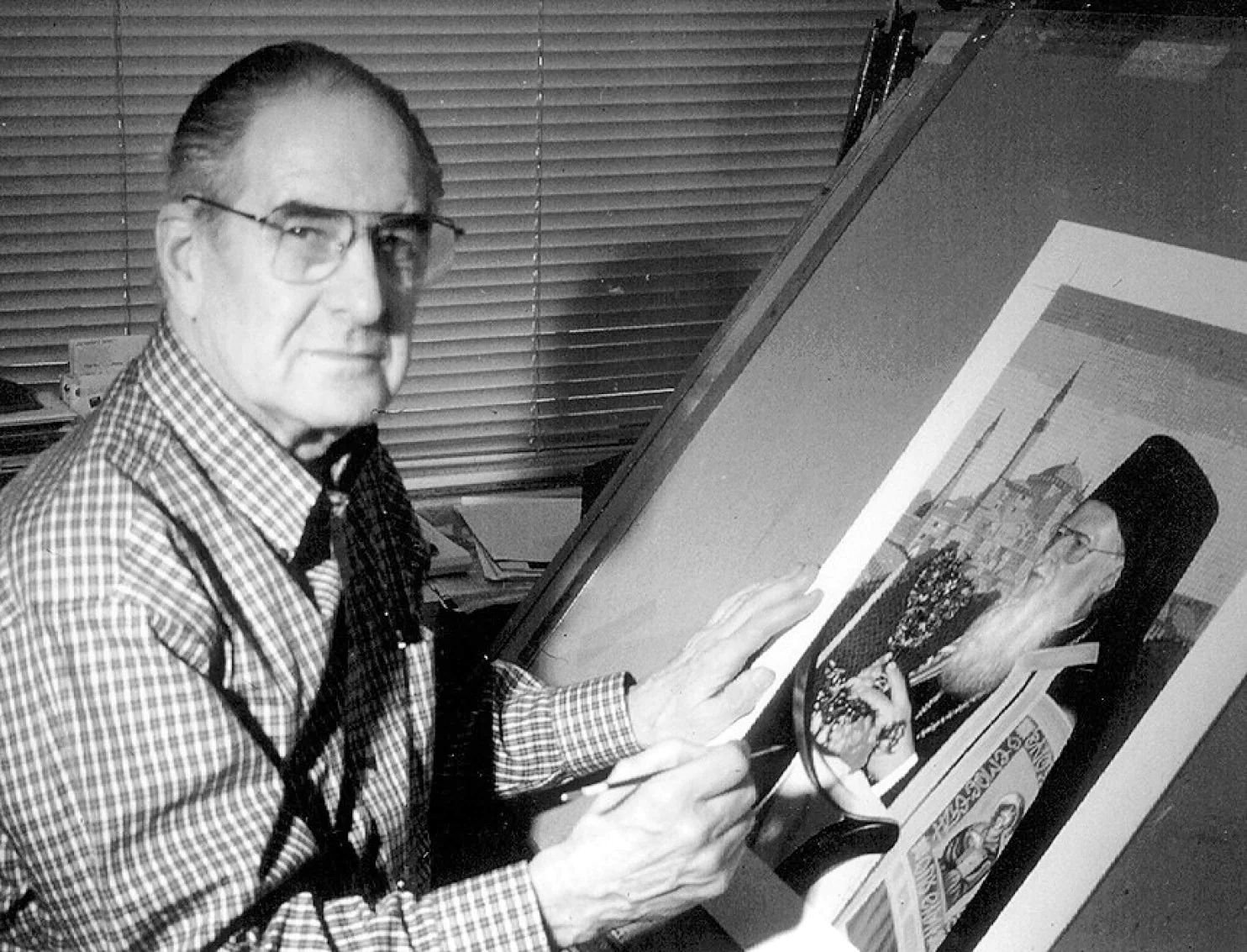
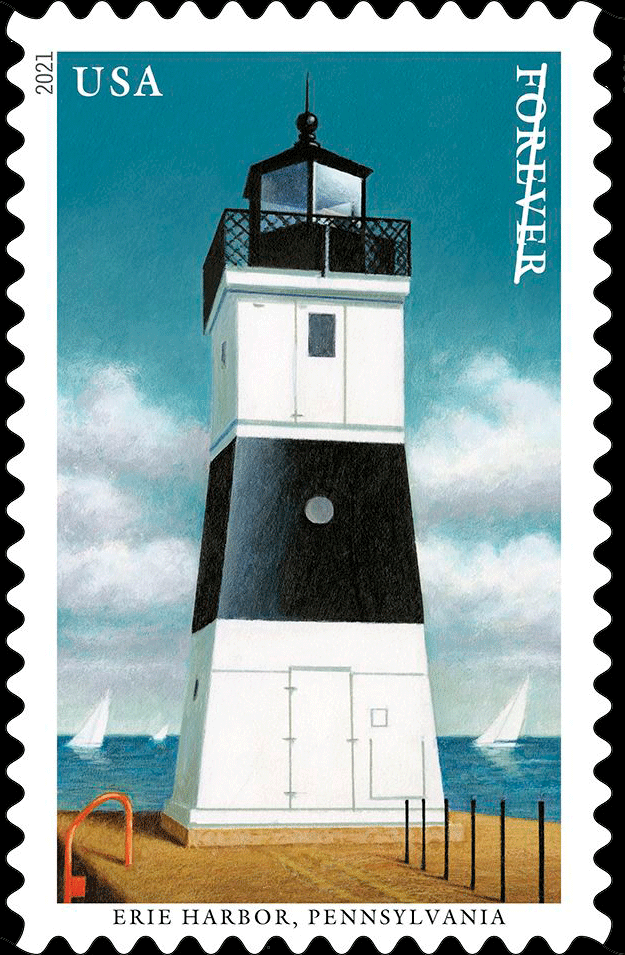
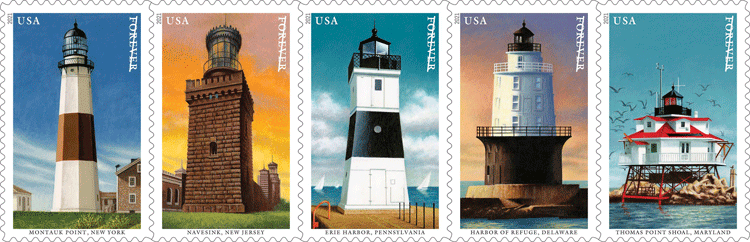 From the USPS: The long-running series celebrating American lighthouses continues with five new stamps. The mid-Atlantic lighthouses featured in this issuance are: Thomas Point Shoal, MD; Montauk Point, NY; Harbor of Refuge, DE; Navesink, NJ; and Erie Harbor Pierhead, PA. The late Howard Koslow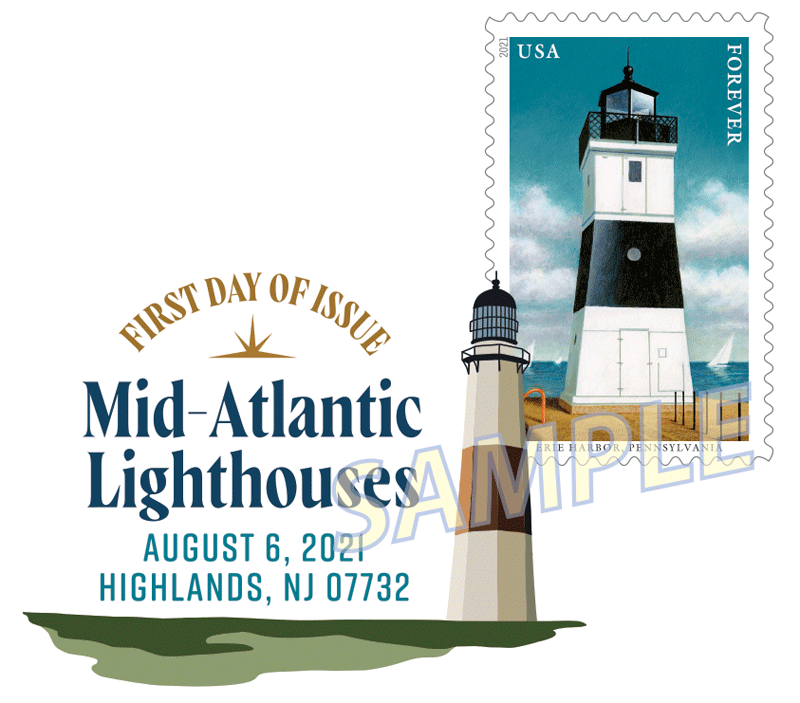
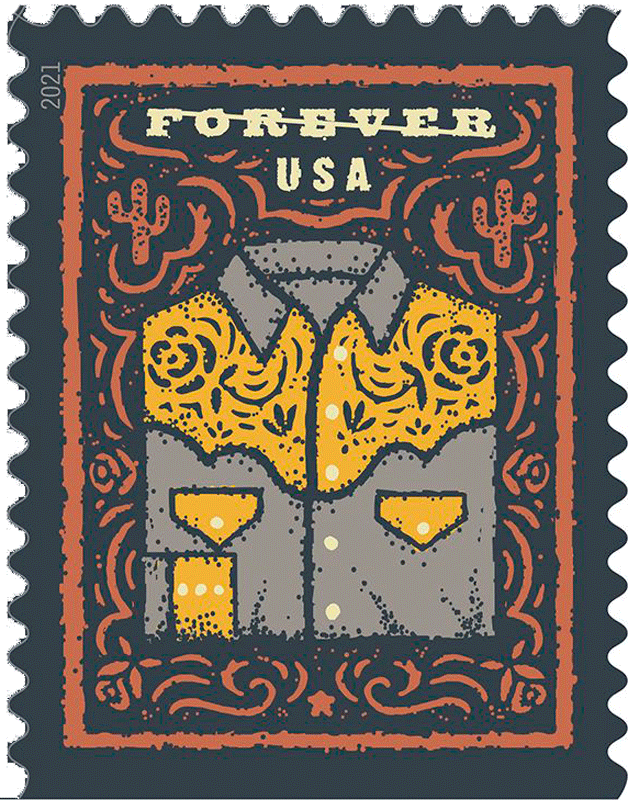
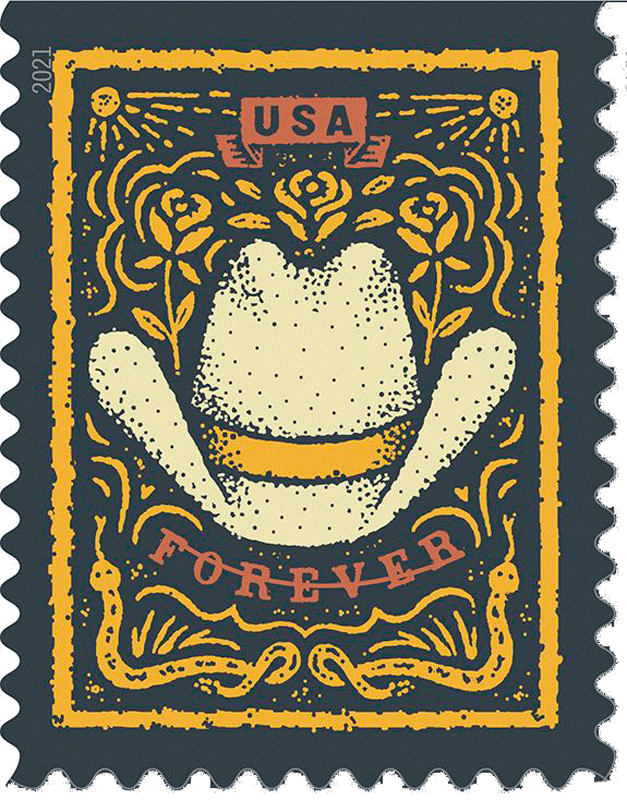
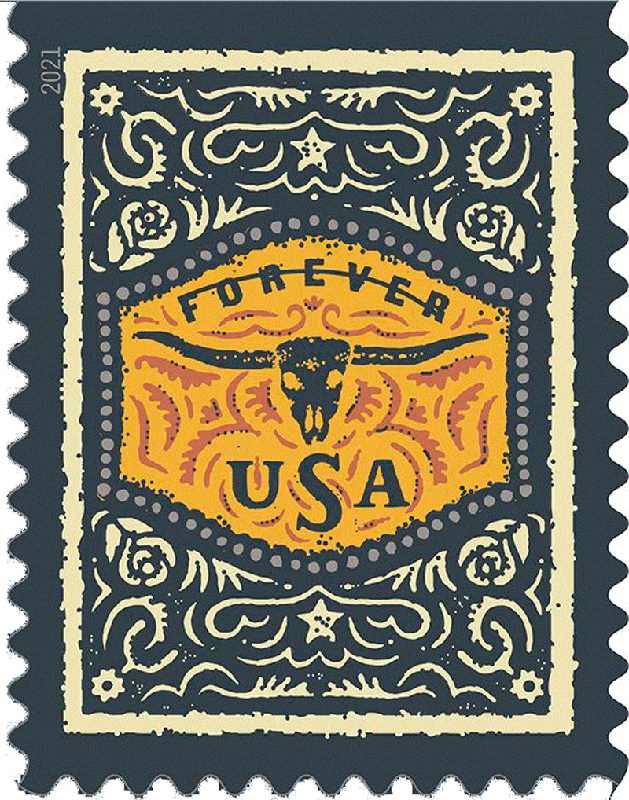
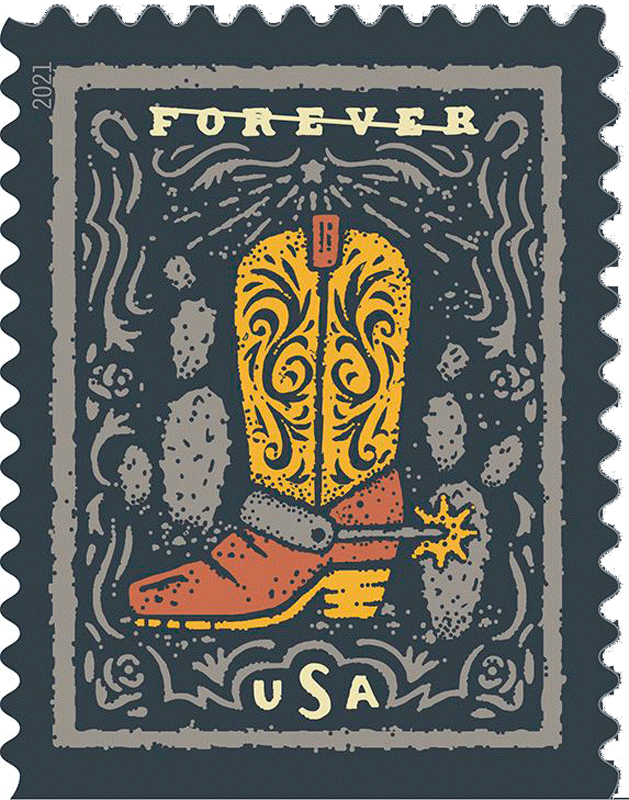
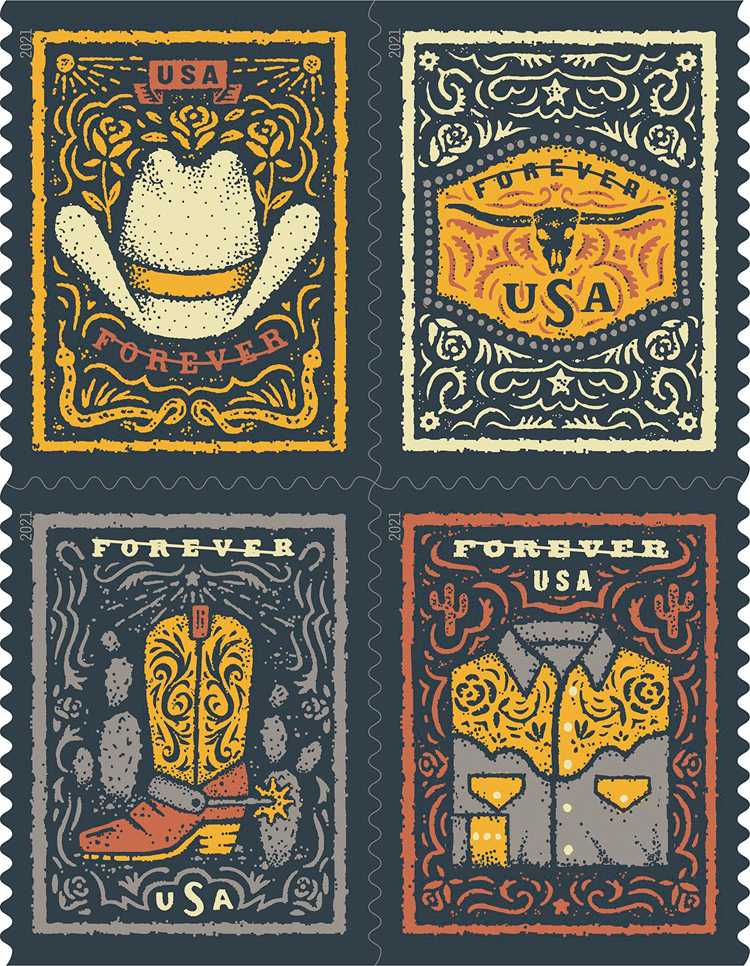 From the USPS: The U.S. Postal Service celebrates the enduring legacy of Western wear with four fun new Forever stamps in a booklet of 20. The stamp art features four graphic illustrations of Western wear staples — a cowboy hat, a cowboy boot with a spur, a Western shirt, and a belt buckle featuring a longhorn head. Each image is framed by elements common to the American West and iconography of the region, including cacti, snakes, roses and stars. Art director Greg Breeding designed the stamps with original art by Ryan Feerer.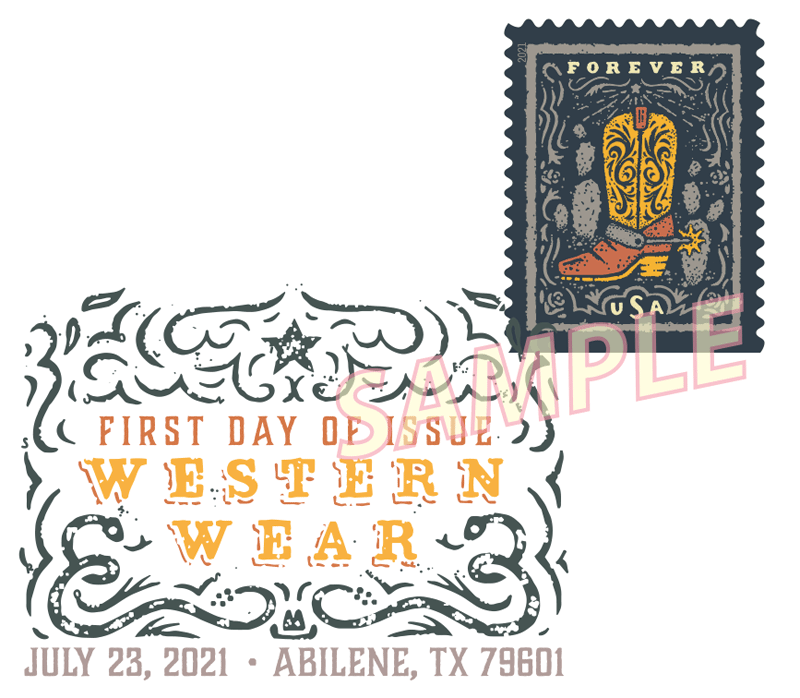
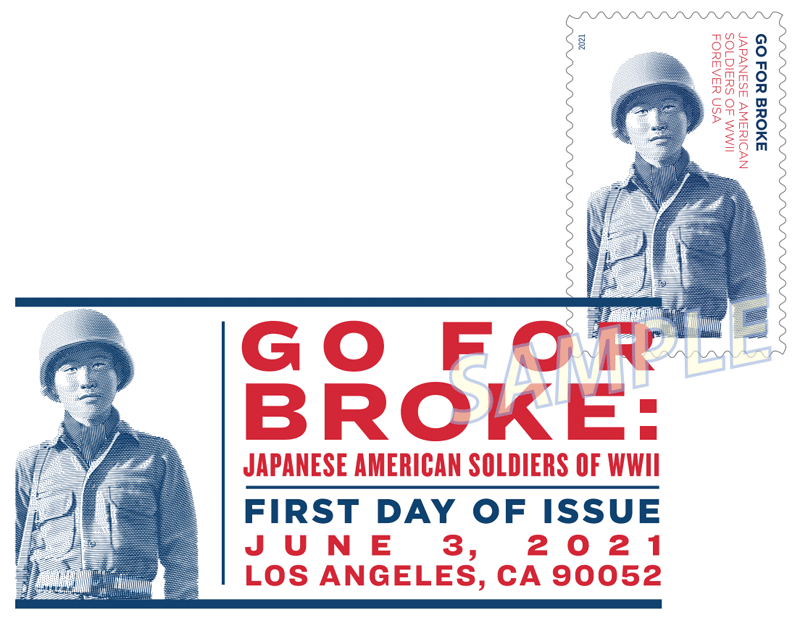
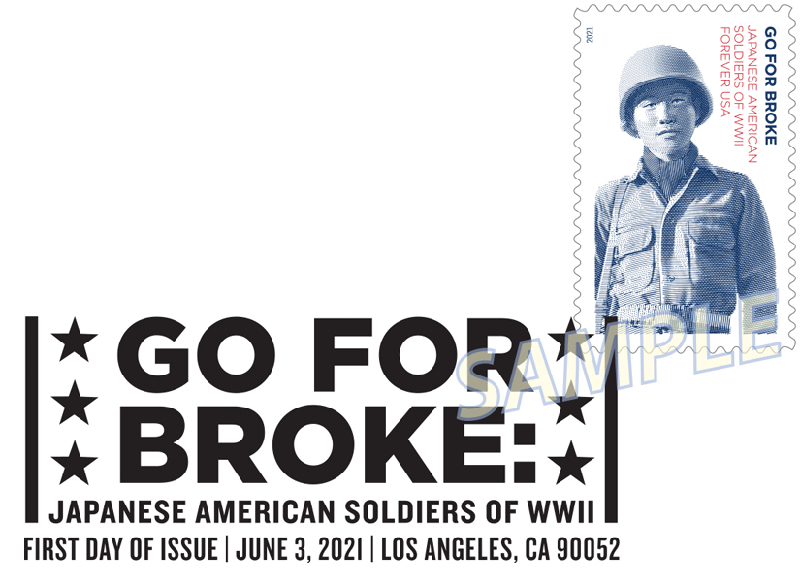
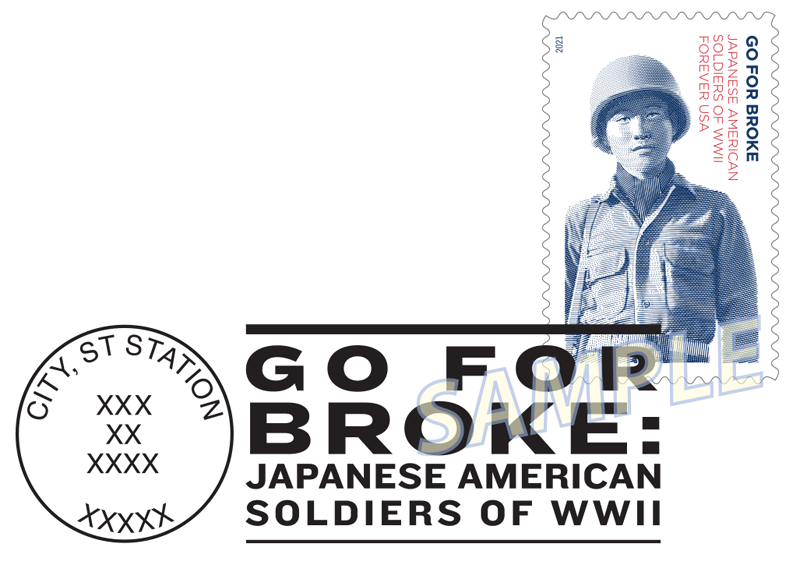
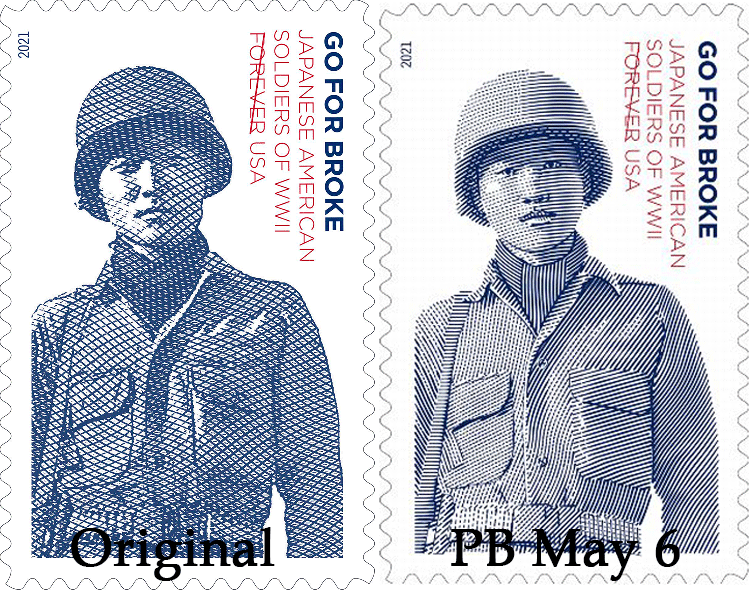
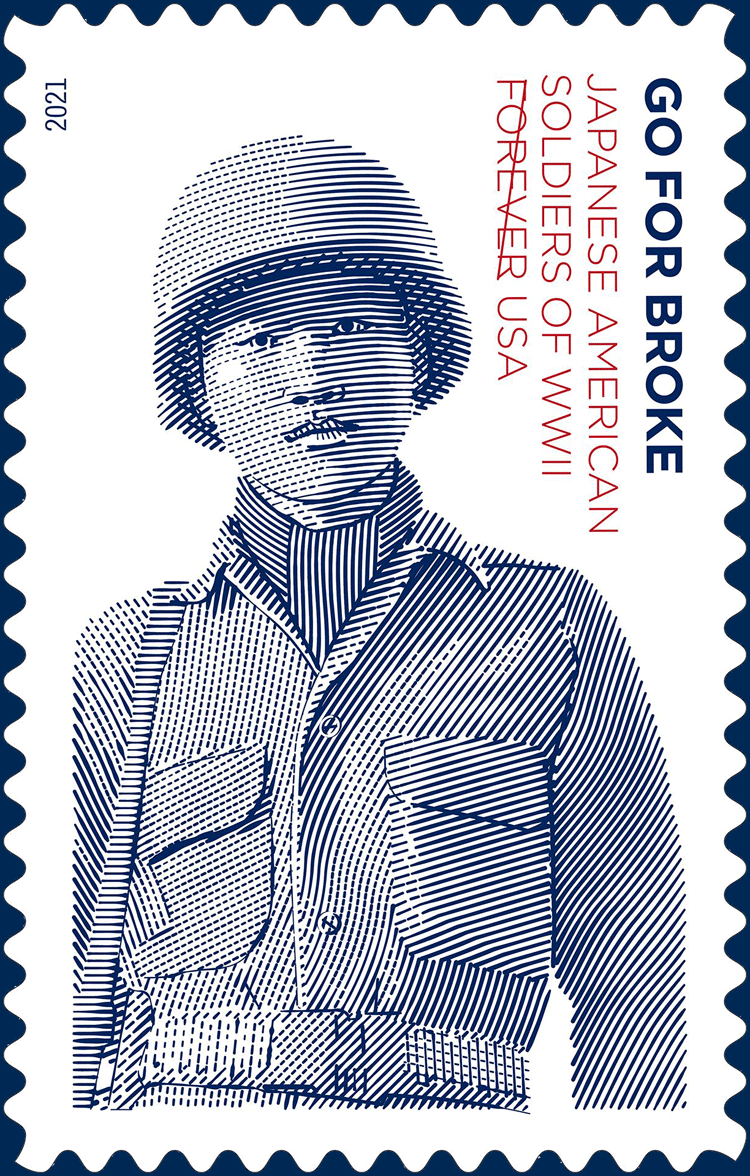
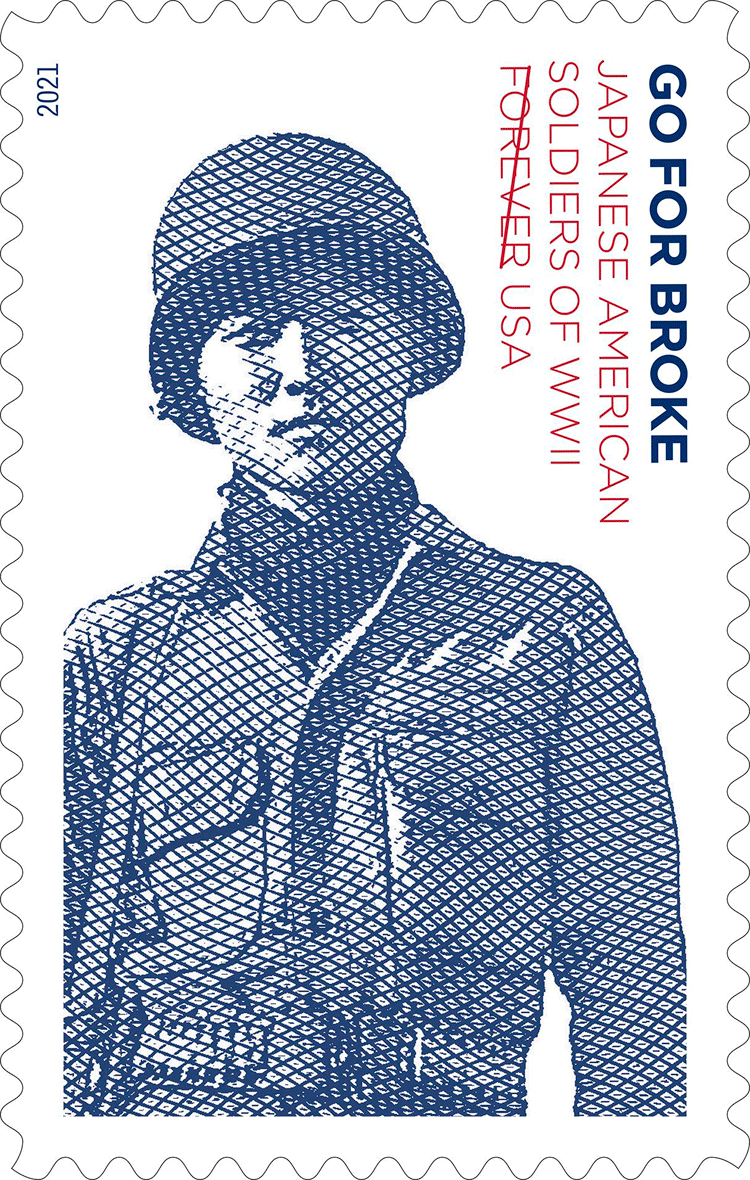 From the USPS: With this commemorative stamp, the Postal Service recognizes the contributions of Japanese American soldiers, some 33,000 altogether, who served in the U.S. Army during World War II. The stamp, printed in the intaglio method, is based on a photograph. “Go for Broke” was the motto of the all-Japanese American 100th Infantry Battalion/442nd Regimental Combat Team and came to represent all Japanese American units formed during World War II. The stamp was designed by art director Antonio Alcalá.