[press release]
Bridges
5th March 2015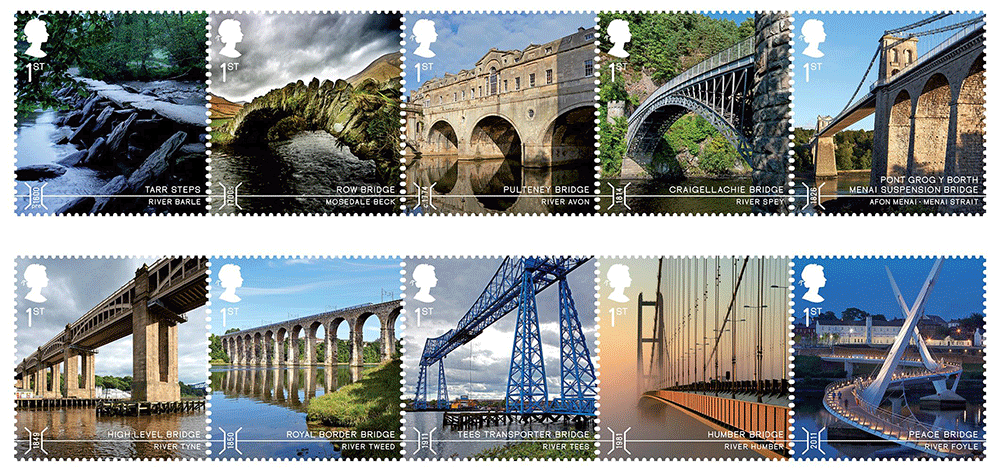 Reason and inspiration
The Bridges stamp issue celebrates the leaps in engineering that have seen the UK’s bridges evolve from humble stone crossings to dramatic symbolic landmarks conceived by progressive architects. The stamp images feature British bridges constructed from a wide range of different materials, including gritstone, limestone, cast iron, wrought iron and steel, while referencing diverse styles of bridge engineering, from clapper and stone arch to suspension and bowstring girder.
Stamp details
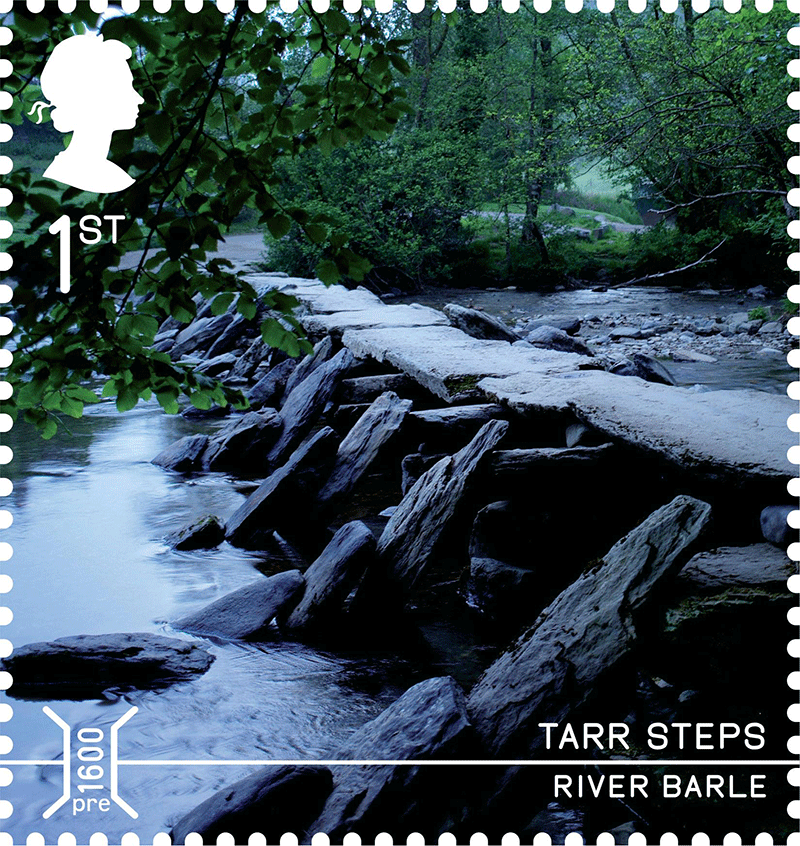
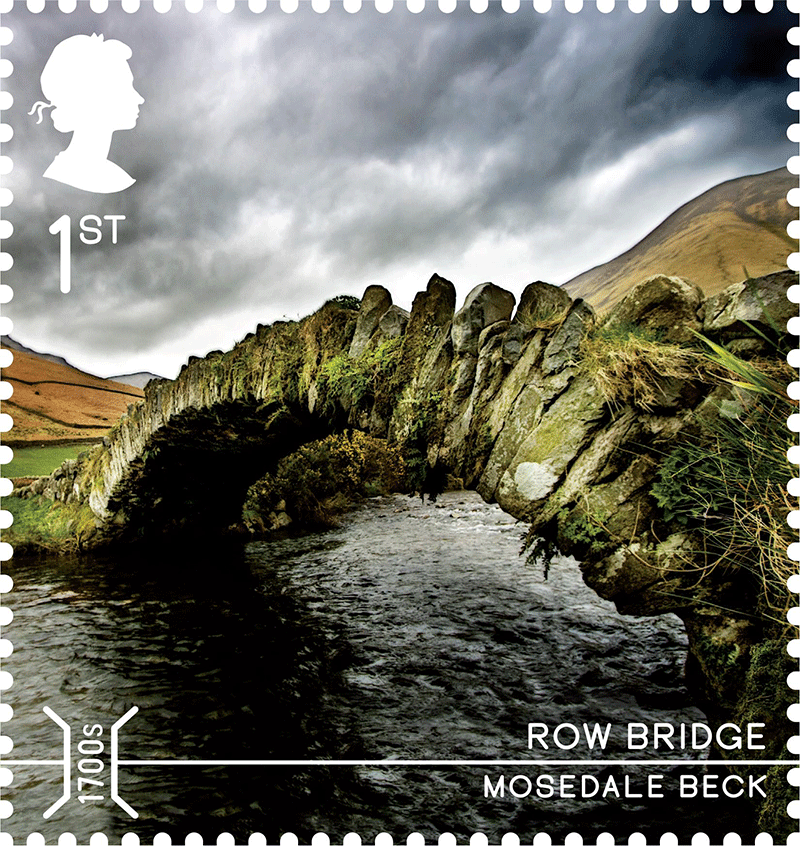
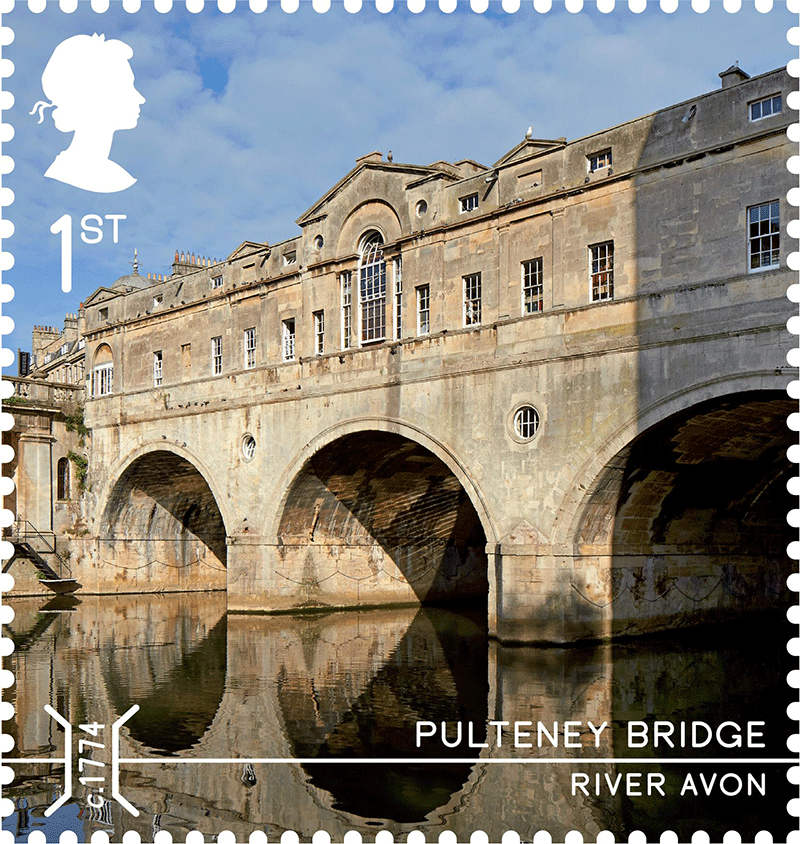
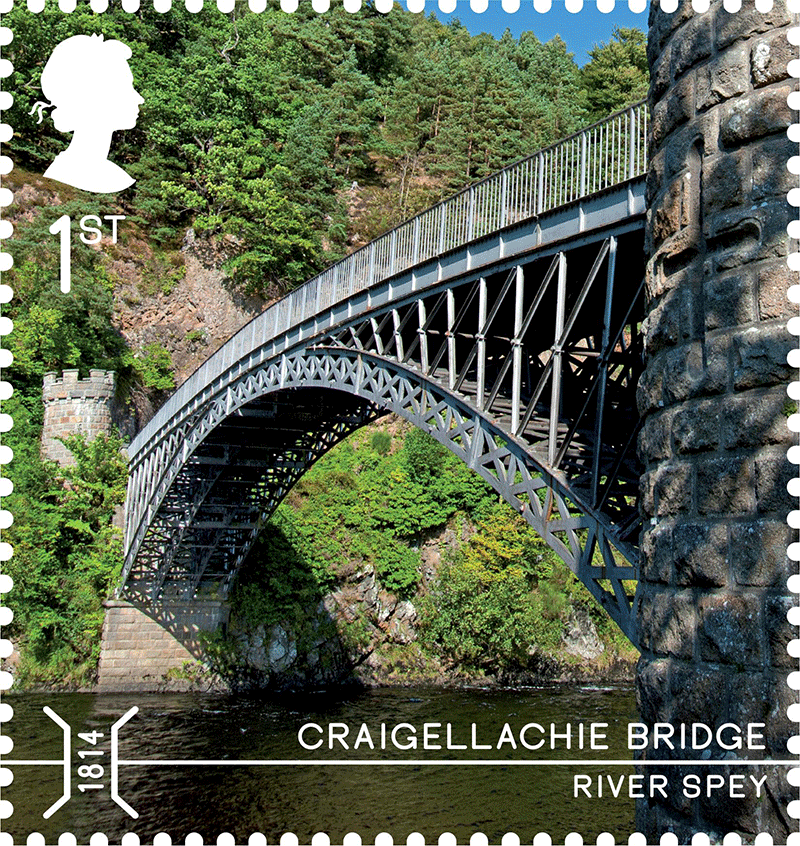
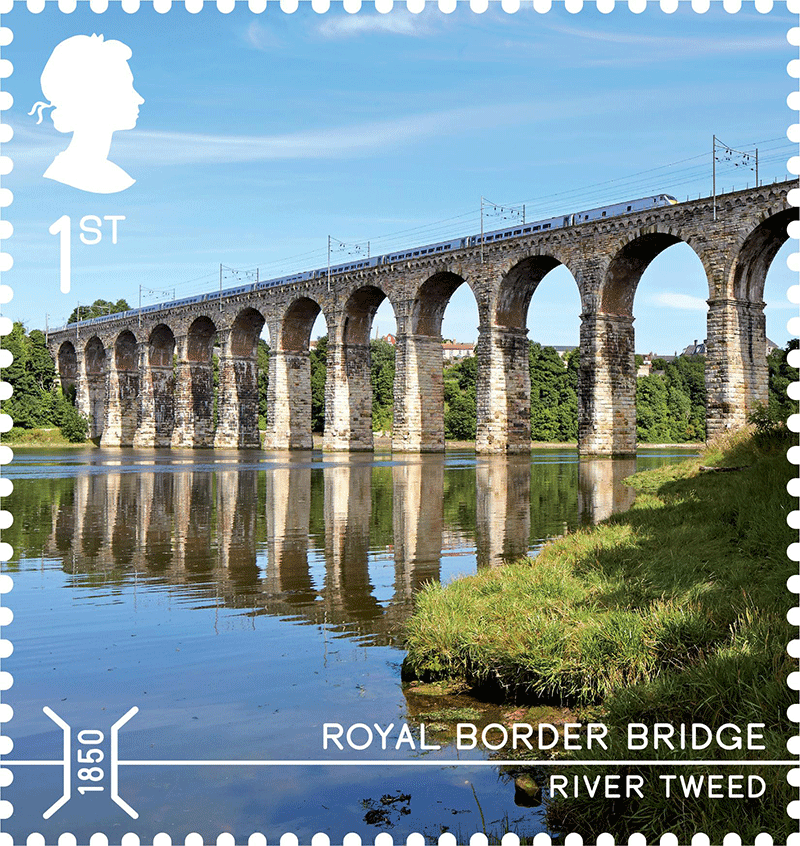
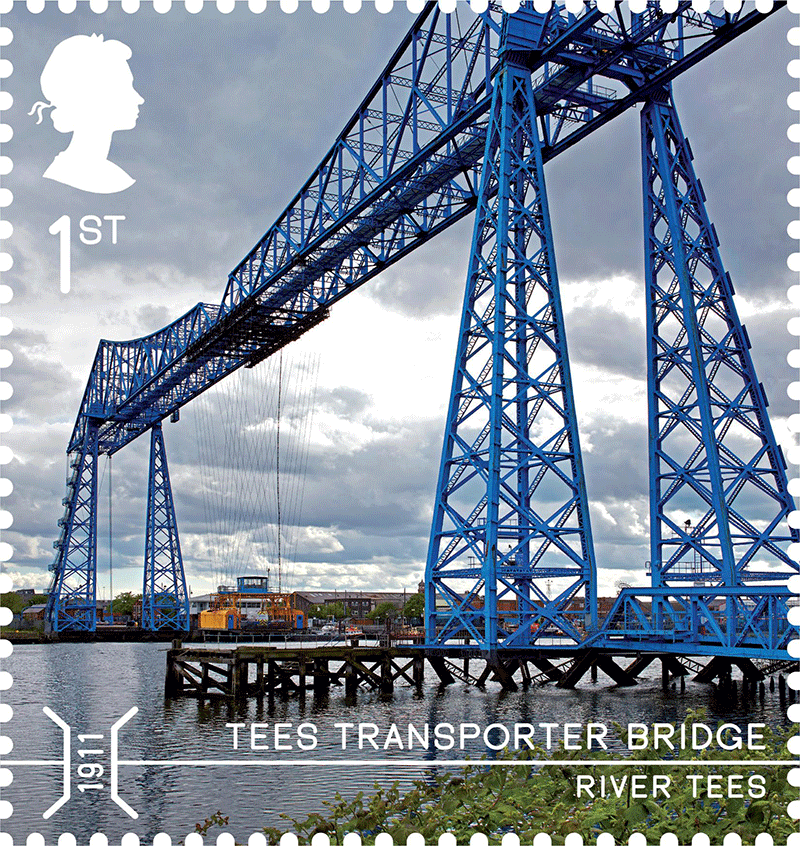
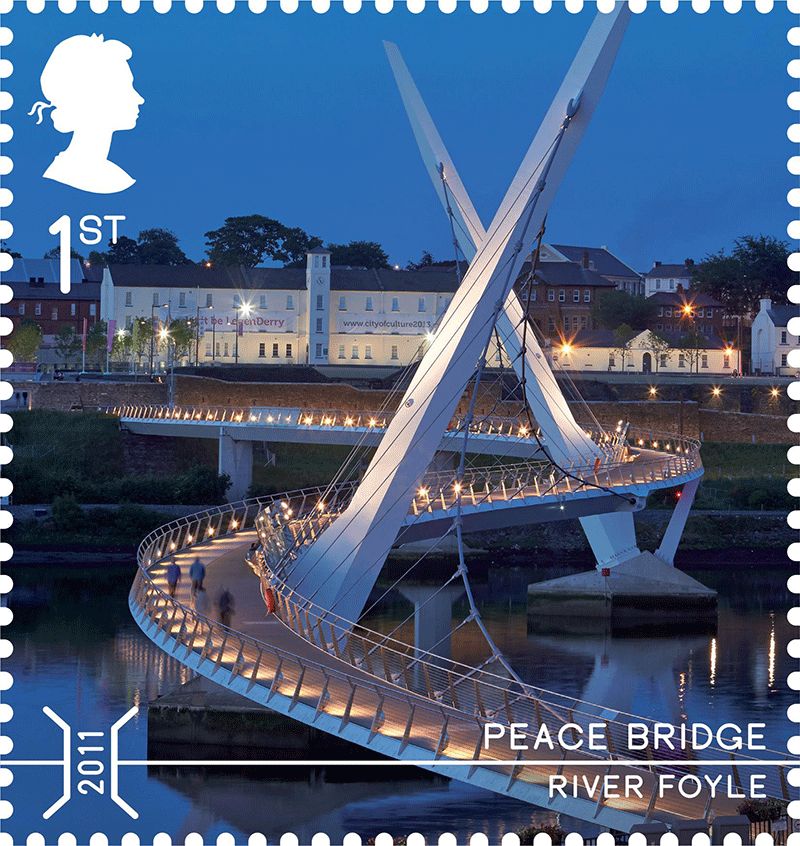
Designed by London agency GBH, the ten photographic stamps from locations spanning the whole UK, are arranged chronologically: pre-1600 –Tarr Steps, River Barle; 1700s – Row Bridge, Mosedale Beck; c.1774 – Pulteney Bridge, River Avon; 1814 – Craigellachie Bridge, River Spey; 1826 – Menai Suspension Bridge, Menai Strait; 1849 – High Level Bridge, River Tyne; 1850 – Royal Border Bridge, River Tweed; 1911 – Tees Transporter Bridge, River Tees; 1981 – Humber Bridge, River Humber; 2011 – Peace Bridge, River Foyle. Seven of the ten are original commissioned photographs by award-winning architectural photography agency Hufton + Crow.
Stamp Set Price: £6.20
Code: AS71A
Number of stamps: 10
Design: GBH
Acknowledgements: Row Bridge © Tony Mangan 2008; Craigellachie Bridge © David Gowans/Alamy; Humber Bridge © Al High 2009; all other photography by Hufton + Crow © Royal Mail Group Limited 2015
Stamp Format: Portrait
Stamp Size: 35mm x 37mm
Number per sheet: 25/50
Printer : International Security Printers
Print Process: Lithography
Perforations: 14.5 x 14
Phosphor: Bars as appropriate
Gum: PVA
Product Portfolio
First Day Cover
Designed by GBH, the envelope design replicates the titling device from the presentation pack, featuring letters in the style of some of the bridges on the stamps on a grey graph-paper background.
Price: £7.92 (Inland) £6.60 (Overseas)
Code: AF390
Filler Card
The filler card combines all 10 bridges into one technical drawing. Drawn to scale and arranged in chronological order, the illustration highlights the evolution of each new bridge. The editorial content features a brief introduction to the subject of bridges and includes sets of statistics and facts relating to each of the ten bridges.
First Day Envelope
Price: 30p
Code: AE348
Presentation Pack
Developed by London agency GBH, the presentation pack design is inspired by architectural blueprints, and charts the engineering evolution of bridges across the UK. The timeline from the stamps break out onto the pack, which forms a central spine to the narrative and includes biographies of engineers Thomas Telford and Robert Stephenson, whose bridges feature on the stamps. The pack combines photography with technical drawings, to provide additional historical or engineering points of detail. The titling device features lettering in the style of bridge designs.
Written by architectural historian and television presenter Dan Cruickshank, the editorial content provides a general overview of the importance of bridges in the civilised world, in terms of how they make vital connections and improve communications, and also in the way they have been created from pioneering methods of construction and new materials. The history and development of each of the ten bridges forms the main body of the editorial content.
Price: £6.70
Code: AP399
Stamp Cards
The ten special stamps are reproduced at postcard-size in this collectable set of stamp cards.
Price: £4.50
Code: AQ218
Postmarks
Tallents House Postmark
The Tallents House handstamp features a line drawing comprising two different bridge designs, similar to the arch styles of Row Bridge and Craigellachie Bridge.
Alternative Postmark
The alternative handstamp references Bridge, Canterbury, a generic location chosen for the general ‘Bridge’ reference, and the line drawing features two different bridge designs, similar to the styles of Menai Suspension Bridge and the Royal Border Bridge.
Non Pictorial Postmark
First Day Facilities
Unstamped Royal Mail First Day Cover envelopes (price 30p) are available from main Post Offices and philatelic outlets approximately one week before the stamps go on sale.
Serviced (i.e. stamped and postmarked) Royal Mail First Day Covers are available by Mail Order from Royal Mail, Tallents House priced £7.92 (overseas £6.60).
Orders for Serviced First Day Covers have to reach Royal Mail by 5th March 2015. Customers may also send stamped envelopes on the day of issue to Royal Mail, Tallents House for the Tallents House, Edinburgh postmark. The address for Royal Mail is as follows:
Royal Mail
Tallents House
21 South Gyle Crescent
EDINBURGH
EH12 9PB
Customers who hand in or post stamped Royal Mail First Day Cover envelopes at main Post Offices® on the day of issue will receive the pictorial BRIDGE, CANTERBURY first day postmark.
Alternatively, customers may send stamped envelopes to any of the Special Handstamp Centres for the pictorial or plain BRIDGE, CANTERBURY postmark quoting the reference number of the postmark required.
The Special Handstamp Centre
Royal Mail,
St Stephens Street,
BIRMINGHAM B6 4AA
The Special Handstamp Centre
Royal Mail
Tallents House
21 South Gyle Crescent
EDINBURGH
EH12 9PB
The Special Handstamp Centre
Royal Mail,
South Shields DO,
Keppell Street,
SOUTH SHIELDS
NE33 1AA
The Special Handstamp Centre
Royal Mail,
220 Penarth Road,
CARDIFF,
CF11 8TA
The Special Handstamp Centre
Royal Mail,
Mount Pleasant
Farringdon Road
LONDON
EC1A 1BB
British Postmark Bulletin
Details of all forthcoming first day of issues and all sponsored special handstamps are announced in the Postmark Bulletin. This is available on subscription from Royal Mail, Tallents House at £12.25 (UK & Europe) or £24.55 (rest of the world).
Special Handstamps
A number of different sponsored Special Handstamps are available for every new stamp issue. They are announced in the British Postmark Bulletin.
Bridges Presentation Pack copy
Throughout history, bridges have made connections and improved communications, while also offering visual delight and a sense of distinction. Bridges express ambition, achievement, pride and identity, almost always enriching rather than compromising the natural settings in which they are constructed.
While many bridges are an expression of functional beauty, some outstanding examples were born of a leap of faith and imagination, created from pioneering methods of construction and new materials. Some of the most innovative structures crossing rivers, roads and valleys have been built in the UK: for example, the Gateshead Millennium Bridge, which opened to the public in 2001, has a 105-metre central span secured by cables to a supporting arch that both tilt to allow large river craft to pass beneath.
TARR STEPS
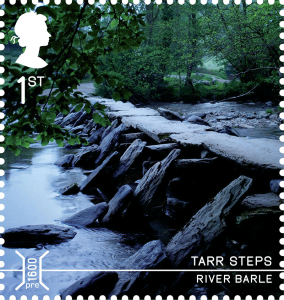 The origins of Tarr Steps, which crosses the River Barle in Exmoor National Park, are not definitively known. It has long been suggested that the structure could be up to 3,000 years old, but recent research reveals it is most likely to date from the 15th or 16th century.
Tarr Steps is a most elemental bridge formed by large slabs of gritstone – weighing up to 2 tons each and varying in length from 2 to 2.9 metres – placed flat on broad, low piers made from blocks of stone. Comprising 17 spans, the 55-metre bridge is held together by weight with no system of fixings or mortar. Serious flood damage over the years has resulted in substantial rebuilding and repairing of the original stones, but Tarr Steps remains an outstanding example of clapper-bridge construction.
ROW BRIDGE
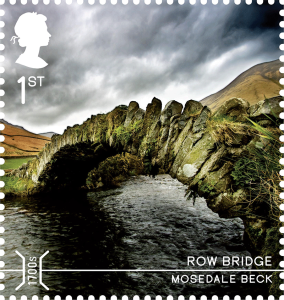 Believed to have been constructed in the mid 18th century, this packhorse bridge over Mosedale Beck at Wasdale Head in Cumbria is a fine example of a type of bridge common in Western Europe in the Middle Ages.
Goods were often carried in panniers slung from packhorses, so bridges on trade routes could be narrow, making them quick and cheap to build. The relative lightness of the loads carried by this type of bridge – simply single rows of packhorses – meant that their forms could be daring, with added strength given to the material used through bold and ingenious design. Typically, as with Row Bridge, they were conceived as high semi-circular or segmental stone-built arches (an inherently strong form), often crossing a river or chasm in one slender span.
PULTENEY BRIDGE
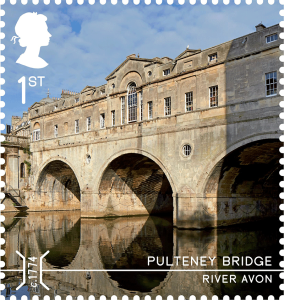 Designed by the esteemed Scottish architect Robert Adam, Pulteney Bridge in Bath is the UK’s finest example of an ‘inhabited’ bridge. Completed by 1774, it contains shops, originally with accommodation above, and was built to link the ancient centre of Bath with the proposed new Bathwick estate on the opposite bank of the River Avon.
Adam based his structure on an unbuilt design by the great 16th-century architect Andrea Palladio, which the Italian had entered into a competition to build a bridge at the Rialto in Venice. Though Palladio’s scheme was not selected, it was published and became an inspiration for 18th-century architects such as Adam, whose resulting creation, made from mellow Bath stone, with its three semi-circular arches and pedimented centre pavilion, is one of the most beautiful classical bridges in the world.
THOMAS TELFORD
Born in 1757 into an impoverished home in Eskdale, Scotland, Thomas Telford became one of the greatest structural engineers of the 19th century. After starting his career as a stonemason, he became a road and canal builder, and by the early 19th century he was exploring the structural potential offered by pioneering materials and methods of construction. This led Telford to design epoch-making bridges utilising cast and wrought iron – materials that achieved great strength and wide spans with more elegance, economy and speed than traditional masonry construction. Built in 1829, and spanning 46 metres with a single cast-iron arch, Telford’s Galton Bridge in Smethwick was once the highest in the world.
CRAIGELLACHIE BRIDGE
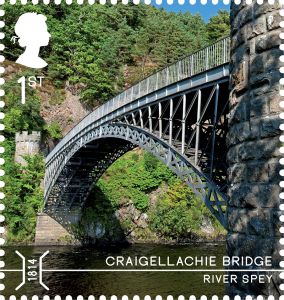 Designed by Thomas Telford and completed in 1814, Craigellachie Bridge carries the roadway on a single 46-metre-long arched span over the River Spey in Moray, Scotland.
Telford had the arch made of cast iron, which was revolutionary at the time because, unlike masonry, only iron could achieve the single long, slender and shallow arch required. The components were cast at a Welsh foundry in controlled conditions to ensure high quality and delivered to the site for assembly. Cast iron is very strong in compression but has low tensile strength, making it ideal for columns but not for beams. Well aware of the metal’s structural limitations, Telford built the bridge ensuring that the maximum number of its components are in compression. The span of the arch is restrained by masonry towers, designed in picturesque manner to look like miniature castles.
PONT GROG Y BORTH
MENAI SUSPENSION BRIDGE
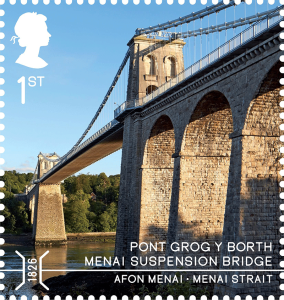 Completed in 1826 to Thomas Telford’s design, the Menai Suspension Bridge linking the island of Anglesey to the Welsh mainland remains one of the most breathtaking bridges ever built in Britain.
The central span of its roadway, 176.5 metres long and set 30 metres above water level to allow tall-masted ships to pass beneath, was carried by 16 wrought-iron chains (since replaced by steel chains).
The road on either side of the central span is supported by tall and elegant arched limestone viaducts. With a total length of 305 metres, this was the world’s first great suspension bridge and established the potential of suspension-bridge technology to achieve both high and lengthy spans.
ROBERT STEPHENSON
Born in 1803 near Newcastle-upon-Tyne, the son of George Stephenson, the future locomotive pioneer, Robert Stephenson would become a giant of the 19th century in locomotive and railway design and bridge-building. His bridges – many of which utilised modern technology in a stunningly bold manner – include some of the most epic creations of the early railway age. The spectacular High Level two-tier rail and road bridge, spanning the Tyne, introduced an unprecedented scale and form in the design of city-centre railway bridges, while the Britannia Bridge across the Menai Strait, completed in 1850, pioneered the concept of long spans of ‘tubular’ form made from wrought iron.
HIGH LEVEL BRIDGE
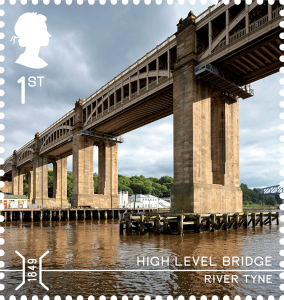 Linking Newcastle-upon-Tyne with Gateshead, the High Level Bridge is one of the most innovative and visually powerful bridges created during Britain’s Railway Age.
This two-tier 408-metre-long bridge, designed by Robert Stephenson to carry road and rail traffic at a high level across the Tyne and allow tall-masted shipping below, is a hymn to the strength, utility and robust beauty of cast iron, used in combination with stone and wrought iron. The tall piers, up to 40 metres high, are made of local sandstone, which possesses great compressive strength and is able to withstand damp, while the iron bow-string girders forming the spans of the bridge (the widest being 38.1 metres) use cast iron for components that are in compression and wrought iron for elements that require tensile strength.
ROYAL BORDER BRIDGE
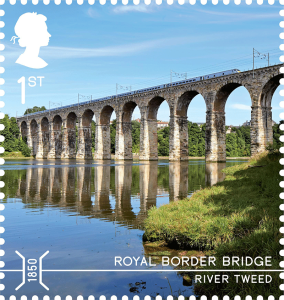 Crossing the River Tweed between Berwick-upon-Tweed and Tweedmouth, the Royal Border Bridge was constructed between 1847 and 1850 to the design of Robert Stephenson and was a key component in Britain’s expanding railway system, linking London to Edinburgh.
Of traditional masonry construction, the bridge is essentially a railway viaduct formed of 28 semi-circular-headed arches, each with a span of 18 metres, with the total length of the bridge – including approach works – reaching 658 metres. This vast extent, combined with the majestic 38-metre height of the arches as they cross the river and the slender form of the vertical piers, from which the arches spring, gives the structure a striking elegance. A superb piece of functional engineering, it is also a work of great beauty that complements the rugged border landscape through which it passes.
TEES TRANSPORTER BRIDGE
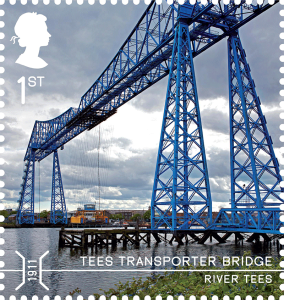 Completed in 1911, the Tees Transporter Bridge in Middlesbrough is a most novel and visually arresting piece of engineering.
Vast in scale and utilitarian in appearance, its stripped-back, lattice-steel structure incorporates a pair of cantilevered trusses that span 259 metres – with a clearance above water of almost 49 metres – that are used to carry a ‘gondola’ across the river. Powered by electric motors, the gondola – which can convey both people and vehicles – is suspended above the river and pulled from one side to the other by a hauling cable in approximately two minutes. This unique design – executed by Sir William Arrol & Co. of Glasgow – was economic to construct and ensured that the crossing would not interfere with river traffic.
HUMBER BRIDGE
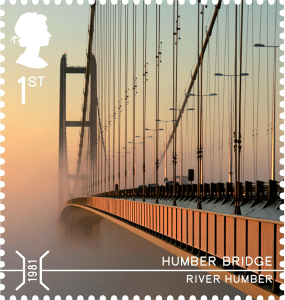 More than a century after the notion of a bridge or tunnel crossing the Humber estuary had first been debated, the eventual completion of the Humber Bridge in 1981 redefined the boundaries for suspension-bridge technology.
Its complex construction, by consulting engineers Freeman Fox & Partners, took nine years. With a total length of 2,220 metres and a central span of 1,410 metres between two towers of reinforced concrete, for 16 years the Humber Bridge was the longest single-span suspension bridge in the world. Its mighty scale, elegant minimal form and the fact that it leaps across one of England’s great natural boundaries has captured the imagination. The poet Philip Larkin, who lived in Kingston-upon-Hull, wrote ‘Bridge for the Living’, a poem that was set to music to celebrate the opening of the Humber Bridge.
PEACE BRIDGE
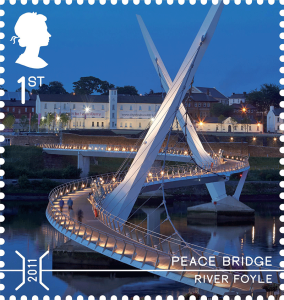 Spanning the River Foyle in Derry/Londonderry in Northern Ireland, the Peace Bridge functions not only as an urban route, but also as a work of art. Its ingenuity is expressed through delicacy and elegance.
This unique bridge, constructed for pedestrians and cyclists, was conceived as two distinct structural systems that work in absolute harmony. Completed in 2011 to the designs of Wilkinson Eyre, the Peace Bridge features a pair of tall masts, whose system of cables overlap mid-river to form a symbolic structural ‘handshake’ across the Foyle. The 235-metre-long pathway of this self-anchored suspension bridge provides a promenade and makes connections, while evoking a sense of pride, place and unity.